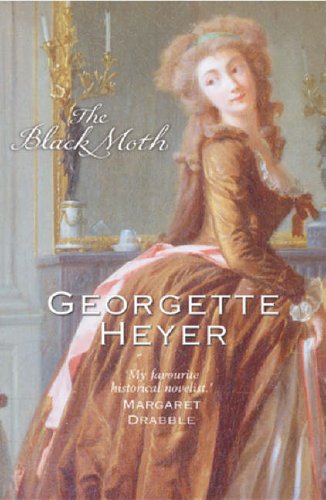
The Black Moth by Georgette Heyer

the-black-moth The Black Moth, published in 1921, was Georgette Heyer’s first novel, written while she was still a teenager. I came to it having already read lots of Heyer’s other novels because I was advised that this was probably not a good place to start and that I would appreciate it more if I was already familiar with her later work. Now that I’ve read it, I think I would agree with that; I did enjoy it (although it hasn’t become a favourite) but I thought it had a slightly different feel from her later books and didn’t seem as polished.

The story is set not in the Regency period with which Heyer is normally associated, but the earlier Georgian period. Jack Carstares, eldest son and heir of the Earl of Wyncham, is a highwayman – though not entirely out of choice. He was accused of cheating at cards six years earlier and forced to leave the country in disgrace, but now he is back in England and trying to make a living in any way he can.

At the beginning of the novel, Jack discovers that his father is dead and that he is now the rightful Earl. He is reluctant to accept his inheritance, however, preferring to leave the estate to his younger brother, Richard. Jack, you see, was never actually guilty at all; he was covering up for Richard, who was the real cheat and who said nothing, allowing his brother to take the blame. Richard is not completely without a conscience, though, and after learning of Jack’s return, he feels increasingly guilty about what he has done – to the disgust of his wife, the beautiful but selfish and petulant Lavinia.

Lavinia is the sister of the Duke of Andover, who is known as ‘Devil’ by friends and foes alike, and who reminds Richard of a black moth. When Andover and Jack Carstares both find themselves drawn to the same woman, the fates of all of these characters become closely entwined once more and a chain of events is set into motion which could change each of their lives forever.

I’ve said that The Black Moth isn’t a favourite, but I did find it fun to read. Unlike some of the later Heyers I’ve been reading recently, such as Black Sheep and Charity Girl, which are more character and dialogue driven, this one is more action-packed and swashbuckling with a plot involving highway robbery, disguises, kidnappings and duels. It’s not as romantic a story as some since the focus is on the relationship between the two brothers, Jack and Richard, although that could be because Heyer was apparently writing this novel to entertain her own younger brother. Jack’s love interest, Diana, is maybe not one of Heyer’s stronger female characters, but I did like her – and was relieved that it wasn’t Lavinia who turned out to be the heroine!

Now that I’ve read The Black Moth, I’m looking forward to reading These Old Shades, which was published several years later and uses updated versions of some of the same characters. It’s one of many Heyer novels I’m hoping to read in 2017!

~

I’m taking a break for a few days, so I would like to take this opportunity to wish all of my blog readers a Merry Christmas! I’ll be back next week with my books of the year and December summary.
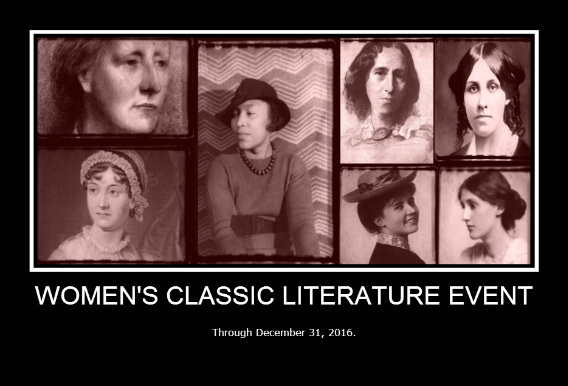
Looking back at the Women’s Classic Literature Event

Womens Classic Literature Event

During the last three months of 2015 and throughout 2016, I have been taking part in the Women’s Classic Literature Event hosted by the Classics Club. The idea was simply to read classics written by women, a classic being defined as any type of work (novels, essays, biographies etc) which was preferably published before 1960.

Here are the books I’ve read for this event which were already on my Classics Club list:

My Ántonia by Willa Cather
Jane Eyre by Charlotte Brontë
Wide Sargasso Sea by Jean Rhys
To the Lighthouse by Virginia Woolf
Mary Anne by Daphne du Maurier
Kristin Lavransdatter by Sigrid Undset
The Heir of Redclyffe by Charlotte M. Yonge
Wives and Daughters by Elizabeth Gaskell
The Romance of the Forest by Ann Radcliffe
The Mill on the Floss by George Eliot

Wide Sargasso Sea was published in 1966, but I think most people would agree that it’s a classic!

There are also two more books by Woolf which I read for Ali’s #Woolfalong:

Flush by Virginia Woolf
A Room of One’s Own by Virginia Woolf

I can’t say that I loved all of these books, but I did find them all interesting, worthwhile reads. I particularly enjoyed Kristin Lavransdatter, Wives and Daughters, Flush and my re-read of Jane Eyre.

However, I have also read other books by women which may or may not be considered classics in the same way as the books above. Because they fit the Classics Club’s definition of a classic for this event, I’m going to mention some of them here.

Non-Combatants and Others

* I’ve read books by authors who are new to me – Non-Combatants and Others by Rose Macaulay, The Nutmeg Tree and Cluny Brown by Margery Sharp and Mauprat by George Sand – and by authors I’ve read before – Amberwell by D.E. Stevenson, Troy Chimneys by Margaret Kennedy and Poor Caroline by Winifred Holtby.

regency-buck-heyer

* I’ve read some historical fiction published before 1960: The White Witch by Elizabeth Goudge, The Rider of the White Horse by Rosemary Sutcliff and several novels by Marjorie Bowen, Dora Greenwell McChesney and Georgette Heyer.

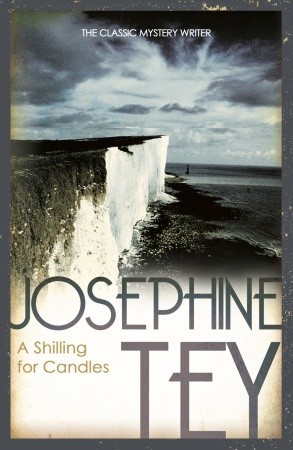
A Shilling for Candles

* I’ve read some classic crime, including A Shilling for Candles by Josephine Tey, Death in Berlin by MM Kaye and two Agatha Christies (Hercule Poirot’s Christmas and The Labours of Hercules).

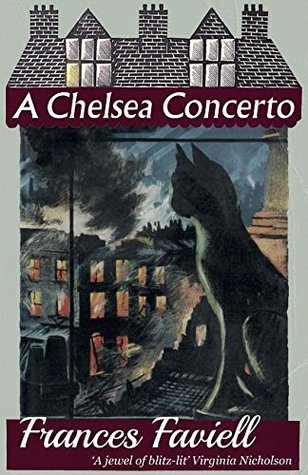
a-chelsea-concerto

* And one non-fiction book – A Chelsea Concerto by Frances Faviell.

~

So, that sums up my reading over the year-and-three-months of this event! Have you been participating too? What are the best classics written by women that you’ve read recently?

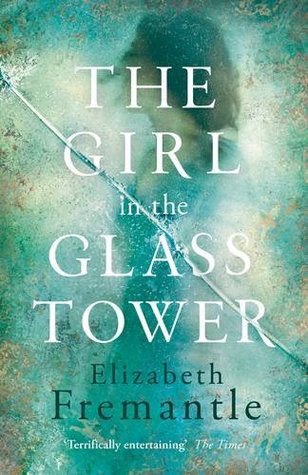
The Girl in the Glass Tower by Elizabeth Fremantle

the-girl-in-the-glass-tower One of the things I like about Elizabeth Fremantle’s historical novels is that they deal with women whose stories aren’t told very often: Penelope Devereux in Watch the Lady, Katherine and Mary Grey in Sisters of Treason and Katherine Parr in Queen’s Gambit. In this, her fourth novel, she writes about two more – Arbella Stuart and Aemilia Lanyer.

The Girl in the Glass Tower is set towards the end of the Elizabethan period, with England waiting anxiously for Elizabeth I, growing old with no children of her own, to name her heir. Born in 1575, Lady Arbella Stuart is the granddaughter of Margaret Douglas, Henry VIII’s niece, and therefore a possible claimant to the throne. Her other grandmother, the formidable and ambitious Bess of Hardwick, Countess of Shrewsbury, is determined to make this possibility a reality – and so Arbella grows up in isolation at Hardwick Hall, sheltered and protected from those who might try to plot against her.

Being close to the throne, however, doesn’t bring Arbella happiness and when her cousin, James VI of Scotland, is finally named as Elizabeth’s successor, she feels that her whole life has been wasted waiting for something that now looks unlikely to happen. Sadly, though, there is still more trouble ahead and when she makes the decision to marry William Seymour, who himself has Tudor blood, Arbella finds herself imprisoned again, this time in the Tower of London.

Arbella’s story alternates with the story of the poet Aemilia Lanyer, author of the poetry collection Salve Deus Rex Judaeorum. Aemilia (whom I have read about previously in Dark Aemilia by Sally O’Reilly) is sometimes considered to have been the ‘Dark Lady’ of Shakespeare’s sonnets, but this theory is not the focus of this novel, which concentrates on other aspects of Aemilia’s life instead: how she coped financially after the end of her affair with her rich lover, Lord Hunsdon, and the death of her husband, Alfonso; her work as a poet and as a teacher; and her relationship with her son, Henry.

For both women’s stories, Elizabeth Fremantle sticks to the known historical facts as far as possible, but where details are not known – particularly where Aemilia is concerned – she takes the opportunity to use her imagination. There is no evidence that the two women were friends, for example (although they would probably have been at court at the same time and Aemilia did dedicate one of her poems to Arbella), but Fremantle imagines that they were and that their lives became closely linked.

I loved following Arbella’s story – I’d only read about her once before, in Maureen Peters’ The Queenmaker, which is written from Bess of Hardwick’s perspective, so it was interesting to see things from another point of view, with Bess almost as a villain, controlling and manipulating her granddaughter’s life. I found Aemilia’s sections of the book slightly less absorbing, maybe because I didn’t like the device Fremantle uses of having Aemilia looking back on her relationship with Arbella from a point several years into the future. Still, I thought her story worked well alongside Arbella’s and provided an interesting contrast; unlike Arbella, whose destiny is always in the hands of other people, Aemilia has a much greater degree of freedom, her own struggle being mainly for financial independence and the respect of her son.

I also appreciated the way Fremantle pulls aspects of her previous novels together in this one – Penelope Devereux, the Earl of Essex’s sister from Watch the Lady, has a role to play, and the memory of Katherine Grey from Sisters of Treason is a strong presence in Arbella’s life. The Girl in the Glass Tower is a sad novel, but one that I enjoyed reading – and now I’m wondering who Elizabeth Fremantle will choose to write about next.

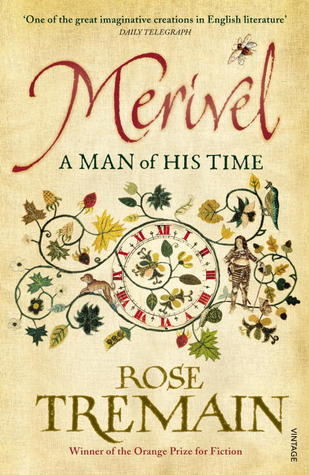
Merivel: A Man of His Time by Rose Tremain

merivel I wasn’t planning to read Merivel so soon after finishing Rose Tremain’s Restoration, but when I saw a copy on the library shelf a few days later, I couldn’t resist bringing it home so I could catch up with Robert Merivel again and see how he was getting on. I didn’t expect this book to be as good as Restoration, as sequels written many years later often aren’t, so I was surprised to find that I actually preferred this one. Looking at other reviews, I can see that I’m in the minority with that opinion, but I think the reason I liked this book better was because I liked Merivel himself better.

At the beginning of Merivel, our narrator, Robert Merivel, is back at his Norfolk estate of Bidnold, where he returned at the end of Restoration. It’s 1683 and sixteen years have gone by since we last saw him; he’s now a middle-aged man, very aware that time is slipping away and bringing changes to himself and the people around him. His faithful servant, Will, is getting old and is struggling to carry out his duties, while his little girl, Margaret, is now a young lady and planning to spend Christmas in Cornwall with friends. Facing the prospect of being left at home alone, Merivel decides to make the most of the time remaining to him and sets off to Versailles – with a letter of introduction from his friend, King Charles II – in the hope of finding some excitement and intellectual stimulation.

Unfortunately, Versailles fails to live up to Merivel’s expectations; he finds little to admire at the French court and it’s not long before he’s on his way home to England. Apart from a brief romance with an attractive botanist, Louise, and an invitation to visit her at her father’s estate in Switzerland, the only thing Merivel has to show for his time in France is a large bear called Clarendon whom he has rescued from captivity and brought back to Norfolk. On arriving at Bidnold, however, Merivel discovers that he has more to worry about than Louise and his bear: his daughter, Margaret, is seriously ill and requires all of his skills as a physician if she is to survive.

Although there are some humorous scenes in this book, I found this quite a sad and sombre novel, especially in comparison to the liveliness of Restoration. The passing of time is a major theme (it’s no coincidence that Merivel shares lodgings in France with a clockmaker) and there’s always a sense that things are coming to an end, that Will, Merivel – and even the King – won’t live forever. Merivel is not so much searching for his place in the world as he was in the previous book, but trying to understand himself and come to terms with his own nature. He still gets things wrong sometimes, he still makes some poor decisions, and has a tendency to neglect the things that are most important, but he also has a good heart and I found him completely endearing! I remember thinking he was a very frustrating character in Restoration, but in this book I had more patience with him because I could see that he was doing his best.

Merivel is a book with many layers, giving the reader a lot to think about. Even the headings of the four sections – The Great Enormity, The Great Captivity, The Great Consolation and The Great Transition – have a significance which is worth considering. But this is also a very entertaining novel. The pace is quite leisurely, but there’s always something happening: a duel, an encounter with highwaymen, an illness, or a visit from the King. The mood of the late 17th century is captured beautifully; Tremain even gives some of the nouns capital letters to enhance the feeling of authenticity, something which I thought might be irritating at first but which, after a few pages, I decided I liked.

The ending, when it came, was not entirely unexpected, but I was still a bit surprised because I think a lot of authors would have chosen to end Merivel’s story in a different, happier way. Considering the themes of this novel, though, I thought it was the perfect conclusion. I loved revisiting Merivel’s world and I would definitely recommend this book to anyone who has read and enjoyed Restoration. It could probably be read as a standalone but I think you’ll get more out of it if you’ve been following Merivel’s story from the beginning.

This book also counts towards my Reading the Walter Scott Prize project. It was shortlisted in 2013.

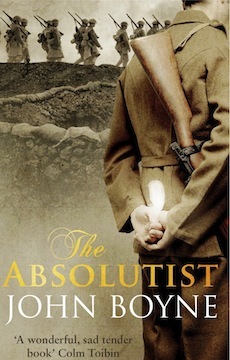
The Absolutist by John Boyne

the-absolutist It’s 1919 and twenty-one-year-old Tristan Sadler is home from the war. He knows he is lucky to have survived when so many like him didn’t – people like his friend and fellow soldier, Will Bancroft. John Boyne’s The Absolutist follows the stories of Tristan and Will, two very different men with very different attitudes towards life, death, love and war.

As the novel opens, Tristan is taking a train from London to Norwich where he plans to visit Will’s sister, Marian, and return the letters she sent to Will during the war. This is not the only reason for his visit, however – he has been carrying a terrible secret and is hoping to unburden himself to Marian so that they can both move on and face the future.

Through a series of long flashbacks, we witness Tristan’s first meeting with Will during their training at Aldershot in 1916 and then watch their relationship develop as they are sent to France and endure the horrors of life in the trenches. This story unfolds alongside the ‘present day’ storyline set in 1919, with Tristan’s big secret kept concealed until near the end of the book, allowing suspense and tension to build throughout the novel. There’s already plenty of tension anyway, of course, because this is a novel which doesn’t shy away from describing the horror and the uncertainty of war and although we know from the start that Tristan survives and Will doesn’t, we don’t know exactly how Will’s life ended or what the fate of the other characters in the story might be.

I’ve read several of John Boyne’s other novels (and particularly loved This House is Haunted, Crippen and A History of Loneliness) so I started this one with high hopes. I thought it was a fascinating and moving read which I enjoyed almost – but not quite – as much as the three I’ve just mentioned. The period leading up to, during and just after the First World War is one that I always like to read about and this novel covers many different aspects of the war and its aftermath. What I found particularly interesting was the exploration of what it meant to be a ‘conscientious objector’ or an ‘absolutist’ during the war, how they were treated by the other soldiers and how they were viewed by the public. The difference between the two is that conscientious objectors, despite refusing to fight, would often agree to fill other roles, such as stretcher bearers, but absolutists were unwilling to have any involvement at all.

The one thing that spoils The Absolutist, in my opinion, is some of the language Boyne uses, especially in the dialogue, which doesn’t feel appropriate to the time period. Other reviews of this book have mentioned inaccuracies regarding the military terminology too, although I would never notice things like that myself. It’s a shame, considering the care and attention to detail Boyne has obviously put into his recreations of life in the trenches and his treatment of other important issues of the period such as women’s suffrage and attitudes towards homosexuality. Still, I had no major problems with this novel and found it a powerful and thought-provoking read. I still have plenty of John Boyne’s earlier books left to explore and am looking forward to his new one, The Heart’s Invisible Furies, coming in 2017.

Redgauntlet by Sir Walter Scott

redgauntlet Redgauntlet, one of Scott’s Waverley novels, is set in Scotland and the north of England in 1765, twenty years after the failed Jacobite Rising of 1745. Although the rising was unsuccessful and ended in disaster for Charles Edward Stuart and his supporters, there were still those who dreamed of restoring the exiled Stuarts to the throne. Redgauntlet centres around a fictional third Jacobite Rebellion and the lives of two innocent young men who accidentally become caught up in the plot.

The novel is made up of a mixture of letters, journal entries and first person narrative written from the perspectives of Darsie Latimer and his friend, Alan Fairford. Darsie, an orphan, has grown up in Scotland knowing very little about his family background, aware only that he has been forbidden to cross the border into England until he turns twenty-five, which is also when he will come into his inheritance. The reason for this unusual condition is unknown to Darsie but eventually becomes clear as the story unfolds and the truth about his past is revealed.

Kidnapped on a fishing expedition to the Solway Firth, Darsie discovers that he has fallen into the clutches of the mysterious Hugh Redgauntlet, a former Jacobite who seems to know more about Darsie than Darsie does himself. Help is on its way, however – when Alan Fairford, who is completing his legal studies in Edinburgh, receives a message from a beautiful young lady known only as Green Mantle, warning him that Darsie is in danger, he sets off at once in search of his friend.

Redgauntlet is the third Scott novel I’ve read (the others were Ivanhoe and The Heart of Midlothian) and my favourite so far. In fact, I was ready to name it one of my books of the year until the plot began to fizzle out towards the end, which meant it lost its place on my list. Up to that point, though, I was completely engrossed in the adventures of Darsie and Alan. No, it’s not a particularly easy book to read, and yes, there are some long, dry passages where Scott discusses the politics of the period or describes obscure points of Scottish law, but otherwise I loved it. I loved the setting, the characters, the air of mystery and foreboding, the exciting plot and the way the novel was structured to incorporate different forms of writing and different viewpoints. I particularly enjoyed reading the letters sent between Darsie and Alan in which the personality of each man – the practical, unimaginative Alan and the romantic, adventurous Darsie – come through strongly.

The problem I had with this novel was with the storyline surrounding the third Jacobite Rising. Knowing that it never happened historically took away some of the suspense and Scott didn’t manage to convince me that Redgauntlet’s schemes would ever come to anything. I enjoyed the build-up, but when the rebellion started to come to the forefront of the novel near the end of the book, this was when I lost interest. It all seemed such an anti-climax after sticking with the story through so many pages. Still, the good bits of Redgauntlet are very, very good – my favourite part was Wandering Willie’s Tale, a wonderful ghost story which appears in the middle of the book. It’s worth reading Redgauntlet for this story alone.

I’m looking forward to reading more of Scott’s novels. Having only read three so far, I certainly have plenty left to choose from. If you’ve read any of them, please let me know which you think I should read next. And I would love to hear other readers’ thoughts on Redgauntlet. Brilliant but flawed is my verdict!

Historical Musings #21: My year in historical fiction

Historical Musings December is always a busy time in the book blogging world, with people reflecting on their year’s reading, choosing their favourite books of the year and announcing plans for the year to come. For this month’s Historical Musings post, then, I thought this would be a good opportunity to look back at my year in historical fiction.

I know the year isn’t quite over yet and I will finish more books before 2016 comes to an end, but not enough to significantly affect the statistics below. I’ve had fun putting these charts, graphs and lists together – I hope you’ll find them interesting!

~

Time periods read about in 2016

time-periods-pie-chart

As you can see, most of the books I’ve read are set between the 14th century and the modern day (the 16th, 17th and 19th centuries being particularly popular), with very few set earlier than that.

My favourite book read this year set pre-1300: Dictator by Robert Harris (set in Ancient Rome)

~

26.4% of the historical fiction authors I read this year were new to me

Three books I enjoyed by new-to-me historical fiction authors this year:
The Rider of the White Horse by Rosemary Sutcliff
Prince of Foxes by Samuel Shellabarger
Succession by Livi Michael

~

Publication dates of books read in 2016

publication-dates

Perhaps not surprisingly, I have read a lot of books that were published in the last few years, with most of the others having publication dates spread across the 20th century.

Here are four historical novels I’ve read this year that were published before 1900:
Lorna Doone by RD Blackmore
Louise de la Vallière by Alexandre Dumas
Redgauntlet by Sir Walter Scott
Rupert, by the Grace of God by Dora Greenwell McChesney

~

12.5% of my historical reads in 2016 were historical mysteries

Three of the best historical mysteries I’ve read this year:
Revelation by CJ Sansom
The Strangler Vine by MJ Carter
The Revelations of Carey Ravine by Debra Daley.

~

I’ve read historical fiction set in 13 different countries this year.

countries-chart

About half of the historical fiction I’ve read this year has been set in my own country, England. I do love reading about the history of other countries, though, and have been collecting recommendations of books set in other parts of the world (see Historical Musings #7: Exploring Africa, #16: Exploring Europe and #20 – Exploring Japan).

Three books read in 2016 set in a country other than my own:
Kristin Lavransdatter by Sigrid Undset (Norway)
The Shogun’s Queen by Lesley Downer (Japan)
The Viper of Milan by Marjorie Bowen (Italy).

~

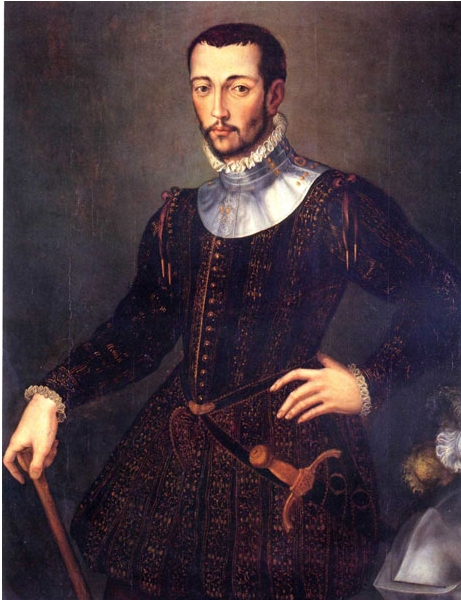
Francesco de' Medici

Francesco de’ Medici

Five historical men I’ve read about this year:

Francesco de’ Medici (The Red Lily Crown by Elizabeth Loupas)
John Wilmot, Earl of Rochester (Alathea by Pamela Belle)
St Patrick (The Lion and the Cross by Joan Lesley Hamilton)
Thomas Chippendale (Gilded Splendour by Rosalind Laker)
Geoffrey Chaucer (The People’s Queen by Vanora Bennett).

~

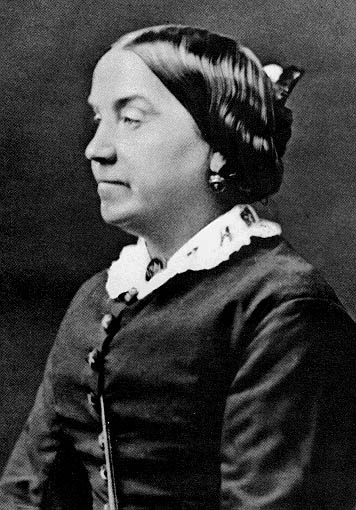
Lizzie Burns

Lizzie Burns

Five historical women I’ve read about this year:

Joanna of Navarre (The Queen’s Choice by Anne O’Brien)
Julia Pastrana (Orphans of the Carnival by Carol Birch)
Penelope Devereux (Watch the Lady by Elizabeth Fremantle)
Sappho (Burning Sappho by Martha Rofheart)
Lizzie Burns (Mrs Engels by Gavin McCrea).

~

Now it’s your turn! Have you read any of the books or authors I’ve mentioned here? What are the best historical fiction novels you’ve read this year?