Historical Fiction Reading Challenge 2017

historical-fiction-challenge-2017 When I first started blogging I could never resist the temptation at this time of year to sign up for as many reading challenges as possible. Recently, though, I have been restricting myself to one or two year-long challenges, preferring to have more freedom in my reading choices and more time to take part in shorter reading events.

The Historical Fiction Reading Challenge hosted by Passages to the Past is one of the few challenges I still like to participate in. It’s perfect for me as I read a lot of historical fiction anyway so don’t need to make any changes to my reading habits, but can still enjoy linking my reviews to the monthly challenge posts, seeing what other participants are reading and discovering new historical fiction novels and bloggers.

The rules are the same as in previous years. The challenge runs from January 1st to December 31st 2017 and there are six different levels to choose from:

20th Century Reader – 2 books
Victorian Reader – 5 books
Renaissance Reader – 10 books
Medieval – 15 books
Ancient History – 25 books
Prehistoric – 50+ books

Any type of historical fiction is accepted including sub-genres such as Historical Romance, Historical Mystery, Historical Fantasy and Young Adult.

In 2016, I successfully completed the challenge at the Prehistoric level (if you’re interested, you can see the list of titles here) so I’ll be aiming for 50+ books again this year.

I’ll be keeping track of my progress on this page.

If you’re interested in joining the challenge too, please see the sign-up post at Passages to the Past!

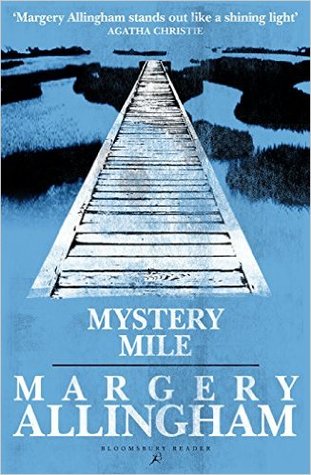
Mystery Mile by Margery Allingham

mystery-mile I often seem to be in the mood for reading mysteries at this time of year and as this one had been on my TBR for months, I found myself reaching for it the week before Christmas. I had read Margery Allingham before – one of her standalones, The White Cottage Mystery, which I enjoyed – and was curious to make the acquaintance of her most famous character, Albert Campion. Mystery Mile is the second in the Campion series, but I had been assured that it wouldn’t matter too much if I didn’t read the books in order.

Mystery Mile opens with an American judge, Crowdy Lobbett, sailing across the Atlantic with his son and daughter, having narrowly escaped several recent attempts on his life. When a further attempt takes place aboard the ship – and is thwarted thanks to a young man with a pet mouse – it is obvious that the gang who want Judge Lobbett dead are still on his trail. On arriving in England, the judge accepts the help of Albert Campion, who brings him to stay with his friends, Biddy and Giles Paget, at their home in Mystery Mile, a small, remote village on the Suffolk coast.

Campion hopes that Judge Lobbett and his children – Marlowe and Isopel – will be safe in the Paget’s house, but when a fortune teller pays a visit and shortly afterwards the village rector is found dead, it becomes clear that they are still not out of danger. Campion and his friends must try to interpret a range of intriguing clues including a red knight from a chess set and a suitcase full of children’s books if they are to solve the mystery and deal with the threat to the judge.

I had mixed feelings about my first Albert Campion novel. I loved the beginning, with the opening scenes on the ship – I thought the way in which Allingham introduced Campion into the story was excellent – and I enjoyed watching the story develop as the group arrived in Mystery Mile and one strange occurrence followed another. The setting is perfect: a mist-shrouded village surrounded by dangerous soft mud which acts like quicksand and a lonely manor house with a garden maze in which it appears that people can disappear without trace. Later, though, when the action moves to London for a while and we meet an assortment of criminals and gang members, the novel loses the quirky country-mystery feel it has at the beginning and I found that the second half of the novel has a very different tone from the first.

As for the character of Albert Campion himself, I couldn’t decide what to think of him! I liked the fact that there is clearly a lot more to him than meets the eye – his relationship with the police is never quite explained, and there are even hints that Albert Campion is not his real name. Although there was something about his constant quips and silly behaviour that I found slightly irritating, I was intrigued because it was obvious that his foolish, flippant public persona is designed to hide his true thoughts and his true intelligence. I can see why he is sometimes compared with Dorothy L. Sayers’ Lord Peter Wimsey, but based on what I’ve read of both so far, I prefer Sayers and Wimsey. Still, I’m looking forward to reading more books in this series and to meeting Albert Campion again!

My favourite books of 2016

I hope you all had a lovely Christmas! I’m back, as promised, with my list of favourite books of the year. This is a slightly shorter list than in recent years, though I’m not sure whether that means I haven’t read as many outstanding books this year or just that I’ve become more discerning and better at narrowing the choices down. Anyway, here are nine of the best, plus a few more which didn’t quite make it onto my final list…

~
magpie-murders

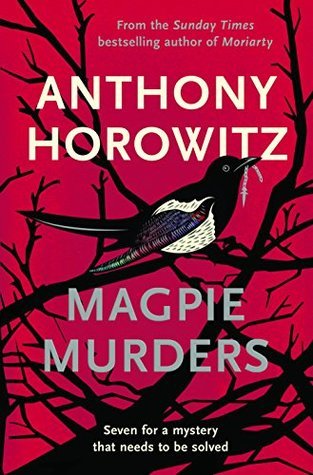
Magpie Murders by Anthony Horowitz

From my review: “This is one of the most compelling mystery novels I’ve read for a long time. Both the fictional story and the ‘real life’ one had me completely gripped, trying to figure out which clues were important and which were designed to mislead us, who had a valid alibi and who didn’t…needless to say, I failed to solve either of the mysteries and fell into most of the traps that had been set for the reader.”
Exposure

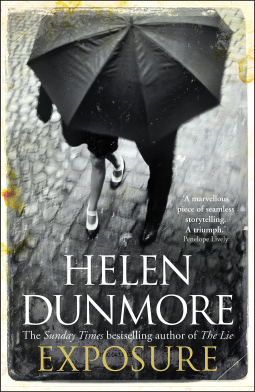
Exposure by Helen Dunmore

From my review: “The first thing I need to say is that although Exposure certainly is a Cold War spy novel of sorts, it’s also a compelling story of love and betrayal, secrets and lies, as seen through the eyes of a wonderful cast of strong and complex characters.”
Kristin Lavransdatter

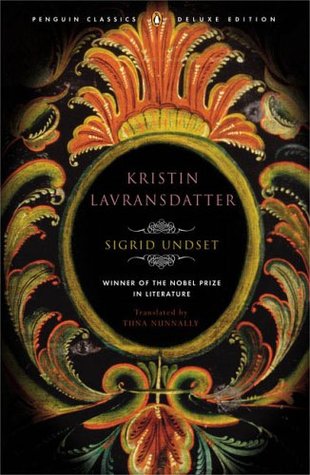
Kristin Lavransdatter by Sigrid Undset

From my review: “I have always loved long books, the sort you can bury yourself in for weeks, becoming immersed in a fully-formed fictional world and getting to know characters who, by the time you reach the final page, feel almost like personal friends. Kristin Lavransdatter, though, is more than just a ‘long’ book – it’s a very long book!”
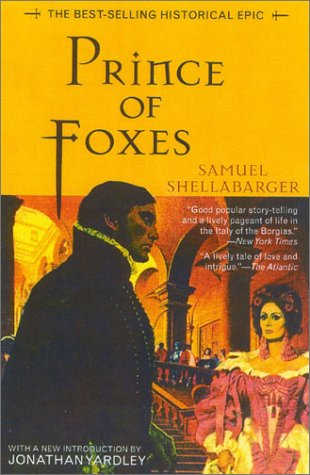
Prince of Foxes

Prince of Foxes by Samuel Shellabarger

From my review: “Not being an expert on the Renaissance (although I always enjoy reading about it and am gradually building up my knowledge) I found that I was learning a lot from Prince of Foxes as well as being entertained by it. It really is a great book!”
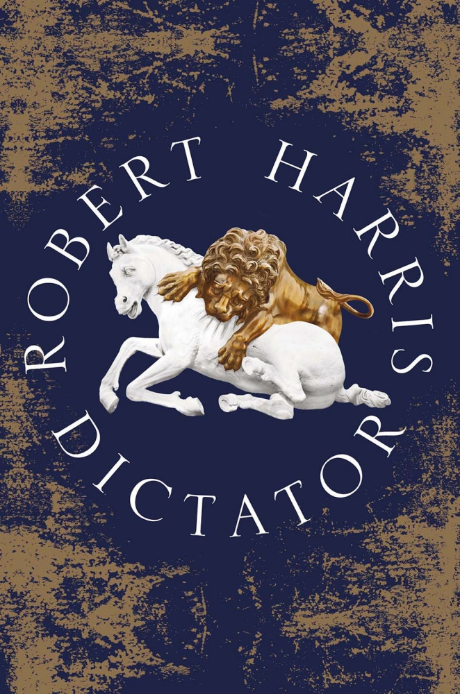
Dictator

Dictator by Robert Harris

From my review: “Until recently, I didn’t have much interest in Ancient Rome and would never have thought that I could find reading about the intricacies of Roman politics so exciting and fascinating. How wrong I was! In fact, the only negative thing I can say about this trilogy is that it has now come to an end.”
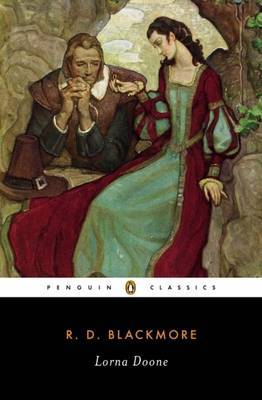
Lorna Doone

Lorna Doone by R.D. Blackmore

From my review: “A clan of murderous outlaws, a dashing highwayman, stolen jewels, family feuds, political intrigue, lots of beautiful scenery and a tender love story: R.D. Blackmore’s 1869 classic, Lorna Doone: A Romance of Exmoor, has all of these things and more.”
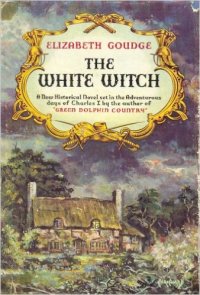
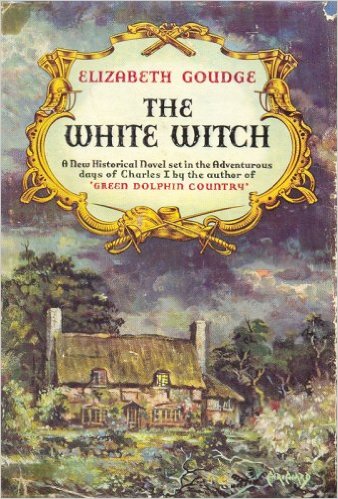
The White Witch

The White Witch by Elizabeth Goudge

From my review: “…but what I loved most about this book were the details of daily village life in the seventeenth century, the beautiful descriptions of the English countryside, and the undercurrents of magic, mystery and mythology which run throughout the story.”

Troy Chimneys

Troy Chimneys by Margaret Kennedy

From my review: “I was so impressed by the writing and by Margaret Kennedy’s grasp of the period (or periods, as there are really two) in which the story takes place. The Victorian letters felt authentic and Miles Lufton’s own narrative style felt so much like the voice of a Regency gentleman that I could easily forget I was reading a book written in the 1950s and by a woman.”
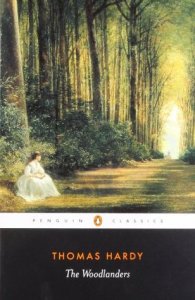
the-woodlanders

The Woodlanders by Thomas Hardy

From my review: “The Woodlanders was apparently one of Hardy’s own favourites; he is quoted as having said, ‘On taking up The Woodlanders and reading it after many years, I like it as a story best of all’. Now that I’ve read more than half of his novels, I have to say that I think I agree with him.”

~

And these books deserve a special mention too:

The Strangler Vine by MJ Carter
The Moving Toyshop by Edmund Crispin
Flush by Virginia Woolf
Revelation by CJ Sansom
Wives and Daughters by Elizabeth Gaskell
The Revelations of Carey Ravine by Debra Daley

~

Have you read any of these books? Which books have you enjoyed most in 2016?

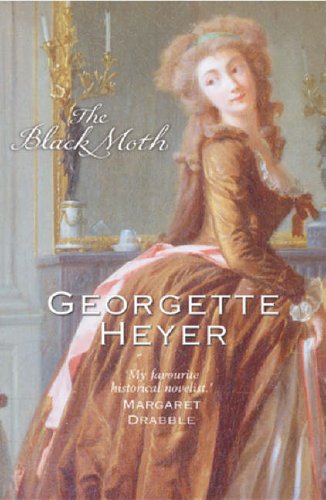
The Black Moth by Georgette Heyer

the-black-moth The Black Moth, published in 1921, was Georgette Heyer’s first novel, written while she was still a teenager. I came to it having already read lots of Heyer’s other novels because I was advised that this was probably not a good place to start and that I would appreciate it more if I was already familiar with her later work. Now that I’ve read it, I think I would agree with that; I did enjoy it (although it hasn’t become a favourite) but I thought it had a slightly different feel from her later books and didn’t seem as polished.

The story is set not in the Regency period with which Heyer is normally associated, but the earlier Georgian period. Jack Carstares, eldest son and heir of the Earl of Wyncham, is a highwayman – though not entirely out of choice. He was accused of cheating at cards six years earlier and forced to leave the country in disgrace, but now he is back in England and trying to make a living in any way he can.

At the beginning of the novel, Jack discovers that his father is dead and that he is now the rightful Earl. He is reluctant to accept his inheritance, however, preferring to leave the estate to his younger brother, Richard. Jack, you see, was never actually guilty at all; he was covering up for Richard, who was the real cheat and who said nothing, allowing his brother to take the blame. Richard is not completely without a conscience, though, and after learning of Jack’s return, he feels increasingly guilty about what he has done – to the disgust of his wife, the beautiful but selfish and petulant Lavinia.

Lavinia is the sister of the Duke of Andover, who is known as ‘Devil’ by friends and foes alike, and who reminds Richard of a black moth. When Andover and Jack Carstares both find themselves drawn to the same woman, the fates of all of these characters become closely entwined once more and a chain of events is set into motion which could change each of their lives forever.

I’ve said that The Black Moth isn’t a favourite, but I did find it fun to read. Unlike some of the later Heyers I’ve been reading recently, such as Black Sheep and Charity Girl, which are more character and dialogue driven, this one is more action-packed and swashbuckling with a plot involving highway robbery, disguises, kidnappings and duels. It’s not as romantic a story as some since the focus is on the relationship between the two brothers, Jack and Richard, although that could be because Heyer was apparently writing this novel to entertain her own younger brother. Jack’s love interest, Diana, is maybe not one of Heyer’s stronger female characters, but I did like her – and was relieved that it wasn’t Lavinia who turned out to be the heroine!

Now that I’ve read The Black Moth, I’m looking forward to reading These Old Shades, which was published several years later and uses updated versions of some of the same characters. It’s one of many Heyer novels I’m hoping to read in 2017!

~

I’m taking a break for a few days, so I would like to take this opportunity to wish all of my blog readers a Merry Christmas! I’ll be back next week with my books of the year and December summary.

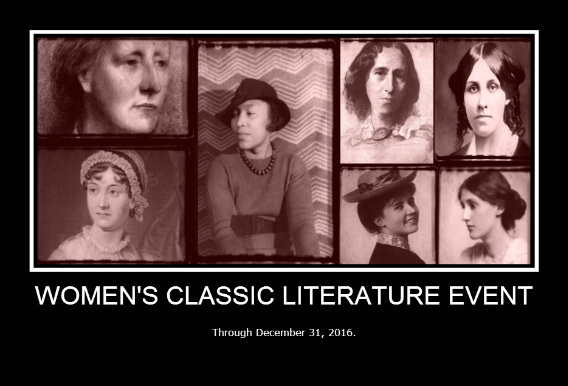
Looking back at the Women’s Classic Literature Event

Womens Classic Literature Event

During the last three months of 2015 and throughout 2016, I have been taking part in the Women’s Classic Literature Event hosted by the Classics Club. The idea was simply to read classics written by women, a classic being defined as any type of work (novels, essays, biographies etc) which was preferably published before 1960.

Here are the books I’ve read for this event which were already on my Classics Club list:

My Ántonia by Willa Cather
Jane Eyre by Charlotte Brontë
Wide Sargasso Sea by Jean Rhys
To the Lighthouse by Virginia Woolf
Mary Anne by Daphne du Maurier
Kristin Lavransdatter by Sigrid Undset
The Heir of Redclyffe by Charlotte M. Yonge
Wives and Daughters by Elizabeth Gaskell
The Romance of the Forest by Ann Radcliffe
The Mill on the Floss by George Eliot

Wide Sargasso Sea was published in 1966, but I think most people would agree that it’s a classic!

There are also two more books by Woolf which I read for Ali’s #Woolfalong:

Flush by Virginia Woolf
A Room of One’s Own by Virginia Woolf

I can’t say that I loved all of these books, but I did find them all interesting, worthwhile reads. I particularly enjoyed Kristin Lavransdatter, Wives and Daughters, Flush and my re-read of Jane Eyre.

However, I have also read other books by women which may or may not be considered classics in the same way as the books above. Because they fit the Classics Club’s definition of a classic for this event, I’m going to mention some of them here.

Non-Combatants and Others

* I’ve read books by authors who are new to me – Non-Combatants and Others by Rose Macaulay, The Nutmeg Tree and Cluny Brown by Margery Sharp and Mauprat by George Sand – and by authors I’ve read before – Amberwell by D.E. Stevenson, Troy Chimneys by Margaret Kennedy and Poor Caroline by Winifred Holtby.

regency-buck-heyer

* I’ve read some historical fiction published before 1960: The White Witch by Elizabeth Goudge, The Rider of the White Horse by Rosemary Sutcliff and several novels by Marjorie Bowen, Dora Greenwell McChesney and Georgette Heyer.

A Shilling for Candles

* I’ve read some classic crime, including A Shilling for Candles by Josephine Tey, Death in Berlin by MM Kaye and two Agatha Christies (Hercule Poirot’s Christmas and The Labours of Hercules).

a-chelsea-concerto

* And one non-fiction book – A Chelsea Concerto by Frances Faviell.

~

So, that sums up my reading over the year-and-three-months of this event! Have you been participating too? What are the best classics written by women that you’ve read recently?

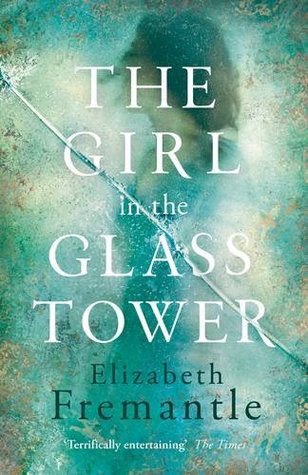
The Girl in the Glass Tower by Elizabeth Fremantle

the-girl-in-the-glass-tower One of the things I like about Elizabeth Fremantle’s historical novels is that they deal with women whose stories aren’t told very often: Penelope Devereux in Watch the Lady, Katherine and Mary Grey in Sisters of Treason and Katherine Parr in Queen’s Gambit. In this, her fourth novel, she writes about two more – Arbella Stuart and Aemilia Lanyer.

The Girl in the Glass Tower is set towards the end of the Elizabethan period, with England waiting anxiously for Elizabeth I, growing old with no children of her own, to name her heir. Born in 1575, Lady Arbella Stuart is the granddaughter of Margaret Douglas, Henry VIII’s niece, and therefore a possible claimant to the throne. Her other grandmother, the formidable and ambitious Bess of Hardwick, Countess of Shrewsbury, is determined to make this possibility a reality – and so Arbella grows up in isolation at Hardwick Hall, sheltered and protected from those who might try to plot against her.

Being close to the throne, however, doesn’t bring Arbella happiness and when her cousin, James VI of Scotland, is finally named as Elizabeth’s successor, she feels that her whole life has been wasted waiting for something that now looks unlikely to happen. Sadly, though, there is still more trouble ahead and when she makes the decision to marry William Seymour, who himself has Tudor blood, Arbella finds herself imprisoned again, this time in the Tower of London.

Arbella’s story alternates with the story of the poet Aemilia Lanyer, author of the poetry collection Salve Deus Rex Judaeorum. Aemilia (whom I have read about previously in Dark Aemilia by Sally O’Reilly) is sometimes considered to have been the ‘Dark Lady’ of Shakespeare’s sonnets, but this theory is not the focus of this novel, which concentrates on other aspects of Aemilia’s life instead: how she coped financially after the end of her affair with her rich lover, Lord Hunsdon, and the death of her husband, Alfonso; her work as a poet and as a teacher; and her relationship with her son, Henry.

For both women’s stories, Elizabeth Fremantle sticks to the known historical facts as far as possible, but where details are not known – particularly where Aemilia is concerned – she takes the opportunity to use her imagination. There is no evidence that the two women were friends, for example (although they would probably have been at court at the same time and Aemilia did dedicate one of her poems to Arbella), but Fremantle imagines that they were and that their lives became closely linked.

I loved following Arbella’s story – I’d only read about her once before, in Maureen Peters’ The Queenmaker, which is written from Bess of Hardwick’s perspective, so it was interesting to see things from another point of view, with Bess almost as a villain, controlling and manipulating her granddaughter’s life. I found Aemilia’s sections of the book slightly less absorbing, maybe because I didn’t like the device Fremantle uses of having Aemilia looking back on her relationship with Arbella from a point several years into the future. Still, I thought her story worked well alongside Arbella’s and provided an interesting contrast; unlike Arbella, whose destiny is always in the hands of other people, Aemilia has a much greater degree of freedom, her own struggle being mainly for financial independence and the respect of her son.

I also appreciated the way Fremantle pulls aspects of her previous novels together in this one – Penelope Devereux, the Earl of Essex’s sister from Watch the Lady, has a role to play, and the memory of Katherine Grey from Sisters of Treason is a strong presence in Arbella’s life. The Girl in the Glass Tower is a sad novel, but one that I enjoyed reading – and now I’m wondering who Elizabeth Fremantle will choose to write about next.

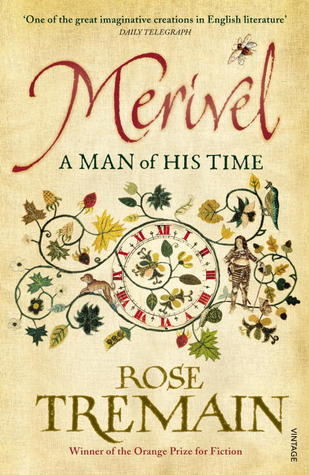
Merivel: A Man of His Time by Rose Tremain

merivel I wasn’t planning to read Merivel so soon after finishing Rose Tremain’s Restoration, but when I saw a copy on the library shelf a few days later, I couldn’t resist bringing it home so I could catch up with Robert Merivel again and see how he was getting on. I didn’t expect this book to be as good as Restoration, as sequels written many years later often aren’t, so I was surprised to find that I actually preferred this one. Looking at other reviews, I can see that I’m in the minority with that opinion, but I think the reason I liked this book better was because I liked Merivel himself better.

At the beginning of Merivel, our narrator, Robert Merivel, is back at his Norfolk estate of Bidnold, where he returned at the end of Restoration. It’s 1683 and sixteen years have gone by since we last saw him; he’s now a middle-aged man, very aware that time is slipping away and bringing changes to himself and the people around him. His faithful servant, Will, is getting old and is struggling to carry out his duties, while his little girl, Margaret, is now a young lady and planning to spend Christmas in Cornwall with friends. Facing the prospect of being left at home alone, Merivel decides to make the most of the time remaining to him and sets off to Versailles – with a letter of introduction from his friend, King Charles II – in the hope of finding some excitement and intellectual stimulation.

Unfortunately, Versailles fails to live up to Merivel’s expectations; he finds little to admire at the French court and it’s not long before he’s on his way home to England. Apart from a brief romance with an attractive botanist, Louise, and an invitation to visit her at her father’s estate in Switzerland, the only thing Merivel has to show for his time in France is a large bear called Clarendon whom he has rescued from captivity and brought back to Norfolk. On arriving at Bidnold, however, Merivel discovers that he has more to worry about than Louise and his bear: his daughter, Margaret, is seriously ill and requires all of his skills as a physician if she is to survive.

Although there are some humorous scenes in this book, I found this quite a sad and sombre novel, especially in comparison to the liveliness of Restoration. The passing of time is a major theme (it’s no coincidence that Merivel shares lodgings in France with a clockmaker) and there’s always a sense that things are coming to an end, that Will, Merivel – and even the King – won’t live forever. Merivel is not so much searching for his place in the world as he was in the previous book, but trying to understand himself and come to terms with his own nature. He still gets things wrong sometimes, he still makes some poor decisions, and has a tendency to neglect the things that are most important, but he also has a good heart and I found him completely endearing! I remember thinking he was a very frustrating character in Restoration, but in this book I had more patience with him because I could see that he was doing his best.

Merivel is a book with many layers, giving the reader a lot to think about. Even the headings of the four sections – The Great Enormity, The Great Captivity, The Great Consolation and The Great Transition – have a significance which is worth considering. But this is also a very entertaining novel. The pace is quite leisurely, but there’s always something happening: a duel, an encounter with highwaymen, an illness, or a visit from the King. The mood of the late 17th century is captured beautifully; Tremain even gives some of the nouns capital letters to enhance the feeling of authenticity, something which I thought might be irritating at first but which, after a few pages, I decided I liked.

The ending, when it came, was not entirely unexpected, but I was still a bit surprised because I think a lot of authors would have chosen to end Merivel’s story in a different, happier way. Considering the themes of this novel, though, I thought it was the perfect conclusion. I loved revisiting Merivel’s world and I would definitely recommend this book to anyone who has read and enjoyed Restoration. It could probably be read as a standalone but I think you’ll get more out of it if you’ve been following Merivel’s story from the beginning.

This book also counts towards my Reading the Walter Scott Prize project. It was shortlisted in 2013.