Behind the Scenes at the Museum by Kate Atkinson

behind-the-scenes-at-the-museum This was Kate Atkinson’s first novel, published in 1995, and yet it’s one of the last of her books that I’ve read. Having read and loved her two most recent books, Life After Life and A God in Ruins, as well as Human Croquet and three of the Jackson Brodie mysteries, I was curious to see what her earliest work was like – but I can honestly say this doesn’t feel like a first novel. It’s ambitious, accomplished, and covers some of the themes and ideas she would return to again in later books.

Behind the Scenes at the Museum is narrated by Ruby Lennox; we first meet her in 1951 while she’s still in the womb, before following her through birth, childhood and into adulthood. Along the way we get to know Ruby’s parents – the irresponsible, lying, cheating George and the long-suffering Bunty – and her two older sisters, naughty Gillian and quiet Patricia. They’re not a particularly happy family but, at least at first, they are leading a fairly normal life in their rooms above the pet shop they own in York. When she is four years old, Ruby is sent away to stay with her Aunt Babs for a while; she’s not sure why, and it’s after this that everything seems to start going wrong.

Each chapter narrated by Ruby is followed by another chapter (which Atkinson calls Footnotes but are usually as long, if not longer than, the actual chapters) telling the story of the previous generations of Ruby’s family. These Footnotes are not necessarily given in chronological order, so in one we might read about Ruby’s great-grandmother, Alice, before jumping forward in time to meet Bunty as a child, and then back again for an episode from Bunty’s mother’s teenage years. If this all sounds very complicated, that’s because it is! I would highly recommend drawing a quick family tree to refer to as you read; that’s what I did and I would have struggled without it.

The quotes on the back cover of the book describe it as ‘hilarious’ and ‘outrageously funny’. I don’t think I would go that far, but Kate Atkinson does have a great sense of humour and there are certainly some very funny scenes in this book (I particularly enjoyed the family holiday in Scotland). However, I also found this quite a sad book and there were a few moments, especially near the end, which brought tears to my eyes. Ruby and her family have to endure lots of disasters and tragedies over the years – deaths, illnesses, fires, betrayals – and so do members of the earlier generations. Sometimes we know in advance what is going to happen – Ruby tells us very early in the book how a certain character is going to die – but in other cases we are taken by surprise.

All of this made me think about the importance of perspective in the novel. Ruby is a young child throughout most of this book and her lack of understanding and awareness make her an unreliable narrator at times. Had the story been written from Bunty’s perspective, for example, or Patricia’s, we would have been given a completely different impression of most of the people and incidents we only have the chance to see through Ruby’s eyes. Some revelations in the final chapters, not just about Ruby but about other characters too, had me flicking back through the book to see if there had been clues that I’d missed – and although there were a few, I think it was simply that I had placed too much trust in Ruby as a narrator instead of reading between the lines and thinking for myself.

Behind the Scenes at the Museum is an excellent novel and as with so many of the other Kate Atkinson books I’ve read, I didn’t want to put it down. I only have a few more left to read now – Emotionally Weird, Not the End of the World and Started Early, Took My Dog – and am looking forward to all three.

Top Ten Tuesday: Ten authors new to me in 2016

Top Ten Tuesday Today’s Top Ten Tuesday topic (hosted by The Broke and the Bookish) is: Top Ten New-To-Me Authors I Read For The First Time In 2016. I’ve discovered lots of new authors this year, so I thought it would be interesting to join in this week and list some of them. Here, then, are ten books by authors I’ve read for the first time in 2016:

~

1. Jane Smiley

Some Luck

Some Luck is the first in a trilogy following one American family over a period of one hundred years. I read this book in February and have the second one, Early Warning, on my shelf ready to start soon. I’m hoping I haven’t left it too long and will be able to pick up all the threads of the story again.

~

2. George Sand

Mauprat

I read Mauprat in April for the Women’s Classic Literature Event and really enjoyed it – I remember being surprised as it wasn’t quite what I had expected Sand’s work to be like. I will be reading more!

~

3. Jules Verne

Around the World in 80 Days

I had never read anything by Jules Verne until this year, but I found Around the World in Eighty Days a fun, entertaining read and am now keeping Verne in mind for future reading.

~

4. Rosemary Sutcliff

The Rider of the White Horse

I can’t believe it has taken me so long to get around to reading Rosemary Sutcliff! The Rider of the White Horse wasn’t the book I was intending to start with, but I liked it enough to want to read more.

~

5. Charlotte M Yonge

The Heir of Redclyffe

I love Victorian novels and The Heir of Redclyffe was a book I had been meaning to read for a long time. It didn’t become an instant favourite, but I did like it and will consider reading more books by Yonge in the future.

~

6. Patrick Gale

A Place Called Winter

I probably wouldn’t have read A Place Called Winter if it hadn’t been on the list for my Walter Scott Prize Project, but I’m so pleased I did read it, because I loved it. Patrick Gale’s other books sound quite different from this one, but I’m still interested in trying them.

~

7. Debra Daley

The Revelations of Carey Ravine

I had the pleasure of reading and reviewing The Revelations of Carey Ravine for Shiny New Books earlier this year. I loved it and am looking forward to going back and reading Debra Daley’s earlier novel, Turning the Stones.

~

8. Lesley Downer

the-shoguns-queen

The Shogun’s Queen is one of a quartet of novels set in 19th century Japan. I found it fascinating and am sure I’ll be reading the other three at some point.

~

9. Edmund Crispin

the-moving-toyshop

The Moving Toyshop was another book I’d been meaning to read for years – and another one that I loved. This is one of Crispin’s Gervase Fen mysteries and luckily there are ten more books in the series for me to look forward to.

~

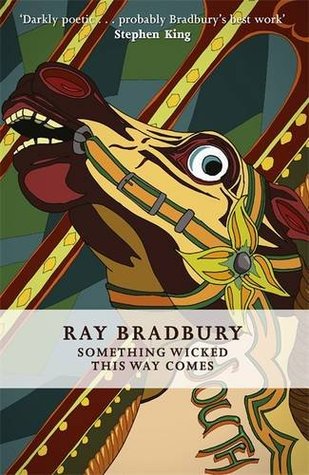
10. Ray Bradbury

something-wicked-this-way-comes

I read Something Wicked This Way Comes for a readalong hosted by Lory. Although I wasn’t sure if Ray Bradbury would be my sort of author, I enjoyed this one much more than I’d expected to and would be happy to read more of his books.

~

So, these are ten authors who were new to me in 2016. Are they new to you too or have I listed any of your favourites? Which of their books would you recommend I try next?

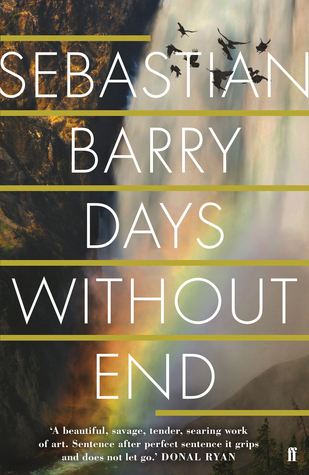
Days Without End by Sebastian Barry

days-without-end Sebastian Barry is one of my favourite Irish authors; having enjoyed his last three novels, The Temporary Gentleman, On Canaan’s Side and The Secret Scripture, I began to read his latest one, Days Without End, not really knowing or caring what it was about. I knew I could count on Barry to have produced another beautifully written novel and I was sure that would be enough. Unfortunately, it wasn’t – I still found things to like and to admire, but this just wasn’t my sort of book.

Thomas McNulty and John Cole are “two wood-shavings of humanity in a rough world” who meet in Missouri as teenagers while sheltering from the rain together under a hedge. It’s the 1850s and Thomas, having lost his family to the famine in Ireland, has fled to America in search of a better life. John, who was born in New England, is the first friend Thomas has made in his new country and the two quickly become inseparable. The first thing they need to do is find employment and here their youthful good looks prove useful when a saloon owner offers them a job as dancers, on the condition that they dress up in women’s clothes to entertain the local miners.

At seventeen, considering themselves too old to continue their dancing act, Thomas and John leave the saloon and join the US Army. Fighting first in the Indian Wars and later in the Civil War (on the Union side), it’s a difficult life and the two young soldiers face dangers and obstacles ranging from hunger and illness to extreme weather and encounters with Native Americans. Throughout all of this there are two things that sustain them: their love for each other and their relationship with Winona, a young Sioux girl separated from her family during a raid.

Days Without End is narrated by Thomas McNulty and this provides a link with several of Barry’s previous novels which tell the stories of other members of the McNulty family (he has also written several which focus on another Irish family, the Dunnes). Thomas, though, is obviously from an earlier generation of McNultys; the other novels are set in the 20th century, which makes this one feel a bit different. Another difference is that this book is set in the American West rather than Ireland – and I think this is probably why I had a problem. Westerns are not a genre I would usually choose to read (although I did love Patrick DeWitt’s The Sisters Brothers) and too much of this novel just didn’t interest me at all.

If the setting does sound of interest to you, then I would have no hesitation in recommending this book even though I didn’t particularly enjoy it myself. Sebastian Barry is a very talented writer and there are some beautiful passages in this novel; the poetic narrative voice didn’t always sound very convincing coming from the down-to-earth soldier, Thomas McNulty, but that didn’t really matter – the beautiful, poetic writing was the reason I chose to read this book, after all.

What I did struggle with was reading page after page of descriptions of army life, buffalo shooting expeditions and battles against the Sioux. I don’t think the balance between these aspects of the story and the more personal aspects was quite right and I very nearly gave up on the book halfway through. I kept reading mainly because I wanted to know what would happen to Winona – and I was rewarded with an interesting and dramatic ending to her storyline.

Days Without End has its good points and its bad points, then, and I think my disappointment with it is entirely due to my personal reading tastes. I shouldn’t have assumed that just because I’ve loved everything else I’ve read by Sebastian Barry I would love this one too, despite a setting and subject which didn’t appeal to me. I’m still looking forward to going back and exploring his earlier novels; I have a copy of Annie Dunne, which sounds much more like the kind of book I would enjoy, so that’s probably the one I’ll be reading next.

Thanks to Faber & Faber for providing a copy of this book via NetGalley for review.

The Woodlanders by Thomas Hardy

the-woodlanders I love Thomas Hardy but have been resisting the temptation to rush through his novels too quickly. I’m dreading there being none left for me to discover for the first time, so since reading Tess of the d’Urbervilles in 2010, I have been limiting myself to one or two a year. It’s been a while since my last Hardy, The Return of the Native, so a few weeks ago I decided it was time to read another one.

The Woodlanders, published in 1887, is set in the small woodland community of Little Hintock. For generations, the people of Little Hintock have made their living from the trees around them. The timber merchant George Melbury, however, is keen for his daughter, Grace, to experience life outside the woodlands and so he sends her away to be educated. The novel opens as she returns to the village after several years of absence and finds herself looking at her old home through new eyes.

Although Grace is promised to Giles Winterborne, a neighbouring woodsman, now that she has become used to a different way of life she can’t help noticing his lack of sophistication, causing her father to question whether the marriage he had planned for her is still appropriate. Grace’s return to Little Hintock coincides with the arrival of a newcomer – Edred Fitzpiers, a young doctor whom Melbury decides will make a much more suitable husband for his daughter than Giles. Despite his good intentions, however, Melbury’s meddling only succeeds in making everyone unhappy in typical Thomas Hardy fashion!

One thing I love about Hardy’s books is that although most of them are set in his fictional Wessex, each one covers a different aspect of Wessex life, from the rural farms of Far From the Madding Crowd and the country fairs and markets of The Mayor of Casterbridge to The Return of the Native’s wild and beautiful Egdon Heath. In The Woodlanders, we see how the lives of the characters have become defined by the woods which surround them, we see Giles Winterborne cutting down trees and pressing apples to make cider, and we see his neighbour, a young woman called Marty South, stripping bark from branches and shaping wood into spars to sell for thatching. It’s the two outsiders in the story – the newly arrived Dr Fitzpiers and the lady of the manor, Felice Charmond – who disrupt the harmony of life in Little Hintock, and Grace who is caught between the sophisticated, cultured world they represent and the simple traditions of her childhood home and friends.

Although this book isn’t as dramatic or tragic as some of Hardy’s others, there were still some scenes near the end that moved me to tears and others that had me holding my breath – and I found the final page beautifully sad and poignant. Not everyone gets the happy ending I would have liked, but that’s true to life, I suppose, and I don’t really expect happy endings from Hardy anyway.

The Woodlanders was apparently one of Hardy’s own favourites; he is quoted as having said, “On taking up The Woodlanders and reading it after many years, I like it as a story best of all”. Now that I’ve read more than half of his novels, I have to say that I think I agree with him. It’s not as powerful or as heartbreaking as Tess or Jude the Obscure, for example, but I really enjoyed it and would definitely include it in my top two or three Hardy novels read so far.

My Commonplace Book: November 2016

A summary of this month’s reading, in words and pictures.

commonplace book
Definition:
noun
a notebook in which quotations, poems, remarks, etc, that catch the owner’s attention are entered

Collins English Dictionary

~

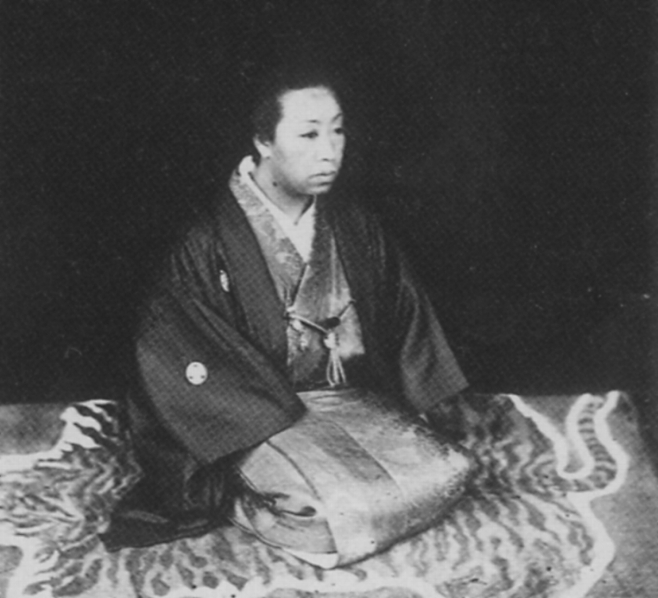
tensyoin

“Barbarians,” she murmured in tones of disbelief. “Barbarians.” Perhaps if she said the word often enough she could defuse the threat. “But in that case…we’re finished. We’re all dead.” It was just as Lord Nariakira had warned. These were not gentle Hollanders. These were other beings, those nameless hordes who’d rampaged across China. Barbarians like those didn’t come in peace. They threatened their lives, their world, everything they knew.

Things were spinning around her. The world was turning upside down. But she couldn’t help feeling curious as well. She wished she could catch a glimpse of these exotic creatures with her own eyes.

The Shogun’s Queen by Lesley Downer (2016)

~

“And then do ye wait and see more; there’ll be plenty of opportunity. Time enough to cry when you know ’tis a crying matter; and ’tis bad to meet troubles half-way.”

The Woodlanders by Thomas Hardy (1887)

~

My family were not readers, but Xavier Mountstuart’s writings had inspired and transported me. I had devoured The Courage of the Bruce and The Black Prince, then graduated to the Indian writings: The Lion of the Punjab, of course, and the tales of bandits and rebels in the foothills of Nepal. I had read of white forts and marble palaces and maharajas’ emeralds; of zenanas and nautch girls in the Deccan; of the sieges and jangals. I had even read a short tract about Hindooism, vegetarianism and republicanism, which had left me a little confused. Mountstuart seemed to me the very acme of Byronic manhood. It was not simply that he was a poet and writer of genius, but that he had lived his writings.

The Strangler Vine by MJ Carter (2014)

~

highwayman

“Now, what mean you by that?”

“Just that I am a common highwayman, Miss Betty.”

She stared at him for a moment, and then resumed her work.

“You look it.”

John cast a startled glance down his slim person.

“Is that so, madam? And I rather flattered myself I did not!”

The Black Moth by Georgette Heyer (1921)

~

“No, I don’t care for novels,” she said, shaking her head. “I’ve never really understood them, if I’m honest.”

“In what way?” I asked, confused by how the concept of the novel could be a difficult one to understand. There were some writers, of course, who told their stories in the most convoluted way possible — many of whom seemed to send their unsolicited manuscripts to the Whisby Press, for instance — but there were others, such as Jack London, who offered their readers such a respite from the miserable horror of existence that their books were like gifts from the gods.

The Absolutist by John Boyne (2011)

~

britannia

Frances struck an attitude, sitting upright with head poised high and left hand outstretched as though she grasped an invisible weapon. “Of course, when I am really posing for Roettier, the engraver, I shall wear a helmet and hold a trident and I shall have flowing, Grecian robes. It was altogether the King’s idea, but James of York thought it should be called Britannia. To represent the nation’s might.”

Lady on the Coin by Margaret Campbell Barnes (1963)

~

“My thoughts are my own,” I answered: “and though you keep my person prisoner, these are beyond your control.”

Redgauntlet by Sir Walter Scott (1824)

~

“Not to my knowledge, sir,” said the Viscount.

“I’m glad to hear it! But if you had agreed to the marriage I planned for you a son of yours might have been sitting on my knee at this moment!”

“I hesitate to contradict you, sir, but I find myself quite unable to believe that any grandchild attempting — at this moment — to sit on your knee would have met with anything but a severe rebuff.”

Charity Girl by Georgette Heyer (1970)

~

aemilia-lanyer-poetry

She has a soft spot for little Peter; he had asked why he needed to learn to read when he first arrived.

“Because without reading you only have half a life,” she’d said, watching his puzzled face. “Reading will open doors for you to new worlds.” He had looked at her in wonder then.

“Like the men who sail to the Americas?”

“Yes, something like that.”

The Girl in the Glass Tower by Elizabeth Fremantle (2016)

~

Favourite books this month: The Woodlanders and The Strangler Vine

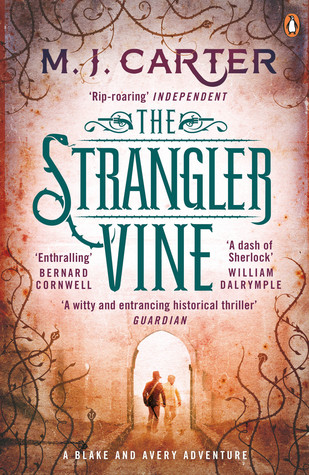
The Strangler Vine by MJ Carter

the-strangler-vine I love a good historical mystery and when this one was recommended to me recently (thank you, Pam!) I remembered that I already had a copy on my Kindle and couldn’t leave it to languish there any longer. Having read it, I wish I’d found time for it earlier – it’s an excellent book – but on the positive side, there are now two more in the series which I can read sooner rather than later.

The Strangler Vine is set in India in 1837, when large areas of the country were ruled by the British East India Company. Our narrator is William Avery, a young officer with the Company’s army. Originally from Devon, he has grown up reading the work of Xavier Mountstuart, a fictional author and poet whose writings sound similar to Rudyard Kipling’s and which have given him a romanticised view of India. Having spent nine months in Calcutta, however, he is starting to feel disillusioned with “the monstrous climate, the casual barbarities of the native population and the stiff unfriendliness of the European society”.

Disappointed that he still hasn’t been summoned to join his cavalry regiment in North Bengal, Avery is growing frustrated and bored – until the day he is asked to accompany an older officer, Jeremiah Blake, on a special mission. It seems that his literary hero, Mountstuart, has gone missing while carrying out research for a new poem and Avery and Blake have been given the task of finding him.

The Strangler Vine is a wonderful, fascinating novel; there are so many things I enjoyed about it that I’m not sure where to start! First of all, there’s the relationship between the two main characters, Avery and Blake, who, like all good mystery-solving duos, are two very different people who complement each other perfectly. Young, naïve and loyal to the Company, Avery is more instantly likeable and although he can be slow to pick up on clues, the fact that he never seems to know any more than the reader does makes him the perfect character to guide us through the novel. There’s a sense that where Indian culture, politics and history are concerned, Avery is learning as he goes along, which means background information tends to be given in large chunks rather than being lightly woven into the story. This style won’t appeal to every reader, but I found it all so interesting that it didn’t bother me.

Jeremiah Blake is a more unusual and intriguing character; although he still has connections to the East India Company, he no longer actively works for them – his knowledge of Indian languages and marriage to an Indian woman have aroused the distrust of the other officers who consider him to have ‘gone native’. His attitude towards Avery is abrupt, rude and dismissive and because we only see him through Avery’s eyes, he is a complete enigma at first. Eventually his true character starts to be revealed, but I was still left with the feeling that we have more to discover about Blake.

The mystery element of the novel is quite complex and what seems to Avery at first to be a straightforward search for a missing man soon develops into something with much deeper implications. It all revolves around the cult of Thuggee – organised gangs of thieves and murderers who worship the Goddess Kali and who are causing widespread fear and panic amongst the British in India. Mountstuart is thought to have been researching the Thugs at the time of his disappearance and so Avery and Blake, following his trail, also become drawn into the mystery and controversy surrounding the cult.

I loved The Strangler Vine; apart from the aspects of the novel I’ve already mentioned, I also really liked MJ Carter’s writing; it’s intelligent and detailed, she brings the setting vividly to life and, while I can hardly claim to be an expert on the India of the 1830s, if there were any inaccuracies or anachronisms I didn’t notice them. I can’t wait to join Avery and Blake for another adventure in The Printer’s Coffin.

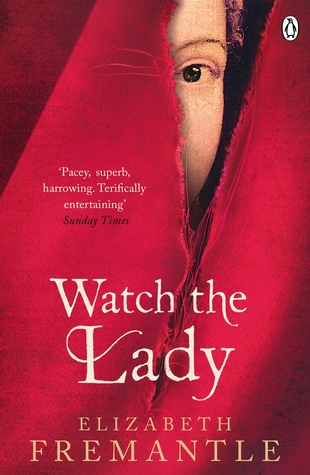
Watch the Lady by Elizabeth Fremantle

watch-the-lady I’ve fallen behind with Elizabeth Fremantle’s books; having read Queen’s Gambit and Sisters of Treason shortly after they came out, the publication of her next book – Watch the Lady – seemed to escape my notice and now there’s also a fourth novel, The Girl in the Glass Tower. I discovered that my library had both and decided that Watch the Lady, her novel about the 16th century noblewoman Penelope Devereux, would be the next one I read.

Penelope’s story is one that is not often told; she has appeared as a minor character in other books I’ve read set during the Elizabethan period, such as Elizabeth I by Margaret George, but this is the first novel I’ve come across in which she is the main character.

Penelope is related to Elizabeth I through her mother, Lettice Knollys, a granddaughter of Mary Boleyn, Elizabeth’s aunt. Lettice has incurred the Queen’s displeasure by secretly marrying Robert Dudley, the man said to be Elizabeth’s own love interest, and has been exiled from court. Lettice’s children, however, are still welcome and Penelope’s handsome, dashing brother, Robert Devereux, Earl of Essex, has become a particular favourite of Elizabeth’s. As Essex rises higher and higher in the Queen’s favour, his enemies plot to pull him down and Penelope must do everything in her power to protect her brother and keep the family’s ambitions alive.

While Essex’s turbulent career, which is marked by military defeats, trials and banishments and ends in the Essex Rebellion of 1601, is followed in detail, Penelope herself is the real focus of the novel. Penelope is considered to be one of the beauties of the Elizabethan court and the inspiration for the poet Philip Sidney’s Astrophil and Stella sonnet sequence. The real nature of her relationship with Sidney is uncertain, but Fremantle gives one interpretation here. Penelope’s unhappy marriage to Lord Rich and her later love for Charles Blount are also described, but I was less interested in these parts of the story and I don’t think the balance between the romance and the politics in this book was quite right for me.

I did like the way Penelope is portrayed – a strong, intelligent and ambitious woman, but one who is still convincing as an Elizabethan woman, rather than feeling like a modern day character dropped into a historical setting – and Essex, if not very likeable, is always interesting to read about. Elizabeth’s adviser, Robert Cecil, however, is very much the villain of the novel; there are several chapters written from his perspective and from the beginning he is shown to be working against Essex and his family, acting on his father’s advice that people need someone to hate and that if he can learn to be that hated person he will be indispensable. I think Cecil does a good job of making himself hated, and it wasn’t until near the end of the book that I began to have some sympathy for him.

I enjoyed reading Watch the Lady and getting to know Penelope Devereux, but this is not my favourite of the three Elizabeth Fremantle novels I’ve read so far, partly because, as I’ve mentioned, Penelope’s love life didn’t interest me all that much, and also because I prefer the periods of Tudor history covered in Queen’s Gambit and Sisters of Treason. I’ve now moved on to The Girl in the Glass Tower and am finding it a much stronger novel; my full thoughts on that one should be coming soon.