The Absolutist by John Boyne

the-absolutist It’s 1919 and twenty-one-year-old Tristan Sadler is home from the war. He knows he is lucky to have survived when so many like him didn’t – people like his friend and fellow soldier, Will Bancroft. John Boyne’s The Absolutist follows the stories of Tristan and Will, two very different men with very different attitudes towards life, death, love and war.

As the novel opens, Tristan is taking a train from London to Norwich where he plans to visit Will’s sister, Marian, and return the letters she sent to Will during the war. This is not the only reason for his visit, however – he has been carrying a terrible secret and is hoping to unburden himself to Marian so that they can both move on and face the future.

Through a series of long flashbacks, we witness Tristan’s first meeting with Will during their training at Aldershot in 1916 and then watch their relationship develop as they are sent to France and endure the horrors of life in the trenches. This story unfolds alongside the ‘present day’ storyline set in 1919, with Tristan’s big secret kept concealed until near the end of the book, allowing suspense and tension to build throughout the novel. There’s already plenty of tension anyway, of course, because this is a novel which doesn’t shy away from describing the horror and the uncertainty of war and although we know from the start that Tristan survives and Will doesn’t, we don’t know exactly how Will’s life ended or what the fate of the other characters in the story might be.

I’ve read several of John Boyne’s other novels (and particularly loved This House is Haunted, Crippen and A History of Loneliness) so I started this one with high hopes. I thought it was a fascinating and moving read which I enjoyed almost – but not quite – as much as the three I’ve just mentioned. The period leading up to, during and just after the First World War is one that I always like to read about and this novel covers many different aspects of the war and its aftermath. What I found particularly interesting was the exploration of what it meant to be a ‘conscientious objector’ or an ‘absolutist’ during the war, how they were treated by the other soldiers and how they were viewed by the public. The difference between the two is that conscientious objectors, despite refusing to fight, would often agree to fill other roles, such as stretcher bearers, but absolutists were unwilling to have any involvement at all.

The one thing that spoils The Absolutist, in my opinion, is some of the language Boyne uses, especially in the dialogue, which doesn’t feel appropriate to the time period. Other reviews of this book have mentioned inaccuracies regarding the military terminology too, although I would never notice things like that myself. It’s a shame, considering the care and attention to detail Boyne has obviously put into his recreations of life in the trenches and his treatment of other important issues of the period such as women’s suffrage and attitudes towards homosexuality. Still, I had no major problems with this novel and found it a powerful and thought-provoking read. I still have plenty of John Boyne’s earlier books left to explore and am looking forward to his new one, The Heart’s Invisible Furies, coming in 2017.

Redgauntlet by Sir Walter Scott

redgauntlet Redgauntlet, one of Scott’s Waverley novels, is set in Scotland and the north of England in 1765, twenty years after the failed Jacobite Rising of 1745. Although the rising was unsuccessful and ended in disaster for Charles Edward Stuart and his supporters, there were still those who dreamed of restoring the exiled Stuarts to the throne. Redgauntlet centres around a fictional third Jacobite Rebellion and the lives of two innocent young men who accidentally become caught up in the plot.

The novel is made up of a mixture of letters, journal entries and first person narrative written from the perspectives of Darsie Latimer and his friend, Alan Fairford. Darsie, an orphan, has grown up in Scotland knowing very little about his family background, aware only that he has been forbidden to cross the border into England until he turns twenty-five, which is also when he will come into his inheritance. The reason for this unusual condition is unknown to Darsie but eventually becomes clear as the story unfolds and the truth about his past is revealed.

Kidnapped on a fishing expedition to the Solway Firth, Darsie discovers that he has fallen into the clutches of the mysterious Hugh Redgauntlet, a former Jacobite who seems to know more about Darsie than Darsie does himself. Help is on its way, however – when Alan Fairford, who is completing his legal studies in Edinburgh, receives a message from a beautiful young lady known only as Green Mantle, warning him that Darsie is in danger, he sets off at once in search of his friend.

Redgauntlet is the third Scott novel I’ve read (the others were Ivanhoe and The Heart of Midlothian) and my favourite so far. In fact, I was ready to name it one of my books of the year until the plot began to fizzle out towards the end, which meant it lost its place on my list. Up to that point, though, I was completely engrossed in the adventures of Darsie and Alan. No, it’s not a particularly easy book to read, and yes, there are some long, dry passages where Scott discusses the politics of the period or describes obscure points of Scottish law, but otherwise I loved it. I loved the setting, the characters, the air of mystery and foreboding, the exciting plot and the way the novel was structured to incorporate different forms of writing and different viewpoints. I particularly enjoyed reading the letters sent between Darsie and Alan in which the personality of each man – the practical, unimaginative Alan and the romantic, adventurous Darsie – come through strongly.

The problem I had with this novel was with the storyline surrounding the third Jacobite Rising. Knowing that it never happened historically took away some of the suspense and Scott didn’t manage to convince me that Redgauntlet’s schemes would ever come to anything. I enjoyed the build-up, but when the rebellion started to come to the forefront of the novel near the end of the book, this was when I lost interest. It all seemed such an anti-climax after sticking with the story through so many pages. Still, the good bits of Redgauntlet are very, very good – my favourite part was Wandering Willie’s Tale, a wonderful ghost story which appears in the middle of the book. It’s worth reading Redgauntlet for this story alone.

I’m looking forward to reading more of Scott’s novels. Having only read three so far, I certainly have plenty left to choose from. If you’ve read any of them, please let me know which you think I should read next. And I would love to hear other readers’ thoughts on Redgauntlet. Brilliant but flawed is my verdict!

Historical Musings #21: My year in historical fiction

Historical Musings December is always a busy time in the book blogging world, with people reflecting on their year’s reading, choosing their favourite books of the year and announcing plans for the year to come. For this month’s Historical Musings post, then, I thought this would be a good opportunity to look back at my year in historical fiction.

I know the year isn’t quite over yet and I will finish more books before 2016 comes to an end, but not enough to significantly affect the statistics below. I’ve had fun putting these charts, graphs and lists together – I hope you’ll find them interesting!

~

Time periods read about in 2016

time-periods-pie-chart

As you can see, most of the books I’ve read are set between the 14th century and the modern day (the 16th, 17th and 19th centuries being particularly popular), with very few set earlier than that.

My favourite book read this year set pre-1300: Dictator by Robert Harris (set in Ancient Rome)

~

26.4% of the historical fiction authors I read this year were new to me

Three books I enjoyed by new-to-me historical fiction authors this year:
The Rider of the White Horse by Rosemary Sutcliff
Prince of Foxes by Samuel Shellabarger
Succession by Livi Michael

~

Publication dates of books read in 2016

publication-dates

Perhaps not surprisingly, I have read a lot of books that were published in the last few years, with most of the others having publication dates spread across the 20th century.

Here are four historical novels I’ve read this year that were published before 1900:
Lorna Doone by RD Blackmore
Louise de la Vallière by Alexandre Dumas
Redgauntlet by Sir Walter Scott
Rupert, by the Grace of God by Dora Greenwell McChesney

~

12.5% of my historical reads in 2016 were historical mysteries

Three of the best historical mysteries I’ve read this year:
Revelation by CJ Sansom
The Strangler Vine by MJ Carter
The Revelations of Carey Ravine by Debra Daley.

~

I’ve read historical fiction set in 13 different countries this year.

countries-chart

About half of the historical fiction I’ve read this year has been set in my own country, England. I do love reading about the history of other countries, though, and have been collecting recommendations of books set in other parts of the world (see Historical Musings #7: Exploring Africa, #16: Exploring Europe and #20 – Exploring Japan).

Three books read in 2016 set in a country other than my own:
Kristin Lavransdatter by Sigrid Undset (Norway)
The Shogun’s Queen by Lesley Downer (Japan)
The Viper of Milan by Marjorie Bowen (Italy).

~

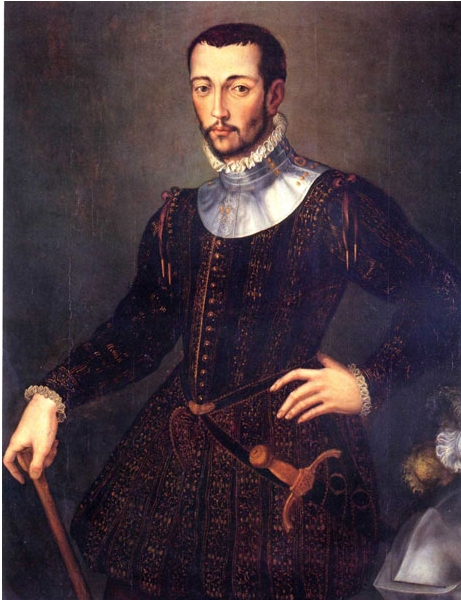
Francesco de' Medici

Francesco de’ Medici

Five historical men I’ve read about this year:

Francesco de’ Medici (The Red Lily Crown by Elizabeth Loupas)
John Wilmot, Earl of Rochester (Alathea by Pamela Belle)
St Patrick (The Lion and the Cross by Joan Lesley Hamilton)
Thomas Chippendale (Gilded Splendour by Rosalind Laker)
Geoffrey Chaucer (The People’s Queen by Vanora Bennett).

~

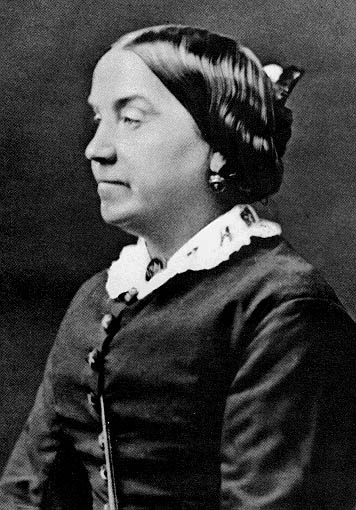
Lizzie Burns

Lizzie Burns

Five historical women I’ve read about this year:

Joanna of Navarre (The Queen’s Choice by Anne O’Brien)
Julia Pastrana (Orphans of the Carnival by Carol Birch)
Penelope Devereux (Watch the Lady by Elizabeth Fremantle)
Sappho (Burning Sappho by Martha Rofheart)
Lizzie Burns (Mrs Engels by Gavin McCrea).

~

Now it’s your turn! Have you read any of the books or authors I’ve mentioned here? What are the best historical fiction novels you’ve read this year?

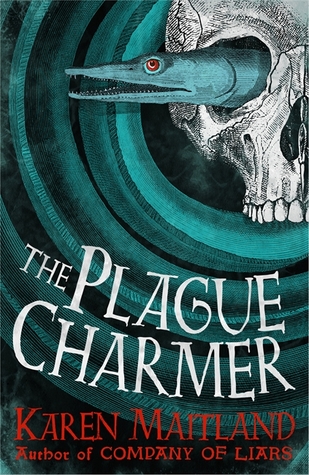
The Plague Charmer by Karen Maitland

the-plague-charmer The village of Porlock Weir appears to be under a curse. Janiveer, a woman rescued from the sea following an eclipse of the sun, has warned the villagers that plague is approaching and that only she can save them – for a price. It’s a price that nobody is willing to pay, but it’s not long before the disease reaches their small coastal community and there are some in the village who begin to wonder whether they have made the right choice. The year is 1361 and the horrors of the Great Pestilence of thirteen years before are still fresh in people’s minds.

In The Plague Charmer, Karen Maitland tells the story of Porlock Weir through the eyes of several different characters: Will, a dwarf; Matilda, devoted to her religion; Christina, who has given birth in secret at nearby Porlock Manor; and Sara, a mother trying to protect her two young sons. It’s a complex plot; each of these characters, and others, have storylines of their own, but they all come together to form a dark and magical mixture of myth, folklore and legend, love, murder, religious relics and secret cults.

There were so many things to like about The Plague Charmer. I particularly loved the setting – a little fishing village on the Exmoor coast – and learning about the lives of the people who lived there, steeped in tradition and superstition. It was interesting to watch the people of Porlock Weir deal with the arrival of the plague at a time when so little was understood about the causes of illness and death, a time when even a natural phenomenon such as an eclipse caused panic and terror. Whether or not Janiveer really possessed magical powers, it was easy to see how she was able to take advantage of the fears of the villagers to manipulate the situation to serve her own ends.

Although I can’t really say that I liked any of the characters, I did enjoy getting to know them all, especially Will, the ‘fake dwarf’. Not a natural dwarf, but one created by his master in a most horrific way, to be sold for the entertainment of rich noblemen. Due to his size and the treatment he has been forced to endure, Will looks at the world differently from the other villagers and is in the unusual position of being not quite ‘one of them’ but not quite an outsider either. He’s a great character and one of only a few in the novel who behaved with decency and humanity. I couldn’t help thinking, though, that there were too many characters and too many subplots (one in particular, involving Sara’s sons, Luke and Hob, added very little to the overall story, in my opinion). I found the constant switching between viewpoints distracting and would have preferred to have spent longer following one character before moving on to the next.

Getting back to the positives, I enjoyed reading the author’s Historical Notes at the end of the book. These provided an opportunity to learn more about the background to the story and some of the people and places that are mentioned (most of the characters are fictional, but a few, such as Sir Nigel Loring of Porlock Manor, are based on real historical figures). I was also pleased to discover that we are given the answers to the intriguing riddles found in the headings of Will’s chapters. Some of them were easy to guess, but others had left me baffled!

Finally, I should probably leave you with a word of warning. Like the other Karen Maitland books I’ve read (The Vanishing Witch and The Raven’s Head), this is a very dark story and can be quite gruesome at times; you need to be prepared for bad things happening to the people of Porlock Weir, and that includes the children. It’s not a book for the faint-hearted, but it’s certainly a fascinating and atmospheric one.

Thanks to Headline for providing a copy of this book for review.

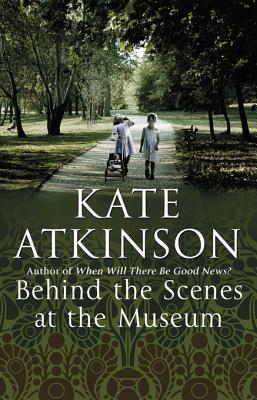
Behind the Scenes at the Museum by Kate Atkinson

behind-the-scenes-at-the-museum This was Kate Atkinson’s first novel, published in 1995, and yet it’s one of the last of her books that I’ve read. Having read and loved her two most recent books, Life After Life and A God in Ruins, as well as Human Croquet and three of the Jackson Brodie mysteries, I was curious to see what her earliest work was like – but I can honestly say this doesn’t feel like a first novel. It’s ambitious, accomplished, and covers some of the themes and ideas she would return to again in later books.

Behind the Scenes at the Museum is narrated by Ruby Lennox; we first meet her in 1951 while she’s still in the womb, before following her through birth, childhood and into adulthood. Along the way we get to know Ruby’s parents – the irresponsible, lying, cheating George and the long-suffering Bunty – and her two older sisters, naughty Gillian and quiet Patricia. They’re not a particularly happy family but, at least at first, they are leading a fairly normal life in their rooms above the pet shop they own in York. When she is four years old, Ruby is sent away to stay with her Aunt Babs for a while; she’s not sure why, and it’s after this that everything seems to start going wrong.

Each chapter narrated by Ruby is followed by another chapter (which Atkinson calls Footnotes but are usually as long, if not longer than, the actual chapters) telling the story of the previous generations of Ruby’s family. These Footnotes are not necessarily given in chronological order, so in one we might read about Ruby’s great-grandmother, Alice, before jumping forward in time to meet Bunty as a child, and then back again for an episode from Bunty’s mother’s teenage years. If this all sounds very complicated, that’s because it is! I would highly recommend drawing a quick family tree to refer to as you read; that’s what I did and I would have struggled without it.

The quotes on the back cover of the book describe it as ‘hilarious’ and ‘outrageously funny’. I don’t think I would go that far, but Kate Atkinson does have a great sense of humour and there are certainly some very funny scenes in this book (I particularly enjoyed the family holiday in Scotland). However, I also found this quite a sad book and there were a few moments, especially near the end, which brought tears to my eyes. Ruby and her family have to endure lots of disasters and tragedies over the years – deaths, illnesses, fires, betrayals – and so do members of the earlier generations. Sometimes we know in advance what is going to happen – Ruby tells us very early in the book how a certain character is going to die – but in other cases we are taken by surprise.

All of this made me think about the importance of perspective in the novel. Ruby is a young child throughout most of this book and her lack of understanding and awareness make her an unreliable narrator at times. Had the story been written from Bunty’s perspective, for example, or Patricia’s, we would have been given a completely different impression of most of the people and incidents we only have the chance to see through Ruby’s eyes. Some revelations in the final chapters, not just about Ruby but about other characters too, had me flicking back through the book to see if there had been clues that I’d missed – and although there were a few, I think it was simply that I had placed too much trust in Ruby as a narrator instead of reading between the lines and thinking for myself.

Behind the Scenes at the Museum is an excellent novel and as with so many of the other Kate Atkinson books I’ve read, I didn’t want to put it down. I only have a few more left to read now – Emotionally Weird, Not the End of the World and Started Early, Took My Dog – and am looking forward to all three.

Top Ten Tuesday: Ten authors new to me in 2016

Top Ten Tuesday Today’s Top Ten Tuesday topic (hosted by The Broke and the Bookish) is: Top Ten New-To-Me Authors I Read For The First Time In 2016. I’ve discovered lots of new authors this year, so I thought it would be interesting to join in this week and list some of them. Here, then, are ten books by authors I’ve read for the first time in 2016:

~

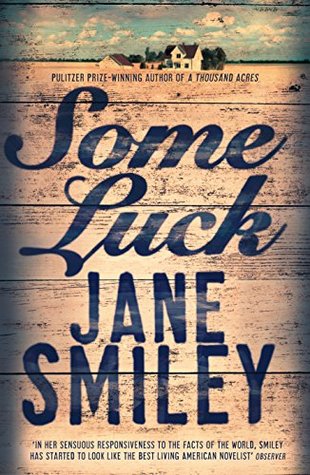
1. Jane Smiley

Some Luck

Some Luck is the first in a trilogy following one American family over a period of one hundred years. I read this book in February and have the second one, Early Warning, on my shelf ready to start soon. I’m hoping I haven’t left it too long and will be able to pick up all the threads of the story again.

~

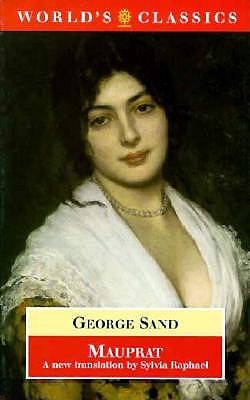
2. George Sand

Mauprat

I read Mauprat in April for the Women’s Classic Literature Event and really enjoyed it – I remember being surprised as it wasn’t quite what I had expected Sand’s work to be like. I will be reading more!

~

3. Jules Verne

Around the World in 80 Days

I had never read anything by Jules Verne until this year, but I found Around the World in Eighty Days a fun, entertaining read and am now keeping Verne in mind for future reading.

~

4. Rosemary Sutcliff

The Rider of the White Horse

I can’t believe it has taken me so long to get around to reading Rosemary Sutcliff! The Rider of the White Horse wasn’t the book I was intending to start with, but I liked it enough to want to read more.

~

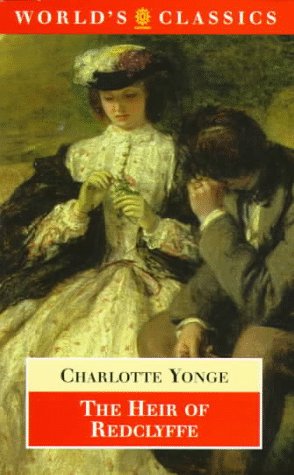
5. Charlotte M Yonge

The Heir of Redclyffe

I love Victorian novels and The Heir of Redclyffe was a book I had been meaning to read for a long time. It didn’t become an instant favourite, but I did like it and will consider reading more books by Yonge in the future.

~

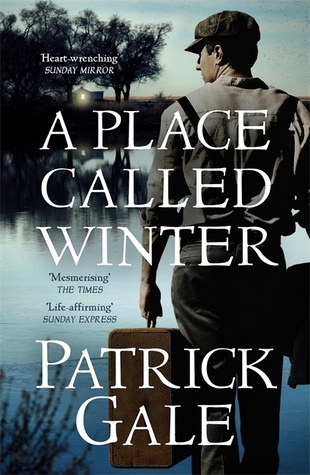
6. Patrick Gale

A Place Called Winter

I probably wouldn’t have read A Place Called Winter if it hadn’t been on the list for my Walter Scott Prize Project, but I’m so pleased I did read it, because I loved it. Patrick Gale’s other books sound quite different from this one, but I’m still interested in trying them.

~

7. Debra Daley

The Revelations of Carey Ravine

I had the pleasure of reading and reviewing The Revelations of Carey Ravine for Shiny New Books earlier this year. I loved it and am looking forward to going back and reading Debra Daley’s earlier novel, Turning the Stones.

~

8. Lesley Downer

the-shoguns-queen

The Shogun’s Queen is one of a quartet of novels set in 19th century Japan. I found it fascinating and am sure I’ll be reading the other three at some point.

~

9. Edmund Crispin

the-moving-toyshop

The Moving Toyshop was another book I’d been meaning to read for years – and another one that I loved. This is one of Crispin’s Gervase Fen mysteries and luckily there are ten more books in the series for me to look forward to.

~

10. Ray Bradbury

something-wicked-this-way-comes

I read Something Wicked This Way Comes for a readalong hosted by Lory. Although I wasn’t sure if Ray Bradbury would be my sort of author, I enjoyed this one much more than I’d expected to and would be happy to read more of his books.

~

So, these are ten authors who were new to me in 2016. Are they new to you too or have I listed any of your favourites? Which of their books would you recommend I try next?

Days Without End by Sebastian Barry

days-without-end Sebastian Barry is one of my favourite Irish authors; having enjoyed his last three novels, The Temporary Gentleman, On Canaan’s Side and The Secret Scripture, I began to read his latest one, Days Without End, not really knowing or caring what it was about. I knew I could count on Barry to have produced another beautifully written novel and I was sure that would be enough. Unfortunately, it wasn’t – I still found things to like and to admire, but this just wasn’t my sort of book.

Thomas McNulty and John Cole are “two wood-shavings of humanity in a rough world” who meet in Missouri as teenagers while sheltering from the rain together under a hedge. It’s the 1850s and Thomas, having lost his family to the famine in Ireland, has fled to America in search of a better life. John, who was born in New England, is the first friend Thomas has made in his new country and the two quickly become inseparable. The first thing they need to do is find employment and here their youthful good looks prove useful when a saloon owner offers them a job as dancers, on the condition that they dress up in women’s clothes to entertain the local miners.

At seventeen, considering themselves too old to continue their dancing act, Thomas and John leave the saloon and join the US Army. Fighting first in the Indian Wars and later in the Civil War (on the Union side), it’s a difficult life and the two young soldiers face dangers and obstacles ranging from hunger and illness to extreme weather and encounters with Native Americans. Throughout all of this there are two things that sustain them: their love for each other and their relationship with Winona, a young Sioux girl separated from her family during a raid.

Days Without End is narrated by Thomas McNulty and this provides a link with several of Barry’s previous novels which tell the stories of other members of the McNulty family (he has also written several which focus on another Irish family, the Dunnes). Thomas, though, is obviously from an earlier generation of McNultys; the other novels are set in the 20th century, which makes this one feel a bit different. Another difference is that this book is set in the American West rather than Ireland – and I think this is probably why I had a problem. Westerns are not a genre I would usually choose to read (although I did love Patrick DeWitt’s The Sisters Brothers) and too much of this novel just didn’t interest me at all.

If the setting does sound of interest to you, then I would have no hesitation in recommending this book even though I didn’t particularly enjoy it myself. Sebastian Barry is a very talented writer and there are some beautiful passages in this novel; the poetic narrative voice didn’t always sound very convincing coming from the down-to-earth soldier, Thomas McNulty, but that didn’t really matter – the beautiful, poetic writing was the reason I chose to read this book, after all.

What I did struggle with was reading page after page of descriptions of army life, buffalo shooting expeditions and battles against the Sioux. I don’t think the balance between these aspects of the story and the more personal aspects was quite right and I very nearly gave up on the book halfway through. I kept reading mainly because I wanted to know what would happen to Winona – and I was rewarded with an interesting and dramatic ending to her storyline.

Days Without End has its good points and its bad points, then, and I think my disappointment with it is entirely due to my personal reading tastes. I shouldn’t have assumed that just because I’ve loved everything else I’ve read by Sebastian Barry I would love this one too, despite a setting and subject which didn’t appeal to me. I’m still looking forward to going back and exploring his earlier novels; I have a copy of Annie Dunne, which sounds much more like the kind of book I would enjoy, so that’s probably the one I’ll be reading next.

Thanks to Faber & Faber for providing a copy of this book via NetGalley for review.