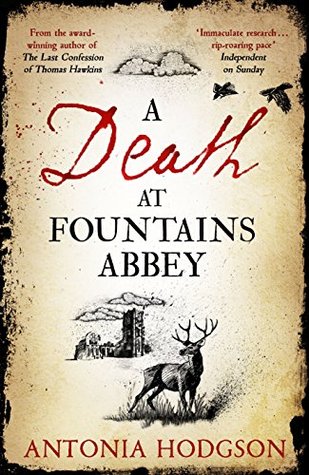
A Death at Fountains Abbey by Antonia Hodgson

a-death-at-fountains-abbey I first met Thomas Hawkins two years ago when I read The Devil in the Marshalsea, a murder mystery set within the confines of a debtors’ prison in eighteenth century London. Last year Antonia Hodgson brought him back again for another adventure in The Last Confession of Thomas Hawkins. And now we’re off to Yorkshire for the third book in the series – A Death at Fountains Abbey. Like the first two, this one could be read as a standalone, but I would still recommend reading all three in the correct order so that you can watch the characters develop throughout the series and avoid spoiling any aspects of the previous mysteries for yourself.

The plot of this third novel is inspired by real historical events and real historical figures, including John Aislabie, the Chancellor of the Exchequer who was held responsible for the South Sea Bubble of 1720, a financial disaster in which thousands of people were ruined. It’s to Studley Royal, Aislabie’s estate in Yorkshire, that Tom Hawkins is sent on a mission for Queen Caroline (wife of George II). The Queen wants Tom to investigate some death threats received by the disgraced former Chancellor, while secretly searching for a hidden ledger which lists the names of several prominent public figures who were involved in the South Sea scandal.

On arriving at the estate, Tom immediately discovers a whole host of suspects, all of whom could have reasons for wanting Aislabie dead. To complicate things further, a young woman has recently arrived at Studley claiming that she is Aislabie’s long-lost daughter, believed to have been killed in a fire at his London home many years earlier. With the help of his lover Kitty (posing as his wife for the sake of appearances) and his young ward, Sam Fleet, Tom begins to investigate both the death threats and the whereabouts of the ledger, a search that will take him all over Studley Royal and neighbouring Fountains Abbey.

Tom Hawkins is a wonderful character; while he’s a bit of a scoundrel – and admits to being a bit of a scoundrel – he’s a decent person at heart and I can’t help liking him. His relationship with Kitty moves forward in this book and we also see a lot of Sam Fleet, the London gang leader’s son whom Tom is trying to educate and turn into a gentleman. I enjoyed the brief insights we are given into Sam’s own thoughts and feelings, showing how desperately he wants to feel valued and loved – and thankfully both Tom and Kitty are beginning to see the good in him. There are some great secondary characters in this novel too, many based on real people.

As for the mystery itself, it’s quite a good one. There were plenty of clues from the start, but it would have been difficult to put them together correctly without knowing certain facts which are withheld until much later in the novel. I certainly wasn’t able to work out what was going on before the truth was revealed.

I enjoyed this book, but it does feel slightly different from the first two Thomas Hawkins novels. The London prisons, slums and taverns which provided the setting for The Devil in the Marshalsea and The Last Confession have been replaced here by the fresh air and open spaces of the Yorkshire countryside. I have visited Studley Royal and Fountains Abbey twice (they are now National Trust properties) and this really added to the experience of reading the book as I could clearly picture the ruined abbey, the water gardens, the follies and the statues. I’m now hoping there will be a fourth book in the series and wondering where Tom’s adventures will take him next.

By the way, if you were expecting to see my monthly Historical Musings post today, I promise it will be coming soon!
The Jewelled Snuff Box by Alice Chetwynd Ley

Alice Chetwynd Ley is an author whose name was completely new to me when I came across this book on NetGalley a while ago, but seeing it described as “an intriguing Regency romance, perfect for fans of Georgette Heyer and Jane Aiken Hodge” made me both curious and wary. I love Georgette Heyer and enjoyed the one Jane Aiken Hodge book I’ve read (Watch the Wall, My Darling), so I hoped the comparison would be accurate. My verdict, having now read The Jewelled Snuff Box, is that there are definitely some similarities and although Ley’s writing is not as good as Heyer’s, this is an entertaining novel in its own right.

the-jewelled-snuff-box Our heroine, Jane Spencer, is a young woman who has fallen on hard times since her beloved father’s death and, determined not to be a burden on her relatives, she has decided to find work and support herself. She is on her way to London to take up a new position as a lady’s companion when her coach is forced to stop during a snowstorm. Getting out to walk, Jane discovers a man unconscious in the snow and believing him to be the victim of an attack, she and her fellow passengers take him to the nearest inn to recover.

When he regains consciousness, the stranger claims to be suffering from amnesia and can’t remember who he is, the only clue to his identity being an ornate snuff box covered in jewels which had been found next to his body. After the weather improves and they can resume their journey, Jane, who is beginning to form a bond with the mysterious stranger, offers to see her lawyer in London on his behalf in the hope that he will be able to help. Once they reach London, however, Jane is disappointed to find that her new friend has disappeared, leaving her in possession of the snuff box – which contains a compromising letter from a lady hidden in a secret compartment.

Sorry that her relationship with the unknown gentleman has come to an end, Jane leaves the box with her lawyer and continues to the home of her new employer, the Earl of Bordesley, where another shock awaits her: the Earl’s young wife, for whom she will be working as a companion, is none other than Celia Walbrook, a girl Jane knew at school. Jane remembers Celia as a snob and a bully and it seems that nothing has changed. It’s through Celia, though, that the stranger comes back into Jane’s life – but not in the way that she would have hoped!

With a plot based heavily on misunderstandings, the reader is always one step ahead of the characters. I never doubted how the book was going to end – the question was not so much whether our hero and heroine would get together, as when they would get together and how. And as with most older romantic novels (The Jewelled Snuff Box was published in 1959) there’s an air of innocence surrounding Jane’s relationship with her mystery man – nothing graphic or explicit!

The pages of The Jewelled Snuff Box are filled with men with quizzing glasses and (obviously) snuff boxes, people riding in carriages, mentions of the Bow Street Runners and Beau Brummell, but on the whole I didn’t find the recreation of the time period quite as convincing as I do when I read a Heyer novel. The dialogue lacks the sparkling wit and humour of Heyer’s too, but the plot and characters feel similar – Francis, the Earl of Bordesley, made me think of some of some of Heyer’s ‘older husbands with younger wives’ such as Rule from The Convenient Marriage and Cardross from April Lady. Jane, however, is more like a Mary Stewart heroine: sensible, intelligent, brave and resourceful – and used to making her own way in the world.

The Jewelled Snuff Box was a short, quick read, written in a style I found very comforting and easy to read. It’s the sort of novel which sweeps you away into its world without requiring too much concentration or effort from the reader. It’s not a particularly deep or insightful novel and not a particularly original one, but not all books need to be, do they? I enjoyed it anyway and would definitely consider reading more of Alice Chetwynd Ley’s books.

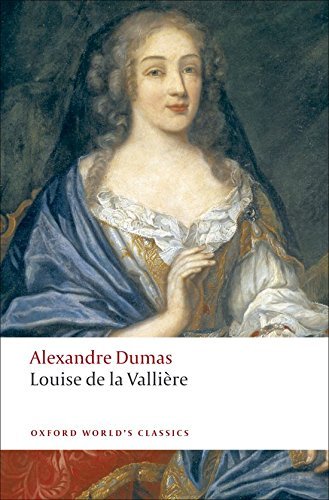
Louise de la Vallière by Alexandre Dumas

Louise de la Valliere Louise de la Vallière is the fourth book (or in some cases, the fifth – more on that later) in the series of d’Artagnan novels which began with The Three Musketeers. Looking at other readers’ reviews, this seems to be one of the least popular books in the series and I can understand why, even though I did enjoy it.

In Louise de la Vallière, the story is picked up directly where the previous book, The Vicomte de Bragelonne, ended and follows all the romance and intrigue of the court of Louis XIV. As the novel opens, the king’s brother, Philippe (known as Monsieur), has just married Charles II’s sister, Henrietta of England (Madame). An instant attraction has formed between the king and his new sister-in-law, so to avert suspicion they decide that Louis will pretend to turn his attentions to Louise de la Vallière, Madame’s young lady-in-waiting. Things don’t go exactly according to plan, however, and the king and Louise end up really falling in love with each other, breaking the heart of poor Raoul, the Vicomte of Bragelonne, who was hoping to marry Louise.

Apart from a few brief scenes here and there, there’s an almost total absence in Louise de la Vallière of the swashbuckling action and adventure which formed such a large part of the earlier volumes of the series. This could be disappointing if you’re expecting more of the same, but I do think the antics of Louis’ court are fun to read too. It’s amusing to watch the king’s desperate attempts to steal some time alone with Louise – passing letters hidden in handkerchiefs, climbing ladders to reach her window and installing secret staircases in her room!

What does all of this have to do with d’Artagnan, you may be asking? Well, the answer is – very little. He does appear from time to time, but this is not really his story. We don’t see much of Athos or Porthos either, although what we do see assures us that they are still the same characters we know and love: Athos is still noble and honourable, while Porthos is still the gentle giant, as good-natured and trusting as ever. I didn’t care for Aramis in this book, though – he’s preoccupied with a mysterious prisoner in the Bastille and when we do see him, he’s plotting and scheming, reluctant to confide in his fellow musketeers. His storyline ends on a cliffhanger which has left me wanting to start The Man in the Iron Mask as soon as possible!

Now, a note on the structure of this series. The first two books are The Three Musketeers and Twenty Years After, which I have written about in previous posts. The third book was originally intended to be one very long novel, but most publishers now split it into three: The Vicomte de Bragelonne, then Louise de la Vallière and finally The Man in the Iron Mask. Some versions (such as the free Project Gutenberg ebooks – see the notes here), split the chapters differently, including an extra volume, Ten Years Later, between The Vicomte and Louise. Be sure to check the editions you’re reading or you could miss part of the story.

This may not have been my favourite Musketeer novel, then, but I did still find a lot to like about it and can’t wait to finish the series with The Man in the Iron Mask.

Dora Greenwell McChesney’s Civil War

Rupert by the Grace of God I have not just one book but two to tell you about today. Dora Greenwell McChesney is an author from the late 19th/early 20th century whose work I discovered a few months ago when I read her Richard III novel from 1913, The Confession of Richard Plantagenet. I love reading about Richard III, but I also enjoy reading about the English Civil War, so when I spotted reissues of two of her Civil War novels on NetGalley recently I was curious to see what they were like.

Rupert, by the Grace of God, originally published in 1899, was the first one I read. I was attracted to this book by the title; it refers, of course, to Prince Rupert of the Rhine, nephew of Charles I and commander of the Royalist cavalry. When I read a biography of Rupert earlier in the year, I said that I was interested in reading more about him (and was given a few suggestions in the comments, which I will get around to reading eventually – I promise!) so that was definitely part of the appeal of this particular novel for me.

The story is narrated by Will Fortescue, a young man who has defied his father to join the Royalist army. Taking refuge in a church to hide from enemy soldiers one day, Will finds an unusual golden coin on the floor and picks it up, unaware that in doing so he is changing the whole course of his life. The coin is recognised by Cosmas, an elderly man whom some say is a wizard, and Will finds himself drawn into a secret plot to put Rupert on the throne in place of Charles. Rupert himself, however, is loyal to his king and wants no part in such a treacherous scheme!

There were parts of this novel that I enjoyed, but it wasn’t really what I’d been expecting. Being part historical adventure novel and part gothic melodrama, it was entertaining at times, but I have to admit, I can see why it was allowed to go out of print for so long. I was interested in Will Fortescue’s personal story and in his involvement in the battles and key moments of the Civil War, but there was too much focus on secret conspiracies and black magic rituals for my taste and after a few chapters I felt my attention starting to wander.

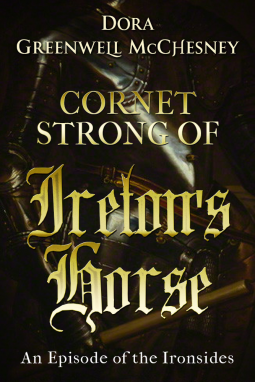
Cornet Strong of Iretons Horse The second McChesney novel I read was Cornet Strong of Ireton’s Horse, published several years later in 1903. This is a different sort of story, concentrating on the relationship between two soldiers within the Parliamentarian army: Nathan Standish, a young captain, and Reuben Strong, who is promoted to the rank of cornet after capturing Prince Rupert’s banner. Throughout the novel, Strong and Standish cross paths on several occasions with a young Irish Cavalier, Roy O’Neil, and his sister, Eileen.

Strong is a dedicated, inflexible person who believes very strongly in carrying out God’s work. When another character tells him “we are all somewhat more than mere engines of soldiership,” Strong answers “I am no more! I am a sword, a sword tempered to this work and to no other use.” Standish is a more likeable character and plays such a prominent part in the story, I wondered, at least for a while, why the author had chosen to put Strong’s name in the title.

Of these two books, I preferred Cornet Strong. Although it was still quite reliant on coincidences, chance encounters and last-minute escapes, it felt like a more ‘serious’ historical novel, telling a more straightforward story. Instead of the magic and mystery of Rupert, by the Grace of God, this one deals with battles, military campaigns and army life. Again, though, I never really felt fully absorbed – not until near the end, when something was revealed which made me think differently about everything I’d read up to that point.

Dora Greenwell McChesney’s writing style won’t appeal to everyone – the language used in her dialogue is archaic and her prose in general feels old-fashioned, even for books published in 1899 and 1903. These two novels haven’t won a place on my list of favourite Civil War books, but they were interesting in parts and were fairly quick reads, particularly the shorter Cornet Strong, so I did find them worth reading.

Ready for R.I.P. XI

R.I.P. XI

(Thanks to Abigail Larson for the banner)

It’s September, which means it’s time for one of my favourite reading events of the year – R.eaders I.mbibing P.eril. R.I.P. is hosted by Carl at Stainless Steel Droppings and is now in its eleventh year!

As always, the idea of R.I.P. is to read books from one or more of the following categories during the months of September and October:

Mystery
Suspense
Thriller
Gothic
Horror
Dark Fantasy

There are different levels of participation to choose from and I am signing up for Peril the First:

Read four books, of any length, from the very broad categories earlier defined as perilous. They could all be by the same author, a series of books, a random mix of classic and contemporary or whatever you like.

ripnineperilfirst

Here are some of the books I currently have on either my shelf or my Kindle which I could choose from for this event:

Mystery Mile by Margery Allingham
The Dead in their Vaulted Arches by Alan Bradley
Magpie Murders by Anthony Horowitz
The Moving Toyshop by Edmund Crispin
The Romance of the Forest by Ann Radcliffe
The Red House Mystery by AA Milne
Savage Magic by Lloyd Shepherd
The Mummy Case by Elizabeth Peters
The Plague Charmer by Karen Maitland
The Protector by SJ Deas
Blood Harvest by Sharon Bolton
The Strangler Vine by MJ Carter
Bleeding Heart Square by Andrew Taylor
A Shilling for Candles by Josephine Tey

I certainly don’t expect to read all of these, but it’s nice to have a good choice. I could also end up reading books which are not on my list, if I come across other suitable R.I.P. reads as the weeks go by!

Will you be participating this year? What will you be reading?

My Commonplace Book: August 2016

A summary of this month’s reading, in words and pictures.

commonplace book
Definition:
noun
a notebook in which quotations, poems, remarks, etc, that catch the owner’s attention are entered

Collins English Dictionary

~

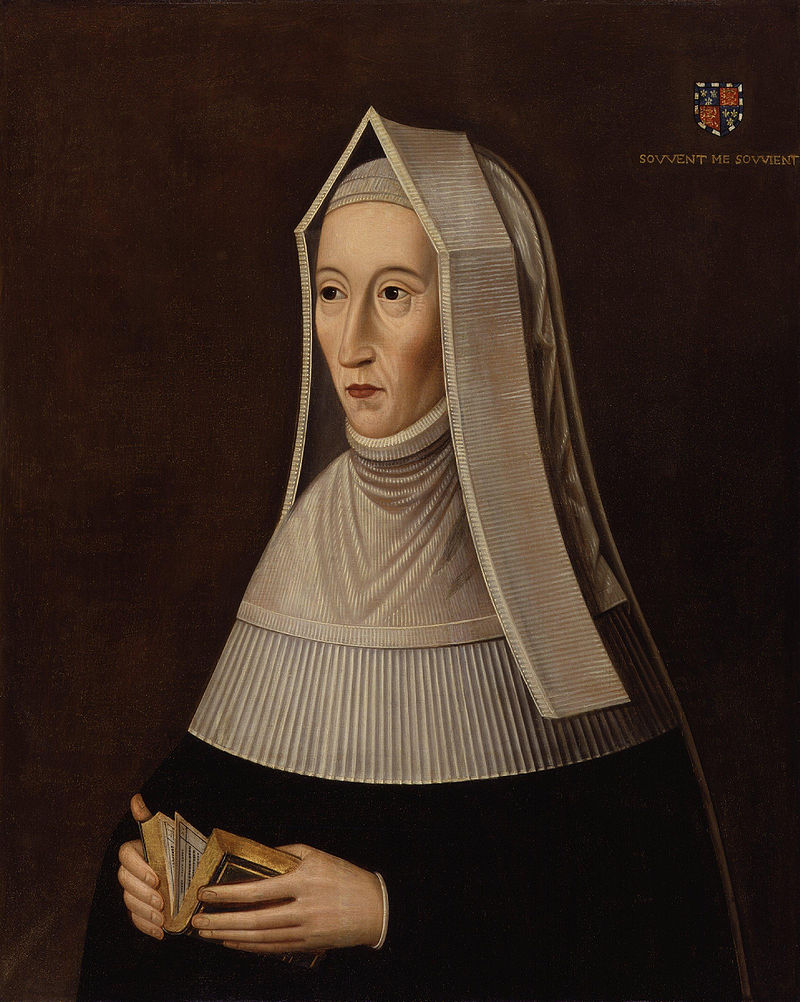
Margaret Beaufort

She could have asked, of course, but she would not get any answers. She thought of all the words that went unspoken in the world, throughout time: what happened to them, where did they go? What would happen if they were all spoken? How different would the world be then?

Succession by Livi Michael (2014)

~

“Molly, I cannot have you speaking so to Lady Harriet,” said Mrs. Gibson, as soon as she was left alone with her stepdaughter. “You would never have known her at all if it had not been for me, and don’t be always putting yourself into our conversation.”

“But I must speak if she asks me questions,” pleaded Molly.

“Well! if you must, you must, I acknowledge. I’m candid about that at any rate. But there’s no need for you to set up to have an opinion at your age.”

“I don’t know how to help it,” said Molly.

Wives and Daughters by Elizabeth Gaskell (1865)

~

I know very little about my mother, and have no family to help me fill in the gaps. I am an only child and my father’s two elder sisters died several years ago. I am intrigued by this photograph and would like to find out more about the people in it…I hope you don’t mind me asking all these questions. Any information you could offer would mean a great deal to me.

The People in the Photo by Hélène Gestern (2011)

~

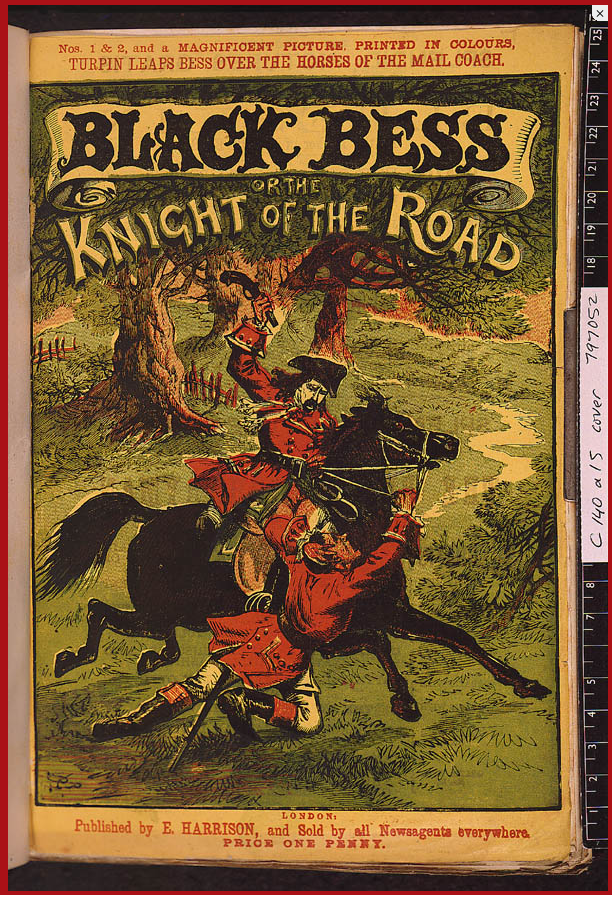
Penny dreadful

Since cheap magazines were traded on street corners, in playgrounds and factory yards, each issue could have many readers. Penny fiction was Britain’s first taste of mass-produced popular culture for the young, and was often held responsible for the decay of literature and of morality.

The Wicked Boy by Kate Summerscale (2016)

~

It can’t have been much of a life, can it? for a woman of over seventy, living alone in lodgings, in debt to her landlady, wearing our cast-off clothes, trotting round after jobs that never materialised, writing articles that nobody would publish, and eating bread and margarine for supper. There really was something rather pathetic about that awful room of hers – crowded with papers full of impossible schemes…I don’t suppose there can ever have been anyone whose life was much less important, or who had less influence on anybody else.

Poor Caroline by Winifred Holtby (1931)

~

It was something he’d learned in the war: only think about what is directly in front of you. No, that wasn’t quite right. He’d had to plan ahead all the time…but not to feel ahead. For a man of Giles’s far-seeing, intricate temperament that had been a hard lesson. But Simon, he could see, knew it by instinct.

Exposure by Helen Dunmore (2016)

~

Red Cocker Spaniel

Hers was the pale worn face of an invalid, cut off from air, light, freedom. His was the warm ruddy face of a young animal; instinct with health and energy. Broken asunder, yet made in the same mould, could it be that each completed what was dormant in the other? She might have been — all that; and he — But no. Between them lay the widest gulf that can separate one being from another. She spoke. He was dumb. She was woman; he was dog. Thus closely united, thus immensely divided, they gazed at each other.

Flush by Virginia Woolf (1933)

~

“I play,” he once said to me, “for the best musician in the world – he may not be there, but I play as if he were”. I thought to myself that he was always there when Sebastian was playing, but I did not say so, for that was the kind of thing which did not please him.

The Little Chronicle of Magdalena Bach by Esther Meynell (1925)

~

It is quite beautiful, a metaphoric triumph over adversity, with every millimetre of its gnarled trunk proudly displaying its struggle.
I wonder now why humans hate the map of their life that appears on their own bodies, when a tree like this, or a faded painting, or a near-derelict uninhabited building is lauded for its antiquity.

The Olive Tree by Lucinda Riley (2016)

~

I cannot say – I had misjudged him before – yet I do think, in that moment, he had his battle to fight – one fierce as his fiercest charge. Cosmas waited, devouring him with his eyes. And I waited; a sudden, amazing sense springing up in me, that if he yielded, as I had so desired him to yield, this King who might be would never be the Prince whom I had served and loved.

Rupert, by the Grace of God by Dora Greenwell McChesney (1899)

~

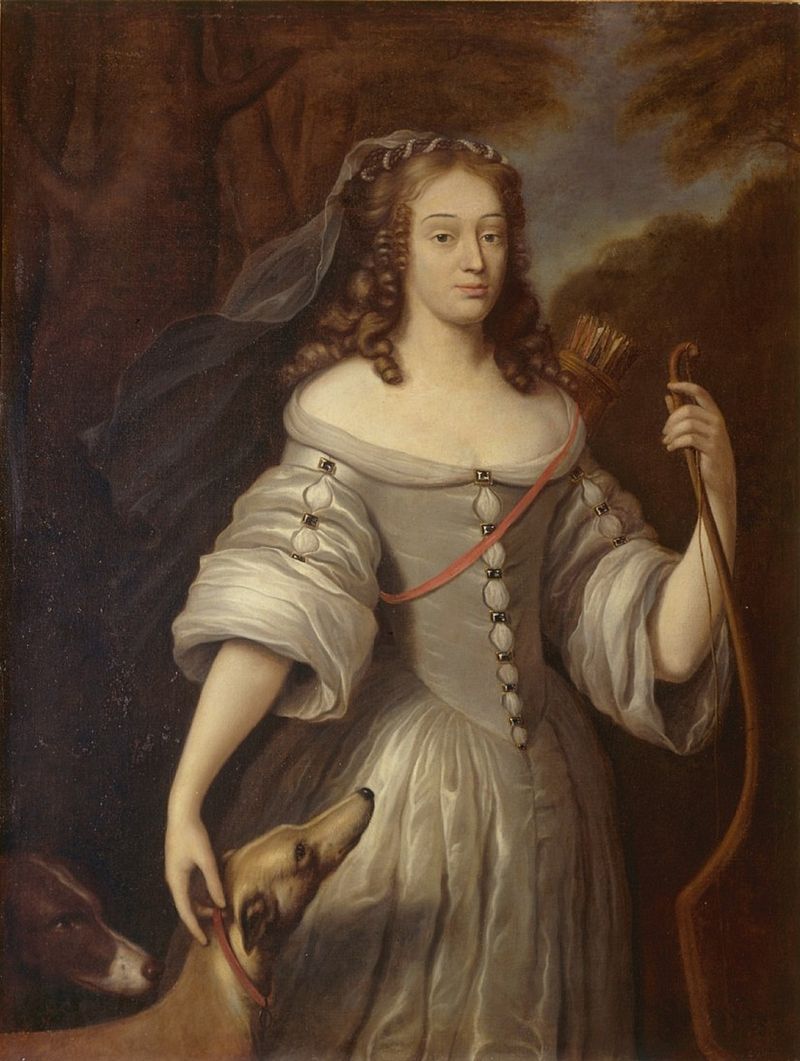
louisedelavalliere

“Life, monsieur,” said Planchet, laughing, “is capital which a man ought to invest as sensibly as he possibly can.”

Louise de la Vallière by Alexandre Dumas (1850)

~

Hélène wondered whether the lady was protesting a bit too much in order to convince her, or to convince herself. Could she start a new life at her age? You can start a new game of cards or redecorate the living room, but life itself, can you do that again?

The Travels of Daniel Ascher by Déborah Lévy-Bertherat (2013)

~

And now? Overseas in England, his brethren in the faith were fighting, were dying, to achieve the freedom which he had sought. Before his eyes rose the grey, thronged sea-port town he knew, the richer fields, the narrower skies; and yet here, in this strenuous bleakness, he had found his soul.

Cornet Strong of Ireton’s Horse by Dora Greenwell McChesney (1903)

~

Love for her was to be a slow, ripening process, the fruit of many meetings and mutual interests. She had never believed in love at first sight. That surely, she told herself, was an invention of novelists, whose business it was to make everything slightly larger than life.

The Jewelled Snuff Box by Alice Chetwynd Ley (1959)

~

Fountains Abbey 1

The queen responded a week later. “We are sending a young gentleman up to Yorkshire to resolve the matter. We do not wish to hear from you again.”

It was a measure of Mr Aislabie’s poor standing at court that I was the young gentleman in question.

A Death at Fountains Abbey by Antonia Hodgson (2016)

~

Favourite books this month: Wives and Daughters, Flush and Exposure

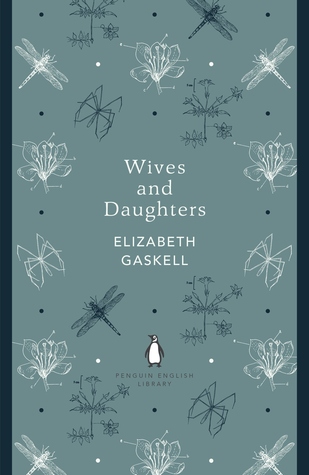
Wives and Daughters by Elizabeth Gaskell

Wives and Daughters - Elizabeth Gaskell Now that I’m starting to come towards the end of my Classics Club list, I’m having to tackle some of the books I’ve been putting off reading since I put the list together in 2012. I’m really not sure why I haven’t picked up Wives and Daughters until now; I’ve enjoyed everything else I’ve read by Gaskell (North and South, Sylvia’s Lovers, The Moorland Cottage, Cranford and Mr Harrison’s Confessions) so it seemed likely that I would enjoy this one too. And did I? Yes, of course I did!

Wives and Daughters is set in a village in England in the 1830s, a world similar to the one Gaskell created in Cranford, where everyone knows everyone else’s business. Molly Gibson, our heroine, is the daughter of the village doctor; her mother is dead and, as an only child, Molly is very close to her father. The two have a strong relationship built around love and trust, but the harmony of their little household is disrupted when Mr Gibson decides to marry again. His new wife is the beautiful widow, Hyacinth Kirkpatrick, former governess to the Duke of Cumnor’s children, and he hopes she will provide the seventeen-year-old Molly with the motherly guidance he is unable to give. Unfortunately, Hyacinth proves to be a selfish, manipulative woman and she and Molly don’t always see eye to eye.

As well as a new stepmother, Molly also has a new stepsister – Cynthia. Although she and Cynthia have very different personalities, the two girls become good friends – and it is this friendship which will get Molly into trouble when she tries to help Cynthia find a way out of her tangled love affairs. Meanwhile, there’s a romance for Molly too but it’s quite a subtle one and also quite one-sided, as the man she loves appears to be in love with someone else, so poor Molly has to keep her feelings to herself.

Wives and Daughters is a very long novel, with more than 700 pages, and there were times when it seemed to be going on forever, but I didn’t really mind because once I’d been pulled into Molly’s world I didn’t want to leave it again. I didn’t want to leave the characters behind either – they were drawn with so much care and in so much depth. I loved Molly for her honesty, intelligence and kind heart, and Cynthia, with all her charms, flaws and vulnerabilities, was also an interesting character. But I particularly enjoyed reading about the family at nearby Hamley Hall: the old country squire, his invalid wife, and their two sons, Osborne and Roger.

First published as a serial between 1864 and 1866, this was Elizabeth Gaskell’s last novel, sadly left unfinished at the time of her death. I was aware that it was unfinished before I started to read, so I was prepared to be left feeling frustrated (as I was when I read Dickens’ The Mystery of Edwin Drood) but luckily this wasn’t the case. At the point where the novel finished I could see the direction in which the plot was heading and I was satisfied that, if the story had continued, things would have worked out in the way that I’d hoped.

Gaskell has a style all of her own, but I think this particular book would appeal to readers of Jane Austen; I could see some similarities in the characterisation, the dialogue and the shape of the plot. So far all of the books I’ve read by Gaskell have been quite different from each other. Wives and Daughters is probably my favourite so far, but I’m looking forward to reading the other two novels I haven’t read yet – Ruth and Mary Barton.