My Commonplace Book: July 2016

A summary of this month’s reading, in words and pictures.
commonplace book
Definition:
noun
a notebook in which quotations, poems, remarks, etc, that catch the owner’s attention are entered

Collins English Dictionary

***

He turned his head to smile at her, apologetically; and his face was haggard in the firelight, so that suddenly she cared nothing for kings and wars, nor bishops nor the soul of man, nor for what Thomas did, only for what Thomas was; and she longed to fling her arms round him and hold him close because he was like a lute that was strung too tight.

The Rider of the White Horse by Rosemary Sutcliff (1959)

***
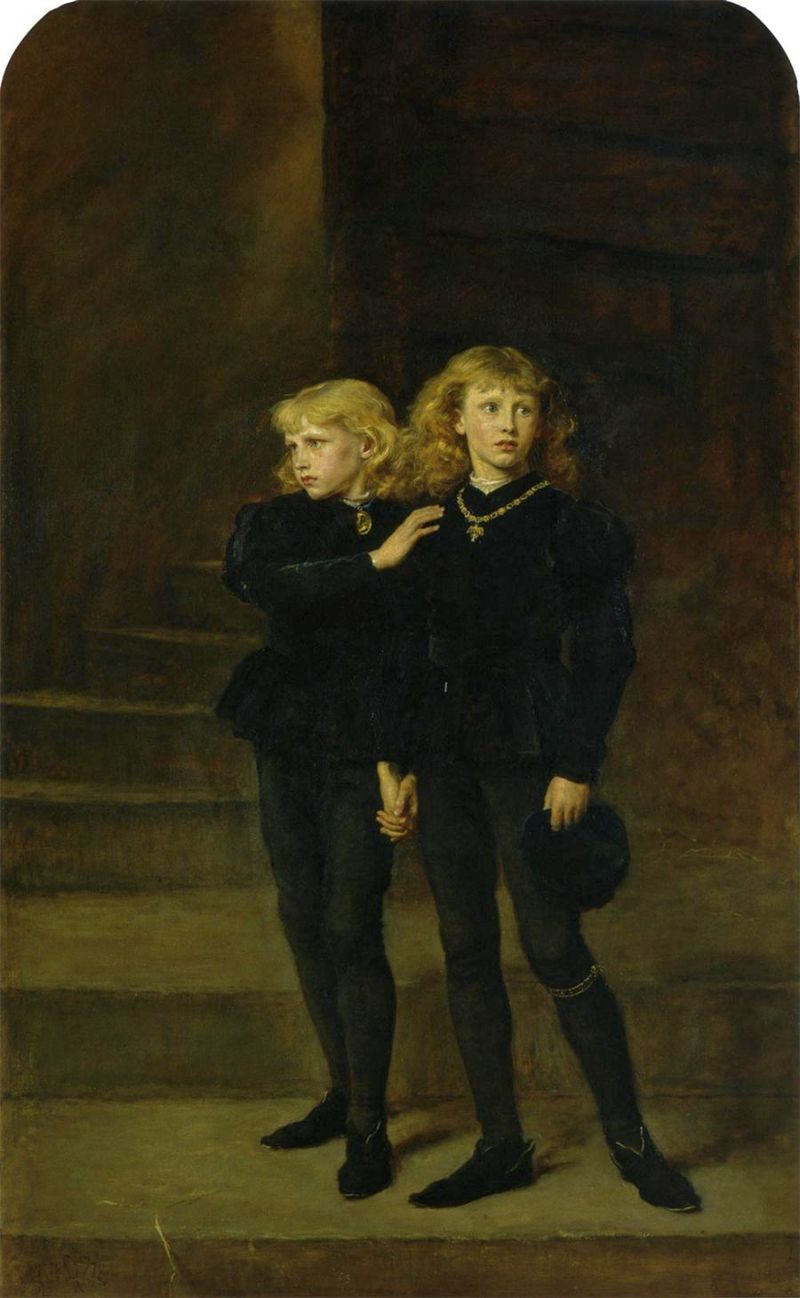
Princes in the Tower

No banners were raised above the company and they wore no livery, anonymity as well as haste their ally this April morning. Where Watling Street cut its blade-straight course towards the Great Ouse, the last of the sentries who had ridden on ahead to silence any word of their coming joined the company and, together, the horsemen thundered towards the small market town of Stony Stratford and the object of their race: the boy who had become king.

Sons of the Blood by Robyn Young (2016)

***

Nash is a follower of the playwrights and knows their best bons mots by heart, but I am fascinated by the actors themselves. I wonder about the life behind the stage and the precariousness of it. The thought of it gives me a shiver. Perhaps my interest stems from the apprehension that actors, whose calling depends on looks and voices and bodies that cannot last, must confront the same hard laws of life that women do. When the brightness of our beauty dies, we are plunged into the dark.

The Revelations of Carey Ravine by Debra Daley (2016)

***
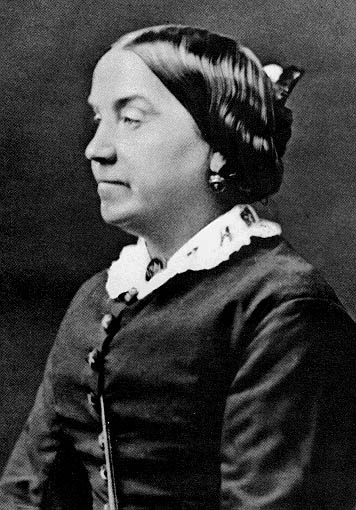
Lizzie Burns

And is it any different with love? Isn’t love the reverse side of the same medal? To love is to have, but rare does it happen that what we have is what we love. Love buys cheap and seeks to sell at a higher price; our greed is for gain that lies outside our reach. We desire those who don’t desire us in return.

Mrs Engels by Gavin McCrea (2015)

***

Before him lay the well-kept grounds, the clipped rose trees already beginning to put forth their glossy leaves, the panes of the glass-house gleaming like ice in the moonlight, the fountain where the water splashed in silver threads, hollow-eyed termini set between yew trees. The windows in the side of the pleasure house facing Desgrez were shuttered; he crept along, however, most warily; he did not know who was posted in the gardens nor what sentries might be placed about the house and grounds.

The Poisoners by Marjorie Bowen (1936)

***

Gondola

They glided away through the spangled water, and he filled his lungs with the haunting sea air. Other gondolas slipped past with lovers or merrymakers. A delicious languor filled the night, lapping of water, wandering of music. He felt a longing, sweeter than possession, for the indescribable, the unattainable. He would return here someday with her; he would occupy one of these palaces; they would live in terms of color – sapphire and silver – in terms of a casement open on the sea-scented night.

Prince of Foxes by Samuel Shellabarger (1947)

***

“Oh, don’t worry, we’re still appalling know-it-alls. We dig things up, but then we photograph and catalogue, record and document, and as often as not we put things back. It’s not the finds so much as the findings. Not the objects but the stories they tell.”

Sandlands by Rosy Thornton (2016)

***

Magna Carta

Under the shade of the pavilion, he noted a table in readiness, stools around it, and parchment and pens and wax all ready, with clerks and knights waiting. They had at least the grace to stand when he entered and, without speaking, took the stool at the table-head. Before him lay the long charter. He knew it by heart, each clause of it had burned into him with rage while impotently he had listened to these rogues’ demands.

The Devil and King John by Philip Lindsay (1943)

***

Favourite books this month: Prince of Foxes and The Revelations of Carey Ravine.
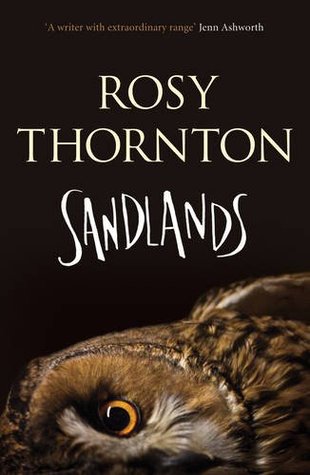
Sandlands by Rosy Thornton

This is a land of sand. The earth hereabouts is nothing but; it’s a wonder anything grows in it at all.

Sandlands Sandlands is a beautifully written collection of sixteen short stories, all of which share a common setting: a small English village on the coast of Suffolk. I’m not usually a reader of short stories (my blog title should be a clue) but I do enjoy them from time to time – and I was surprised by just how much I enjoyed reading this particular collection. The problem I sometimes have with short stories is that they tend to lack the plot development and depth of character I look for in full-length novels. I often find them unsatisfying and…well, too short.

Sandlands is not like that. The stories are the perfect length – not too long and not too short – and each one feels complete. Although they share some similar themes such as the beauty of nature and the relationships people have with the area in which they live, the stories are also quite varied. Some are written in the first person and some in the third, some are set entirely in the present and some take us into the past, some are sad and some are funny. I’m not going to comment on all sixteen of them here, but will pick out a few which I found particularly interesting.

One of my favourites was All the Flowers Gone, a poignant story which explores the bond between three generations of women: Poppy, a botanist who finds a rare flower growing at a disused air base; her mother, Rosa, who campaigned against nuclear weapons at the same base in the 1980s; and finally, her grandmother, Lilian, who worked there during the 1940s and fell in love with a bomber pilot. I loved the way the lives of these three women were linked not only to each other but also to one specific location and to the flowers which grew there.

Another story in which the past begins to merge with the present is The Witch Bottle, a tale of love and revenge which unfolds when a woman moves into an old house and discovers a connection with Patience Spall, a girl accused of witchcraft in the seventeenth century. Like many of the stories in the book, this one has a touch of the supernatural. While I wouldn’t describe Sandlands as a book of ghost stories in the traditional sense, some do have a ghostly atmosphere and a sense that more is going on than meets the eye.

I also enjoyed the final two stories in the collection. Curlew Call is written from the perspective of a young woman who decides to spend a year working as a companion to Agnes, an artist who is confined to a wheelchair. The narrator loves nature and is captivated by the Suffolk landscape with its salt marshes, mudflats and reed beds and the distinctive sound of the curlews calling. As she settles into her new job and home, she makes some surprising discoveries about her elderly employer. The following story, Mackerel, also looks at the relationship between two women, this time a grandmother and granddaughter: Hattie, in her twenties, who has a degree and has travelled across Europe, and eighty-nine-year-old Ganny (as she is known) who has spent her whole life living in a small fishing village and knows everything there is to know about mackerel.

These are just some of the wonderful stories to be found in Sandlands. Others that stand out include Whispers, the story of Dr Whybrow, an academic who buys a Martello tower on the coast, and The Watcher of Souls, where an owl guards a secret stash of love letters hidden in the woods. I wish I could tell you about the rest of the stories as well, as I found something to enjoy and admire in every one of them, but this review is already long enough and I need to leave something for other readers to discover for themselves!

I have previously read and enjoyed one of Rosy Thornton’s other books, The Tapestry of Love, so I was delighted to be offered a copy of Sandlands by the author for review. Many thanks, Rosy!

Sons of the Blood by Robyn Young

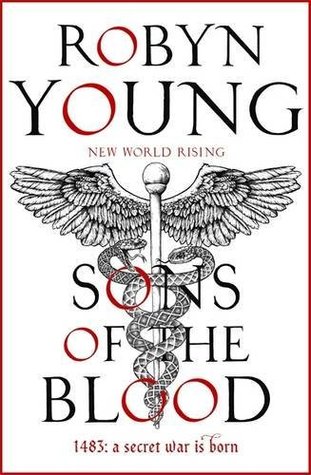
Sons of the Blood Having read Robyn Young’s Robert the Bruce trilogy recently, I was looking forward to reading her new novel, Sons of the Blood. It’s the first in a planned series – New World Rising – set in Renaissance Europe and following the adventures of Jack Wynter, the illegitimate son of royal chamberlain Sir Thomas Vaughan.

As the novel opens in 1483, the unexpected death of Edward IV after several years of stability has plunged England back into turmoil and uncertainty. Just when it seemed that the Wars of the Roses were over, the country now faces the prospect of another child king on the throne, unable to provide the strong leadership required. But as Thomas Vaughan escorts the young Edward, Prince of Wales, to London to be crowned, they are intercepted at Stony Stratford by the prince’s uncle, Richard, Duke of Gloucester.

Accused of treason and fearing for his life, Thomas finds an opportunity to send one of his squires to Seville with an urgent message for his son, Jack, who has been in Spain for several months guarding a mysterious leather scroll case. To Jack, this had seemed like an excuse to remove an inconvenient illegitimate son from the country, but when he learns that his father’s messenger has been attacked on his way to Seville, he realises that the case really does contain secrets of great importance and that men are prepared to kill to get their hands on these secrets.

Returning to England in the hope of learning more, Jack finds himself surrounded by enemies, one of whom is his own half-brother, Harry Vaughan. Desperate to find answers to his questions, Jack decides to seek the help of another boy to whom Sir Thomas had been a father of sorts – the young Edward V, who has now been deposed by his uncle Richard, and has disappeared, along with his brother, into the Tower of London. As rumours of the princes’ deaths begin to spread throughout the city, Jack is drawn into one of history’s greatest mysteries.

I have to say, this wasn’t quite what I expected when I first heard that Robyn Young was writing a series set during the Renaissance; I had thought there would be a wider geographical scope, so I was surprised to find that this first book is set mainly in Richard III’s England. The Wars of the Roses is one of my favourite subjects to read about, though, so I’m not complaining – and I’m sure Jack’s adventures will be taking him to other locations in future books.

I have read a lot of different portrayals of Richard III over the last few years and a range of different theories and opinions on the question of what really happened to the Princes in the Tower. From the beginning, Robyn Young’s depiction of Richard was quite negative – he comes across as ambitious and ruthless (a human being, though, rather than an evil monster) – so I thought I knew which direction the story was going to take. I was wrong, of course! Richard is responsible for a lot of the bad things that happen in the novel, but not all of them, and it’s worth mentioning that Henry Tudor isn’t exactly shown in a very good light either.

As usual with one of Young’s novels, there’s a lot of additional material which all adds to the experience: maps, character lists (clearly showing who is real and who is fictional) and a comprehensive list of sources. Young admits in her author’s note that she had little prior knowledge of the fifteenth century, having been immersed in earlier periods while writing her previous trilogies, but I would never have guessed because, as far as the historical background is concerned, everything in the novel feels fully researched and authentic. I think she does a good job of working Jack Wynter’s fictional story into the historical facts – however, I’m slightly disappointed that the conspiracy/secret society/mysterious document aspect of the novel is so dominant. This period of history is interesting enough as it is!

With Sons of the Blood, the New World Rising series is off to a good start. I did enjoy it, despite having one or two reservations, and now I’m curious to see how the story is going to develop.

Mrs Engels by Gavin McCrea

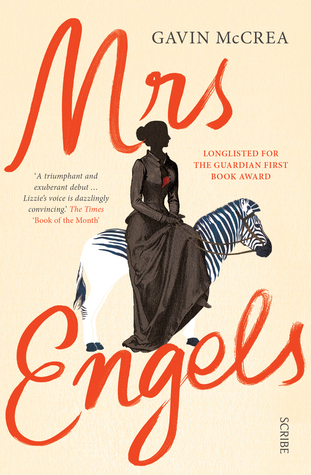
Mrs Engels This is another book read for my Reading the Walter Scott Prize project and another one that I’ve enjoyed. I don’t think I had even heard of it until it appeared on the shortlist for this year’s prize and I’m pleased that it did because otherwise I would probably never have read it and would never have had the opportunity to get to know Lizzie Burns – the Mrs Engels of the title.

The novel is narrated by Lizzie herself, a working-class Irish woman who becomes the lover and common-law wife of the German philosopher Friedrich Engels. In 1870, when we first meet Lizzie, she and Engels are boarding a train which will take them from Manchester to London, where they will be moving into a house in Primrose Hill close to Friedrich’s friend, Karl Marx. The narrative then moves backwards and forwards in time, so that as well as watching the couple settle into their new home, we also learn something of Lizzie’s early life in Manchester, where she and her sister, Mary, grew up in poverty before starting work at Ermen & Engels cotton mill – something which will bring them into contact with the man who is to become such an important part of both of their lives.

I came to this book knowing almost nothing about Friedrich Engels and his work (other than that he co-authored The Communist Manifesto with Karl Marx) and I wondered whether that would be a problem. I needn’t have worried, though, because the focus of this novel is very much on the details of his personal life and his relationships with the Burns sisters, first Mary, his partner of many years, and then – after her death – Lizzie. It seems that little is known about the real Lizzie and Mary, so I kept in mind while reading that not everything that happens in the novel is historically accurate and that a lot of it is the product of the author’s imagination.

One thing we do know about Lizzie Burns is that Marx’s daughter Eleanor said she was “illiterate and could not read or write but she was true, honest and in some ways as fine-souled a woman as you could meet”. I think Gavin McCrea does a great job in Mrs Engels of displaying these different facets of Lizzie’s character. On the surface she’s strong, outspoken and tough – she has to be, to cope with everything life throws at her – but underneath there’s an intelligence, a sensitivity and a sharp wit. Through his choice of words and spellings, McCrea also manages to convey the fact that she is illiterate and poorly educated. The result is a narrative voice which is unusual, memorable and perfectly suited to Lizzie’s character.

Mrs Engels is not a perfect novel – the transitions between time periods are not always clear and the characters, with the exception of Lizzie, feel thinly drawn and difficult to like. However, I found it interesting to read the descriptions of the living and working conditions experienced by mill workers in Victorian Manchester and the challenges faced by a working-class woman who suddenly finds herself moving up the social ladder and trying to manage a London household. It’s a fascinating read – and I loved the fact that a woman who was unable to tell her own story has finally been given a voice.

The Rider of the White Horse by Rosemary Sutcliff

The Rider of the White Horse Rosemary Sutcliff is an author I’ve been meaning to read for years, having heard only good things about her work. I wasn’t planning to start with this particular book (The Eagle of the Ninth and Sword at Sunset are the ones which have been recommended to me most often) but as I had the opportunity to read The Rider of the White Horse via NetGalley and have been enjoying other books set in the same time period recently, I thought I would give it a try.

Many of Rosemary Sutcliff’s books were written for younger readers, but this is one of her adult novels, published in 1959. The ‘rider’ of the title is Sir Thomas Fairfax, also known as Black Tom, commander-in-chief of the Parliamentarian army during the English Civil War, and the ‘white horse’ refers to his stallion, White Surrey. Sutcliff’s novel tells Fairfax’s story, from the events leading up to the conflict, to his exploits on the battlefield and the formation of the New Model Army. But this is also the story of Anne Fairfax, the devoted wife who – along with their daughter, Little Moll – follows her husband to war.

Written largely from Anne’s perspective, The Rider of the White Horse is a moving portrayal of the relationship between husband and wife. It’s not so much a sweeping romance as a quiet, poignant tale of a woman with a passionate love for a man whom she knows does not – and probably never will – feel the same way about her. Despite this, Anne wants to be there for Thomas whenever he needs her; she wants to help in any way she can. Following him on campaign, travelling from one town to another, a lot of time is spent anxiously awaiting news of Thomas, but Anne also has adventures of her own – including one episode in which she is captured by the Royalist commander, Lord Newcastle.

NPG D27098; Thomas Fairfax, 3rd Baron Fairfax of Cameron possiby by Francis Engleheart, after Edward Bower As for Thomas Fairfax himself, I have to admit that he’s someone I previously knew very little about. Although I’ve read other books (both fiction and non-fiction) about the Civil War, Fairfax tends to be overshadowed by Oliver Cromwell. In this novel, he comes across as a decent, humble, honourable man who loves his daughter and – even if he is unable to return her feelings – appreciates and respects his wife. He is portrayed very sympathetically, which I hadn’t really expected as from the little I’d read about him I had picked up a more negative impression. Of course, that could be partly because I tend to be drawn more to the Royalist side anyway (not for any good reason, I have to confess, but purely because from a fictional point of view, they seem more colourful and interesting). I have no idea how accurate this portrait of Thomas is – or how much of Anne’s story is based on fact – but I did like this version of both characters.

I’ve never been a fan of battle scenes as I often find them boring and difficult to follow. There are several in this novel and while I could see that they were detailed and well-written, they didn’t interest me as much as the domestic and family scenes. Luckily for me, there are plenty of these too. What I’ll remember most, though, is the character of Anne and her love for a man who is simply not able to give her what she wants, cherishing each moment of happiness, however brief and fleeting…“You could not hold a winged thing; you could not even perfectly remember it afterwards, for that, too, was a kind of holding.”

The Mauritius Command by Patrick O’Brian

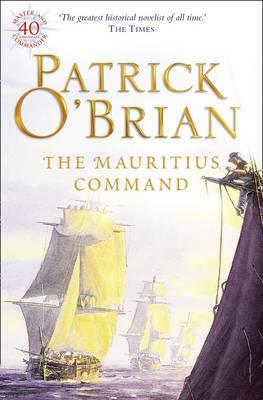
The Mauritius Command This is the fourth of Patrick O’Brian’s novels following the adventures of Captain Jack Aubrey and Dr Stephen Maturin. I have always been (and I’m sure I always will be) a landlubber, so I’m actually quite proud of myself for managing to get so far into a series which is set largely at sea! Unfortunately, the nautical details and terminology are not getting any easier for me to understand and that made this fourth novel, in particular, slightly challenging at times – but I did still enjoy this one, if not quite as much as I enjoyed the first three books.

In the intervening period between the end of the previous novel, HMS Surprise, and the beginning of The Mauritius Command, Jack Aubrey has married Sophie Williams and she has given birth to twin girls. Despite these happy events, however, Jack is feeling restless and miserable. Currently ashore with no ship to command, he is having to live on half-pay, and as his mother-in-law has lost all her money, including Sophie’s dowry, the whole family are crowded together in a small, damp cottage on the Hampshire coast.

Jack’s spirits are lifted when his friend, Stephen Maturin – ship’s surgeon, naturalist and occasional spy – arrives bearing the news that Jack is required to lead a naval campaign against the French with the aim of taking control of the islands of Mauritius and La Réunion. Setting sail aboard the HMS Boadicea, a thirty-eight-gun frigate, Jack is temporarily promoted to commodore and given command of a squadron. As if his mission wasn’t already going to be difficult enough, he also faces problems in the form of his own captains: Lord Clonfert, a handsome, dashing young man who is determined to outdo everybody else, and Captain Corbett, who believes in strict discipline and whose crew are always on the verge of mutiny.

Until now, we have only seen Jack Aubrey as captain of one individual ship; here he is in command of several, something which brings new challenges and requires a new set of skills. Whereas in the past he has been able to concentrate on getting to know his own crew and his own ship, now he is responsible for coordinating the movements of more than one vessel and working with other officers of various ranks.

‘Why, don’t you see,’ cried Jack, his mind fixed upon this question of command, ‘it has always been the command of a single ship. You are bred up to it—it comes natural. But high command is something you come to suddenly, with no experience. There are captains under you; and handling the captains of a squadron, each one of them God the Father of his own quarterdeck, is a very different matter from handling a ship’s company under your own eye. You can rarely choose them and you can rarely get rid of them…’

The plot of The Mauritius Command is based on a real naval campaign in the Indian Ocean (the Mauritius Campaign of 1809-11, part of the Napoleonic Wars) and I think this is possibly why I didn’t get on as well with this book as I did with the previous ones. Sticking so closely to historical events meant less time was spent on fictional storylines and on developing the friendship between Aubrey and Maturin; apart from the opening chapters, there is almost no land-based action either and a large portion of the novel is devoted to naval battles which, well-written and accurate as they may be, I find it hard to get excited about. This is just my personal opinion, of course, and I’m sure readers with different tastes will love this book for the very reasons that I didn’t!

Although we are given a glimpse at the beginning of the book of Jack’s married life with Sophie (and have our first chance to meet the twins) I was sorry not to see anything of Diana Villiers in this novel and I’m hoping she will make an appearance in the next one. So far I have found each book in the series to have its own different strengths and weaknesses; maybe book five (Desolation Island) will be more to my taste than this one.

Six Tudor Queens: Katherine of Aragon, the True Queen by Alison Weir

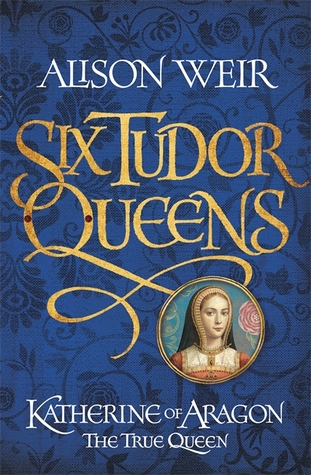
Six Tudors Queens - Katherine of Aragon I thought I’d read enough about the Tudors, but it seems that I was wrong. Despite having read about Henry VIII’s first wife, Katherine of Aragon, several times before, I was still able to enjoy this new fictional account of her life – the first in a planned series called Six Tudor Queens in which Alison Weir will devote one novel to each of Henry’s six wives.

Katherine of Aragon, the True Queen is a straightforward retelling of Katherine’s story, beginning in 1501 with her arrival in England at the age of sixteen to marry Prince Arthur, son of Henry VII and Elizabeth of York. The young Katherine is nervous and homesick but as the daughter of Spain’s King Ferdinand and Queen Isabella she is determined to accustom herself to her new country as quickly as possible and prove herself a worthy future queen of England. Her future is thrown into doubt, however, when Arthur dies just a few months into their marriage, leaving Katherine a widow.

In 1509 – after a long period of uncertainty – Katherine marries Arthur’s younger brother, Henry, who has just succeeded to the throne as Henry VIII. At first, Katherine is full of optimism; she and Henry are in love and looking forward to the birth of their first child, which they hope will be one of many. Unfortunately, the reader knows what is coming: a series of miscarriages, stillbirths and infant deaths (a daughter, Mary, would be the only child to survive), and the breakdown of Katherine’s marriage as Henry turns his attentions to Anne Boleyn. A story which began with so much hope and happiness ends in disappointment and heartbreak, but through it all Katherine stands by her conviction that she is Henry’s lawful wife and his one true queen.

As I said above, I have read other novels which tell Katherine’s story in fictional form, but this is certainly the most detailed and the most thorough. While most books tend to concentrate on Katherine’s later years and Henry’s mission to have their marriage annulled (which came to be described as ‘the King’s Great Matter), Alison Weir spends a lot of time on the period before they were married when Katherine, as Prince Arthur’s widow, was living at the court of Henry VII. I enjoyed reading about all the intrigue taking place within Katherine’s circle as her dowry of plate and jewels becomes the centre of a power struggle between strict Spanish duennas and manipulative ambassadors.

There were times, though, when I wondered whether this book really needed to be so long and so detailed. Alison Weir is a historian who writes non-fiction as well as fiction, but this is a novel rather than a factual biography and I think there were probably things which could easily have been left out to help the story flow better. Still, because Alison Weir does write so much non-fiction, I could trust that the background to this novel would have been fully researched and I had no problems regarding accuracy. However, there are a few controversies surrounding Katherine over which historians disagree, such as the question of whether her marriage to Arthur was ever consummated (Henry used this as the basis to his claim that his own marriage to Katherine was invalid). As Katherine is the heroine of the novel, we are asked to accept her own version of events (that is, that she and Arthur never consummated their marriage) and believe that she was telling the truth.

This is not an unbiased portrayal of Katherine, then; the whole novel is written from her own perspective, so we don’t hear anyone else’s side of the story. Because Katherine falls in love with Henry early on and continues to love him no matter what, she rarely attributes any blame to him – whatever he does is always the fault of someone else: usually Cardinal Wolsey, Thomas Cromwell or Anne Boleyn. It’s understandable, I suppose, that Anne Boleyn is very much the villain of Katherine’s story, but Anne will be the central focus of the second book in the series so it will be interesting to have a chance to see things from her point of view.

I thought this was an enjoyable start to a new series and I’m now looking forward to reading about the other five queens!