Sons of the Blood by Robyn Young

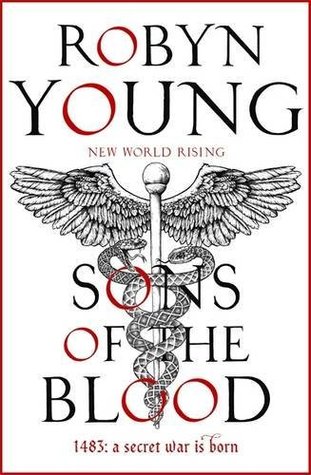
Sons of the Blood Having read Robyn Young’s Robert the Bruce trilogy recently, I was looking forward to reading her new novel, Sons of the Blood. It’s the first in a planned series – New World Rising – set in Renaissance Europe and following the adventures of Jack Wynter, the illegitimate son of royal chamberlain Sir Thomas Vaughan.

As the novel opens in 1483, the unexpected death of Edward IV after several years of stability has plunged England back into turmoil and uncertainty. Just when it seemed that the Wars of the Roses were over, the country now faces the prospect of another child king on the throne, unable to provide the strong leadership required. But as Thomas Vaughan escorts the young Edward, Prince of Wales, to London to be crowned, they are intercepted at Stony Stratford by the prince’s uncle, Richard, Duke of Gloucester.

Accused of treason and fearing for his life, Thomas finds an opportunity to send one of his squires to Seville with an urgent message for his son, Jack, who has been in Spain for several months guarding a mysterious leather scroll case. To Jack, this had seemed like an excuse to remove an inconvenient illegitimate son from the country, but when he learns that his father’s messenger has been attacked on his way to Seville, he realises that the case really does contain secrets of great importance and that men are prepared to kill to get their hands on these secrets.

Returning to England in the hope of learning more, Jack finds himself surrounded by enemies, one of whom is his own half-brother, Harry Vaughan. Desperate to find answers to his questions, Jack decides to seek the help of another boy to whom Sir Thomas had been a father of sorts – the young Edward V, who has now been deposed by his uncle Richard, and has disappeared, along with his brother, into the Tower of London. As rumours of the princes’ deaths begin to spread throughout the city, Jack is drawn into one of history’s greatest mysteries.

I have to say, this wasn’t quite what I expected when I first heard that Robyn Young was writing a series set during the Renaissance; I had thought there would be a wider geographical scope, so I was surprised to find that this first book is set mainly in Richard III’s England. The Wars of the Roses is one of my favourite subjects to read about, though, so I’m not complaining – and I’m sure Jack’s adventures will be taking him to other locations in future books.

I have read a lot of different portrayals of Richard III over the last few years and a range of different theories and opinions on the question of what really happened to the Princes in the Tower. From the beginning, Robyn Young’s depiction of Richard was quite negative – he comes across as ambitious and ruthless (a human being, though, rather than an evil monster) – so I thought I knew which direction the story was going to take. I was wrong, of course! Richard is responsible for a lot of the bad things that happen in the novel, but not all of them, and it’s worth mentioning that Henry Tudor isn’t exactly shown in a very good light either.

As usual with one of Young’s novels, there’s a lot of additional material which all adds to the experience: maps, character lists (clearly showing who is real and who is fictional) and a comprehensive list of sources. Young admits in her author’s note that she had little prior knowledge of the fifteenth century, having been immersed in earlier periods while writing her previous trilogies, but I would never have guessed because, as far as the historical background is concerned, everything in the novel feels fully researched and authentic. I think she does a good job of working Jack Wynter’s fictional story into the historical facts – however, I’m slightly disappointed that the conspiracy/secret society/mysterious document aspect of the novel is so dominant. This period of history is interesting enough as it is!

With Sons of the Blood, the New World Rising series is off to a good start. I did enjoy it, despite having one or two reservations, and now I’m curious to see how the story is going to develop.
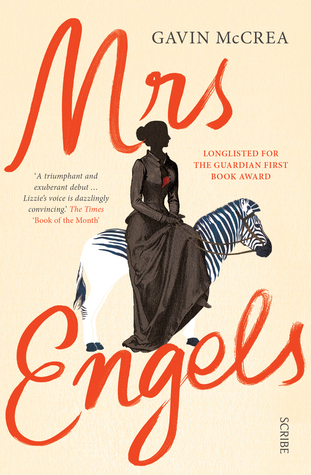
Mrs Engels by Gavin McCrea

Mrs Engels This is another book read for my Reading the Walter Scott Prize project and another one that I’ve enjoyed. I don’t think I had even heard of it until it appeared on the shortlist for this year’s prize and I’m pleased that it did because otherwise I would probably never have read it and would never have had the opportunity to get to know Lizzie Burns – the Mrs Engels of the title.

The novel is narrated by Lizzie herself, a working-class Irish woman who becomes the lover and common-law wife of the German philosopher Friedrich Engels. In 1870, when we first meet Lizzie, she and Engels are boarding a train which will take them from Manchester to London, where they will be moving into a house in Primrose Hill close to Friedrich’s friend, Karl Marx. The narrative then moves backwards and forwards in time, so that as well as watching the couple settle into their new home, we also learn something of Lizzie’s early life in Manchester, where she and her sister, Mary, grew up in poverty before starting work at Ermen & Engels cotton mill – something which will bring them into contact with the man who is to become such an important part of both of their lives.

I came to this book knowing almost nothing about Friedrich Engels and his work (other than that he co-authored The Communist Manifesto with Karl Marx) and I wondered whether that would be a problem. I needn’t have worried, though, because the focus of this novel is very much on the details of his personal life and his relationships with the Burns sisters, first Mary, his partner of many years, and then – after her death – Lizzie. It seems that little is known about the real Lizzie and Mary, so I kept in mind while reading that not everything that happens in the novel is historically accurate and that a lot of it is the product of the author’s imagination.

One thing we do know about Lizzie Burns is that Marx’s daughter Eleanor said she was “illiterate and could not read or write but she was true, honest and in some ways as fine-souled a woman as you could meet”. I think Gavin McCrea does a great job in Mrs Engels of displaying these different facets of Lizzie’s character. On the surface she’s strong, outspoken and tough – she has to be, to cope with everything life throws at her – but underneath there’s an intelligence, a sensitivity and a sharp wit. Through his choice of words and spellings, McCrea also manages to convey the fact that she is illiterate and poorly educated. The result is a narrative voice which is unusual, memorable and perfectly suited to Lizzie’s character.

Mrs Engels is not a perfect novel – the transitions between time periods are not always clear and the characters, with the exception of Lizzie, feel thinly drawn and difficult to like. However, I found it interesting to read the descriptions of the living and working conditions experienced by mill workers in Victorian Manchester and the challenges faced by a working-class woman who suddenly finds herself moving up the social ladder and trying to manage a London household. It’s a fascinating read – and I loved the fact that a woman who was unable to tell her own story has finally been given a voice.

The Rider of the White Horse by Rosemary Sutcliff

The Rider of the White Horse Rosemary Sutcliff is an author I’ve been meaning to read for years, having heard only good things about her work. I wasn’t planning to start with this particular book (The Eagle of the Ninth and Sword at Sunset are the ones which have been recommended to me most often) but as I had the opportunity to read The Rider of the White Horse via NetGalley and have been enjoying other books set in the same time period recently, I thought I would give it a try.

Many of Rosemary Sutcliff’s books were written for younger readers, but this is one of her adult novels, published in 1959. The ‘rider’ of the title is Sir Thomas Fairfax, also known as Black Tom, commander-in-chief of the Parliamentarian army during the English Civil War, and the ‘white horse’ refers to his stallion, White Surrey. Sutcliff’s novel tells Fairfax’s story, from the events leading up to the conflict, to his exploits on the battlefield and the formation of the New Model Army. But this is also the story of Anne Fairfax, the devoted wife who – along with their daughter, Little Moll – follows her husband to war.

Written largely from Anne’s perspective, The Rider of the White Horse is a moving portrayal of the relationship between husband and wife. It’s not so much a sweeping romance as a quiet, poignant tale of a woman with a passionate love for a man whom she knows does not – and probably never will – feel the same way about her. Despite this, Anne wants to be there for Thomas whenever he needs her; she wants to help in any way she can. Following him on campaign, travelling from one town to another, a lot of time is spent anxiously awaiting news of Thomas, but Anne also has adventures of her own – including one episode in which she is captured by the Royalist commander, Lord Newcastle.

NPG D27098; Thomas Fairfax, 3rd Baron Fairfax of Cameron possiby by Francis Engleheart, after Edward Bower As for Thomas Fairfax himself, I have to admit that he’s someone I previously knew very little about. Although I’ve read other books (both fiction and non-fiction) about the Civil War, Fairfax tends to be overshadowed by Oliver Cromwell. In this novel, he comes across as a decent, humble, honourable man who loves his daughter and – even if he is unable to return her feelings – appreciates and respects his wife. He is portrayed very sympathetically, which I hadn’t really expected as from the little I’d read about him I had picked up a more negative impression. Of course, that could be partly because I tend to be drawn more to the Royalist side anyway (not for any good reason, I have to confess, but purely because from a fictional point of view, they seem more colourful and interesting). I have no idea how accurate this portrait of Thomas is – or how much of Anne’s story is based on fact – but I did like this version of both characters.

I’ve never been a fan of battle scenes as I often find them boring and difficult to follow. There are several in this novel and while I could see that they were detailed and well-written, they didn’t interest me as much as the domestic and family scenes. Luckily for me, there are plenty of these too. What I’ll remember most, though, is the character of Anne and her love for a man who is simply not able to give her what she wants, cherishing each moment of happiness, however brief and fleeting…“You could not hold a winged thing; you could not even perfectly remember it afterwards, for that, too, was a kind of holding.”

The Mauritius Command by Patrick O’Brian

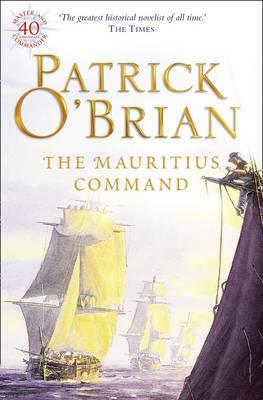
The Mauritius Command This is the fourth of Patrick O’Brian’s novels following the adventures of Captain Jack Aubrey and Dr Stephen Maturin. I have always been (and I’m sure I always will be) a landlubber, so I’m actually quite proud of myself for managing to get so far into a series which is set largely at sea! Unfortunately, the nautical details and terminology are not getting any easier for me to understand and that made this fourth novel, in particular, slightly challenging at times – but I did still enjoy this one, if not quite as much as I enjoyed the first three books.

In the intervening period between the end of the previous novel, HMS Surprise, and the beginning of The Mauritius Command, Jack Aubrey has married Sophie Williams and she has given birth to twin girls. Despite these happy events, however, Jack is feeling restless and miserable. Currently ashore with no ship to command, he is having to live on half-pay, and as his mother-in-law has lost all her money, including Sophie’s dowry, the whole family are crowded together in a small, damp cottage on the Hampshire coast.

Jack’s spirits are lifted when his friend, Stephen Maturin – ship’s surgeon, naturalist and occasional spy – arrives bearing the news that Jack is required to lead a naval campaign against the French with the aim of taking control of the islands of Mauritius and La Réunion. Setting sail aboard the HMS Boadicea, a thirty-eight-gun frigate, Jack is temporarily promoted to commodore and given command of a squadron. As if his mission wasn’t already going to be difficult enough, he also faces problems in the form of his own captains: Lord Clonfert, a handsome, dashing young man who is determined to outdo everybody else, and Captain Corbett, who believes in strict discipline and whose crew are always on the verge of mutiny.

Until now, we have only seen Jack Aubrey as captain of one individual ship; here he is in command of several, something which brings new challenges and requires a new set of skills. Whereas in the past he has been able to concentrate on getting to know his own crew and his own ship, now he is responsible for coordinating the movements of more than one vessel and working with other officers of various ranks.

‘Why, don’t you see,’ cried Jack, his mind fixed upon this question of command, ‘it has always been the command of a single ship. You are bred up to it—it comes natural. But high command is something you come to suddenly, with no experience. There are captains under you; and handling the captains of a squadron, each one of them God the Father of his own quarterdeck, is a very different matter from handling a ship’s company under your own eye. You can rarely choose them and you can rarely get rid of them…’

The plot of The Mauritius Command is based on a real naval campaign in the Indian Ocean (the Mauritius Campaign of 1809-11, part of the Napoleonic Wars) and I think this is possibly why I didn’t get on as well with this book as I did with the previous ones. Sticking so closely to historical events meant less time was spent on fictional storylines and on developing the friendship between Aubrey and Maturin; apart from the opening chapters, there is almost no land-based action either and a large portion of the novel is devoted to naval battles which, well-written and accurate as they may be, I find it hard to get excited about. This is just my personal opinion, of course, and I’m sure readers with different tastes will love this book for the very reasons that I didn’t!

Although we are given a glimpse at the beginning of the book of Jack’s married life with Sophie (and have our first chance to meet the twins) I was sorry not to see anything of Diana Villiers in this novel and I’m hoping she will make an appearance in the next one. So far I have found each book in the series to have its own different strengths and weaknesses; maybe book five (Desolation Island) will be more to my taste than this one.

Six Tudor Queens: Katherine of Aragon, the True Queen by Alison Weir

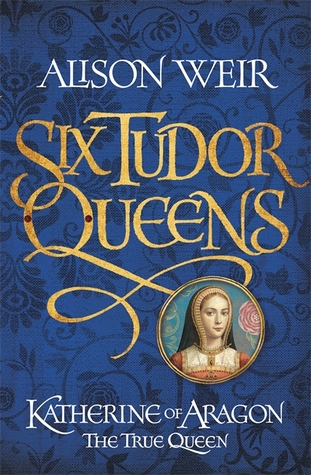
Six Tudors Queens - Katherine of Aragon I thought I’d read enough about the Tudors, but it seems that I was wrong. Despite having read about Henry VIII’s first wife, Katherine of Aragon, several times before, I was still able to enjoy this new fictional account of her life – the first in a planned series called Six Tudor Queens in which Alison Weir will devote one novel to each of Henry’s six wives.

Katherine of Aragon, the True Queen is a straightforward retelling of Katherine’s story, beginning in 1501 with her arrival in England at the age of sixteen to marry Prince Arthur, son of Henry VII and Elizabeth of York. The young Katherine is nervous and homesick but as the daughter of Spain’s King Ferdinand and Queen Isabella she is determined to accustom herself to her new country as quickly as possible and prove herself a worthy future queen of England. Her future is thrown into doubt, however, when Arthur dies just a few months into their marriage, leaving Katherine a widow.

In 1509 – after a long period of uncertainty – Katherine marries Arthur’s younger brother, Henry, who has just succeeded to the throne as Henry VIII. At first, Katherine is full of optimism; she and Henry are in love and looking forward to the birth of their first child, which they hope will be one of many. Unfortunately, the reader knows what is coming: a series of miscarriages, stillbirths and infant deaths (a daughter, Mary, would be the only child to survive), and the breakdown of Katherine’s marriage as Henry turns his attentions to Anne Boleyn. A story which began with so much hope and happiness ends in disappointment and heartbreak, but through it all Katherine stands by her conviction that she is Henry’s lawful wife and his one true queen.

As I said above, I have read other novels which tell Katherine’s story in fictional form, but this is certainly the most detailed and the most thorough. While most books tend to concentrate on Katherine’s later years and Henry’s mission to have their marriage annulled (which came to be described as ‘the King’s Great Matter), Alison Weir spends a lot of time on the period before they were married when Katherine, as Prince Arthur’s widow, was living at the court of Henry VII. I enjoyed reading about all the intrigue taking place within Katherine’s circle as her dowry of plate and jewels becomes the centre of a power struggle between strict Spanish duennas and manipulative ambassadors.

There were times, though, when I wondered whether this book really needed to be so long and so detailed. Alison Weir is a historian who writes non-fiction as well as fiction, but this is a novel rather than a factual biography and I think there were probably things which could easily have been left out to help the story flow better. Still, because Alison Weir does write so much non-fiction, I could trust that the background to this novel would have been fully researched and I had no problems regarding accuracy. However, there are a few controversies surrounding Katherine over which historians disagree, such as the question of whether her marriage to Arthur was ever consummated (Henry used this as the basis to his claim that his own marriage to Katherine was invalid). As Katherine is the heroine of the novel, we are asked to accept her own version of events (that is, that she and Arthur never consummated their marriage) and believe that she was telling the truth.

This is not an unbiased portrayal of Katherine, then; the whole novel is written from her own perspective, so we don’t hear anyone else’s side of the story. Because Katherine falls in love with Henry early on and continues to love him no matter what, she rarely attributes any blame to him – whatever he does is always the fault of someone else: usually Cardinal Wolsey, Thomas Cromwell or Anne Boleyn. It’s understandable, I suppose, that Anne Boleyn is very much the villain of Katherine’s story, but Anne will be the central focus of the second book in the series so it will be interesting to have a chance to see things from her point of view.

I thought this was an enjoyable start to a new series and I’m now looking forward to reading about the other five queens!

Six in Six for 2016

I look forward to Jo’s Six in Six meme every July! I think it’s a great way to reflect on our reading over the first six months of the year. The idea is to choose six categories (either from the list Jo has provided or new categories of your own) and under each heading list six of the books or authors you’ve read so far this year.

6

I’ve had fun trying to fit my books into categories and this is what I’ve decided on:

Six books set in the 17th century

1. The White Witch by Elizabeth Goudge
2. Fire by CC Humphreys
3. Shadow on the Highway by Deborah Swift
4. God and the Wedding Dress by Marjorie Bowen
5. The Ashes of London by Andrew Taylor
6. Prince Rupert: The Last Cavalier by Charles Spencer (non-fiction)

***

Six Victorian classics

1. Vanity Fair by William Makepeace Thackeray
2. Lorna Doone by RD Blackmore
3. Shirley by Charlotte Bronte
4. Phineas Redux by Anthony Trollope
5. The Time Machine by HG Wells
6. The Heir of Redclyffe by Charlotte M Yonge

***

Six books published between 1900 and 1950

1. Here Comes the King by Philip Lindsay (1933)
2. The Road to Wigan Pier by George Orwell (1937)
3. The Viper of Milan by Marjorie Bowen (1906)
4. The Nutmeg Tree by Margery Sharp (1937)
5. To the Lighthouse by Virginia Woolf (1927)
6. Kristin Lavransdatter by Sigrid Undset (1920)

***

Six books about historical women

1. Mary Anne by Daphne du Maurier (Mary Anne Clarke)
2. The People’s Queen by Vanora Bennett (Alice Perrers)
3. The Queen’s Choice by Anne O’Brien (Joanna of Navarre)
4. The Virgin Queen by Maureen Peters (Elizabeth I)
5. Katherine of Aragon, the True Queen by Alison Weir (Katherine of Aragon)
6. The Queenmaker by Maureen Peters (Bess of Hardwick)

***

Six books about historical men

1. Renegade by Robyn Young (Robert the Bruce)
2. Dictator by Robert Harris (Cicero)
3. The Lion and the Cross by Joan Lesley Hamilton (St Patrick)
4. Gilded Splendour by Rosalind Laker (Thomas Chippendale)
5. Arctic Summer by Damon Galgut (EM Forster)
6. The Confession of Richard Plantagenet by Dora Greenwell McChesney (Richard III)

***

Six books set in different countries

1. Mauprat by George Sand (France)
2. Sleeper’s Castle by Barbara Erskine (Wales)
3. Death in Berlin by MM Kaye (Germany)
4. The Red Lily Crown by Elizabeth Loupas (Italy)
5. A Place Called Winter by Patrick Gale (Canada)
6. Some Luck by Jane Smiley (USA)

***

Have you read any of these books? Have you posted or are you planning to post your own sixes this year?

Historical Musings #16: Exploring Europe

Historical Musings I think it’s safe to say that, if you live in the UK, the subject of Europe will have been very much in your thoughts over the last few weeks. Now, don’t worry – I have always made an effort to keep politics away from my blog, so I’m not planning to discuss the EU referendum here or to ask whether you voted Remain or Leave. However, when I sat down to choose a topic for this month’s Historical Musings post, the first thing that came to mind was Europe…and specifically, how little I’ve read about the histories of certain European countries.

Obviously, I have read a large number of historical fiction novels covering various periods of British history and quite a lot set in France and Italy. Looking back through my blog archives, I can see that I’ve read several historical novels set in Spain (including The Last Queen by CW Gortner, the story of Juana of Castile, and By Fire, By Water by Mitchell James Kaplan, set in a Jewish community in 15th century Granada) and have also been introduced to Dutch history through books like Jessie Burton’s The Miniaturist, Tracy Chevalier’s Girl with a Pearl Earring and Alexandre Dumas’ The Black Tulip.

The Wild Girl German history has featured less often in my reading – apart from books about the Second World War, I can only really think of The Wild Girl by Kate Forsyth (the story of Dortchen Wild and her relationship with the Brothers Grimm) and The Beggar King by Oliver Pötzsch (a mystery set in 17th century Bavaria). My recent read of Kristin Lavransdatter, which I wrote about last week, is the first time I’ve read about medieval Norway, and the only other book I can think of which touched on Norwegian history was Lucinda Riley’s The Storm Sister.

Far to Go I’ve read one novel set in 18th century Portugal (The Devil on her Tongue by Linda Holeman), one in 1930s and 40s Hungary (The Invisible Bridge) and one in the former Czechoslovakia (Far to Go by Alison Pick). Dorothy Dunnett’s Lymond Chronicles and House of Niccolo series have introduced me to the histories of several other European countries, including Cyprus (Race of Scorpions), Iceland (To Lie with Lions) and Malta (The Disorderly Knights). These novels, though – excellent as they are – only cover a brief time period and I’m very aware that I still have a lot to learn.

This month, then, I’m looking for some suggestions. I would love to hear about any historical fiction you’ve read set in any of the European countries I’ve already mentioned and also in any I haven’t – for example, Sweden, Denmark, Finland, the Baltic states, Austria, Greece (other than ancient history and mythology), Bulgaria, Romania/the Balkans, Poland, Switzerland to name just a few. I’ve read contemporary fiction set in some of these countries but know little to nothing of their histories and that’s something I would like to change.