Six in Six for 2016

I look forward to Jo’s Six in Six meme every July! I think it’s a great way to reflect on our reading over the first six months of the year. The idea is to choose six categories (either from the list Jo has provided or new categories of your own) and under each heading list six of the books or authors you’ve read so far this year.

6

I’ve had fun trying to fit my books into categories and this is what I’ve decided on:

Six books set in the 17th century

1. The White Witch by Elizabeth Goudge
2. Fire by CC Humphreys
3. Shadow on the Highway by Deborah Swift
4. God and the Wedding Dress by Marjorie Bowen
5. The Ashes of London by Andrew Taylor
6. Prince Rupert: The Last Cavalier by Charles Spencer (non-fiction)

***

Six Victorian classics

1. Vanity Fair by William Makepeace Thackeray
2. Lorna Doone by RD Blackmore
3. Shirley by Charlotte Bronte
4. Phineas Redux by Anthony Trollope
5. The Time Machine by HG Wells
6. The Heir of Redclyffe by Charlotte M Yonge

***

Six books published between 1900 and 1950

1. Here Comes the King by Philip Lindsay (1933)
2. The Road to Wigan Pier by George Orwell (1937)
3. The Viper of Milan by Marjorie Bowen (1906)
4. The Nutmeg Tree by Margery Sharp (1937)
5. To the Lighthouse by Virginia Woolf (1927)
6. Kristin Lavransdatter by Sigrid Undset (1920)

***

Six books about historical women

1. Mary Anne by Daphne du Maurier (Mary Anne Clarke)
2. The People’s Queen by Vanora Bennett (Alice Perrers)
3. The Queen’s Choice by Anne O’Brien (Joanna of Navarre)
4. The Virgin Queen by Maureen Peters (Elizabeth I)
5. Katherine of Aragon, the True Queen by Alison Weir (Katherine of Aragon)
6. The Queenmaker by Maureen Peters (Bess of Hardwick)

***

Six books about historical men

1. Renegade by Robyn Young (Robert the Bruce)
2. Dictator by Robert Harris (Cicero)
3. The Lion and the Cross by Joan Lesley Hamilton (St Patrick)
4. Gilded Splendour by Rosalind Laker (Thomas Chippendale)
5. Arctic Summer by Damon Galgut (EM Forster)
6. The Confession of Richard Plantagenet by Dora Greenwell McChesney (Richard III)

***

Six books set in different countries

1. Mauprat by George Sand (France)
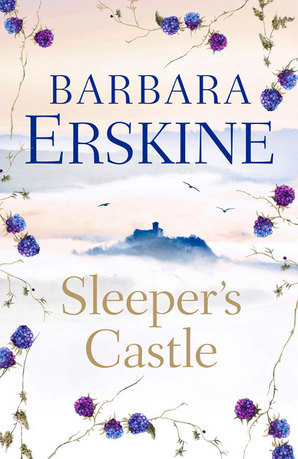
2. Sleeper’s Castle by Barbara Erskine (Wales)
3. Death in Berlin by MM Kaye (Germany)
4. The Red Lily Crown by Elizabeth Loupas (Italy)
5. A Place Called Winter by Patrick Gale (Canada)
6. Some Luck by Jane Smiley (USA)

***

Have you read any of these books? Have you posted or are you planning to post your own sixes this year?

Historical Musings #16: Exploring Europe

Historical Musings I think it’s safe to say that, if you live in the UK, the subject of Europe will have been very much in your thoughts over the last few weeks. Now, don’t worry – I have always made an effort to keep politics away from my blog, so I’m not planning to discuss the EU referendum here or to ask whether you voted Remain or Leave. However, when I sat down to choose a topic for this month’s Historical Musings post, the first thing that came to mind was Europe…and specifically, how little I’ve read about the histories of certain European countries.

Obviously, I have read a large number of historical fiction novels covering various periods of British history and quite a lot set in France and Italy. Looking back through my blog archives, I can see that I’ve read several historical novels set in Spain (including The Last Queen by CW Gortner, the story of Juana of Castile, and By Fire, By Water by Mitchell James Kaplan, set in a Jewish community in 15th century Granada) and have also been introduced to Dutch history through books like Jessie Burton’s The Miniaturist, Tracy Chevalier’s Girl with a Pearl Earring and Alexandre Dumas’ The Black Tulip.

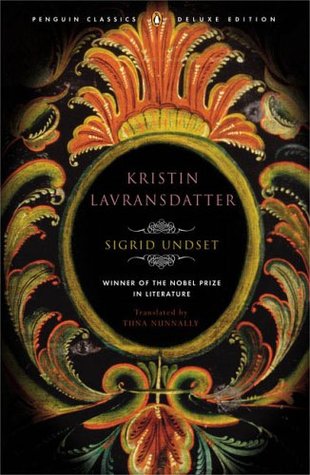
The Wild Girl German history has featured less often in my reading – apart from books about the Second World War, I can only really think of The Wild Girl by Kate Forsyth (the story of Dortchen Wild and her relationship with the Brothers Grimm) and The Beggar King by Oliver Pötzsch (a mystery set in 17th century Bavaria). My recent read of Kristin Lavransdatter, which I wrote about last week, is the first time I’ve read about medieval Norway, and the only other book I can think of which touched on Norwegian history was Lucinda Riley’s The Storm Sister.

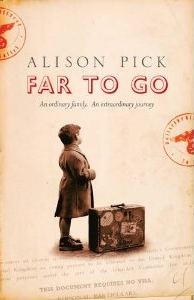
Far to Go I’ve read one novel set in 18th century Portugal (The Devil on her Tongue by Linda Holeman), one in 1930s and 40s Hungary (The Invisible Bridge) and one in the former Czechoslovakia (Far to Go by Alison Pick). Dorothy Dunnett’s Lymond Chronicles and House of Niccolo series have introduced me to the histories of several other European countries, including Cyprus (Race of Scorpions), Iceland (To Lie with Lions) and Malta (The Disorderly Knights). These novels, though – excellent as they are – only cover a brief time period and I’m very aware that I still have a lot to learn.

This month, then, I’m looking for some suggestions. I would love to hear about any historical fiction you’ve read set in any of the European countries I’ve already mentioned and also in any I haven’t – for example, Sweden, Denmark, Finland, the Baltic states, Austria, Greece (other than ancient history and mythology), Bulgaria, Romania/the Balkans, Poland, Switzerland to name just a few. I’ve read contemporary fiction set in some of these countries but know little to nothing of their histories and that’s something I would like to change.

Kristin Lavransdatter by Sigrid Undset

Kristin Lavransdatter I have always loved long books, the sort you can bury yourself in for weeks, becoming immersed in a fully-formed fictional world and getting to know characters who, by the time you reach the final page, feel almost like personal friends. Kristin Lavransdatter, though, is more than just a ‘long’ book – it’s a very long book! With over 1,100 pages in the edition I read, it’s similar in length to classics like War and Peace, Don Quixote and Les Miserables and left me with a similar mixture of feelings on finishing: a sense of achievement at making it to the end; sadness at having to say goodbye to Kristin and her family; and, I have to admit, relief at finally being able to move on to something else. I enjoyed Kristin Lavransdatter – loved it at times – but it’s not always an easy book to read, for reasons which I’ll explain below.

So far I have been describing this as a ‘book’, but in fact Sigrid Undset originally wrote three individual books about Kristin – The Wreath (first published in 1920), The Wife (1921) and The Cross (1922) – which have been combined into one volume in this Penguin Classics edition. It’s still possible to buy them separately (and it would probably seem less daunting that way) but they don’t stand alone very well at all and really do feel like three sections of a longer novel. After finishing the first part I moved straight on to the second and then the third and I was glad I took this approach otherwise I would probably have lost track of what was happening.

Set in the 14th century, Kristin Lavransdatter is, unsurprisingly, the story of Kristin, daughter of Lavrans. We first meet Kristin as a young girl growing up on her parents’ manor at Jorundgaard in Sil, a rural area of Norway. A good, honourable, hard-working man, Lavrans gains respect and admiration wherever he goes and he and Kristin are very close. His wife, Ragnfrid, however, has never fully recovered from the loss of three young sons and as a result her relationships with both Lavrans and Kristin are strained.

Early in the novel, Kristin is betrothed to the quiet, reliable Simon Darre, whose family own a neighbouring estate. She has no reason to dislike Simon, but she feels nothing for him and longs to experience the sort of passion her own parents’ marriage lacks. Her chance comes when she meets and falls in love with Erlend Nikulausson, a man who is handsome, charming and romantic – in other words, everything Simon isn’t. Kristin knows that this is the husband she has been dreaming of and even the knowledge that he has been excommunicated by the church for living with another man’s wife doesn’t change her mind. When Simon finds out about Erlend he agrees to break off the betrothal, but it takes a lot longer for Kristin to persuade Lavrans and Ragnfrid – so long that by the time she is eventually allowed to marry Erlend she is already pregnant with his child.

In case you’re thinking I’ve given away too much of the plot, all of the above happens in The Wreath alone. The other two parts of the book – The Wife and The Cross – explore the consequences of Kristin’s decision to marry Erlend rather than Simon. And the consequences are varied and far-reaching, affecting not only Kristin herself but everyone else around her. It’s a sad and tragic story and this is one of the reasons why, as I mentioned earlier, this is not the easiest of books to read. Whether it’s a death, an illness or an accident, a murder, an act of betrayal or an unhappy marriage, each and every character is subjected to a relentless stream of misery.

My heart ached for Kristin as she discovered that the man she had married was not all that she had hoped he would be – not a hero but a flawed human being – and that making their relationship work was going to be difficult. However, I also had some sympathy for Erlend; he is not a bad man but he is sometimes a weak one, with a tendency to act before he thinks and with none of the skills necessary to manage a farm and household effectively. He makes mistakes and has to live with those mistakes, but so does Kristin and I thought it was unfair of her to place so much of the blame on him. I also felt sorry for their young children, for Simon (who ended up being one of my favourite characters) and for Kristin’s sister, Ramborg. As I said, this is not a happy story for anyone!
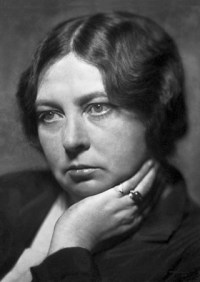
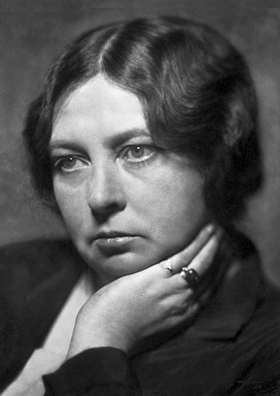
Sigrid Undset (1882-1949)

Sigrid Undset (1882-1949)

As we accompany Kristin on her journey through life, we are also given a lot of information on the history and politics of the period. This becomes increasingly important as Erlend finds himself embroiled in a plot against the king and, I have to admit, I found some of this difficult to follow. If I read the book again (as I’m sure I will want to at some point in the future) I’ll have to concentrate more on that aspect of the story. Of more interest to me was the portrayal of daily life in the valleys and mountains of medieval Norway, a way of life strongly influenced by the Catholic Church, but also steeped in superstition and folklore. The publication of Kristin Lavransdatter led to Sigrid Undset being awarded the 1928 Nobel Prize in Literature “principally for her powerful descriptions of Northern life during the Middle Ages”.

Finally, I should mention that Kristin Lavransdatter was originally written in Norwegian. The English translation I read was a recent one by Tiina Nunnally and I had no problems with it; I thought it was very clear and readable. I’ve heard that the earlier translation from the 1920s by Charles Archer and JS Scott is not as accessible, so I’m happy that I made the right choice.

Kristin Lavransdatter was the book selected for me in the Classics Club Spin back in March – and it kept me busy until June! Now I’m looking forward to starting my next Spin book: Prince of Foxes by Samuel Shellabarger.

Classics Club Monthly Meme: Question #42 – Science Fiction and Mysteries

The Classics Club

On the 26th of each month the Classics Club post a question for members to answer during the following month. It’s been a while since I last participated so I’ve decided to join in with this one. The question below was contributed by club member Fariba:

“What is your favourite mystery or science fiction classic? Why do you think it is a classic? Why do you like it?”

I haven’t read a huge number of classics from either of these genres, so rather than pick favourites I’m simply going to write about a few books I’ve enjoyed which fall into each category. First, let’s look at classic mysteries…

Mysteries

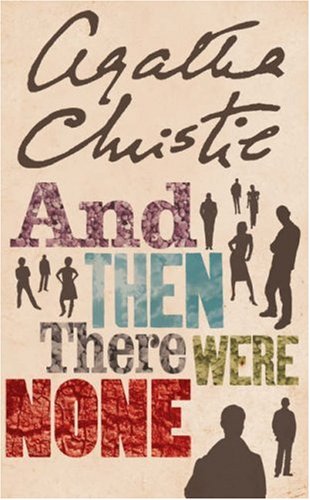
And Then There Were None The first author to come to mind when I think about classic mysteries is Agatha Christie. Although I haven’t read all of her books yet (not even half of them), I’ve loved most of those that I have read, particularly And Then There Were None. It’s such a simple idea – ten strangers are cut off from the world on an isolated island and start to be killed off one by one – but the solution is fiendishly clever!

My next choice is from the Victorian period: a book which TS Eliot famously described as “the first, the longest, and the best of modern English detective novels”. It’s The Moonstone by Wilkie Collins, a novel which centres around the disappearance of a valuable Indian diamond. As anyone who has read it will know, the mystery itself is almost secondary to the wonderful array of memorable narrators, especially Gabriel Betteredge, the elderly servant.

With my interest in history, I also enjoyed The Daughter of Time by Josephine Tey, in which a detective recuperating in hospital decides to amuse himself by trying to solve the mystery of Richard III and the Princes in the Tower. In 1990 this book came top of the British Crime Writers’ Association’s Top 100 Crime Novels of All Time list. I haven’t read any of Tey’s other mysteries yet, but I have A Shilling for Candles on my shelf to read soon.

Science Fiction

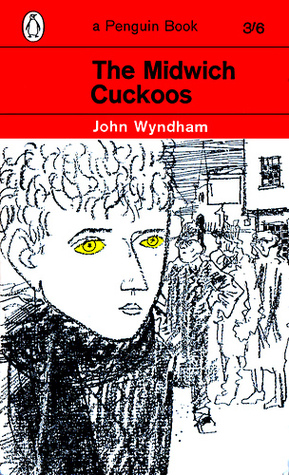
The Midwich Cuckoos A few years ago I read and loved The Midwich Cuckoos, a classic science fiction novel about a mysterious phenomenon which occurs in a quiet English village. I was (and still am) intending to read more of John Wyndham’s books, but haven’t got round to it yet. I know some of his other novels are regarded as being better than this one, so I’m looking forward to trying them for myself.

HG Wells is one of the most famous authors of classic science fiction and so far I have read two of his books – The Island of Doctor Moreau and The Time Machine. I enjoyed both of these novels but I didn’t find either of them entirely satisfying. In the case of The Time Machine in particular, I felt that there were a lot of ideas which could have been explored in more depth. I’m sure I’ll read more of Wells’ novels eventually.

If I can also class dystopian novels as science fiction, there are quite a few that I’ve read including, years ago, 1984 by George Orwell and Brave New World by Aldous Huxley and, more recently, Margaret Atwood’s The Handmaid’s Tale. Otherwise, I really haven’t read much science fiction at all and would love some recommendations!

Have you read any classic mystery or science fiction novels? Which are your favourites?

Gilded Splendour by Rosalind Laker

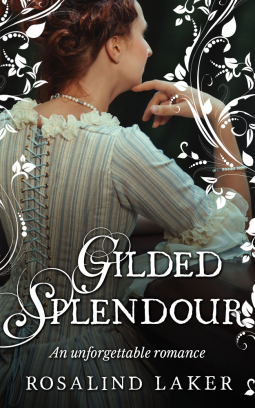
Gilded Splendour First published in 1982, this is the story of the famous 18th century cabinet-maker and furniture designer, Thomas Chippendale, author of The Gentleman and Cabinet Maker’s Director. Not knowing anything about Chippendale before beginning this book, I was interested in learning more and curious to see why Rosalind Laker had thought he would make a good subject for a novel.

It seems that the amount of information available on Thomas Chippendale is limited; although there are plenty of documents which shed some light on his professional career, we know very little of his personal life, which leaves a lot of scope for an author to use his or her imagination. And use her imagination is exactly what Rosalind Laker does, intertwining Chippendale’s story with that of Isabella Woodleigh, who provides a love interest for Thomas throughout the novel – and who is a completely fictional character.

At the beginning of the novel, Isabella is staying with friends of her father’s at Nostell Priory, a grand estate in Yorkshire, while she recuperates following an illness which has left her weak and frail. When she takes delivery of a wooden wheelchair made especially for her by a local carpenter’s apprentice, she is so grateful and impressed that she becomes determined to meet its creator. This is how Isabella is first brought into contact with Thomas Chippendale, a young man who is just starting out on a career in furniture design.

It’s not long before Isabella falls in love with Thomas and at first it seems that her feelings may be returned – until Isabella’s envious younger sister, Sarah, arrives for a visit and immediately begins to cause trouble. Left with no choice other than to marry the wealthy politician Nathaniel Trench, a man she knows she will never love, Isabella’s life starts to follow a very different course to the one she had expected and hoped for. Meanwhile, Thomas leaves Yorkshire for London, where he sets about establishing his own business. His path crosses with Isabella’s again and again, but is there still any chance that Isabella’s dreams will come true?

With a lot of focus on Chippendale’s love affairs, this book will probably be enjoyed by fans of older-style historical romances. Having said that, I didn’t find this a particularly romantic story, mainly because so many of the characters were so difficult to like. While I admired Thomas for what he achieved as a craftsman, I lost respect for him during an incident with Isabella’s sister, Sarah, early in the novel, and after this I wished Isabella would just forget about him and move on. The other men in Isabella’s life treat her badly too, as does Augusta, her own mother – and Sarah is a horrible, manipulative person, with no real explanation given for why she is so cruel and vicious towards everyone she meets.

Despite disliking most of the characters, including the hero, I still found this an interesting read with more to offer than just the romance. We are given a lot of information on architecture, furniture making and interior design; it was impressive to see the amount of effort and hard work which Chippendale put into perfecting his skills and learning new ones – including carving, veneering, marquetry and gilding. I particularly enjoyed reading about the dolls’ house Thomas creates at Nostell; so much care and attention to detail was required to carve miniature bedposts and create little frames for tiny paintings and mirrors.

Gilded Splendour provides some fascinating insights into Thomas Chippendale’s life and work. The only problem is that with so much of the novel devoted to his relationship with an imaginary character, it’s difficult to know which parts of the story are based on fact and which are purely fictional. As long as that doesn’t bother you, I think this book is definitely worth reading.

I received a copy of Gilded Splendour via NetGalley for review.

My Commonplace Book: June 2016

A summary of this month’s reading, in words and pictures.

commonplace book
Definition:
noun
a notebook in which quotations, poems, remarks, etc, that catch the owner’s attention are entered

Collins English Dictionary

~

Daisy

“Do you know what, that does interest me. Not the fact that he was popular before he was arrested. He’s a good-looking man, there’s nothing remarkable in that. What fascinates me is the number of women who, by all accounts, write to him in prison. Why would they do that, do you think?”

“All notorious killers have a fan club,” he says.

Daisy in Chains by Sharon Bolton (2016)

~

Oh, there was pomp and pageantry and all the splendour of trumpets and gold brocade and wine flowing from the conduits, but there was something more that I can only think of as passion – the passion of a queen for her people and of the people for their queen. Already Elizabeth had the gift of investing the most ordinary action with an almost symbolic nobility, and, conversely, the ability to draw a touch of humanity from the most solemn ceremony.

The Virgin Queen by Maureen Peters (1972)

~

At heart he could not abide sense in women. He liked to see them as silly, as light-headed, as vain, as open to ridicule as possible, because they were then in reality what he held them to be, and wished them to be — inferior, toys to play with, to amuse a vacant hour, and to be thrown away.

Shirley by Charlotte Brontë (1849)

~

Katherine of Aragon

Katherine thanked him, drew the curtains and huddled back into her furs. She had found Prince Henry a little disturbing. He was a handsome boy, with undeniable charm, and even in those brief moments he had dominated the courtesies. Arthur had been reserved and diffident, and she could not stop herself from wondering how different things would have been had she been betrothed to his brother. Would she have felt more excited? More in awe? She felt disloyal even thinking about it. How could she be entertaining such thoughts of a child of ten? Yet it was so easy to see the future man in the boy. And it was worrying to realise how effortlessly Arthur could be overshadowed by his younger brother. Pray God Prince Henry was not overambitious!

Katherine of Aragon: The True Queen by Alison Weir (2016)

~

He claims to be himself the author of the nickname. Signor Pronto, he says, was a character in a popular farce, — a most obliging person who always turned up in the nick of time to arrange matters for everybody. The catch word of the farce was: Pronto will manage it! Some great lady was lamenting the difficulties of arranging charades at her country house party; ‘But,’ she cried, ‘I expect Mr. Lufton tomorrow and he will manage it for me.’ At which Crockett, who was present, said: ‘Oh ay! Pronto will manage it.’ After that they all called Lufton Pronto behind his back.

Troy Chimneys by Margaret Kennedy (1953)

~

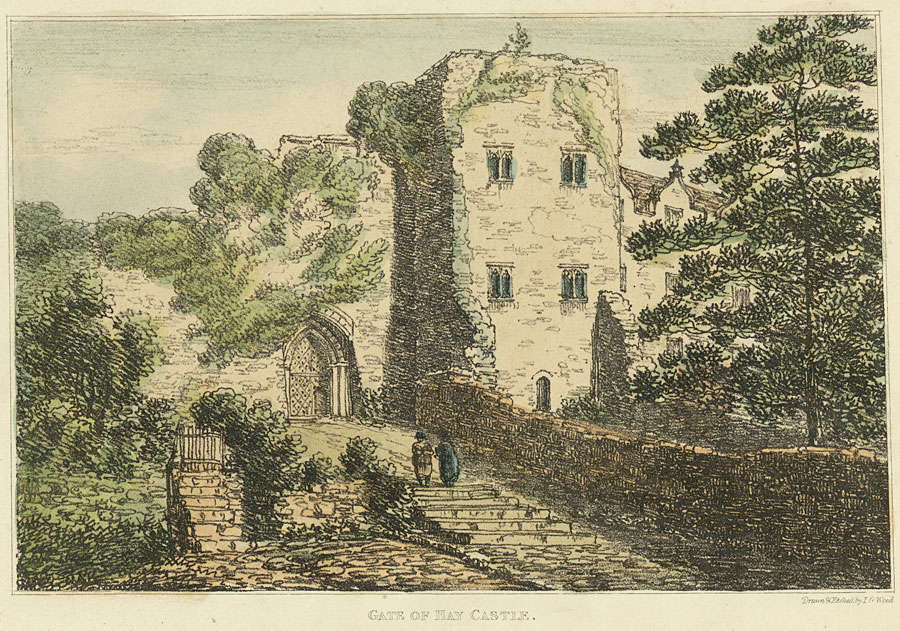
Gate_Of_Hay_Castle

Catrin woke and stared round in the dim light of a flickering fire. Her heart was pounding from the horror of the dream. The dream she had shared, did she but know it, with another woman; a dream she had dreamt recently, at home in Sleeper’s Castle. But she wasn’t at home. She pulled her cloak around her, shivering, confused as to where she was. Then she remembered.

Sleeper’s Castle by Barbara Erskine (2016)

~

She had not come to God with her wreath or with her sins and sorrows, not as long as the world still possessed a drop of sweetness to add to her goblet. But now she had come, after she had learned that the world is like an alehouse: The person who has no more to spend is thrown outside the door.

Kristin Lavransdatter by Sigrid Undset (1920)

~

Favourite books this month: Kristin Lavransdatter, Daisy in Chains and Troy Chimneys

Sleeper’s Castle by Barbara Erskine

Sleeper's Castle After reading Lady of Hay I said I wouldn’t be looking for any more of Barbara Erskine’s novels, but I couldn’t resist this latest one with its unusual title, pretty cover and intriguing synopsis! And actually, Sleeper’s Castle was a pleasant surprise; I enjoyed it much more than any of the other books I’ve read by Erskine.

Despite its name, Sleeper’s Castle is not really a castle; it’s a house near Hay-on-Wye, close to the border between England and Wales. For several years it has been home to Sue and her cat, Pepper, but when Sue decides to go back to Australia she offers her friend, Miranda, the chance to live in Sleeper’s Castle rent-free for a year in return for looking after the house and the cat. Miranda – who prefers to be known as Andy – has been going through a difficult time following the death of her partner, Graham, and is delighted to have the opportunity to get away from London for a while. She looks forward to resuming her career as an illustrator in the peace of the Welsh countryside, safe in the knowledge that Rhona – the jealous, vicious wife Graham never divorced – will never be able to find her now.

As soon as she moves into Sleeper’s Castle, Andy knows she is going to love her new home. It’s an old house, with a history dating back hundreds of years, so at first Andy is not surprised when she begins to have vivid dreams involving a young woman called Catrin who lived at Sleeper’s Castle around the year 1400. Catrin is the daughter of another dreamer – Dafydd, a bard and seer – and as she travels around Wales with her father, entertaining at the castles of his patrons, she finds herself caught up in Owain Glyndŵr’s rebellion against the English.

Most of Barbara Erskine’s books are described as time slip novels and this one really lives up to that description, with the narrative slipping seamlessly from one time period to another so that the boundaries between past and present gradually start to blur. It’s not only Andy who is aware that something unusual is occurring; while she can see into the past, Catrin can also glimpse the future. Less convincingly, there’s also a sort of psychic connection between Andy and Rhona which draws the two women together against their will.

Catrin’s story is fascinating and I could understand why Andy was captivated by it. I have to admit, I know almost nothing about Owain Glyndŵr other than that he is considered a Welsh hero for his attempt to free Wales from the rule of Henry IV, so it was good to have the opportunity to add to my knowledge. As most of the characters in the historical sections of the novel are fictional, however, and Glyndŵr himself appears only occasionally, this book serves as a starting point to finding out more rather than exploring the period in any real depth.

The present day storyline was entertaining too – I loved Bryn the gardener, Meryn the healer and Pepper the cat – but it was spoiled slightly by the Rhona subplot. Rhona’s behaviour becomes so malicious and threatening that I really couldn’t believe Andy didn’t call the police and I couldn’t accept her reasons for not doing so. Very frustrating!

Much has been made of the fact that this book is being published to coincide with the 30th anniversary of Barbara Erskine’s first novel, Lady of Hay, and is set in the same part of the world. Sleeper’s Castle is not a sequel and it’s not necessary to have read Lady of Hay first; this is an enjoyable book in its own right and I’m glad I decided to give Barbara Erskine another chance to impress me.