Historical Musings #13: The author’s note

Historical Musings

If you read historical fiction, you have probably noticed that many books in this genre include an ‘Author’s Note’ or ‘Historical Note’ at either the back or the front. You probably also have an opinion on these, whether good or bad.

In most cases, the author’s note is found at the end of the book and I think this is usually the most sensible place to put it. It means that if we don’t already know the history, we can enjoy the story without having any surprises spoiled for us and without disrupting our immersion in the lives of the characters. When the note appears at the back, the author tends to use it as an opportunity to explain where he or she has deviated away from the known historical facts and where they have had to use their imagination to fill in the gaps. I always appreciate it when an author does this, especially if it’s clear that they’ve researched the topic thoroughly and if they give good, logical reasons for the choices they’ve made in telling the story (rather than using their note as an excuse to explain away something completely implausible).
The Silvered Heart There can be other uses of the Author’s Note too: to share the author’s personal connection to the events of the story; to tell us what happened to any real historical figures after the novel ended; to make suggestions for further reading and even to provide photographs and illustrations – at the end of her novel The Silvered Heart, for example, Katherine Clements shares a picture of her heroine, Lady Katherine Ferrers.

Notes located at the front of the book are less common (although a foreword or introduction sometimes serves the same purpose) and are presumably intended to give us information that the author thinks it would be helpful to know before we start to read. In my current historical fiction read, The White Witch, Elizabeth Goudge places her Authors’ Note at the front and apologises in advance “for the many mistakes I must have unwittingly made”. Several of Dorothy Dunnett’s novels also contain an Author’s Note at the beginning, but they are very brief ones (I don’t feel the lack of detailed notes in her books, though – I think some books benefit from having them and others are fine without). Anya Seton’s Katherine, however, has a very detailed note at the front, describing how the author’s interest in Katherine Swynford and John of Gaunt began, discussing the fates of some of the characters and listing her sources – information which I personally think would have been better placed at the end.
The Iron King I have read novels where the notes are provided at the back but are also referenced directly in the text. Maurice Druon’s Accursed Kings series comes to mind here. This has the advantage of clarifying points as soon as we encounter them in the story, but it can also break the flow of our reading. Not many authors choose this format for their notes – it’s what you would usually expect to find in non-fiction – but I think it suits the style of Druon’s novels.

As well as enjoying good historical notes in my historical fiction, I also appreciate it when a book includes maps, family trees, character lists, glossaries and/or pronunciation guides. Although some of my favourite books don’t contain any of these things (and if a subject really interests me, I’m always happy to do my own research anyway), I do think their inclusion adds something to the overall reading experience. Recently I have been particularly impressed by the amount of additional information provided in Robyn Young’s Robert the Bruce trilogy.

Of course, just because an author has included notes in his or her book, it doesn’t mean that you have to read them! The best novels, in my opinion, should stand alone from supplementary material and should be able to be enjoyed for the story itself whether or not you want to read the notes.

How do you feel about Author’s Notes in historical fiction novels? Do you read them or not? Which authors do you think write the best notes?
The Ashes of London by Andrew Taylor

The Ashes of London I always look forward to new books by Andrew Taylor, having enjoyed several of his others in the past. His last two novels, The Scent of Death and The Silent Boy, both featured the same characters (Edward Savill, an 18th century London clerk, and his family) and I had expected there to be more books in that series. However, The Ashes of London is something different: it’s set more than a century earlier – during the Great Fire of London of 1666 – and introduces us to a completely new set of characters.

Our narrator, James Marwood, is the son of a Fifth Monarchist who has recently been released from the Tower of London. All Marwood wants is a quiet life and the opportunity to escape the taint of his father’s disgrace – but as the flames begin to rage across London, it seems that fate has something else in store for him. While he watches St Paul’s Cathedral burn, a young woman runs past towards the fire, taking Marwood’s cloak with her. Later, a dead body is found in the ashes: a man with his thumbs tied behind his back. Marwood, who works for the government, is given the job of investigating the death.

Running parallel with his story is that of Catherine (Cat) Lovett, daughter of a regicide who was involved in the execution of King Charles I and who has been on the run since the restoration of the monarchy. As more dead bodies are discovered in the aftermath of the fire, it seems that Cat must be connected to the deaths in some way…and it’s up to Marwood to find out how.

I don’t think The Ashes of London is one of Andrew Taylor’s best books (my favourite is still The American Boy), but I did enjoy reading it. While I didn’t find it quite as atmospheric as some of his other novels, the setting was certainly a fascinating one. Not only do we witness the destruction of a city by fire and share the sense of loss felt by those who lived there, we are also given the chance to learn something about the political situation in London at that time. I previously knew almost nothing about the Fifth Monarchists, a religious sect who even during the Restoration were plotting to overthrow the monarchy and prepare for the coming of King Jesus, so I found that aspect of the story very interesting.

I enjoyed getting to know both of our main characters, James Marwood and Cat Lovett. Marwood is not a particularly memorable character in himself, but he interested me due to his background and ties with the Fifth Monarchists and regicides. Cat is a strong, independent person who knows how to look after herself, and while I couldn’t quite believe in her as a realistic 17th century woman, her actions do help to drive the plot forward. Apparently this book is the first in a new series, so I expect – and hope – that we will meet both James and Cat again.

Overall, I found The Ashes of London a good Andrew Taylor novel, if not a great one. I’m looking forward to reading the next book in this series, but while I’m waiting for it I would like to go back and read Bleeding Heart Square, the only one of his historical novels I still haven’t read yet.

Cluny Brown by Margery Sharp

Cluny Brown After reading The Nutmeg Tree a few months ago, I was desperate to read more books by Margery Sharp, so the news that several of her novels were being reissued by Open Road Media came just at the right time for me. I have been lucky enough to receive a copy of Cluny Brown for review via NetGalley, but official release day is Tuesday 12th April so not long to wait!

What I remember most from The Nutmeg Tree is its heroine, the wonderful Julia Packett. Cluny Brown is another memorable character – an intelligent, free-spirited young woman who refuses to ‘know her place’. To the dismay of Uncle Arn, who has brought up the orphaned Cluny, she’s the sort of girl who goes for tea at the Ritz on her own just to see what it’s like and who spends a whole day in bed eating oranges because she’s read in a magazine that it provides revitalisation. Uncle Arn is a plumber, a hard-working man leading a conventional life, and he’s unsure of the best way to deal with Cluny.

It is eventually decided that what Cluny needs is a job – and so she finds herself taking up a position as parlourmaid at Friars Carmel, a country house in Devon which is home to Sir Henry and Lady Carmel and their son, Andrew. With her ‘height, plainness and perfectly blank expression’, Cluny makes a perfect Tall Parlourmaid and soon settles into her new life, taking the neighbour’s dog for walks on her day off and forming a friendship with Mr Wilson, the local pharmacist.

But Cluny is not the only new arrival at Friars Carmel. The Polish academic Adam Belinski has been invited to Devon by Andrew, who is afraid for his friend’s safety. It’s 1938 and with the situation in Europe growing increasingly unsettled, Belinski (who becomes known to the family as The Professor) needs refuge from the Nazis. Andrew himself is still a bachelor but contemplating marriage with the beautiful Betty Cream….and it’s not long before Betty also decides to visit. Life at Friars Carmel is about to become much more complicated!

I loved Cluny Brown as a character. Like Julia in The Nutmeg Tree, she’s a real individual and doesn’t conform to the expectations of others, but at the same time she’s friendly, warm-hearted and always has the best of intentions. Her story is played out during a time of social change and unrest with Britain on the brink of war – and as the novel itself was published in 1944, this adds an interesting angle.

The conclusion to Cluny’s story surprised me, all the more so because what eventually happened was what I had initially expected to happen before Margery Sharp began to lead things in a different direction. I was quite happy with the ending, but I’m not sure whether Cluny would be happy with it once a few years had gone by; it would have been nice if Sharp had written a sequel, both for the pleasure of meeting this set of characters again and also so we could see whether everything did work out for Cluny.

I think I enjoyed The Nutmeg Tree slightly more than this one, but I have been impressed by both of the Margery Sharp books I’ve read so far and am looking forward to reading more of them. I just need to decide which to read next, now that so many tempting titles are being made available to us again.

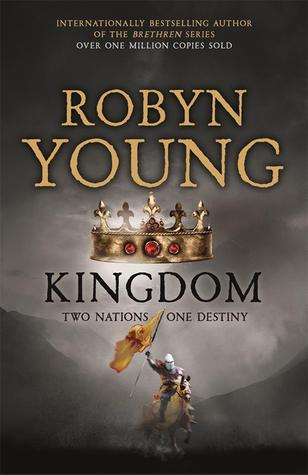
Kingdom by Robyn Young

Kingdom After reading Renegade earlier this year (the second of Robyn Young’s three novels on Robert the Bruce), I decided to move quickly on to the third and final volume, Kingdom. Having had my interest piqued in this period of Scottish history, I wanted to read The Scottish Chiefs by Jane Porter and possibly Nigel Tranter’s Bruce trilogy – but it made sense to finish with this trilogy first to avoid confusion!

Kingdom continues Robert’s story, picking up where Renegade left off. It’s 1306 and Robert Bruce has been crowned King of Scots at last, the other claimants to the throne now either dead or in exile. His dream has finally been achieved – and yet he is still unable to rule in peace. King Edward I of England, who feels he has been betrayed by Robert once too often, is unwilling to give up control of Scotland and sends Aymer de Valence, Earl of Pembroke, north at the head of an army. Just a few months after his coronation, Robert is defeated by Valence at Methven Wood and is forced to flee. Eight years of conflict will follow, ending in 1314 at the Battle of Bannockburn – and if you don’t know what happens at Bannockburn, then I’ll leave you to find out for yourself.

I enjoyed Kingdom more than Renegade, but not as much as the first book, Insurrection. This one is a bit too heavy on the battle scenes for my taste, although that’s understandable as the period covered – 1306 to 1314 – was, as I’ve mentioned above, a time of constant conflict, with Robert and his men caught up in a long series of sieges, raids, battles and skirmishes. It’s also quite a sad book, as Robert’s friends and family pay a heavy price to enable Robert to fulfil his destiny. Some face execution, some are imprisoned and others suffer the indignity of being caged like animals. There’s cruelty on both sides, but also compassion and that’s one of the things I’ve noted throughout this trilogy: that the situation is not just portrayed as a case of Scotland good and England bad or vice versa. In fact, Robert faces not just opposition from Edward and the English but also from Scottish rivals and rebels, all of whom ensure that his path to the throne will not be an easy one.

Robert himself is a more sympathetic character in this novel than in the previous two. I found him difficult to warm to before – although that was partly a result of all the treachery and betrayal he was involved in, as well as the lack of time he had to spend with his wife and daughter – but it seems that with his coronation has come a new maturity and sense of responsibility. He is still a slightly bland character, though; I prefer my heroes to be more charismatic! I actually thought some of the other characters were far more interesting than Robert – Alexander Seton, for example, a nobleman from East Lothian who finds his loyalties torn between his country and his family.

I was sorry to see the last of Edward I, who had been the driving force behind much of what happened in the first two and a half books. He is succeeded by his son, Edward II, who lacks his father’s military and leadership skills and is a less worthy opponent for Robert. But while I can’t say that I liked either of the Edwards, the real villain in Kingdom is Aymer de Valence. Apparently, though, the historical Valence was not exactly as he is portrayed in this trilogy; Robyn Young admits in her author’s note that she hasn’t been very fair to him and that he probably doesn’t deserve to be seen as villainous at all. I would like to give a word of praise to Robyn Young for her author’s notes, by the way – they are much more comprehensive than most.

I have enjoyed reading this trilogy, especially as I previously had only a very basic idea of the history involved, which meant that most of Robert Bruce’s story was new and unfamiliar to me. Now I’m looking forward to exploring the period further!

My Commonplace Book: March 2016

commonplace book
Definition:
noun
a notebook in which quotations, poems, remarks, etc, that catch the owner’s attention are entered

Collins English Dictionary

~

A summary of this month’s reading, in words and pictures.

~

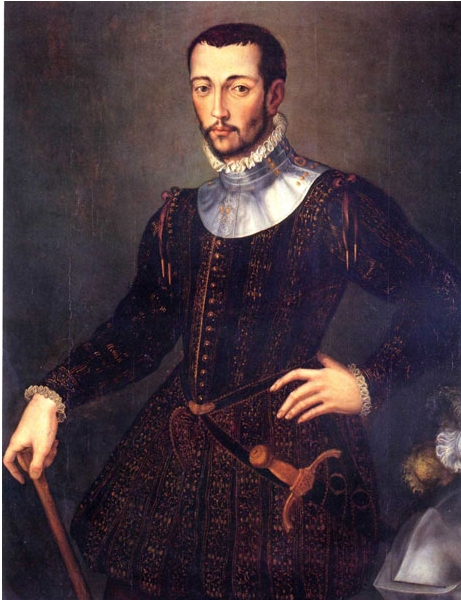
He had a narrow, swarthy face with a high forehead, so high he had his cropped dark hair brushed forward – he was losing his hair, then. His eyes slanted downward, sensual, melancholic and secretive. Saints in the churches, painted on panels and murals, had halos of light around their heads and bodies; the prince seemed to have a tracing of darkness, as if he was standing in front of a prince-shaped hole that led into something terrible, and you could just catch glimpses of it when he moved…

The Red Lily Crown by Elizabeth Loupas (2014)

~

Do you keep time in the same place that you save it? If so why is it so difficult to find? It must be in a very safe place.

Human Croquet by Kate Atkinson (1997)

~

Miss Rebecca was not, then, in the least kind or placable. All the world used her ill, said this young misanthropist, and we may be pretty certain that persons whom all the world treats ill, deserve entirely the treatment they get. The world is a looking-glass, and gives back to every man the reflection of his own face. Frown at it, and it will in turn look sourly upon you; laugh at it and with it, and it is a jolly kind companion; and so let all young persons take their choice.

Vanity Fair by William Makepeace Thackeray (1847)

~

Buddhist caves, two hundred and fifty BC…? It was the Emperor Ashoka who had ordered them to be made, he felt almost sure about that. But there was something else, something to do with the shape of the caves, that escaped him. Was it about meditation? He hadn’t been paying close attention, his mind had been preoccupied, and now their purpose remained a mystery – as it seemed so much in this country was destined to, at least for him.

Arctic Summer by Damon Galgut (2014)

~

The children of Dynmouth were as children anywhere. They led double lives; more regularly than their elders they travelled without moving from a room. They saw a different world: the sun looked different to them, and so did Dynmouth’s trees and grass and sand. Dogs loomed at a different level, eye to eye. Cats arched their tiger’s backs, and the birds behind bars in Moult’s Hardware and Pet Supplies gazed beadily down, appearing to speak messages.

The Children of Dynmouth by William Trevor (1976)

~

Days lived, whether full or empty, whether busy or serene, are but days gone by, and the ashes of the past weigh the same in every hand.

The Royal Succession by Maurice Druon (1957)

~

As for the cold, he had never experienced anything like it: a dry, iron clamp upon the land, like death itself, full of unexpected beauty, like the hard crystals that formed on the inside of the windows. The cold did something strange to the quality of sounds around the farm, deadening all background noise so that the smallest scratching or whisper was emphasised. It was easy to see how the unwary settler could die in such a scene, lulled into marvelling at its deadly beauty even as his blood began to freeze.

A Place Called Winter by Patrick Gale (2015)

~

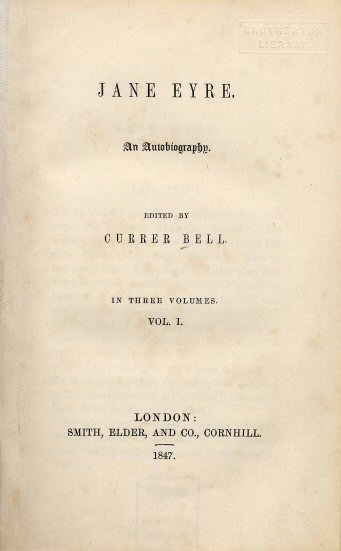
Jane_Eyre_title_page

Under Dad’s philosophy, books were not shape-shifting constructions of a reader’s imagination. Novels, he said, offered the specific clues, maps and guidelines necessary for their own evaluation. By clues, he did not mean metaphors and he did not mean symbolism. He meant actual clues. To him, every book was its own treasure map. A good novel, he said, left the close reader with a useful souvenir. All you needed to do was learn to see what was right under your nose.

The Madwoman Upstairs by Catherine Lowell (2016)

~

“Robert has been led most of his life by his ambition – our family’s ambition – for him to be king. All of us have paid a price, for some the highest price, for him to fulfil that desire, but we have done so because we see in him something that lifts him above most other men; something that makes us hope. He has the iron will of our grandfather and, yes, the hot blood of our father, though he’ll not hear the latter said, but he also has the heart of our mother. It is a true heart. A good heart. You must keep faith, my lady.”

Kingdom by Robyn Young (2014)

~

Sitting at her bureau a short time before, Frances had been picturing her lodgers in purely mercenary terms – as something like two great waddling shillings. But this, she thought, shuffling backward over the tiles, this was what it really meant to have lodgers: this odd, unintimate proximity, this rather peeled-back moment, where the only thing between herself and a naked Mrs Barber was a few feet of kitchen and a thin scullery door.

The Paying Guests by Sarah Waters (2014)

~

“I think you’ll find most women in pursuit of a husband share an interest in appearing less educated than they really are,” said Beatrice. “It is why I have a low opinion of them.”

“Of women, miss?” said Abigail.

“No, of husbands,” said Beatrice.

The Summer Before the War by Helen Simonson (2016)

~

Knighthood’s not for the likes of these people; for Madame Perrers’ brood. He thought she knew her place. But she’s overreached herself; she’s as grasping as the rest of them, after all. Do these people think they can buy or steal everything?

The People’s Queen by Vanora Bennett (2010)

~

Favourite books this month: The Red Lily Crown and The Summer Before the War.

The Summer Before the War by Helen Simonson

The Summer Before the War Six years after her debut, Major Pettigrew’s Last Stand, Helen Simonson is back with a second novel – and, in my opinion, it has definitely been worth the wait! The Summer Before the War is a beautiful, moving story about a small town in East Sussex and how it is transformed forever by the effects of the First World War.

It’s the summer of 1914 and spinster Beatrice Nash is arriving in the town of Rye to take up a position as Latin teacher at the local grammar school. Despite the support of Agatha Kent, one of the school governors, Beatrice quickly discovers that not everyone is happy with the decision to offer the teaching job to a woman and that she could be about to lose her position before she’s even begun.

Also in Rye for the summer are Agatha’s nephews, Hugh and Daniel, two young men who think they know what the future holds: Hugh expects to complete his medical studies and then marry Lucy Ramsey, daughter of the surgeon he has been working for, while Daniel, an aspiring poet, hopes to go to Paris and start a literary journal with his friend, Craigmore. With the onset of war, however, all of these plans will be thrown into disarray and life in Rye will never be the same again.

Towards the end of the novel, the action switches to France where we join the men in the trenches, but most of the book, as the title suggests, is devoted to those lazy, idyllic summer days and the changes that are brought by the approach of war. The rigid social structure in place at the beginning of the summer – a time in which independence in women such as Beatrice is seen as something to be discouraged, the atrocities experienced by a young refugee girl make her a social outcast, and Daniel’s relationship with Craigmore risks causing scandal – begins to break down as the war progresses and priorities change.

The Summer Before the War is a long book (with a lovely, cheerful and sunny front cover) but I enjoyed every minute I spent with this set of characters. The story is told with humour, intelligence and sensitivity – and some witty, Jane Austen-style dialogue. Occasionally a word or phrase feels out of place, but otherwise the atmosphere of that summer of 1914 is perfectly evoked. Although the pace is quite gentle I was completely absorbed, discovering as I reached the final chapters how much I had come to care for the men on the front line and the women left behind.

This is a warm, emotional and poignant story and I was close to tears at the end. I loved it and look forward to more from Helen Simonson.

Thanks to Lovereading for providing a review copy.

2016 Walter Scott Prize shortlist

Following the announcement last month of this year’s longlist for the Walter Scott Prize for Historical Fiction, today the shortlist of six books has been revealed. As I am currently attempting to work my way through all of the books shortlisted for the prize since it began in 2010 (see my progress here), I was particularly interested to see which titles would make the list this year. And here they are:

Sweet Caress by William Boyd

Sweet Caress

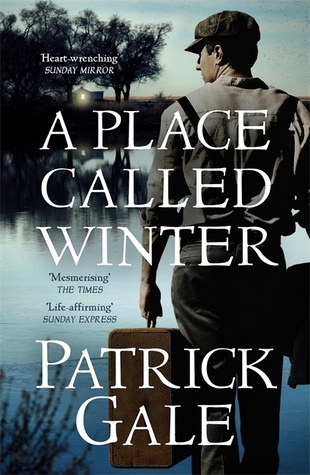
A Place Called Winter by Patrick Gale

A Place Called Winter

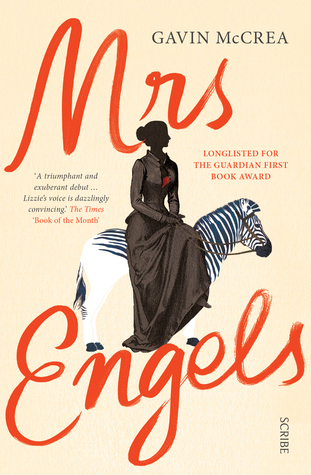
Mrs Engels by Gavin McCrea

Mrs Engels

End Games in Bordeaux by Allan Massie

End Games in Bordeaux

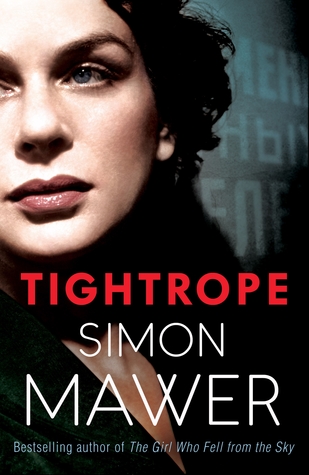
Tightrope by Simon Mawer

Tightrope

Salt Creek by Lucy Treloar

Salt Creek

Have you read any of these? If not, are there any you’re interested in reading?

So far I have only read one of the six – A Place Called Winter, which I enjoyed, although I haven’t posted my review yet. I know very little about any of the other books on the list, but I do know that Tightrope is a sequel and End Games in Bordeaux is the fourth in a quartet, which means, with my preference for reading a series in order, I will have some catching up to do before I can start either of those two!

I’m surprised – and slightly disappointed – that there’s no place on the shortlist for A God in Ruins by Kate Atkinson or Dictator by Robert Harris, both of which had been longlisted, but congratulations to the six authors above. The winner will be announced in June.