2016 Walter Scott Prize shortlist

Following the announcement last month of this year’s longlist for the Walter Scott Prize for Historical Fiction, today the shortlist of six books has been revealed. As I am currently attempting to work my way through all of the books shortlisted for the prize since it began in 2010 (see my progress here), I was particularly interested to see which titles would make the list this year. And here they are:

Sweet Caress by William Boyd

Sweet Caress

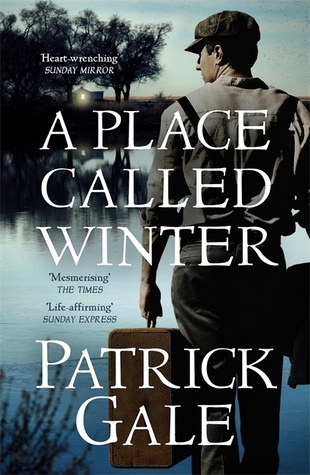
A Place Called Winter by Patrick Gale

A Place Called Winter

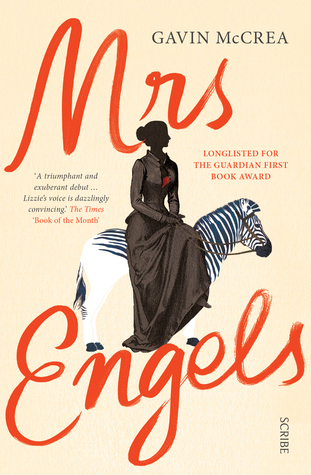
Mrs Engels by Gavin McCrea

Mrs Engels

End Games in Bordeaux by Allan Massie

End Games in Bordeaux

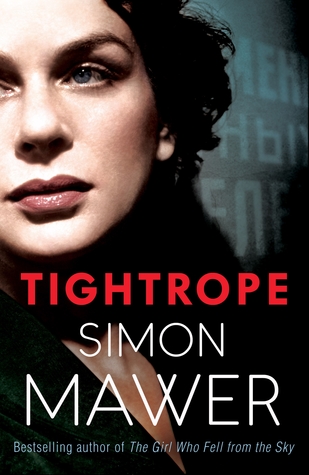
Tightrope by Simon Mawer

Tightrope

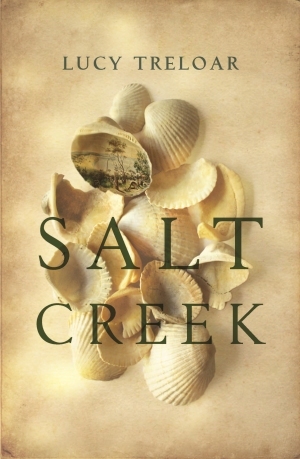
Salt Creek by Lucy Treloar

Salt Creek

Have you read any of these? If not, are there any you’re interested in reading?

So far I have only read one of the six – A Place Called Winter, which I enjoyed, although I haven’t posted my review yet. I know very little about any of the other books on the list, but I do know that Tightrope is a sequel and End Games in Bordeaux is the fourth in a quartet, which means, with my preference for reading a series in order, I will have some catching up to do before I can start either of those two!

I’m surprised – and slightly disappointed – that there’s no place on the shortlist for A God in Ruins by Kate Atkinson or Dictator by Robert Harris, both of which had been longlisted, but congratulations to the six authors above. The winner will be announced in June.

Vanity Fair by William Makepeace Thackeray

Vanity Fair With my love of Victorian novels, I’m not sure why it has taken me so long to decide to read Vanity Fair. I think, without really knowing anything about it, I thought it sounded dry and hard going; Lisa’s review changed my mind and I added it to my Classics Club list, but I was still slow to actually pick it up and start reading. I finally got round to it this month and am pleased to say that although there were certainly times when I found the book dry and times when I found it hard going, overall I enjoyed it.

The first thing I found on beginning Vanity Fair is that Thackeray, like Anthony Trollope and other Victorian authors, likes to talk directly to the reader, commenting on his characters and giving praise or criticism where necessary:

“And, as we bring our characters forward, I will ask leave, as a man and a brother, not only to introduce them, but occasionally to step down from the platform, and talk about them: if they are good and kindly, to love them and shake them by the hand: if they are silly, to laugh at them confidentially in the reader’s sleeve: if they are wicked and heartless, to abuse them in the strongest terms which politeness admits of.”

He never lets us forget that we are reading a novel and that the characters are puppets under the author’s control – but at the same time, I found them all very real and human. There are a few examples in Vanity Fair of people being ‘good and kindly’, but many more of them being silly and heartless. In a book subtitled “A Novel Without a Hero” (which is debatable), it’s not surprising that the characters are flawed and imperfect. The most flawed of all is Becky Sharp, ruthless schemer and ambitious social-climber. From the moment Becky throws her dictionary through the carriage window as she drives out of the school gates to go and make her own way in the world, I knew she was going to be an interesting character!

Becky’s friend, Amelia Sedley, is her exact opposite: quiet and gentle, sweet and obliging…and from a wealthy family. I liked Amelia – although she could be infuriating – but there’s no doubt that it’s Becky who makes things happen and keeps the story moving forward. Early in the novel, she sets her sights on marrying Jos Sedley, Amelia’s brother, and when this plan fails, it becomes clear that there is nothing Becky won’t do to get what she wants and to advance another step up the social ladder.

This is not just Becky’s story, though. Vanity Fair has a very large cast of characters, drawn from a variety of backgrounds: noblemen and army officers, merchants and servants. Most of them belong to, or are in some way connected with, the novel’s three central families – the Sedleys, the Osbornes and the Crawleys – and with plenty of subplots involving these three families, the story quickly becomes quite complex. Like many novels of the time, Vanity Fair was originally published as a serial and as a result feels longer than it maybe needed to be, but everything that happens has its place in the plot, as Thackeray explains:

“…my readers must hope for no such romance, only a homely story, and must be content with a chapter about Vauxhall, which is so short that it scarce deserves to be called a chapter at all. And yet it is a chapter, and a very important one too. Are not there little chapters in everybody’s life that seem to be nothing and yet affect all the rest of the history?”

‘Vauxhall’, of course, is a reference to the famous London pleasure gardens so popular during the Regency – and this will be a good place for me to mention that despite being a Victorian novel first published in 1847-48, Vanity Fair is actually set several decades earlier, in the Regency period. The Napoleonic Wars are always in the background, with some of the characters being present at the Battle of Waterloo.

This hasn’t become a favourite classic – I thought at first that it might, but in the end there were too many moments when I felt the story was starting to drag and too many times when I found my attention starting to wander. I did like it, though, and am glad I hadn’t put off reading it any longer!

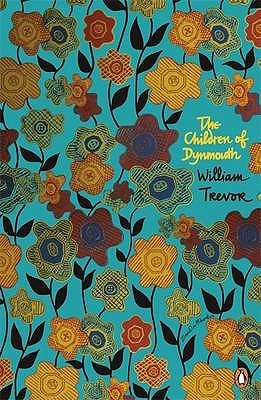
The Children of Dynmouth by William Trevor

The Children of Dynmouth I always believe in giving an author a second chance, so after a failed attempt at reading William Trevor’s Love and Summer a few years ago, I have still been interested in trying more of his work. As March is Reading Ireland Month (hosted by Cathy and Niall) and Trevor is an Irish author, this seemed a good time to give another of his books a try.

Published in 1976, The Children of Dynmouth is set in a typical English seaside town full of ordinary people leading ordinary lives – at least on the surface. Fifteen-year-old Timothy Gedge, who wanders the streets of Dynmouth watching and listening, knows what is really going on behind closed doors and inside people’s heads…and he’s not afraid to use that information to his own advantage. As family scandals, hidden passions and secret affairs are brought to light, the adults and children of Dynmouth begin to wonder what Timothy’s motives really are.

Timothy Gedge is a sinister creation, at the heart of all the tension in Dynmouth, although it’s never quite clear whether or not he is fully aware of the trouble he is causing and the inappropriateness of his actions. The first real indication that something is badly wrong comes when we learn that he is planning to enter the annual Spot the Talent contest with a gruesome ‘comedy act’ which no decent person could possibly find funny. When several obstacles are placed in the way of his act – the lack of a curtain for the stage, for example, and the need for a man’s suit and a wedding dress – Timothy goes to great lengths to get what he wants, regardless of who gets hurt in the process.

With no father in his life and a mother who neglects him, Timothy has been left to fend for himself and has grown up to be a lonely, awkward teenager facing the usual fate of Dynmouth’s young men: a lifetime spent working in the town’s sandpaper factory. The people of Dynmouth can’t get away from him as he tries to connect with them in any way he can; he is everywhere they turn, listening to private conversations, staring through windows, inviting himself into their homes, asking questions, hiding in the shadows and lurking in the background at funerals. Nobody likes him and nobody wants him there, but as a representation of all that is wrong with society, he can be seen as everybody’s responsibility and everybody’s problem.

Timothy is an unsettling character – and this is an unsettling novel. It’s a short book at under 200 pages, but long enough for the author to build up a complete portrait of life in a small community in 1970s England, to introduce us to the people who live there, and to add undercurrents of danger and foreboding, so that by the end of the novel we go away with a very different impression of Dynmouth than we had at the beginning.

The Children of Dynmouth is a disturbing but thought-provoking book and one which left me with a lot to think about after I turned the final page. I would like to read more by William Trevor, so your recommendations are welcome. I’m prepared to try Love and Summer again too, as I think I was probably just in the wrong mood for it the first time.

The Red Lily Crown by Elizabeth Loupas

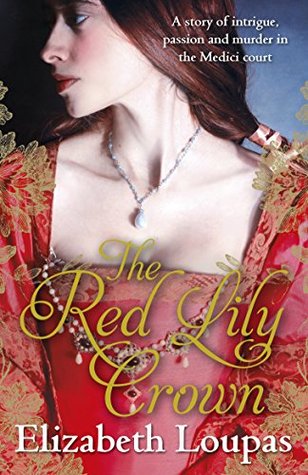
The Red Lily Crown Nearly two years ago I read The Second Duchess by Elizabeth Loupas, a fascinating novel set in Renaissance Italy which told the story of Barbara of Austria, the second wife of Alfonso d’Este, Duke of Ferrara. In The Red Lily Crown we revisit the same time period, but this time we are in Florence, where Barbara’s sister, Giovanna of Austria, is married to Francesco de’ Medici, a member of the ruling Florentine family. The novel opens in 1574 when Grand Duke Cosimo de’ Medici is about to die and his son Francesco is preparing to inherit the red lily crown of Tuscany.

Fifteen-year-old Chiara Nerini is the orphaned daughter of a bookseller and alchemist. Desperate for money to support her grandmother and little sisters, Chiara attempts to sell some of her father’s old equipment to Francesco, who is also known to have an obsession with alchemy. However, Chiara gets more than she bargained for when she finds herself being initiated as Francesco’s soror mystica, the female partner believed to be necessary for the creation of the legendary Philosopher’s Stone. Her new role brings her into the heart of the Medici household where she witnesses first-hand the corruption, intrigue and danger of Francesco’s court.

I loved The Red Lily Crown. I wasn’t sure about it at first, because books about alchemy tend not to appeal to me, but actually the alchemy was only one part of the story. What I found much more interesting was the wonderful portrayal of the Medici court and the people Chiara meets during her time there. Francesco de’ Medici himself is the perfect villain: coldly intellectual, clever and calculating, and with a terrifying knowledge of poisons. His only weakness appears to be his love for his Venetian mistress, Bianca Cappello – although their relationship is not a healthy one. Bianca is as scheming and ruthless as Francesco himself but she is also another victim of his cruelty and can only truly please him when pretending to be something she is not.

Chiara does make some friends too and becomes close to Francesco’s poor wife, the Grand Duchess Giovanna, who has been unable to provide her husband with the healthy male heir he so badly wants. There’s also the possibility of romance for Chiara with a mysterious English alchemist known as Ruanno, but knowing little about him and his previous life in Cornwall, she must decide whether or not he can be trusted. As for Chiara herself, I found that, as with Barbara in The Second Duchess, our heroine is both a strong woman and one whose actions and attitudes are believable in the context of the time period.

All of these characters have their role to play in a fast-moving plot packed with murder, magic, power struggles and poisonings. The setting is a great one too. The Medici palaces, the Nerini bookshop and the streets and squares of sixteenth century Florence are all vividly described – and there are some particularly memorable scenes set in the Grand Duke’s labyrinth in the Boboli Gardens. Not everything that happens in the story is entirely accurate, but Elizabeth Loupas explains in her author’s note what is true and what is fictional. Of course, there is a lot that we still don’t know for sure about the Medici, which leaves plenty of scope for an author to use his or her imagination.

I think I liked The Second Duchess slightly more than this one, but both books I’ve read by Loupas are excellent. I need to get hold of a copy of her other novel, The Flower Reader, as soon as I can!

The Madwoman Upstairs by Catherine Lowell

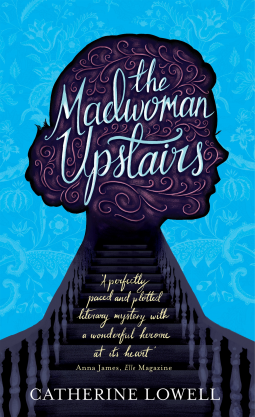
The Madwoman Upstairs As someone who loves the work of the Brontë sisters, I was both intrigued by and wary of a book described as “A witty modern love story which draws from the enduring classics of Jane Eyre and Wuthering Heights”. Modern novels inspired by classics can sometimes be very good, but they can also be very bad, so I was interested to see what this one would be like. I’m pleased to report that I enjoyed it, but with one or two reservations.

Our narrator, a young American woman called Samantha Whipple, is (supposedly – this is fiction) the last living descendant of the Brontë family. The novel opens several years after the death of Samantha’s father, the eccentric author Tristan Whipple, from whom she is believed to have inherited a vast Brontë estate which includes previously unseen drawings and manuscripts. Samantha knows this is untrue; her inheritance consists of something known only as The Warnings of Experience – what exactly this may be, she has no idea.

Arriving at Oxford University to study English Literature, Samantha is told that there’s a shortage of accommodation and is given a room on the fifth floor of a windowless tower decorated with an eerie painting she calls The Governess. Things become eerier still when her father’s old copies of the Brontës’ novels start to mysteriously appear in her room – novels which she believed to have been destroyed in the fire that killed her father. It seems that Tristan Whipple, from beyond the grave, is sending Samantha on a literary treasure hunt – and with the reluctant help of her tutor, James Timothy Orville III, she begins to follow the clues.

There’s so much in The Madwoman Upstairs for a Brontë fan – or a fan of literature in general – to enjoy. Samantha and Orville, who have very different views about reading, have lots of fascinating discussions, asking questions to which there is no right or wrong answer, such as whether the intentions of the author or the reader’s own interpretation is more important. In particular, they talk about the Brontës and their novels, exploring the themes and symbolism and how the sisters drew on their own lives and experiences for inspiration. I liked the fact that Anne, who is usually given less attention than Charlotte and Emily, was the most prominent of the sisters in this book, and Catherine Lowell has some theories about her which I had never come across before. This was all very interesting and I liked this aspect of the book much more than the mystery element – or the romance, which was quite predictable.

My main problem with this book was the character of Samantha herself. Homeschooled by her father and with no friends her own age, she’s awkward, outspoken and lacking in important social skills. I didn’t dislike her; some of the things she says are quite funny, and I particularly liked her response when asked if there are any leading men in her life (“several, but they’re all fictional”). However, I couldn’t understand why someone who appeared to have no passion for literature and claimed not to like any authors had chosen to study English Literature and how she could possibly have been offered a place at one of the world’s top universities. I thought her conversation with Orville at their first tutorial session was unrealistic – I couldn’t imagine speaking to a tutor like that!

Of course, the whole portrayal of university life in this book is unrealistic. Apart from her one-to-one meetings with Orville, Samantha seems to receive no other form of tuition and doesn’t have any interaction at all with any of the other students. And would Oxford really house a new student alone in an ancient tower which is part of a weekly tour? [Edited to add: maybe some of this is more normal than I’d thought]. Luckily, I was able to overlook the more implausible parts of the plot and concentrate on enjoying the literary analysis and Brontë references. If you can do that too, I think you’ll find this an entertaining read with some fascinating insights into the lives and work of Anne, Emily and Charlotte.

I received a copy of this book for review via NetGalley.

Historical Musings #12: Essential Tudor fiction

Historical Musings Whether you’ve been reading historical fiction for years or whether you’re new to the genre, you can’t have failed to have noticed the abundance of novels set in the Tudor period. From Philippa Gregory’s The Other Boleyn Girl to Hilary Mantel’s Wolf Hall, it seems there’s a Tudor novel to suit all literary tastes and preferences. Although I’m now much more interested in the Plantagenet era, particularly the Wars of the Roses, and, increasingly, in earlier periods such as the Norman Conquest and the early medieval period, I have still read a lot of Tudor fiction over the years and I’m sure I’ll continue to do so, however much I might sometimes feel that I’ve read enough. I’m currently halfway through CJ Sansom’s Shardlake series and I also have a review copy of Alison Weir’s new book, Six Tudor Queens: Katherine of Aragon, The True Queen, so they will probably be my next Tudor reads.

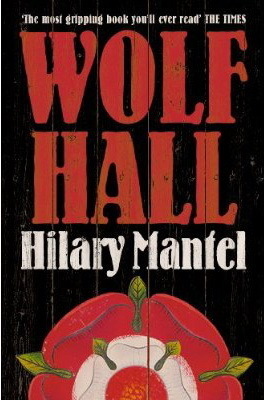
Wolf HallI have listed here and here most of the Tudor books I’ve reviewed on my blog so far, including those set in the Elizabethan period (I’m planning to update these lists at some point with books read prior to blogging). However, I can’t really say that I would recommend all of them. There are some excellent Tudor novels out there but also some which are quite disappointing and with so much choice available it can be easy to find yourself reading a lot of the mediocre books while perhaps missing out on some of the better ones.

I didn’t have much time to prepare this month’s post, so I’m keeping it short and simple and will finish by asking for your thoughts.

Which Tudor novels would you consider essential reads for someone who has never read any and is wondering where to start?

Are there any books you would recommend even to someone who is getting bored with the Tudors? Any which you think approach the Tudor period in an unusual way or breathe fresh life into the subject?

Human Croquet by Kate Atkinson

Having read Kate Atkinson’s two most recent books, Life After Life and A God in Ruins, as well as some of her Jackson Brodie mysteries, I’ve been curious about her earlier novels and was pleased to see this one from 1997 on the library shelf. I knew nothing about this novel before I started to read it and I think that was a good thing because this is a story packed with surprises, plot twists and weird and wonderful occurrences. I have done my best here to give you an idea of what the book is about without giving too much away.

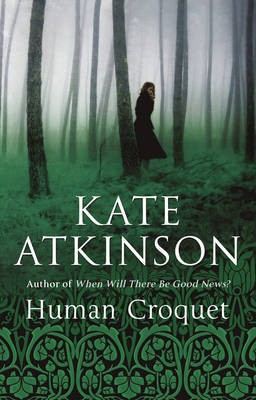
Human Croquet Human Croquet is narrated by sixteen-year-old Isobel Fairfax who lives with her family in a house called Arden in a small town somewhere in the north of England. Isobel’s family consists of her brother, Charles, their Aunt Vinny, and their father Gordon, who has recently returned after a long absence, bringing with him a new wife, Debbie. Gordon’s first wife, Eliza – mother of Isobel and Charles – disappeared years ago, although her presence at Arden can still be felt in small and unexpected ways. Throughout the novel we move between the Present (Isobel’s life in the 1960s) and the Past (in which we learn more about the early days of Gordon’s marriage to Eliza and the events leading up to her disappearance).

Now, this might all sound quite straightforward so far, but I’ve promised some surprises, plot twists and weird and wonderful occurrences – and yes, there are plenty of those! One of the first indications we get that something is not right in Isobel’s world comes when she finds herself suddenly slipping through time, briefly emerging in another period before just as suddenly returning to her own time. Charles, who is obsessed with the paranormal, is envious, telling her she must have experienced a time warp. But this is only the beginning of a series of increasingly bizarre things which happen to Isobel and her family. Things also become darker and darker as Isobel tries to make sense of what is going on and the truth about Eliza is slowly revealed.

Human Croquet is a wonderfully creative and imaginative story in which Atkinson plays with time and with our perceptions of what is real and what is unreal. The novel is rich in literary references and allusions; the name of Isobel’s home, Arden, brings to mind the Forest of Arden in Shakespeare’s As You Like It, and both the Shakespearean theme and the forest/tree symbolism continue throughout the book. Even the title, Human Croquet, has a meaning which only really becomes clear right at the end of the novel and which made me think again about Isobel’s role in the story.

My favourite thing, though, about this – and all of Atkinson’s books – is the characterisation. Isobel’s narrative voice is very strong and distinctive, sometimes funny, sometimes sad, and peppered with witty observations, self-deprecating humour and clever wordplay. Through Isobel’s eyes the rest of the Fairfax family, as well as their friends and neighbours, come to life in vivid detail. Among the most memorable are the people next door, timid Mrs Baxter and her daughter Audrey, both of whom live in fear of the sinister ‘Daddy’. The Fairfaxes are not the only troubled family in Human Croquet; this is definitely not a happy story, so I was pleased to find that there are some lighter moments to alleviate the darkness.

I haven’t read anything by Kate Atkinson yet that hasn’t impressed me; I’m looking forward to reading the rest of her earlier books, as well as Started Early, Took My Dog, the only Jackson Brodie novel I haven’t read yet. What is your favourite Kate Atkinson book?