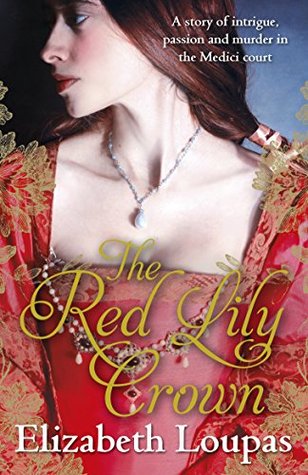
The Red Lily Crown by Elizabeth Loupas

The Red Lily Crown Nearly two years ago I read The Second Duchess by Elizabeth Loupas, a fascinating novel set in Renaissance Italy which told the story of Barbara of Austria, the second wife of Alfonso d’Este, Duke of Ferrara. In The Red Lily Crown we revisit the same time period, but this time we are in Florence, where Barbara’s sister, Giovanna of Austria, is married to Francesco de’ Medici, a member of the ruling Florentine family. The novel opens in 1574 when Grand Duke Cosimo de’ Medici is about to die and his son Francesco is preparing to inherit the red lily crown of Tuscany.

Fifteen-year-old Chiara Nerini is the orphaned daughter of a bookseller and alchemist. Desperate for money to support her grandmother and little sisters, Chiara attempts to sell some of her father’s old equipment to Francesco, who is also known to have an obsession with alchemy. However, Chiara gets more than she bargained for when she finds herself being initiated as Francesco’s soror mystica, the female partner believed to be necessary for the creation of the legendary Philosopher’s Stone. Her new role brings her into the heart of the Medici household where she witnesses first-hand the corruption, intrigue and danger of Francesco’s court.

I loved The Red Lily Crown. I wasn’t sure about it at first, because books about alchemy tend not to appeal to me, but actually the alchemy was only one part of the story. What I found much more interesting was the wonderful portrayal of the Medici court and the people Chiara meets during her time there. Francesco de’ Medici himself is the perfect villain: coldly intellectual, clever and calculating, and with a terrifying knowledge of poisons. His only weakness appears to be his love for his Venetian mistress, Bianca Cappello – although their relationship is not a healthy one. Bianca is as scheming and ruthless as Francesco himself but she is also another victim of his cruelty and can only truly please him when pretending to be something she is not.

Chiara does make some friends too and becomes close to Francesco’s poor wife, the Grand Duchess Giovanna, who has been unable to provide her husband with the healthy male heir he so badly wants. There’s also the possibility of romance for Chiara with a mysterious English alchemist known as Ruanno, but knowing little about him and his previous life in Cornwall, she must decide whether or not he can be trusted. As for Chiara herself, I found that, as with Barbara in The Second Duchess, our heroine is both a strong woman and one whose actions and attitudes are believable in the context of the time period.

All of these characters have their role to play in a fast-moving plot packed with murder, magic, power struggles and poisonings. The setting is a great one too. The Medici palaces, the Nerini bookshop and the streets and squares of sixteenth century Florence are all vividly described – and there are some particularly memorable scenes set in the Grand Duke’s labyrinth in the Boboli Gardens. Not everything that happens in the story is entirely accurate, but Elizabeth Loupas explains in her author’s note what is true and what is fictional. Of course, there is a lot that we still don’t know for sure about the Medici, which leaves plenty of scope for an author to use his or her imagination.

I think I liked The Second Duchess slightly more than this one, but both books I’ve read by Loupas are excellent. I need to get hold of a copy of her other novel, The Flower Reader, as soon as I can!
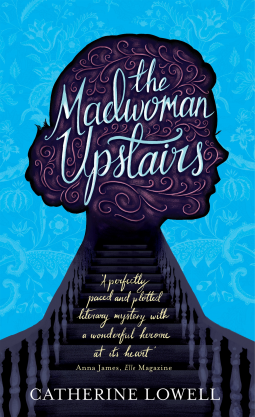
The Madwoman Upstairs by Catherine Lowell

The Madwoman Upstairs As someone who loves the work of the Brontë sisters, I was both intrigued by and wary of a book described as “A witty modern love story which draws from the enduring classics of Jane Eyre and Wuthering Heights”. Modern novels inspired by classics can sometimes be very good, but they can also be very bad, so I was interested to see what this one would be like. I’m pleased to report that I enjoyed it, but with one or two reservations.

Our narrator, a young American woman called Samantha Whipple, is (supposedly – this is fiction) the last living descendant of the Brontë family. The novel opens several years after the death of Samantha’s father, the eccentric author Tristan Whipple, from whom she is believed to have inherited a vast Brontë estate which includes previously unseen drawings and manuscripts. Samantha knows this is untrue; her inheritance consists of something known only as The Warnings of Experience – what exactly this may be, she has no idea.

Arriving at Oxford University to study English Literature, Samantha is told that there’s a shortage of accommodation and is given a room on the fifth floor of a windowless tower decorated with an eerie painting she calls The Governess. Things become eerier still when her father’s old copies of the Brontës’ novels start to mysteriously appear in her room – novels which she believed to have been destroyed in the fire that killed her father. It seems that Tristan Whipple, from beyond the grave, is sending Samantha on a literary treasure hunt – and with the reluctant help of her tutor, James Timothy Orville III, she begins to follow the clues.

There’s so much in The Madwoman Upstairs for a Brontë fan – or a fan of literature in general – to enjoy. Samantha and Orville, who have very different views about reading, have lots of fascinating discussions, asking questions to which there is no right or wrong answer, such as whether the intentions of the author or the reader’s own interpretation is more important. In particular, they talk about the Brontës and their novels, exploring the themes and symbolism and how the sisters drew on their own lives and experiences for inspiration. I liked the fact that Anne, who is usually given less attention than Charlotte and Emily, was the most prominent of the sisters in this book, and Catherine Lowell has some theories about her which I had never come across before. This was all very interesting and I liked this aspect of the book much more than the mystery element – or the romance, which was quite predictable.

My main problem with this book was the character of Samantha herself. Homeschooled by her father and with no friends her own age, she’s awkward, outspoken and lacking in important social skills. I didn’t dislike her; some of the things she says are quite funny, and I particularly liked her response when asked if there are any leading men in her life (“several, but they’re all fictional”). However, I couldn’t understand why someone who appeared to have no passion for literature and claimed not to like any authors had chosen to study English Literature and how she could possibly have been offered a place at one of the world’s top universities. I thought her conversation with Orville at their first tutorial session was unrealistic – I couldn’t imagine speaking to a tutor like that!

Of course, the whole portrayal of university life in this book is unrealistic. Apart from her one-to-one meetings with Orville, Samantha seems to receive no other form of tuition and doesn’t have any interaction at all with any of the other students. And would Oxford really house a new student alone in an ancient tower which is part of a weekly tour? [Edited to add: maybe some of this is more normal than I’d thought]. Luckily, I was able to overlook the more implausible parts of the plot and concentrate on enjoying the literary analysis and Brontë references. If you can do that too, I think you’ll find this an entertaining read with some fascinating insights into the lives and work of Anne, Emily and Charlotte.

I received a copy of this book for review via NetGalley.

Historical Musings #12: Essential Tudor fiction

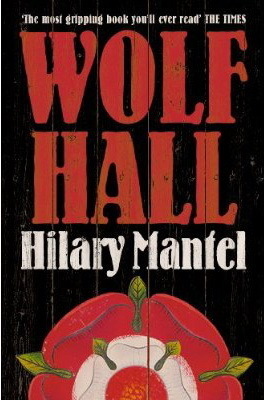
Historical Musings Whether you’ve been reading historical fiction for years or whether you’re new to the genre, you can’t have failed to have noticed the abundance of novels set in the Tudor period. From Philippa Gregory’s The Other Boleyn Girl to Hilary Mantel’s Wolf Hall, it seems there’s a Tudor novel to suit all literary tastes and preferences. Although I’m now much more interested in the Plantagenet era, particularly the Wars of the Roses, and, increasingly, in earlier periods such as the Norman Conquest and the early medieval period, I have still read a lot of Tudor fiction over the years and I’m sure I’ll continue to do so, however much I might sometimes feel that I’ve read enough. I’m currently halfway through CJ Sansom’s Shardlake series and I also have a review copy of Alison Weir’s new book, Six Tudor Queens: Katherine of Aragon, The True Queen, so they will probably be my next Tudor reads.

Wolf HallI have listed here and here most of the Tudor books I’ve reviewed on my blog so far, including those set in the Elizabethan period (I’m planning to update these lists at some point with books read prior to blogging). However, I can’t really say that I would recommend all of them. There are some excellent Tudor novels out there but also some which are quite disappointing and with so much choice available it can be easy to find yourself reading a lot of the mediocre books while perhaps missing out on some of the better ones.

I didn’t have much time to prepare this month’s post, so I’m keeping it short and simple and will finish by asking for your thoughts.

Which Tudor novels would you consider essential reads for someone who has never read any and is wondering where to start?

Are there any books you would recommend even to someone who is getting bored with the Tudors? Any which you think approach the Tudor period in an unusual way or breathe fresh life into the subject?

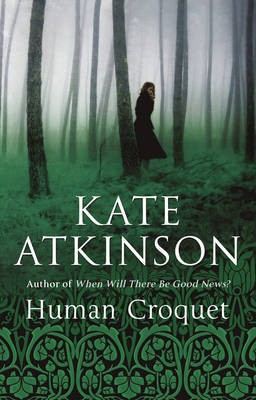
Human Croquet by Kate Atkinson

Having read Kate Atkinson’s two most recent books, Life After Life and A God in Ruins, as well as some of her Jackson Brodie mysteries, I’ve been curious about her earlier novels and was pleased to see this one from 1997 on the library shelf. I knew nothing about this novel before I started to read it and I think that was a good thing because this is a story packed with surprises, plot twists and weird and wonderful occurrences. I have done my best here to give you an idea of what the book is about without giving too much away.

Human Croquet Human Croquet is narrated by sixteen-year-old Isobel Fairfax who lives with her family in a house called Arden in a small town somewhere in the north of England. Isobel’s family consists of her brother, Charles, their Aunt Vinny, and their father Gordon, who has recently returned after a long absence, bringing with him a new wife, Debbie. Gordon’s first wife, Eliza – mother of Isobel and Charles – disappeared years ago, although her presence at Arden can still be felt in small and unexpected ways. Throughout the novel we move between the Present (Isobel’s life in the 1960s) and the Past (in which we learn more about the early days of Gordon’s marriage to Eliza and the events leading up to her disappearance).

Now, this might all sound quite straightforward so far, but I’ve promised some surprises, plot twists and weird and wonderful occurrences – and yes, there are plenty of those! One of the first indications we get that something is not right in Isobel’s world comes when she finds herself suddenly slipping through time, briefly emerging in another period before just as suddenly returning to her own time. Charles, who is obsessed with the paranormal, is envious, telling her she must have experienced a time warp. But this is only the beginning of a series of increasingly bizarre things which happen to Isobel and her family. Things also become darker and darker as Isobel tries to make sense of what is going on and the truth about Eliza is slowly revealed.

Human Croquet is a wonderfully creative and imaginative story in which Atkinson plays with time and with our perceptions of what is real and what is unreal. The novel is rich in literary references and allusions; the name of Isobel’s home, Arden, brings to mind the Forest of Arden in Shakespeare’s As You Like It, and both the Shakespearean theme and the forest/tree symbolism continue throughout the book. Even the title, Human Croquet, has a meaning which only really becomes clear right at the end of the novel and which made me think again about Isobel’s role in the story.

My favourite thing, though, about this – and all of Atkinson’s books – is the characterisation. Isobel’s narrative voice is very strong and distinctive, sometimes funny, sometimes sad, and peppered with witty observations, self-deprecating humour and clever wordplay. Through Isobel’s eyes the rest of the Fairfax family, as well as their friends and neighbours, come to life in vivid detail. Among the most memorable are the people next door, timid Mrs Baxter and her daughter Audrey, both of whom live in fear of the sinister ‘Daddy’. The Fairfaxes are not the only troubled family in Human Croquet; this is definitely not a happy story, so I was pleased to find that there are some lighter moments to alleviate the darkness.

I haven’t read anything by Kate Atkinson yet that hasn’t impressed me; I’m looking forward to reading the rest of her earlier books, as well as Started Early, Took My Dog, the only Jackson Brodie novel I haven’t read yet. What is your favourite Kate Atkinson book?

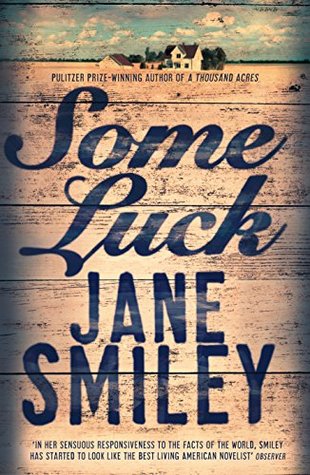
Some Luck by Jane Smiley

Some Luck This is the first volume of a trilogy following the lives of the Langdon family across a period of a century. Beginning in 1920 and ending in 2020 (although Some Luck only takes us up to 1953), we will get to know several generations of the family over the course of the three novels, watching as the children grow up, get married and have children of their own, sharing their hopes and dreams, and accompanying them through some of the events which shaped the last one hundred years of American history.

At the heart of the story are Walter and Rosanna Langdon, a young married couple who, as the novel opens, are settling into life on the farm they have recently bought in Iowa. Rosanna has just given birth to their first child, Frank, and in the first few chapters, not only do we see things through the eyes of the two adults, but also through the baby’s, to whom everything in the world is new and strange. As the years go by, four more sons and daughters follow: quiet, gentle, animal-loving Joey; the sweet and angelic Lillian; Henry, who loves reading; and Claire, the youngest and her father’s favourite. Frank himself is handsome, clever and adventurous – and the contrast between his personality and Joey’s adds an interesting angle to the dynamics of the Langdon family.

The novel is carefully structured so that each chapter is devoted to one year and this keeps the story moving forward at a steady pace. However, it also gives the book an episodic feel; each time a new chapter begins and we find that we’ve jumped straight into the following year, there’s a sense that there are some gaps in the story and that things may have changed without our knowledge in a way that wouldn’t happen with a more fluent narrative. Also, as is true in all of our lives, some years are more eventful than others, which means that some chapters are more interesting than others.

Really, though, this is not a book you would choose to pick up if you were looking for a thrilling, action-packed read. Some Luck is a quiet, low-key story about ordinary people leading ordinary lives. Much of the novel is concerned with farming and all it involves: planting and harvesting crops, shearing sheep, trying to cope with summer droughts and winter snowdrifts. It reminded me in this respect of other farm-based novels I’ve read – Willa Cather’s My Antonia and, of course, Little House on the Prairie.

There are some dramas in the lives of the Langdons, but they are relatively small ones – the sort of things that could happen to any of us. Historical events are experienced mainly as the effects filter through to their remote Iowa farm – advances in farming methods, such as the replacement of horses with tractors, cause a lot of excitement and controversy – but occasionally a family member decides to leave the farm and see more of the world. Frank enlists in the army during the Second World War and is sent to North Africa, Rosanna’s sister Eloise moves to Chicago and marries a communist, and Lillian…well, I won’t say too much about what Lillian does except that it’s the one thing I found hard to believe.

Some Luck is the first book I have read by Jane Smiley. I’m aware that A Thousand Acres was her Pulitzer Prize-winning novel and might have been a better choice for me to start with, but I did still enjoy this one and am planning to continue with the trilogy soon. I have the next two books – Early Warning and Golden Age – ready to read.

Classics Spin #12: The Result!

Last week I decided to take part in the Classics Spin. The idea of the Spin was to list twenty books from my Classics Club list, number them 1 to 20, and the number announced today (Monday) represents the book I have to read before 2nd May 2016.

The number that has been selected by the Classics Club this time is #8, which means the book I’ll be reading is:

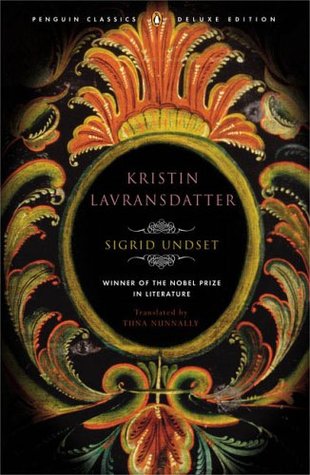
Kristin Lavransdatter

Kristin Lavransdatter by Sigrid Undset

I have to admit, this is not one of the books I was hoping for – although I’m still quite happy with this result. I do think I’ll enjoy it, but having just finished Vanity Fair today I would really have liked something shorter and lighter. This is the longest book left on my Classics Club list so trying to read it by the May deadline might be too ambitious, but I should at least have time for the first volume, The Wreath.

Have you read Kristin Lavransdatter? What did you think? And if you took part in the spin too, what will you be reading?

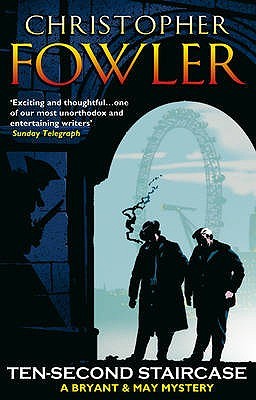
Ten-Second Staircase by Christopher Fowler

What a wonderful imagination Christopher Fowler has! This fourth novel in the Bryant and May mystery series involves the bizarre deaths of several minor celebrities, a mysterious highwayman complete with horse, cape and tricorn hat, gangs of feuding schoolchildren and a possible link to the Knights Templar. It’s just the sort of case the Peculiar Crimes Unit was created to deal with, and this is one of the most peculiar yet.

Ten Second Staircase As the novel opens, we learn that yet again the PCU is facing the threat of closure, with Bryant and May’s outdated methods of detection coming under attack. Bryant and May – Arthur and John – are the two elderly detectives around whom the rest of the unit revolves. John May is logical, methodical and more open to modern technology, but his partner prefers to rely on his tried-and-tested network of historians, clairvoyants, witches and psychics. Their different personalities and different approaches to crime-solving are the reasons why the two of them have had so much success over the years, right from the very first case they worked on together during the Second World War (described in Full Dark House). Among the successes, however, there has been one failure: the identity of the serial killer known as the Leicester Square Vampire, which has remained unknown since the 1970s.

Bryant and May’s latest mystery begins when a controversial modern artist is drowned in the display case of one of her own art installations. The only witness is Luke Tripp, a twelve-year-boy from nearby St Crispin’s Boys’ School, who claims to have seen a figure resembling Dick Turpin ride into the gallery on horseback and throw the artist into the tank. No sooner have the detectives begun to investigate than the Highwayman strikes again, his second murder as strange and inexplicable as the first. As Bryant and May dig deeper, they uncover some similarities between the Highwayman and the Vampire; if only they can find a way to solve both mysteries at once, the future of the PCU could be secured.

I enjoyed Ten-Second Staircase as I’ve enjoyed all of the previous books in this series, but this is probably my least favourite of the four. The Peculiar Crimes Unit seems to have been facing closure in every book so far and that aspect of the story is starting to feel repetitive, especially as with another nine (at least) books to follow, it was obvious that it would be allowed to stay open. I also couldn’t help feeling that the author was using Bryant and May in this book to voice his own views and opinions on society; this meant that the dialogue sometimes felt more like a lecture rather than a natural conversation between friends.

The things that I did love in this book were the same things I loved in the first three: the unusual and imaginative mystery (which, as usual, I failed to solve), Arthur’s unorthodox detection methods, and the fascinating historical facts and pieces of trivia which are incorporated into the plot. The real attraction of this series, of course, is the partnership of Bryant and May themselves, but we do get to know other members of the PCU as well and some of these characters are developed further in this novel, particularly May’s agoraphobic granddaughter, April, who I’m sure we’ll see more of in future books.

I’ll be continuing soon with book number five, White Corridor!