Clear by Carys Davies – #ReadingWales25

Clear is a book I hadn’t really considered reading until it appeared on the Walter Scott Prize longlist in February and I was pleased that I was still able to get a copy through NetGalley. Carys Davies is also a Welsh author, which is perfect for Reading Wales Month ’25, hosted this year by Karen at BookerTalk.

Clear is a beautifully written novella set in 1843 and telling the story of a friendship that forms between two men who should be enemies. John Ferguson is one of many evangelical ministers who have broken away from their church to form the Free Church of Scotland. Having given up his job and his home to establish this new church, John is struggling financially and, out of desperation, accepts an offer of work from a landowner who wants him to travel to a remote Scottish island and evict the last remaining tenant from the land. Forced evictions like these, known as Clearances, have been happening all over the Scottish Highlands as landlords remove the people living on their estates so that they can use the land for other purposes such as sheep farming. It’s a traumatic and often cruel process and not something John is looking forward to being part of.

The man John will have to evict is Ivar, who has lived alone on his island in the far north of Scotland since the deaths of his remaining family members. It’s an isolated life, but Ivar is content and has his horse, Pegi, for company. One day, he finds a man unconscious on the beach under the cliffs and takes him to his home to nurse him back to health. This is John Ferguson, who has met with an accident soon after arriving on the island. Ivar finds a picture of John’s wife, Mary, in his belongings and becomes infatuated with her, the first woman he’s seen for a long time – but as the injured man begins to recover, Ivar switches his affections to John himself. He has no idea why John is there, however, and because the two men speak different languages, he’s unable to ask.

Language forms an important part of the novel. Ivar speaks only Norn, a now extinct language once spoken in Shetland and Orkney, and John speaks English with a small amount of Scots. Over the course of the book, we see how two men unable to communicate in words are still able to bond and connect until eventually they do begin to learn each other’s language. In her author’s note Davies explains how the novel was inspired by Jakob Jakobsen’s Etymological Dictionary of the Norn Language in Shetland and she scatters Norn words throughout the book with a glossary at the back. Norn appears to have been a fascinating language; John is surprised to discover how descriptive it is and how many different words there are for mist, fog, wind and other types of weather.

Some parts of the novel are written from the perspective of Mary, John’s wife, who becomes concerned about the work her husband has been sent to do – she’s heard that the evictions can be unpleasant and violent – and decides to follow him to the island. I enjoyed reading Mary’s story and thought her sections of the book perfectly complemented Ivar and John’s. Mary’s thread of the novel comes together with the others near the end, and although I’m not going to tell you how the book ends I can say that it wasn’t what I expected but I was quite happy with it!

Carys Davies’ writing is beautiful and also very readable and I found this a quick, absorbing read. For such a short book, there’s a lot packed inside it. It reminded me a lot of Claire Keegan’s novella Small Things Like These, so if you enjoyed one book I would recommend trying the other.

Thanks to Granta Publications for providing a copy of this book for review via NetGalley.

Top Ten Tuesday: Books on My Spring TBR

This week’s topic for Top Ten Tuesday (hosted by That Artsy Reader Girl) is “Books on My Spring 2025 To-Read List”.

I have a lot more than ten books I’m hoping to read this spring, but here’s a selection of them:

~

1. That Dark Spring by Susannah Stapleton – I haven’t read Susannah Stapleton’s previous non-fiction book, but her new one, about a true crime in 1920s Provence, sounds fascinating.

2. The Versailles Formula by Nancy Bilyeau – I was very excited to see the next book in the Genevieve Planché series on NetGalley last week.

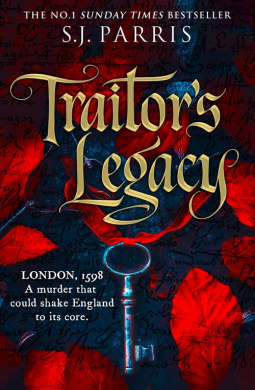
3. Traitor’s Legacy by SJ Parris – The first in a new series of historical thrillers set in Elizabethan England.

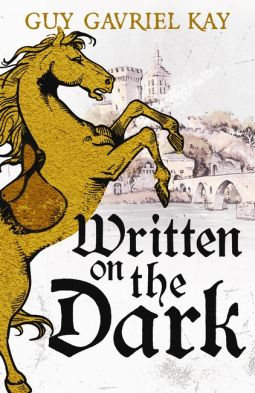
4. Written on the Dark by Guy Gavriel Kay – A new book by GGK is always something I look forward to. This one is set in a world based on medieval France.

5. The Mourning Necklace by Kate Foster – I enjoyed Kate Foster’s last novel, The King’s Witches, so I’m hoping this one will be just as good.

6. The Elopement by Gill Hornby – A sequel to Hornby’s Godmersham Park, about Jane Austen’s niece, Fanny Knight.

7. Linden Rise by Richmal Crompton – When I was looking for books published in 1952 to read for the upcoming 1952 Club, I remembered I had this one on my Kindle. Not sure what else I’ll read yet.

8. White Corridor by Christopher Fowler – My recent Six Degrees of Separation post reminded me about the Bryant and May series. I enjoyed the first four books and this is the fifth.

9. The Eagle and the Hart by Helen Castor – Another non-fiction book, this time about the relationship between Richard II and Henry IV. I’ve already started it, but it’s so long I think it will take me the rest of the spring to finish it.

10. The End of the Affair by Graham Greene – One of the final few books on my Classics Club list. It will also be the first book I’ve read by Graham Greene.

~

What are you planning to read this spring?

The Lost Passenger by Frances Quinn

Frances Quinn’s That Bonesetter Woman was one of my books of the year in 2022 and I didn’t really expect her new one, The Lost Passenger, to live up to it. Well, I’m pleased to say that I thought it was even better!

The novel begins in England in 1910. Nineteen-year-old Elinor Hayward is the daughter of a wealthy Manchester mill owner known as ‘the cotton king’, but when she marries Frederick Coombes, the son and heir of Lord and Lady Storton, she finds herself being looked down upon by her aristocratic in-laws. It seems that nothing she says or does is good enough for them and although Frederick himself is not unkind, it quickly becomes obvious that he doesn’t love her and it’s not going to be the happy marriage she had dreamed about. Worse still, when their first child, Teddy, is born, he is immediately taken away to be raised by a nanny and it is made clear to Elinor that she’s to have very little involvement in his upbringing.

After two unhappy years, Elinor is thrilled when her father buys tickets for the Titanic and invites her to join him on the ship’s maiden voyage, along with Frederick and Teddy. It’s a chance to see more of the world, but also to finally spend some precious time with her little boy. Of course, the voyage ends in tragedy but Elinor and Teddy are lucky enough to be rescued after the ship goes down. When asked for her name so a list of survivors can be compiled, it occurs to Elinor that this is the only opportunity she’s ever going to have to escape from her old life. Before she has time to really think about the consequences, she finds herself giving another woman’s name and taking on a fake identity. But will she be able to avoid being caught – and will the new life she builds for herself in New York be worth the deception?

Frances Quinn has a real gift for creating characters the reader can get behind and root for. I liked Elinor from the beginning and she had my full sympathy in having to deal with the vicious snobbery of Lady Storton and the disappointment of a loveless marriage. Her life with Frederick and his family is so stifling and unhappy that even though the decision she makes after the sinking of the Titanic is questionable, it’s also very understandable. Although this first section of the novel is quite slow, I think it was necessary for Quinn to spend plenty of time showing us how trapped Elinor felt and how desperate she had become.

Many books have been written about the Titanic, but this one is different. The Titanic is not the main focus of the story but is a starting point to explore how Elinor makes the most of the second chance she has been given. However, I still felt that Quinn handles the disaster sensitively and with respect for the victims. She writes about the failings of the evacuation process, the conditions experienced by those who make it into a lifeboat and the realisation that there’s no hope for the hundreds left on board, but she doesn’t go into too much detail on any of these things. Instead of concentrating on the disaster itself, she focuses more on the survivors and how they try to cope with the trauma they’ve suffered and move forward with their lives.

The second half of the book is devoted to Elinor’s arrival in New York and how she goes about trying to build a happier future for herself and Teddy. I’m deliberately not saying much more because I want you to enjoy discovering the rest of Elinor’s story for yourself (everything else I’ve talked about so far is already touched on in the publisher’s blurb for the book). It’s both fascinating and inspirational to see how Elinor is able to create a whole new life out of the ruins of her old one, but at the same time there’s always the risk that someone who knew her before could see her and give her away her secret.

I loved this book and as I haven’t read her first one, The Smallest Man, yet, I still have something to look forward to!

Thanks to Simon and Schuster UK for providing a copy of this book for review via NetGalley.

Top Ten Tuesday: Books featuring doubles, doppelgängers and impersonations

This week’s topic for Top Ten Tuesday (hosted by That Artsy Reader Girl) is “Books that Include/Feature [insert your favourite theme or plot device here]”. There were lots of different options here! After some thought, I decided to list ten books with characters who have doubles and are either mistaken for them or decide to impersonate them.

1. The Scapegoat by Daphne du Maurier – I’ve read all of du Maurier’s novels and I think this is one of her best. John, an Englishman visiting France, meets his exact double, Jean de Gué, a French count. As they are both dissatisfied with their current lives, John ends up impersonating Jean, taking his place at the family château with interesting results!

2. A Tale of Two Cities by Charles Dickens – This is probably my favourite Dickens novel, featuring one of my favourite characters, Sydney Carton, who bears a strong resemblance to Charles Darnay, a Frenchman on trial for treason in 1780s London.

3. The Prisoner of Zenda by Anthony Hope – One of the most famous impersonation novels of all time is this 1894 classic by Anthony Hope in which an English gentleman, Rudolf Rassendyll, impersonates the King of Ruritania to save him from a treasonous plot.

4. The Man in the Iron Mask by Alexandre Dumas – This is the final book in Dumas’ d’Artagnan series which began with The Three Musketeers. The first half of the novel revolves around one of the musketeers, Aramis, and a plot involving a man imprisoned in the Bastille who resembles the King of France and is forced to hide his face behind an iron mask.

5. The Woman in White by Wilkie Collins – This is another favourite of mine! It begins with drawing master Walter Hartright’s meeting on a lonely London road with a mysterious woman dressed all in white who has escaped from an asylum. The next day Walter takes up a teaching position at Limmeridge House in Cumberland where he finds that one of his students, Laura Fairlie, bears a striking resemblance to the woman in white…

6. The Ivy Tree by Mary Stewart – I love Mary Stewart’s books, including this one, in which Mary Grey is approached by a man who has mistaken her for his cousin, Annabel, and persuades her to impersonate Annabel as part of a scheme to inherit his great-uncle’s fortune.

7. The Mark of the Horse Lord by Rosemary Sutcliff – This book appeared on my recent Top Ten Tuesday list of books set in the ancient world, but it fits perfectly with this week’s topic as well. In Roman Britain, Phaedrus, a slave, is asked to impersonate King Midir of the Dalriadain, whom he closely resembles and who has been overthrown by a usurper queen.

8. The Great Impersonation by E. Phillips Oppenheim – The title says it all! This entertaining impersonation novel from 1920 begins with Everard Dominey meeting his doppelganger in an African desert and coming up with a plan to steal his identity.

9. Dance of Death by Helen McCloy – Published in 1938, this is one of a series of detective novels featuring the psychiatrist Dr Basil Willing. The body of a young woman is found buried in snow in a New York street and is quickly identified by the police – but the mystery deepens when they interview her cousin, who looks very like the dead girl and claims she had been asked to impersonate her.

10. Destination Unknown by Agatha Christie – This is a standalone thriller rather than a detective novel. Our heroine, Hilary Craven, encounters a British secret agent in a Casablanca hotel who persuades her to impersonate a dying woman whom she resembles. He hopes she will be able to locate the woman’s husband, one of a group of scientists who have disappeared. Maybe not one of Christie’s best, but I still enjoyed it.

~

Have you read any of these? Can you think of any other books where a character has a double and/or impersonates them?

Four Days’ Wonder by A.A. Milne

A.A. Milne is, of course, best known for his Winnie the Pooh stories, but he also wrote a wide variety of works aimed at adults, ranging from novels and plays to essays and poetry. I read and loved his detective novel, The Red House Mystery, a few years ago and was disappointed that he hadn’t written more of them, so when I came across Four Days’ Wonder, described as a ‘spoof on the detective novel’, I thought it might be the next best thing.

Eighteen-year-old Jenny Windell has been raised by her Aunt Caroline at Auburn Lodge, having been orphaned as a child. Now Caroline has died as well and Jenny has moved in with another guardian, the family lawyer, so that Auburn Lodge can be rented out. However, she still has a key and absentmindedly lets herself into the house one day, forgetting that she no longer lives there. To her surprise, she is confronted by the body of her other aunt, Jane Latour, an actress whom she hasn’t seen for several years, lying dead on the drawing room floor.

It seems obvious that Aunt Jane has slipped on the polished floor and hit her head on a brass door stop, but when Jenny hears the new tenants returning to the house, she panics and escapes through a window. It immediately occurs to her that she has left her monogrammed handkerchief beside the body and that her footprints are now visible under the window. Worse still, she had wiped the blood off the door stop (with the handkerchief) and placed it on top of the piano, thereby concealing the evidence. Jenny, who has read a lot of murder mysteries and has an active imagination, is convinced that she has made herself the number one suspect. Her solution is to go on the run, disappearing into the countryside and sleeping on haystacks. What could go wrong?

Four Days’ Wonder is not a book you can take too seriously and Milne clearly didn’t intend it to be. It’s a comic novel, with a similar kind of humour to P.G. Wodehouse or Christie’s Tommy and Tuppence series, where the characters keep getting themselves into ridiculous, farcical situations. The book was published in 1933 and you can see that Milne is parodying various tropes of the Golden Age crime novels that were so popular at that time – dead bodies found in drawing rooms, mistaken identities, messages written in code, and so on. What you won’t find is any real detective work or, in fact, any real mystery. There are policeman (who, naturally, get everything wrong) but as we know from the beginning that Jenny didn’t kill Aunt Jane and that it was almost certainly an accident, there’s not much suspense in terms of wondering what the solution will be.

Jenny is a very likeable heroine, as is her friend Nancy Fairbrother, whom she enlists to help her with her escape. There’s also a love interest for Jenny in the form of Derek Fenton, a young man she meets while on the run, who just happens to be the brother of the crime writer Archibald Fenton, Nancy’s employer. This leads to yet more misunderstandings and comedy moments – such as when, unaware of who Archibald is, Jenny shoots him with her trusty Watson Combination Watch Dog and Water Pistol! Four Days’ Wonder is a lot of fun and I kept thinking that it would make an entertaining adaptation for TV or film – so I wasn’t entirely surprised to find that there is already one, from 1936, although it doesn’t seem to stick very closely to the book and I can’t find it available anywhere either to buy or stream.

My edition of this book is published by Farrago, an imprint of independent publisher Duckworth Books. It’s one of five Milne books for adults available to buy through Farrago’s website, the others being Mr Pim, Two People, Chloe Marr and The Rabbits. I must try more of them at some point!

The Morrigan by Kim Curran – #ReadingIrelandMonth25

Trying to tell my story is like trying to hold the smoke of a forest fire in your hands or force an ocean into a cup. I resist. I re-form. How could they succeed when even I didn’t know who I was from one moment to another?

There have been so many Greek mythology retellings recently, it came as a nice surprise to see that this new novel by Kim Curran takes as its subject not another Greek goddess, but an Irish one. In Irish mythology, the Morrigan is known as the goddess of war and fate, a fierce, shapeshifting figure who leads warriors into battle and can foretell whether they will live or die. She is sometimes known as Badb, sometimes as Macha and sometimes as Nemain and often believed to be all three. In The Morrigan, Kim Curran sets out to tell her story.

The novel begins with the Tuatha Dé Danann, the supernatural race to which the Morrigan belongs, returning to Ireland having spent many generations ‘in the north of the world learning arts and magic’. Soon after their arrival, they defeat the Fir Bolg in battle to reclaim Ireland for themselves, only to be defeated in turn by the invading Milesians, who drive them underground. Rather than stay beneath the earth with her own people, the Morrigan goes out into the world where she discovers that even the power of a goddess is limited in a land ruled by men.

The Morrigan is beautifully written and as a debut novel, I thought it was very impressive. Having very little knowledge of Irish mythology, I found it fascinating and particularly enjoyed the first section about the Tuatha Dé Danann, where the writing style, together with the shapeshifting, magical beings and epic battles, makes it feel like a high fantasy novel. The later stages of the book are based on the Ulster Cycle – with the Morrigan crossing paths with Medb, Queen of Connacht; Conchobar, King of Ulaid; and the legendary warrior Cúchulainn – and feel slightly more grounded in reality, but less captivating for me personally. I did love the way Curran incorporates all of the Morrigan’s three parts into the novel, moving seamlessly from Badb to Macha to Nemain, showing how her personality and actions change as she takes on each persona, while at the same time retaining memories of her previous lives and experiences.

However, there was so much happening in this book that I started to feel overwhelmed. There seemed to be no real direction to the plot and it felt like a string of short stories and separate episodes rather than one cohesive narrative. I think there was easily enough material here for a trilogy, rather than trying to pack everything into a single book. Maybe readers more familiar with Irish myth and legend would have found it all easier to follow than I did, but as a newcomer it was just too much for me to process all at once.

I would still highly recommend this book to anyone interested in sampling some Irish mythology – or anyone with existing knowledge who wants to see how Kim Curran approaches the subject. It has certainly left me wanting to look into some of the stories and characters in more depth and wishing more authors would move away from Greek mythology to explore other parts of the world!

Thanks to Michael Joseph for providing a copy of this book for review via NetGalley.

As this book is set in ancient Ireland and the author Kim Curran was born in Dublin, I am contributing this review to #ReadingIrelandMonth25 hosted by Cathy of 746 Books.

Britain’s Greatest Private Detective by Nell Darby

As someone who enjoys detective novels, I was naturally drawn to this non-fiction book about a real life private detective who achieved fame and success in the late Victorian era. His name (at least the one by which he was best known) was Henry Slater and he was the owner of Britain’s leading detective agency. This new book by Nell Darby explores Henry Slater’s life and career and looks at the world of the early private detective in general – the backgrounds they came from, the type of cases they dealt with, the methods they used and the problems that could arise from those methods.

The Matrimonial Causes Act 1857 is one of the key factors that gave rise to the private detective in the second half of the 19th century. This made it possible for people to request a divorce through the law courts (rather than through a private Act of Parliament as previously) as long as they could prove their spouse had committed adultery. Women would also need to prove one other offence, such as desertion or cruelty. But how could people obtain evidence to show that their partner had been unfaithful? By employing a private detective, of course, and asking them to shadow their husband or wife and look for proof of infidelities. And what do you think happened if the detective couldn’t find any proof – and their client was paying them to deliver results?

Slater’s Detective Agency, who operated from offices in London’s Basinghall Street, advertised all sorts of detective work, but most of their business relied on divorce cases. It was one case in particular that brought about their downfall. Having been hired on behalf of a Mrs Kate Pollard to help her divorce her husband, the agency resorted to underhand methods to get the evidence they needed and were betrayed by a former employee with a personal grudge against Henry Slater. This led to a trial which damaged Slater’s business and exposed his true identity. The Pollard case and the trial which followed form a large part of the book, although Darby moves back and forth between that story, a personal biography of Henry Slater himself and a general history of private detective agencies.

This is a fascinating book and has clearly been very well researched (there’s a long bibliography and an extensive section of notes), but it wasn’t quite what I expected. I thought there would be details of more of Slater’s cases than just the Pollard one and more discussion of the other types of work the agency carried out as well as divorces, but maybe there just wasn’t enough information available to do that. I can’t agree with other reviews saying the book reads like a detective novel as there’s very little actual ‘detecting’ being done and certainly not much similarity between Henry Slater and Sherlock Holmes, whose adventures were appearing in print during the same period that Slater was operating. The jumping around from one topic to another also disrupts the flow of the book and meant I couldn’t become as immersed in it as I would have liked.

Still, I enjoyed learning about Henry Slater and how he established his agency, how he found work first through advertising and then through the strength of his fame and reputation, and how he faced challenges from rival companies. It seems that although Slater can be admired for what he achieved in building his business up from nothing and reaching the very top in his chosen profession, he was less skilled in handling his personal relationships with friends and employees – and this, together with his determination to keep his perfect record in winning divorce cases, is what led to his demise.

I was intrigued by the occasional mentions of the women detectives Slater employed, particularly the ones described as ‘cyclist detectives’ who followed their suspects by bicycle. I’ve discovered that Nell Darby has written another book, Sister Sleuths: Female Detectives in Britain, which sounds like a good companion to this one and I’m sure it would be an interesting read as well.

Thanks to Pen & Sword for providing a copy of this book for review via NetGalley.