The Time Machine by H.G. Wells

The Time Machine I don’t often read science fiction, but when I do I usually find that I enjoy it. H.G. Wells’ 1895 novel, The Time Machine, is an early classic of the genre and I’m sorry it has taken me so long to decide to read it – especially as I’ve previously read and liked two of his other books, The Island of Dr Moreau and Ann Veronica (although the latter is not science fiction).

The Time Machine follows the adventures of a Victorian scientist known only as the Time Traveller who believes he has created a machine which can travel into the past and the future. After describing his invention to a group of friends and explaining how it works, he announces that he intends to use the machine to explore time. Assembling at a dinner party the following week, the gentlemen await the appearance of the Time Traveller – who arrives late, looking dirty and exhausted, and proceeds to narrate an incredible story.

The Time Traveller tells of his journey to the year 802,701, a world populated by the Eloi, a race of beautiful, innocent, childlike people who, far from being the advanced society he had expected, are leading surprisingly lazy, directionless lives and appear to be weaker and less intelligent than ourselves. Due to a change in language, he is unable to communicate with them to find out more about their way of life, although he does form a friendship of sorts with an Eloi woman whose name is Weena.

Later, the Time Traveller discovers that the Eloi are not the only inhabitants of this futuristic world; another race of human-like creatures live below ground, only coming to the surface at night. Known as the Morlocks, these creatures are brutish and savage but appear to be carrying out all the work and industry which enables the Eloi to live their simple lives of leisure on the land above. They also appear to have stolen the time machine, which means that unless the Time Traveller can find a way to retrieve it, he could be trapped in the future forever!

The Time Traveller comes up with several theories to explain what is happening in this futuristic world, but has to revise his opinion as more information comes to light. He speculates that the human race must have evolved at some point into two species, the rich and privileged becoming the Eloi and the working classes becoming the Morlocks. The Eloi, he thinks, have led such comfortable lives and faced so few challenges, that they have had no further need to grow and adapt:

“It is a law of nature we overlook, that intellectual versatility is the compensation for change, danger, and trouble. An animal perfectly in harmony with its environment is a perfect mechanism. Nature never appeals to intelligence until habit and instinct are useless. There is no intelligence where there is no change and no need of change. Only those animals partake of intelligence that have to meet a huge variety of needs and dangers.”

I’ve always been intrigued by the possibilities of time travel and although I personally would be more interested in visiting the past than the future, I find it fascinating to see what people think the future will hold. Remembering when this novel was published, Wells’ vision of a future world has been developed from some of the issues which would have seemed relevant at the end of the 19th century, such as widening class divisions, theories of evolution and Darwinism. It’s a bleak and depressing view of the future – and if that really is what we have to look forward to, then imperfect as our current society may be, I’m very glad to be living in 2016!

While I enjoyed reading The Time Machine, I thought there could have been more to the story. I hadn’t realised it was such a short book (there are just over 100 pages in my edition, so it can easily be read in a few hours), and I would have liked it to have been a bit longer which would have allowed some of the ideas in the novel to be developed in more depth. Still, I’m pleased to have read such an important and influential science fiction novel and will think about reading more of Wells’ work at some point.

My commonplace book: January 2016

commonplace book
Definition:
noun
a notebook in which quotations, poems, remarks, etc, that catch the owner’s attention are entered

Collins English Dictionary

~

A summary of this month’s reading, in words and pictures.

~

I hated the mountains and the hills, the rivers and the rain. I hated the sunsets of whatever colour, I hated its beauty and its magic and the secret I would never know. I hated its indifference and the cruelty which was part of its loveliness. Above all I hated her. For she belonged to the magic and the loveliness. She had left me thirsty and all my life would be thirst and longing for what I had lost before I found it.

Wide Sargasso Sea by Jean Rhys (1966)

~

Roger had learned from Mr. Gray that this particular kind of rhododendron was called Ponticum, so the secret hiding-place was called Ponticum House. It was used for all sorts of activities and gradually it was furnished with odds and ends of furniture.

Amberwell by D.E. Stevenson (1955)

~

There was the rub: that Julia, who could get intimate with a trapeze artist after five minutes’ conversation – who was intimate with a salesman after buying a pair of shoes – had talked for an hour to her own daughter, about the girl’s own father and lover, without the least intimacy at all.

“I’m a fool,” thought Julia, again. “It’s just because she’s such a perfect lady. And what I need is a good sleep.”

The Nutmeg Tree by Margery Sharp (1937)

~

So fine was the morning except for a streak of wind here and there that the sea and sky looked all one fabric, as if sails were stuck high up in the sky, or the clouds had dropped down into the sea. A steamer far out at sea had drawn in the air a great scroll of smoke which stayed there curving and circling decoratively, as if the air were a fine gauze which held things and kept them softly in its mesh, only gently swaying them this way and that.

To the Lighthouse by Virginia Woolf (1927)

~

Come, Joanna. I can wait no longer.

There it was, Henry’s declaration, as clear as my reflection in my mirror. Neither, I decided, could I wait.

I sent for my uncle of Burgundy. I had an urgent negotiation to undertake.

The Queen’s Choice by Anne O’Brien (2016)

~

Meantime, all around me is violence and robbery, coarse delight and savage pain, reckless joke and hopeless death. Is it any wonder that I cannot sink with these, that I cannot so forget my soul, as to live the life of brutes, and die the death more horrible because it dreams of waking? There is none to lead me forward, there is none to teach me right; young as I am, I live beneath a curse that lasts for ever.

Lorna Doone by R.D. Blackmore (1869)

~

“It is the women who lay clothes to dry on the rooftops of Troy,” I continued. “It is the fishermen who catch the silver fish in the bay,” I gestured out over the plain towards the sea, sparkling blue in the sunlight, “and sell them on the stalls of the marketplace. It is the princes who live in the palaces on the windy heights of the city, and the slaves who draw water from the wells. This, my king – this is Troy. And if we act now, we may still be able to save our city before it is too late.”

For the Most Beautiful by Emily Hauser (2016)

~

The desolation struck me like a blow, fresh and painful, as if all this destruction had been newly made yesterday, and as if this were my first sight of it. It was grief, I think, nothing more or less. I knew it was absurd. But I had noticed this reaction in others as well as in myself: that we mourned for our ravaged city as if for a mother.

The Ashes of London by Andrew Taylor (2016) – Review to follow

~

“And you cannot move at all in Time, you cannot get away from the present moment.”

“My dear sir, that is just where you are wrong. That is just where the whole world has gone wrong. We are always getting away from the present moment. Our mental existences, which are immaterial and have no dimensions, are passing along the Time-Dimension with a uniform velocity from the cradle to the grave. Just as we should travel down if we began our existence fifty miles above the earth’s surface.”

The Time Machine by H.G. Wells (1895)

~

Favourite books this month: Lorna Doone and Amberwell

For the Most Beautiful by Emily Hauser

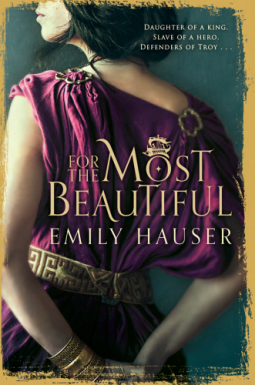
For the Most Beautiful “For the most beautiful”. These are the words inscribed on a golden apple presented by Paris, Prince of Troy, to the goddess Aphrodite whom he has chosen over her rivals, Hera and Athena. In return, the goddess rewards Paris with Helen of Sparta, the most beautiful woman in the world – but unfortunately, Helen is already married. Not surprisingly, her husband, Menelaus, is enraged by the theft of his wife and sends the mighty armies of Greece, led by his brother King Agamemnon, to the shores of Troy to bring her back.

The story of the Trojan War is one that has been told many times before and with which a lot of readers will already be familiar before picking up Emily Hauser’s debut novel, For the Most Beautiful. However, this book retells the story from a feminine perspective and focuses on two female characters – Krisayis and Briseis – who both have important roles to play yet have not been given much attention in other versions such as Homer’s Iliad.

Krisayis (whose name is usually spelled Chryseis) is the daughter of a Trojan priest and companion to Cassandra, a princess of Troy. As the novel begins, we learn that Krisayis is in love with Cassandra’s brother, Troilus, and that, much against her wishes, she is about to become a priestess devoted to the god Apulunas. Our other main character, Briseis, is a princess of Lyrnessus who has unexpectedly found love with her husband Mynes, despite growing up under the shadow of a prophecy which seemed to rule out the possibility of happiness. With the onset of war, the lives of both young women are thrown into turmoil; their paths cross while held captive in the Greek camp, but will they be able to change fate and save Troy?

I found For the Most Beautiful a very enjoyable read. I think it was probably aimed at a younger audience but there was enough depth to keep an adult reader happy too. Having only read two or three other novels about Troy (including Madeline Miller’s The Song of Achilles and Judith Starkston’s Hand of Fire) I found that while I knew the basic outline of the story, a lot of it was new to me and the approach the author took made it feel fresh and original. It was interesting to see how Emily Hauser interpreted the characters of not just Krisayis and Briseis but also Achilles, Patroclus, Paris, Hector, Cassandra and others.

The stories of our two heroines unfold in alternating chapters and I thought these sections of the book were well written and emotionally engaging (both Briseis and Krisayis suffer the death of a loved one and then face further ordeals and difficult decisions after their capture by the Greeks). However, these chapters are interspersed with short scenes in which we witness the gods on their mountain observing and manipulating the lives of the mortals below – and this is the one aspect of the book which really didn’t work for me. The writing style in these sections is quite different – the language feels much more modern and the tense changes from past to present – and the gods come across as bored, shallow and petulant. I think I can see what the author was trying to do here and I’m sure other readers will enjoy the light-hearted, comedy feel of these scenes, but it just made me impatient to get back to Briseis and Krisayis!

After finishing this book, I was pleased to discover that it’s the start of a new Golden Apple trilogy. Greek mythology is not a subject that particularly interests me, but I was still captivated by For the Most Beautiful and am looking forward to reading another two books by Emily Hauser.

I received a copy of this book from NetGalley for review.

Lorna Doone by R.D. Blackmore

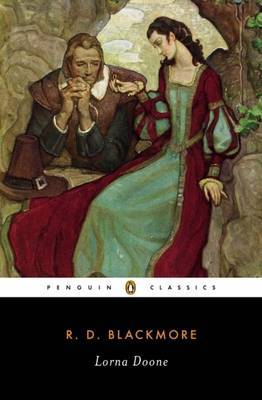
A clan of murderous outlaws, a dashing highwayman, stolen jewels, family feuds, political intrigue, lots of beautiful scenery and a tender love story: R.D. Blackmore’s 1869 classic, Lorna Doone: A Romance of Exmoor, has all of these things and more. Set in the south west of England in the seventeenth century, it tells the story of John Ridd, a yeoman farmer, and his love for the beautiful Lorna Doone.

Lorna Doone John is twelve years old when his father is attacked and killed by a gang of Doones, a once noble family who fell out of favour at court and fled to an isolated Exmoor valley where they have since been leading wild and lawless lives. Being a child, there is no immediate action John can take, so he puts his desire for revenge aside and settles back into life at Plover’s Barrows farm with his mother and two younger sisters, Annie and Lizzie.

At fourteen, John has his first encounter with the eight-year-old Lorna after climbing a hill behind a steep waterfall and unexpectedly finding himself in the Doone Valley. Several years later they meet again as adults and fall in love, but there are many obstacles which must be overcome before they can have any chance of happiness. First there are John’s own feelings towards the Doones, and the fact that as granddaughter of Sir Ensor Doone, head of the family, Lorna’s social status is much higher than that of a humble farmer like John. To complicate things further, the brutal and violent Carver Doone intends to marry Lorna himself and will let nothing stand in his way.

I could tell from the beginning that I was going to enjoy Lorna Doone. It’s just the sort of classic I love! I suppose this could technically be classed as a re-read as I did own an abridged version of the book as a child, but I can barely remember reading it and huge chunks of the original must have been missing anyway (the full, unabridged version has more than 700 pages). I can only regret that it has taken me so long to decide to try it again as an adult.

Lorna Doone takes place during the final years of the reign of Charles II, the Monmouth Rebellion of 1685 and the Bloody Assizes which followed. If you don’t know much about this period of history it might be worth briefly reading up on it first, to gain an understanding of the novel’s historical context, but don’t worry – it’s easy enough to follow the story of John and Lorna even without this knowledge. As our narrator, John is the character we get to know best, following him as he grows from a child into a man. His narrative voice is honest, down-to-earth and often humorous. Lorna, though, is a typical Victorian heroine – beautiful, delicate, gentle, passive, and with a tendency to faint and swoon. I didn’t dislike her, but I preferred John’s two sisters: Annie, who has a romance of her own with the highwayman Tom Faggus (who is based on a real person, and whose horse, Winnie, is a great character in her own right), and the intelligent, sharp-tongued Lizzie.

There are lots of other characters, of course, all of whom play an important role in the story. These include Reuben Huckaback and his granddaughter, Ruth, who wants John to marry her; Lorna’s maid Gwenny Carfax, daughter of a Cornish miner; Counsellor Doone, the clever, scheming father of Carver; and Jeremy Stickles, the King’s messenger, who provides a link with London and the court. I should warn you that some of the characters speak in a strong dialect (for example, “there be a dale of faighting avore thee. Best wai to begin gude taime laike. Wull the geatman latt me in, to zee as thee hast vair plai, lad?”) but this is restricted mainly to one or two of the Ridds’ servants – as in many Victorian novels, dialect is used as an indication of class.

Blackmore devotes a lot of time to telling us about daily life at Plover’s Barrows and the things that are important to John and to his family, such as bringing in the harvest, fishing for loaches in the river and surviving a bad winter. I couldn’t help being reminded of Thomas Hardy – another author with a lot of affection for the countryside and country life. Doing a bit of research online, I was interested to discover that Hardy had read Lorna Doone in 1875 and wrote a letter to Blackmore, mentioning “the kindred sentiment between us in so many things”. Lorna Doone is set in Somerset and Devon and there are lots of vivid descriptions of the beautiful landscapes. I particularly loved reading about John Ridd’s adventures in the secluded, hidden valley of the Doones; every time he enters it in search of Lorna, whether through the waterfall or the forbidding Doone Gate, it’s almost as if the reader is being pulled into another world.

I thoroughly enjoyed reading Lorna Doone and now I’m curious as to why it seems to be the only one of Blackmore’s many novels that has stood the test of time and is still in print. His others are available as ebooks and on Project Gutenberg, but before I investigate further I would love to know if any of you have read them and if so, did you find them worth reading?

Margery Sharp Day: The Nutmeg Tree

One of the things I love about book blogging is being introduced to authors I would otherwise never have thought about reading. Margery Sharp is one of those authors. Jane at Beyond Eden Rock hosted a celebration of Margery’s work on her birthday (25th January) last year but I wasn’t able to take part, so I was pleased to see that she was doing it again this year. Not knowing much about any of her books, I picked her 1937 novel The Nutmeg Tree, which I hoped would be a good place to start.

And it was a good place to start! I found it a light, entertaining and witty story with a main character I loved. Her name is Julia (“by marriage Mrs. Packett, by courtesy Mrs. Macdermot”) and as the novel opens, she is in the bath singing the Marseillaise while men from the Bayswater Hire Furniture Company are removing her furniture. The reason for this is that she needs money for a journey to France to visit her daughter, Susan. Susan was the product of Julia’s brief marriage to a soldier who was killed in action, and being young and keen to pursue a career as an actress, Julia had left her daughter to be raised by her in-laws. Now, after nearly twenty years, Susan has sent a letter to her mother, begging her to come to visit the family in France. She wants to get married, she says, “and Grandmother objects”.

Reunited with her daughter after such a long absence, Julia finds that Susan is very different from herself: sensible, reliable and with strong principles. However, when she meets Bryan, the man Susan intends to marry, Julia immediately knows he is one of “her sort”. She is sure he won’t make Susan happy, so she has a decision to make. Should she support the marriage or oppose it? To make things worse, Bryan also recognises Julia as a kindred spirit. Will he expose her true character to her in-laws, to whom she has been trying to pass herself off as a respectable lady?

I wasn’t sure at first whether Julia would be a character I was going to like, but I did warm to her very quickly and enjoyed reading about her exploits as she stumbled from one disaster to another. She has such a mixture of qualities, some good and some bad: she can be irresponsible and often acts without thinking, but she’s also warm, friendly and fun-loving. She may have made mistakes in the past (and continues to make them in the present) but her heart is in the right place and she tries so hard to be ‘good’ that it’s easy to forgive her. I ended up loving Julia, though I couldn’t help but wonder what readers in 1937 would have thought of her!

Julia is the star of the story, but some of the other characters are wonderful too, particularly Susan’s grandmother who is convinced that Julia is going to open a cake-shop (and even starts collecting recipes on her behalf), and Sir William, Susan’s guardian, who is also visiting the family and with whom Julia finds herself falling in love. I desperately wanted Julia and Sir William to get the happy ending they deserved, though I’m not going to tell you whether that happens or not, of course! I did think the ending seemed quite abrupt, which I found slightly disappointing at first, but on reflection it was probably the best way the story could have ended.

I’m so pleased that my first experience of Margery Sharp’s work has been a good one and I’m sure I’ll be reading more of her books in the future.

The Queen’s Choice by Anne O’Brien

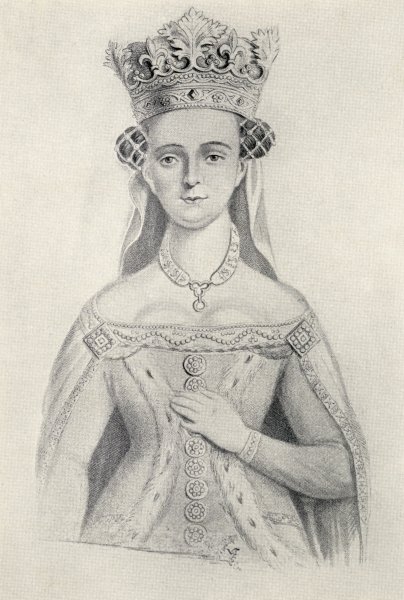
Some queens of England are much better known and have been written about much more often than others; I think it’s fair to say that Joanna of Navarre is not one of them.  As Henry IV’s second wife, Joanna (or Joan as she is sometimes known), doesn’t seem to get a lot of attention as far as historical fiction is concerned.  Anne O’Brien’s new novel, The Queen’s Choice, is the first book I’ve read with Joanna as the main character.

As the novel opens in 1396, Joanna is the wife of John, Duke of Brittany.  While she doesn’t love her husband, who is much older than herself, they have had several children together and their marriage is not an unhappy one.  To the court of Brittany comes Henry Bolingbroke, having been banished from England by his cousin Richard II, and Joanna is given a brief taste of the love and passion which has so far been missing from her life.

Three years later, things have changed.  Henry has returned to England, taken the crown from Richard and imprisoned him in Pontefract Castle, while Joanna herself is now a widow and acting as regent of Brittany on behalf of her young son.  When Henry sends one of his men, Thomas de Camoys, to approach Joanna about the possibility of a marriage alliance, she must make the difficult decision to leave her sons and her regency behind and come to England as Henry’s queen.

I won’t say much more about the plot, because I’m sure future readers will prefer to watch the rest of Joanna’s story unfold for themselves.  What I will say is that the marriage between Joanna and Henry takes place fairly early in the novel; after this, the focus is on their attempts to make their relationship work – which is not always an easy task!  Although their marriage is portrayed as a love match (it seems that there could be some historical evidence to support this), they are both proud people and a lack of communication sometimes causes misunderstandings.  After Henry’s death in 1413, Joanna’s life takes a more dramatic turn during the reign of her stepson, Henry V.

I knew almost nothing about Joanna of Navarre before reading this book, but what little I did know was negative.  It seems that she was greatly disliked by the English people because of her strong connections with France and Brittany at a time when hostilities between England and France were ever present.  Her unpopularity and how she felt about it is covered in the novel – and sometimes her pride and unwillingness to take advice are frustrating – but Joanna is also given lots of good qualities and I liked her overall.  There were times when I felt she reacted to certain situations in the way I would expect a modern day woman to react rather than a medieval one, but otherwise I thought she was a believable and strongly drawn character.

I may have had very little prior knowledge of Joanna, but I didn’t know much about Henry IV either and it was good to have the opportunity to learn more about him from this book.  Henry only ruled England for fourteen years but his reign was an unsettled one: as well as the threat from overseas, he faced rebellions in Wales and in Northumberland, and rumours surrounding the death of his cousin Richard II, said to have been starved to death in captivity.  Although The Queen’s Choice is set several decades before the conflict we know as the Wars of the Roses, we can see how it has its beginnings here, with tensions between rival branches of the family of the late King Edward III (Henry’s claim to the throne coming through the Lancaster line).

This is the third book I’ve read by O’Brien – the other two are The Forbidden Queen (the story of Katherine of Valois) and The King’s Sister (Elizabeth of Lancaster) – and I have enjoyed them all.  I’ll look forward to finding out who will be the subject of her next novel.

I received a copy of this book from the publisher via NetGalley for review.

To the Lighthouse by Virginia Woolf

Throughout 2016 Ali of Heavenali is hosting a #Woolfalong – a celebration of the work of Virginia Woolf. Every two months there’s a selection of books to choose from and the theme for January/February is ‘getting started with a famous Woolf novel – To the Lighthouse or Mrs Dalloway’. As I hadn’t read either of those books (my previous experience with Woolf has been limited to Orlando, which I enjoyed) I thought I would start with her 1927 novel, To the Lighthouse.

To the Lighthouse is divided into three parts. The first, The Window, introduces us to Mr and Mrs Ramsay, their children, and a group of friends who have all gathered for a holiday on the Isle of Skye. As the novel opens, young James Ramsay is looking forward to a journey to the nearby lighthouse the next day – but only if the weather is fine, which his father informs him is not likely to happen. We then get to know each of the other characters – including Lily Briscoe, an artist who is working on a painting of the Ramsays, and Charles Tansley, a philosophy student – and we follow them over the course of a single day.

The middle section, Time Passes, moves the story forward ten years and shows us what has happened to the Ramsay family during that period (a period which includes the First World War). The Ramsay’s summer house on the island has been standing empty and from the perspective of the housekeeper, Mrs McNab, we learn how things have changed over time. Eventually, in The Lighthouse, several of the people we met in the first section of the book decide to return to Skye and make that long-anticipated journey to the lighthouse.

This is a novel that I’m glad I’ve read, but not one that I particularly enjoyed reading. That doesn’t surprise me, though – not being a fan of the ‘stream of consciousness’ style of writing or of books with almost no plot, I knew before I started that this wouldn’t really be my kind of book, so I’m actually quite proud of myself for not only attempting to read it, but managing to finish it. There’s no doubt that it’s beautifully written (as Woolf herself is quoted as saying on the back cover of my edition, “I am making up To the Lighthouse – the sea is to be heard all through it”) but I sometimes struggled to concentrate and had to read the same page twice to be able to appreciate the beauty of the words.

I did like the way the passage of time was handled in the novel. The first and third sections are the longest; they each cover just one day (ten years apart) and the perspective constantly shifts from character to character, taking us through a stream of thoughts, emotions, memories and observations. The middle section is much shorter, forming a bridge between the two September days, and is a wonderfully poetic piece of writing.

Although I didn’t love To the Lighthouse, I did find a lot to admire. I don’t think Woolf will ever be a favourite author of mine, but I will probably dip into the #Woolfalong again later in the year, as I think I might be interested in reading Flush and A Room of One’s Own.