Jane Eyre by Charlotte Brontë (re-read)

Jane Eyre was the book chosen for me in the Classics Spin in December. When I discovered that this was the one I’d be reading, I was delighted – it’s a book I love and which I hadn’t read for a long time. I immediately pulled my copy off the shelf to start my re-read and from the familiar opening line – “There was no possibility of taking a walk that day” – I was drawn into the story once more. The gothic atmosphere of the novel made it a perfect read for dark December nights and I finished it just before Christmas.

Jane Eyre I think I was probably eleven or twelve years old when I had my first encounter with Jane but on that first read I didn’t get past the Lowood School section at the beginning and more than ten years passed before I decided to try again. My second attempt was much more successful; being older and better able to appreciate the story and the quality of the writing, I read the whole book and loved it. This most recent read was my third. I was curious to see whether I would feel differently about it now, after another long gap, but although I did notice things this time that I don’t think I picked up on last time, my overall opinion of the book is unchanged.

Jane Eyre, for those who don’t know the story, is an orphan raised in the home of an aunt and three cousins who make it obvious that they don’t like her and don’t want her there. At the age of ten, Jane is sent to a charity-run boarding school for girls, another harsh and unwelcoming environment. However, Jane is able to take two positive things away from her time at school – a brief but much-valued friendship with Helen Burns, and the education which later enables her to find a position as governess to Adele, the young ward of Mr Rochester of Thornfield Hall. Jane soon begins to fall in love with her employer but when she discovers that he is hiding a dark secret, it seems that her chance of happiness has been destroyed.

*Spoiler warning: I will find it difficult to discuss the book any further without spoilers, so if you haven’t read Jane Eyre yet, I would advise skipping to the end of this post.*

I loved the experience of reading Jane Eyre again. Although much of the story was familiar to me from my previous reads and many of the scenes had stayed in my mind – including Jane’s imprisonment in the red room at Gateshead Hall, the tragic death of Helen Burns, Rochester disguising himself as a gypsy woman and the revelation of Bertha’s existence – there were other parts that I had forgotten and that I enjoyed discovering again.

I also loved being reacquainted with the characters. I know there are a lot of people who have problems with Mr Rochester and I can understand why – apart from his treatment of Bertha, there’s the fact that he lies to Jane and that he’s prepared to enter into a bigamous marriage with her, but despite this I have always liked him as a character. Jane is not my favourite literary heroine (although I do admire her for her honesty, integrity, inner strength and sense of right and wrong) and Mr Rochester is not my favourite hero but they both feel so real and I can believe in their relationship and their love for one another – a love that I think they both desperately needed.

Of course, there’s much more to Jane Eyre than just the romance. There’s also some social commentary, with the descriptions of conditions at Lowood School and with the exploration of class, gender and religion. It’s an interesting read from a feminist perspective, portraying Jane’s search for independence and depicting the options open to a woman faced with making her own way in life in the early Victorian period. Having read about the lives of Charlotte and the rest of the Brontë family (something I hadn’t done when I first read this book) I can see how autobiographical some parts of the story are.

My least favourite section of the book is still the part where Jane leaves Thornfield Hall during the night and is taken in by St. John Rivers and his sisters. I remembered intensely disliking St. John on my last read, but I wasn’t sure whether that was because of the character himself or just because I was impatient for Jane and Rochester to be reunited. However, I didn’t like St. John any better this time round. I find him cold and controlling – Jane herself describes his nature as “austere and despotic” – and he doesn’t seem to care at all about Jane’s own opinions and wishes. Even though I had read the book before, I was still relieved when Jane rejects him!

*End of spoilers*

I thoroughly enjoyed my re-read of Jane Eyre, if I haven’t already made that clear! I’ve heard it said that people can either love Jane Eyre or Wuthering Heights, but not both – well, I do love both, but I have always preferred Wuthering Heights. I’m planning to re-read it soon too and it will be interesting to see if I still do like it more.

Since finishing Jane Eyre a couple of weeks ago, I have now read the prequel Wide Sargasso Sea by Jean Rhys for the first time and will be posting my thoughts on that one soon. Then I have a copy of Lyndsay Faye’s new Jane Eyre-inspired novel, Jane Steele, which I’m looking forward to reading – and I also still need to read my only remaining unread Brontë novel, Shirley. It seems I’m having a very Brontë themed start to the new year!

Ten Reading Resolutions for 2016

It’s been a while since I last took part in Top Ten Tuesday (hosted by The Broke and the Bookish) but this week’s topic is one I was going to post about anyway: my plans and resolutions for 2016.

Top Ten Tuesday

1. Make more time for re-reads. Only one of my 2015 books was a re-read (Jane Eyre, which I haven’t written about yet) and this makes me feel sad because I used to get so much enjoyment from reading my favourite books over and over again. I’m not going to set a target in terms of numbers, but I do want to re-read more than just one book this year!

2. Make progress with my Classics Club list. My target date for finishing my list is 10th March 2017 and I still have 32/100 books to read, so I really need to make a lot of progress this year. I will be going through the list to see if I still actually want to read all of the books on it and might decide to make some changes (one thing I like about the Classics Club is that you don’t need to stick rigidly to your original list and can add or remove books at any time).

3. Read books towards the Women’s Classic Literature Event. There’s some overlap here with my previous resolution, as this is an event hosted by the Classics Club. I already read three women’s classics towards the end of 2015, but there are a lot more that I’m hoping to read in 2016.

4. Continue to work through the series that I’m in the middle of reading. I’m very good at starting them but not so good at remembering to continue with them. Some of the many series I would like to make progress with in 2016 include the Aubrey/Maturin series by Patrick O’Brian, Amelia Peabody by Elizabeth Peters, Temeraire by Naomi Novik, Mary Russell/Sherlock Holmes by Laurie R King, The Accursed Kings by Maurice Druon, Shardlake by CJ Sansom and the Pallisers by Anthony Trollope.

5. Continue to work on my own projects i.e. Ten from the TBR and Reading the Walter Scott Prize. I have found that ‘challenges’ don’t really work for me (the Historical Fiction Reading Challenge is the only one I’ve signed up for this year, apart from the Women’s Classic Literature Event) and I like to allow myself plenty of time and flexibility, so I’m happier with my own personal projects, for which I haven’t set any deadlines.

6. Read the books that I really want to read! There are a lot of books that I’ve been wanting to read for years and am sure I’m going to love, but that I’ve been avoiding reading because I’m ‘saving them for later’ or ‘want to have something to look forward to’. I’m aware of how silly this is, so 2016 is going to be the year I finally read those long-anticipated books!

7. Be more ruthless about abandoning books I’m not enjoying. Sometimes I can tell almost immediately that a book is not for me, but sometimes I’m not sure and decide to keep going in the hope that it will get better – and then even when it doesn’t improve I still struggle on to the end.

8. Try to take more notes while reading. Even if I write about a book immediately after finishing it, I often struggle to remember exactly what I wanted to say about it. Better note-taking would definitely help, but once I become swept away by a good book I don’t like having to interrupt the flow of my reading. I’m not sure what to do about this but will give it some thought.

9. Continue trying to blog regularly, but don’t worry if I ‘get behind’ or if I don’t manage to post as often as I would like to. The focus of my blog in 2016 will still be books and reading and I will still be aiming to write about every book I read (as the original purpose of my blog was to keep a record of my reading). I will be continuing with my monthly Historical Musings posts this year as I enjoy writing them and I think we’ve had some good discussions in the comment sections. I’ve also settled on a new format for my end-of-month summary posts which I think will be more interesting for me to write and for you to read!

10. Try to make every book I read a potential favourite book of the year. I know this won’t realistically happen, but it’s what we would all like, isn’t it? Hopefully Resolutions 1-7 will help with this!

Do you have any resolutions for 2016?

Historical Fiction Reading Challenge 2016

2016 HF Reading Challenge Button 2 One thing I have learned in more than six years of blogging is that the only type of reading challenges I actually like taking part in are the ones that aren’t really ‘challenges’ at all! That’s why the Historical Fiction Reading Challenge hosted by Passages to the Past is perfect for me. I never have any trouble completing it as I already read so much historical fiction anyway, but I still enjoy linking my reviews to the monthly challenge posts and seeing what other participants have been reading. It’s a great way to discover new historical fiction novels and readers.

The challenge runs from January 1st to December 31st 2016 and there are six different levels to choose from:

20th Century Reader – 2 books
Victorian Reader – 5 books
Renaissance Reader – 10 books
Medieval – 15 books
Ancient History – 25 books
Prehistoric – 50+ books

Any type of historical fiction is accepted including sub-genres such as Historical Romance, Historical Mystery, Historical Fantasy and Young Adult.

I’ll be joining at the Prehistoric level again. In 2015 I read 72 historical fiction novels (you can see the list of titles here) so I’ll be aiming for 50+ books again this year.

I’ll be keeping track of my progress on this page.

If you’re interested in joining the challenge too, please see the sign-up post at Passages to the Past!

My favourite books of 2015

I always enjoy looking back at my reading year, listing my favourite reads and reminding myself of all the great books I’ve discovered during the previous twelve months. As usual, this is going to be a long list (I have never been able to restrict myself to just posting a top ten) and could have been even longer…so without further ado, here are my favourite books of 2015:

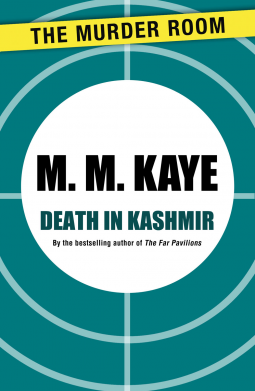
Death in Kashmir

Death in Kashmir by M.M. Kaye

From my review: “I loved this book from the very beginning. It’s so important that a first chapter pulls you straight into the story and this one did, right from the opening line – Afterwards Sarah could never be quite sure whether it was the moonlight or that soft, furtive sound that had awakened her. The rest of the story was equally engrossing: a perfect mixture of mystery, suspense, romance and espionage.”

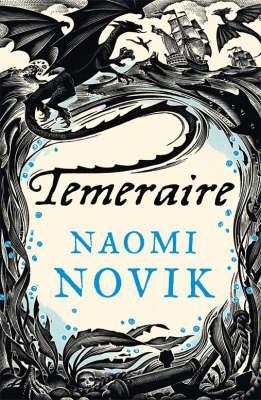
Temeraire

Temeraire by Naomi Novik

From my review: “The first in a series of nine books and set during an alternate version of the Napoleonic Wars. This alternate world is exactly like our own in almost every detail, but with one very important difference – the existence of dragons…Now that I know how things work in the world of Temeraire I’m looking forward to continuing with the series.”

The Last Light of the Sun

The Last Light of the Sun by Guy Gavriel Kay

From my review: “A blue moon and a white moon shine in the sky, faeries wait to claim the souls of the dead, and ancient magical forces lurk in the forest, yet the world portrayed in The Last Light of the Sun can easily be identified as Northern Europe in the time of the Vikings, the Anglo-Saxons and the Celts…This is a beautifully written novel, and as well as being an entertaining story, it’s also very thought-provoking in places.”

David Copperfield

David Copperfield by Charles Dickens

From my review: “My edition had more than 900 pages, which seemed quite daunting at first…but once I started reading, I found it surprisingly addictive and it was actually a much quicker read than I imagined it would be. Of the seven Dickens novels I’ve now read, A Tale of Two Cities is still my favourite, but I think this one ties with Our Mutual Friend for second place.”

Edwin High King of Britain

Edwin: High King of Britain by Edoardo Albert

From my review: “This is a fascinating novel and I feel that I’ve learned a lot from it, but it’s also a gripping, entertaining story…There are battles and duels, feasts and feuds, and lots of political intrigue; there’s always something interesting happening or something new to learn and I was never bored.”

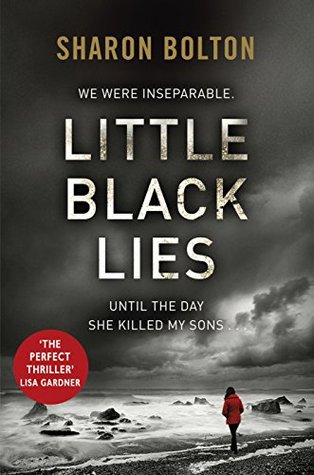
Little Black Lies

Little Black Lies by Sharon Bolton

From my review: “There are plot twists, there are surprises and there are revelations (one of them coming at the end of the very last page) and every time I thought I knew where the story was going, I was proved wrong. This book is dark, powerful and emotional…and probably my favourite by Sharon Bolton so far.”

The Hollow Hills

The Hollow Hills by Mary Stewart

From my review: “I loved this book from beginning to end…While I don’t have a lot of knowledge of the Arthurian legends, I do know the basic details, so some parts of the story felt familiar to me – but even where I thought I knew what was going to happen, this didn’t lessen the enjoyment of the book for me.”

The Vicomte de Bragelonne

The Vicomte de Bragelonne by Alexandre Dumas

From my review: “As Dumas is one of my favourite authors I was fully expecting to love this book – and I did…I love the way Dumas writes and I love French history, so I didn’t really mind the fact that there was less swashbuckling action and that we don’t see as much of d’Artagnan’s friends.”

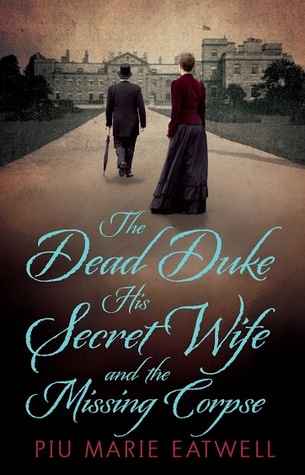
the dead duke

The Dead Duke, His Secret Wife and the Missing Corpse by Piu Marie Eatwell

From my review: “How could I resist reading a book with a title like that? Luckily, the story between the covers proved to be as intriguing as the title; I was completely engrossed in The Dead Duke, His Secret Wife and the Missing Corpse from beginning to end. I don’t often choose to read non-fiction but I’m very glad I decided to read this one!”

Imperium

Imperium by Robert Harris

From my review: “I had heard of Cicero, of course, but knew very little about his work and nothing at all about his personal life. Now that I’ve read Imperium, the first in a trilogy of novels narrated by Cicero’s slave and secretary, Tiro, I know much more about both…A book about Roman politics may sound boring, but I can assure you it’s not. Harris is an author of thrillers as well as historical fiction and this is an exciting, entertaining read, not just an educational one.”

Lustrum

Lustrum by Robert Harris

From my review: “The first book in the trilogy, Imperium, was one of my favourite reads of the year so far and I’m pleased to say that I enjoyed Lustrum even more. What a great book this is! I was completely gripped from beginning to end, immersed in Cicero’s world.”

Sea of Poppies

The Ibis Trilogy by Amitav Ghosh (Sea of Poppies, River of Smoke, Flood of Fire)

From my review of Flood of Fire: “Set in India and China before and during the First Opium War, the trilogy follows the adventures of a group of people thrown together on board a former slaving ship called the Ibis…Before reading these books I knew nothing at all about the First Opium War, so this trilogy has provided a perfect introduction…I am happy to have had the opportunity to read these three wonderful novels!”

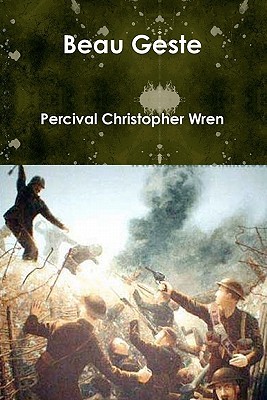
Beau Geste

Beau Geste by P.C. Wren

From my review:Beau Geste is many things: an adventure novel set in North Africa; a tale of the French Foreign Legion; an Agatha Christie-style whodunnit. But if I was asked to describe it in one sentence, I would say that it’s a book for people who like puzzles…it’s so much fun to read that it’s easy enough to overlook any flaws…I enjoyed Beau Geste as much as I expected to and was pleased to find that P.C. Wren wrote more books featuring some of the same characters.”

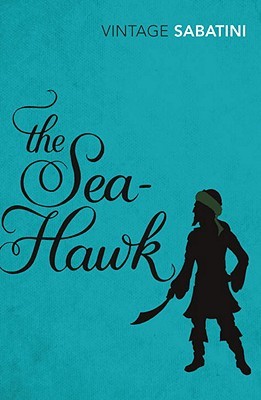
The Sea Hawk

The Sea-Hawk by Rafael Sabatini

From my review: “I love Rafael Sabatini! I can always count on him when I’m in the mood for a good old-fashioned adventure story and The Sea-Hawk has it all: treachery, betrayal, revenge, duels, kidnapping and piracy on the high seas…Having read three of Sabatini’s other novels, I’ve come to know what to expect from him – and The Sea-Hawk definitely lived up to my expectations.”

And these books deserve a special mention too:

Ross Poldark by Winston Graham
Romola by George Eliot
Alias Grace by Margaret Atwood
The Last Enchantment by Mary Stewart
The Luminaries by Eleanor Catton
Oswald: Return of the King by Edoardo Albert
Gildenford by Valerie Anand

***

Have you read any of the books on my list? What were your favourite reads of 2015?

Happy New Year!

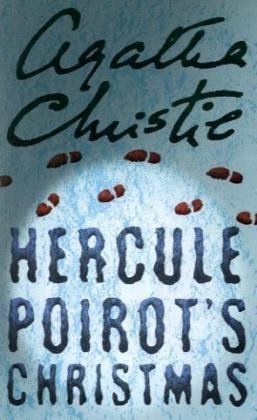
Hercule Poirot’s Christmas by Agatha Christie

Hercule Poirots Christmas I hope you’ve all had a good Christmas! Mine hasn’t been great, unfortunately. My grandfather, who is eighty-five, fell and broke his shoulder last week and has been in hospital over Christmas. Because of his age and poor general health, the doctors haven’t been able to say whether he will make a full recovery or when he might be able to go home. My grandmother, who also has health problems, can’t be left on her own so we are all helping out with taking care of her until we know what long-term arrangements will need to be made. As you can probably imagine, it’s been quite a stressful time and not conducive to writing good book reviews, so this is just a short post to record some thoughts on a recent Christmas-themed read.

Hercule Poirot’s Christmas is a classic locked-room murder mystery which begins with an elderly millionaire, Simeon Lee, inviting various members of his family to spend Christmas with him at his home, Gorston Hall. The family are surprised and suspicious – they are not all on speaking terms and as they begin to gather at Simeon’s house tensions are running high. When the old man is found dead in a pool of blood in his locked bedroom on Christmas Eve, there is no shortage of suspects.

Who could the killer be? Could it be one of Simeon’s sons – the money-obsessed George, maybe, or Harry, who has been estranged from the rest of the family for many years – or one of their wives? What about Pilar Estravados, Simeon’s granddaughter, newly arrived from Spain? Or Stephen Farr, son of Simeon’s former business partner, who has come unexpectedly from South Africa? Hercule Poirot is called in to investigate and as he begins to piece together what happened on the night of the murder, some family secrets are brought to light.

This is not very high on my list of favourite Agatha Christie novels, but I did enjoy it. As usual, I failed to solve the mystery before Poirot did and although there were a few times when I thought I’d figured it out, I never even came close to being correct! Despite the title, it’s not a particularly Christmassy book (Christmas Day passes almost without mention) but I found it fun, entertaining and quick to read, which is just what I was in the mood for. I was reminded of Envious Casca by Georgette Heyer, which is also set at Christmas and has a similar storyline.

With plenty of other unread Christie novels still to look forward to, I’m sure I’ll be reading more Poirot in 2016.

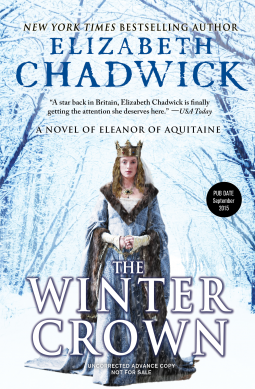
The Winter Crown by Elizabeth Chadwick

The Winter Crown This will be my last post this week, so I’m going to take this opportunity to wish everyone a Merry Christmas! I’ll be back before New Year to tell you about a Christmas-themed read and to share my list of favourite books of 2015, but first here are my thoughts on another recent read – no connection with Christmas, but at least it does have ‘winter’ in the title.

The Winter Crown is the second of Elizabeth Chadwick’s trilogy of novels following the story of Eleanor of Aquitaine. Chadwick uses the alternate spelling Alienor, as she says this is how the name would have been spelled at the time, so I have done the same throughout the rest of this post. The first book in the trilogy, The Summer Queen, covered Alienor’s early years and her marriage to King Louis VII of France. Now, in The Winter Crown, we move on to the next stage in Alienor’s life.

The novel opens in December 1154 when, having had her first marriage annulled, Alienor is crowned Queen of England alongside her second husband, Henry II. As Duchess of Aquitaine in her own right, Alienor has brought Henry wealth, lands and influence – but he has made it clear that he has no plans to allow her to govern her own lands. What Henry wants is a wife who will concentrate on providing and raising children, who will turn a blind eye to his many mistresses and who will keep her opinions to herself. Alienor, though, has other ideas and a marriage that began with so much promise and a certain amount of chemistry, if not love, descends into a series of disappointments and disagreements.

The deterioration of Alienor’s relationship with the king forms a large part of the novel, but so do her relationships with her sons – Henry the ‘Young King’, Geoffrey, Duke of Britanny, and John, the youngest – and her daughters, Matilda, Alie (Alienor) and Joanna. The other son who I haven’t mentioned, of course, is Richard (the future Richard the Lionheart). Alienor makes no secret of the fact that Richard, the heir to her own lands of Aquitaine, is her favourite child, and he is the one whose character is developed most fully in this novel.

For the first half of the novel, Alienor seems to be involved in a constant cycle of pregnancies and births, but that doesn’t mean the story was boring at all. As well as the tensions that are building in Alienor and Henry’s marriage (which get worse when she learns of his new mistress, Rosamund de Clifford), a lot of time is also devoted to Henry’s feud with his chancellor, Thomas Becket. When Henry – against Alienor’s advice – makes Becket Archbishop of Canterbury, he finds that Becket now possesses power which could be used against him instead of for him. The second half of the novel is equally full of conflict, as Henry discovers that his sons are prepared to rise against him in rebellion – and Alienor is forced to take sides.

I have read a few different fictional portrayals of Alienor/Eleanor and I really like the way Elizabeth Chadwick has chosen to portray the character. The Alienor of The Winter Crown is a strong, intelligent woman, keen to play a role in the governance of Aquitaine and England, but restricted due to her gender and the reluctance of her husband to involve her in his decision-making. I was interested to read Chadwick’s author’s note at the end in which she explains why she disagrees with the popular description of Alienor as a powerful medieval woman.

There are plenty of other characters worth mentioning too. Chadwick’s novels often feature a strong female friendship and in this book we meet Isabel de Warenne, wife of William of Blois (son of the late King Stephen of England), who becomes a trusted friend of Alienor’s after being taken into her household. Isabel, and Henry II’s half-brother Hamelin, were two of my favourite characters in the novel: two people who are close to the King and Queen but who don’t always agree with their actions. And readers of Chadwick’s The Greatest Knight will be pleased to know that William Marshal also appears in this novel, as a young man who is brought into Alienor’s service to train her sons in fighting and swordplay. I’m sure we’ll be seeing more of William in the next book.

I am thoroughly enjoying this trilogy so far and am looking forward to reading the final Alienor novel, The Autumn Throne, which should be available next year.

Thanks to Sourcebooks for providing a review copy via NetGalley.

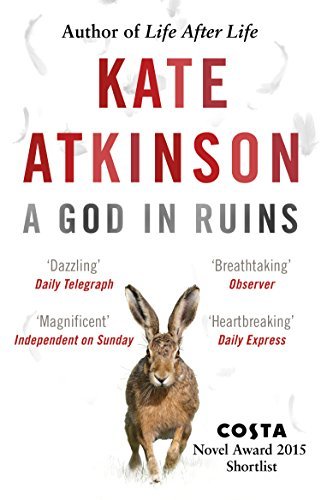
A God in Ruins by Kate Atkinson

A God in Ruins It’s been nearly three years since I read my first Kate Atkinson novel, Life After Life, in which Ursula Todd lives her life over and over again, each new life giving her a chance to alter decisions and mistakes made in the one before. Since then I’ve been catching up with Atkinson’s Jackson Brodie mystery series (I only have one of those left to read) but last week I decided it was time to pick up her latest novel, A God in Ruins, and reacquaint myself with the Todd family.

A God in Ruins is not exactly a sequel to Life After Life – it can be better described as a ‘companion novel’ – and both do stand alone. There are some similarities between the two novels, but there’s also a big difference. While Life After Life follows several different versions of the same person’s life, A God in Ruins concentrates on someone who lives just one life: his name is Teddy Todd and he is Ursula’s younger brother.

Teddy’s story is told in non-chronological order, so that a chapter about his childhood is followed by one set towards the end of his life and then another describing his time as a World War II bomber pilot (there are several wartime chapters interspersed throughout the novel). We also get to know Teddy’s wife, Nancy (who was literally the ‘girl next door’), their daughter, Viola, and grandchildren, Sunny and Bertie. The stories of each of these people unfold gradually, chapter by chapter, and the non-linear timeline means that we are sometimes given hints of something that has happened in the past or will happen in the future but have to wait until later in the book for a revelation. Flashbacks and ‘flashforwards’ often happen in the middle of a paragraph or even a sentence, which I found intriguing rather than confusing.

I enjoyed A God in Ruins but didn’t love it as much as I loved Life After Life, maybe because it felt less innovative without the device of one person living many different lives. Still, many of the same themes are here: life and death, fate and the ways in which our actions in the present can have big consequences in the future, and, of course, the effects of war. I mentioned that there are several chapters on Teddy’s experiences piloting a Halifax bomber during the war. I didn’t initially find these sections very engaging (in the words of Nancy, Teddy’s wife, “Let’s talk about something more interesting than the mechanics of bombing”), but eventually I was drawn in and started to enjoy those chapters as much as the others.

My favourite thing about Kate Atkinson’s writing is the way she creates characters who feel so real and believable – even if some of them are not easy to like, they are still interesting and fully developed. Viola, for example, is a cold and bitter person, unable to offer her children any love and affection, and as her father grows older, resenting every minute of the time she has to spend caring for him. At first it seems that there is no reason for Viola’s selfish behaviour, but later in the novel we learn of something that happened in her childhood that could provide an explanation.

I also liked all the little literary references Atkinson slipped into the story. I was particularly pleased to see that Teddy was an Anthony Trollope reader! As for the ending of the book, I think it’s probably best if I say nothing at all – other than that it’s one of those endings people will either love or hate. Personally, I thought it was perfect; it changed the way I felt about the entire book and left me with a lot to think about, which is what all good novels should do.