Ross Poldark by Winston Graham

Ross PoldarkI’ve often thought about reading the Poldark novels but there was always some reason why I didn’t; it never felt like the right time to start a twelve volume series or I could only find copies of the later books and not the first one. I had been aware that the BBC were making a new adaptation to be shown this year but I had forgotten about it until seeing a trailer a few weeks ago. That left me with a dilemma as the first episode is being shown on Sunday and obviously I wouldn’t have time to read the whole series by then. But I could at least read the first book and that is what I’ve done.

Ross Poldark is set in 18th century Cornwall (in fact, it is subtitled A Novel of Cornwall 1783-1787). At the beginning of the novel, Ross Poldark returns home from fighting in America to discover that things have changed in his absence. His father has died, leaving his estate, Nampara, to Ross – and Elizabeth, the woman he loves, has just become engaged to his cousin, Francis. With his heart broken, Ross devotes his time to restoring Nampara, which has fallen into disrepair having been left in the hands of the servants, and investigating the possibility of opening a new copper mine.

Life is not easy for Ross – as well as managing his father’s lazy, drunken servants, Jud and Prudie, and dealing with the problems of the tenants and workers who live on the estate, he also has to cope with seeing Francis and Elizabeth together at family gatherings. Then one day, Ross rescues fourteen-year-old Demelza Carne from a brawl at the fair and brings her home to work in his kitchen. With an age difference of ten years, the relationship between Ross and Demelza is at first one of master and servant, but as time goes by a friendship forms and Ross will eventually discover whether or not he is able to love again.

When I began to read Ross Poldark last weekend I thought I might have started it too late to finish by Sunday, but I needn’t have worried; I found it so easy to get into and the story so compelling that it turned out to be a very quick read. I loved the Cornish setting; I won’t comment on the accuracy of the descriptions or the dialect, not being from Cornwall myself, but I thought the overall sense of time and place was very strong. Although they’re quite different stories, the setting and the mining element made me think of another book I enjoyed: Penmarric by Susan Howatch.

As the title character, this is very much Ross Poldark’s story (and Ross is the sort of hero I could immediately like and care about, right from the moment he arrives home to find that the woman to whom he was planning to propose is marrying his cousin) but I found Demelza an even more intriguing character. She changes quite a lot over the four or five years the novel covers and she does slowly grow in confidence, yet never quite shakes off her insecurities and her feeling that the Poldarks are looking down on her because of her background. She is still just in her teens when the novel ends and I’m sure there will be more development to come in the second book. I also liked Verity, Ross’s cousin, and found her personal storyline as interesting as Ross and Demelza’s.

As well as the main characters, there are also lots of memorable secondary characters representing all different levels of society, from the Poldarks and their friends to the farmers and miners who work for them. Quite a lot of time is devoted to the servants Jud and Prudie, and also to one of Ross’s young tenants, Jinny Martin, and two rivals for her love, farm boy Jim Carter and the villainous Reuben Clemmow. Whenever the focus switches to these characters, it provides a diversion from the main plot, sometimes funny, sometimes moving, as well as showing us how Ross handles the problems on his estate and interacts with the people around him.

At the end of this book there are still a lot of unresolved storylines and loose ends and I’m looking forward to continuing the series with the second book, Demelza.
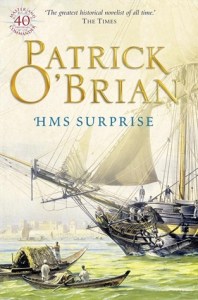
HMS Surprise by Patrick O’Brian

HMS Surprise Do you love novels set at sea?

Do you know your topsail from your mainsail?

Do you find descriptions of sea battles exciting and easy to understand?

I would answer NO to all three of those questions, so you may be wondering why I am continuing to read Patrick O’Brian’s Aubrey/Maturin series. The answer is that while, yes, most of the action takes place at sea and there are certainly a lot of nautical terms and quite a few sea battles, the series has so much more to offer than that. So let me ask three more questions.

Do you love novels with strong, complex, nuanced characters?

Do you like to be swept away to fascinating and exotic locations?

When you read historical fiction, do you like the setting to feel accurate and the language authentic?

Now you see why I’m happy to struggle through the naval terminology and the occasional engagement between enemy ships; HMS Surprise has all of the qualities I’ve just mentioned above and more. There’s adventure (including a dramatic rescue scene, a duel and a storm), a long voyage during which we visit Brazil, India and Madeira, romantic rivalries, witty dialogue and humour – where else would you find a line like “Jack, you have debauched my sloth!” – and descriptions of life aboard a navy frigate that are so interesting and detailed even a landlubber like me can appreciate them.

This is the third book in the series and although it is my favourite so far, I would recommend reading both Master and Commander and Post Captain first. I think it’s important to start at the beginning so that you can watch the friendship develop between Royal Navy captain Jack Aubrey and physician, naturalist and spy Stephen Maturin and so you know the background to their relationships with other characters, particularly the two women in their lives, Sophie Williams and Diana Villiers. I’m definitely finding the books more and more enjoyable now that I’m familiar with the characters and with Patrick O’Brian’s writing style.

I realise I haven’t said very much about the plot of this particular instalment, but I’m not sure that it’s really necessary. It’s probably enough to know that Jack, whose marriage plans have been put on hold as he’s in debt again, has been given the job of escorting a British ambassador to the East Indies, while Stephen, who is accompanying him, has learned that the woman he loves is in India and is determined to see her – even if it means he risks having his heart broken. To go into any further detail would mean giving too much of the story away (I always find it difficult to know how much to say about books that are part of a series) so I’ll leave it there.

The Mauritius Command will be next for me and this time I’ll try not to leave such a long gap between books. I was shocked when I discovered that it was August 2013 when I read Post Captain! Meanwhile I’m reading Temeraire by Naomi Novik, which I’ve seen described as Patrick O’Brian with dragons and which I’m counting as my first book for the Forgotten Histories Reading Challenge.

The Widow’s Confession by Sophia Tobin

The Widows Confession It’s the summer of 1851 and visitors are beginning to arrive in the seaside town of Broadstairs, Kent. Among the new arrivals are a young American widow, Delphine Beck, and her cousin, Julia Mardell; two women surrounded by an air of mystery. What is the scandal in Delphine’s past that has led her to flee New York and become estranged from her family? Why has Julia decided to accompany her and why does she keep her face covered by a veil?

Another newcomer is Edmund Steele who has come to Broadstairs to escape from a failed love affair. He is staying at the parsonage with his clergyman friend, Theo Hallam, who is himself trying to move on after a personal loss of his own. Then there’s the artist Mr Benedict, who is planning to spend the summer painting the Broadstairs scenery while his family are staying in nearby Ramsgate, and finally there’s Miss Waring, a nervous woman in her fifties who is visiting with her beautiful young niece, Alba.

All of these people are brought together by Theo’s aunt, Mrs Quillian, who arranges a series of picnics, walks and sightseeing excursions for them. But despite her enthusiasm, there is a lot of tension within the little group and it seems that almost everyone has his or her own secrets to hide. When the body of a young girl is washed up on the beach – and more suspicious deaths follow – it appears that one of the summer visitors could be to blame. Can they put their differences aside and work together to identify the murderer?

The Widow’s Confession is Sophia Tobin’s second novel. Her first was The Silversmith’s Wife, a book I haven’t read and probably won’t now be reading as I found this one quite disappointing. I’m sorry I didn’t like it more as it did sound like the sort of book I would usually enjoy. There were some aspects I enjoyed – the setting, the portrayal of Victorian society and the way the relationships between the characters were developed so carefully – but otherwise the book was just not what I’d expected it to be. Maybe I was misled by the front cover, which gave me the impression the story would be more suspenseful and gothic than it actually was.

I felt that the mystery surrounding the dead girls was ignored for very long stretches of the novel, to the point where I no longer really cared who had killed them or why. I was more interested in the characters themselves, in their tragic pasts and in what had brought each of them to Broadstairs. As a slow-paced, atmospheric study of character and of 19th century life, I thought the novel worked quite well.

What I did love about this book was the setting. Broadstairs was a popular English seaside resort in Victorian times and a favourite holiday spot of Charles Dickens who wrote David Copperfield there (while staying at a house on the cliff which became known as Bleak House). The characters also visit some of the surrounding tourist attractions, all of which are vividly described; I particularly loved reading about their visit to the Shell Grotto in Margate.

For the right reader, I think The Widow’s Confession would be an interesting and worthwhile read, but I have to admit I was pleased when I reached the end and could move on to something else.

Looking back at February

February

February was another good month for me in terms of reading – I read eleven books and enjoyed most of them.

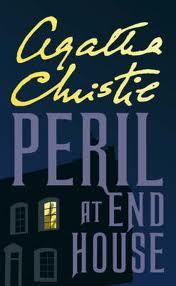
Peril at End House I started the month with a great book – Death in Kashmir by M. M. Kaye, an exciting and atmospheric mystery novel set in Kashmir in 1947. Although I haven’t had an opportunity to read any more yet, there are five other books in the series to look forward to. After reading this book, I was in the mood for another mystery and the one I chose was Agatha Christie’s Peril at End House. I almost guessed the solution to this one, but allowed myself to be misled by the red herrings!

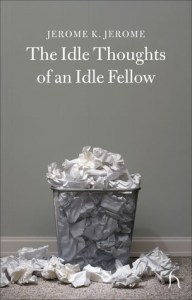
I only managed to read one book from my Classics Club list this month and that was Jerome K. Jerome’s The Idle Thoughts of an Idle Fellow – a fun read (and a quick one), though not as memorable as Three Men in a Boat. I’ve also been reading another classic throughout February, which I hope to finish soon. This is Romola by George Eliot – quite a challenging book to read but I’m loving it.

Two other books I loved this month were Guy Gavriel Kay’s The Last Light of the Sun, historical fantasy based on the Viking, Anglo-Saxon and Welsh cultures, and Small Island by Andrea Levy, a novel about the experiences of Jamaican immigrants in Britain. I also continued with the third book in Patrick O’Brian’s Aubrey-Maturin series, HMS Surprise, which I think is probably my favourite of the series so far. I don’t want to say too much about any of these books here as I haven’t had time to write my reviews yet.

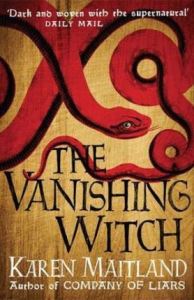
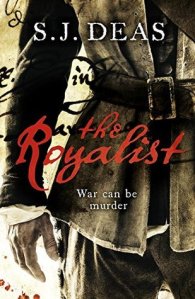
The Vanishing WitchI also enjoyed The Royalist by S.J. Deas, the first in a series of historical mysteries set during the English Civil War – and going further back in time, I read Karen Maitland’s The Vanishing Witch, set in the 14th century at the time of the Peasants’ Revolt.

Only two of the books I read during February disappointed me slightly – they were The Widow’s Confession by Sophia Tobin, yet another mystery (I told you I’d been in a mystery-reading mood this month!) and Jakob’s Colours by Lindsay Hawdon, a book about the Romany Holocaust. Again, I haven’t had time to write about these two books yet, but will do so as soon as I can. Finally, I have just finished reading The Goddess and the Thief by Essie Fox, a novel set in the Victorian period and revolving around the fate of the Koh-i-Noor diamond.

Have you read any of these books? What did you read in February?

The Royalist by S.J. Deas

The Royalist As someone who loves both historical fiction and mysteries, it’s not surprising that I also enjoy historical mysteries! If the book has an interesting and unusual setting, as this one has, even better.

The Royalist is the first in a planned series featuring the character of William Falkland. Falkland, as the title suggests, is a Royalist and has been fighting for King Charles in the English Civil War. As the novel begins in 1645, he has been captured by Parliamentarians and is in Newgate Prison awaiting his fate. When after several months of imprisonment a guard comes to take him from his cell, he is convinced that the day of his execution has arrived at last. To his surprise, though, he is taken instead to a meeting with Oliver Cromwell, the man with whom Parliament’s hopes of victory lie.

It seems that Cromwell has learned of a previous occasion on which Falkland stood up to his King to see that a criminal was brought to justice – and he is now hoping that Falkland will be able to solve a second crime, this time within Cromwell’s own New Model Army. Large, well-trained and highly disciplined, the New Model Army has been created with the aim of bringing a rapid end to the war. However, with men being pressed into the army regardless of their religious or political beliefs, discontent, disloyalty, fear and resentment are widespread. At the army’s winter camp in the town of Crediton in Devon, three young soldiers appear to have committed suicide – but why? This is what Falkland must agree to find out, in return for his own life.

I enjoyed The Royalist; it’s a very atmospheric book, taking us from a dark, cramped prison cell right into the heart of an army camp in the middle of a cold, harsh winter. This is the unusual setting I mentioned earlier; I’ve read other novels set during the Civil War, but none that focus specifically on the New Model Army. I knew almost nothing about the army before starting this book, and I found it fascinating, particularly the fact that even former Royalists were recruited, often against their will. It was also interesting to read about the ways in which the people of Crediton were affected by the army moving into their town and forcing them out of their homes.

This is not a book about an army on the move so there are (fortunately, in my opinion) no long battle scenes or discussions of military tactics; this is a book about an army that is stationary, based in one place, biding its time. That doesn’t mean there’s no action, of course! As Falkland continues to investigate and begins to uncover the truth about the young men who have died, he finds that he himself is in danger. There’s a lot of suspense as he explores the camp and its buildings in the dead of night, examines the tree where the three soldiers allegedly took their own lives, and tries to decide who can and cannot be trusted.

As the novel’s narrator, Falkland is the character we get to know best, but I still felt that there was plenty of information about his past that he was withholding from us and could reveal in a future novel. There are other interesting characters too: Thomas Fairfax, for example, the commander of the New Model Army and known as ‘Black Tom’ – one of the few real historical figures to appear in the book. There’s also Kate Cain, a woman who has refused to leave Crediton, and with whom Falkland lodges during his time in the town. And I was particularly intrigued by the character of Henry Warbeck, the man given the job of escorting Falkland to the army camp, as I discovered that there was more to him than met the eye at first.

I’m now looking forward to reading the second William Falkland novel, The Protector, which will be out later this year.

The 2015 Walter Scott Prize longlist

I was interested to see that the longlist for the Walter Scott Prize for Historical Fiction was announced today. I’ve been following this prize for the last few years and this is the first time the longlist has been made public. The judges have selected fifteen books, with the shortlist to be announced in March and the winner in June.

You can learn more about the prize on the Walter Scott Prize website.

The fifteen books on the longlist are:

The Zone of Interest by Martin Amis
The Temporary Gentleman by Sebastian Barry
The Miniaturist by Jessie Burton
The Lie by Helen Dunmore
Viper Wine by Hermione Eyre
In the Wolf’s Mouth by Adam Foulds
Mr Mac and Me by Esther Freud
Arctic Summer by Damon Galgut
Wake by Anna Hope
The Wake by Paul Kingsnorth
The Undertaking by Audrey Magee
A God in Every Stone by Kamila Shamsie
The Architect’s Apprentice by Elif Shafak
The Ten Thousand Things by John Spurling
The Paying Guests by Sarah Waters

I have read four of these books – The Temporary Gentleman, The Miniaturist, The Lie and Mr Mac and Me – and have linked to my reviews above so that you can see what I thought of them.

Anna Hope’s Wake is a book I would like to read at some point. I remember hearing a lot about it when it was published last year, but I didn’t read it as I wasn’t in the mood for a First World War novel at that time. I’m sure I’ll read The Paying Guests eventually too as I’ve enjoyed all of Sarah Waters’ previous novels, but I haven’t been in any hurry after seeing some very mixed reviews. The Wake by Paul Kingsnorth first came to my attention when it was longlisted for the Booker Prize last year – having looked at the first few pages I decided the unusual writing style didn’t appeal to me. Maybe I should give it a chance after all?

All of the other titles on the list are new to me, so I’ve had to do some investigating! Viper Wine sounds very intriguing and so does The Architect’s Apprentice.

Have you read any of these books? Are there any that you think I need to try?

The Idle Thoughts of an Idle Fellow by Jerome K. Jerome

The Idle Thoughts of an Idle Fellow It is impossible to enjoy idling thoroughly unless one has plenty of work to do. There is no fun in doing nothing when you have nothing to do. Wasting time is merely an occupation then, and a most exhausting one. Idleness, like kisses, to be sweet must be stolen.

Jerome K. Jerome’s Three Men in a Boat is one of the funniest books I’ve ever read. I still pick it up from my shelf at times to re-read certain passages when I want to cheer myself up. The sequel, Three Men on the Bummel, wasn’t quite as funny but I did enjoy reading that book too and was looking forward to trying this one, The Idle Thoughts of an Idle Fellow (published in 1886, a few years before Three Men in a Boat).

Unlike the other two books I’ve read by Jerome, this is not a novel but a collection of short essays covering topics as diverse as Cats and Dogs, Eating and Drinking, Being in Love and Being Shy. The tone of his writing varies from essay to essay – sometimes he is melancholy and poignant, sometimes satirical and hilarious (I should warn you that if you read any of Jerome’s books in public, you won’t be able to stop yourself from smiling and should be prepared for people asking you what’s so funny).

A few examples:

On the vanity of cats…

I do like cats. They are so unconsciously amusing. There is such a comic dignity about them, such a “How dare you!” “Go away, don’t touch me” sort of air. Now, there is nothing haughty about a dog. They are “Hail, fellow, well met” with every Tom, Dick, or Harry that they come across. When I meet a dog of my acquaintance I slap his head, call him opprobrious epithets, and roll him over on his back; and there he lies, gaping at me, and doesn’t mind it a bit. Fancy carrying on like that with a cat! Why, she would never speak to you again as long as you lived.

On babies…

There are various methods by which you may achieve ignominy and shame. By murdering a large and respected family in cold blood and afterward depositing their bodies in the water companies’ reservoir, you will gain much unpopularity in the neighbourhood of your crime, and even robbing a church will get you cordially disliked, especially by the vicar. But if you desire to drain to the dregs the fullest cup of scorn and hatred that a fellow human creature can pour out for you, let a young mother hear you call dear baby “it.”

On buying an umbrella…

I bought one and found that he was quite correct. It did open and shut itself. I had no control over it whatever. When it began to rain, which it did that season every alternate five minutes, I used to try and get the machine to open, but it would not budge; and then I used to stand and struggle with the wretched thing, and shake it, and swear at it, while the rain poured down in torrents. Then the moment the rain ceased the absurd thing would go up suddenly with a jerk and would not come down again; and I had to walk about under a bright blue sky, with an umbrella over my head, wishing that it would come on to rain again, so that it might not seem that I was insane.

I did enjoy this book, but I didn’t like it as much as the two Three Men…novels. I found it very uneven – there are some great lines and anecdotes, but it’s also quite boring in places, especially when he becomes very sentimental. It’s worth reading (and the lack of a plot makes it a perfect book to dip in and out of when you have a few spare minutes) but I wouldn’t describe it as an essential, must-read classic. On the other hand, this is what Jerome himself says about the book in his Preface:

What readers ask nowadays in a book is that it should improve, instruct, and elevate. This book wouldn’t elevate a cow. I cannot conscientiously recommend it for any useful purposes whatever. All I can suggest is that when you get tired of reading “the best hundred books,” you may take this up for half an hour. It will be a change.

It was certainly a change!