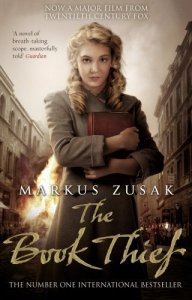
The Book Thief by Markus Zusak

The Book Thief I know what you’re thinking: how could I possibly have not read The Book Thief until now? My answer is that I really don’t know. My excuse is that I wasn’t paying much attention to new releases at the time when the book was published in 2005 so I missed all the hype surrounding it. Since then I have just never felt like reading it; there has always been another book calling to me more loudly. Now that I’ve finally read it, of course, the next question is: was it worth waiting for? And my answer to that is, sadly, no. Not only am I one of the last people in the world to have read The Book Thief, it seems that I’m also one of the only people not to have loved it.

The novel is narrated by Death, who is experiencing one of the busiest times of his career – World War II. Death is everywhere during the war, but he has chosen to focus on the story of a nine-year-old German girl called Liesel Meminger. Liesel’s parents are communists and as the novel begins in 1939, Liesel and her brother, Werner, are being sent to live with a foster family in the small town of Molching. Werner dies during the journey and this is when Death has his first encounter with Liesel – and when he first witnesses her stealing a discarded book, which happens to be called The Grave-Diggers Handbook.

Liesel can’t read but she is fascinated by books and words and this is what sustains her as she faces the challenges of settling into a new home. Her kind-hearted foster father, Hans Hubermann, teaches her to read and with the help of her new friend, Rudy Steiner, Liesel soon begins to add to her small library, becoming the ‘book thief’ of the title. Despite the atrocities going on in the world around her, Liesel’s life on Himmel Street, Molching, is relatively peaceful until the arrival of Max Vandenburg, a Jew in need of help – and a basement to hide in.

I said that I didn’t love the book, but this doesn’t mean I didn’t like it at all, because I did. My problem was the writing style – or I should say, styles, as there are so many all incorporated into one book. There are some very short sentences, some partial sentences, nouns used as verbs, dictionary definitions dropped into the text, and parts of the story told in the form of illustrations and cartoons. Sometimes Death interrupts his narration to talk directly to the reader, to make an observation or to hint at something that will happen later in the book.

It’s certainly creative and unique – I’ve never read anything quite like it – and I can see that a lot of readers will absolutely love it, but I am just not a fan of writing that feels experimental or gimmicky. I don’t even like it when a book is written in the present tense! I find that when a novel is written in an unusual way I end up being distracted by the writing instead of being drawn into the story and the lives of the characters. While I was reading The Book Thief I felt that I was never quite there on Himmel Street with Liesel and Rudy and the others; I could never forget that I was reading a book.

I did like the idea of the story being narrated by Death. I’m aware that this is not a very original concept and that there are other books that also use Death as a narrator (some of Terry Pratchett’s, for example) but I haven’t personally read any so it was something different as far as I was concerned! There were other things that I liked – the development of Liesel’s relationship with her foster parents; the stories Max writes while he’s hiding in the basement; watching Liesel discover the joys of reading – and by the time I started to approach the final chapters of the book, I found that Zusak had made me care about the characters and their fates. There’s no doubt that this is a very moving book and I was close to tears once or twice near the end.

Despite being a little bit disappointed by this book, I completely understand why it is so popular and why so many people love it. I know I’m in a tiny minority, so please, if you haven’t read it yet don’t let me put you off – try it for yourself and see what you think!
2015 Historical Fiction Reading Challenge

2015 HF Reading Challenge Button_FINAL I’ve been avoiding the temptation to sign up for any reading challenges for 2015 as I want to keep things simple and free of stress. However, I’ve been awaiting the announcement of this year’s Historical Fiction Reading Challenge as it’s one challenge that I always like to participate in and don’t find stressful at all!

This challenge has previously been hosted by Historical Tapestry but there’s a new host this year – Amy at Passages to the Past. Amy is very active in the historical fiction community and I’m sure she’ll be a great host.

The challenge runs from January 1st to December 31st 2015 and there are six different levels to choose from:

20th century Reader – 2 books
Victorian Reader – 5 books
Renaissance Reader – 10 books
Medieval – 15 books
Ancient History – 25 books
Prehistoric – 50+ books

Any type of historical fiction is accepted including sub-genres such as Historical Romance, Historical Mystery, Historical Fantasy and Young Adult.

As such a large proportion of my reading is historical fiction anyway, I know I will read more than 25 books so although I might not reach 50 I’m going to aim for the Prehistoric level.

I’ll be keeping track of my progress on my Challenges page.

If you’re interested in joining the challenge too, please see the challenge sign-up post at Passages to the Past!

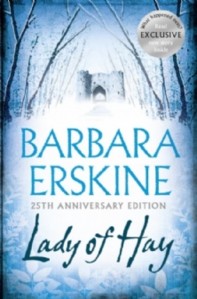
Lady of Hay by Barbara Erskine

Lady of Hay As a university student in Edinburgh in the 1970s Jo Clifford agrees to take part in a study into regression and past lives. She allows herself to be hypnotised, not really expecting anything to happen, but she proves to be such a good subject that both the Professor and his assistant, Sam Franklyn, are alarmed. They lie to her, telling her that they’d failed to hypnotise her, and then send her home.

Fifteen years later, now a journalist living in London, Jo is working on a series of magazine articles, one of which will be about hypnotism. As part of her research she agrees to undergo hypnosis again herself to prove that it doesn’t work. Jo has just split up with her boyfriend – Sam’s brother, Nick Franklyn – so when he and Sam try to warn her of the dangers, she doesn’t want to listen. Going ahead with the regression, she makes a shocking discovery: hypnotism does work and it seems that in a previous life she was Matilda de Braose, a 12th century noblewoman.

Intrigued by Matilda’s story, Jo spends more and more time in the past, reliving the events of Matilda’s marriage to the powerful baron William de Braose, her affair with the handsome Richard de Clare and her turbulent relationship with King John. As she learns more about Matilda, it becomes clear to Jo that there are some frightening similarities between her previous life and her current one – and that events from the past could be about to be replayed again in the present.

Barbara Erskine’s books always sound very intriguing to me, yet I’ve now tried three of them and have had mixed feelings about all three. There were some things I liked about Lady of Hay but other things that I really disliked, and overall I wish I hadn’t bothered with this one.

Let’s get the negative points out of the way first. My biggest problem with this book was the modern day storyline…the characters were so difficult to like! It seemed that they were all either cheating on their partners, betraying their friends or plotting and scheming against family members. There was also a lot of domestic violence and abuse which the women just seemed to accept and view as normal. I’m aware that this book was published in 1986 but I don’t think things have changed all that much since then and I wanted to see Jo stand up for herself and let the men in her life know that the way they were behaving was wrong. In some cases I couldn’t understand why the police weren’t called.

I did find it interesting to read about the theories behind reincarnation and the various methods of hypnotism and regression but it was difficult to believe that so many people in the novel were experts on the subject. Jo was constantly meeting people at random who just happened to be trained hypnotists! There was also a suggestion that other people in Jo’s present had also lived in the 12th century, but I felt that this was never fully resolved. In particular, I struggled to understand what was going on with Sam Franklyn, whose personality seemed to change entirely within the space of a few chapters; it wasn’t clear whether this was supposed to be the result of a past life, a mental illness or something else.

I really enjoyed the historical sections of the book, which didn’t surprise me as I almost always do prefer the historical parts of a multiple time period novel. I have heard of Matilda de Braose before (mainly in Sharon Penman’s Here Be Dragons – although she was known as Maud, a variation of Matilda, in that book) but I have never read about her story in any detail. It was fascinating…so much more interesting than the modern day storyline; I was always disappointed when we had to leave medieval Wales and return to 20th century England.

I did feel a bit cheated when I turned to the author’s note at the end and saw that Erskine had actually invented a lot of the things that happened to Matilda in the novel. The affair with Richard de Clare, which forms such a big part of the story, was entirely imaginary, and so was the nature of Matilda’s relationship with King John. Not a problem if you already know a lot about the period, but if you don’t then it could be confusing as you would come away thinking that things really happened which actually had no basis in reality. Despite this, I would still have preferred this book to have been set purely in the past!

The edition of Lady of Hay that I read includes an additional short story at the end, written specifically for the 25th anniversary edition and following on from the ending of the original novel. I didn’t like the story and didn’t think it was necessary, though I suppose people who read the book years ago and have been desperate to know what happened next may feel differently! My advice if you’re reading the novel for the first time is to leave it at the original ending, which is fine the way it is.

Lady of Hay was not a great success with me, then, as the negative points probably outweighed the positive. If nothing else, though, it reminded me of the very similar Green Darkness by Anya Seton, which I enjoyed a lot more and would like to re-read one day!

Case Histories by Kate Atkinson

Case Histories My first introduction to Kate Atkinson’s work was Life After Life, which I read in 2013 and loved. I’ve been wanting to read more of her books and knowing that a lot of people speak very highly of her Jackson Brodie novels, I decided to start with the first one in the series, Case Histories.

In Case Histories, private detective Jackson Brodie is investigating three old cases that have remained unresolved for years:

Case History No. 1 – During the summer heatwave of 1970, three-year-old Olivia Land is sleeping in a tent in the garden with her older sister, Amelia. When Amelia wakes up, she finds that Olivia has disappeared without trace.

Case History No. 2 – In 1994, eighteen-year-old Laura Wyre is murdered on her first day working in her father’s office. Her killer has still not been found and no motive for the attack has ever been discovered.

Case History No. 3 – In 1979, Michelle Fletcher is living on an isolated farm with her new husband and baby daughter. Depressed, lonely and finding it hard to cope, an argument with her husband ends in a brutal murder.

The connection between these three stories is Jackson Brodie, who is contacted by family members hoping to have the cases reopened or looked at again. Amelia and Julia Land want to find out what happened to their little sister, Olivia, and whether she could still be alive; Laura’s father, Theo, wants to know who killed his beloved daughter and why; and Shirley Morrison is searching for her sister Michelle’s daughter, with whom she lost contact after the incident which tore their family apart. But Jackson has problems of his own and as he begins to investigate these three very different crimes, he is reminded of a tragedy in his own past and another ‘lost girl’ who disappeared from his life decades earlier.

I loved Case Histories. I know describing a book as unputdownable is a cliché, but it was true in this case – it really is the sort of book where once you start reading, you don’t want to stop until you reach the end. It’s a crime novel I would recommend even to readers who are not really interested in crime fiction because, while the three mysteries are quite interesting, the real strength of the book is in the characterisation. The story is not so much about the crimes themselves as about the effect they had on the people involved and how they have tried (and often failed) to move on from what has happened.

I liked Jackson and am looking forward to meeting him again in the rest of the series, but my favourites in this book were Amelia and Theo. Amelia, who is approaching middle age feeling friendless and unwanted, has invented an imaginary boyfriend to brighten up her non-existent social life, and Theo, for whom his daughter was the centre of his universe, is neglecting his health while he devotes his life to finding her killer, drawing up colour-coded charts of her friends and teachers and making yearly pilgrimages to the scene of her death. Their lives are sad, lonely and tragic, yet Atkinson injects just enough humour into their stories to turn them into characters who are amusing but not ridiculous, flawed but sympathetic.

I also thought the structure of the book was interesting, because the timeline is not entirely linear. We see events from one perspective in one chapter, then in the next chapter we go back several hours, days or weeks to see those same events from another character’s perspective, filling in gaps and adding to our knowledge of what is going on. Two of the case histories – Olivia’s disappearance and Laura’s murder – worked very well alongside each other, but the third one, involving Michelle and her sister, felt disconnected from the others and didn’t work quite as well. I think I had expected all three cases to be much more closely linked than they actually were and I was disappointed that they weren’t.

At the end of the book, after Jackson is sure he’s solved the crimes, there are still more twists to come. We are given enough information throughout the story so that we can guess at what may have happened and work out some parts of the mystery, but the final pieces of the puzzle are withheld from us until the very end.

That’s two Kate Atkinson books read and two enjoyed; now I can’t wait to read the second book in the Jackson Brodie series, One Good Turn.

Season of Storms by Susanna Kearsley

Season of Storms Happy New Year! I had considered posting about my reading plans for 2015 today but, to be honest, I don’t really have any. I know I want to do some re-reading this year, as that’s something I’ve been neglecting, but apart from that I don’t have any specific goals in mind. I want to keep things stress-free and just read the books that I really want to read without worrying about challenges and targets. I do still have some December reads to tell you about, so I thought I would get on with writing about those instead…starting with Susanna Kearsley’s 2001 novel, Season of Storms.

Our narrator, Celia Sands, is a twenty-two-year-old actress who has been offered the lead role in a play being staged at an outdoor theatre in the grounds of Il Piacere, an Italian villa. The play – Il Prezzo – was written in the 1920s by the playwright Galeazzo D’Ascanio for his lover, another actress also called Celia Sands. The night before the play was due to have its first performance, the first Celia disappeared and was never seen again.

Now, decades later, the second Celia Sands (no relation to the first despite being named after her) has been invited by D’Ascanio’s grandson, Alessandro, to star in a renewed version of the play. Arriving at Il Piacere, she meets the other people involved with the play and soon becomes aware of tensions within the group; it seems to Celia that everyone has a secret to hide. As the preparations continue and rehearsals begin, strange things start to happen – a servant disappears without trace, a man is found dead, and Celia suspects that her room may be haunted – and the mysteries of the past become entwined with the mysteries of the present.

Season of Storms is the seventh Susanna Kearsley book I’ve read and the first one I’ve been slightly disappointed by. I think part of the problem was that the pace was very slow at the beginning and the story took a very long time to really get started; I think the book could probably have been a lot shorter without losing any essential plot points. By the time the various threads of the novel began to come together in the second half of the book I was struggling to stay interested.

Unlike some of Kearsley’s other books, this one is set almost entirely in the present with only a few flashbacks in which we are given some glimpses of Galeazzo D’Ascanio and the first Celia Sands. The connections between the past and present storylines weren’t strong enough and I felt that the historical one wasn’t resolved properly; I would have liked more focus on solving the mystery of the first Celia’s disappearance and on the supernatural aspects of the novel, which never really came to anything. I was also disappointed by the romantic side of the story – there was no real spark between Celia and her eventual romantic interest and he was not one of my favourite Kearsley heroes.

On a more positive note, Kearsley’s novels always have wonderful settings and this one is no exception! Il Piacere, the playwright’s villa, is on Lake Garda, somewhere I have never been but have always wanted to visit. The descriptions of the estate and the surrounding area are beautiful. Before arriving at Il Piacere, Celia spends some time in Venice, which is somewhere I have visited and I loved watching her explore St Mark’s Square and the Basilica, the canals and the bridges.

There were other things that I liked – the little theatrical touches such as dividing the story into Acts and Scenes and starting the chapters with quotes from plays; and Celia’s relationship with Bryan and Rupert, the gay couple who raised her when her glamorous actress mother neglected her – but there were too many negative points for me to really be able to say that I enjoyed this book.

Not a favourite, then, but I’m pleased I still have two more unread Susanna Kearsley novels to read – and a new one, A Desperate Fortune, to look forward to in 2015.

My favourite books of 2014

I always enjoy putting together my list of favourites at the end of the year and reminding myself of all the great books I’ve read during the previous twelve months. Of course there have also been some that weren’t so great, but I prefer not to focus on those and concentrate instead on the books that I loved or that I found special or memorable in some way.

And here they are, my favourite books of 2014, in the order I read them. I apologise in advance for the length of this list!

Little Man What Now

Little Man, What Now? by Hans Fallada

From my review: “I’ll be very surprised if this one is not on my list in December! I loved every minute of this funny and charming yet dark and poignant German novel from 1932.”

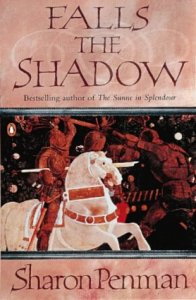
Falls the Shadow

Falls the Shadow by Sharon Penman

From my review: “Long, complex and emotionally intense…this is the story of Simon de Montfort, 6th Earl of Leicester, the French nobleman who ruled England for more than a year. I didn’t realise quite how much Penman had made me love Simon until I reached the end of his story.”

Can You Forgive Her

Can You Forgive Her? by Anthony Trollope

From my review: “As usual with a Trollope novel, I was completely drawn into the lives of the characters and enjoyed all 690 pages! This is definitely one of my favourite Trollope novels so far and I’m now looking forward to reading the rest of the Pallisers.”

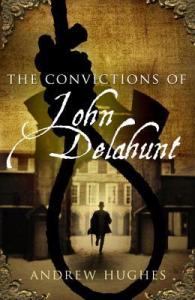
The Convictions of John Delahunt

The Convictions of John Delahunt by Andrew Hughes

From my review: “A wonderfully moody and sinister historical crime novel…I loved this dark and atmospheric book and was completely gripped by John Delahunt’s fascinating story.”

The Moon in the Water

The Moon in the Water by Pamela Belle

From my review:The Moon in the Water follows the story of Thomazine Heron and her family, and is set during the English Civil War. I loved it from the first page to the last…it was a joy to discover this one and to know that I have many more Pamela Belle books still to look forward to.”

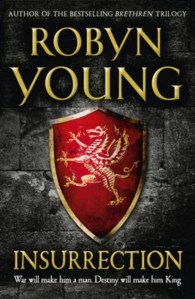
Insurrection - Robyn Young

Insurrection by Robyn Young

From my review:Insurrection is exactly the sort of historical fiction I love…I found it to be a fascinating, atmospheric tale of kings and knights, witches and soldiers, treachery, murder and war.”

The Mayor of Casterbridge - Thomas Hardy

The Mayor of Casterbridge by Thomas Hardy

From my review: “I loved this book as much as I expected to and enjoyed being back in Hardy’s Wessex. The plot is a great one, with lots of twists and turns and plenty of drama; I was never bored once.”

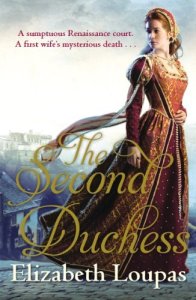
The Second Duchess

The Second Duchess by Elizabeth Loupas

From my review: “A fascinating historical novel set in Renaissance Italy and narrated by Barbara of Austria. Although the back cover of this book promised “conspiracy, intrigue and murder”, I was still surprised that the story had such a strong mystery element.”

The Devil in the Marshalsea

The Devil in the Marshalsea by Antonia Hodgson

From my review: “I found The Devil in the Marshalsea very entertaining and fun to read. As a mystery novel, it kept me guessing right until the end..as a work of historical fiction it’s equally impressive.”

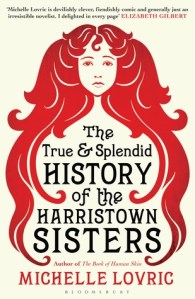
Harristown Sisters

The True and Splendid History of the Harristown Sisters by Michelle Lovric

From my review: “I loved this book, the first I’ve read by Michelle Lovric, and I would agree that it really is a ‘splendid history’. One of my favourite books of the year so far.”

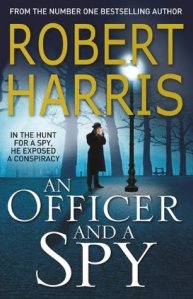
An Officer and a Spy

An Officer and a Spy by Robert Harris

From my review: “This is the first book I’ve read by Robert Harris…and guess what? I loved it! An Officer and a Spy really is a fascinating novel and took me through a range of emotions from shock to frustration to absolute outrage!”

Assassin's Apprentice

Assassin’s Apprentice by Robin Hobb

From my review: “Yet again I have book blogging to thank for helping me to discover an author who I think is going to become a favourite…Assassin’s Apprentice, the first book of The Farseer Trilogy seemed the logical place to start, and what a great book it turned out to be!”

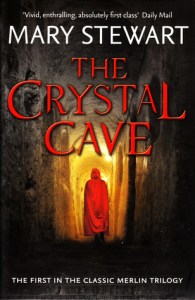
The Crystal Cave

The Crystal Cave by Mary Stewart

From my review:The Crystal Cave introduces us to Myrddin Emrys, better known as Merlin…A great book and now one of my absolute favourites by Mary Stewart.”

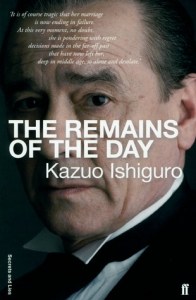
The Remains of the Day

The Remains of the Day by Kazuo Ishiguro

From my review: “It’s a gentle, slow-paced novel but completely compelling and, despite the lack of drama, I found it difficult to put down…The ending is perfect too.”

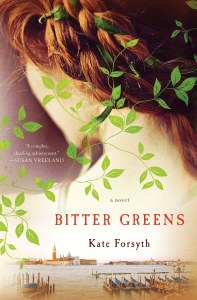
Bitter Greens

Bitter Greens by Kate Forsyth

From my review: “There’s just so much packed into this novel: the scandals and intrigues of the 17th century French court, a version of Rapunzel much darker and more compelling than the one I remember from my childhood, a vivid depiction of Renaissance Italy, magic and witchcraft, religious persecution, stories within stories, and much more.”

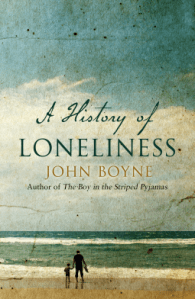
A History of Loneliness

A History of Loneliness by John Boyne

From my review: “A very insightful and thought-provoking novel and my favourite John Boyne book so far. I loved this book and am so glad I still have so many of his earlier novels left to explore!”

Zemindar

Zemindar by Valerie Fitzgerald

From my review: “What a great book! A wonderful setting, a beautiful romance, characters I really cared about, an exciting story and lots of fascinating historical detail…definitely one of my favourite books of the year.”

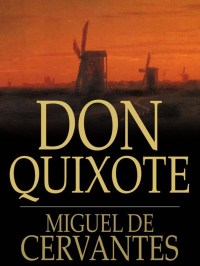
Don Quixote

Don Quixote by Miguel de Cervantes

From my review: ” It’s fun and imaginative and entertaining – and I loved it… I’m going to miss Don Quixote and Sancho after spending so much time with them this year!”

***

What about you? What are the best books you’ve read this year? Have you read any of the books on my list?

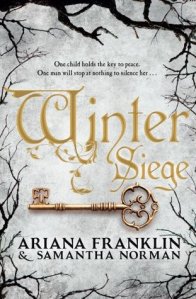
Winter Siege by Ariana Franklin and Samantha Norman

Winter Siege I hope everyone had a good Christmas! I have an appropriately wintry book to tell you about today before I get round to posting my end-of-year list, probably on Tuesday or Wednesday.

Ariana Franklin (a pen name of Diana Norman) was the author of the Adelia Aguilar mystery series, of which I’ve still only read the first, Mistress of the Art of Death. As you may know, she sadly died in 2011, leaving Winter Siege unfinished, but the book has now been completed by her daughter, Samantha Norman. Winter Siege is not part of the Adelia Aguilar series, but a standalone novel set during the period of English history known as the Anarchy.

It’s 1141 and the country is in the grip of a civil war as King Stephen and his cousin, the Empress Matilda, are battling for the English crown. In the Cambridgeshire Fens, an eleven-year-old girl is captured by a passing band of soldiers, raped and left for dead. The child’s way of dealing with her trauma is to wipe the whole incident entirely from her mind, so that by the time she is discovered by Gwil, a kind-hearted mercenary, she can’t remember her name, where she lives or anything about her past. Gwil renames her Penda and allows her to accompany him, disguised as a boy, while he builds a new career for himself as a travelling entertainer.

Moving from place to place, the two of them impress the crowds with their displays of archery while Gwil continues to search for any signs of Penda’s attackers – his only clues being a scrap of parchment carrying a message in Greek and the knowledge that the soldiers were accompanied by a monk smelling strongly of an unusual herb. Eventually, fate will take Gwil and Penda to Kenniford Castle, home of Maud, a sixteen-year-old ward of King Stephen.

To ensure the safety of her castle and her people, Maud has been forced to marry a man much older than herself – the brutal, drunken Sir John of Tewing, a supporter of Stephen’s. But when Sir John is struck down by illness and the Empress Matilda arrives at Kenniford asking for protection, Maud must decide whether to switch sides. This is a decision that will place the castle at the heart of the civil war and all of Gwil’s and Penda’s archery skills will be needed to help defend it.

I really enjoyed this entertaining medieval novel. As with Mistress of the Art of Death, I found it very atmospheric and evocative of the time period. The mystery aspect of the novel following Gwil’s search for the evil monk was slightly disappointing, but there was a second mystery that I found more interesting – and this involved the identity of an old abbot who is dictating the story of the Anarchy to his scribe, several decades into the future (in 1180). These sections provide a sort of framework for the rest of the novel and help to explain some of the historical background, while also making us curious as to who the abbot really is and how he knows so much about what happened at Kenniford Castle.

The book is called Winter Siege and so far I haven’t mentioned either winter or sieges, but I can assure you that both do play a part in the story. Snow is falling throughout much of the novel and one particularly snowy night forms the backdrop for one of the book’s most memorable scenes, when Gwil and Penda meet Matilda for the first time. Later in the book, our characters find themselves trapped in a besieged castle, which is when the various threads of the story are brought together.

Bearing in mind that this novel was written by both Ariana Franklin and Samantha Norman, it all seemed like the work of one author to me; it never felt uneven or disjointed. I don’t know how much Franklin had managed to complete before her death or if she would have taken the story in a different direction…but I think she would be pleased if she could read the finished version.