My Commonplace Book: January 2025

A selection of quotes and pictures to represent January’s reading:

commonplace book
noun
a book into which notable extracts from other works are copied for personal use.

~

When freedoms are forbidden, their enjoyment becomes an especially delicious pleasure.

The Ghosts of Rome by Joseph O’Connor (2025)

~

‘It’s a terrible thing you’ve lived through,’ she said. ‘And you won’t forget it easily. Perhaps you won’t forget it ever. But we have a saying in Swedish: you cannot prevent the birds of sadness from flying over your head, but you can stop them from nesting in your hair.’

The Lost Passenger by Frances Quinn (2025)

~

Johannes Vermeer – Woman in blue reading a letter

It is a quiet painting – no bells ring. It is quiet not just because the young woman is reading, but quiet in its colours. There are no shouting bright orange carpets or loud lemon-yellow bodices or flaming red dresses that scream. Everything is muted.

Woman in Blue by Douglas Bruton (2025)

~

Biography and good novels were his favourite reading, a discovery of his own as he grew up since he came from a family who only read if they were ill in bed. But for him such books helped to satisfy the acute curiosity about what people did and why they did it that made him a notable detective.

Tea on Sunday by Lettice Cooper (1973)

~

Most people just want an easy life. It’s unsettling when someone starts pulling apart the stories we’ve stitched together, the things we tell ourselves for comfort.

The Sirens by Emilia Hart (2025)

~

Japanese embroidered Temari balls

“I’m not saying he was a bad man, but when you withdraw from the world like that, you end up closing in on yourself. Take, for example, the stories that everybody talks about, only then to forget them the very next day. Well, he held on to them, you see, deep inside himself.”

The Little Sparrow Murders by Seishi Yokomizo (1959)

~

She wonders when it became so difficult to find answers. Or has the truth always come hard won? People rarely say what they mean, relationships are fraught with misunderstandings, who can really be objective? How can she even hope to pinpoint motives and actions, drives and desires when they are all so muddled and slippery, even in the best of us? Who among us really knows our own heart, let alone someone else’s?

Murder at Gulls Nest by Jess Kidd (2025)

~

‘No, no,’ says Lou, and her top hat shakes in the moonlight. ‘Tastes can develop, certainly, but at any given time, one’s opinion on art is certainly valid. ‘Tis the point of art to stir us whether we have studied paintings for fifty years or are looking upon our first painting. Be confident in your tastes, Alice. But do be open to the notion that they are wilful and unpredictable and will almost certainly change.’

The Portrait Artist by Dani Heywood-Lonsdale (2025)

~

The Tuatha Dé Danann as depicted in John Duncan’s Riders of the Sidhe (1911)

I asked him later if he wanted to know how and when he would die. He laughed and said, ‘Sure, stories don’t die.’ But they do. They die and they are forgotten and new stories take their place, just as kings follow kings.

The Morrigan by Kim Curran (2025)

~

To think of anything else except the way things are is just to live in a world of the imagination – fine for some things but not for real life. Don’t you agree?

This Sweet Sickness by Patricia Highsmith (1960)

~

Favourite books read in January:

This Sweet Sickness, Woman in Blue and The Lost Passenger

Authors read for the first time in January:

Lettice Cooper, Dani Heywood-Lonsdale, Kim Curran

Places visited in my January reading:

Italy, Vatican City, England, Australia, Netherlands, Japan, Ireland, USA

~

January reading notes: This was a good start to the year for me, reading-wise. Most of the books I’ve read are NetGalley books being released over the next few months, so I’ll be posting my reviews around the publication dates. I also managed to read a book for the Japanese Literature Challenge and may even have time to fit in another one in February! Another event I’m hoping to join in with in February is #ReadIndies hosted by Kaggsy’s Bookish Ramblings and Lizzy’s Literary Life. I’m also planning to participate in #ReadChristie2025, as next month’s book, The Thirteen Problems, is one I haven’t read yet.

How was your January? Do you have any plans for your February reading?

The Ghosts of Rome by Joseph O’Connor

The story of our Roman Escape Line has been characterised as a tale of courage. But it was always a story of friendship, first and last. The friends we knew and those we did not, some fleetingly encountered, others never at all. I am no sentimentalist, but I call it a love story.

This is the second book in Joseph O’Connor’s new trilogy inspired by the true story of the Rome Escape Line, a secret network that smuggled thousands of Jewish refugees and Allied soldiers out of Nazi-occupied Rome. The first novel, My Father’s House, introduces us to the work of the Escape Line who meet in the neutral Vatican under the guise of a choir to avoid the attentions of the Gestapo and focuses on one member in particular – Monsignor Hugh O’Flaherty, the Irish Catholic priest who is the leader of the network.

The Ghosts of Rome continues the story, beginning in February 1944, six months into the Nazi occupation. Although Hugh O’Flaherty is still part of the group, we see very little of him in this book as he steps into the background to let other characters’ stories be told. The main focus this time is the widowed Contessa Giovanna Landini, known as Jo, whose palazzo is commandeered by Gestapo officer Paul Hauptmann. Hitler isn’t satisfied with Hauptmann’s performance in Rome so far and he is under pressure to produce results. If he could obtain evidence of the Choir’s activities he’s sure that would help to improve his reputation with the Führer. Hauptmann hopes that the Contessa, whose house he is living in, will lead him to her fellow Escape Line members, but Jo is a resourceful woman and decides to take advantage of Hauptmann’s interest in her to try to protect herself and the Choir.

Another significant storyline revolves around a Polish airman who is shot down over Rome. Some members of the Escape Line want to help him, but others are more cautious. How can they be sure he is who he says he is? What if he betrays them? When it becomes obvious that he has life-threatening injuries and will die if not treated, they are faced with an important decision to make.

Of the two books, I think I preferred My Father’s House because it was more suspenseful, describing the countdown to a major mission on Christmas Eve, and because I found Hugh O’Flaherty such an interesting character. This is an excellent book as well, though, and I’m sure other readers will like it better than the first one. Although Jo Landini is at the forefront of the story, most of the characters we met in the previous book also reappear, including British Envoy Sir Francis D’Arcy Osborne, diplomat’s wife Delia Kiernan and escaped soldier Sam Derry. We also see a lot of Delia’s teenage daughter, Blon, who is angry when her mother leaves the Escape Line and insists on trying to take her place, which not everyone is happy about! These are all people who really existed, but O’Connor includes an author’s note to explain that the way they are portrayed in the book is just his interpretation and shouldn’t be relied on as fact.

If you haven’t read the previous novel, you’re probably wondering whether it’s necessary to have read it before starting this one. I would say it’s not really essential, but it would make it easier to follow what’s happening in this book. There are a lot of characters and O’Connor constantly switches between different perspectives throughout the novel, as well as inserting passages written in other styles – such as transcripts of (fictional) BBC interviews – which means you do need to pay attention otherwise it would be easy to lose track of things. As with My Father’s House, I was particularly interested in the insights we get into the mind of Paul Hauptmann – a very human villain, which just makes him all the more unsettling to read about. It’s the brave and tireless work of the Escape Line, however, that makes these novels so compelling; in this book, I loved the way they managed to hide hundreds of people inside a derelict old theatre right under the noses of the Gestapo.

This is a planned trilogy and although I can’t see any details of the third book yet, I know it will be something to look forward to!

Thanks to Harvill Secker for providing a copy of this book for review via NetGalley.

Top Ten Tuesday: Authors I discovered in 2024

This week’s topic for Top Ten Tuesday (hosted by That Artsy Reader Girl) is “New-to-Me Authors I Discovered in 2024”. There were lots of authors I tried for the first time last year, but the ten I’m listing below are all authors whose work I enjoyed and would consider reading again.

1. Benjamin Myers – I read Cuddy early last year and although I wasn’t sure at first if it would be my sort of book, I enjoyed it much more than I’d expected. I have The Gallows Pole waiting to be read!

2. Alexander Lernet-HoleniaCount Luna was a great book – so unusual and thought-provoking! I’m pleased to see there are more of Lernet-Holenia’s books available in English translations.

3. Tove Jansson – I finally read my first Moomin book, Finn Family Moomintroll, thanks to last year’s #MoominWeek. I might read more of them at some point, but would also like to try one of Jansson’s adult books.

4. Charlotte Armstrong – I didn’t know where to start with Charlotte Armstrong’s books, but I think I made a good choice with Mischief. There are lots more to explore now!

5. Clare Whitfield – I loved Clare Whitfield’s Poor Girls, about the fascinating Forty Elephants gang. Now I’m looking forward to reading her previous novel, People of Abandoned Character.

6. Akimitsu Takagi – Takagi’s The Noh Mask Murders is one of the best Japanese crime novels I’ve read so far. I would like to read more of his books, although I think there’s only one other currently in print in English – The Tattoo Murder.

7. Penelope Mortimer – I read a short story by Penelope Mortimer in A Different Sound, a collection of stories by women authors of the mid 20th century. It was one of the highlights of the book and made me want to read more of her work.

8. Kate Foster – I read Kate Foster’s The King’s Witches last year and enjoyed it, so I’m looking forward to reading my review copy of her new novel, The Mourning Necklace.

9. Jane ThynneMidnight in Vienna, a thriller set in the 1930s, is the first Jane Thynne novel I’ve read, but I’m sure I’ll be reading more of them now. I really liked this one!

10. Alice Loxton – I read very little non-fiction in 2024, but I did enjoy Alice Loxton’s Eighteen, which explored the history of Britain through the lives of eighteen famous young people. She has written another book about Georgian London which also sounds interesting.

~

Have you read books by any of these authors or would you like to? Which new authors did you discover last year?

The Little Sparrow Murders by Seishi Yokomizo

Translated by Bryan Karetnyk

I’ve read all five of Seishi Yokomizo’s Kosuke Kindaichi mysteries that have previously been published by Pushkin Press in new English translations. This is the sixth, with another due later this year, and I decided to read it for the Japanese Literature Challenge being hosted this month and next by Dolce Bellezza.

The Little Sparrow Murders was originally published in Japanese in 1959 and is set a few years earlier in the village of Onikobe in Okayama Prefecture. Private detective Kosuke Kindaichi is taking a break from crime-solving and has decided to travel to Okayama to visit his old friend, Inspector Isokawa, at the prefectural police headquarters. Isokawa gives him the address of a nearby inn to stay at, run by Rika Aoike, a widowed friend. Although Kindaichi had been hoping to relax and avoid any mysteries for a while, he finds himself drawn into one when he learns that Rika’s husband, Genjiro, was murdered twenty years earlier – and the killer was never found.

As Kindaichi hears more about the events before and after Genjiro’s death and gets to know some of the people involved, another murder takes place, coinciding with the disappearance of the village chieftain and a sighting of a mysterious old woman on a mountain path. It seems that Kindaichi’s relaxing break is over before it even started. He and Isokawa begin to investigate, convinced that the key to the present day mystery lies in determining what really happened to Rika’s husband all those years ago.

Having read a lot of older Japanese crime novels over the last few years, thanks mainly to Pushkin who are doing a wonderful job with their new translations, I’ve found that many of them – most notably the ones I’ve read by Yukito Ayatsuji and Soji Shimada – are more concerned with solving seemingly impossible crimes and complex puzzles than with characters and motives. Yokomizo, I think, usually finds a better balance between the two; although his books still have intricate plots, the focus is often not so much on working out how the murders were committed, but rather on why they were committed and who could have had a reason for doing so. The impossible crime books can sometimes be fun as well, but I personally prefer the more character-driven ones. In this particular novel, the murders take place out in the open, not in locked rooms, and there’s almost no discussion of alibis, timings or similar things that can sometimes bog down a plot.

One thing I loved about The Little Sparrow Murders is that Yokomizo builds the story around a children’s rhyme – a device that Agatha Christie also often used. The killer in this novel is inspired by a temari song (a song sung by children in Japan while bouncing colourful embroidered temari balls). It begins “In the trees in the garden behind our house, Three little sparrows came to stay” and goes on to describe three young women from different families, who were “all of them sent away” – in other words, murdered. The deaths in the book correspond to the rhyme, which adds some extra interest to the mystery. I hadn’t heard of temari songs or balls before so, as always, a Yokomizo novel has contributed to my knowledge of Japanese culture.

This is one of my favourite Yokomizo novels so far, along with The Honjin Murders and The Inugami Curse, but I did have one problem with it – trying to keep track of the huge number of characters! There are five families in the book and it’s not easy to remember which family each character belongs to and how they’re connected to people in the other families. If you’re reading the ebook version (or maybe even if you’re not), I recommend taking the time to draw some family trees using the character list at the front of the book before you start, then you can easily refer to them as you read. I would have been lost otherwise, I think.

I’m now looking forward to the next Yokomizo book, Murder at the Black Cat Café, coming in September. Pushkin Vertigo also have another Ayatsuji novel, The Clock House Murders, on the way, as well as others by authors I haven’t tried yet, so 2025 should be a good year if you’re a fan of Japanese mysteries!

Top Ten Tuesday: Recent Additions to my TBR

This week’s topic for Top Ten Tuesday (hosted by That Artsy Reader Girl) is: “The Ten Most Recent Additions to My Book Collection (or to your to-read list!)”.

These aren’t strictly the last ten as I wanted to highlight books I haven’t already mentioned in other posts, but they are all books I’ve acquired recently. Let me know if you’ve read them or are planning to read them!

1. The Official Agatha Christie Puzzle Book – This was a Christmas present from my sister. It will take me a while to work through all 100 of these Christie-themed puzzles, but I’m enjoying them so far!

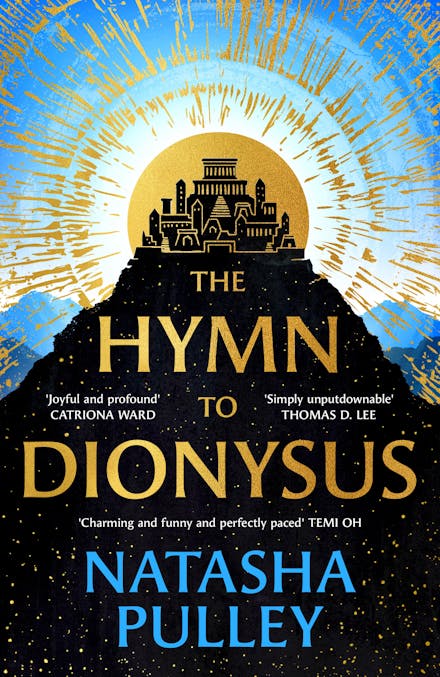
2. The Hymn to Dionysus by Natasha Pulley – I didn’t get on with Pulley’s The Bedlam Stacks and thought she probably wasn’t an author for me, but then I read one of her short stories and enjoyed it. I have a NetGalley copy of her new book, out in March, and look forward to giving her another chance.

3. The Eagle and the Hart by Helen Castor – I want to read more non-fiction this year and have enjoyed Helen Castor in the past. This is her most recent book, about the relationship between Richard II and Henry IV.

4. The Little Sparrow Murders by Seishi Yokomizo – I’ve already read this one and my review will be up later this week. I enjoyed the five previous Yokomizo mysteries published in new English translations by Pushkin Press and this is the sixth.

5. There’s a Reason for Everything by E.R. Punshon – This mystery from 1945 was a Dean Street Press free ebook of the week just before Christmas. A few people reviewed it for Dean Street December and it sounded interesting.

6. Secrets of the Bees by Jane Johnson – Another review copy from NetGalley, but it won’t be published until June. I’ve enjoyed some of Jane Johnson’s other books, particularly the ones set in Morocco, although she also writes beautifully about Cornwall, which is the setting for this new one.

7. Cleopatra by Natasha Solomons – This, as you may have guessed, is a novel about Cleopatra – also from NetGalley and being published in May. I’ve loved some of Solomons’ books but not others, so I’ll be interested to see what this one is like.

8. Theirs was the Kingdom by RF Delderfield – The second book in the Swann family saga. The first one, God is an Englishman, was one of my favourite books of last year so I’m sure I’ll enjoy this one.

9. The Thirteen Problems by Agatha Christie – I’m not joining in with the Read Christie 2025 challenge this month because I’ve already read the selected book (and the suggested alternatives) but I haven’t yet read the February choice, a collection of Miss Marple stories.

10. This Sweet Sickness by Patricia Highsmith – This 1960 psychological thriller is one of ten classics reissued as Virago Modern Classics this month. I’ve been wanting to read something else by Highsmith since reading Strangers on a Train a few years ago.

~

What have you added to your book collection recently?

Absolutely and Forever by Rose Tremain

I’ve had mixed experiences with Rose Tremain’s books, enjoying some and struggling with others. Absolutely and Forever was shortlisted for last year’s Walter Scott Prize for Historical Fiction and as it’s a personal project of mine to try to read all of the shortlisted titles, I decided to read this one despite it not sounding particularly appealing to me. It’s a short book (under 200 pages), so at least it wouldn’t be too big a commitment if I didn’t like it.

Here’s how the book begins:

When I was fifteen, I told my mother that I was in love with a boy called Simon Hurst and she said to me, ‘Nobody falls in love at your age, Marianne. What they get are “crushes” on people. You’ve just manufactured a little crush on Simon’.

What Marianne Clifford has manufactured, however, is more than just a little crush. It’s an obsession. She knows she’s going to love Simon Hurst ‘absolutely and forever’ and at first it seems that he feels the same way about her – but when he leaves for Paris to study at the Sorbonne and never returns, Marianne’s heart is broken. As the years go by, Marianne tries to move on and build her own life, but she can never quite let go of her love for Simon and the dreams she once had.

The book is set in the 1950s and 1960s and Marianne narrates the story of her life during and after her relationship with Simon. A lot happens to her over the years – she attends secretarial college in London, has several jobs, gets married and makes new friends – but all the time she’s pining for Simon, which holds her back from finding happiness and contentment. It’s understandable that she would be upset for a while, but when she continues to grieve for years and years afterwards, it quickly becomes frustrating, particularly as it’s so one-sided and Simon clearly doesn’t care as much as she does. But Marianne herself is naïve, innocent and childlike, never really seeing the world as other people see it, so it’s maybe not surprising that she reacts the way she does. Although she grows from a teenager into an adult over the course of the book, she doesn’t develop very much as a person and the Marianne at the end is not a lot different from the Marianne at the beginning.

Although I didn’t dislike Marianne and found her story quite sad, it was Hugo, the man she marries, who had my sympathy. Hugo is completely devoted to Marianne and she does like him very much, but her feelings for Simon prevent her from loving anybody else. At least Marianne is lucky enough to have a close female friend in Petronella, a sensible, practical Scottish woman she’s known since their school days, and Petronella does her best to help her move on with her life, but ultimately she can’t control whether Marianne chooses to take her advice.

The time period the story covers is the period when Rose Tremain herself was a teenager and young adult and I’m sure she’ll have drawn on some of her own personal memories and experiences of that era. Having read her memoir, Rosie: Scenes from a Vanished Life, however, this novel seems to be only partly autobiographical – Marianne’s life follows a different course from Rose’s own, but there are also some similarities, such as Marianne’s desire to be an author (for much of the book she’s working on a novel narrated by an Argentinian horse).

As I’ve mentioned, Absolutely and Forever appeared on the Walter Scott Prize shortlist in 2024, but it didn’t win and I think I can see why. Although I found it quite an easy, enjoyable read (despite Marianne being a bit irritating), sometimes the more readable books aren’t the ones that win prizes and this one doesn’t really tackle important or topical issues like the others on the list. I have the final shortlisted title, The New Life by Tom Crewe, to read soon.

The Voyage Home by Pat Barker

This is the final novel in Pat Barker’s trilogy telling the stories of some of the women involved in the Trojan War. Books one and two, The Silence of the Girls and The Women of Troy, focus on Briseis, who was given to Achilles as a prize of war, although I was surprised by the number of male perspectives that are also included in those two books, considering the titles! In The Voyage Home, we leave Briseis behind to follow three other characters as the victorious Greeks return home from the war.

One of these is Cassandra, the Trojan princess and prophet who is cursed never to be believed. Like Briseis, Cassandra has become a war prize – in her case, she has been taken as a concubine by Agamemnon, King of Mycenae. Then there’s Ritsa, a Trojan slave and healer given the job of accompanying Cassandra on the journey to Mycenae and acting as her personal servant. Finally there’s Clytemnestra, Agamemnon’s wife, who is grimly preparing for her husband’s return. It’s been a decade since Agamemnon sacrificed their daughter Iphigenia to the gods in exchange for a wind to sail to Troy, but Clytemnestra has never forgiven him and is ready to take her revenge.

I enjoyed the first two books in this trilogy and I did like this one as well, but not quite as much. I’ve read several other novels about Clytemnestra and the events of the Oresteia recently (including Elektra by Jennifer Saint and Clytemnestra by Costanza Casati) and I felt that her sections of the novel didn’t offer me much that was new or different. Having said that, the way Barker portrays Clytemnestra’s emotions – her anger, bitterness and grief – was very well done. There are also some atmospheric scenes of ghostly children haunting the palace – although, oddly, chanting British nursery rhymes such as Oranges and Lemons, which pulled me right out of the Ancient Greek setting!

Of the main characters, Ritsa is probably the easiest to like and as a servant, of a lower social status than the others, she has an interesting perspective on the events that unfold. Cassandra is a fascinating, complex character in the unusual position of being both enslaved and the wife of the king. She has already predicted the deaths of herself and Agamemnon but due to the curse she is under, nobody takes her seriously. I would have liked more of the book to have been written from Cassandra’s point of view, but instead Barker concentrates on showing her through the eyes of the other women: Clytemnestra, who views her with suspicion (after all, Agamemnon was her husband first) and Ritsa, who initially resents Cassandra for not being her beloved friend Briseis, who has not accompanied them to Mycenae. Ritsa sees Cassandra as wild and deluded, but gradually starts to have more sympathy for her.

This is a satisfying end to the trilogy, although if you haven’t read the first two books I’m sure you could read this one as a standalone.

Thanks to Hamish Hamilton for providing a copy of this book for review via NetGalley.