Classics Club July Meme: Biographies

The Classics Club

This month’s Classics Club Meme question is:

Have you ever read a biography on a classic author? If so, tell us about it. If you had already read works by this author, did reading a biography of his/her life change your perspective on the author’s writing? Why or why not? // Or, if you’ve never read a biography of a classic author, would you? Why or why not?

Looking through my list of books reviewed here on my blog, I can only see three or four biographies of classic authors that I’ve read in the last five years. I’ve also read some fictional biographies (such as The Taste of Sorrow by Jude Morgan) but they’re not quite the same thing! When I read a book, classic or otherwise, I do like to know some basic information about the author (whether they are male or female, which country they are from, how old they are, etc) but I can usually get that information from the book cover or ‘about the author’ page. Beyond that, I don’t usually feel any need to know every detail of the author’s life and prefer just to concentrate on enjoying their work.

One biography that I did enjoy was Claire Tomalin’s Charles Dickens: A Life. It didn’t leave me with a very good opinion of Dickens as a person, but it was interesting to see how people and events from his personal life inspired his fictional plots and characters. Having also read Tomalin’s Samuel Pepys: The Unequalled Self, which is another excellent book, I would like to read more of her work at some point, despite my usual lack of interest in reading biographies. Her book on Thomas Hardy sounds the most appealing to me, but I’ve been waiting until I’ve finished reading all of Hardy’s novels first.

Earlier this year I read The Secret Life of Wilkie Collins by William M. Clarke but although Collins is one of my favourite classic authors, I was a bit disappointed with this particular biography. There’s a lot of information on Collins’ private life (though to be fair, you would expect that from the title) but Clarke doesn’t spend much time discussing his writing. He does occasionally show how aspects of Wilkie’s personal life may have related to his work, but there’s not enough of this and when I reached the end of the book I didn’t feel I’d gained any real insights.

While I did learn a lot about Collins’ and Dickens’ lives from these two biographies, I can’t really say that they changed how I feel about their writing. For the purposes of this meme, a better book for me to mention here is probably the biography of Daphne, Angela and Jeanne du Maurier which I read last year – Daphne du Maurier and Her Sisters by Jane Dunn. Although I had a few problems with this biography too (which I’ve explained in my review) I do think Jane Dunn did a good job of explaining how the girls’ childhood experiences and influences shaped their future careers. I’ve never read anything by Angela du Maurier, but I know that Daphne put a lot of herself into her writing and many of her novels include autobiographical elements – reading Dunn’s biography gave me a better appreciation of this.

Well, it seems I’ve found more to say on the subject of biographies than I’d expected! Do you enjoy reading biographies of classic authors? Which ones have you read?
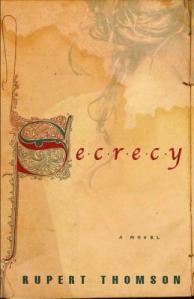
Secrecy by Rupert Thomson

Secrecy Secrecy is set in 17th century Florence and tells the story of Gaetano Zumbo, a sculptor famous for creating gruesome wax models depicting the human body in various stages of decay. Zumbo (or Zummo, as he is usually referred to in the novel) arrives in Florence in 1691, having fled from his home in Sicily for reasons which are revealed later in the book. The Grand Duke of Tuscany, Cosimo III de’ Medici, is an admirer of Zummo’s work and commissions a very special sculpture from him – one which must be kept a secret between the two men.

After settling into his new home, the House of Shells, and getting to know his landlady, her young daughter, and another lodger, a French acrobat, Zummo concentrates on creating the Grand Duke’s special wax model. But when he falls in love with the apothecary’s niece, Faustina, and makes an enemy of Stufa, a monk and advisor to the Grand Duke’s mother, Zummo’s life suddenly becomes a lot more complicated.

Gaetano Zumbo was a real person, although I didn’t know anything about him or his work before reading this book. If you’re curious and not too squeamish, you can find plenty of images online showing his various plague scenes, dismembered bodies and rotting corpses. Apparently some examples of his work are displayed in Florence’s Museum of Zoology and Natural History, but I have to admit I don’t have any desire to go and look at them as they sound a bit too grotesque for my liking!

There’s no doubt, though, that Zumbo is an unusual and intriguing subject for historical fiction. The setting is fascinating too. I don’t think I’ve ever read about this particular period of Italian history before and I enjoyed reading about Florence under the rule of Cosimo III – portrayed here as a corrupt and dangerous place. The novel has a dark, unsettling atmosphere and the theme of secrecy is woven into the complex plot in several different ways.

But the interesting protagonist and atmospheric setting were not quite enough to make me love Secrecy. I found the characters, even Zummo himself, difficult to fully connect with and never really managed to engage with any of them on an emotional level. I also thought the narrative style was slightly confusing as it was sometimes not immediately obvious when Zummo was dreaming or remembering something that had happened in his past.

Still, if you enjoy historical fiction set in Italy and are in the mood for something a little bit different, this book could be just what you’re looking for.

I received a copy of this book via NetGalley for review.

Plague by C.C. Humphreys

Plague I’ve always been fascinated by the Great Plague of 1665. I know that probably makes me sound morbid, but it’s true – with my interest in the history of medicine, I love reading about the theories suggested by 17th century people to explain what was happening to them, the weird and wonderful ‘cures’ they came up with and the impact of the epidemic on English society. So when I saw a novel called Plague in my library’s ebook catalogue, I was immediately intrigued, especially as it’s by C.C. Humphreys, an author I’ve been wanting to try since I saw Audra’s review of one of his other books, Jack Absolute.

Plague, I quickly discovered, is not simply a novel about the plague (although it’s always there in the background affecting the lives of all our characters in one way or another) but it’s also an action-packed historical mystery set in Restoration London.

In 1665, England is still recovering from the aftermath of the recent Civil War which had resulted in the execution of King Charles I. Although his son, Charles II, has now been restored to the throne, lots of former royalists are still struggling after losing everything in the war. One of these is Captain William Coke, who has had to resort to highway robbery to survive.

One night, Coke is surprised to find that his shouts of “stand and deliver” have no effect on the approaching carriage. The reason: the driver and the passengers have all already been brutally murdered. Coke takes an expensive necklace from the neck of one of the bodies before running away, but leaves one of his pistols behind in his hurry to escape. This is found by the thief-taker, Pitman, who becomes determined to capture Coke and receive the reward for bringing him to justice. We, the readers, know that Coke is innocent – but who is the real killer?

Two women also become embroiled in the mystery. One of them, Lucy Absolute, is the sister of a wartime comrade of Captain Coke’s. She is now an actress at a London theatre – and the mistress of the notorious Earl of Rochester. The other woman is Lucy’s friend, Sarah Chalker, another actress. When Sarah’s husband goes missing, the unlikely pairing of Coke and Pitman must work together to investigate his disappearance…and meanwhile, plague is continuing to spread through London. As the novel’s subtitle tells us, ‘murder has a new friend’.

Although the story deals with serious subjects such as murder, illness, robbery and treachery, and can be quite graphic at times, Plague is an entertaining novel that I found fun to read. Humphreys’ writing style is clear and engaging and I knew from the first page that this was a book I was going to enjoy. It’s always a relief when that happens! It’s a very atmospheric novel too, taking us from the dark, dirty cells of Newgate Prison and the squalid, claustrophobic homes of the plague victims to the splendour of the royal court and the drama of the theatrical world. Each location is brought to life vividly and realistically and the author doesn’t shy away from describing some of the less pleasant sights, sounds and smells of the period!

We meet lots of interesting characters in Plague, including some real historical figures such as Charles II and the fascinating Earl of Rochester. But my favourite was Captain Coke. He’s a complex, flawed character and I liked him from the beginning, even though we first see him as a highwayman and a thief. I enjoyed watching his relationship with Pitman develop from hunter and prey to unlikely partners. One aspect of the book I was less happy with, though, was the inclusion of a conspiracy plot involving a religious sect called the Fifth Monarchists. I think this sort of thing is overused in historical crime and I’m starting to get a bit bored with it. Other than that, I really enjoyed this book. The ending sets things up nicely for a sequel; I don’t know if there will be one, but I would like to have the chance to meet some of these characters again.

Written in My Own Heart’s Blood by Diana Gabaldon

Written in my Own Heart's Blood Diana Gabaldon seems to polarise readers like no other author. It’s rare to find anyone who has read one of her novels and didn’t feel strongly about it one way or the other! I do completely understand the reasons why people would dislike her writing, but I admit that I’ve always loved her Outlander series, at least until the last couple of books. I think I was about eighteen when I read Gabaldon’s first novel – Cross Stitch as it was called here in the UK, and I immediately went on to read the next three books (there were only four in the series then). Since then I’ve read each new book as it was published. The seventh volume, An Echo in the Bone (which happens to be the very first book I reviewed on this blog in 2009), left me feeling a bit disappointed, but sadly this new one has disappointed me even more, especially after a five year wait.

In some respects I think Gabaldon has improved as a writer over the course of the series, but the later books just don’t compare to the earlier ones in any of the other ways that matter to me – in plot, structure, characterisation or emotional impact. I’m not sure whether it’s just that my tastes have changed over the years, but I think the shift in narrative structure from being mainly narrated by one character in the first person to being told from multiple perspectives might also have something to do with it. And then there’s the fact that while the earlier novels are set mostly in Scotland during the 1745 Jacobite Rising and its aftermath, the later ones are set during the American Revolution, a period I’m not as interested in. Whatever the reason, these books are starting to lose their appeal for me. I’ll still be following the series to its end, though – I’ve invested far too much time in it to stop now!

Anyway, on with my thoughts on Written in My Own Heart’s Blood. This review is as spoiler-free as I could make it but as it refers to the eighth book in a series you may prefer not to read any further until you’ve caught up with the first seven books. At this point I should say that if you’re not already familiar with this series, then you really need to start at the beginning or you’ll get hopelessly confused!

If you remember, the previous book, An Echo in the Bone, ended on more than one cliffhanger and thankfully Written in My Own Heart’s Blood picks up immediately where Echo left off. There are two main threads to the novel. First, we follow Jamie, Claire and their assorted friends and family members who are all now based in Philadelphia. The year is 1778 and we are in the middle of the Revolution, with all the dangers and complications that brings. In the novel’s other strand, we return to Lallybroch in Scotland to catch up with Brianna and Roger who are having some exciting adventures of their own.

I really wanted to love this book but unfortunately I experienced a lot of the same problems with this one that I had with Echo. Both books seem to be dominated by characters and storylines from Gabaldon’s spin-off Lord John series – and I gave up on that series after two books. Ideally, I would have preferred the Lord John characters to stay in the Lord John books and the main Outlander series to concentrate on Jamie, Claire and the other characters we already know and love, such as Fergus and Marsali and their children or Ian Murray and Jenny. It seemed strange to me, for example, that we see so little in this book of Jenny interacting with Ian, the son she hasn’t seen for years, yet so much time is devoted to a search for Lord John’s nephew, Ben, a character who I can’t even remember being mentioned in previous books.

I don’t want to sound completely negative, because the good parts of Written in My Own Heart’s Blood are very good, but overall I thought the book lacked focus and because there are so many different storylines all running parallel with each other, it was inevitable that I would struggle to care about them all, particularly the ones dealing with characters I don’t really like. Many of the things that happen in the book feel superfluous and seem to have no real purpose other than to make a very long book even longer: a storyline involving two young girls William takes under his protection, an operation Claire performs on a slave with an unpleasant medical condition, and the death of a character which I found totally unnecessary.

The military aspect of the book was another problem for me, but I’ll admit that my lack of knowledge of this period of American history is probably to blame. I couldn’t keep track of the various Generals and Colonels and which side they were on, and whenever Claire met a presumably famous historical figure of the period I didn’t feel the excitement I was obviously intended to feel. My fault, though, not the author’s.

On the other hand, I thought Roger and Brianna’s parts of the book were fantastic! It was great to meet characters I’d never expected to meet again. These sections were much more compelling than the rest of the book, something I never thought I would say! While I’ve always liked Roger I could never quite warm to Bree and have often been impatient with the amount of time devoted to them in some of the previous books – but not this time. I was disappointed that only two out of the novel’s nine parts follow Roger and Bree and their children…I didn’t want their story to come to an end.

So, I’ve been left with very mixed feelings about this book and am sorry I’ve had to post a less than glowing review of a book by an author I used to consider one of my favourites. I did love the final few pages, though, because what I had been desperately hoping would happen did happen! If I didn’t already know that there’s going to be a book nine I think I would have been happy for this to have been the end of the series, even though there are still some storylines left unresolved. Based on past experience, I suspect we’ll have to wait four or five years to read the ninth, and probably final, book. I’m sure I’ll be reading it, despite my problems with this one, and am hoping for a satisfying conclusion to the series.

Girl with a Pearl Earring by Tracy Chevalier

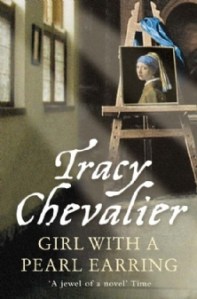
Girl with a Pearl Earring Set in the 1660s, Girl with a Pearl Earring is narrated by Griet, the sixteen-year-old daughter of a tile painter who lives in Delft in the Netherlands. When her father is left unable to work after being blinded in an accident, he arranges for Griet to become a maid in the household of the artist Johannes Vermeer. Settling into her new job, Griet soon finds that coping with the cleaning, washing and dusting are the least of her worries; she also has to learn to deal with the hostility of Vermeer’s wife, the cruelty of one of their young daughters and the jealousy of the family’s other servant, Tanneke. And why is Tanneke jealous? Because Griet has been given the job of dusting Vermeer’s studio – a room rarely entered by the rest of the household. As the months go by, Griet watches painting after painting slowly take shape on Vermeer’s easel, but when she discovers that she herself is going to be the subject of his next portrait she senses that the fewer people who know about it the better…

Having read two of Tracy Chevalier’s other books, Remarkable Creatures and The Virgin Blue, it seemed silly that I still hadn’t read Girl with a Pearl Earring. Now that I’ve read it I can see why it’s her most famous novel. The thing I found most striking about the book is that the writing style actually feels like one of Vermeer’s paintings: clear and detailed and true to life. I am not an expert on Vermeer (or any other artist, to be honest) but this was something that I noticed almost immediately and was very impressed by. If you’re not familiar with Vermeer’s work I highly recommend searching for an image of each painting as it is referred to in the book – I can promise that it will add to your appreciation of the story and of Chevalier’s writing.

This book is set in a time and place that I know very little about and I loved the descriptions of 17th century Delft. Most of Griet’s time is devoted to carrying out her duties within the Vermeer home, but she also has plenty of opportunities to visit other areas of the town – buying meat for the family at the meat market, going to church, visiting her brother at the tile factory where he is an apprentice, or spending time with her parents and the young butcher they hope she will marry. I have never been to Delft but by the time I finished this book I felt I could almost picture what it would have been like to live and work there in the 1660s. The religious aspect of the book – the tensions between the town’s Catholic and Protestant people – was also handled well, showing us the distrust and suspicion that existed between the two communities.

Although there is a romantic element to the story it is quite understated. We are in no doubt as to how Griet feels about Vermeer – it’s noticeable that while she thinks of other people by name, Vermeer is always ‘he’ or ‘him’ and this instantly sets him apart from all the other characters in the story. However, Griet is very slow to admit to herself the significance he has in her life. The romantic aspect of the book is quiet and subtle and lacks drama and passion, as does the rest of the story, but I didn’t have a problem with that. I enjoyed following Griet’s everyday life – shopping at the market, chopping vegetables, dusting the studio – and I enjoyed learning about Vermeer’s work and painting techniques. I didn’t need drama.

But despite finding so much to like about this book, there were also some things that I didn’t like. With the exception of Griet, I thought most of the other characters felt more like stereotypes than fully developed characters. And while I did find the writing style very effective, there seemed to be a distance between the narrator and the reader; the books that I really love are the ones where I can share in the characters’ hopes and fears, where I can laugh with them and cry with them – but I didn’t feel any of that with this book. Still, of the three Chevalier novels I’ve now read, this is my favourite so far and I’m looking forward to trying some of her others.

Six in six!

Two years ago Jo of The Book Jotter came up with this fun and simple meme to help us reflect on the books we’ve read in the first six months of the year. The idea is to pick six different categories and then for each one list six books or authors that you’ve read so far this year. Jo has provided lots of category headings to choose from if you need inspiration or you can be creative and think of your own. This time I’ve used some of the same categories that I’ve used in previous years, as well as one or two new ones. I’ve only listed each book once, though some could have been included in more than one category.

6

Six classics read in 2014

1. Can You Forgive Her? by Anthony Trollope
2. Stoner by John Williams
3. The Mayor of Casterbridge by Thomas Hardy
4. Tender is the Night by F. Scott Fitzgerald
5. Coming Up for Air by George Orwell
6. Madame Bovary by Gustave Flaubert

Six novels based on the lives of real people

1. Sisters of Treason by Elizabeth Fremantle (Katherine and Mary Grey)
2. The Summer Queen by Elizabeth Chadwick (Eleanor of Aquitaine)
3. Crippen by John Boyne (Dr Hawley Harvey Crippen)
4. Empress of the Night by Eva Stachniak (Catherine the Great)
5. Girl on the Golden Coin by Marci Jefferson (Frances Stuart)
6. Falls the Shadow by Sharon Penman (Simon de Montfort)

Six books with an element of mystery and suspense

1. The Second Duchess by Elizabeth Loupas
2. Madam, Will You Talk? by Mary Stewart
3. Tropical Issue by Dorothy Dunnett
4. A Dark and Twisted Tide by Sharon Bolton
5. Cat Among the Pigeons by Agatha Christie
6. Watch the Wall, My Darling by Jane Aiken Hodge

Six books that took me to six different locations

1. Beatrice and Benedick by Marina Fiorato (Sicily)
2. Americanah by Chimamanda Ngozie Adichie (Nigeria)
3. The Long Song by Andrea Levy (Jamaica)
4. The Orchard of Lost Souls by Nadifa Mohamed (Somalia)
5. One Night in Winter by Simon Sebag Montefiore (Russia)
6. Ghostwritten by Isabel Wolff (Java)

Six authors new to me this year

1. Jenny Barden (The Lost Duchess)
2. Paul Doherty (Roseblood)
3. Laurie Lee (Cider with Rosie)
4. Deborah Harkness (A Discovery of Witches)
5. Octavia Butler (Kindred)
6. Margaret Irwin (These Mortals)

Six books I loved but didn’t manage to fit into another category above

1. The Moon in the Water by Pamela Belle
2. Insurrection by Robyn Young
3. Family Roundabout by Richmal Crompton
4. The Fortune Hunter by Daisy Goodwin
5. Little Man, What Now? by Hans Fallada
6. The Convictions of John Delahunt by Andrew Hughes

How has your reading been in 2014 so far? Have you or will you be posting your own six in six?

Dark Aemilia by Sally O’Reilly

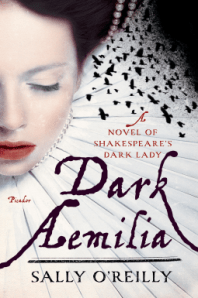
Dark Aemilia Dark Aemilia is a fictional account of the life of Aemilia Lanyer, one of several women whose names have been suggested as possible candidates for the ‘Dark Lady’ of Shakespeare’s sonnets. She was also one of the first women in England to have a book of poetry published.

Born Aemilia Bassano, the illegitimate daughter of a Venetian musician at the court of Elizabeth I, Aemilia becomes the mistress of the much older nobleman Lord Hunsdon. When she discovers that she is pregnant, she is forced to leave court and is married off to another court musician, Alfonso Lanyer. However, the father of her child (according to Sally O’Reilly) is probably not Hunsdon, but a young playwright by the name of William Shakespeare.

Aemilia first meets Shakespeare at a performance of The Taming of the Shrew where she confronts him over his negative portrayal of women in the play. Not the best of starts to their relationship, but a brief affair follows – despite the fact that Shakespeare is already married. Aemilia finds a kindred spirit in William, a man who shares her love of poetry, literature and the theatre, before their affair comes to an end after a misunderstanding. Aemilia resigns herself to life away from court with Alfonso Lanyer and her beloved baby boy, Henry, but she is reunited with Shakespeare during an outbreak of plague in London. And when Henry becomes seriously ill, Aemilia is prepared to do anything to save his life.

My feelings about Dark Aemilia are very mixed. I would like to be able to say that I loved it, but that wouldn’t be true; in fact I came very close to abandoning it several times during the first half of the book. I felt that I was reading about nothing but Aemilia’s love affairs and at the risk of sounding like a prude, I thought the language was unnecessarily vulgar. I don’t always have a problem with that sort of thing, but in this case I didn’t feel that it was adding anything to the story. I kept reading, though, and somewhere in the middle of the book I found that I was finally being drawn in. The language remained bold and lively (and appropriate to the Elizabethan setting) but not as explicit as it was earlier on in the novel and the plot moved away from Aemilia’s love life to focus on other storylines.

As Sally O’Reilly states in her author’s note, the real Aemilia would not have been a feminist in the modern sense of the word, but her surviving poetry (such as the poem Eve’s Apology in Defense of Women) shows that she felt strongly about the roles of men and women. The fictional Aemilia speaks up on behalf of the female sex whenever she can, challenging the views of the men around her. As an intelligent and talented woman, she doesn’t have the opportunities that would have been open to her if she had lived today and she finds it very difficult to gain any recognition for her work. This leads to an interesting interpretation of the question of who actually wrote the plays attributed to Shakespeare – there’s no evidence that Aemilia had any involvement in them, but Sally O’Reilly’s theories work in the context of this novel.

Aemilia is a fascinating character and I was left wanting to know more about the real woman. William Shakespeare, though, is not really shown in a very good light and the portrayal of his romance with Aemilia didn’t feel completely convincing to me. They didn’t actually have many scenes together and when they did meet I didn’t sense much love or passion between the two of them – not until very near the end. There were other characters in the book who interested me more than Shakespeare did; I was particularly intrigued by Simon Forman, the astrologer who was said to have cured himself of the plague. And this is where I need to mention another aspect of Dark Aemilia: black magic and the occult. I won’t spoil the story by telling you exactly how this is woven into the plot, but I think this will be something you’ll either love or hate!

While I did have my problems with Dark Aemilia, in the end my lasting impression of the book is of the wonderfully vivid portrayal of Elizabethan England. The writing is very atmospheric and there are some great descriptions of dark, dirty streets, crowded marketplaces, the sights and sounds of the Globe Theatre, the frozen River Thames in winter and a London ravaged by plague. I’m pleased I persevered and followed Aemilia’s story through to the end and I would happily read more books by Sally O’Reilly.

I received a copy of this book from NetGalley for review.