Strange Pictures by Uketsu – #ReadIndies

Translated by Jim Rion

Strange Pictures is a strange novel, but it’s also a completely fascinating one. I’ve been reading a lot of the classic Japanese crime published by Pushkin Vertigo recently, but this is a modern crime novel, first published in Japan in 2022 and made available in an English translation last month. I had never heard of the author, but apparently he’s a ‘YouTube sensation’ known only by the single-word pseudonym Uketsu. He always appears in his videos wearing a mask and his true identity has not been revealed to the public.

In this book, Uketsu takes as his premise the idea that studying drawings made by victims or perpetrators of crime can give us important insights into the psychological state of those people, which could provide clues to help solve the mystery. Strange Pictures consists of three interconnected short stories based around this concept. The links between the stories are not clear at first, but gradually an overall narrative starts to form, raising questions that are answered in a final, fourth section of the book.

Each of the three stories involves some ‘strange pictures’. First, a series of drawings made by a pregnant woman before her death, which her husband posts on his blog. Then, a disturbing picture of a house drawn by a child at school. And finally a sketch of the mountains drawn by a murder victim in the final moments of his life. These pictures are reproduced in the book, along with various other illustrations, and Uketsu interprets them for us step by step as the characters begin to uncover the clues they contain. He discusses the symbolism in some of the pictures and in other cases the physical drawing itself – the paper it was drawn on; the way images can be digitally resized, rotated and layered; the use of gridlines to help with proportion and perspective; coloured crayons that smudge and blur. All of these things and many more are significant to the plot.

The first two stories in the book help to introduce the characters and provide context, but the third one is a great little murder mystery in its own right. I loved the interactive feel, with not just the main drawings but also other sketches, maps and diagrams helping to clarify what’s happening and lead us to the solution. There are also some very creepy moments, particularly a scene with a woman and child convinced they are being followed home to their apartment, and another where a man awakes in his tent in the mountains to discover that he’s no longer alone.

Although I found this book very enjoyable, it’s not one that you would choose to read for the beauty of the prose as the writing style is very plain and simplistic. However, it’s easy to read and while it’s obviously better if you can experience the book in its original language, I think Jim Rion has done a good job with the translation. A second Uketsu book, Strange Houses, revolving around a series of floorplans, is due to be published in English later this year. I’m already looking forward to it!
As Pushkin Press are an independent publisher, I am counting this book towards this year’s #ReadIndies event hosted by Kaggsy’s Bookish Ramblings and Lizzy’s Literary Life.
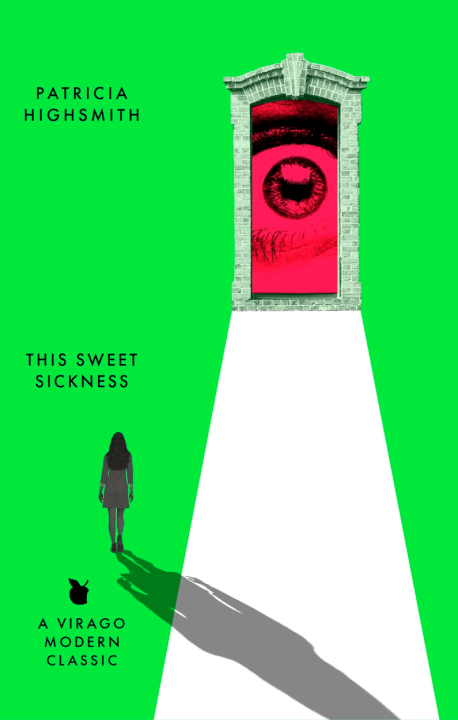
This Sweet Sickness by Patricia Highsmith

Virago have just reissued ten of the books from their Modern Classics range with new green cover designs, including Valley of the Dolls by Jacqueline Susann, Their Eyes Were Watching God by Zora Neale Hurston – and this one, Patricia Highsmith’s This Sweet Sickness. I’ve been meaning to try another Highsmith novel since reading Strangers on a Train a few years ago, so when I spotted this book on NetGalley it seemed the perfect opportunity.

This Sweet Sickness was first published in 1960 and takes us inside the mind of David Kelsey, a young man who lives in a boarding house in the town of Froudsburg, New York, and works as a scientist at a fabrics factory. At least, this is his life from Monday to Friday. When the weekend comes around, David leaves for his own house in nearby Ballard, where he becomes William Newmeister, a freelance journalist. For two whole days he locks himself away and imagines he is happily married to Annabelle, the love of his life. He has decorated the house the way he thinks Annabelle would have wanted it, prepares the meals he’s sure she would like and has even bought her a piano. The only problem is, Annabelle ended their relationship two years earlier and married another man. She and her husband, Gerald Delaney, live in Connecticut with their baby son and Annabelle has never even visited the house in Ballard, let alone lived in it.

David thinks he has successfully covered up his dual identities, having convinced everyone at work and at the boarding house that he visits his elderly mother at her nursing home every weekend. His mother has actually been dead for many years, but he’s sure no one will ever find out! However, two of his friends – a work colleague, Wes Carmichael, and a fellow boarder, Effie Brennan – begin to grow suspicious and decide to investigate. They are right to be concerned, because David is becoming increasingly unstable. He can’t and won’t accept that his relationship with Annabelle is over and bombards her with letters and phone calls, urging her to leave Gerald and marry him. Eventually, things take a more sinister turn and David finds himself in trouble. Is his double life about to be exposed at last?

I loved this book and although the first half is quite slow, I was completely gripped by it all the way through. It’s definitely a disturbing read, though, particularly as the whole book is written from David’s perspective (in third person). I was so impressed by the way Highsmith changed my perception of him several times throughout the book. At first I saw him as a basically decent person who’d had his heart broken and was struggling to move on, then I quickly lost sympathy for him when it became clear how dangerous his obsession was and how relentlessly he was stalking Annabelle, and finally, despite his actions, I began to pity him again because by then he had completely lost his grip on reality and desperately needed help.

Annabelle, although we do meet her occasionally, exists mainly as a fantasy woman in David’s mind and it seems obvious that if he got his wish and married her he would find that the real Annabelle didn’t quite live up to the imaginary one. Annabelle frustrated me because she could have been much more firm with David; instead, at least at first, she seems to be encouraging him, speaking to him on the phone, agreeing to meet him and letting him think there’s still hope. It would have been interesting to have seen things from Annabelle’s perspective, I think. Did part of her still care about David and not want to hurt him? How did she really feel about Gerald?

Effie is another character who interested me. She’s clearly in love with David, but he’s too preoccupied with his delusions and obsessions to pay her much attention. He becomes more and more irritated by her persistence and her ‘spying’, without acknowledging that he is behaving the same way towards Annabelle. Effie and the other characters in the book are seen only through David’s eyes which almost certainly doesn’t give us a true or fair picture of what they are really like.

This Sweet Sickness is an unsettling novel and not very comfortable to read, but it’s also fascinating from a psychological point of view and I found it very immersive. I liked it better than Strangers on a Train and look forward to reading more of Patricia Highsmith’s books.

Thanks to Little, Brown Book Group UK/Virago for providing a copy of this book for review via NetGalley.

The Queen of Fives by Alex Hay

The Queen of Fives. They breathed the title with reverence on the docks, down the coastline. A lady with a hundred faces, a thousand voices, a million lives. She might spin into yours if you didn’t watch out…She played a glittering game: lifting a man’s fortune with five moves, in five days, before disappearing without a trace.

I enjoyed Alex Hay’s first novel, The Housekeepers, about a group of servants staging a heist during a ball in a grand London house. I hoped for something similar from his next book – and that’s what I got! If anything, this one is more complex, ambitious and inventive.

It’s 1898 and Quinn Le Blanc has five days to convince the Duke of Kendal to marry her and trick him out of his fortune. Why five days? Because Quinn is the ‘Queen of Fives’, the leader of a network of London con artists based at a house known as The Château who play by a specific set of rules. Their current game is called False Heiress and there are a number of steps that have to be carried out on each day of the con. The Château has been operating for generations and there have been many previous Queens. During Quinn’s eight-year reign, however, things have started going wrong: debts are mounting and the house is falling into disrepair. She desperately needs this latest scheme to be a success.

Quinn is assisted by Mr Silk, whose job is to serve the Queen and to guard the all-important Rulebook, which contains the instructions for the Château’s various games. But watching from the shadows is the mysterious Man in the Blue Silk Waistcoat – and also the equally mysterious Woman in the Cream Silk Gown – who will do whatever it takes to stop Quinn in her tracks.

As you can see, this is an unusual story based on an unusual premise and, to be honest, I was never fully convinced by it. I didn’t really understand why it was so important to complete the game within five days and to stick so rigidly to the Rulebook, when allowing more time or adapting the rules to fit unforeseen circumstances could have made it easier to win. Still, I managed to just suspend disbelief and go along with it! After a slow start, with time spent introducing the characters and the history of the Château, things gradually pick up pace and by the middle of the book I was gripped.

As with The Housekeepers, the reader is in the rare position of wanting the villains, in this case Quinn and her friends, to succeed. However, we also get to know the victims, the Duke of Kendal and his sister, Tor (short for Victoria). Tor is a single woman in her thirties who still lives with her brother and their stepmother and she is worried about losing her home should the Duke decide to marry. Tor is immediately suspicious of the woman who appears out of nowhere and introduces herself as Miss Quinta White, but the Duke himself seems unsuspecting. Later, we discover that he has reasons of his own for wanting to marry quickly, so Quinn’s attentions aren’t unwelcome to him – though, of course, he has no idea who she really is or what her plans are.

There are some great twists towards the end of the book and although in hindsight I feel I should probably have seen them coming, I didn’t and was taken by surprise. I think overall I preferred The Housekeepers, but both books are fun and I’m already looking forward to a third book by Alex Hay, whenever and whatever that may be.

Thanks to Headline for providing a copy of this book for review via NetGalley.

Six Degrees of Separation: From Dangerous Liaisons to Birdcage Walk

It’s the first Saturday of the month which means it’s time for another Six Degrees of Separation, hosted by Kate of Books are my Favourite and Best. The idea is that Kate chooses a book to use as a starting point and then we have to link it to six other books of our choice to form a chain. A book doesn’t have to be connected to all of the others on the list – only to the one next to it in the chain.

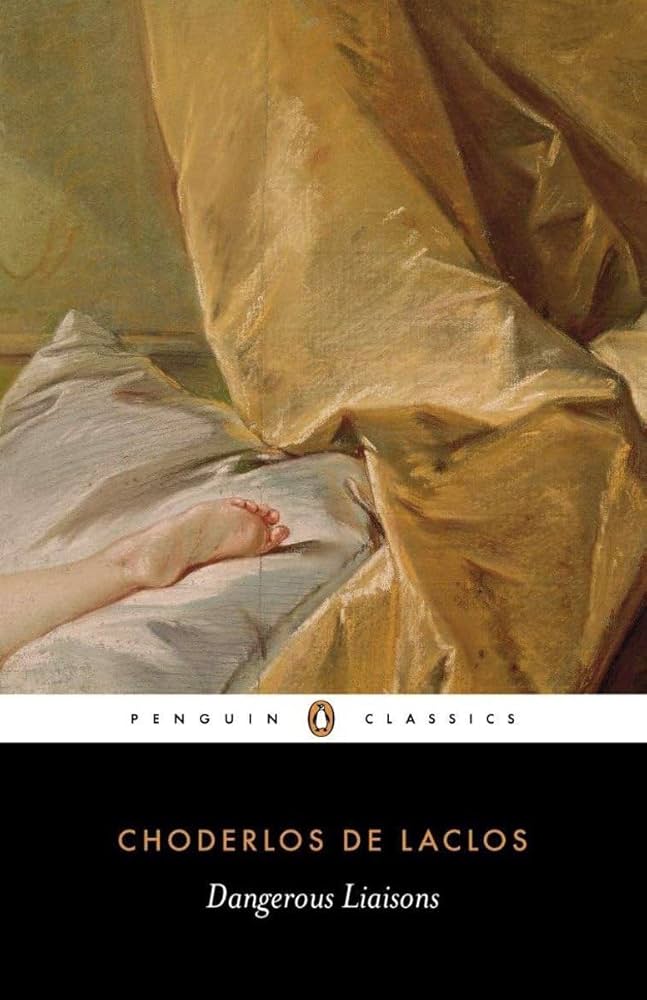
This month we’re starting with Dangerous Liaisons by Pierre Choderlos de Laclos.

Published in 1782, just years before the French Revolution, Les Liaisons Dangereuses is a disturbing and ultimately damning portrayal of a decadent society. At its centre are two aristocrats, former lovers, who embark on a sophisticated game of seduction and manipulation to bring amusement to their jaded existences. While the Marquise de Merteuil challenges the Vicomte de Valmont to seduce an innocent convent girl, the Vicomte is also occupied with the conquest of a virtuous married woman. But as their intrigues become more duplicitous and they find their human pawns responding in ways they could not have predicted, the consequences prove to be more serious, and deadly, than Merteuil and Valmont could have guessed.

Dangerous Liaisons has been adapted for film several times, sometimes transposing the setting to different periods and countries. The most famous version was the 1988 one, which received seven Oscar nominations including one for Glenn Close for Best Actress. She also appeared in an adaptation of Agatha Christie’s Crooked House (1) in 2017.

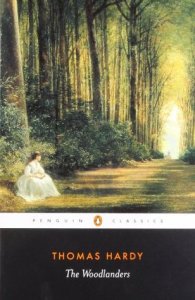
In the foreword, Christie states that “practically everybody has liked Crooked House, so I am justified in my own belief that it is one of my best”. Similarly, Thomas Hardy named his novel The Woodlanders (2) as a personal favourite, saying “I like it as a story best of all”. It’s one of my favourite Hardy novels as well – definitely in my top three!

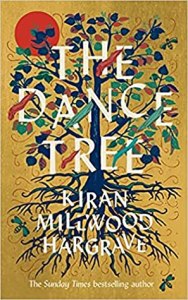
Trees grow in woodlands, so the next book I’m linking to is The Dance Tree by Kiran Millwood Hargrave (3). This fascinating novel is set in Strasbourg in 1518 during a plague of dancing – something which may sound strange, but did actually happen!

Another novel I’ve read with a dancing theme is Russian Winter by Daphne Kalotay (4) in which a retired ballerina looks back on her career with the Bolshoi Ballet in the 1940s and 50s.

A simple link to another book with ‘winter’ in the title: The Winter Garden by Nicola Cornick (5), which tells the story of the family of Robert Catesby, one of the conspirators involved in the failed Gunpowder Plot of 1605. I found it interesting to read about Catesby as the name usually associated with the Gunpowder Plot is Guy Fawkes.

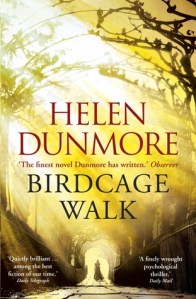
Lizzie Fawkes is the main character in Birdcage Walk by Helen Dunmore (6). Although the novel is set in England, the lives of the characters are affected by events in France as the French Revolution gathers pace. With our starting book, Dangerous Liaisons, being set just before the Revolution, I think this brings the chain full circle!

~

And that’s my chain for February! My links this month have included: Glenn Close adaptations, authors’ personal favourites, woods and trees, dancing, the word ‘winter’ and the name Fawkes.

In March we’ll be starting with Prophet Song by Paul Lynch.

My Commonplace Book: January 2025

A selection of quotes and pictures to represent January’s reading:

commonplace book
noun
a book into which notable extracts from other works are copied for personal use.

~

When freedoms are forbidden, their enjoyment becomes an especially delicious pleasure.

The Ghosts of Rome by Joseph O’Connor (2025)

~

‘It’s a terrible thing you’ve lived through,’ she said. ‘And you won’t forget it easily. Perhaps you won’t forget it ever. But we have a saying in Swedish: you cannot prevent the birds of sadness from flying over your head, but you can stop them from nesting in your hair.’

The Lost Passenger by Frances Quinn (2025)

~

Johannes Vermeer – Woman in blue reading a letter

It is a quiet painting – no bells ring. It is quiet not just because the young woman is reading, but quiet in its colours. There are no shouting bright orange carpets or loud lemon-yellow bodices or flaming red dresses that scream. Everything is muted.

Woman in Blue by Douglas Bruton (2025)

~

Biography and good novels were his favourite reading, a discovery of his own as he grew up since he came from a family who only read if they were ill in bed. But for him such books helped to satisfy the acute curiosity about what people did and why they did it that made him a notable detective.

Tea on Sunday by Lettice Cooper (1973)

~

Most people just want an easy life. It’s unsettling when someone starts pulling apart the stories we’ve stitched together, the things we tell ourselves for comfort.

The Sirens by Emilia Hart (2025)

~

Japanese embroidered Temari balls

“I’m not saying he was a bad man, but when you withdraw from the world like that, you end up closing in on yourself. Take, for example, the stories that everybody talks about, only then to forget them the very next day. Well, he held on to them, you see, deep inside himself.”

The Little Sparrow Murders by Seishi Yokomizo (1959)

~

She wonders when it became so difficult to find answers. Or has the truth always come hard won? People rarely say what they mean, relationships are fraught with misunderstandings, who can really be objective? How can she even hope to pinpoint motives and actions, drives and desires when they are all so muddled and slippery, even in the best of us? Who among us really knows our own heart, let alone someone else’s?

Murder at Gulls Nest by Jess Kidd (2025)

~

‘No, no,’ says Lou, and her top hat shakes in the moonlight. ‘Tastes can develop, certainly, but at any given time, one’s opinion on art is certainly valid. ‘Tis the point of art to stir us whether we have studied paintings for fifty years or are looking upon our first painting. Be confident in your tastes, Alice. But do be open to the notion that they are wilful and unpredictable and will almost certainly change.’

The Portrait Artist by Dani Heywood-Lonsdale (2025)

~

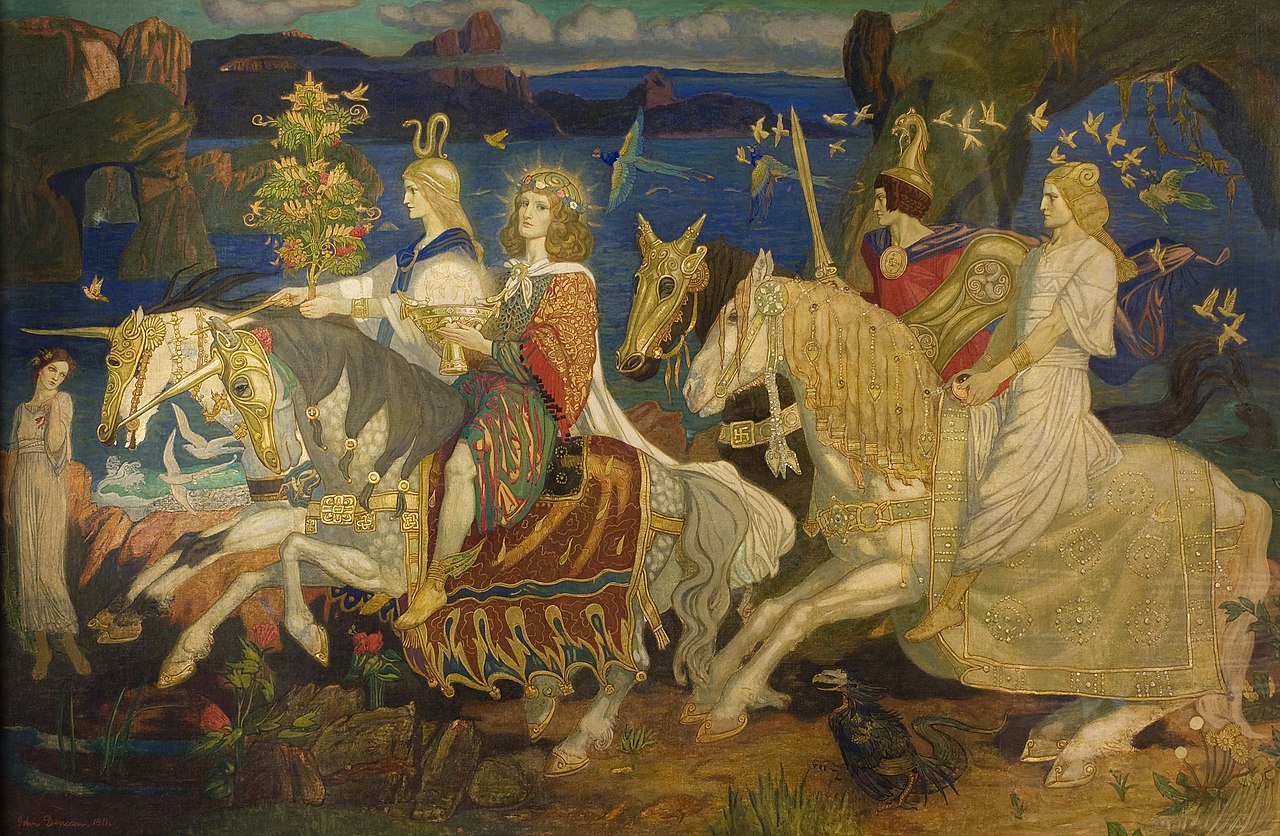
The Tuatha Dé Danann as depicted in John Duncan’s Riders of the Sidhe (1911)

I asked him later if he wanted to know how and when he would die. He laughed and said, ‘Sure, stories don’t die.’ But they do. They die and they are forgotten and new stories take their place, just as kings follow kings.

The Morrigan by Kim Curran (2025)

~

To think of anything else except the way things are is just to live in a world of the imagination – fine for some things but not for real life. Don’t you agree?

This Sweet Sickness by Patricia Highsmith (1960)

~

Favourite books read in January:

This Sweet Sickness, Woman in Blue and The Lost Passenger

Authors read for the first time in January:

Lettice Cooper, Dani Heywood-Lonsdale, Kim Curran

Places visited in my January reading:

Italy, Vatican City, England, Australia, Netherlands, Japan, Ireland, USA

~

January reading notes: This was a good start to the year for me, reading-wise. Most of the books I’ve read are NetGalley books being released over the next few months, so I’ll be posting my reviews around the publication dates. I also managed to read a book for the Japanese Literature Challenge and may even have time to fit in another one in February! Another event I’m hoping to join in with in February is #ReadIndies hosted by Kaggsy’s Bookish Ramblings and Lizzy’s Literary Life. I’m also planning to participate in #ReadChristie2025, as next month’s book, The Thirteen Problems, is one I haven’t read yet.
How was your January? Do you have any plans for your February reading?

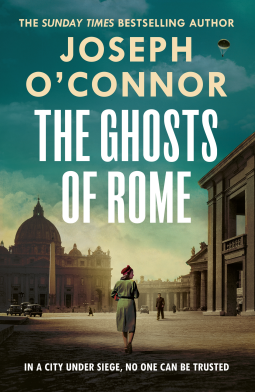
The Ghosts of Rome by Joseph O’Connor

The story of our Roman Escape Line has been characterised as a tale of courage. But it was always a story of friendship, first and last. The friends we knew and those we did not, some fleetingly encountered, others never at all. I am no sentimentalist, but I call it a love story.

This is the second book in Joseph O’Connor’s new trilogy inspired by the true story of the Rome Escape Line, a secret network that smuggled thousands of Jewish refugees and Allied soldiers out of Nazi-occupied Rome. The first novel, My Father’s House, introduces us to the work of the Escape Line who meet in the neutral Vatican under the guise of a choir to avoid the attentions of the Gestapo and focuses on one member in particular – Monsignor Hugh O’Flaherty, the Irish Catholic priest who is the leader of the network.

The Ghosts of Rome continues the story, beginning in February 1944, six months into the Nazi occupation. Although Hugh O’Flaherty is still part of the group, we see very little of him in this book as he steps into the background to let other characters’ stories be told. The main focus this time is the widowed Contessa Giovanna Landini, known as Jo, whose palazzo is commandeered by Gestapo officer Paul Hauptmann. Hitler isn’t satisfied with Hauptmann’s performance in Rome so far and he is under pressure to produce results. If he could obtain evidence of the Choir’s activities he’s sure that would help to improve his reputation with the Führer. Hauptmann hopes that the Contessa, whose house he is living in, will lead him to her fellow Escape Line members, but Jo is a resourceful woman and decides to take advantage of Hauptmann’s interest in her to try to protect herself and the Choir.

Another significant storyline revolves around a Polish airman who is shot down over Rome. Some members of the Escape Line want to help him, but others are more cautious. How can they be sure he is who he says he is? What if he betrays them? When it becomes obvious that he has life-threatening injuries and will die if not treated, they are faced with an important decision to make.

Of the two books, I think I preferred My Father’s House because it was more suspenseful, describing the countdown to a major mission on Christmas Eve, and because I found Hugh O’Flaherty such an interesting character. This is an excellent book as well, though, and I’m sure other readers will like it better than the first one. Although Jo Landini is at the forefront of the story, most of the characters we met in the previous book also reappear, including British Envoy Sir Francis D’Arcy Osborne, diplomat’s wife Delia Kiernan and escaped soldier Sam Derry. We also see a lot of Delia’s teenage daughter, Blon, who is angry when her mother leaves the Escape Line and insists on trying to take her place, which not everyone is happy about! These are all people who really existed, but O’Connor includes an author’s note to explain that the way they are portrayed in the book is just his interpretation and shouldn’t be relied on as fact.

If you haven’t read the previous novel, you’re probably wondering whether it’s necessary to have read it before starting this one. I would say it’s not really essential, but it would make it easier to follow what’s happening in this book. There are a lot of characters and O’Connor constantly switches between different perspectives throughout the novel, as well as inserting passages written in other styles – such as transcripts of (fictional) BBC interviews – which means you do need to pay attention otherwise it would be easy to lose track of things. As with My Father’s House, I was particularly interested in the insights we get into the mind of Paul Hauptmann – a very human villain, which just makes him all the more unsettling to read about. It’s the brave and tireless work of the Escape Line, however, that makes these novels so compelling; in this book, I loved the way they managed to hide hundreds of people inside a derelict old theatre right under the noses of the Gestapo.

This is a planned trilogy and although I can’t see any details of the third book yet, I know it will be something to look forward to!

Thanks to Harvill Secker for providing a copy of this book for review via NetGalley.

Top Ten Tuesday: Authors I discovered in 2024

This week’s topic for Top Ten Tuesday (hosted by That Artsy Reader Girl) is “New-to-Me Authors I Discovered in 2024”. There were lots of authors I tried for the first time last year, but the ten I’m listing below are all authors whose work I enjoyed and would consider reading again.

1. Benjamin Myers – I read Cuddy early last year and although I wasn’t sure at first if it would be my sort of book, I enjoyed it much more than I’d expected. I have The Gallows Pole waiting to be read!

2. Alexander Lernet-HoleniaCount Luna was a great book – so unusual and thought-provoking! I’m pleased to see there are more of Lernet-Holenia’s books available in English translations.

3. Tove Jansson – I finally read my first Moomin book, Finn Family Moomintroll, thanks to last year’s #MoominWeek. I might read more of them at some point, but would also like to try one of Jansson’s adult books.

4. Charlotte Armstrong – I didn’t know where to start with Charlotte Armstrong’s books, but I think I made a good choice with Mischief. There are lots more to explore now!

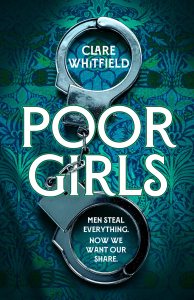
5. Clare Whitfield – I loved Clare Whitfield’s Poor Girls, about the fascinating Forty Elephants gang. Now I’m looking forward to reading her previous novel, People of Abandoned Character.

6. Akimitsu Takagi – Takagi’s The Noh Mask Murders is one of the best Japanese crime novels I’ve read so far. I would like to read more of his books, although I think there’s only one other currently in print in English – The Tattoo Murder.

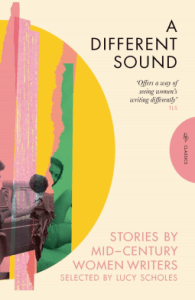
7. Penelope Mortimer – I read a short story by Penelope Mortimer in A Different Sound, a collection of stories by women authors of the mid 20th century. It was one of the highlights of the book and made me want to read more of her work.

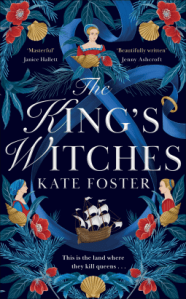
8. Kate Foster – I read Kate Foster’s The King’s Witches last year and enjoyed it, so I’m looking forward to reading my review copy of her new novel, The Mourning Necklace.

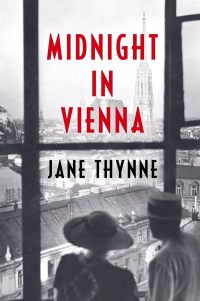
9. Jane ThynneMidnight in Vienna, a thriller set in the 1930s, is the first Jane Thynne novel I’ve read, but I’m sure I’ll be reading more of them now. I really liked this one!

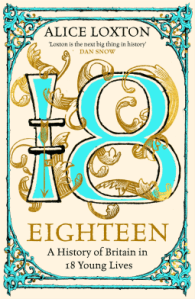
10. Alice Loxton – I read very little non-fiction in 2024, but I did enjoy Alice Loxton’s Eighteen, which explored the history of Britain through the lives of eighteen famous young people. She has written another book about Georgian London which also sounds interesting.

~

Have you read books by any of these authors or would you like to? Which new authors did you discover last year?