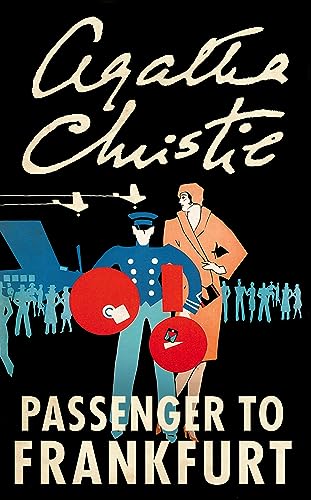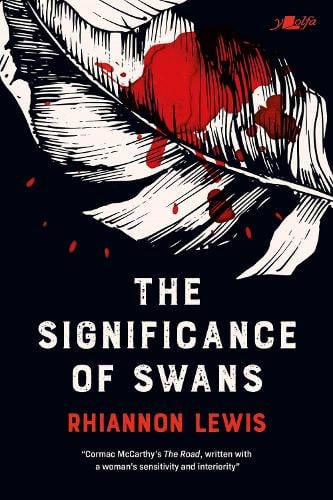
My Commonplace Book: July 2024

A selection of quotes and pictures to represent July’s reading:

commonplace book
noun
a book into which notable extracts from other works are copied for personal use.

~

To know when to use the truth was the essence of successful deception.

N or M? by Agatha Christie (1941)

~

“Mom says life isn’t fair and that’s all there is to it.”

“Your mother says that to justify the fact that she isn’t being fair to you,” Mrs Grace said calmly. “Which is mostly what people mean when they say ‘life isn’t fair’. It isn’t, which is why people should endeavor to be more fair to one another, not less.”

The Briar Club by Kate Quinn (2024)

~

Part of the Inner Temple, printed in Old and New London vol 1 by George Walter Thornbury

No harm in that, thought Gabriel. I, too, read to escape; and dreams are so often more satisfying than the reality that awaits us when we stop reading.

A Case of Mice and Murder by Sally Smith (2024)

~

“And while I was becoming interested in the business, I discovered something else: some books are for selling and others are for keeping. Becoming a book collector is like joining a religion: it’s for life.”

The Dumas Club by Arturo Pérez-Reverte (1993)

~

‘Travelling is all very well,’ she said at last, ‘but it is a fine thing to have a home.’

The Trouble with Mrs Montgomery Hurst by Katie Lumsden (2024)

~

Cecily Neville, from the 15th century Neville Book of Hours

‘I’ll give you a rule, Edward, one your father taught me, take it to heart. Only fight when you have to. Though always look ready, and as if you would win.’

The King’s Mother by Annie Garthwaite (2024)

~

That Lady Blakeney was in love with her own husband, nobody could fail to see, and in the more frivolous cliques of fashionable London this extraordinary phenomenon had oft been eagerly discussed.

“A monstrous thing, of a truth, for a woman of fashion to adore her own husband!” was the universal pronouncement of the gaily-decked little world that centred around Carlton House and Ranelagh.

The Elusive Pimpernel by Baroness Orczy (1908)

~

I could see that, on their own, fine words of regret and sorrow were not enough but I couldn’t help but feel that if truly meant, they were the start, otherwise there was no acceptance of wrongdoing.

House of Shades by Lianne Dillsworth (2024)

~

Favourite books read this month:

The Trouble with Mrs Montgomery Hurst and A Case of Mice and Murder

Authors read for the first time this month:

Arturo Pérez-Reverte, Sally Smith

Places visited in this month’s reading:

England, US, Spain, Portugal, France

~

Reading Notes: My 20 Books of Summer reading is continuing to go well: I have now read 16 books from my list and have reviewed 14 of them. I think I actually have a good chance of completing this challenge for the first time ever! I was pleased that I also managed to fit in a book for Spanish and Portuguese Lit Month (the Pérez-Reverte), even if it wasn’t a complete success.

In August, as well as trying to complete my 20 Books of Summer I’m looking forward to joining in with Moomin Week and have Finn Family Moomintroll lined up for it. It’s also Women in Translation Month, so the Moomins book will count towards that – and maybe I’ll also have time for The Black Lake by Hella S. Haasse.

How was your July? What are you planning to read in August?

The Elusive Pimpernel by Baroness Orczy

Since reading Baroness Orczy’s The Scarlet Pimpernel several years ago, I have been slowly working my way through the rest of the Pimpernel series. There are various recommended reading orders – some following publication dates and others attempting to follow an internal timeline – and I’m not sure if I’ve chosen the best route through the series, but The Elusive Pimpernel is the fifth book I’ve read. Like the others, this one revolves around the efforts of the English adventurer known as the Scarlet Pimpernel to rescue aristocrats from the guillotine during the French Revolution.

*If you have not read the first book and would prefer not to know the identity of the Scarlet Pimpernel, you may want to avoid the rest of this review as I can’t really discuss this book without naming him!*

First published in 1908, the novel begins in September 1793 with Citizen Chauvelin, the Scarlet Pimpernel’s arch-enemy, receiving orders from Robespierre in Paris. Having failed to capture the Pimpernel in the past, Chauvelin is being given one last chance. He must go to England as a representative of the Committee of Public Safety, responsible for the interests of French citizens who have settled in England. The real reason for his mission, however, is to hunt down the Scarlet Pimpernel and bring him back to France dead or alive.

As the action switches temporarily to England, we meet a French actress, Désirée Candeille, who has been befriended by Marguerite Blakeney, wife of Sir Percy, the Scarlet Pimpernel himself. Unknown to Marguerite, Désirée is in league with Chauvelin and part of the scheme to lure Sir Percy to France. Will their scheme be successful – and could Marguerite unintentionally be the one to lead her husband into the trap?

Although it’s not quite as good as the original book, The Elusive Pimpernel is probably the best of the sequels I’ve read so far. The plot Chauvelin comes up with to capture Sir Percy is so fiendishly clever I couldn’t see how he was going to find a way out of it. Of course, I knew that he probably would find a way out, because he’s the Scarlet Pimpernel, after all, and there are more books in the series, but it seemed to me that he was well and truly trapped this time! One of the things I like about these books is that Chauvelin is by no means portrayed as a bumbling idiot who is easily outwitted; his plan would almost certainly have succeeded against anybody less brilliant than Sir Percy.

We don’t see very much of the other members of the League of the Scarlet Pimpernel, although we are briefly reunited with some characters from the previous book, I Will Repay (so I would recommend reading that book before this one, if you can). Marguerite, though, plays a big part in the story and is one of our main viewpoint characters. It’s frustrating to see how easily she is manipulated, but she does mean well and her love for Percy isn’t in doubt, so I can forgive her!

Continuing chronologically, the next book for me to read will be Lord Tony’s Wife. Have you read that one – or any of the others in the series?

This is book 14/20 of my 20 Books of Summer 2024.

Book 31/50 for the Historical Fiction Reading Challenge 2024

This is also book 44/50 from my second Classics Club list

A Case of Mice and Murder by Sally Smith

After finishing Sally Smith’s A Case of Mice and Murder I was delighted to find that it’s the start of a new historical mystery series, which is great news as this first book is excellent. I hope we don’t have to wait too long for a second!

The novel is set in 1901 in the Inner Temple, one of the four Inns of Court that make up London’s legal community. Sir Gabriel Ward KC is a barrister who leads a quiet, reclusive life within the Temple grounds, only venturing into the outside world when absolutely necessary. He’s not the sort of person you would expect to become an amateur detective, but that’s what happens when he steps out of his rooms early one morning in May and stumbles across the dead body of the Lord Chief Justice. Sir Gabriel is persuaded by his superiors to investigate before the police are brought in and he reluctantly agrees, despite already being busy with a very different case.

The manuscript of a children’s book, Millie the Temple Church Mouse, had been left at the door of Herbert Moore’s publishing house with no way of identifying or contacting the author. Moore went ahead with publishing the book anyway and it has become a huge success, inspiring Millie toys and a forthcoming stage play. Now a woman has come forward claiming to be the author and Moore is in trouble! Gabriel is Moore’s lawyer and must work on establishing authorship of the book while also trying to solve the mystery of the Lord Chief Justice’s death.

When writing a novel set in the past, creating a sense of time and place is incredibly important and Sally Smith does that extremely well here. She writes in a style that is appropriate to the time period and at no point does it really feel like a ‘modern’ book. The descriptions of the Inner Temple are perfect, both in terms of the physical buildings, chambers and grounds, and the way of life with its rituals and traditions. The Inner Temple, like the neighbouring Middle Temple, is considered a local authority largely outside the jurisdiction of the City of London (hence the police needing to be invited in to investigate the murder) and it makes a fascinating and unusual setting.

Gabriel Ward is a great character and it’s interesting to see him grow as person as the story progresses. At the beginning he is a quiet, solitary man who spends most of his time in his rooms with his books and his legal work, following little routines, such as checking the door three times, that today would be called an OCD. Being forced to leave the confines of the Temple to interview suspects and witnesses from a range of social backgrounds gives Gabriel a different perspective on life and helps him to open up to new ideas. My only complaint is that Smith gives him the character trait of ‘snuffling’, a word she repeats far too often throughout the book. Looking at other reviews, I can see that many of us felt the same way, so I hope Gabriel will snuffle a bit less often in the next book!

The murder mystery is an interesting one, with a solution I hadn’t seen coming, but I found the Millie the Mouse storyline even more enjoyable. I started to have my suspicions about that second mystery by the middle of the book and was pleased to be proved right. I can’t wait to see what Gabriel’s next case will be!

Thanks to Raven Books for providing a copy of this book for review via NetGalley.

This is book 13/20 of my 20 Books of Summer 2024.

Book 30/50 for the Historical Fiction Reading Challenge 2024

The Dumas Club by Arturo Pérez-Reverte

Translated by Sonia Soto

For Spanish and Portuguese Lit Month, hosted by Stu of Winstonsdad’s Blog, I decided to read a book that sounded perfect for me. A bibliomystery set in the world of antiquarian booksellers, paying tribute to Alexandre Dumas, whose novels I love. What could go wrong?

The Dumas Club (or The Club Dumas – it has appeared under both titles) was originally published in Spanish in 1993 and translated into English three years later by Sonia Soto. You may have watched the 1999 film adaptation The Ninth Gate, starring Johnny Depp; I don’t think I’ve seen it, but apparently it’s very different from the book and completely removes the Dumas connection, which seems strange but maybe they thought there was too much going on and couldn’t include everything.

Lucas Corso is a ‘book detective’ who hunts down rare or valuable books on behalf of his clients. Corso has found that unscrupulous dealers and collectors are prepared to pay large sums of money for the books and don’t really care whether the methods he has used to get hold of them are particularly legal or ethical. In The Dumas Club, we follow Corso as he travels across Europe on two separate missions. The first concerns an early draft of a chapter from Alexandre Dumas’ The Three Musketeers. The chapter, titled Anjou Wine, appears to be written at least partly in Dumas’ own handwriting and Corso’s job is to prove its authenticity.

His second task is more complex and involves a very different kind of book: The Book of the Nine Doors of the Kingdom of Shadows, published by Aristide Torchia in 1666. This rare and sinister book is thought to contain the key to summoning the Devil and Torchia was burned at the stake shortly after its publication. Only one copy is thought to have survived. Corso’s client, Varo Borja, owns a copy of the book which he believes may be a forgery and he wants Corso to examine two other copies, one in Portugal and one in France, to determine which is genuine and which are fakes.

Setting out on his journey, Corso begins to encounter some mysterious strangers who remind him of characters from books. For example, he is pursued by a man with a scar who resembles Rochefort, the ‘Man from Meung’, from The Three Musketeers and he also crosses paths with a young woman who introduces herself as Irene Adler after the character from the Sherlock Holmes stories. Corso is unsure whether these people are interested in The Anjou Wine, The Nine Doors or both, so he must try to keep the manuscripts out of their hands until he has solved the two mysteries.

The Dumas Club is an unusual novel and there were lots of things I liked about it. As a Dumas fan, I enjoyed all the references to The Three Musketeers and other titles; it’s not really essential to be familiar with Dumas, but you’ll definitely get more out of the book if you are. Pérez-Reverte includes a lot of unnecessary information, though, such as a full bibliography of all Dumas’ works inserted into the middle of a chapter. This info-dumping continues throughout the book, as well as lots of long digressions into printing and binding techniques and discussions of first editions, illustrations and rare collections. Some of it is quite fascinating and I think people who love books as physical objects more than for the words they contain will find it particularly interesting, but it doesn’t make for a very quick or easy read.

Although I enjoyed following the Anjou Wine thread of the story, Corso’s second mission revolving around The Nine Doors and the occult was of less interest to me and reminded me too much of The Da Vinci Code. It didn’t help that I didn’t like Lucas Corso at all and found most of the other characters equally unpleasant. Still, the ending is clever and we are given answers to both of the mysteries, so I think my feelings about this book are probably slightly more positive than negative. I have another of Pérez-Reverte’s novels on my TBR – Captain Alatriste – and wonder if I would get on better with that one.

The Trouble with Mrs Montgomery Hurst by Katie Lumsden

In a small, close-knit community in 1841, the arrival of a newcomer can really cause a stir – and that’s what happens when Mr Montgomery Hurst brings his new wife home to Wickenshire. Mr Hurst was one of the county’s most eligible bachelors, so everyone is curious to see what sort of woman has tempted him to marry at last. The new Mrs Hurst, however – a widow in her thirties with three small children – is not what they are expecting. It seems to the people of Wickenshire that she is not quite respectable and gossip quickly begins to spread as they speculate about her past and her previous marriage.

One person who doesn’t care too much about the gossip is Amelia Ashpoint. Amelia’s father owns a brewery, making the Ashpoints one of the richest families in Wickenshire, yet they are still not regarded as equals by the older families whose wealth and titles have been passed down through the generations. At twenty-three, Amelia is expected to marry soon, but what she really wants is a career as a writer and the freedom to be with the person she truly loves. Meanwhile, Felicia Elton, ‘the great beauty of Wickenshire’, is also under pressure to find a rich husband. With her looks and accomplishments, it shouldn’t be a difficult task, but for some reason nobody seems interested in marrying Felicia and she’s beginning to think she’ll have to settle for the first man who asks.

In The Trouble with Mrs Montgomery Hurst, Katie Lumsden tells the stories of Amelia Ashpoint, Felicia Elton and the Hursts, as well as several of their other friends and neighbours, all of whom occupy different positions on the social ladder. At the top there’s the Earl and Countess of Wickford and their dissolute son, Lord Salbridge; lower down, the town families who have made their money through trade and industry; and lower still, people such as Mr Lonsdale, the foreman at the Ashpoint brewery, and Monsieur Brisset, Felicia’s piano teacher. With so many unwritten rules of society and boundaries that can’t be crossed, it seems that nobody in Wickenshire is free to live and love as they choose and it’s easy to see why someone who doesn’t conform, like Mrs Hurst, can become the subject of rumour and slander.

Although the book is set in the early 1840s, at the start of the Victorian era, it has the feel of a Regency novel and there’s an obvious Jane Austen influence in both the writing style and the plot. The worldbuilding is strengthened by the inclusion of a map at the beginning and a list of characters giving their age, address and occupation. It was all so immersive that I really didn’t want to have to leave Wickenshire behind when I reached the end of the book! Because it’s a modern novel, though, Lumsden is able to explore topics that an author like Austen couldn’t (or at least not so explicitly). For example, one of the main characters is a lesbian and her story really helped me to appreciate how difficult it must have been to have no romantic interest in men in a world where it seemed that a young woman’s whole purpose in life was to find a husband. However, her story didn’t go quite the way I had predicted – and neither did the stories of several of the other characters. Some got happy endings, some didn’t and others just had to make the best of things, which I found very realistic.

In case you can’t tell, I loved this book and I think I preferred it to Katie Lumsden’s previous one, The Secrets of Hartwood Hall, which borrows from the Brontës rather than Austen. I would like a sequel so we can catch up with the residents of Wickenshire again and see how they are getting on, but I suspect this is probably intended as a standalone. Either way, I’ll be looking out for whatever Katie Lumsden writes next.

Thanks to Michael Joseph for providing a copy of this book for review via NetGalley.

This is book 12/20 of my 20 Books of Summer 2024.

Book 29/50 for the Historical Fiction Reading Challenge 2024

N or M? by Agatha Christie

This month – and in August and September – the Read Christie challenge is moving on to books published in the 1940s and 1950s. I have several unread Christies from those decades to choose from, but I decided to start with N or M?, a Tommy and Tuppence novel from 1941. I enjoyed the first two T&T books, The Secret Adversary and Partners in Crime, and this is the third in the series.

I think this is a series best read in order as, unlike Poirot and Miss Marple, Tommy and Tuppence age almost in real time; they were in their early twenties in 1922’s The Secret Adversary and when we join them at the beginning of N or M? they are over forty. Their advancing age has become a source of frustration to them now that the world is at war and it seems that they are too old to make any meaningful contribution. Then, Mr Grant, a secret agent, arrives with an intriguing proposition for Tommy. He must travel undercover on behalf of the Secret Service to a boarding house on the south coast of England in search of two German spies, one male and one female, known only by the initials N and M. The mission must be kept secret from everyone, including Tuppence, who is told that Tommy is being sent to Scotland to take up a boring office job. However, Tuppence is already one step ahead and determined not to miss out on the excitement!

N or M? is more of a thriller/espionage novel rather than a traditional detective novel, which made a nice change from my last two Read Christie selections, which have both been Poirot mysteries. One of the good things about diving into Christie’s books more or less at random as I have been doing over the last few years is that there’s enough variety within her body of work that you never really get bored. However, there’s still a mystery to be solved here – the mystery of the true identities of N and M – and plenty of clues to look out for. I found it very easy to identify one of the spies (and was frustrated that Tommy and Tuppence didn’t work it out as quickly as I did), but I didn’t guess the other one so there were still some surprises in store for me.

With most of the novel being set in and around the Sans Souci boarding house, this means all of the suspects are together in one place, giving Tommy and Tuppence plenty of opportunities to observe them. The most obvious is Carl von Deinim, a German refugee and research chemist, but is he too obvious? The other guests include a larger than life Irishwoman, a retired Major, an invalid and his wife, and a young mother with her two-year-old daughter. Literally anybody could be a spy and Christie does a great job of capturing the sense of danger, mistrust and paranoia. I was quite worried for Tommy and Tuppence at times, even though I knew they must survive as there are more books in the series!

I’ve found that the other Christie novels I’ve read that were published during this same time period barely mention the war, if at all, so it was unusual to find one in which the war is such a central part of the plot and affects the lives of the characters in so many ways. I really enjoyed it and am looking forward to reading the next Tommy and Tuppence book, By the Pricking of My Thumbs – although not just yet, as it’s published in 1968 and we’ll be staying in the 40s and 50s for the next two months.

This is book 11/20 of my 20 Books of Summer 2024.

Top Ten Tuesday: Ten Things I Love About The Count of Monte Cristo

This week’s topic for Top Ten Tuesday (hosted by That Artsy Reader Girl) is “Ten Things I Loved About [Insert Book Title Here]” (Pick any book and tell us ten things you loved about it!) (submitted by Cathy @ WhatCathyReadNext)

I’ve just finished reading The Club Dumas by Arturo Pérez-Reverte, so when I saw the topic for this week’s TTT the first book to come to mind was Alexandre Dumas’ The Count of Monte Cristo, a French classic I love and have read several times, despite the length! Here are ten things I particularly enjoyed about it:

1. Edmond Dantès – Our hero (or anti-hero, at various times in the book) and one of my favourite characters in all of literature. Early in the novel, he is falsely accused of treason and imprisoned for fourteen years. He finally engineers an escape, but we quickly find that the youthful, naive Edmond Dantès we once knew has been transformed into the bitter and vengeful Count of Monte Cristo, out to hunt down the men who betrayed him and make them pay!

2. The exciting plot – With murders, poisonings, court cases, duels, thefts, anonymous letters, illegitimate children and searches for buried treasure, there’s always something happening. Most editions have over 1000 pages, so naturally there are some slower sections, but everything is relevant and I wouldn’t recommend reading an abridged version.

3. The setting – Or rather settings, as there are several. From Marseille with its island fortress, the Château d’If, and the small Catalan community where Edmond’s fiancée Mercédès lives, to Rome during Carnival, they are all memorable.

4. The Abbé Faria – When Edmond is imprisoned in the Château d’If, the Abbé Faria is occupying a neighbouring cell and the two manage to communicate and become friends. Faria passes on his wisdom and knowledge to Edmond and encourages him to never give up hope.

5. Monsieur Noirtier – M. Noirtier is the elderly father of Villefort, one of the Count’s main enemies. After suffering a stroke, he devises a form of communication using only his eyes and forms a special bond with his granddaughter, Valentine, two things that endeared him to me as a character!

6. The revenge theme – Stories of victims getting their revenge against the people who wronged them are usually very satisfying, but in this book the revenge plot has more layers to it. At times Dantès has doubts about the path he has set out on, regretting that “I did not tear out my heart the day I resolved to revenge myself”. When you finish the book you can decide for yourself whether it was all worth it in the end.

7. Monsieur Morrel – Another favourite character is M. Morrel, who makes Edmond Dantès captain of his ship, the Pharaon. During Edmond’s imprisonment, Morrel tries unsuccessfully to get him released, while also taking care of his elderly father in his absence, and his kindness is later rewarded by the Count.

8. The way there’s always something new to discoverThe Count of Monte Cristo is a book that rewards multiple readings as there’s so much to take in the first time and it’s easy to miss important details. Re-reading has given me an even greater appreciation for the complexity of the story and how things that initially seem irrelevant are actually crucial to the plot.

9. The entertaining subplots – On re-reading the book, I found that I could slow down and enjoy some of the longer digressions and stories-within-stories that I got impatient with on my first read. During my most recent read I found that I particularly enjoyed the subplot involving La Carconte (the wife of Caderousse, another of Dantès’ enemies) and a valuable diamond ring. It could almost have made a great short story on its own.

10. The writing – It’s not just an adventure novel; there’s also some great writing, with quotes like this:

“Life is a storm, my young friend. You will bask in the sunlight one moment, be shattered on the rocks the next. What makes you a man is what you do when that storm comes.”

And this:

“Live, then, and be happy, beloved children of my heart, and never forget that until the day when God shall deign to reveal the future to man, all human wisdom is summed up in these two words —’Wait and hope’.”

~

Have you read The Count of Monte Cristo? If so, what did you love (or not love) about it?