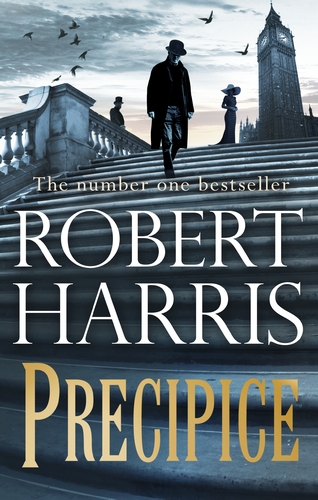
Precipice by Robert Harris

Robert Harris became a must-read author for me after reading and loving An Officer and a Spy, the Cicero trilogy and Conclave, but some of his more recent books have left me feeling slightly disappointed. His new one, Precipice, sounded promising, but would it be a return to form?

The novel opens in London in the summer of 1914 and introduces us to Venetia Stanley, a twenty-six-year-old woman from a wealthy, aristocratic family. Venetia is growing bored with the aimlessness of her days and the spoiled, shallow group of friends, known as the Coterie, that she has fallen in with, so when Herbert Henry Asquith begins an affair with her she sees it as a welcome escape. Not only is Asquith more than twice her age, he is also the Prime Minister and Venetia finds it flattering that he seems to value her opinion on politics and includes her in discussions on important matters of state.

Asquith is currently preoccupied with the situation in Ireland where the Nationalists are campaigning for Home Rule, but soon he has an even bigger problem to deal with as tensions begin to escalate in Europe and it looks increasingly possible that Britain could be pulled into a war. At this crucial moment in British history, it seems that the security of the nation is being put at risk – several confidential documents giving details of the government’s military and diplomatic plans have been found by members of the public and handed to the police. Only a small number of high-ranking government ministers have access to this information so, unlikely as it seems, one of them must be responsible for the leaks. Detective Sergeant Paul Deemer is given the task of investigating and it’s not long before he makes a shocking discovery.

Although I’ve read many novels set during WWI, they’ve usually dealt with ordinary people rather than politicians and certainly haven’t been written from the perspective of the Prime Minister. I knew nothing about H.H. Asquith’s private life, what he was like as a person or how he was viewed by his friends, colleagues and the public, so I learned a lot from this book. Harris draws on Asquith’s published letters to Venetia Stanley as one of his main sources and quotes from them extensively throughout the novel (Venetia’s letters to Asquith were apparently destroyed, so Harris uses his imagination to recreate them).

The impression I got of Asquith from this book, as a politician, was of a generally well-meaning man who was competent enough as a peacetime Prime Minister (apart from where the challenge of Ireland was concerned) but definitely not the right person to lead the country through a war. His overly cautious approach in the early stages was very frustrating to watch; it’s likely that the outbreak of war was inevitable and nothing he could have done would have averted it, but he didn’t seem to grasp the seriousness of the situation at all and refused to commit Britain one way or the other when he was being pressed from all sides to take decisive action. Even when war did break out, it seemed to be of less importance to him than his relationship with Venetia and again it was frustrating to see him sitting composing letters to her during cabinet meetings and plotting ways to escape from political duties to go and visit her. Although the general public weren’t supposed to know about the affair, it was an open secret amongst their family members and I couldn’t help feeling sorry for Margot, Asquith’s wife.

The thriller element of the novel is weaker and although I was never bored, the book never quite became unputdownable either. There’s no real mystery surrounding the security breaches because both we and Paul Deemer know from very early on who is responsible, but it’s still interesting to see how Deemer approaches the situation and there’s an entertaining section where he goes undercover in Wales in search of more information. There’s also a small twist towards the end of the book, which I hadn’t really seen coming, although it had started to occur to me that something wasn’t quite right!

Precipice is definitely more historical fiction than thriller, which may or may not appeal depending on your personal taste. Although it hasn’t become one of my absolute favourites by Robert Harris, I really enjoyed it for the fascinating insights into Asquith and his government.

Thanks to Hutchinson Heinemann for providing a copy of this book for review via NetGalley.

Book 42/50 for the Historical Fiction Reading Challenge 2024

Hera by Jennifer Saint

In her previous novels, Jennifer Saint has retold the stories of several women from Greek mythology including Ariadne, Elektra and Atalanta. Her new book, Hera, as the title suggests, is a retelling of the life of Hera, Greek goddess of marriage.

The novel opens with Hera helping her brother Zeus to overthrow their father, the Titan Cronus, in a great war. With Cronus and the other Titans defeated and banished, Zeus divides control of the world between himself and his two brothers, Poseidon and Hades. Hera wants nothing more than to rule beside Zeus, so while her sisters Demeter and Hestia find new roles for themselves as goddesses of the harvest and the hearth respectively, Hera ends up marrying her brother. She isn’t able to gain the power she desires, however, and begins to grow increasingly resentful of Zeus.

Zeus makes Hera the goddess of marriage, presiding over weddings and childbirth, but their own marriage is far from perfect. Zeus is an unfaithful husband, cheating on Hera with nymphs, mortals and other goddesses, producing a multitude of children who either join the gods on Mount Olympus (such as Artemis and Apollo) or become heroes in the mortal world (Heracles and Perseus). Hera is determined to take revenge, but is this really her best route to happiness?

Hera is usually depicted in Greek myths as vengeful, jealous and vindictive and although Jennifer Saint has clearly set out to paint a more nuanced picture of her here, she doesn’t really do much to change that overall impression. I could certainly have sympathy for her as she’s repeatedly betrayed and treated badly by Zeus and struggles to achieve what she sees as her rightful position as his equal, but Saint’s Hera is still not an easy character to like. Her actions often seem petty and spiteful, taking out her frustrations not just on Zeus but on his children and their mothers, despite the fact that most of those women were actually raped or tricked by Zeus.

Hera is involved in many of the key moments and incidents from Greek myths and I felt that Saint tried to include absolutely everything in this book. Some episodes are fascinating and gripping, but I think others could probably have been left out. My favourite parts of the book were Hera’s visits to the caves inhabited by Ekhidna (usually spelled Echidna), the half woman-half snake who is mother to many of the most famous Greek monsters including Cerberus, the Hydra and the Chimera. In this version, Hera is the mother of Typhon, a monstrous snake-like giant, whom she gives birth to secretly and gives to Ekhidna to raise without Zeus’s knowledge.

This isn’t my favourite Jennifer Saint book – that would probably be Ariadne – but I did find it quite enjoyable and it was interesting to see Saint writing from the perspective of a goddess rather than a mortal woman for a change. Ultimately, though, I was left with a feeling of sadness because Hera seemed so bitter and unhappy; I wished she could have carved out her own path in life like Demeter and Hestia instead of allowing Zeus to do it for her. I’ll be interested to see who Saint writes about next; I would love a whole novel about Ekhidna and her monsters!

Thanks to Headline, Wildfire for providing a copy of this book for review via NetGalley.

Six Degrees of Separation: From After Story to The Testaments

It’s the first Saturday of the month which means it’s time for another Six Degrees of Separation, hosted by Kate of Books are my Favourite and Best. The idea is that Kate chooses a book to use as a starting point and then we have to link it to six other books of our choice to form a chain. A book doesn’t have to be connected to all of the others on the list – only to the one next to it in the chain.

This month we’re starting with After Story by Larissa Behrendt. As usual, I haven’t read it, but here’s what it’s about:

When Indigenous lawyer Jasmine decides to take her mother, Della, on a tour of England’s most revered literary sites, Jasmine hopes it will bring them closer together and help them reconcile the past. Twenty-five years earlier the disappearance of Jasmine’s older sister devastated their tight-knit community. This tragedy returns to haunt Jasmine and Della when another child mysteriously goes missing on Hampstead Heath. As Jasmine immerses herself in the world of her literary idols – including Jane Austen, the Brontë sisters and Virginia Woolf – Della is inspired to rediscover the wisdom of her own culture and storytelling. But sometimes the stories that are not told can become too great to bear. Ambitious and engrossing, After Story celebrates the extraordinary power of words and the quiet spaces between. We can be ready to listen, but are we ready to hear?

I was drawn to the line ‘to rediscover the wisdom of her own culture and storytelling’, which reminded me of The Story Keeper by Anna Mazzola (1) in which a young woman applies for a job as assistant to a folklorist and travels to the Isle of Skye to collect folk tales from the local people. I enjoyed this book, with its wonderfully atmospheric setting.

To the Lighthouse by Virginia Woolf (2) is also set on the Isle of Skye, where the Ramsay family have a summer home. The novel begins with six-year-old James Ramsay being promised a trip to the lighthouse the next day if the weather is fine – but the weather is not fine and James won’t get to visit the lighthouse until ten years later. Although this is one of her best known books, it wasn’t really for me and I’ve enjoyed others by Woolf much more.

Another book featuring a lighthouse is The Light Between Oceans by ML Stedman (3). Tom Sherbourne is a lighthouse keeper on the island of Janus Rock, off the coast of Australia. When a boat is washed up on the shore with a baby girl inside, Tom and his wife decide to keep her and raise her as their own child. This is a beautiful, thought-provoking novel which perfectly captures the isolation endured by lighthouse keepers and their families, as well as the guilt experienced after making an impulsive decision that you know was wrong.

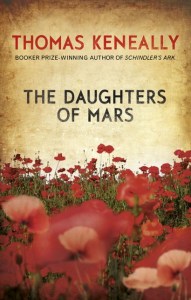
The Daughters of Mars by Thomas Keneally (4) is also set, at least partly, in Australia. It tells the story of two sisters who join the Australian Army Nursing Service during the First World War and serve on a hospital ship in the Dardanelles and on the Western Front. It’s a fascinating novel but was spoiled for me by the unconventional punctuation and the distance I felt from the two main characters.

Another book about nursing during the Great War is Testament of Youth by Vera Brittain (5). This is the only non-fiction book in my chain and is Brittain’s memoir covering the years 1900-1925 and describing her experiences as a VAD nurse during the First World War. I highly recommend reading this book if you haven’t already, but be warned that it’s completely heartbreaking in places!

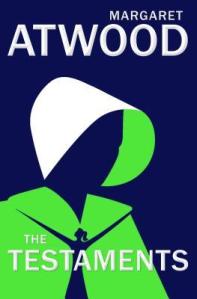
My final book has a shared word in the title. Margaret Atwood’s The Testaments (6) is a sequel to her earlier novel, The Handmaid’s Tale and is again set in Gilead, a dystopian community ruled by a patriarchal regime. The novel is made up of the ‘testaments’ of three characters, giving us three different perspectives of life in Gilead. I didn’t like it as much as the first book, but still found it interesting.

~

And that’s my chain for this month. My links have included: Collecting stories, the Isle of Skye, lighthouses, Australia in WWI, wartime nursing and the word ‘testament’. In October, we’ll be starting with Colm Tóibín’s Long Island.

The King’s Messenger by Susanna Kearsley

The role of Royal Messenger is one that still exists, but has changed and diminished over time due to modern technology and the declining power of the monarchy. In the 17th century, when Susanna Kearsley’s new novel is set, the job involved acting as a courier to convey messages or important documents around the country, as well as carrying out other diplomatic missions on behalf of the monarch, in this case King James VI and I.

The King’s Messenger opens in London in 1613, ten years after James united Scotland and England under one crown. His eldest son and heir, Henry, Prince of Wales, has died unexpectedly and rumours of poisoning have started to spread. Determined to find out who is responsible, the King summons one of his Messengers, Andrew Logan, and sends him north to Scotland with orders to arrest Sir David Moray, who had been a companion to the young prince. James believes that capturing Sir David is the key to finding out what really happened to his son and he hopes to make him confess to his involvement.

A neighbour of Logan’s, Laurence Westaway, is commissioned to travel with Logan as a scrivener, or scribe, tasked with writing down any information Moray gives them that can be used as evidence. Because Westaway is in poor health, his daughter Phoebe insists on accompanying them to Scotland and back. Unfortunately, Phoebe has always hated Andrew Logan and her loathing for him has intensified since he became embroiled in a confrontation with her lover, the courtier Valentine Fox. It’s going to be an interesting journey!

The novel is written from four different perspectives. Andrew Logan and Phoebe Westaway are two of them and it’s interesting to see how they view each other and how their feelings change as the journey progresses. Sir David provides a third perspective, offering an outsider’s view of the other members of the party, as well as giving us some flashbacks to his time in Prince Henry’s service. Finally, there are a few chapters focusing on Queen Anna, the Danish wife of King James, who also wants to know more about her son’s death. I felt that the Anna sections weren’t really needed and added very little to the novel, but the other shifting perspectives worked very well, changing from one to another at appropriate times to move the story forward.

A large portion of the book is set on the road, as Andrew, Sir David and the Westaways make their way back to London from Scotland. I found the route they take interesting because it’s not very direct, but of course there are no modern roads or infrastructure in the 17th century and they also need to find towns and castles where they can shelter for the night along the way. Andrew’s scarlet livery, which identifies him as a King’s Messenger, can be either a blessing or a danger, depending on the political allegiances of the people they meet. Something else which could put him in danger, considering the witch hunts sweeping across the country during that period, is his ability to glimpse the future. Susanna Kearsley’s novels often contain elements of the supernatural and I liked the way they were handled in this book; Andrew’s second sight doesn’t form a big part of the story but does lead to a wonderfully eerie scene as the party are crossing the Tarras Moss in the land of the Border Reivers.

Susanna Kearsley’s author’s note is almost as interesting as the book itself! I was impressed by the level of research she carried out, including touring the Scottish Borders and north of England to trace the route her fictional characters would take. She also describes the history of the Royal Messengers which led to the creation of her fictional hero Andrew Logan and explains which of the other people in the book were historical figures who really existed. Sir David Moray is one of these, although usually referred to as Murray (she has a reason for using the Moray spelling). Whether real or fictional, all of the characters in the novel come to life; I loved both Andrew and Sir David and although it took me longer to warm to Phoebe, she did win me over in the end!

I loved this book; it’s probably my favourite by Susanna Kearsley so far. It’s also coincidentally the second book I’ve read in the space of two months about Anne/Anna of Denmark (the other was The King’s Witches by Kate Foster).

Thanks to Simon & Schuster UK for providing a copy of this book for review via NetGalley.

Book 41/50 for the Historical Fiction Reading Challenge 2024

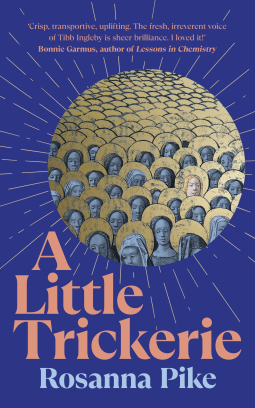
A Little Trickerie by Rosanna Pike

This was surprisingly good! A few pages in, I started to wonder if I’d made a mistake in choosing to read this book – the writing style was very unusual and I thought I was going to find it irritating – but once I settled into the story I fell in love with the narrator and was gripped all the way to the end.

The novel is set in the early Tudor period, during the reign of Henry VII, and begins with the death of Tibb Ingleby’s mother. Tibb has never known a home of her own; she and her mother have lived the life of vagabonds, moving from one place to another to escape the consequences of her mother’s con tricks or relationships with unsuitable men. Now, left alone in the world with her newborn baby sister to care for, Tibb sets off across the countryside with one aim in mind: to one day have her own roof over her head at last.

Tibb soon finds that making your own way in life as a young woman in 16th century England is not easy. She gets herself into trouble now and then and despite her wish to settle down in one place, she is forced to stay on the move. Along the way she meets a multitude of people including a troupe of travelling performers, a villainous farmer and even royalty. There’s also Ivo, a young man who, like herself, is an outcast who doesn’t feel he can conform to society’s expectations. She and Ivo become close friends and although most of the novel is narrated by Tibb herself, Ivo provides us with an occasional second perspective.

Tibb’s narrative style, as I’ve said, is unique and takes a while to get used to. She seems unaware of the correct words to describe things – a balding head becomes a ‘thinning-on-top-head’, being naked is ‘wearing a no-clothes outfit’, an empty room is a ‘sad nothing-in-it room’, all of which make sense but are not what other people would say. It fits with her portrayal as an illiterate, unsophisticated, naive young woman, but at the same time she’s certainly not stupid and I would have thought that with age and experience her language would have improved, yet she sounds the same at the end of the book as she does at the beginning. Still, the unusual narrative voice didn’t annoy me as much as I thought it would and I did love Tibb. One scene in the middle of the book even brought tears to my eyes, I was so emotionally invested in her story.

I had assumed Tibb was an entirely fictional character, so I was surprised to learn that she was inspired by a real-life woman known as the Holy Maid of Leominster who, like Tibb herself, engaged in fraud and ‘trickeries’ (although at least in Tibb’s case, she acted with the best of intentions). I really enjoyed this book and will look out for more by Rosanna Pike.

Thanks to Fig Tree for providing a copy of this book for review via NetGalley.

Book 40/50 for the Historical Fiction Reading Challenge 2024

The end of 20 Books of Summer 2024 – and the start of RIP XIX

I’ve taken part in Cathy’s 20 Books of Summer challenge every year since 2017, but have never managed to read all of the books on my list – until now. I’ve come very close once or twice, reading 18 or 19 of them, but usually I get distracted by other books and end up only reading 10 or 11. What did I do differently this year? I can think of three things: first, I only listed books I needed to read anyway – NetGalley review copies and books for various other reading challenges and events. I also took advantage of Cathy’s flexible rules and listed some alternatives in case any of the books on my main list didn’t appeal when the time came. Finally, I avoided including any very long, heavy books, which is a mistake I’ve made in the past.

Here’s what I read, with links to my reviews:

1. Three Act Tragedy by Agatha Christie (Read Christie 2024)
2. N or M? by Agatha Christie (Read Christie 2024)
3. Finn Family Moomintroll by Tove Jansson (Moomin Week)
4. Thomasina by Paul Gallico (Reading the Meow)
5. In the Upper Country by Kai Thomas (Walter Scott Prize project)
6. The Noh Mask Murder by Akimitsu Takagi
7. The Meiji Guillotine Murders by Futaro Yamada
8. The King’s Witches by Kate Foster
9. The Ballad of Jacquotte Delahaye by Briony Cameron
10. The Burial Plot by Elizabeth Macneal
11. The Cautious Traveller’s Guide to the Wastelands by Sarah Brooks
12. A Woman of Opinion by Sean Lusk
13. Babylonia by Costanza Casati
14. The King’s Mother by Annie Garthwaite
15. A Case of Mice and Murder by Sally Smith
16. The Hazelbourne Ladies Motorcycle and Flying Club by Helen Simonson
17. The Lost Queen by Carol McGrath (didn’t finish – still reading)
18. The Trouble with Mrs Montgomery Hurst by Katie Lumsden
19. The Briar Club by Kate Quinn
20. Cabaret Macabre by Tom Mead

Alternatives

I listed four of the shorter books remaining on my Classics Club list as alternatives:

1. The Black Lake by Hella S. Haasse
2. The Silver Branch by Rosemary Sutcliff (didn’t read)
3. The Elusive Pimpernel by Baroness Orczy
4. The End of the Affair by Graham Greene (didn’t read)

As you can see, I actually read 19 of the original 20 books on my list, plus 2 of the alternatives, for a total of 21. I also enjoyed most of these books, which is the most important thing!

Thanks to Cathy of 746Books for hosting.

~

Today is also the first day of another of my favourite reading challenges, RIP (Readers Imbibing Peril), which is back for its nineteenth year! This event, which used to be hosted by book blogs, seems to take place mainly on Instagram now (follow @perilreaders for more information); I’m not very active over there, but I still like to join in with RIP, even if it’s just in a casual, flexible way.

The idea is to read, watch or listen to anything that fits one of the following categories:

Mystery
Suspense
Thriller
Dark Fantasy
Gothic
Horror
Supernatural

After reading from my 20 Books of Summer list all summer, I don’t want to make another long list of RIP reads as I would prefer to be spontaneous and just read whatever I feel like reading. I’ve already started working through a collection of classic horror stories – Tales Accursed, edited by Richard Wells – and I have plenty of other suitable books on the TBR.

~

Did you take part in 20 Books of Summer and did you complete your list? And are you taking part in Readers Imbibing Peril XIX?

My Commonplace Book: August 2024

A selection of quotes and pictures to represent August’s reading:

commonplace book
noun
a book into which notable extracts from other works are copied for personal use.

~

It was the end of August – the time when owls hoot at night and flurries of bats swoop noiselessly over the garden. Moomin Wood was full of glow-worms, and the sea was disturbed. There was expectation and a certain sadness in the air, and the harvest moon came up huge and yellow. Moomintroll had always liked those last weeks of summer most, but he didn’t really know why.

Finn Family Moomintroll by Tove Jansson (1948)

~

Freedom of speech, in advance of experience, will lead you into saying some foolish things, while freedom of thought may run you into irreparable errors – of which the greatest is supposing that love is a matter for the scientists and doctors.

Miss Granby’s Secret: or the Bastard of Pinsk by Eleanor Farjeon (1941)

~

Sopwith Camel fighter plane

Sheltered in the old boys’ bonhomie of the Flying Corps, he had been slow to realize how much more character was worth than pedigree. But rubbing up against all sorts and depending on the man next to you, he had come to see that competence, decency, and grit were not the sole purview, or even the natural gifts, of the well-born.

The Hazelbourne Ladies Motorcycle and Flying Club by Helen Simonson (2024)

~

Now I am doing the thinking.

‘So are you saying that perhaps a home does not need a roof?’

‘Perhaps not, Tibb. And besides, home can be a person as much as a place.’

A Little Trickerie by Rosanna Pike (2024)

~

Freedom is never absolute, it seems, and therefore escape, despite what they tell you, yields no final destination.

In the Upper Country by Kai Thomas (2023)

~

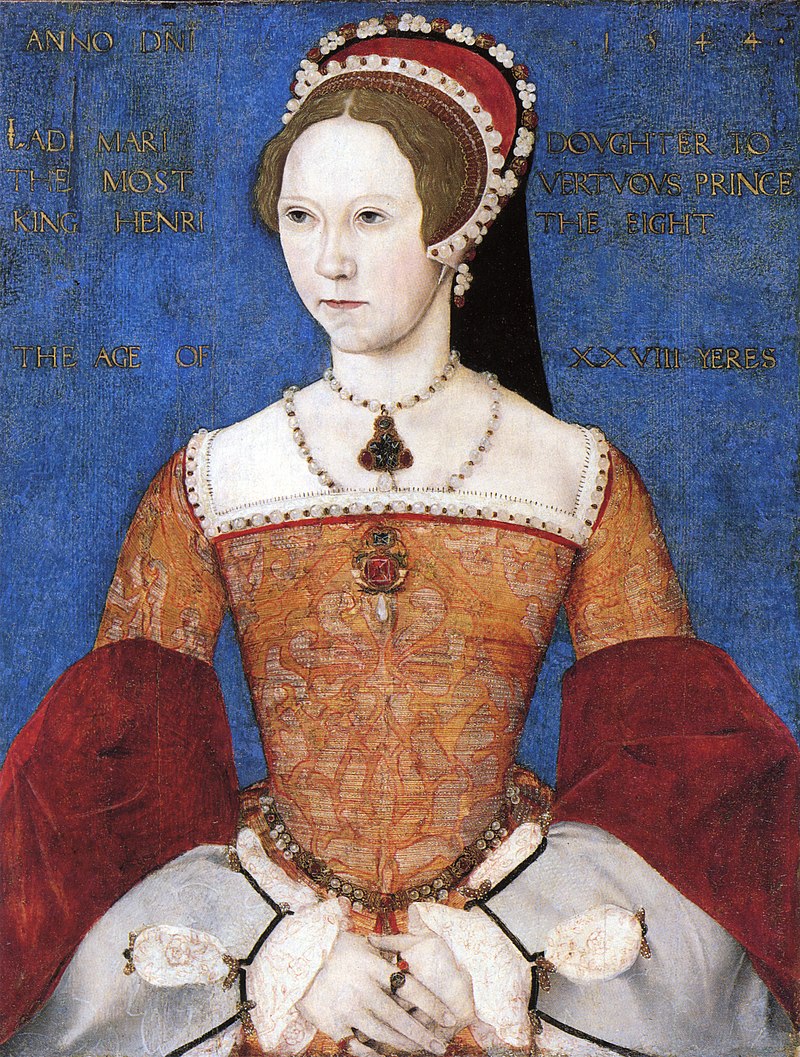
Queen Mary I

‘But you know everything,’ Mary countered.

‘Some knowledge is not mine to impart,’ he replied, and would say no more.

Mary I: Queen of Sorrows by Alison Weir (2024)

~

‘Some parts I still remember. Like the part about the candle flame that does not lose its brilliance till the moment it’s extinguished, and how, like that candle, we all carry flames of truth within us, and of justice, that should only be extinguished by our deaths. Yet, see how easily a candle is put out.’ She took the pewter snuffer in her hand and killed a flame. ‘And so it is with truth, and justice,’ Anna said. ‘Especially with justice.’

The King’s Messenger by Susanna Kearsley (2024)

~

“It’s human nature to overcomplicate what is fundamentally simple,” said Spector. “Magicians know that. We thrive on the knowledge. And so – in some instances – do killers.”

Cabaret Macabre by Tom Mead (2024)

~

It’s astonishing what the human heart will do to make allegiances. Loneliness is a kind of glue that can bind us to the most unlikely strangers.

The Golden Tresses of the Dead by Alan Bradley (2019)

~

Hera on an antique fresco from Pompeii

‘There are other ways to rule. Sometimes the true power is in the shadows. Someone who stays out of the light, and watches others shrivel and burn in its glare.’

Hera by Jennifer Saint (2024)

~

‘A panther isn’t the same as a monkey,’ Gerard said after a pause. ‘But is either one less than the other? A stupid question, you’ll say, and rightly so. The same applies to human beings. Being different – that’s normal. Everybody’s a little different from everybody else. I’m not the same as you. As for being less or more important on account of the colour of your skin or who your father is – that’s nonsense. Oeroeg is your friend, isn’t he? And if you can be friends with him, how he can he possibly be less than you or anybody else?’

The Black Lake by Hella S. Haasse (1948)

~

The joy of history is it’s everything that ever happened and everyone who has ever lived. Whatever your story is or was, it is worthy of being told.

Eighteen: A History of Britain in 18 Young Lives by Alice Loxton (2024)

~

Favourite books read in August:

The King’s Messenger and Cabaret Macabre

Authors read for the first time in August:

Rosanna Pike, Eleanor Farjeon, Kai Thomas, Alice Loxton, Tove Jansson

Countries visited in my August reading:

England, Canada, Scotland, Wales, Northern Ireland, Indonesia, Greece

~

Reading notes: August has been mainly devoted to completing my 20 Books of Summer list and also taking part in two reading events – Women in Translation Month and Moomin Week. It’s been a varied month, with a mixture of historical fiction, non-fiction, children’s fiction, mythology and crime! I’m also pleased that I could add Swedish and Dutch to my list of languages read in translation this year.

In September I’m looking forward to some suitably autumnal reading as this year’s R.I.P. challenge begins. I’ll post more about that soon, as well as a look back at my 20 Books of Summer reading.

How was your August? What are you planning to read in September?