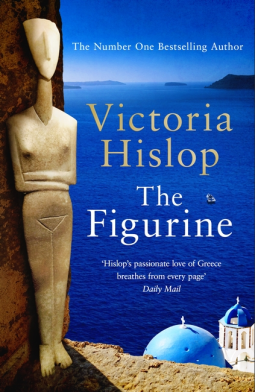
The Figurine by Victoria Hislop

‘Every object, whether it’s old, new, beautiful or even ugly, has a life. A starting point, a journey, a story, Whatever you want to call it. Some have places where they really belong, which is different from the location where they find themselves.’

In her new novel, The Figurine, Victoria Hislop tackles the subject of the theft and smuggling of art and antiquities, a problem that has existed for centuries and sadly is still making news headlines today. As Hislop explains in her foreword to the book, ‘the theft of cultural treasures and the falsification of provenance diminishes our understanding of civilisation’. The Figurine explores this topic through the eyes of Helena McCloud, a young woman with a Greek mother and Scottish father.

We first meet Helena in 1968 as an eight-year-old child arriving in Athens to visit her grandparents for the first time. Her mother was born and raised in Greece, but she doesn’t accompany Helena on this trip and appears to have been estranged from her family for many years, although at this point we don’t know why. Everything is new and strange to Helena, but during this visit – and more to follow over the next few summers – she begins to fall in love with Greece and to develop loving relationships with her grandmother and the housekeeper, Dina. Her grandfather, however, remains a cold, remote figure and her dislike of him grows as she discovers that he has connections with the military dictatorship currently in control of the country.

Helena’s summers in Greece come to an end in the 1970s due to political turmoil and by the time it’s safe to return, her grandparents are no longer alive. Heading to Athens to inspect the apartment she has inherited from them, she makes another shocking discovery about her grandfather, this time relating to his involvement in the looting of valuable historical artefacts. Helena’s own interest in antiquities has already led her to take part in an archaeological dig on an island in the Aegean Sea. Can she use her newly gained knowledge to make amends for what her grandfather has done?

This is the third Victoria Hislop novel I’ve read, after Those Who Are Loved, also set in Greece, and The Sunrise, set during the Turkish invasion of Cyprus, and although I didn’t enjoy it as much as those two books, it was still a fascinating story. As well as the exploration of cultural theft and its impact on world heritage, we also learn a lot about the political situation in Greece during the 1960s and 70s and of course, there are lots of beautiful descriptions of the country itself. While there are some horrible characters in the novel, Helena also makes several friends and I loved watching her bond with her grandparents’ servant, Dina – I enjoyed seeing them sneak out onto the streets of Athens in search of somewhere to view the 1969 moon landing, because her grandfather has cruelly removed the television to stop them from watching this historic event.

My main problem with this book was the length; I felt that there were lots of scenes that added very little to the overall story and could easily have been left out. I also found some parts of the plot predictable and others very unrealistic, particularly towards the end of the book where Helena and her friends decide to take matters into their own hands when it would surely have been much more sensible just to have gone to the police.

Although this isn’t a favourite Hislop novel, I do have another one, The Thread, on my shelf which I’m looking forward to reading.

Thanks to Headline for providing a copy of this book for review via NetGalley.

Historical Musings #83: Books to look out for in 2024

Now that 2023 is almost over, it’s time to look ahead to the historical fiction being published in 2024. I’ve listed below a selection of books that have caught my attention for one reason or another – some are review copies I’ve received, some are new books by authors I’ve previously enjoyed and others just sound interesting. 2024 looks like being a great year for historical fiction and I hope there’s something here that appeals to you.

Dates provided are for the UK and were correct at the time of posting.

January

The Beholders by Hester Musson (18th January 2024) – A debut Gothic thriller about secrets within the household of a politician and his wife, set in the 1870s and written from the perspective of their maid.

February

The Bone Hunters by Joanne Burn (8th February 2024) – I haven’t read either of Joanne Burn’s previous two novels but this new one, about the discovery of fossils in the cliffs of Lyme Regis, sounds appealing to me. I’ll be interested to see how it compares with Tracy Chevalier’s Remarkable Creatures, on the same subject.

The Fox Wife by Yangsze Choo (13th February 2024) – Choo’s novels usually combine history with elements of fantasy or magical realism and her new book, in which rumours of ‘fox gods’ surround the death of a young woman in 1908 Manchuria, sounds like it will do the same.

The Phoenix Crown by Kate Quinn and Janie Chang (15th February 2024) – I don’t often read novels that are collaborations between two authors, but I’ve enjoyed other books by Kate Quinn, although I haven’t read anything by Janie Chang yet. This one is about two women who are drawn into a mystery when a dealer in Chinese antiques disappears after the 1906 San Francisco earthquake.

Clairmont by Lesley McDowell (29th February 2024) – I’ve read other books about Lord Byron and Percy and Mary Shelley, but this one is written from the perspective of Claire Clairmont, Mary’s stepsister, which should be interesting.

A Court of Betrayal by Anne O’Brien (29th February 2024) – Moving on from her last two novels which were a fictional account of the Paston family based on the letters they left behind, O’Brien’s new novel has a completely different setting and tells the story of Johane de Geneville, an heiress of the Welsh Marches in the 14th century.
March

The Tower by Flora Carr (7th March 2024) – This is a novel about the imprisonment of Mary Queen of Scots at Lochleven Castle, told from the point of view of Mary and her maids. It’s Flora Carr’s debut novel, so I’ll be interested to see what I think.

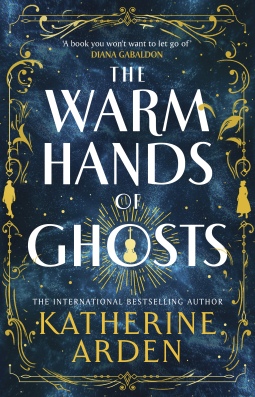
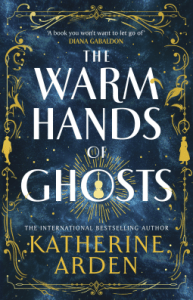
The Warm Hands of Ghosts by Katherine Arden (7th March 2024) – I loved Arden’s Winternight historical fantasy series set in medieval Russia, but this book, about a nurse investigating the disappearance of her brother in the trenches of the First World War, sounds very different.

The Other Gwyn Girl by Nicola Cornick (7th March 2024) – A dual timeline novel with the historical storyline set in 1671 and telling the story of Rose Gwyn, sister of the more famous Nell Gwyn, Charles II’s mistress.

The Book of Secrets by Anna Mazzola (21st March 2024) – I didn’t read Mazzola’s last book, but enjoyed her earlier ones. This new book is inspired by real events that took place in 17th century Italy.

April

The Household by Stacey Halls (11th April 2024) – A book inspired by the true story of Urania Cottage, a house for ‘fallen women’ co-founded by Charles Dickens. I enjoyed all of Stacey Halls’ previous three books so will definitely be reading this one.

A Plague of Serpents by KJ Maitland (25th April 2024) – This is going to be the last in the series of Daniel Pursglove mysteries set in Jacobean England. I’m hoping all my questions will be answered!
May

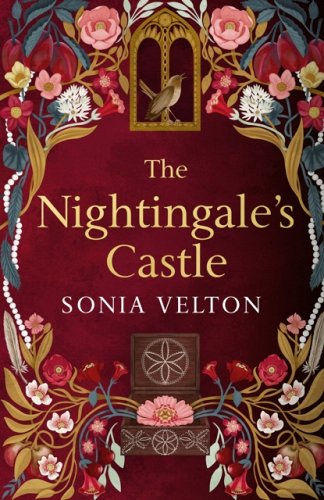
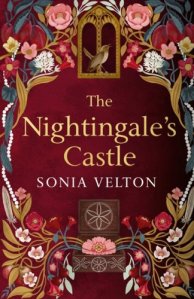
The Nightingale’s Castle by Sonia Velton (2nd May 2024) – This novel about the infamous Countess Erzsébet Báthory, an alleged 16th century serial killer, sounds fascinating and has a beautiful cover!

The Hazelbourne Ladies Motorcycle and Flying Club by Helen Simonson (7th May 2024) – It feels like a very long time since Helen Simonson’s last book – in fact, it has been eight years! Her new one is going to be about a woman who joins a ladies’ motorcycle club in post-WWI England.

The Puzzle Wood by Rosie Andrews (9th May 2024) – I had mixed feelings about Rosie Andrews’ first book, The Leviathan, but I like the sound of this one, in which a woman takes up a position as governess in disguise so she can investigate the death of her sister.

Mary I: Queen of Sorrows by Alison Weir (9th May 2024) – The final book in Weir’s Tudor Rose trilogy, following her novels on Elizabeth of York and Henry VIII. I haven’t read as much about Mary I as I have about Elizabeth I, so it should be interesting.

Long Island by Colm Tóibín (23rd May 2024) – The long-awaited sequel to Tóibín’s 2009 novel Brooklyn will pick up the story of Eilis Lacey twenty years after the previous book ended.

June

The Burial Plot by Elizabeth Macneal (6th June 2024) – Described as a thriller set in Victorian London, this is Macneal’s third novel and having enjoyed her previous two, I’m already looking forward to it.

July

A Woman of Opinion by Sean Lusk (4th July 2024) – Lady Mary Wortley Montagu, the 18th century writer, poet and medical pioneer, is the subject of Sean Lusk’s new novel, which sounds entirely different from last year’s The Second Sight of Zachary Cloudesley!

The Trouble with Mrs Montgomery Hurst by Katie Lumsden (18th July 2024) – Lumsden’s first book, The Secrets of Hartwood Hall, was a Gothic novel inspired by the Brontës, so her new book, in which a rich gentleman marries an impoverished widow, again sounds very different!

August

The King’s Messenger by Susanna Kearsley (1st August 2024) – Set in 1613, this book follows the story of Andrew Logan, messenger to King James I of England and VI of Scotland, who becomes caught up in rumours of poisoning following the death of the king’s eldest son.

The Briar Club by Kate Quinn (15th August 2024) – Kate Quinn’s second book of the year is a solo effort this time, about a group of women who hold weekly meetings in the attic of a Washington DC boarding house in the 1950s.

Unsinkable by Frances Quinn (15th August 2024) – I loved Frances Quinn’s last book, That Bonesetter Woman, so I’ll be looking out for Unsinkable which, as the title suggests, is going to be about the Titanic.

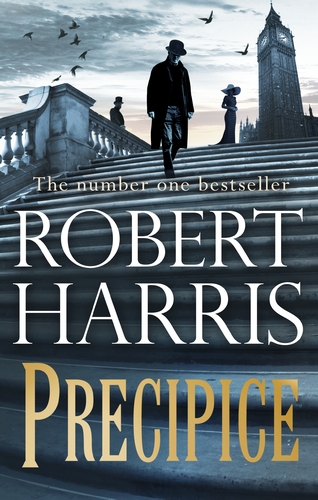
Precipice by Robert Harris (29th August 2024) – A new Robert Harris book is always something to look forward to. This one is set at the beginning of World War I and involves Prime Minister H.H. Asquith, his affair with Venetia Stanley, and some leaked secret documents.

September

The Royal Rebel by Elizabeth Chadwick (5th September 2024) – The first of two books telling the story of Jeanette of Kent (usually known as Joan of Kent), wife of Edward, the Black Prince and mother of Richard II. I have read about Joan before but I’m sure Chadwick’s version will add something new.

The Glassmaker by Tracy Chevalier (12th September 2024) – Chevalier’s first new novel in five years will begin in 15th century Venice and will follow a family of glassblowers down through the generations to the present day.

~

Are you interested in reading any of these books? What else have I missed?
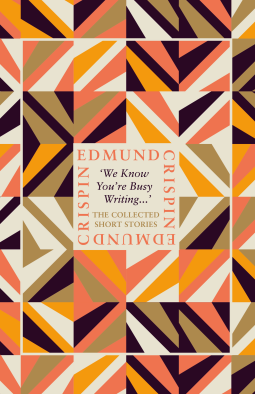
We Know You’re Busy Writing… by Edmund Crispin

I hadn’t read much of Edmund Crispin’s work – two novels and one or two short stories – so I jumped at the chance to read this new anthology from HarperCollins. It collects together in one volume all of Crispin’s forty-six published short stories, many of them featuring his series detective Gervase Fen. The entire contents of two previously published Crispin collections are included here – Beware of the Trains (1953) and Fen Country (1979) – as well as several standalones. It has taken me nearly two months to work my way through the whole book, a few stories at a time, as I think reading them all at once would have been too much!

Gervase Fen is a Professor of English Language and Literature at Oxford University and a friend of Detective Inspector Humbleby of Scotland Yard, whom he often assists in the solving of crimes. Most of the short stories that feature Fen are very short – just a few pages long – and begin with Humbleby or another friend describing an unsolved case, after which Fen is soon able to tell him the solution, sometimes without even leaving the room, sometimes by making a quick telephone call or consulting a reference book. I was reminded of Baroness Orczy’s Old Man in the Corner stories, where her detective solves mysteries from the comfort of a London tea shop. The stories are too short for any real character development and the focus is on the puzzling scenario and how Fen solves it. I think there were only one or two that I guessed correctly; the majority rely on noticing tiny clues and sometimes require some specialist knowledge, for example knowing how cameras work or how a foreign word is pronounced.

Overall, I enjoyed the non-Fen stories more. The title story, We Know You’re Busy Writing, But We Thought You Wouldn’t Mind If We Just Dropped in for a Minute, is the highlight. Written in the first person, it’s narrated by an author who is working on a new novel and desperately trying to meet his publisher’s deadline. Unfortunately, he is constantly being interrupted by the telephone and people at the door. When his latest visitors sit themselves down and show no sign of leaving, he is forced to take drastic action! This is a great story, written with a lot of humour and a dark conclusion. Child’s Play, another standout, is dark from the beginning. Judith has just started a new position as governess to four children, one of whom is an orphan and is bullied by the other three. The story becomes very disturbing when a murder takes place and it seems that one of the children may be responsible.

This collection closes with a Gervase Fen novella from 1948, The Hours of Darkness, which was unpublished until it appeared in a Bodies from the Library anthology in 2019. The novella is set at Christmas, which makes it perfect for this time of year! Although the story itself isn’t very festive, Fen walks around singing carols as he works, much to the irritation of Inspector Wyndham, whom Fen is helping to investigate a murder which takes place during a game of hide and seek at a Christmas Eve house party. I didn’t find this a particularly outstanding or original mystery, but it was very enjoyable and the longer length allowed more depth of plot and characters.

I think the best place to start with Crispin, based on what I’ve read so far, is his 1946 Fen novel The Moving Toyshop, but these short stories are very entertaining, although I recommend taking your time over them as the Fen ones do become quite repetitive. You should also be aware that justice isn’t always done and Fen is sometimes satisfied just to find the solution and allow the culprits to get away with their crimes. Still, this is a great collection and has reminded me that I really need to read more of Crispin’s novels.

Thanks to HarperCollins for providing a copy of this book for review via NetGalley.

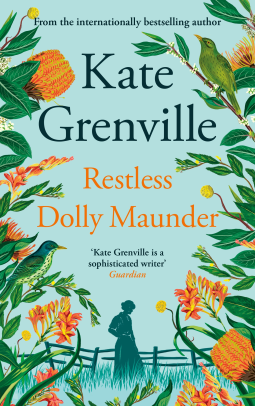
Restless Dolly Maunder by Kate Grenville

Kate Grenville is an author I’ve wanted to read for years but never have, so I’m pleased to have finally had an opportunity to try one of her books. Restless Dolly Maunder is a short novel, inspired by the life of Grenville’s own maternal grandmother, Sarah Catherine Maunder (known to everyone as Dolly).

Dolly is born on a sheep farm in Currabubula, New South Wales in 1881, the sixth of seven children. Her older brothers and sisters can barely read and write, attending school only when their parents can spare them, but by the time Dolly reaches school-age, attendance has become compulsory. Dolly is a bright, intelligent girl and decides that she wants to continue her education and become a teacher after leaving school. Unfortunately, it’s not her decision to make – her father’s permission is required and he refuses to give it, saying that “over my dead body” will a daughter of his go out to work.

As the years go by, Dolly’s siblings begin to marry and move away, while Dolly herself stays on the farm with her parents, eventually marrying Bert Russell, an old friend from school who comes to work for her father. When Dolly discovers that her mother has been keeping a terrible secret from her, she decides that it’s time she and Bert started a new life somewhere else. Aware that farming leaves them at the mercy of the weather, they agree to try something completely different – running a little grocery shop in Wahroonga. It proves to be a success, but Dolly is still not satisfied…in fact, it seems that she’s never going to be satisfied, with anything.

The rest of the novel follows Dolly, Bert and their three children as they move around from place to place, from one business venture to another. Although I did initially have a lot of sympathy for Dolly and understood her desire to make something meaningful of her life, having had her dreams of becoming a teacher destroyed by her father, as the book went on I began to dislike her more and more. It seemed that she was only ever thinking of herself, giving no consideration at all to the effect on her children of constantly being uprooted and disrupted. She was a cold, unloving mother and although she was aware of her faults, she made no attempt to change.

Despite the unlikeable protagonist – and Grenville acknowledges herself in her author’s note that her grandmother was a difficult woman to love – I did enjoy this book. It was interesting to get some insights into life in Australia in the late 19th and early 20th centuries. The family live through both World Wars and although the first leaves them largely untouched, by the time the second comes around Bert and Dolly have sons of fighting age, so are affected in a much more personal way. With this being my first experience of a Kate Grenville book, I didn’t know what to expect from her writing, but I found it very readable. She doesn’t use speech marks, which usually annoys me, but it didn’t bother me too much here, maybe because it’s not a particularly dialogue-heavy book. I’ll look forward to reading more of her work.

Thanks to Canongate for providing a copy of this book for review via NetGalley.

This is book 50/50 for the 2023 Historical Fiction Reading Challenge.

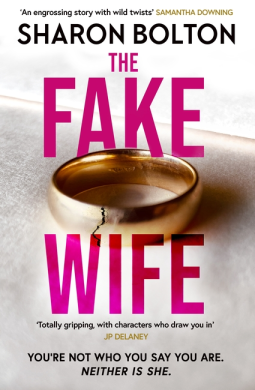
The Fake Wife by Sharon Bolton

I very rarely choose to pick up a contemporary crime novel, but I’m always happy to make an exception for Sharon Bolton. I think I’ve read all of her novels but one and have loved nearly all of them, so I had high hopes for her newest book, The Fake Wife, published last month.

The novel begins on a snowy evening just before Christmas when Olive Anderson, on her way home from a business trip, is staying at a hotel in Hexham, Northumberland. She has managed to get a table in the busy hotel restaurant, but when she enters the dining room she is surprised to see another woman sitting in her place. With no other tables available, Olive agrees to dine with the stranger, but is even more surprised when the woman tells the waiter that she and Olive are a married couple. For some reason even Olive can’t explain, she finds herself going along with the story and accompanying her ‘wife’ back to her hotel room after the meal.

PC Garry Mizon has twice tried and failed to qualify as a detective and has had to settle for a job with the traffic police, patrolling the roads at night and in bad weather. When politician Michael Anderson reports his wife, Olive, missing, Garry is ordered to accompany DS Lexy Thomas to interview him. Believing Olive may have had an accident on the country roads after leaving her hotel, Garry and Lexy head out into the snow to see if they can track her down. Olive, however, isn’t the first woman connected with Michael Anderson who has gone missing and to get to the truth behind her disappearance, Garry and Lexy will need to delve into the politician’s past and the story of his first wife, Eloise.

When I first started to read The Fake Wife, I wasn’t at all sure that I was going to like this particular Bolton novel. Those opening scenes in the hotel seemed ridiculously contrived – Olive’s reaction to having a strange woman stealing her table then pretending to be her wife certainly wasn’t the way I would have reacted! – and as I read on, other parts of the plot felt very implausible as well. It was also clear from early on that there was going to be a lot more sexual content in this book than you normally get from Bolton, something which I don’t really enjoy. Somewhere after the first few chapters, however, I became immersed in the story and then it didn’t really matter how far-fetched the beginning had been. I’m glad I didn’t abandon it, because otherwise I would have missed out on all the twists and turns of the plot as the novel headed towards its conclusion – and I wouldn’t have got to know Garry Mizon.

Garry is a wonderfully endearing character, one of my favourites in all of Sharon Bolton’s books. He’s one of those people who always try their best, yet nothing ever seems to go right for them, as we see at the beginning of the book when he makes a catastrophic and embarrassing mistake during a raid. Having proved yet again his unsuitableness for detective work, he is only asked to drive Lexy to the Andersons’ because nobody else is available, but as the investigation begins to unfold, we quickly discover that he is much more intelligent and resourceful than his superiors think he is – as well as being a genuinely nice person. He and Lexy make a great team and I would love to meet them again in a future book, although I suspect this is probably just going to be a standalone.

This book isn’t a favourite by Bolton, then, but the characters made it worthwhile. It’s also the perfect novel to read at this time of year, as so much of it is set outdoors in the snow. I’ll look forward to her next book, but meanwhile I really need to find time to go back and read Blood Harvest, which I think is the only one I still haven’t read!

Thanks to Orion for providing a copy of this book for review via NetGalley.

A Footman for the Peacock by Rachel Ferguson

This month, Liz at Adventures in Reading, Running and Working from Home is hosting another Dean Street Press December. I hope I’ll manage to read more than one book for this, but I decided to start with one that was sent to me for review by Dean Street Press back in 2016. I do feel guilty about not reading it sooner, but had been put off by some mixed reviews, as well as that ongoing problem shared by all readers – too many books and too little time!

A Footman for the Peacock (first published in 1940) is a strange novel, nothing at all like the only other Rachel Ferguson book I’ve read, Alas, Poor Lady. It’s going to be a difficult book to describe, but I’ll do my best! On the surface, it’s the story of the Roundelay family who live at Delaye, a large country house in the fictional English county of Normanshire. In 1939, when the novel begins, the household consists of Sir Edmund, the head of the family, (who isn’t quite sure why he has been knighted – maybe it was a mistake), his wife Lady Evelyn and their two daughters, practical, down-to-earth Margaret and the more sensitive Angela. There are also three elderly aunts, two of whom haven’t spoken to each other for many years and go to great lengths to continue their silent feud, a cousin and an assortment of servants, including ninety-year-old Nursie, who is suffering from dementia.

Like many aristocratic families in the years between the wars, the Roundelays are finding that money is becoming a problem and the upkeep of such a large estate is much more difficult than it used to be. The house is falling into disrepair, they have no car and Lady Evelyn does the food shopping herself by bus. Despite this, the Roundelays still have the views and attitudes of their class and when it is eventually announced that Britain is at war with Germany, they display a shocking lack of interest in how it will affect anyone other than themselves.

The whole of the first half of the book is devoted to introducing the various members of the household, with some amusing anecdotes about their lives, and describing the history of the house and its surrounding towns and villages. Nothing much actually happens at all until the war breaks out – and even then, there’s not really any plot to speak of, just a series of episodes in which the family prepare their gas masks, cover their doors and windows for the blackout, and use any excuse they can think of to refuse to take in even a single evacuee. Their total selfishness and lack of compassion for those less privileged than themselves makes uncomfortable reading, but Ferguson doesn’t really make it clear whether she expects the reader to feel angry with them, to have sympathy for them or just to experience a feeling of recognition that, unfortunately, the way the Roundelays react to the evacuee situation is probably the way many people reacted and still would today.

Also in the second half of the book, the peacock of the title is brought to the forefront of the story – and yes, it’s a real peacock, who wanders the grounds of Delaye, bad-tempered, noisy and prone to attack anyone other than Sue Privett, the maid. There is an unusual connection between the peacock and the words inscribed on the window of a disused bedroom: “Heryn I dye. Thomas Picocke 1792”. Thomas Picocke, we soon discover, was a ‘running footman’ at Delaye in the 18th century – a servant who would literally run ahead of his employer’s carriage to smooth their journey and prepare for their arrival at their destination. Not a nice job and Picocke’s story, when it begins to unfold, is quite sad, as well as merging with the story of the Delaye peacock in a bizarre and unexpected way.

There are lots of great ideas in this book, then, but the lack of any overarching plot means the separate parts of the novel don’t work together as well as they should. It feels like a rambling, directionless mess, but that doesn’t mean I didn’t enjoy it at all. Ferguson’s portrayal of an upper-class family’s attitude to war is fascinating (and apparently caused some controversy when the book was first published), the eccentric characters are entertaining to read about, and I was intrigued by the little touches of the supernatural in the peacock storyline. I would be happy to try the other two Rachel Ferguson books currently available from Dean Street Press, Evenfield and A Harp in Lowndes Square, but maybe not immediately!

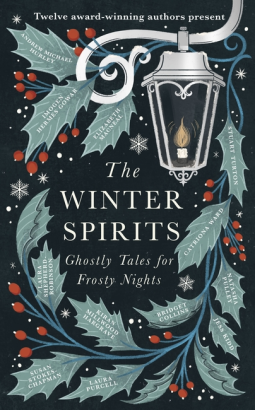
The Winter Spirits: Ghostly Tales for Frosty Nights

The Winter Spirits: Ghostly Tales for Frosty Nights is a collection of twelve new ghost stories written by popular authors of historical and Gothic fiction, all with a Christmas or Advent theme. It’s a follow-up to The Haunting Season, which I haven’t read but which includes eight of the same authors. This is the perfect time of year for ghost stories, so maybe I’ll look for the previous book next winter.

Back to The Winter Spirits and most of the stories are set in the 19th or early 20th centuries, giving them a traditional feel. More variety would have been nice – not just in the time periods, but also in the geographical settings, as the majority take place in Britain, with one or two in America or elsewhere in Europe – but otherwise I really enjoyed this collection. I’ve previously read full-length novels by most of the featured authors, but three of them were new to me: Andrew Michael Hurley, Catriona Ward and Susan Stokes-Chapman. I felt that Hurley’s The Old Play and Stokes-Chapman’s Widow’s Walk were two of the weaker stories, but looking at other reviews, some readers have singled them out as favourites, so I think it’s just a case of different stories appealing to different people! Ward’s contribution, Jenkin, was completely bizarre but added some diversity as it felt quite unlike any of the others.

The biggest surprise, for me, was Natasha Pulley’s The Salt Miracles; I really didn’t get on with her writing style in her novel The Bedlam Stacks, so I wasn’t expecting too much from this tale of disappearing pilgrims on a remote Scottish island (based on St Kilda). However, I ended up loving it – it’s such an unusual and chilling story! Inferno by Laura Shepherd-Robinson, one of my current favourite historical fiction authors, is another I particularly enjoyed – a wonderfully eerie story set in 18th century Italy, where a man is forced to confront his sins. Even better than both of these is Stuart Turton’s creepy and imaginative The Master of the House, in which a young boy who is being neglected by his father makes a deal with the devil. This one feels almost like a very dark fairytale and is one of the highlights of the book.

Of the twelve authors, Laura Purcell is probably the most well established as a writer of horror fiction and she doesn’t disappoint here with Carol of the Bells and Chains, in which a governess trying to deal with two unruly children tells them the story of the Krampus, with unintended consequences. Imogen Hermes Gowar’s A Double Thread, where a woman gets her comeuppance after badly treating her hardworking seamstress, is another I really enjoyed – it made me long for another novel by Gowar, as it’s been a few years since The Mermaid and Mrs Hancock!

The remaining stories are by Elizabeth Macneal, Bridget Collins, Jess Kidd and Kiran Millwood Hargrave. With a range of different styles and subjects, unless you just don’t like ghost stories I think this collection should contain something to please almost every reader.

Thanks to Sphere for providing a copy of this book for review via NetGalley.