A Marriage of Fortune by Anne O’Brien

This sequel to The Royal Game continues the story of the Paston family. The Pastons were an influential Norfolk family during the 15th century and left behind a collection of private correspondence, known as the Paston Letters, which are a valuable source of information on life in England at this time. In this novel and her previous one, Anne O’Brien brings the story of the Pastons to life, using their letters to provide the outline of the plot. You could read this book as a standalone if you wanted to, but I would recommend reading both in order if you can.

A Marriage of Fortune is again narrated by several of the Paston women. First there’s Margaret Mautby Paston, now a widow with seven children. Her eldest son, Sir John, is now head of the family following the death of his father, but Margaret still takes an active part in managing the household, arranging the marriages of her younger children and continuing the ongoing feud against the Duke of Norfolk over the ownership of Caister Castle. Margaret’s priority is seeing that the Pastons continue to rise through the ranks of society, so she is furious when her eldest daughter Margery announces that she is in love with the family bailiff, Richard Calle. She refuses to allow a marriage between the two, but is unprepared for the lengths to which Margery is prepared to go.

The relationship between Margaret and Margery is very sad to read about. Margery is another of our narrators, which means we get to know exactly how she feels about her mother’s refusal to accept her love for Richard and the family estrangement that occurs as a result. Margaret believes that a daughter’s first duty should be to her parents and that Margery has no right to consider her own happiness, but there’s always a sense that she might come to regret taking this stance and we are kept wondering whether mother and daughter will be reconciled in the end.

We also hear from Margaret’s sister-in-law, Elizabeth Paston Poynings, whose husband has been killed fighting on the Yorkist side at the Second Battle of St Alban’s, leaving her a widow with a young son. Like Margaret, Elizabeth has found herself facing a struggle to hold on to her late husband’s estates, which are being claimed by the powerful Percy family. A fourth narrator is Anne Haute, cousin of Elizabeth Woodville, Edward IV’s queen. Anne is betrothed to Margaret’s son, Sir John Paston, but with the rapidly changing political situation in England – Edward IV on the throne one minute, Henry VI the next – it seems that Sir John is reluctant to either make the marriage official or release her from it. I had a lot of sympathy for poor Anne when she begins to discover that she’s wasted years of her life on a man who clearly doesn’t really love her.

I enjoyed A Marriage of Fortune; this is one of my favourite periods to read about, but I still haven’t read the original Paston Letters or Helen Castor’s non-fiction account of them, Blood and Roses, despite having had the latter on my TBR pile for several years now. This was maybe a good thing as far as this novel was concerned, as it meant that although I was familiar with the historical background – the kings and queens, the battles and rebellions – I didn’t know the personal stories of the individual Paston family members, so I never knew what was going to happen to them next. However, I do think this novel, like the first one, was slightly too long, with a lot of information packed into it. It may have been better to have focused on fewer characters; Elizabeth Poynings’ story, in particular, felt very separate from the others and could possibly have been left out.

I’m not sure whether there will be a third book on the Pastons or whether Anne O’Brien will be moving on to something else now. Either way, she always chooses interesting historical women to write about so I know it will be worth looking forward to.

Thanks to Orion for providing a copy of this book for review via NetGalley.
This is book 2/50 read for the 2023 Historical Fiction Reading Challenge.
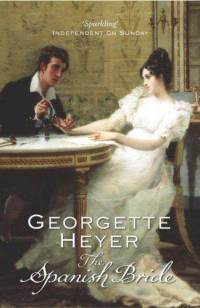
The Mysterious Case of the Alperton Angels by Janice Hallett

Imagine you find a box of documents that make up the research material for a true crime book. After reading them, you see that the book will shed new light on the eighteen-year-old case of the Alperton Angels – but what will you do next? Destroy the documents? Or hand them over to the police? This is the premise of Janice Hallett’s new novel, The Mysterious Case of the Alperton Angels. It’s fascinating, but Hallett has a style all of her own which can take a while to get used to. I knew what to expect as I loved her previous novel, The Twyford Code – one of my favourite books of 2022 – and I think I enjoyed this one even more.

The case of the Alperton Angels involved a cult led by a man who called himself the Angel Gabriel, two vulnerable teenagers and a baby they believed to be the Antichrist. When true crime writer Amanda Bailey is commissioned to write a book for a new series re-assessing historic crimes, she decides to write about the Alperton Angels from the perspective of the baby, who is now about to turn eighteen. The only problem is, she has no idea where the baby is – or even who they are. Even worse, she discovers that one of her rivals, Oliver Menzies, is working on the same book from the same angle. Who will find the baby first and uncover the truth behind the Alperton Angels?

The whole novel is presented as Amanda’s collection of research material: emails, letters, WhatsApp messages, and even excerpts from books and film scripts. Where she has met and interviewed people involved in the case, these conversations are transcribed by her assistant Ellie, who adds her own amusing observations and asides. This modern, multimedia style of storytelling is not something that would usually sound appealing to me, but in Janice Hallett’s hands I love it. And actually, when I think about it, it’s really just an updated form of the classic epistolary novels I’ve always enjoyed, so there’s no reason why I shouldn’t like it!

Despite the fragmentary style, I could still get a feel for the personalities of the main characters – Amanda persistent and tenacious, Oliver gullible and easily led, and Ellie witty and down to earth – but there’s also a sense that there’s a lot we’re not being told. How much can you trust what someone says in an email or in an interview where they know they’re being recorded? Similarly, the facts behind the case of the Alperton Angels are unravelled very slowly, one little piece of information at a time, and with many of the suspects and witnesses following their own agenda, we don’t even know if what we are reading is true or will be proved false later in the book. Things do eventually start to come together and make sense – and if you continue to the end, you’ll be rewarded with some great twists!

I found The Mysterious Case of the Alperton Angels completely gripping and difficult to put down, particularly as there are no traditional chapter breaks so no logical places to stop. Now I’m looking forward to reading Janice Hallett’s first novel, The Appeal.

Thanks to Viper for providing a copy of this book for review via NetGalley.

Cards on the Table by Agatha Christie

A new year means the start of a new Agatha Christie challenge! Read Christie 2023 is hosted by the official Agatha Christie site and this year the focus is on methods and motives. The theme for January is jealousy and the chosen book is Sad Cypress. However, I read that one quite recently so I’ve gone with one of the alternative suggestions for this month, Cards on the Table.

Published in 1936, this is a Poirot novel, but it also features three of Christie’s other recurring characters, all of whom work together to solve the mystery. They are Superintendent Battle, the Scotland Yard detective; former Army officer and intelligence agent, Colonel Race; and Ariadne Oliver, the famous crime author. All three, along with Poirot, are invited to a dinner party hosted by Mr Shaitana, a wealthy man known as a collector of rare objects. He tells Poirot that he will also be inviting a collection of criminals – four people he believes have committed murder but never been caught.

During the party, the eight guests divide into two groups and sit down to play bridge. Several hours later, Mr Shaitana, who wasn’t participating, is found dead in his chair by the fire – stabbed with a small dagger by one of his guests while the others were engrossed in their game. The four sleuths can obviously be ruled out, but any one of the other four could be the murderer. To get to the truth, Poirot and his friends must investigate the background of each suspect to see whether Shaitana was correct and each of them had already killed before.

Cards on the Table begins with a foreword in which Christie explains that unlike most crime novels where the least likely suspect is usually the culprit, this book has four suspects who are all equally likely. They have all (allegedly) committed murder in the past, so all have a motive – fear that Shaitana will expose their previous crimes to the other guests. There’s Dr Roberts, who may or may not have been responsible for the death of at least one of his patients; Major Despard, whose expedition to the Amazon is shrouded in mystery; young Anne Meredith, who tries to cover up her reasons for leaving a previous job; and Mrs Lorrimer, an expert bridge player whose secrets prove particularly difficult to unearth. I suspected all of them at various points, but every time I thought I’d worked it out, Christie threw another twist into the story and I had to think again!

I loved the idea of having four different detectives working together in the same novel (it’s a shame Miss Marple and Tommy and Tuppence hadn’t been invited to the party too!) and each of them has a chance to contribute to the solving of the mystery. Colonel Race has a disappointingly small part, but we see a lot of Battle and Mrs Oliver – who is often described as a self-parody of Christie herself and provides an opportunity to comment on the writing of detective novels. Of course, it’s Poirot who correctly identifies the murderer in the end!

I enjoyed this book, but I think I would have enjoyed it even more if I’d had more knowledge of bridge, which is a game I don’t play and don’t really understand. Part of Poirot’s investigation revolves around the score cards and an analysis of each suspect’s playing style, so this meant very little to me. Luckily, though, it’s not completely essential to be able to follow all of this and there are other clues to piece together as well.

February’s Read Christie theme is ‘a blunt object’ and the group read will be Partners in Crime, which again is a book I’ve already read. I’ll wait until they reveal the alternative choices for the month and see if any appeal to me.

Historical Musings #77: My year in historical fiction – 2022

Welcome to my monthly post on all things historical fiction. For my first Musings post of the year, I am looking back at the historical fiction I read in 2022 and have put together my usual selection of charts and lists! I have kept most of the same categories I’ve used for the previous six years so that it should be easy to make comparisons and to see if there have been any interesting changes in my reading patterns and choices (here are my posts for 2021, 2020, 2019, 2018, 2017 and 2016).

Before I begin, just a reminder that I do actually read other genres but haven’t included those books in these stats!

~

Time periods read about in 2022:

No big changes here – the 19th and 20th centuries are nearly always the most popular settings for my historical reading and the 16th, 17th and 18th centuries usually do well too. Earlier time periods never feature as strongly, but I was pleased to find two books set in the Roman period that I enjoyed last year (The Wolf Den by Elodie Harper and The Eagle of the Ninth by Rosemary Sutcliff).

~

43% of the historical fiction authors I read in 2022 were new to me. This is more than the last few years (39% in 2021 and 32% in 2020) and I think that’s a good balance of new authors and old favourites.

~

I read 3 historical novels in translationThe Reindeer Hunters by Lars Mytting (Norwegian, transl. Deborah Dawkin), Ashes in the Snow by Oriana Rammuno (Italian, transl. Katherine Gregor) and Nights of Plague by Orhan Pamuk (Turkish, transl. Ekin Oklap). I must try to do better in 2023!

~

Sources of historical fiction novels read in 2022:

NetGalley – 41
Books from TBR – 15
Other review copies – 7

As I mentioned in my 2023 Reading Resolutions post, I have been making an effort to get up to date with my NetGalley shelf and I expect to be requesting and reading fewer NetGalley books this year. This will allow me to get on with reading books from my own TBR, including the older books that tend to be the ones I enjoy most. Which brings me to the next category…

~

Publication dates of books read in 2022:

Following on from my comments on NetGalley above, you can see in this chart that my 2022 historical reading was dominated by newly published books. I only read four books published in the 20th century, but I expect these figures to look quite different in next year’s charts as I focus on picking up more books from my own shelves.

The oldest historical fiction novel I read in 2022 was Cup of Gold by John Steinbeck, published in 1929. It tells the story of the Welsh pirate, Henry Morgan.

~

9% of my historical reads in 2022 were historical mysteries.

This is about the same as in previous years. Here are three I enjoyed reading in 2022:

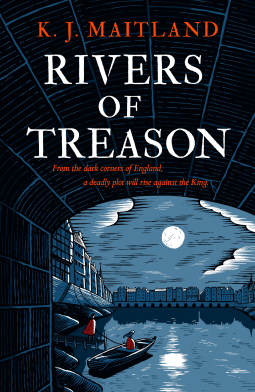
Traitor in the Ice by KJ Maitland
Death and the Conjuror by Tom Mead
The Blood Flower by Alex Reeve.

~

I read historical fiction set in 17 different countries in 2022:

As you can see, I still read far more historical fiction set in England than anywhere else, which is mainly a reflection of the books that are being published and coming to my attention rather than a deliberate choice of mine. I’m happy with the range of other countries I read about in 2022, which is more than the previous year – and I’m almost certain that Fortune by Amanda Smyth is the first book I’ve ever read set in Trinidad.

In addition, I read a book set almost entirely at sea (Blue Water by Leonora Nattrass) and one on a fictional Mediterranean island (Nights of Plague by Orhan Pamuk).

~

Four historical men I read about in 2022:

Edward Whalley (Act of Oblivion by Robert Harris)
Varian Fry (The Flight Portfolio by Julie Orringer)
Mahmood Mattan (The Fortune Men by Nadifa Mohamed)
Giorgio Barbarelli (The Colour Storm by Damian Dibben)

Four historical women I read about in 2022:

Alice Samuel (The Bewitching by Jill Dawson)
Joan of Arc (Joan by Katherine J Chen)
Bridget Cromwell (The Rebel Daughter by Miranda Malins)
Lyudmila Pavlichenko (The Diamond Eye by Kate Quinn)

~

What about you? Did you read any good historical fiction last year? Have you read any of the books or authors I’ve mentioned here and have you noticed any patterns or trends in your own reading?

The Orange Girl by Jostein Gaarder (tr. James Anderson) – #NordicFINDS23

What is this great fairytale we live in and which each of us is only permitted to experience for such a short time? Maybe the space telescope will help us to understand more of the nature of this fairytale one day. Perhaps out there, behind the galaxies, lies the answer to what a human being is.

It’s been years since I last read anything by Jostein Gaarder! I loved Sophie’s World and The Solitaire Mystery, which I read around the time they were published in English in the mid-1990s, but although I read a few more of his books after that I found them disappointing in comparison and didn’t explore any of his later work. This month, Annabel is hosting her second Nordic FINDS event, celebrating literature from Finland, Iceland, Norway, Denmark and Sweden, and I thought it would be a good opportunity to try one of the Gaarder novels I never got round to reading.

First published in Norwegian in 2003 and translated into English by James Anderson the following year, The Orange Girl is narrated by Georg Røed, a fifteen-year-old boy whose father, Jan Olav, died eleven years earlier. Georg’s mother has married again and had another child and Georg gets on well enough with both, but he has never stopped wondering about the father he can barely remember. One day, Georg’s grandmother finds a letter written by Jan Olav before his death and addressed to Georg, intended for his son to read when he was old enough to understand it. The Orange Girl includes Jan Olav’s letter in full, interspersed with Georg’s reaction to it and the lessons he learns from it.

In the letter, Jan Olav tells the story of a young woman he meets in Oslo in the 1970s. He comes to think of her as ‘the Orange Girl’ because when he sees her for the first time on a tram, she is wearing an orange dress and carrying a large bag of oranges. When the tram stops, she disappears, leaving Jan Olav desperate to find her again. As the weeks and months go by, he becomes obsessed with tracking down the mysterious Orange Girl and discovering her true identity. Who is she? Why did she need so many oranges? And why is it important for Georg to hear her story so many years later?

On the surface, The Orange Girl is a quick, easy read. Being narrated by a teenage boy, it’s written in simple language (Georg actually feels more like a ten or eleven-year-old than a fifteen-year-old), and like many of Gaarder’s novels, it would be perfect for younger readers. The story of the Orange Girl is entertaining and amusing – particularly when Jan Olav creates a series of imaginary scenarios to explain the huge bag of oranges! I would have liked to have been given a stronger sense of place as Jan Olav follows the girl from Oslo to Seville and back again, but it wasn’t that sort of book; it’s concerned mainly with plot and ideas rather than setting.

However, anyone who has read any of Gaarder’s other books will know that they always contain a philosophical element, and this one is no different. Georg and his father share an interest in the Hubble Space Telescope, which leads to a lot of discussion of the expanding universe and the place of human beings within it. The book also raises the question of whether, if you knew before you were born that you would die early and have all your happiness taken away, would you still choose to be born at all? These are clearly the things Gaarder really wanted to write about here, and the Orange Girl story is just a way of illustrating these philosophical points.

I haven’t been left wanting to immediately search out the rest of Gaarder’s novels, but I did find this one quite enjoyable and am glad I picked it up for Nordic FINDS.

Wild Strawberries by Angela Thirkell

Wild Strawberries is the second book in Angela Thirkell’s Barsetshire series and the book chosen for me in the last Classics Club Spin. I had mixed feelings about the first book, High Rising, which I read nearly two years ago, but still wanted to try this one as I knew it was about a different set of characters and I thought I might get on better with it.

Published in 1934, this book introduces us to the Leslie family who live at Rushwater, their estate in West Barsetshire. The family consists of Henry Leslie and his absentminded wife, Lady Emily, their two sons John and David, and their daughter Agnes, who is married to Robert Graham and has three young children. There was also another son, the eldest, who died in the Great War, and his sixteen-year-old son Martin is now the heir to Rushwater and lives with his grandparents. As the novel opens, Robert Graham has gone to South America on business so Agnes and the children are spending the summer with the Leslies and so is a niece of Robert’s, Mary Preston.

This probably all sounds straightforward enough to you, but for some reason it took me ages to remember who was who and I wished I had drawn a family tree at the beginning! Anyway, once I started to settle into the story and get to know the characters, I found it quite enjoyable. The plot mainly revolves around Mary Preston and the question of which of the Leslie men she’ll marry – David or John. David, the younger brother, is charming but selfish and thoughtless (he promises to bring Mary the ‘wild strawberries’ of the title, then forgets them), while John is quiet, kind and considerate. I knew which of them I wanted her to choose but Thirkell keeps us in suspense until the end of the book!

There’s also a subplot involving a French family, the Boulles, who move into the vicarage for the summer. Keen for Martin to improve his French, the Leslies arrange for him to study with the Boulles’ children, but instead he becomes involved in a plot to restore the French monarchy. Meanwhile, the lovely but irritating Agnes spends the entire book fussing over her children, and Mr Holt, an acquaintance of Lady Emily’s who talks about nothing but gardens and his titled friends, keeps imposing himself on the family, oblivious to the fact that nobody wants him there.

I enjoyed this book once I got into it; although it doesn’t have much more substance than High Rising, I found it funnier and can see now why people praise Thirkell for her humour and wit. There are also touches of poignancy when the Leslies remember their lost son, killed in the war, and when John, who is a widower, grieves for Gay, his late wife. Some of the characters, such as Mr Holt and the Boulles, are clearly there for comedy purposes, but the family themselves, annoying as some of them were, felt realistic to me. I liked John and Martin, while I found Mary’s infatuation with David, who treats her carelessly, frustrating but all too believable. I should mention, though, that there are a few instances of racism, mainly in the first half of the book, that even though I’m used to it in books of this era, I found more jarring than I normally would.

I still haven’t been completely won over by Angela Thirkell but I liked this better than the first book and will probably continue with the series at some point. However, the third book is about Tony, the teenage boy from High Rising whom I found almost unbearable, so I don’t know what I’ll think of that one!

This is book 35/50 read from my second Classics Club list.

The Giant, O’Brien by Hilary Mantel

Having finished Hilary Mantel’s Thomas Cromwell trilogy last year, I knew I wanted to read more of her books. A Place of Greater Safety, her novel about the French Revolution, has always sounded appealing to me but the length is off-putting, so I decided to try a shorter one first.

The Giant, O’Brien, published in 1998, is based on the true story of the 18th century Irish giant, Charles Byrne. Also known as Charles O’Brien and claiming descent from the High Kings, but usually referred to by Mantel as simply ‘the Giant’, Byrne and his friends leave Ireland in 1782, fleeing ‘cyclical deprivation, linguistic oppression and cultural decline.’ The Giant has previously been able to make a living by entertaining his neighbours with stories and songs but, sensing that things are changing, he knows he needs to find a new way to earn money. The solution seems obvious, so after arriving in London with his entourage, the Giant appoints the unscrupulous Joe Vance as his agent and agrees to exhibit himself as a freak, to be stared at, pointed at, poked and prodded, in return for money.

The story of another man unfolds in parallel with the Giant’s. His name is John Hunter, a Scottish surgeon and anatomist – like Charles Byrne, a real historical figure. Mantel describes Hunter’s early years in Long Calderwood and how he came to be in London, first as an assistant to his brother William, another famous anatomist, and then on his own, conducting autopsies in the name of scientific research. Before the Anatomy Act of 1832, it was very difficult to obtain bodies for medical study in the UK, a problem which led to body snatching and the illegal digging up of graves. In one fascinating, if slightly gruesome scene, Hunter lectures a group of newly recruited body snatchers on the best ways to get hold of fresh corpses without being detected. Naturally, the bodies of most interest to Hunter are those that are unusual in some way – so when he hears news of the Giant currently being exhibited in London, he decides to make him an offer, despite the fact that the Giant is not yet dead.

Mantel portrays the Giant as a gentle, intelligent man with a natural gift for telling stories and a seemingly endless knowledge of myth, folklore and fairy tales. This, as much as his height, makes him stand out from his friends. While the others succumb to London’s temptations – alcohol, women and gambling – the Giant saves his money in the hope of one day rebuilding Mulroney’s tavern, now a ruin but once the place where ‘Courts of Poetry’ were held and he was taught the art of storytelling. John Hunter, in contrast, is much less likeable; if the Giant represents tradition and a way of life that is about to be lost forever, Hunter represents progress and advancement and is portrayed as clever, ambitious and lacking in empathy.

In her author’s note at the end of the book, Mantel explains which parts of the story are based on fact and which are purely fictional. There’s more factual information available on John Hunter than there is on the life of Charles Byrne, but what we do know about Byrne is that he suffered from gigantism caused by pituitary tumours, his height was 7ft 7 (2.31m) and his skeleton has been on display in the Hunterian Museum at the Royal College of Surgeons for over two centuries, despite his own wishes to be buried at sea. The museum has been closed since 2017 for renovations and the future of Charles Byrne’s remains is the subject of an ethical debate.

I found both the Giant and John Hunter interesting to read about, particularly as I previously knew nothing at all about either of them, but I thought the book seemed slightly disjointed because of the way it kept switching between the two narratives. Until they began to converge very near the end, the two storylines felt completely separate and unconnected; I suppose Mantel’s aim was to show the contrast between the main characters and the different paths they followed through life, but I felt it didn’t flow very well as a novel. I also didn’t find the eighteenth century London setting as immersive as the Tudor world she creates in the Wolf Hall books. Still, there are some fascinating ideas in this novel and the Giant O’Brien himself is a character I won’t forget in a hurry!

This is book 1/50 read for the 2023 Historical Fiction Reading Challenge.