Six Degrees of Separation: From Born to Run to Bellarion

It’s the first Saturday of the month, which means it’s time for another Six Degrees of Separation, hosted by Kate of Books are my Favourite and Best. The idea is that Kate chooses a book to use as a starting point and then we have to link it to six other books of our choice to form a chain. A book doesn’t have to be connected to all of the others on the list – only to the one next to it in the chain.

This month we’re starting with Bruce Springsteen’s autobiography, Born to Run. I’m not much of a Springsteen fan so have no interest in reading his book, but here’s what it’s about:

In 2009, Bruce Springsteen and the E Street Band performed at the Super Bowl’s halftime show. The experience was so exhilarating that Bruce decided to write about it. That’s how this extraordinary autobiography began. Over the past seven years, Bruce Springsteen has privately devoted himself to writing the story of his life, bringing to these pages the same honesty, humour and originality found in his songs.

He describes growing up Catholic in Freehold, New Jersey, amid the poetry, danger and darkness that fuelled his imagination, leading up to the moment he refers to as ‘The Big Bang’: seeing Elvis Presley’s debut on The Ed Sullivan Show. He vividly recounts his relentless drive to become a musician, his early days as a bar band king in Asbury Park, and the rise of the E Street Band. With disarming candour, he also tells for the first time the story of the personal struggles that inspired his best work, and shows us why the song ‘Born to Run’ reveals more than we previously realized.
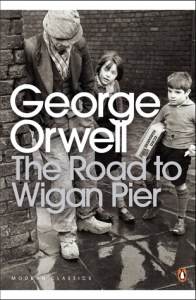
There are lots of pretty, multi-coloured book covers around at the moment, but I think monochrome can often be just as striking. Another book I’ve read and reviewed with a black and white cover is The Road to Wigan Pier by George Orwell (1). I’ve enjoyed a lot of Orwell’s fiction, but this is the only one of his non-fiction books I’ve read so far. Published in 1937, it documents Orwell’s observations of the lives of working class people living in the North of England, describing the shocking levels of poverty, the poor standard of housing and the dangerous working conditions.

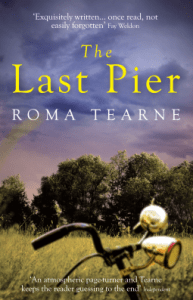
Another book with the word ‘pier’ in the title is The Last Pier by Roma Tearne (2). It tells the story of Cecily, a teenage girl growing up on a farm in rural England just before the start of World War II and her relationship with the Italian family who live nearby. There’s an element of mystery as something tragic happens to Cecily’s sister, for which she gets the blame, but what I found particularly interesting was the exploration of the fate of Italian people living in Britain during the war, something I hadn’t read much about before.

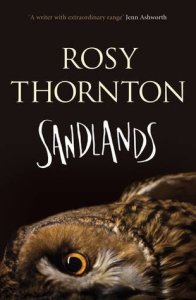
The Last Pier is set in Suffolk. Sandlands by Rosy Thornton (3) is a collection of sixteen short stories all set in and around a small Suffolk village. I don’t always enjoy short stories and usually prefer fiction in longer forms, but I did find these very satisfying, with something to interest me in each of the sixteen. It’s a very varied collection – some are set in the present and some in the past, some are romantic, some are funny and others have a touch of the supernatural.
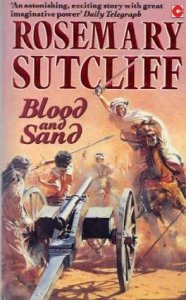
The title ‘Sandlands’ leads me to Blood and Sand by Rosemary Sutcliff (4). Sutcliff is better known for her books for younger readers, but this is one of several she wrote for adults. It’s based on the true story of Thomas Keith, a Scottish soldier who is taken captive in Egypt during the Napoleonic Wars and later converts to Islam, becoming Governor of Medina – a fascinating man I had previously known nothing about!

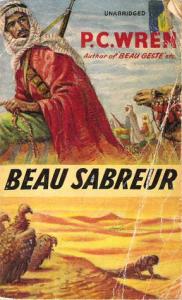
Beau Sabreur by PC Wren (5) is also set in the deserts of North Africa. It’s the sequel to Beau Geste, a book I absolutely loved, and follows the adventures of one of the characters from that book, Henri de Beaujolais. However, I found this one slightly disappointing in comparison; the first half is excellent, but a plot twist in the middle changes the entire tone and feel of the novel. I’m still planning to read the third book in the trilogy, Beau Ideal.

Beau Sabreur was published in 1926, as was Bellarion by Rafael Sabatini (6). This is not my favourite Sabatini novel (you should definitely start with Scaramouche, which is wonderful) but I did still enjoy it. It’s set in Renaissance Italy; I described it in my review as “a world of warring city states, tyrannical dukes and beautiful princesses, of powerful condottieri and bands of mercenary soldiers, of sieges and battles, poisonings and conspiracies.” Great fun, like most of Sabatini’s novels!

And that’s my chain for April. My links included: monochrome covers, piers, the county of Suffolk, the word ‘sand’, desert settings and books published in 1926.

In May we’ll be starting with Hydra by Adriane Howell.

My Commonplace Book: March 2023

A selection of words and pictures to represent March’s reading:

commonplace book
noun
a book into which notable extracts from other works are copied for personal use.

~

Well, don’t be too hard on yourself, Jazz. We all remember the good times and try to forget the bad. It’s human nature and thank God for it.

The Murders at Fleat House by Lucinda Riley (2022)

~

“I blame myself for being drawn into argument with him, but what else could I do? I was glad to hear a cultured voice, even his, after so much solitary confinement. It was, in a sense, not unlike being stuck in the club with some bore whose opinions are very left or very right. You can’t do anything but listen to the man. You know he is wrong, but since you argue from the standpoint of individuals and he argues about a mythical mass, there is no common ground. And it’s utterly impossible to explain yourself.”

Rogue Male by Geoffrey Household (1939)

~

Lady’s slipper orchid

“It can’t get any darker than midnight.”

There must be a thousand Sicilian proverbs, but this one became my favorite, this one I clung to.

The Orchid Hour by Nancy Bilyeau (2023)

~

Man is a courageous and highly adaptable animal. The conditions he lives under are brought about largely by his own passions, but as soon as enough men find those conditions intolerable they change them as the people of Paris acted in concert when they advanced against the Bastille. It has always been so.

Farewell, the Tranquil Mind by RF Delderfield (1950)

~

Favourite books read in March:

The Murders at Fleat House

Authors read for the first time in March:

Geoffrey Household

Places visited in my March reading:

England, France, USA

~

Reading notes: March hasn’t been a great month for me due to some ongoing health problems (nothing too serious, I hope, but enough to cause a distraction from reading). I managed to take part in Reading Ireland Month with These Days, which I read at the end of February in preparation, but I didn’t have time to read anything for Reading Wales so I’ll make that a priority next year. On a more positive note, I’ve finished Rogue Male, my book for the recent Classics Club Spin already! It helped that it was only 200 pages long. In April, I’m hoping to join in with 1940 Club and have a few books in mind for that.

How was your March? Do you have any plans for your April reading?

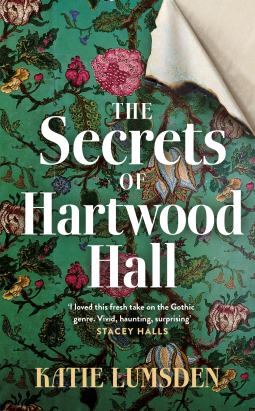
The Secrets of Hartwood Hall by Katie Lumsden

It’s 1852 and the recently widowed Margaret Lennox has just arrived at Hartwood Hall to take up a new position as governess to ten-year-old Louis Eversham. Margaret worked as a governess before her marriage, so has plenty of experience, but she quickly discovers that the Evershams are not quite like any other family she has worked for. Mrs Eversham is secretive and overprotective, isolating herself and Louis from their neighbours, and in the village rumours are spreading that Hartwood Hall is haunted. Although this makes Margaret feel uneasy – and the hostility she faces from one of the maids, Susan, doesn’t help – she does her best to settle into her new job, while also trying to conceal the truth about her own past.

The Secrets of Hartwood Hall is Katie Lumsden’s debut novel and is obviously heavily influenced by the work of the Brontës, particularly Jane Eyre, The Tenant of Wildfell Hall and Agnes Grey. One character turns out to be an author not dissimilar to Charlotte, Emily and Anne, while others are seen reading Brontë novels – and of course, there are elements of the plot and setting that feel very familiar as well. The descriptions of the locked east wing of Hartwood Hall, off-limits to Margaret, with its strange noises and flickering lights made me think of Jane Eyre’s ‘madwoman in the attic’ and had me wondering what exactly was going on in there! Of course, this is a book written in the 21st century, not the 19th, and I could never quite forget that; some parts of this story could never have been written by the Brontës – or would have had to be alluded to much more vaguely.

This is not the only recently published book to be inspired by classic Gothic novels and at first I thought it was going to be very similar to Stacey Halls’ Mrs England, Marianne Ratcliffe’s The Secret of Matterdale Hall or Beth Underdown’s The Key in the Lock, to name a few. However, although I think readers of those books would enjoy this one too, it’s still different enough to be a satisfying story in its own right. I didn’t guess the solutions of all the mysteries hinted at in the book – although I was convinced at one point that I’d worked it all out, some of the revelations still took me by surprise!

There’s a romantic thread to the novel too, as Margaret begins to form a relationship with a male member of the Hartwood Hall staff. However, I found this the least successful aspect of the story. I sensed very little chemistry between the two of them, neither was honest with the other and I felt that Margaret treated him unfairly. For this reason, the later stages of the novel didn’t have the emotional impact they probably should have done. I did enjoy watching Margaret’s relationship with the Evershams develop, as she gained the trust and respect of Louis and Mrs Eversham – and I was angry on Margaret’s behalf about the treatment she received from the scheming Susan! Although I didn’t always agree with Margaret’s decisions, I found her quite an engaging heroine and narrator.

This was an entertaining novel and while not every part of it worked for me, I would be happy to read more books by Katie Lumsden, particularly if they fall into this same subgenre.

Thanks to Michael Joseph for providing a copy of this book for review via NetGalley.

This is book 11/50 read for the 2023 Historical Fiction Reading Challenge.

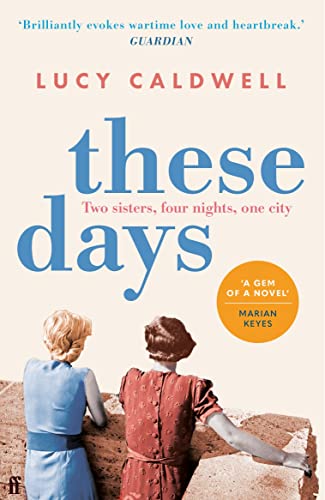
These Days by Lucy Caldwell – #ReadingIrelandMonth23

I hadn’t really considered reading These Days until I saw it had been longlisted for this year’s Walter Scott Prize and as Lucy Caldwell is an author from Belfast I thought it would be a good choice for Reading Ireland Month.

I have previously read very little about the fate of Northern Ireland during World War II – Sebastian Barry’s The Secret Scripture contains a very vivid description of the bombing of Belfast, but otherwise it has barely featured at all in any of my reading. In These Days, Lucy Caldwell gives this topic the attention it deserves, focusing on a series of attacks on Belfast that took place in April and May 1941 – the Dockside Raid, the Easter Raid and the Fire Raids. More than a thousand people were killed in these attacks and the Easter Raid alone caused the greatest loss of life in any night raid outside of London during the war.

This short but tragic period in Belfast’s history is explored through the stories of two sisters, Audrey and Emma Bell, the daughters of Dr Philip Bell and his wife, Florence. I have to confess, when I first started reading this book and saw that not only was it written in the present tense, the author had also chosen to omit speech marks, my heart sank. Not including speech marks seems to be an increasingly popular trend in fiction and maybe some readers like it, but it never works for me. I just find it distracting and annoying. However, I stuck with the book and settled into the story after a while.

Audrey is twenty-one and works as a junior clerk at the tax office. She is engaged to Richard, a doctor like her father, but is beginning to have doubts about the marriage. Becoming Richard’s wife will mean she’s expected to give up her job and conform to society’s expectations, and after witnessing the independence and freedom enjoyed by her unmarried friend, Miss Bates, Audrey is trying to decide what she really wants from life.

Emma is just eighteen and volunteers at a First Aid post, where she has met and fallen in love with Sylvia, a woman ten years older than herself. Emma has always been ‘awkward’ but when she’s with Sylvia she feels that she’s found her place in the world at last. Unfortunately, though, this is the 1940s so their relationship will have to remain a secret.

The Bell sisters, along with their mother Florence, are the main focus of the novel and although the writing style meant it took longer for me to connect with them than I would have liked, I did warm to all three of them and found each of their stories very moving as the bombings began and their lives were thrown into turmoil. We also get to know several other characters, from a range of backgrounds, who cross paths with the Bells at various points in the novel. I particularly loved six-year-old Maisie Gallagher, who becomes separated from her mother during a raid and has the good fortune to be discovered by Audrey.

The attacks were devastating for the people of Belfast, with so much destruction and loss of life, and as you can imagine the book is quite harrowing in places. How could it not be, particularly with images of Ukraine fresh in our minds? But it’s also a book I’m pleased to have read, especially as it has taught me so much about an aspect of the war I had known so little about.

This is book 10/50 read for the 2023 Historical Fiction Reading Challenge.

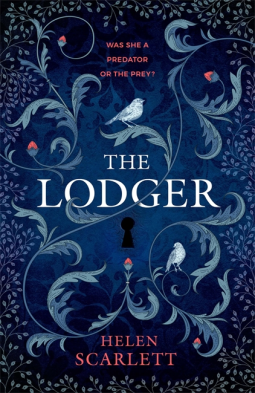
The Lodger by Helen Scarlett

It’s 1919 and Grace Armstrong, like many other young women, is mourning the loss of her fiancé and brother in the Great War. She has done her best to move on – having served as a VAD nurse during the war, she is now pursuing a career as a journalist with the London periodical Nursing World – but she is still haunted by the thought that her fiancé Robert, reported missing in action at the Somme, could still be alive. Meanwhile her mother, struggling to cope with the death of Grace’s brother Edward, is under sedation in a nursing home. It’s a difficult time for the Armstrong family – and is about to get worse when their lodger, Elizabeth Smith, is found drowned in the River Thames.

Elizabeth had lodged with the family for eight years and she and Grace had become good friends. Unable to accept the verdict from the police that Elizabeth had committed suicide, Grace is determined to find out what really happened. The only person who is prepared to help her is Tom Monaghan, who fought with Edward in France, but as they begin to investigate Elizabeth’s death, they make some shocking discoveries about Grace’s friend.

This is Helen Scarlett’s second novel; I haven’t read her first, The Deception of Harriet Fleet, but both are standalones so that didn’t matter at all. I will probably look for that earlier book now, as I did enjoy this one. It’s a slow-paced novel, but I still found it quite gripping, mainly because of the vivid portrayal of a world emerging from war, with people attempting to move forward while still struggling with the trauma of the recent past. Nobody in the novel has come out of the war unscathed; we meet men left damaged both physically and mentally by the horrors of the trenches, families grieving for the deaths of loved ones – and perhaps worst of all, people like Grace who are unable to grieve properly without knowing whether their loved one is dead or alive. Grace sees Robert everywhere – in the street, on the bus, in her dreams – and feels that she’ll never be able to rebuild her life until she knows the truth.

I found the mystery element of the book less successful. The story of Elizabeth’s past seemed too far-fetched to be very convincing and as more and more of her secrets were uncovered I felt that the plot was in danger of becoming much too complicated. There’s also a romance for Grace which was predictable but satisfying, although I would have liked to have seen her spend more time with her love interest; that would have helped me to become more invested in their relationship.

Despite the few negative points I’ve mentioned, The Lodger is an atmospheric and moving novel and the image it evokes of a London in the aftermath of war is one that will stay with me.

Thanks to Quercus for providing a copy of this book for review via NetGalley.

This is book 9/50 read for the 2023 Historical Fiction Reading Challenge.

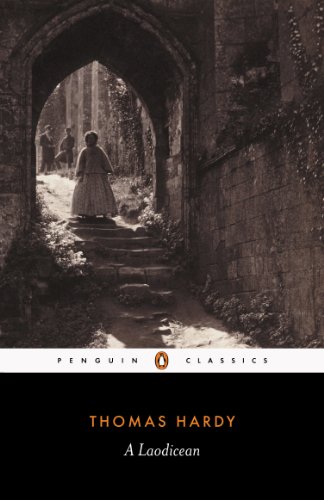
A Laodicean by Thomas Hardy

First published in Harper’s New Monthly Magazine in 1880-81, A Laodicean; or, The Castle of the De Stancys: A Story of To-Day is one of Thomas Hardy’s lesser known novels and one that I very much enjoyed.

Architect George Somerset is exploring the countryside near the village of Sleeping-Green one evening when he stumbles upon a castle. He learns that this is Stancy Castle, the ancestral home of the De Stancy family which has recently been purchased by the wealthy railway contractor, John Power. Mr Power has since died, leaving the castle to his daughter, Paula, who is planning to carry out extensive renovations on the ancient building. When Paula is introduced to Somerset she considers commissioning him to do the work on the castle, but before the restoration even begins Somerset finds himself falling in love with her.

It seems that Somerset has a rival for Paula’s love, however – Captain De Stancy, an impoverished descendant of the aristocratic family who once owned the castle. The Captain’s son, William Dare, has seen a chance to get his hands on some of the Power fortune and is determined that his father must marry Paula, no matter what.

Paula herself is the Laodicean of the title, described by the local minister as ‘lukewarm, and neither cold nor hot’, like the people of the church of Laodicea in the Bible. Throughout the novel she vacillates between Somerset and De Stancy, attracted to both of them in different ways and unwilling to fully commit to one or the other. This reflects the way she feels about society in general. As an industrialist’s daughter who has installed a telegraph wire and a new clock at Stancy Castle, Paula represents science and progress but at the same time she likes the idea of marrying into an aristocratic family and becoming a De Stancy. The clash between tradition and a new way of life is one of the recurring themes that comes up again and again in Hardy’s novels.

Although Paula irritated me with her inability to make up her mind and give either man a definite answer, I found Somerset’s infatuation with her quite annoying as well – I wanted him to notice Paula’s friend, Charlotte, who I think would have been a much better choice for him! Irritating characters aside, I found the story very entertaining, mainly because of the machinations of William Dare, who will stop at nothing to ensure Paula chooses his father. He uses forged telegrams, fake photographs and all sorts of other devious tricks to try to get what he wants and this makes the book more of a pageturner than I’d expected at first.

A Laodicean doesn’t really have the pastoral feel of most of Hardy’s other novels; in fact, most of the second half is set in Europe where the various sets of characters wander around the casinos of Monte Carlo, the spas of Baden and the busy streets and squares of Strasbourg. Things do become a bit far-fetched in this section, with lots of coincidental meetings, but I enjoyed reading something different from Hardy after so many books set in his Wessex countryside.

Although this hasn’t become one of my favourite Hardy novels, it’s still a very good one. I think I only have three more of them to read, as well as some of his short story collections. Have you read this one? What did you think?

This is book 36/50 from my second Classics Club list.

Classics Club Spin #33: The result

The result of the latest Classics Club Spin was revealed today.

The idea of the Spin was to list twenty books from my Classics Club list, number them 1 to 20, and the number announced by the Classics Club represents the book I have to read before 30th April 2023. The number that has been selected is…

18

And this means the book I need to read is…

Rogue Male by Geoffrey Household

An Englishman plans to assassinate the dictator of a European country. But he is foiled at the last moment and falls into the hands of ruthless and inventive torturers. They devise for him an ingenious and diplomatic death but, for once, they bungle the job and he escapes.

But England provides no safety from his pursuers – and the Rogue Male must strip away all the trappings of status and civilization as the hunter becomes a hunted animal.

~

I’m very happy with this result and glad I’ve avoided some of the longer books on my list! I’ve seen the excellent 1976 BBC adaptation of this book and am looking forward to reading it.

Have you read this? What did you think of it? And if you took part in the Spin which book did you get?