Merry Christmas!

Just a quick post to wish a very Merry Christmas to those who celebrate it – and for those who don’t, I hope you have a lovely day anyway!

Thank you to everyone who has read, liked or commented on my reviews throughout the year. It’s very much appreciated! Have a great Christmas and I’ll be back soon with one or two more posts before the end of the month.

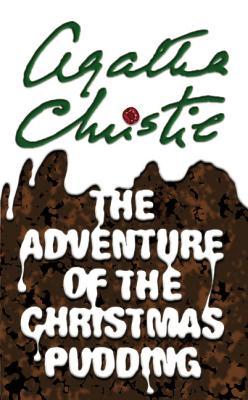
The Adventure of the Christmas Pudding by Agatha Christie

The December prompt for Read Christie 2022 is ‘a story containing precious jewels’ and the book chosen for the group read is Hercule Poirot’s Christmas. I read that one a few years ago, so decided to try The Adventure of the Christmas Pudding instead. This is a collection of six short stories and although only the first one contains precious jewels and has a festive theme, I thoroughly enjoyed reading all six of them!

Agatha Christie herself selected the stories for this collection and the first five in the book are Poirot mysteries. In the title story, The Adventure of the Christmas Pudding, Poirot joins the Lacey family at their country house, supposedly to experience a ‘typical English Christmas’. However, unknown to the family, he has another motive for attending their Christmas celebrations – he is hoping to track down a precious ruby stolen from a foreign prince. Although I felt that the title gave away part of the mystery – it’s obvious that the pudding is going to have some significance – there are still some twists before the full solution becomes clear. And I loved the Lacey children who decide to present Poirot with a murder as a special Christmas treat!

The Adventure of the Christmas Pudding was apparently inspired by Christie’s own memories of spending Christmas at Abney Hall, her sister’s home in Cheshire (presumably without the stolen jewels and murders). The other four Poirot stories in this collection are not set at Christmas, but are equally enjoyable to read. The Mystery of the Spanish Chest, in which a dead body is found in a chest after a party, is excellent. I had no idea who the culprit was or how the crime was carried out and I loved watching the plot unfold. The Under Dog, where Poirot investigates the death of a man who has been hit on the head with a club, is another good one. It’s quite complex and involved and I think it could easily have been developed into a full length novel.

The next two stories are quite unusual. In Four and Twenty Blackbirds, a man who usually dines in the same restaurant every Tuesday and Thursday without fail suddenly turns up on a Monday and asks for food he has never ordered before. Poirot is intrigued, particularly when he hears three weeks later that the man has died after an accidental fall downstairs. I found part of the solution easy to guess, but again there’s more to this story than it would seem at first! Then, in The Dream, Poirot is summoned by an elderly millionaire who is having a recurring dream in which he shoots himself with a revolver. When the old man does actually die a few days later in exactly the manner he has described, Poirot is called back to investigate. I loved this one – it’s very cleverly done!

After all of these Poirot mysteries, it was nice to see Miss Marple make an appearance in the final one, Greenshaw’s Folly. In this story, the elderly Miss Greenshaw, the current owner of the house known as Greenshaw’s Folly, is murdered in the garden just after making a new will. Miss Marple is brought into the mystery by her nephew Raymond West, whose niece has been working at the house, and through her usual methods – a knowledge of human nature and trying to decide who the various suspects remind her of – she proceeds to solve the mystery.

Overall, this is a great collection and I hope I’ve managed to give you a taste of each story without spoiling them too much. I’m looking forward to taking part in Read Christie 2023 next year!

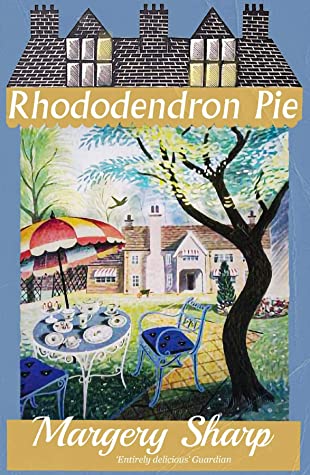
Rhododendron Pie by Margery Sharp – #DeanStreetDecember

This month, Liz of Adventures in Reading, Running and Working from Home is hosting Dean Street Press December. Margery Sharp’s first novel, Rhododendron Pie, had been out of print for years and was notoriously difficult to find before being reprinted by Dean Street Press in 2021. As I’ve previously enjoyed some of her other books I decided to read it for this month’s event.

First published in 1930, Rhododendron Pie is the story of Ann Laventie, who grows up in the Sussex countryside with her parents and two older siblings. The Laventies are a wealthy and accomplished family who consider themselves intellectual, artistic and refined; their neighbours, however, see them as cold and snobbish. Ann herself doesn’t fit in with the rest of the family – unlike her brother Dick, a sculptor, and sister Elizabeth, a writer, she hasn’t yet discovered where her own talents lie and doesn’t believe herself to be special or superior in any way. The more time she spends with the Gayfords, the large, cheerful, down-to-earth family who live nearby, the more she becomes aware of how different her own home life is.

The title of the book refers to the tradition in the Laventie household of presenting the children with birthday pies filled not with fruit but with inedible flowers. Aesthetically beautifully and appreciated by the rest of the family, but not by Ann:

“Every year she has hoped against hope, and every year the lovely inedible petals have cheated her. For she has a fundamental, instinctive conviction that they are out of place. Flowers are beautiful in gardens…and in houses, of course…but in a pie you want fruit. Apples. Hot and fragrant and faintly pink, with lots of juice…and cloves. She wished there had been apples in her pie.”

Although Ann loves her family and admires their intellectual brilliance, it’s her secret longing for the ordinary, conventional things in life that drives the story forward. When Dick and Elizabeth move to London and Ann goes to visit them there, her knowledge and experience of the world widens and she becomes more aware of what she really wants and what will make her happy.

It took me a while to get into this book, but once I did it was very enjoyable. I loved Ann and found it interesting to watch the internal conflict play out between her true nature and the values and prejudices that have been instilled into her as a result of her upbringing. Although there’s some romance in the book – Ann has two very different love interests and it’s quite easy to predict which one she’ll choose! – it never really becomes the main focus and is just one aspect of the story, along with the exploration of intellectual snobbery, the class system and the difficulties of finding your place in the world.

As I’d hoped, this was a good choice for Dean Street December and I’ll see if I have time for another book before the end of the month.

Historical Musings #76: Books to look out for in 2023

Now that 2022 is almost over, it’s time to look ahead to the historical fiction being published in 2023. I’ve listed below a selection of books that have caught my attention for one reason or another – some are review copies I’ve received (and in a few cases have already read), some are new books by authors I’ve previously enjoyed and others just sounded interesting. 2023 looks like being a great year for historical fiction and I hope there’s something here that appeals to you.

Dates provided are for the UK and were correct at the time of posting.

January

A Marriage of Fortune by Anne O’Brien (19th January) – Set during the Wars of the Roses, this is the sequel to The Royal Game and continues the story of the women of the Paston family.

For Thy Great Pain Have Mercy On My Little Pain by Victoria MacKenzie (19th January) – A novella describing a meeting in 1413 between Julian of Norwich and Margery Kempe, two English mystics and authors.

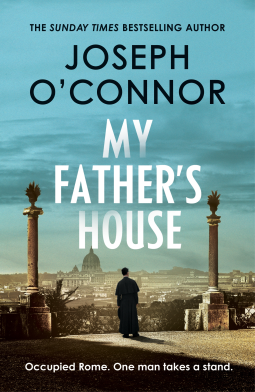
My Father’s House by Joseph O’Connor (26th January) – Based on a true story, an Irish priest in Vatican City helps people escape from the Nazis.

February

The Whispering Muse by Laura Purcell (2nd February) – Laura Purcell’s new Gothic novel is set in a theatre in Victorian London, where an actress is said to have made a pact with Melpomene, the muse of tragedy.

Weyward by Emilia Hart (2nd February) – This book weaves together the stories of three women from different time periods who share a connection to witchcraft.
March

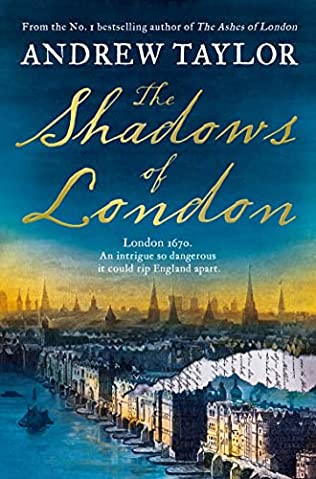
The Shadows of London by Andrew Taylor (2nd March) – The sixth book in Taylor’s excellent Marwood and Lovett mystery series set in the years following the Great Fire of London.

Lady MacBethad by Isabelle Schuler (2nd March) – The story of Gruoch, the real-life queen who was the inspiration for Shakespeare’s Lady Macbeth. Having read several other books about Macbeth and Gruoch/Groa, I’ll be interested to see how this one compares.

The Secrets of Hartwood Hall by Katie Lumsden (30th March) – A Victorian Gothic novel about a young woman who becomes a governess at an isolated country house.

April
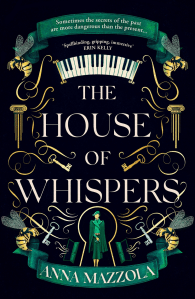
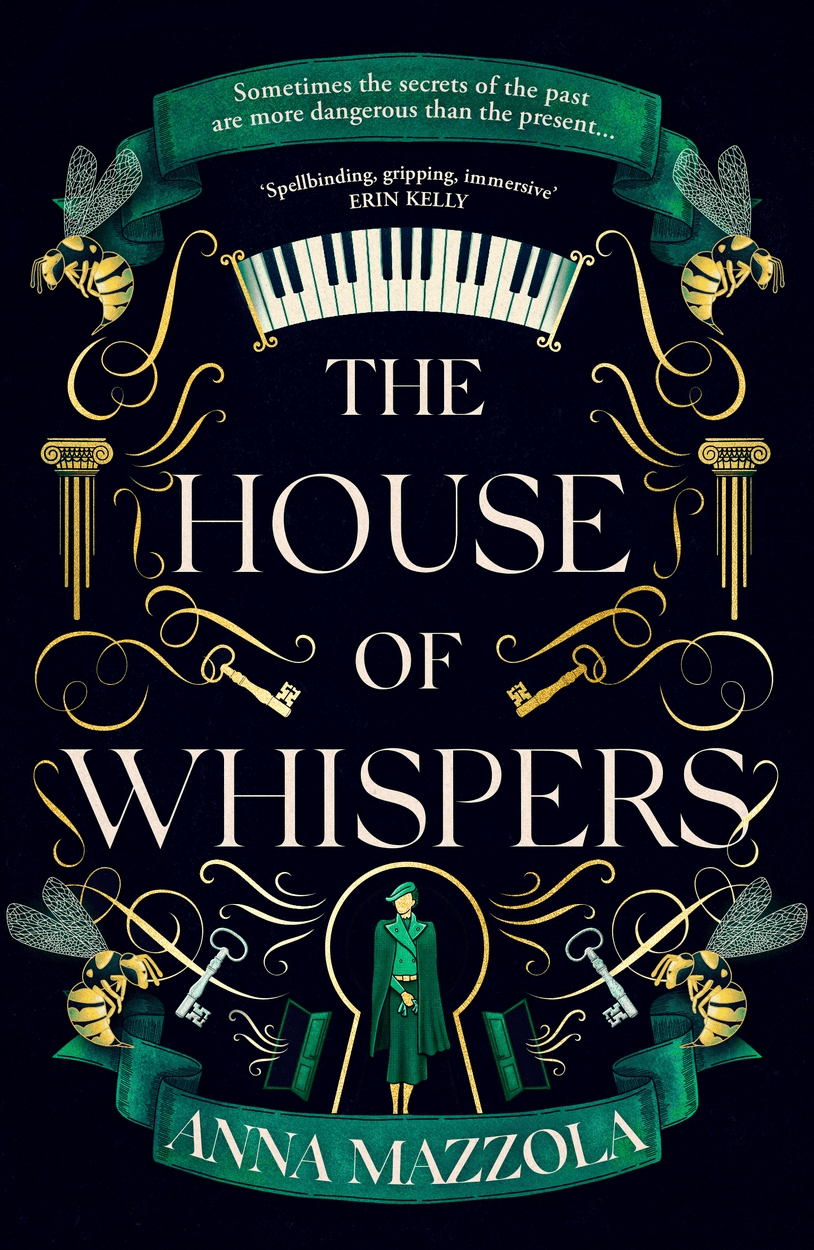
The House of Whispers by Anna Mazzola (6th April) – I’ve read all of Anna Mazzola’s previous novels and each one has been very different from the one before. This new book is set in Rome in 1938.

The King’s Jewel by Elizabeth Chadwick (13th April) – The new novel from Elizabeth Chadwick is set in 11th century Wales and tells the story of Nesta, daughter of Prince Rhys of Deheubarth.

Rivers of Treason by KJ Maitland (13th April) – The third book in the Daniel Pursglove mystery series sees Daniel returning to his childhood home in Yorkshire and falling under suspicion of murder.

Homecoming by Kate Morton (13th April) – A modern day journalist discovers a family connection with an unsolved murder case in 1950s Australia. I’ve enjoyed some of Kate Morton’s previous books but not others, so I’ll be interested to see what this one is like.

Prize Women by Caroline Lea (27th April) – Set in Canada during the Great Depression, this is the story of two women who become involved in the contest known as The Great Stork Derby.

May

Atlas: The Story of Pa Salt by Lucinda Riley and Harry Whittaker (11th May) – The final book in the Seven Sisters series, completed by Lucinda Riley’s son after her death in 2021. I can’t wait to find out the truth about Pa Salt at last!

A Lady’s Guide to Scandal by Sophie Irwin (11th May) – I loved Sophie Irwin’s A Lady’s Guide to Fortune-Hunting and her second novel, another one set in the Regency period, sounds just as entertaining!

Henry VIII: The Heart and the Crown by Alison Weir (11th May) – After writing a series of novels from the perspectives of Henry VIII’s six wives, now Alison Weir is going to give us Henry’s side of the story.
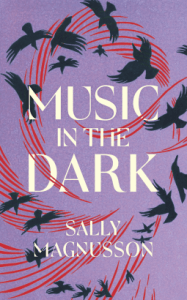
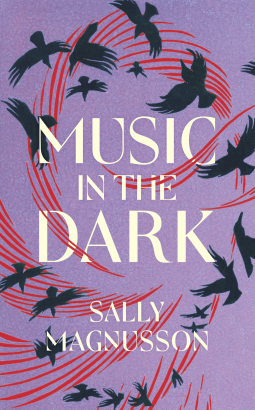
Music in the Dark by Sally Magnusson (11th May) – The new novel by Scottish author Sally Magnusson explores the lives of two people during the Highland Clearances of 1854.

The Ghost Theatre by Mat Osman (11th May) – This sounds like a very unusual novel about children in a theatrical troupe in Elizabethan London.

The Stolen Crown by Carol McGrath (18th May) – Following her recent She-Wolves trilogy, Carol McGrath goes further back in time for her new novel which tells the story of Henry I’s daughter Matilda and the period known as The Anarchy.

Mrs Porter Calling by AJ Pearce (25th May) – The third book in Pearce’s series about Emmy Lake, who works for Woman’s Friend magazine during World War II. I still need to catch up with the second one!

June

The Last Lifeboat by Hazel Gaynor (8th June) – Set in 1940, this new book by Hazel Gaynor tells the story of the evacuees sent away by sea during the war.

Disobedient by EC Fremantle (8th June) – A new EC Fremantle book is always something to look forward to and this one, about the 17th century artist Artemisia Gentileschi, sounds great.

The Square of Sevens by Laura Shepherd-Robinson (22nd June) – I’d been hoping for a third book in the Harry and Caro Corsham mystery series, but this new book about a fortune-teller in Georgian England could be even better!

The Other Side of Mrs Wood by Lucy Barker (22nd June) – This one sounds fun – it’s described as an ‘irresistible historical comedy about two rival mediums in Victorian London’.
July

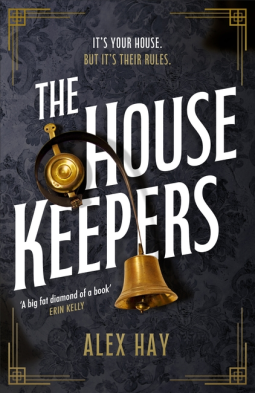
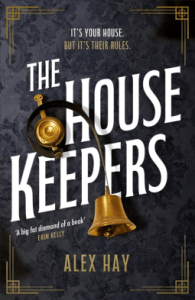
The Housekeepers by Alex Hay (6th July) – An intriguing-sounding debut novel in which a group of servants plan to carry out a daring heist in a grand London house in 1905.

Lady Tan’s Circle of Women by Lisa See (6th July) – I usually love Lisa See’s books and this one is about the life of Tan Yunxian, a Chinese physician during the Ming dynasty.

The Murder Wheel by Tom Mead (11th July) – I loved Tom Mead’s first Golden Age-style mystery novel, Death and the Conjuror, and I’m pleased to see that he’s written another one, again featuring the magician Joseph Spector.

August

Fair Rosaline by Natasha Solomons (3rd August) – The second novel in this list with a Shakespeare connection, this is the story of Rosaline, the woman Romeo loved before beginning his tragic romance with Juliet.

Night Train to Marrakech by Dinah Jefferies (31st August) – The third book in the Daughters of War trilogy is going to be set in 1960s Morocco. I’m looking forward to finding out how the story ends.

October

Menewood by Nicola Griffith (3rd October) – The long-awaited sequel to Hild, this book will continue the story of St Hilda of Whitby. The first book was beautifully written and I’ve been looking forward to this one for years!
November

The Temple of Fortuna by Elodie Harper (23rd November) – This will be the final book in Elodie Harper’s trilogy set in ancient Pompeii. I loved The Wolf Den but still need to read the middle book.

December

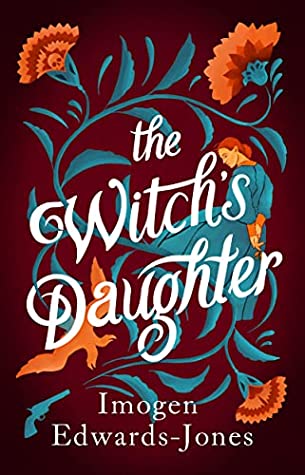
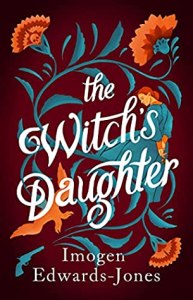
The Witch’s Daughter by Imogen Edwards-Jones (7th December) – The sequel to The Witches of St Petersburg is set in 1916 and follows the story of Princess Militza’s daughter Nadezhda as the Russian Revolution approaches.

~

Are you interested in reading any of these? What else have I missed?

The Winter is Past by Noel Streatfeild

Noel Streatfeild is an author I loved as a child but I’ve never tried any of her adult books until now. There are plenty to choose from but I decided on her 1940 novel The Winter is Past (although here in the UK, winter is currently very much with us – we’ve had snow, ice and freezing temperatures all week, where I am!). It occurred to me after I started reading that I should probably have saved this book for next year’s 1940 Club – it’s worth keeping this one in mind if you’re wondering what to read for that event.

Anyway, The Winter is Past begins by introducing us to the Laurence family, who have lived at Levet, a beautiful English country house, since the 18th century. The current head of the family, Bill Laurence, has brought his new wife, Sara, home to Levet for the first time, but it immediately becomes clear that she’s not going to fit in. Nannie, who nursed several generations of Laurence children and is still an important part of the household, disapproves of Sara’s background as an actress – and when Bill’s upper-class mother Lydia comes to stay, Sara feels even more out of place. After suffering a miscarriage, she decides that her marriage is not working and that she needs to get away for a while, but with the outbreak of World War II she is forced to stay at Levet and make the best of things.

Another family whose lives have been thrown into turmoil by the war are the Vidlers. While Mr Vidler stays at home in London, his wife and their three young children – Rosie, Tommy and baby Herbert – are evacuated and taken in by the Laurences. Life at Levet comes as a culture shock for the working-class Vidlers, but they do their best to adapt, with varying success! When the cold weather arrives and the house is cut off from the village by snow, this disparate group of people will have to work together to get through the winter.

I loved this book; it’s very character-driven but with just enough plot to keep the story moving forward. I always find it fascinating to read books set during the war that were actually written before the war was over – it puts a very different perspective on things, when neither the characters nor the author have any idea how long it will last or how bad things are going to get. What little plot there is deals with the events of the winter of 1939-40 and although the book ends with another five years of war still to come, there’s already a sense that the lives of the characters have changed irrevocably and the way of life each of them has always known is disappearing forever.

My favourite characters were Mr and Mrs Vidler who, despite not leading a privileged life like the Laurences, possess things that money can’t buy – love, happiness and contentment – and rather than feeling inferior to Sara, Lydia and the others, look on them with sympathy and pity. The children, in the countryside for the first time, have more mixed emotions; they aren’t too pleased about the regular baths and formal mealtimes, but Tommy is captivated by the thought of making things grow in the garden and Rosie is amazed to discover that real ducks don’t wear sailor suits like Donald! It’s not surprising that Streatfeild writes about children so convincingly, considering she’s better known as a children’s author, but her adult characters are well developed too, even if some of them are difficult to like. She does come close to stereotyping with the maid Irene who has what we would probably call learning difficulties today, but that’s my only criticism and she does make up for it by giving Irene a heart of gold.

This was the perfect book to read in December, with snow on the ground outside, and I’m looking forward to reading more of Streatfeild’s adult novels next year. If you’ve read any of them let me know which ones you would recommend!

The Looking-Glass by Machado de Assis (tr. Daniel Hahn)

Thanks to the Pushkin Press Essential Stories series I’ve had the opportunity to explore the short stories of Herman Melville (a new author for me) and Fyodor Dostoevsky (an author I’d read before but only in full-length novel form). This latest collection has introduced me to another new author, the Brazilian writer Machado de Assis, who lived from 1839-1908. This book contains ten of his stories, translated from Portuguese into English by Daniel Hahn.

When trying a new author for the first time, you never really know what to expect, but since Joaquim Maria Machado de Assis (usually just referred to by his surnames) is described as one of Brazil’s greatest authors I thought he would surely be worth reading, even if the stories turned out not to be to my taste. Fortunately, I did find most of them quite enjoyable, providing lots of insights into the various sides of human nature. Although the stories were written more than a hundred years ago and on the other side of the world from me, they were still relatable because, of course, human beings aren’t really all that different, no matter where or when they lived.

The longest story in the book, which could probably be considered a novella, is The Alienist, in which Simão Bacamarte, a physician, opens an asylum in the town of Itaguaí. Bacamarte has a genuine interest in the new science of psychology and begins committing patients to the asylum so that he can study their symptoms. However, the numbers being admitted rapidly start to increase as it becomes clear that sane people are being sent there as well. Once most of the population of the town has been locked up and the others begin to rebel, Bacamarte is forced to reconsider his criteria for deciding who is sane and who is not, with surprising results!

Another story, The Stick, follows the story of Damião, a young man who escapes from a seminary and is afraid to return home because he’s convinced his father will send him back. Instead, he seeks the help of Rita, his godfather’s lover, who lets him stay in her house until the situation is resolved. Rita is a teacher of lacework and embroidery and has several young girls working for her. Damião discovers that one of them, a black slave called Lucrécia, is being badly treated and he must decide whether to intervene. I found this story interesting because Machado himself was the mixed-race grandson of freed slaves – and slavery was not abolished in Brazil until 1888.

Apart from The Canon, which describes a noun and an adjective searching for each other inside a man’s brain (too bizarre for me), I found most of the other stories intriguing in different ways. The Fortune-Teller, The Tale of the Cabriolet and Midnight Mass were some I particularly enjoyed. However, although I don’t usually include ‘trigger warnings’ in my reviews, I should mention that in The Secret Cause there are some graphic descriptions of animal cruelty which aren’t very pleasant to read!

At the end of the book, I was interested to read Daniel Hahn’s note on the translation where he explains why he deliberately tried to retain the 19th century feel of the original writing, even though this wasn’t necessarily the easiest option for a translator. I think this was the right decision – it worked for me and I found this collection a good introduction to the work of Machado de Assis.

Thanks to Pushkin Press for providing a copy of this book for review via NetGalley.

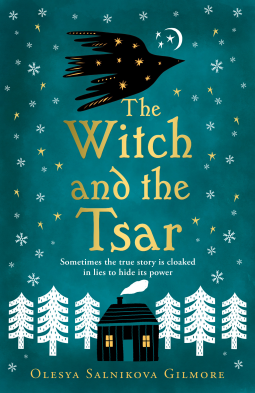
The Witch and the Tsar by Olesya Salnikova Gilmore

I was drawn to this book by the pretty cover, but also because it sounded similar to Katherine Arden’s Winternight trilogy, which I loved. Set in 16th century Russia, during the reign of Ivan the Terrible, The Witch and the Tsar is a blend of history, fantasy and folklore featuring as its heroine the legendary Baba Yaga. Unlike the traditional idea of Baba Yaga as a ferocious old witch who eats children, however, Moscow-born author Olesya Salnikova Gilmore’s portrayal is something very different.

We first meet Yaga, as she is known, living alone in a forest with her wolf Dyen, owl Noch, and Little Hen, a living hut who stands on chicken legs and has a mind of her own. Half-mortal and half-goddess, Yaga has been badly treated in the past so has chosen a life of solitude, interacting with other people only when they come and seek out her knowledge of healing and potions. She is reluctantly drawn back into society when an old friend, the Tsaritsa Anastasia – wife of Tsar Ivan IV – comes to her to ask for help. Convinced that Anastasia is being poisoned by someone at court, Yaga decides to accompany her friend on the journey back to Moscow to keep her safe.

Returning to the world from which she has hidden away for so long, Yaga is dismayed by the evil she senses all around her. Unsettled by an encounter with a former adversary, Koshey Bessmertny (usually known in Slavic myth as Koschei the Deathless), she is then introduced to Ivan Vasilyevich, the man who will later become Ivan the Terrible, and is struck by his power and volatility. When tragedy strikes the Russian court, Ivan becomes more unstable and launches a campaign of terror with his band of oprichniki burning, raiding and pillaging Russia’s towns and cities. It seems that Yaga is the only one who can stop him, but to do so she will have to learn things about herself and her family that she would prefer not to uncover.

I enjoyed some aspects of The Witch and the Tsar, but others not so much. I wasn’t sure what to think of Yaga herself. On the one hand, it’s good to see a much-maligned character given a more sympathetic interpretation; on the other, Gilmore’s Yaga has so little in common with the mythical Baba Yaga she’s really not the same character at all. Also, we are told that although she has the appearance of a young woman, she has actually lived for hundreds of years – yet she never sounds, thinks or behaves the way I would expect someone with centuries of wisdom and experience to sound, think and behave. She just feels like the young woman she appears to be.

It was interesting to see how Gilmore works characters from other Russian and Slavic myths into the story. As well as Koschei the Deathless, we meet Marya Morevna, Morozko the frost demon, the god Volos, the house spirit Kikimora and others. The fantasy/mythology element becomes very dominant in the second half of the book, more than I would have preferred, but Gilmore does a good job of tying it together with the historical storyline, showing how the actions of the gods and demons are linked to the actions of Ivan and his oprichniki. I was particularly intrigued by the character of Ivanushka, the Tsar’s son and heir; Yaga promises Anastasia she will protect him, but we know from history that his story will take a tragic turn.

I think The Witch and the Tsar is worth reading if you’re interested in Russian history and mythology, but naturally I couldn’t help comparing it to Katherine Arden’s trilogy (beginning with The Bear and the Nightingale) which I found much more enjoyable.

Thanks to HarperVoyager for providing a copy of this book for review via NetGalley.