My Year in Novellas – #NovNov25

Novellas in November 2025 (hosted by Cathy of 746 Books and Rebecca of Bookish Beck) officially started yesterday and we’re invited to begin by posting a “My Year in Novellas” retrospective looking at any novellas we have read since last year’s NovNov. When I looked back over the year, I was surprised to see how few novellas I’d actually read in the past twelve months – only seven. I’ve listed them below with links to my reviews.

For the purposes of this event, anything under 200 pages can be classed as a novella.

Fire by John Boyne (163 pages) – This is the third novel in Boyne’s Elements Quartet and is narrated by a surgeon who works with burn victims. I’m hoping to read the final book, Air, this month.

Mischief by Charlotte Armstrong (144 pages) – A tense and suspenseful noir thriller about a psychopathic babysitter.

The Ghost of Madison Avenue by Nancy Bilyeau (120 pages) – Perfect for Christmas, this is a ghost story set in and around the Morgan Library on New York’s Madison Avenue.

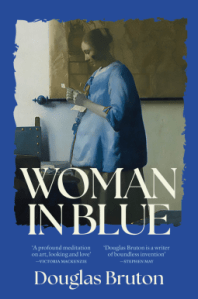
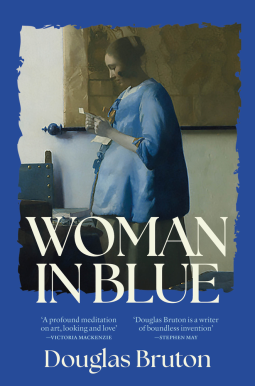
Woman in Blue by Douglas Bruton (144 pages) – I loved this book about a man who finds himself drawn to Vermeer’s Woman in Blue Reading a Letter and the story of the 17th century woman depicted in the painting.

Ice by Anna Kavan (194 pages) – A strange and fascinating dystopian story in which the narrator pursues a pale, white-haired girl around a world rapidly becoming engulfed by ice.

Clear by Carys Davies (160 pages) – A beautifully written novella set in Scotland during the Highland Clearances.

The Stepdaughter by Caroline Blackwood (128 pages) – A dark psychological thriller about a woman who develops an obsessive hatred for her young stepdaughter.

~

Do you like reading novellas? Have you read any good ones during the last year?

Six Degrees of Separation: From We Have Always Lived in the Castle to The Confessions of Frannie Langton

It’s the first Saturday of the month which means it’s time for another Six Degrees of Separation, hosted by Kate of Books are my Favourite and Best. The idea is that Kate chooses a book to use as a starting point and then we have to link it to six other books of our choice to form a chain. A book doesn’t have to be connected to all of the others on the list – only to the one next to it in the chain.

This month we’re starting with We Have Always Lived in the Castle by Shirley Jackson. For once, this is a book that I’ve actually read – and also one that I enjoyed. Here’s my synopsis of the plot, taken from my review posted in 2011:

The book is narrated by eighteen-year-old Mary Katherine Blackwood, or ‘Merricat’, who lives with her sister Constance, their Uncle Julian, and Jonas the cat in a big house on the edge of town. Near the beginning of the story we see Merricat walking home with some shopping, being taunted and chanted at by everyone she passes. It seems the Blackwoods are very unpopular, but at first we don’t know why.

When Merricat returns home, it becomes even more apparent that something is wrong. Merricat herself does not seem like a normal eighteen-year-old – she likes to bury things in the grounds of the Blackwood house and believes that using magic words and rituals will protect her home and family. Constance is agoraphobic and afraid to walk any further than the garden. Uncle Julian, confined to a wheelchair, is obsessed with the book he’s writing about a tragedy that occurred six years earlier. And what exactly has happened to the rest of the Blackwood family?

We Have Always Lived in the Castle is a dark, unsettling novel. My first link is to another dark novel with the word ‘castle’ in the title: The Nightingale’s Castle by Sonia Velton (1). This is a reimagining of the story of Countess Erzsébet Báthory (often anglicised to Elizabeth Bathory), thought to be a possible inspiration behind Bram Stoker’s Dracula. Bathory and her servants were accused of murdering hundreds of Hungarian peasant girls, making her one of the most notorious serial killers in history.

The Angel Makers by Patti McCracken (2) is a nonfiction book about another Hungarian serial killer. Zsuzsanna Fazekas, known in the book as Auntie Suzy, was a midwife and the ringleader of a circle of women responsible for the deaths of over one hundred men between 1914 and 1929. Suzy was the one who sold bottles of arsenic to the other women in her village and, in the absence of a village doctor, the one who dictated the causes of death to be put on the death certificates.

Poisoning also plays a big part in Marjorie Bowen’s The Poisoners (3), originally published in 1936. The book is set in 17th century Paris during the reign of the Sun King, Louis XIV, and revolves around a famous murder scandal known as L’affaire des poisons. I described it in my review as a story featuring “fortune tellers and spies, counterfeiters and apothecaries, an empty house which hides sinister secrets, mysterious letters marked with the sign of a pink carnation, and a society thought to be involved in black magic.”

I don’t want a whole chain full of serial killers, so I’ll try to send things in a slightly different direction now. Another book published in 1936 is A Shilling for Candles by Josephine Tey (4). This is one of Tey’s Alan Grant mysteries (of which I’m sorry to say I’ve still only read two) and was adapted for film by Alfred Hitchcock under the title Young and Innocent.

A shilling is a coin, so that leads me to Sugar Money by Jane Harris (5). This novel is set in the Caribbean in the year 1765. Our narrator, teenage Lucien, and his older brother Emile are slaves working on a sugar plantation in French-ruled Martinique. It’s a fascinating book exploring some aspects of slavery I had never read about before – and it’s also partly based on a true story.

The final book in my chain is The Confessions of Frannie Langton by Sara Collins (6). The book begins with Frannie, a former slave, awaiting trial in London for the murder of her employers (sorry, it seems I couldn’t get away from murderers this month after all). However, the crime element is only one small part of the story – a large part of the novel is devoted to Frannie remembering her childhood on a sugar plantation in Jamaica and her experiences on arriving in England.

~

And that’s my chain for November! My links have included: The word ‘castle’, Hungary, female poisoners, 1936, money and sugar plantations.

In December we’ll be starting with Seascraper by Benjamin Wood.

My Commonplace Book: October 2025

A selection of quotes and pictures to represent October’s reading:

commonplace book
noun
a book into which notable extracts from other works are copied for personal use.

~

Very old vampires are anachronisms: they are living history, bringing the past right into the present, with all the traumas of the past. Every one of us who has written about a vampire knows our own vampire very well, because each reflects something of what we thought of humanity at the time we wrote them.

White Teeth, Red Blood: Selected Vampiric Verses by various authors (2025)

~

And so they strolled on over the sand, happy in each other’s company but with their minds full of things they should have said, but didn’t.

A Ghost Hunter’s Guide to Solving a Murder by F.H. Petford (2025)

~

The Cat-sith, a creature from Celtic mythology.

So, give me the unknown any day. Forget what other people learned, discover something new, something no one else knows, that’s when you make a name for yourself. That’s when the big people come looking for you.

Monstrous Tales by various authors (2025)
(Quote from Boneless by Janice Hallett)

~

‘Nor I!’ Granmere laughed again. ‘Thou wouldst never set out to do the impossible?’

Simon reflected. ‘Nay, I think not, sir. Yet I believe that there is very little that is impossible. There is always a way.’

Simon the Coldheart by Georgette Heyer (1925)

~

I was captivated. Each wasp knows its function and performs it: no doubts, no mistakes, no misunderstandings. The beautiful logic of insect lives. A million miles from the messy irrationality of human beings.

Rainforest by Michelle Paver (2025)

~

“It’s sometimes a mistake to remember too much,” said Mitchell Dane. “Half the people in the world make their own troubles by forgetting what they ought to remember, and then they keep ’em alive by remembering what they ought to forget.”

The Black Cabinet by Patricia Wentworth (1925)

~

St Mark’s Square, Venice

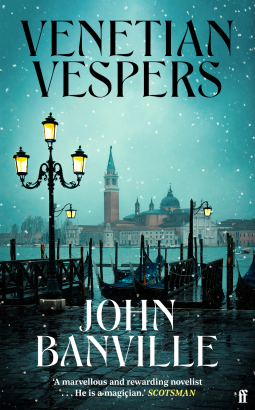
But then, I told myself, trying to make sense of it, is that not the case with all of the places, things, and people we dream of, that they seem mundanely familiar and at the same time inexpressibly strange?

Venetian Vespers by John Banville (2025)

~

I thought of it, afterwards, with astonished guilt. I told myself that it is impossible to dissect your friends and separate the good from the bad, that you accept them as they are, imperfect as they are.

The Odd Flamingo by Nina Bawden (1954)

~

But the brightest lights shine only against the darkest of backgrounds…

Murder Most Haunted by Emma Mason (2025)

~

Favourite books read this month:

The Black Cabinet and Monstrous Tales

Authors read for the first time this month:

F.H. Petford, Emma Mason, Sunyi Dean, Jenn Ashworth, Abir Mukherjee – and too many poets to list them all here!

Places visited in my October reading:

England, France, Germany, Scotland, Wales, Italy, Mexico

~

Reading notes: My October reading has been devoted mainly to books for 1925 Club and also the RIP XX challenge, so lots of dark, atmospheric or ghostly reads this month! November is always a busy month in the book blogging calendar (I wrote about my plans here) and I’m looking forward to joining in with Nonfiction November, Novellas in November and, if I have time, Margaret Atwood Reading Month and German Literature Month.

What did you read in October? Do you have any plans for November?

Murder Most Haunted by Emma Mason

Fifty-five-year-old Midge McGowan is retiring after thirty years as a police detective and her colleagues have given her a very unusual retirement gift: a ticket to spend the weekend before Christmas in a haunted house. The reason? The tour company, Haunting Holiday Excursions, is run by a former police officer, John Rendell, and HR get discounted tickets. Midge doesn’t want to go, especially as it will mean leaving behind her wife, Bridie, who is having chemotherapy, but Bridie persuades her that she’ll be fine for a few days and that it will be a good experience for Midge.

Soon, Midge finds herself getting off the bus at Atherton Hall with a small group of other guests: Dr Mortimer and his invalid wife, Gloria; Noah, who hosts a paranormal podcast; and Rona, a pop star in remission from a drug addiction. The bus driver, Harold, also ends up staying at the Hall with them after heavy snow leaves the roads impassable and cuts them off from the rest of the world. Almost as soon as they arrive, the guests begin to experience sightings of the White Lady of Atherton Moor drifting around the grounds of the estate, although not everyone believes they have truly seen a ghost. When their host, Rendell, is found dead in the bath, however, they have to decide whether ghosts are the culprits or whether there’s a human killer on the loose.

This is the book I thought A Ghost Hunter’s Guide to Solving a Murder was going to be! Unlike that other book (which was good, but not as advertised), this one has an actual ghost hunter in it, in the form of Noah who arrives with his cameras and recording equipment hoping to get new material for his podcast. The book also has an interesting and unusual detective character in Midge, who is quickly dismissed – sometimes very cruelly – by the others as an overweight, middle-aged woman with no fashion sense and no social skills. It was great to see her come into her own and find her own identity away from the slightly overpowering Bridie.

Apart from Midge, the other characters feel like stereotypes at first: Noah, the ‘woke’ young person who clashes with Harold, the racist, sexist older man; Rona, the shallow pop star with a wild lifestyle; the domineering doctor and his fragile wife who takes to her bed at the first sign of danger. However, most of these people turn out to have secrets or hidden depths and aren’t quite what they appear to be on the surface.

The murder mystery element of the book is interesting; Midge never seriously considers Noah’s theory that ghostly activity is responsible, but even she has to admit that there are some spooky similarities between the murders taking place in the present and those described in an old diary belonging to the Atherton family doctor. My only criticism is that I found the killer and the motive too easy to guess, so wasn’t surprised at all when the solution was revealed. Still, this was an entertaining novel and the good news is that it’s the first in a series, with the second Midge McGowan mystery coming next year!

Thanks to Bantam for providing a copy of this book for review via NetGalley.

Book 5 for RIP XX

Top Ten Tuesday: Ten Horror Novels I Read Before Blogging

This week’s topic for Top Ten Tuesday (hosted by That Artsy Reader Girl) is “Halloween Freebie”.

Usually, when I put my TTT lists together I only include books I’ve reviewed on my blog, but this time I decided to highlight some books I read long before I started blogging in 2009. To fit the Halloween topic, these are all horror novels, a genre I don’t read as much as I used to – I do still like dark, unsettling novels but I prefer not to be too frightened! I think I was braver when I was younger.

1. The Shining by Stephen King

Let’s start with probably the most famous horror writer of them all. I read quite a few Stephen King books as a teenager and I think my favourite was his 1977 novel The Shining, set in the lonely Overlook Hotel, although I also remember enjoying Misery, The Dark Half and Rose Madder. His fantasy novel, The Eyes of the Dragon, was another one I liked.

2. The Fog by James Herbert

I also read several James Herbert novels, but the only ones I can really remember are The Magic Cottage and this one, The Fog, about a sinister fog that descends over England and begins to drive people mad.

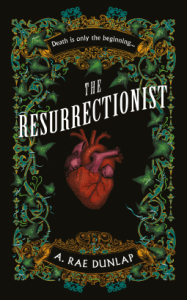
3. The Resurrectionists by Kim Wilkins

I read this one sometime in the early 2000s and loved it. It’s about an Australian woman uncovering family secrets in a small Yorkshire village and has a wonderfully atmospheric setting with a lonely cottage beside a clifftop cemetery.

4. Obsession by Ramsey Campbell

I really enjoyed this psychological horror novel about a group of teenagers who receive a letter from an unknown sender promising to make their wishes come true. Later, they find that there’s a terrible price to pay.

5. The Violin by Anne Rice

I never read any of Anne Rice’s more famous Interview with the Vampire books, but I did read this one, which I think was more of a ghost story.

6. The Point Horror series

I’m cheating slightly here and including this whole series of young adult horror novels, because I read a lot of them and can’t remember much about the individual books. They were written by a variety of different authors; I think my favourites were Richie Tankersley Cusick and R.L. Stine.

7. The Town by Bentley Little

This is a completely bizzare novel set in a small town in Arizona. All I remember about it is that a woman gives birth to a cactus and a church grows hair. I think I may have read other books by Bentley Little but this is the only one that has stayed in my mind.

8. The Silence of the Lambs by Thomas Harris

I’m sure many of you will be familiar with this one, if not the book then the film starring Jodie Foster and Anthony Hopkins in which a young FBI trainee tries to catch a serial killer who removes the skin of his victims. I read it, but it wasn’t really for me!

9. The Amityville Horror by Jay Anson

This book terrified me as a teenager. It’s supposedly the true story of George and Kathy Lutz, who move into a house that was the scene of a mass murder the previous year and flee again four weeks later after experiencing paranormal activity. There have since been various lawsuits over the book’s accuracy and truthfulness.

10. Audrey Rose by Frank De Felitta

I often find books about reincarnation very creepy. In this book, Eliot Hoover becomes convinced that eleven-year-old Ivy Templeton is the reincarnation of his own daughter, Audrey Rose, killed in a car crash at the age of three. There’s a sequel, For Love of Audrey Rose, but I didn’t like that one as much.

~

Do you read horror? Have you read any of these?

Nonfiction November: Week 1 – My Year in Nonfiction

I’m taking part in Nonfiction November which starts today and is hosted by Heather of Based on a True Story, Frances of Volatile Rune, Liz of Adventures in Reading, Running and Working from Home, Rebekah of She Seeks Nonfiction and Deb of Readerbuzz.

This week, Heather has posted the following questions for us to answer:

Week 1 – Your Year in Nonfiction:

What books have you read?
What were your favorites?
Is there a topic you want to read about more?
What are you hoping to get out of participating in Nonfiction November?

I’m not someone who reads a huge amount of nonfiction, but this year I’ve read more of it than usual – seven books so far and I am in the middle of an eighth. Here are the links to my reviews:

1. Britain’s Greatest Private Detective by Nell Darby
2. That Dark Spring by Susannah Stapleton
3. The Crying of the Wind: Ireland by Ithell Colquhoun
4. Come, Tell Me How You Live by Agatha Christie
5. Masquerade Balls in Regency Britain by Anne Glover
6. The Living Stones: Cornwall by Ithell Colquhoun
7. A History of England in 25 Poems by Catherine Clarke

These are all either history, true crime, memoirs or travel books, which isn’t very surprising as these are the topics I tend to always be drawn to when it comes to nonfiction. Of these seven books, my favourites are Christie’s Come, Tell Me How You Live, her account of accompanying her archaeologist husband on digs in Syria in the 1930s, and A History of England in 25 Poems, which I found fascinating (and much more of a history book than a poetry anthology).

I’m hoping that taking part in Nonfiction November will encourage me to read more nonfiction and find some new books and authors to add to my nonfiction TBR (which is much, much smaller than my fiction TBR).

Do you like to read nonfiction? Will you be joining in with Nonfiction November this year?

The Black Cabinet by Patricia Wentworth – #1925Club

Twenty-year-old orphan Chloe Dane has always loved her family’s ancestral home, Danesborough, but since the family fell on hard times, the house has been bought by a wealthy distant relative, Mitchell Dane, whom Chloe has never met. It comes as a big surprise to her, then, when Mr Dane tells her he would like to adopt her and make her his heir. Chloe is quite happy with her current life – she’s working as a dressmaker’s assistant and has plenty of admirers, although she’s not ready to accept any of them yet – and she tells Mr Dane she’s not interested in his money. That doesn’t stop him from leaving everything to her anyway when he dies unexpectedly soon afterwards.

Arriving at Danesborough, Chloe is immediately drawn to the black cabinet in the drawing room, which she remembers from her childhood. Before his death, Mr Dane had told her that the cabinet contained a safe and had sworn her to secrecy before telling her the combination to open it. When she opens the safe, Chloe finds some items that could be dangerous if they fall into the wrong hands – and when she discovers that the late Mr Dane’s secretary, Leonard Wroughton, is desperate to access the safe’s contents, she resolves to do whatever it takes to stop him.

This is my second book for 1925 Club, hosted by Simon and Karen this week, and was another great choice. I found it very similar to The Red Lacquer Case, published the previous year, which I also enjoyed, but the heroine in this one is more engaging. Chloe is a lovely person, principled, passionate and courageous – but at the same time, like Sally in The Red Lacquer Case, she’s too trusting, which leads her into danger over and over again. It’s frustrating, but also adds excitement to the plot – and, to be fair, I couldn’t always decide who could and couldn’t be trusted either.

Mr Wroughton is an obvious villain, along with his accomplice, the mysterious ‘Stran’, whose true identity isn’t known until the end of the book. However, there are other characters who are more ambiguous. Michael and Martin are both love interests of Chloe’s and it’s clear, at least to the reader, that one of them is trying to help her while the other is working against her. The question is, which is which? I was impressed by how cleverly Wentworth leads us to suspect first one, then the other, so that I found myself changing my mind several times throughout the book!

I thoroughly enjoyed The Black Cabinet, my only problem being that I couldn’t understand why Chloe didn’t just go straight to the police when she discovered what was inside the safe. I suppose the answer is that there would have been no story otherwise! I’m glad I picked such a fun book for 1925 Club. I’m looking forward to reading more by Patricia Wentworth as I’ve read very little of her work so far.