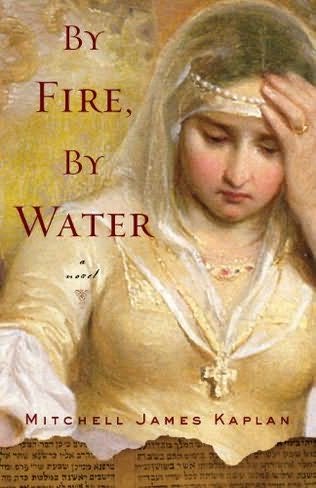
By Fire, By Water by Mitchell James Kaplan

By Fire, By Water tells the story of an important period in the history of Spain. A time of progress and discovery, as Christopher Columbus prepares to set out on his legendary voyage to the Indies and seeks funding from the Spanish court. But also a time of fear and suffering with Tomas de Torquemada’s New Inquisition designed to root out heresy.

Luis de Santángel, the King’s chancellor, is a converso – his family has recently converted from Judaism to Christianity – and his Jewish heritage means that even he, in his position of great wealth and power, is under suspicion. Santángel wants to understand the differences between the Jewish and Christian faiths but attempting to gain this knowledge could put his life in danger.

Intertwined with Santángel’s story is the story of Judith Migdal, who lives with her nephew and his grandfather in a Jewish community in Muslim-ruled Granada. Following the deaths of her brother and his wife, Judith decides to become a silversmith so that she can take over her brother’s silver workshop and support her family. Eventually Luis and Judith’s paths meet, but can there be any happiness for them?

By Fire, By Water was not a light or easy read and I found I had to really concentrate to follow everything that was going on. However, it was worth the effort because I felt that I really learned a lot from this book. I thought it was an excellent portrayal of what it must have felt like to live during the Inquisition, not being sure who could and couldn’t be trusted, knowing that even your own friends and family could betray you at any moment. This book really opened my eyes to the suffering and persecution the Jews faced in Spain. The images of thousands of Jews being driven from their homes and forced to leave the country are unforgettable.

I was also interested in the inclusion of Cristóbal Colón (Christopher Columbus) in the plot. Most people are aware of his quest to find the Indies and his subsequent arrival in America, but this book looks at the struggles he faced to obtain the funding he needed for the voyage and to get people to take his ideas seriously.

The author’s attention to detail is incredible, from the colours and fabrics of the clothes people wore, to the sights and sounds of the marketplace. You could never forget that you were in 15th century Spain and I was very impressed with the amount of research that must have gone into this book. Everything felt very realistic and believable.

I read most of this book in one day because I was so desperate to find out what would happen to Santángel, Judith and the other characters. The ending was not what I expected at all, but again, it was probably a realistic outcome. By Fire, By Water should be enjoyed by anyone who appreciates well-written historical fiction or is interested in learning more about 15th century Spain.

I received a review copy of this book from the author.
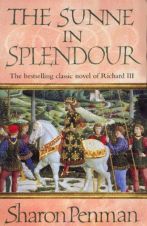
The Sunne in Splendour by Sharon Penman

“And what of those who didn’t know him? What happens, too, when all who knew him are dead, when people know only what they’ve been told?”

When I read The White Queen by Philippa Gregory earlier in the year, I became intrigued by Richard III, the Wars of the Roses and the mystery of the Princes in the Tower. The Sunne in Splendour was recommended to me as the best fictional account of Richard III, so I immediately bought a copy – and it has taken me until now to pick it up and read it. I think one of the things that was putting me off was the sheer size of the book; it’s one of those books that is physically difficult to hold because it’s so thick and heavy. But as soon as I started reading I knew I was going to love this book. Not only did it turn out to be the best historical fiction book I’ve read for a long time, it was also one of the best books of any type that I’ve read this year.

The Sunne in Splendour tells the complete life story of Richard III from childhood to death. Penman portrays Richard as a sympathetic figure who has been unfairly treated by history. Sadly, he is often thought of today as the villain of Shakespeare’s Richard III: the evil hunchback who murdered his nephews. It’s worth remembering though, that Shakespeare lived in Tudor England – and it was Henry Tudor who defeated Richard, the last of the Plantagenet kings.

The Wars of the Roses is the term used to describe a series of battles and rebellions that took place between two branches of the English royal family, the House of York and the House of Lancaster, during the late fifteenth century. I already had some basic knowledge of the period before I started reading this book, but even if you don’t I think Penman makes it easy enough to understand. Sometimes a story can suffer from the author’s attempts to include every little bit of interesting information they’ve uncovered in their research, but that’s not actually a problem here. Yes, there’s an enormous amount of detail, but everything feels necessary and helps to build up a vivid picture of Richard’s world.

The author really brought the characters to life and made them feel like real people who I could understand and care about rather than just names on the pages of a school history book. The number of characters with similar names could have caused confusion but I thought Penman handled the problem very well making them easy to identify by using nicknames (Ned, Dickon, Bess etc) or titles (Warwick, Clarence, Montagu) and Edward of Lancaster is given the French version of his name, Edouard, to distinguish him from Edward of York.

The story is told from multiple viewpoints, with surprisingly little of the story being from Richard’s perspective. Much of what we learn about Richard we learn through the eyes of his family, friends and enemies. A lot of time is devoted to the romance between Richard and Anne Neville, but what really fascinated me was the complex relationship between the York brothers, Richard, Edward and George.

As you might expect, there are a number of battle scenes – something that I don’t usually enjoy, but these were so well written that I was able to follow exactly what was happening and could even form mental pictures of the battlefields and the positions of the two opposing armies. The Battle of Barnet kept me up late on a work night and the Battle of Tewkesbury was even more compelling. I loved the way we got to see the human side of the battles, the emotions of the people on the battlefield, rather than just descriptions of the military tactics. While Richard and Edward are clearly supposed to be our ‘heroes’, it’s a testament to Penman’s writing that I could also cry at the deaths of their ‘enemies’.

Being almost 900 pages long, it took me a long time to read this book, but that was mainly because it was so emotionally intense in places that I couldn’t read too much at once. And also, I was dreading reaching the end. The problem with a book like this is that you know what’s ultimately going to happen (at least you do if you have some background knowledge of the period or have read about it before) so I knew what the eventual fate of the characters was going to be.

This is one of the best books I’ve read this year and I can’t believe I’ve never read anything by Sharon Penman before now. At least I know I’ll have hours of reading pleasure ahead of me as I work through the rest of her novels!

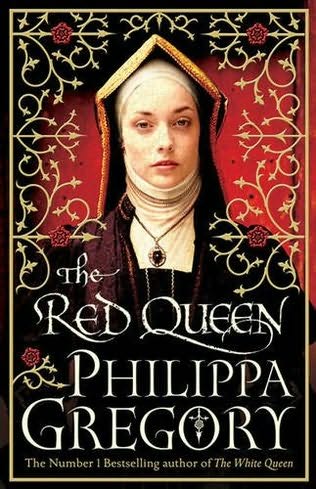
Review: The Red Queen by Philippa Gregory

This is the second book in Philippa Gregory’s new series set during the Wars of the Roses, a tumultuous period of English history in which the rival houses of York and Lancaster struggled for power. In The White Queen we met Elizabeth Woodville, wife of Edward IV of York, sister-in-law of Richard III and mother of the two young princes who mysteriously disappeared in the Tower of London in 1483. The Red Queen is the story of another woman who also played an important part in the Wars of the Roses: Margaret Beaufort of Lancaster, the mother of King Henry VII.

Although this is the second book in the series, I wouldn’t really describe it as a sequel – that is, The Red Queen doesn’t just pick up where The White Queen left off. The two books overlap somewhat and cover some of the same events, but from opposing sides of the conflict. You don’t really need to have read the first book to understand this one, although it would probably make sense to read them in the correct order. I really like the concept of two books each telling the story from a different perspective; throughout much of The White Queen, Margaret Beaufort and the Tudors were shadowy characters in the background, plotting and scheming from afar, so it was good to have them take centre stage in The Red Queen.

One of the themes running throughout the book is Margaret’s belief that God has chosen her to be another Joan of Arc, who will lead the House of Lancaster to victory, and that God’s will is for her son Henry Tudor to be crowned King. Margaret was not very likeable – in fact she came across as a very cold, ambitious and unpleasant person – but as far as I can tell, this is probably true of the historical Margaret. I was surprised that I could still enjoy this book despite the narrator being so unsympathetic; sometimes obnoxious characters can be fun to read about, and I found Margaret’s uncharitable thoughts about the House of York and the Woodville family quite funny at times.

I can’t really comment on the historical accuracy of this book because I have never studied the period in any depth – however, my lack of knowledge meant that I could just concentrate on enjoying the story! The Wars of the Roses were a complex and long-running series of conflicts, during which many of the key players changed their allegiances several times (and just to confuse things further, many of them also had the same names – lots of Henrys and Edwards, for example) but Philippa Gregory has made it easy to understand and follow what’s going on. I do think a more detailed family tree would have been helpful though – the one provided in the book was incomplete and I didn’t find it very useful.

The book is written in the same format as The White Queen, with most of the story being told in the first person present tense, occasionally switching to the third person to relate important events at which Margaret was not present, such as the Battle of Bosworth Field. I really like the way Philippa Gregory writes battle scenes using language that I can understand, as I often find reading about battles very confusing! The whole book is written in quite simplistic prose and can be repetitive at times, but it always held my attention and drew me into the story.

If you are new to the Wars of the Roses – a fascinating period of history – then I would recommend either The Red Queen or The White Queen as an excellent starting point. I also think that if you’ve tried Philippa Gregory in the past and didn’t find her books to your taste, it could be worth giving her another chance as these newest books are quite different from the Tudor ones that I’ve read.

Recommended

I received a copy of this book from Simon & Schuster UK for their Red Queen Blog Tour

Review: O, Juliet by Robin Maxwell

When Juliet Capelletti meets Romeo Monticecco at a masked ball, they instantly fall in love. There’s only one problem: the Capelletti and the Monticecco are families at war. Oh, and Juliet’s father is already planning to marry her to another man. Does this sound familiar? It should, because it’s a retelling of Shakespeare’s Romeo and Juliet – the most famous love story of all time.

The storyline is basically the same as Shakespeare’s but Robin Maxwell has made the story her own by adding some interesting twists and variations; for example she uses 15th century Florence as the setting rather than Verona and has her Romeo and Juliet mixing with real historical figures such as Lucrezia Tornabuoni and Cosimo de’ Medici. Also, while the events of Shakespeare’s play take place in less than a week, Maxwell’s story covers a longer period, making the pace feel more realistic and allowing her to spend more time fleshing out the early stages of Romeo and Juliet’s romance and Romeo’s attempts to reconcile their feuding families.

Although Jacopo Strozzi, the man Juliet is promised to, is a stereotypical villain (cruel and spiteful with yellow teeth and stinking breath), most of the other characters are well drawn. Maxwell’s Juliet is the daughter of a wealthy silk merchant and is portrayed as a strong, intelligent woman who enjoys writing her own poetry in the style of her beloved Dante Alighieri. The charming, romantic Romeo, son of an olive grower, is another Dante fan and it’s their mutual love of the poet that helps to bring them together. Throughout the book Romeo and Juliet frequently quote from Dante, as well as sharing their own poetic efforts with each other. I thought this was a nice touch and the fact that they had a common interest made their relationship more believable, rather than it just being love at first sight.

I wish I could say that I loved this book, but I didn’t – I thought it was good, without being exceptionally good. As the story started building towards its tragic climax I just didn’t feel as emotionally affected by it as I expected to. However, there were plenty of things I did like about the book, for example the way it was structured, with most of the story being told from Juliet’s viewpoint interspersed with the occasional chapter from Romeo’s point of view. The fact that the plot unfolds within a real historical setting makes the story feel convincing. I haven’t read many books set in Renaissance Italy, so this was another aspect of the book that I enjoyed – the descriptions of Florence are full of detail and imagery. Finally – and I don’t normally mention this in my reviews – the front cover is gorgeous! I would recommend O, Juliet to lovers of historical romance or to anyone who is intrigued by the thought of reading a new take on a classic tale.

Genre: Historical Fiction/Pages: 338/Publisher: New American Library/Year: 2010/Source: Won in giveaway

Review: The White Queen by Philippa Gregory

Philippa Gregory is best known for her Tudor court novels, but with The White Queen she moves further back in time to the Plantagenets and the Wars of the Roses.

Elizabeth Woodville is twenty seven when she meets and falls in love with King Edward IV. Following a private wedding, Elizabeth becomes Queen of England and finds herself caught up in the ongoing battles between the House of Lancaster and the House of York. Amidst all the politics, intrigue and betrayal, Elizabeth’s concern is for the future of her children – in particular her two royal sons who will become the famous ‘Princes in the Tower’, a mystery which remains unsolved to this day.

The book is written in the first person present tense which I found slightly irritating, though not enough to stop me from enjoying the book. The use of present tense does help the reader to feel as if they are experiencing events along with Elizabeth, so it works in that sense, but my personal preference is definitely for past tense. There are a few passages where the viewpoint temporarily changes to the third person in order to describe battles which Elizabeth doesn’t witness but which are an important part of the storyline. I often find battle scenes boring, but these are well written and go into just the right amount of detail.

I found the story itself quite suspenseful and exciting – it probably helped that although I read a lot of historical fiction novels, I haven’t read many about the War of the Roses, so only had a vague idea of what was going to happen. Of course, this meant that I wasn’t sure exactly which parts of the book were based on fact and which parts were the invention of the author. In her note at the end of the book, Gregory mentions that there’s not much information available about the period, therefore there are some areas where she felt free to use her imagination.

If you’re not very familiar with the historical background, you’ll need to concentrate to be able to keep track of all the battles, changes of allegiances and numerous claimants to the throne. The family tree provided at the front of the book is not very helpful – it’s incomplete and really needed to show at least one more generation, as it ends before some of the important characters in the story were even born.

I found it difficult to warm to the character of Elizabeth but could feel sympathy for her, especially towards the end of the book. Richard III was also portrayed quite sympathetically – nothing like the evil hunchback in Shakespeare’s play! I would have liked to have seen his relationship with Elizabeth more thoroughly explored in the book – there was no real explanation for why she distrusts him so much, other than that she’s had dreams and premonitions that something bad will happen to her sons in the Tower. On the subject of the Princes in the Tower, the book explores an interesting theory, which may or may not be true – it would be nice to think that it was.

Interspersed with the main story is the tale of Melusina, the water goddess, from whom Elizabeth and the female members of her family are said to have descended and from whom they claim to have inherited magical powers.
Magic and mythology are recurring themes throughout the book. Elizabeth and her mother Jacquetta’s witchcraft skills are used as an explanation for several key historical events – for example, they whistle up storms to defeat their enemies at sea. This aspect of the story became quite repetitive and just didn’t appeal to me much. Sometimes it felt as if there were references to Melusina, water, rivers, the sea etc on almost every page!

The book ends abruptly, but that’s not surprising since The White Queen is the first in a trilogy called The Cousins’ War and will be followed by The Red Queen and The White Princess which will focus on Margaret Beaufort and Elizabeth of York respectively.

I would recommend The White Queen if, like me, you don’t have much knowledge of the Wars of the Roses and are looking for an enjoyable and relatively easy to understand introduction to the period. For those of you with a lot of background knowledge, I think there should still be enough new ideas to keep you interested.

Recommended

Genre: Historical Fiction/Pages: 417/Publisher: Simon & Schuster/Year: 2009/Source: My own copy bought new