The Silent Companions by Laura Purcell

I decided to read this for the 20 Books of Summer challenge in preparation for the sequel, House of Splinters, coming out in October. I’m not sure how closely connected the two books will be, but it made sense to read The Silent Companions first and as I’ve enjoyed other books by Laura Purcell I was sure I would like this one anyway.

The novel begins in 1865 with Elsie Bainbridge arriving at The Bridge, her late husband’s family estate near the village of Fayford. Elsie only married Rupert a month earlier but already he is dead, leaving her a widow and pregnant with his child. She has come to The Bridge for the funeral and to spend the duration of her pregnancy, accompanied by Sarah, a cousin of Rupert’s.

From the moment she sets eyes on the house, Elsie has an uneasy feeling about it, which only increases when she learns that The Bridge has a bad reputation in the village and there’s been difficulty finding servants because no one wants to work there. Then, in a locked room upstairs she and Sarah discover a painted wooden figure that bears a striking resemblance to Elsie herself. What is this ‘silent companion’ and why does it seem to have a mind of its own? The answers can be found in a two-hundred-year-old diary written by Anne Bainbridge, who lived in the house with her husband and daughter, Hetta, during the reign of King Charles I.

The narrative switches back and forth between Anne’s story in 1635 and Elsie’s in 1865 and there are also some chapters set in St Joseph’s Hospital at an unspecified point in the future. The hospital is an asylum and we learn that Elsie has been sent there following a fire at The Bridge which has left her badly burned and unable to speak. It seems that Elsie has been accused of murder and her doctor suggests that if she writes down everything she can remember, beginning with her arrival at The Bridge, it might be enough to save her from execution.

Although I felt that the framing story in the hospital wasn’t really necessary (maybe because the ‘woman sent to an asylum by family members’ trope is one I come across such a lot in novels with Victorian settings), I did really enjoy the book as a whole. I loved the atmosphere Purcell creates, which grows increasingly tense and sinister as more and more strange occurrences take place at The Bridge and the silent companions multiply in number. Silent companions really existed; also known as dummy boards, they originated in the 17th century – the National Trust has some information about them here and some pictures which show how lifelike they were.

The story that unfolds through Anne’s diary is fascinating. After having several sons, she uses herbs to try to conceive a daughter and when that daughter, Hetta, is born with a damaged tongue and without the ability to speak, Anne believes it was her fault for using witchcraft. The child is shunned by her father and hidden away from society, where she becomes associated with the sense of evil that seems to be spreading throughout the house and the Bainbridge family. It’s Anne who first acquires the silent companions and brings them home, creating the link between her own life and Elsie’s two centuries later.

This is not a book where everything is neatly tied up at the end. There are questions left unanswered and several possible theories to consider. I usually prefer an explanation, but in this case I was happy to be left wondering. I’m looking forward to House of Splinters now!

Book 20/20 for 20 Books of Summer 2025.

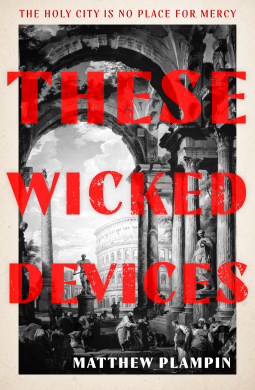
These Wicked Devices by Matthew Plampin

I’ve only read one Matthew Plampin book – Mrs Whistler, about the life of Maud Franklin, the model and muse of the artist James McNeill Whistler – so I was intrigued by the description of his new one, which is set in an entirely different time and place. These Wicked Devices takes us to Rome in the summer of 1650 and introduces us to three separate characters whose stories become entwined in various ways.

First, we meet Sister Orsola, a Benedictine nun who has fled to Rome after the city of Castro, including the convent that was her home, was razed to the ground on the Pope’s orders. Orsola is accompanied by Sister Serafina, a choir nun who goes into trance-like states where she endlessly recites the lives of the saints. In the final hours before Castro’s destruction, the Mother Abbess had asked Orsola to protect Serafina and help her find another convent where she could live in safety. Orsola agreed, hoping that performing this task would help her to atone for the sin of giving birth to a child who died unbaptised.

Another thread of the novel follows Donna Olimpia Maidalchini, the most important woman in Rome. As the sister-in-law of Pope Innocent X, she is regarded as the real power behind the papal throne, involving herself in politics and the appointment of positions within the church. At the beginning of the novel, Donna Olimpia is negotiating with France to help a French invasion force seize the Kingdom of Naples from Spain.

Finally, we meet Juan de Pareja , newly arrived in Rome from Spain. Juan is an assistant and slave of the Spanish artist, Diego Velázquez, who hopes to paint a portrait of the Pope. When Juan discovers some secret papers hidden inside a metal statue, however, he suspects that there’s also another reason for their presence in Rome.

These three storylines alternate throughout the book, clearly marked with the Latin headings Sorores (sisters), Domina (mistress) and Servus (servant), to indicate whose perspective we’ll be reading from next. The three do merge together a lot, but I did find myself preferring one over the others – the one about Sisters Orsola and Serafina. There’s a real sense of danger as they are suspected of being heretics due to their connection with Castro and Orsola isn’t sure who can and can’t be trusted as she tries to carry out her promise to the Abbess. There was a lot to interest me in Juan de Pareja’s story as well – his relationship with his master, Diego Velázquez, his own ambitions of becoming an artist and his desire to live his life as a free man – but I found Donna Olimpia’s sections less engaging, maybe because she herself is much less likeable as a person.

Plampin creates a strong sense of time and place, with vivid descriptions of the piazzas, fountains, palazzi and churches of Rome as the city bakes in a late spring heatwave. I found the writing style quite dry, though, so for me this was an interesting read rather than an entertaining one. Still, it was good to add to my knowledge of a period in Rome’s history that I knew very little about.

Thanks to The Borough Press for providing a copy of this book for review via NetGalley.

Book 7/20 for 20 Books of Summer 2025.

The King’s Messenger by Susanna Kearsley

The role of Royal Messenger is one that still exists, but has changed and diminished over time due to modern technology and the declining power of the monarchy. In the 17th century, when Susanna Kearsley’s new novel is set, the job involved acting as a courier to convey messages or important documents around the country, as well as carrying out other diplomatic missions on behalf of the monarch, in this case King James VI and I.

The King’s Messenger opens in London in 1613, ten years after James united Scotland and England under one crown. His eldest son and heir, Henry, Prince of Wales, has died unexpectedly and rumours of poisoning have started to spread. Determined to find out who is responsible, the King summons one of his Messengers, Andrew Logan, and sends him north to Scotland with orders to arrest Sir David Moray, who had been a companion to the young prince. James believes that capturing Sir David is the key to finding out what really happened to his son and he hopes to make him confess to his involvement.

A neighbour of Logan’s, Laurence Westaway, is commissioned to travel with Logan as a scrivener, or scribe, tasked with writing down any information Moray gives them that can be used as evidence. Because Westaway is in poor health, his daughter Phoebe insists on accompanying them to Scotland and back. Unfortunately, Phoebe has always hated Andrew Logan and her loathing for him has intensified since he became embroiled in a confrontation with her lover, the courtier Valentine Fox. It’s going to be an interesting journey!

The novel is written from four different perspectives. Andrew Logan and Phoebe Westaway are two of them and it’s interesting to see how they view each other and how their feelings change as the journey progresses. Sir David provides a third perspective, offering an outsider’s view of the other members of the party, as well as giving us some flashbacks to his time in Prince Henry’s service. Finally, there are a few chapters focusing on Queen Anna, the Danish wife of King James, who also wants to know more about her son’s death. I felt that the Anna sections weren’t really needed and added very little to the novel, but the other shifting perspectives worked very well, changing from one to another at appropriate times to move the story forward.

A large portion of the book is set on the road, as Andrew, Sir David and the Westaways make their way back to London from Scotland. I found the route they take interesting because it’s not very direct, but of course there are no modern roads or infrastructure in the 17th century and they also need to find towns and castles where they can shelter for the night along the way. Andrew’s scarlet livery, which identifies him as a King’s Messenger, can be either a blessing or a danger, depending on the political allegiances of the people they meet. Something else which could put him in danger, considering the witch hunts sweeping across the country during that period, is his ability to glimpse the future. Susanna Kearsley’s novels often contain elements of the supernatural and I liked the way they were handled in this book; Andrew’s second sight doesn’t form a big part of the story but does lead to a wonderfully eerie scene as the party are crossing the Tarras Moss in the land of the Border Reivers.

Susanna Kearsley’s author’s note is almost as interesting as the book itself! I was impressed by the level of research she carried out, including touring the Scottish Borders and north of England to trace the route her fictional characters would take. She also describes the history of the Royal Messengers which led to the creation of her fictional hero Andrew Logan and explains which of the other people in the book were historical figures who really existed. Sir David Moray is one of these, although usually referred to as Murray (she has a reason for using the Moray spelling). Whether real or fictional, all of the characters in the novel come to life; I loved both Andrew and Sir David and although it took me longer to warm to Phoebe, she did win me over in the end!

I loved this book; it’s probably my favourite by Susanna Kearsley so far. It’s also coincidentally the second book I’ve read in the space of two months about Anne/Anna of Denmark (the other was The King’s Witches by Kate Foster).

Thanks to Simon & Schuster UK for providing a copy of this book for review via NetGalley.

Book 41/50 for the Historical Fiction Reading Challenge 2024

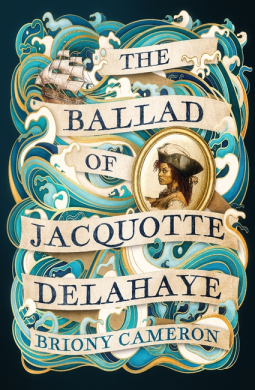
The Ballad of Jacquotte Delahaye by Briony Cameron

The Ballad of Jacquotte Delahaye is an unusual novel because it’s based on the ‘true story’ of someone who may or may not have actually existed! One of a very small number of 17th century female pirates, Jacquotte Delahaye is not mentioned in any contemporary sources and appears in writing, possibly for the first time, in the 1940s in stories by Léon Treich, a French fiction writer. However, she has become part of pirate folklore and although her existence hasn’t been proved, it hasn’t been disproved either. In this new novel, Briony Cameron has taken the few ‘facts’ about Jacquotte that have found their way into the legends – such as her place of birth and the colour of her hair (red, leading to the nickname Back from the Dead Red) – and imagined a story around them.

At the beginning of the book, twenty-year-old Jacquotte is living in the town of Yáquimo, Santo Domingo, in 1655. As the daughter of a Frenchman exiled to the Caribbean for treason, all Jacquotte knows about her mother is that she was a free black woman who died after giving birth to her younger brother. When her father is implicated in another treasonous plot, Jacquotte’s world falls apart and she is forced to flee the island. Her life of piracy begins when she is captured by the brutal Captain Blackhand and finds herself an indentured servant aboard his ship, but eventually Jacquotte will become a pirate captain in her own right, with her own ship and crew to command.

There’s also a romantic element to the novel, with Jacquotte falling in love with Teresa, wife of the Governor of Yáquimo, but this was one of my least favourite aspects of the book. They seemed to rush into things very quickly, with no time for the reader to see their feelings for each other developing and I felt that the relationship lacked emotional depth. In fact, apart from Jacquotte herself, I thought all of the characters in the book lacked depth – the good characters were very good and the bad ones were very bad, with little in between. I would describe this as much more of a plot-driven book. Although it takes a while to get started, once Jacquotte is at sea there’s lots of action, with sea battles, fight scenes and all the swashbuckling adventure you would expect from a pirate novel.

Sadly, despite the fascinating protagonist, I wasn’t very impressed with this book. I did enjoy the first section, which describes Jacquotte’s life in Yáquimo and the events that lead to her becoming a pirate, but as I read on I felt I was reading the author’s fantasy of how she would have liked 17th century society to have been, rather than how it actually was. I don’t think many people in the 1650s had such progressive ideas on race, gender and sexuality, however nice it is to imagine that they did! If you’re not too bothered about historical accuracy and just want to read an entertaining story, then you’ll probably enjoy The Ballad of Jacquotte Delahaye, but it wasn’t really for me. On a more positive note, I liked the descriptions of the various ports Jacquotte and her crew visit as they sail around Hispaniola, Jamaica and Tortuga, which is the closest I’ll get to visiting the Caribbean this summer!

Thanks to Piatkus for providing a copy of this book for review via NetGalley.
Book 20/50 for the Historical Fiction Reading Challenge 2024

This is book 2/20 of my 20 Books of Summer 2024.

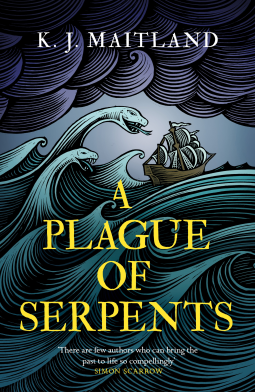
A Plague of Serpents by KJ Maitland

This is the fourth and final book in the Daniel Pursglove series by KJ Maitland (who has also published under the name Karen Maitland). Although I’ve done my best to avoid spoilers in this review, I wouldn’t recommend starting with this book anyway; the plots are complex and there are lots of characters to keep track of, so this is a series that should really be read in order, beginning with The Drowned City and moving on to Traitor in the Ice and Rivers of Treason.

This fourth novel, A Plague of Serpents, is set in the spring of 1608. It’s been three years since the Gunpowder Plot of 1605, a failed attempt on the life of King James I of England and VI of Scotland by Catholic conspirators. One of the escaped conspirators, a man known only as Spero Pettingar, remains unidentified and uncaptured, but Daniel Pursglove is still on his trail. The King’s man, Charles FitzAlan, who released Pursglove from Newgate Prison on the condition that he would hunt down Spero Pettingar in return, is growing impatient; the longer Pettingar remains on the loose, the longer the King’s life remains at risk.

In search of answers, Daniel infiltrates a secret group of Catholics known as the Serpents who are plotting another assassination attempt. However, he has also become aware of a second group, the Wyverns, who are planning to use the Serpents as pawns and then seize control of the throne for themselves. To make things even more dangerous for Daniel, there are people within both factions who know too much about him and are prepared to threaten and blackmail him to get what they want.

Unlike the previous three novels, which took us to Bristol, Sussex and Yorkshire respectively, this one is set in London and while floods, frosts and thaws played a big part in those three books, the natural environment is less significant in this one. Instead of extreme weather conditions, this time the public have an outbreak of plague to deal with. I’ve always found the plague an interesting topic to read about, even more so since our own recent pandemic, but it doesn’t actually form a very big part of the book despite the title and prologue which made me think otherwise! Other than that, Maitland does her usual excellent job of creating an immersive and believable 17th century world. Rather than breaking the flow of the story to explain the meanings of terms and phrases, she saves these for a glossary at the end of the book, so if you want to know what a bene-feaker is, what a palterer does or what a cracknel tastes like, you’ll have your chance to find out.

The characters in the novel are a mixture of real and fictional; some, like Robert Cecil, are well known historical figures, but others are more obscure – I was surprised to find that the brothel-keeper Donna Britannica Hollandia really existed! With this being the last in the series, the storylines for the characters who have been with us for several books are wrapped up in one way or another and I was pleased to see that my theory about one particular character was proved correct.

Although I did enjoy A Plague of Serpents, I felt that it, like the earlier books, was far more complicated than it really needed to be. With several different groups of conspirators and others at court working with or against each other for their own purposes, it was difficult at times to remember who was on which side and who knew what. Otherwise, this was a perfect ending to the series and I will be interested to see whether Maitland continues to write historical mysteries/thrillers like these or goes back to the kind of standalone historical novels she wrote earlier in her career.

Thanks to Headline Review for providing a copy of this book for review via NetGalley.

Book 17/50 for the Historical Fiction Reading Challenge 2024

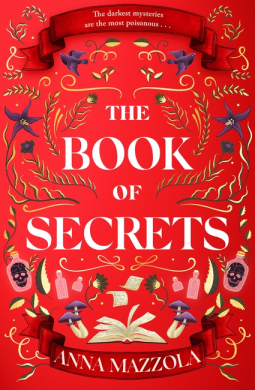
The Book of Secrets by Anna Mazzola

Anna Mazzola’s new novel – her fifth and the fourth that I’ve read – is set in Italy and takes as its inspiration the real life story of a group of women accused of selling poison in 17th century Rome.

It’s 1659 and Stefano Bracchi, a junior magistrate at the Papal Court, has been commissioned by the governor of Rome to investigate some unusual deaths that have taken place in the city. The plague that recently swept through Rome took many lives, but this is something different. These deaths are all men and for some unexplained reason, the bodies haven’t gone through the normal process of decay.

Meanwhile, Anna is trapped in an abusive marriage and searching for a way of escape. Her maid introduces her to a woman who says she can help, but the sort of help she provides is not quite what Anna was expecting! As Stefano begins to close in on the people responsible for the mysterious deaths, Anna finds herself caught in his net, but will he be able to prove that she has done anything wrong?

The Book of Secrets is written from the alternating perspectives of Stefano, Anna and a third character – Girolama, a Sicilian woman with a knowledge of herbs, potions and fortune telling, who is said to possess the ‘book of secrets’ of the title. Because we see the story unfold through all three of these characters, there’s very little mystery involved in the book; we know what Girolama and her friends are doing to help the women of Rome, we know how Anna deals with her violent husband and we know how Stefano’s investigation is progressing. However, what I found interesting about this book was not so much the plot as the characters and the way each of them reacts to the situation in which they find themselves.

Our sympathies are naturally with Anna, a desperate woman who takes the only way out she feels is open to her, while Girolama is a more morally ambiguous character – she has the best intentions and her work does a lot of good, but at the same time she seems largely unconcerned that her actions may occasionally cause harm to innocent people. The Rome of 1659 is a male-dominated society and many of the women in the book are victims of men, but Stefano Bracchi is another nuanced character; as he begins to round up Anna, Girolama and their associates for interrogation at the Tor di Nona prison, he becomes torn between compassion for their suffering and the desire to keep his superiors happy for the sake of his career.

Before starting this book, I knew nothing about Girolama Spana and the case this novel is based on. Although Anna Mazzola hasn’t stuck to the historical facts and has invented or expanded parts of the story, she does explain her choices in her author’s note at the end of the book. The Clockwork Girl is still my favourite of her novels, but this is another fascinating one.

Thanks to Orion for providing a copy of this book for review via NetGalley.

Book 12/50 for the Historical Fiction Reading Challenge 2024

Silence by Shūsaku Endō

Translated by William Johnston

One of my resolutions for 2024 is to read more historical fiction in translation and where better to start than with a book for the Japanese Literature Challenge (hosted by Dolce Bellezza throughout January and February).

First published in Japanese in 1966 and in English in 1969, Shūsaku Endō’s Silence is set in the 17th century and tells the story of a Portuguese Jesuit priest, Sebastian Rodrigues, who travels to Japan to investigate claims that his old mentor, Father Ferreira, has committed apostasy – in other words, renounced his faith. Rodrigues and his friend Francisco Garrpe, another priest, can’t believe that their teacher would do such a thing. Certain that there must be some mistake, the two set out from Lisbon on the long journey to Japan, where they hope to learn what has really happened to Ferreira.

Rodrigues and Garrpe reach Japan in 1639 and quickly discover that the local Christian communities are being persecuted and forced to hide their religion from the authorities. Anyone the officials suspect of being a Christian is told to trample on an image of Christ, known as a fumie, and if they refuse they are imprisoned and tortured by being suspended upside down over a pit. On his arrival in Japan, Rodrigues goes into hiding with the other Christians, carrying out his missionary work and helping them to worship in secret, but he knows it’s only a matter of time before he is caught and has his own faith put to the test.

Silence is both beautifully written and beautifully translated. From beginning to end, I was completely immersed in another time and place; there’s no jarringly modern language to pull the reader out of the story and everything feels authentic and real. I was intrigued by Endō’s decision to write the novel from the perspective of Rodrigues (first in the form of letters written by the priest and then in the third person) rather than the Japanese Christians and it was interesting to see how Endō viewed his country, its people and its customs through the eyes of a stranger.

I am not a particularly religious person but you don’t need to be to be able to appreciate this novel. I was very moved by the internal struggles Rodrigues faces as he begins to question why God is remaining silent in the midst of so much torture and persecution and whether renouncing his faith, under certain circumstances, could actually be the right thing to do if it helps alleviate the suffering of others. As you can imagine, it’s quite a bleak story, but I loved it and although it’s only been a few days since I finished it, I don’t think it’s a book I’ll ever forget. I would like to try more of Endō’s work and am pleased to see that some of his other novels are also available in English translations.

I read this book for the Japanese Literature Challenge 17 and the Historical Fiction Reading Challenge.