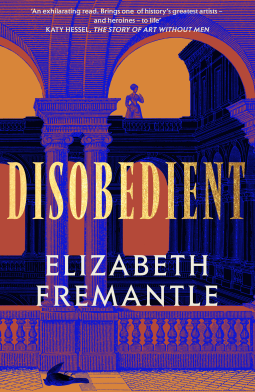
Disobedient by Elizabeth Fremantle

Elizabeth Fremantle is an author I always look forward to reading and I have enjoyed all six of her previous novels, including her two historical thrillers published under the name E.C. Fremantle. This seventh novel takes us to 17th century Italy and tells the story of Artemisia Gentileschi, one of the most important and accomplished female painters of her time.

Artemisia grows up in Rome, the daughter of the painter Orazio Gentileschi. Having lost her mother while still a child, Artemisia is raised by her father, spending time in his workshop learning to draw and paint. Orazio is a talented artist, heavily influenced by the more famous Caravaggio, but it quickly becomes obvious even to him that his daughter’s work is better than his own.

In 1611, the painter Agostino Tassi enters Artemisia’s life, first as her tutor and then as her intended husband. However, Tassi’s arrival leads to a terrible experience for Artemisia – something I won’t go into here because I think any reader who has come to this book with little or no knowledge of Artemisia’s life will probably prefer to discover her story for themselves. The second half of the book becomes quite dramatic as the repercussions of this incident become clear, so if you don’t already know all the details in advance, which I didn’t, it’s interesting just to watch it all unfold.

Artemisia is a great subject for historical fiction, being a strong, ambitious, determined woman whose work has left a lasting impact. Although we can’t know her true thoughts and feelings, Fremantle does a good job of getting inside Artemisia’s head and showing us what may have provided the inspiration for some of her paintings, such as Susanna and the Elders and Judith Slaying Holofernes. You’ll probably find yourself wanting to look up the paintings online as you read. As well as Artemisia, there are other characters in the novel who are equally well drawn; I’ve already mentioned Tassi and Artemisia’s father Orazio, but there’s also Zita, who becomes a model and chaperone for Artemisia, and Piero, Orazio’s assistant.

Disobedient covers only the earlier part of Artemisia’s life and the novel ends with a lot of her story still untold, but after reading Fremantle’s author’s note where she explains her personal reasons for wanting to write this book, I can see why she chose this period to focus on and I appreciate the courage it has taken for her to do so. I don’t think it’s my favourite of her novels, simply because some of the other settings and historical figures she has written about have interested me more, but I still enjoyed this book and am pleased to have had the opportunity to add to my knowledge of this fascinating artist.

Thanks to Penguin Random House/Michael Joseph for providing a copy of this book for review via NetGalley.

This is book 8/20 of my 20 Books of Summer 2023

This is book 29/50 for the 2023 Historical Fiction Reading Challenge.

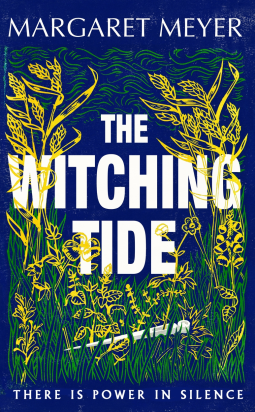
The Witching Tide by Margaret Meyer

I’ve read several novels about English witch trials in the 16th and 17th centuries, most recently The Bewitching by Jill Dawson, and I wondered whether this one – The Witching Tide, Margaret Meyer’s debut novel – would have anything new to offer. I’m pleased to say that although there are some obvious similarities with the other books I’ve read, this book also explores some different elements and ideas so was definitely worth reading.

The novel is set in 1645 in the small coastal village of Cleftwater, East Anglia. Martha Hallybread is a servant in the household of Kit Crozier, whom she nursed as a child. Martha has never married herself, choosing instead to devote her life to Kit and his family, as well as serving as the village midwife and healer. When the witchfinder Master Makepeace arrives in Cleftwater, Martha fears that she could become a target, particularly if anyone discovers her secret ‘poppet’, a wax doll inherited from her mother. However, a twist comes very early in the novel when Martha avoids being rounded up with the other suspected witches – and finds herself one of several women enlisted by the witchfinder as assistants.

Most books focus on the misogyny behind the witch hunts, but The Witching Tide reminds us that there were also women involved in condemning their fellow women. Some of them may have really believed they were cleansing their towns and villages of witchcraft, others probably just thought it was the best way to avoid falling under suspicion themselves; in Martha’s case, she hopes that her position will allow her to bring some comfort to the women awaiting trial and find a way to prove they are innocent.

Another thing that makes Martha an unusual protagonist is the fact that she is mute – and yet this is the aspect of the book I found least successful. Margaret Meyer has said that Martha’s lack of speech is intended to represent the way in which the ‘witches’ were silenced, denied a voice and prevented from defending themselves against their accusers, but although this is a clever idea, I felt that Martha made herself understood too easily, expressing complex ideas and sentences through gestures so that even strangers seemed to know what she meant. I could see what the author was trying to do, but I wasn’t completely convinced.

Martha’s story is fictional, but inspired by the real life East Anglian witch hunts of 1645-47 and the imaginary Cleftwater is loosely based on Aldeburgh, Suffolk, the location of one of the hunts. Knowing that real people experienced the things Martha and her friends went through makes the book even more meaningful.

Thanks to Orion Publishing Group/Phoenix for providing a copy of this book for review via NetGalley.

This is book 7/20 of my 20 Books of Summer 2023

This is book 28/50 for the 2023 Historical Fiction Reading Challenge.
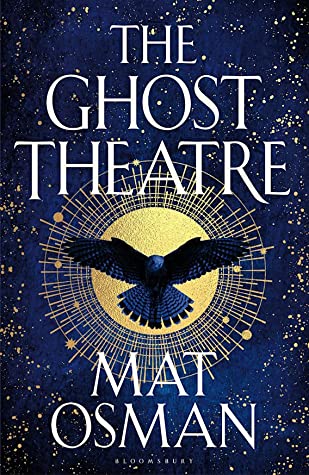
The Ghost Theatre by Mat Osman

The Ghost Theatre, Mat Osman’s second novel, is the story of two young people who meet on the rooftops of Elizabethan London. One of them is Shay, a teenage girl who dresses as a boy and belongs to a community of bird-worshippers. As the novel opens, Shay has released some caged birds from captivity in a shop and is being chased by the angry owner; with the instincts of a bird herself, she flees upwards to the roof and here she has her first encounter with Nonesuch. Taking his name from Henry VIII’s grand palace, Nonesuch claims to be the abducted son of a great lord, forced into performing at the Blackfriars Theatre, dressing as a woman to play leading female roles such as Cleopatra.

As Shay begins to fall in love with Nonesuch, she helps him to create the Ghost Theatre, a troupe of young actors who stage special plays in secret locations all over London. But it is another talent of Shay’s – her ability to tell fortunes – that brings her to the attention of Queen Elizabeth I and leads her into danger.

Mat Osman is the brother of the author and TV presenter Richard Osman and also the bassist in the British rock band Suede. I haven’t read his first novel, The Ruins, and had no idea what to expect from this one, but I can tell you it’s a very unusual book – not purely historical fiction but not quite fantasy either. It’s set in a city we can recognise as the London of the late Elizabethan period – there are outbreaks of plague, attempted rebellions, references to popular Elizabethan sports such as cock-fighting and bear-baiting – but there are also some imagined elements. As far as I know there was no community of Aviscultans living in Birdland and predicting the murmurations of starlings!

I have to be honest and say that this book wasn’t really for me. Perhaps because of the blend of alternate history with real history, it didn’t have the strong period feel I prefer – the dialogue was too modern, for example. I also found it quite difficult to focus on the plot; the imagery and descriptions were lovely but slightly distracting and sometimes I read several pages without really absorbing any of the words. If I had to compare this book to anything, it would be Megan Campisi’s The Sin Eater, another novel set in an alternate Elizabethan world and which I had some similar problems with. Incidentally, there is a sin eater in Osman’s novel too, although only mentioned in passing!

It would seem that Osman’s own love of music has influenced this story, with a lot of emphasis placed on the power of song, performing on stage and entertaining an audience. The novel as a whole is imaginative, creative, dreamlike and completely original. I wish I had been able to enjoy it more, but the right reader will love it.

Thanks to Bloomsbury Publishing for providing a copy of this book for review via NetGalley.

This is book 16/50 read for the 2023 Historical Fiction Reading Challenge.
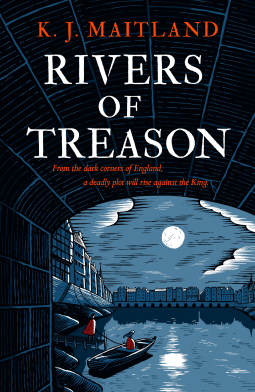
Rivers of Treason by KJ Maitland

This is the third book in KJ Maitland’s 17th century mystery series and continues Daniel Pursglove’s search for the mysterious Spero Pettingar. If you haven’t read the first two (The Drowned City and Traitor in the Ice) I strongly recommend that you do so before starting this book. Even though I’ve read both of them, the plot is so complex I found it difficult to keep track of what was happening at times, so I think coming straight to this book could be quite confusing.

The series is set in the aftermath of the Gunpowder Plot of 1605, a failed attempt by Catholic conspirators to blow up the Houses of Parliament and assassinate the King (James I of England and VI of Scotland). In the first book, Daniel Pursglove was released from Newgate Prison by the King’s advisor, FitzAlan, on the condition that he would hunt down and identify one of the escaped conspirators, a man known only as Spero Pettingar. As Rivers of Treason opens, Daniel has still not caught Spero but the mystery surrounding his whereabouts continues to deepen.

It’s now 1607 and the Great Frost that has held England in its grip during the winter is beginning to thaw. Without FitzAlan’s permission, Daniel has headed north to his childhood home in Yorkshire, not on the King’s business this time, but hoping to find answers about his own past. When an old woman is found murdered, however, Daniel finds himself under suspicion and is forced to flee across the country, pursued by a sinister man with a distinctive black and white beard. Has Daniel stumbled upon the trail of Spero Pettingar at last or has he become caught up in another, even bigger conspiracy?

I enjoyed this book, despite feeling that there was too much going on, a criticism I’ve had of the first two books in the series as well. I would have preferred a tighter focus on the central mystery, which often seems to get lost under the numerous subplots Maitland throws into the story. Having said that, some of the subplots were quite fascinating, such as one involving a London apothecary commissioned by the King to make an antidote to poison. After narrowly avoiding death in the Gunpowder Plot, it’s understandable that James has developed a paranoia about further attempts on his life! During Daniel’s time in Yorkshire, meanwhile, we learn a little bit more about our protagonist’s past and although I still don’t feel that we know him very well, it was good to have some questions answered.

I also love the atmosphere Maitland creates in this series, making it easy to feel immersed in the early 17th century, particularly where she describes the lives of the ordinary people Daniel meets on his travels but also in her descriptions of the Jacobean court. In this book, we follow the preparations for an elaborate masque (play or entertainment) written by the playwright Ben Jonson, with the set and costumes designed by the architect Inigo Jones. Jonson and Jones really did collaborate on many court masques, but this is the first time I’ve read about their work together, so I found that aspect of the story interesting.

Rivers of Treason finishes on something of a cliffhanger, leaving us wondering what Daniel is going to do next. I hope we won’t have to wait too long for the next book so that we can find out!

Thanks to Headline Review for providing a copy of this book for review via NetGalley.

This is book 13/50 read for the 2023 Historical Fiction Reading Challenge.
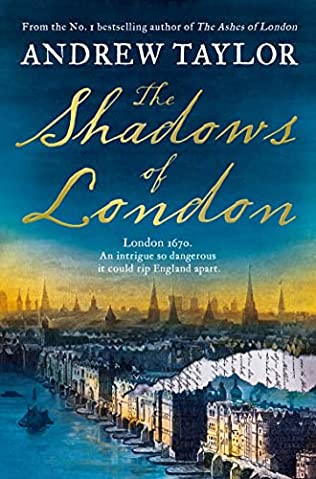
The Shadows of London by Andrew Taylor

A new book in Andrew Taylor’s Marwood and Lovett series is always something to look forward to. This is the sixth in the series and another one I thoroughly enjoyed. If you’re new to these books they do all work as standalones, but I would recommend reading all of them in order if possible so you can watch the relationship develop between James Marwood and Cat Lovett.

The Shadows of London is set around six years after the devastation of the Great Fire of London in 1666. The city is continuing to rebuild and Cat Lovett – now the widowed Mistress Hakesby – is working on the restoration of an ancient almshouse. Having taken over the running of her late husband’s architecture business, Cat is establishing a reputation for herself as a talented architect in her own right, and she and her partner, Brennan, have received a commission to rebuild the almshouse and construct new brick houses on the adjoining land. When a dead body is found on the site, bringing the project to a halt, Cat approaches her friend James Marwood to ask for his help in speeding up the investigations so that work can continue.

Marwood is now working as private secretary to the powerful statesman Lord Arlington. When it emerges that the dead man could be a clerk employed at the Council of Foreign Plantations, Arlington instructs Marwood to find out all he can about the murder. As he and Cat begin to investigate, however, they begin to uncover a trail that seems to be leading to the royal court and to Marwood’s old enemy, the Duke of Buckingham.

The investigation also has implications for another young lady, Louise de Kéroualle, formerly a maid of honour to Charles II’s sister, Minette. The King has his eye on Louise and she has been brought to England to serve as lady-in-waiting to his queen, Catherine of Braganza. It will suit certain people in both England and France to have a Frenchwoman in the King’s bed, but Louise has other things on her mind. Her lover, a French tutor, has gone missing – could he be involved in the almshouse murder?

As with the other five books in this series, Andrew Taylor blends fact and fiction together perfectly. Although the story of the dead man on the building site is fictional, it weaves in and out of the government intrigues and court conspiracies in a way that almost convinces you it could really have happened. While it was good to meet Cat and Marwood again, as well as some of the recurring characters I’ve become quite fond of, such as Marwood’s servants Sam and Margaret Witherdine, I also enjoyed getting to know Louise de Kéroualle. It was interesting to read Taylor’s author’s note where he discusses the politics behind Louise’s seduction by Charles II – with letters from the period as evidence – and why his interpretation of her story is more sympathetic than some.

Long-term readers of the series will be wondering whether this is the book where Cat and Marwood finally get together after what has been a bit of a love-hate relationship. Well, I’m not going to tell you that, but I do think you’ll be pleased to know that, unlike in some of the previous novels, there are plenty of interactions between the two of them and they work closely with each other to solve the mystery. I found the ending of the book quite satisfying, but I’m hoping there will be a book seven as I would love to see what’s in store next for Marwood and Lovett!

Thanks to HarperCollins for providing a copy of this book for review via NetGalley.

This is book 8/50 read for the 2023 Historical Fiction Reading Challenge.
Weyward by Emilia Hart

Witchcraft is a subject I always find interesting to read about, so I was curious to see how Emilia Hart would approach it in Weyward, her debut novel published in the UK earlier this month. It’s a book set in three different time periods, something which doesn’t always work for me, but in this case the three storylines are so closely linked I found the structure very effective.

In Shakespeare’s First Folio, the three witches in Macbeth are referred to as the ‘weyward sisters’, a term which evolved into ‘weird sisters’ in later versions – and just like Macbeth, Emilia Hart’s novel features three ‘weyward’ women.

In 2019, we meet Kate, a young woman trapped in an abusive relationship. Finally making the decision to leave, she flees London for Crows Beck, a village in Cumbria where she has inherited a cottage from her great-aunt, Violet. Settling into the house, known as Weyward Cottage, Kate begins to uncover some family secrets that help her to understand the great-aunt she barely knew. A second thread of the novel is set in 1942 and introduces us to Violet as a girl of sixteen living at Orton Hall with her father. She longs to know more about her mother, who died when she was a small child, but her father refuses to talk about her, except to say that Violet resembles her – and not in a good way. As Violet’s story unfolds, we find out how she came to leave Orton Hall and build a new life at Weyward Cottage.

The third of the weyward women in the novel is Altha Weyward who lives in Crows Beck in the early 17th century. Altha, who has a knowledge of healing and herbs passed down to her by her mother, is on trial for witchcraft, having been accused of killing a local man. As Altha waits to hear whether she will be found guilty, we learn more about her life in the village and the truth behind the man’s death.

The three women are linked not just by a family connection, but also through a shared love of nature. In fact, it’s more than just a love – it’s an affinity so strong that they are able to draw power from the natural environment and find comfort in surrounding themselves with plants and animals even at the most difficult of times. I could have done without so many detailed descriptions of insects and spiders, but on the other hand the affection these women have for even the least pleasant of creatures is what makes them unusual and different. None of them conform to society’s expectations and for Violet and Altha at least, this can lead to suspicion and distrust.

The male characters don’t come out of this book very well; from Kate’s violent, manipulative ex-partner and Violet’s cold, strict father to the men who hold Altha’s fate in their hands, they are very much the villains of the book. However, I did like Violet’s brother Graham and the little we learn of Kate’s father, so not all of the men are shown in a bad light. As for the three female protagonists, I liked all of them, although Violet was the one I felt the closest connection with. The three narratives are written in different styles using different combinations of first and third person and past and present tense, so I never felt confused as to whose story I was reading. Parts of Kate’s story towards the end were quite predictable, but otherwise all three storylines were gripping, staying with one character for just the right length of time before switching to the next, and with plenty of cliffhanger chapter endings to keep things moving forward.

I enjoyed Weyward, although there wasn’t as much focus on witchcraft as I expected – it’s more a book about the magic of nature and the obstacles faced by women over the centuries. It wasn’t always comfortable to read as all three of the main characters go through some very traumatic experiences, but I found it an interesting and unusual novel and will look out for more from Emilia Hart.

Thanks to HarperCollins UK/The Borough Press for providing a copy of this book for review via NetGalley.

This is book 6/50 read for the 2023 Historical Fiction Reading Challenge.
Recent reads: The Drums of War; Ashes in the Snow; Ithaca

I’m falling behind with my reviews again, so here are my thoughts on three recent reads – all very different books.

The Drums of War is the third in Michael Ward’s Thomas Tallant mystery series, continuing the story begun in Rags of Time and The Wrecking Storm. It also works as a standalone novel, so don’t worry if you haven’t read the first two in the series.

This third novel opens in London in 1642. With the divisions between King and Parliament becoming greater, England is rapidly heading towards Civil War and spice merchant Thomas Tallant and his friends are being forced to choose sides. Soon Tom finds himself assisting the Puritan leader John Pym in his search for a consignment of stolen gunpowder being smuggled out of London by Royalist forces. Meanwhile, Elizabeth Seymour is carrying out investigations of her own as she sets out on the trail of a mysterious jewel thief. Although Tom and Elizabeth are separated for most of the book and I missed their interactions, I did find both storylines interesting, particularly Elizabeth’s as she suffers a personal trauma and begins to fall back into some of her former bad habits as a result!

As with the first two books in the series, real historical figures appear alongside the fictional ones and as well as John Pym and the commander of the London Trained Bands, Philip Skippon, we also meet the scientist and physician William Harvey and are reacquainted with the intriguing Lucy, Countess of Carlisle. In the second half of the novel, the focus moves away from the mystery-solving for a while to concentrate on the events of the Civil War, particularly the battles of Edgehill and Brentford. This aspect of the story was of less interest to me, but that’s just down to personal taste (I’m not really a fan of battle scenes) and I still found this an enjoyable novel overall.

~

Ashes in the Snow is Oriana Ramunno’s debut crime novel, written in Italian and translated into English by Katherine Gregor. The book is set in Poland during World War II and begins with a young boy, Gioele Errera, finding the body of an SS officer in the snow. The man appears to have choked on an apple, but it soon seems that there is more to his death than that and German criminologist Hugo Fischer is summoned to investigate. Finding the murderer will not be easy, particularly as the dead man’s wife seems reluctant to cooperate, but Gioele agrees to help – if, in return, Hugo will help him to find his family from whom he has become separated.

This is a beautifully written and translated novel but not an easy one to read because, as we quickly discover, Gioele has a twin brother and the two of them have become subjects of the infamous Josef Mengele’s experiments. Of course this sort of thing is not supposed to be pleasant to read about, but I wasn’t really prepared for the level of detail Ramunno goes into in describing this and other parts of Gioele and Hugo’s stories. Hugo is an interesting and likeable character, a man suffering from a degenerative illness who must keep his condition a secret to avoid becoming a target of the Nazi regime himself. He’s an unusual detective and the crime element of the novel works well, but this book wasn’t for me.

~

Ithaca by Claire North is the latest of many Greek mythology retellings based on the events surrounding the Trojan War. What makes this one different from the others I’ve read is that it focuses on the story of Penelope as seen through the eyes of the goddess Hera.

It has been seventeen years since Penelope’s husband Odysseus, King of Ithaca, sailed away to war with Troy and although the war is now over, she and her son, Telemachus, are still awaiting his return. Penelope is kept busy running the kingdom with the help of her women, while also trying to defend the island of Ithaca from raiders and fend off the attentions of the crowd of suitors who have descended upon her home in the hope of marrying her if Odysseus never comes back. Meanwhile, Penelope’s cousin Clytemnestra has fled to Ithaca looking for somewhere to hide after murdering her husband, Agamemnon.

Ithaca is quite a long novel and moves at a slow pace; it’s the first in a planned trilogy and Claire North takes her time setting the scene and introducing the characters. I liked the choice of Hera as narrator; she provides a different perspective on a well-known story and I enjoyed her observations of the mortal world and her interactions with other goddesses such as Athena. However, it does mean we are kept at a distance from Penelope herself, which could explain why I found it difficult to form any kind of connection with her – or with any of the other characters. For that reason, I don’t think I’ll be continuing with the second book. Claire North writes beautifully but I needed more than that to sustain my interest and I preferred Margaret Atwood’s The Penelopiad – I didn’t love that one either, but it was a shorter and more memorable read.