A Woman of Opinion by Sean Lusk

In his new novel, A Woman of Opinion, Sean Lusk tells the story of Lady Mary Wortley Montagu, based closely on her own published letters. Montagu, whom I previously knew almost nothing about, lived from 1689 to 1762, and was an English writer, poet and medical pioneer. She led a fascinating life and I enjoyed seeing it unfold through the pages of this novel.

A Woman of Opinion begins in 1712 with Mary eloping with Edward Wortley Montagu in order to avoid being pushed into marriage to her father’s choice of husband, the Irish nobleman Clotworthy Skeffington. Edward is a Whig politician and the two settle in London for a few years until, growing impatient with her husband’s lack of ambition and desperate to see more of the world, Mary manages to engineer a job offer for him as ambassador to Constantinople.

While Edward is busy trying to negotiate an end to the Austro-Turkish War, Mary gets to know some of the local Turkish women and is intrigued when she observes them inoculating their children against smallpox, through the method of ‘engrafting’ – taking pus from an infected person and introducing it into the arm or leg of an uninfected child. Mary, who has suffered from smallpox herself and been left with scarring to the face, is so impressed by the results of this procedure that when she returns to England she becomes determined to inoculate as many children as possible.

Most of the novel is narrated by Mary herself – in a formal, eloquent style that fits the 18th century setting, with no glaringly anachronistic language – but some chapters are narrated by her sister, Frances. Unlike Mary, who is the strong, independent ‘woman of opinion’ of the title, Frances has a gentler, more trusting nature. She is easier to like than Mary but her story is much less interesting and I didn’t feel that her perspective really added anything to the book.

Although the Constantinople episode is the most engaging part of the novel, Mary’s life continued to be eventful after her return. She formed a friendship and then a rivalry with the poet Alexander Pope, travelled to Italy where she began an affair with Count Francesco Algarotti, and produced a number of poems and essays. She also left behind her collection of letters, which were published in three volumes after her death as Turkish Embassy Letters (and are still in print today). Her other lasting legacy – her role in the development of the smallpox vaccine – has been overshadowed by Edward Jenner and I’m pleased that this novel has been able to raise some awareness of her contributions.

I enjoyed A Woman of Opinion much more than Sean Lusk’s debut, The Second Sight of Zacahary Cloudesley, which I felt had an unnecessary magical realism element and lost its way halfway through. However, I discovered from Lusk’s author’s note at the end of this book that one of the characters in Zachary Cloudesley was also based on Mary Wortley Montagu. If you’ve read both books, I’ll leave you to guess which one!

Thanks to Doubleday for providing a copy of this book for review via NetGalley.

This is book 9/20 of my 20 Books of Summer 2024.

Book 27/50 for the Historical Fiction Reading Challenge 2024

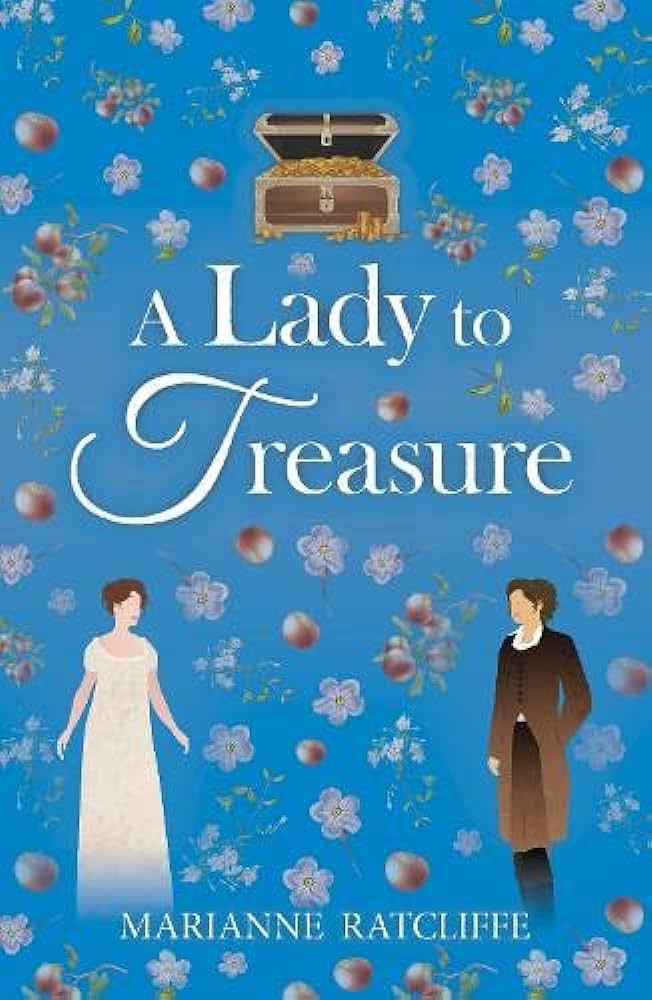
A Lady to Treasure by Marianne Ratcliffe – #ReadIndies

I enjoyed Marianne Ratcliffe’s previous book, The Secret of Matterdale Hall, a Victorian Gothic novel set at a Yorkshire boarding school, so I was happy to try her new Regency romance, A Lady to Treasure. I had some doubts as to whether I would like this one as much, as Gothic novels are usually more to my taste than romances, but it actually turned out to be my favourite of the two. Both books are published by Bellows Press.

Louisa Silverton is the daughter of a rich American businessman. With the onset of the 1812 War, the Silvertons are beginning to experience financial uncertainties and Louisa is sent to stay with family in England, in the hope that she can find a wealthy husband there. Arriving at Athelton Hall in Northamptonshire, she quickly settles in, forming a friendship with her cousin, Eleanor, and getting to know the neighbouring families.

From her father, Louisa has gained a knowledge of accounting – ‘her first toy was an abacus and her earliest reading matter business receipts, from which she learnt to add and subtract’ – and she is able to use her skills to assist Sarah Davenport, who lives at nearby Kenilborough Hall. The Kenilborough estate is falling into debt due to the mismanagement of Sarah’s father, Lord Kenilborough, and the gambling habits of her stepbrother, and it has been left to Sarah to try to salvage the situation. As Louisa spends more time with Sarah, advising her on how to increase the profitability of the estate and deal with unscrupulous business associates, the two slowly become aware that what they feel for each other is more than just friendship.

The romance element of the book is more subtle and understated than I expected. Louisa and Sarah don’t immediately recognise their feelings as romantic love and it takes them a long time to start to act on it, particularly as they have other matters to deal with, such as Sarah attempting to save Kenilborough and Louisa trying to keep her father happy by looking for a rich husband. I liked both of them, particularly the independent, outspoken Sarah (a character very like the historical Anne Lister, or ‘Gentleman Jack’). Despite Sarah being an unconventional character, I still believed in her, and in Louisa, as realistic 19th century women; nothing in the book felt anachronistic or unconvincing.

As well as the two main characters, there’s also a strong supporting cast – I found Louisa’s cousin, Eleanor, an interesting character as she has curvature of the spine and therefore doesn’t conform to Regency society’s idea of how a woman should look. I wanted Eleanor to find happiness as much as I wanted Louisa and Sarah to do the same!

I knew after reading Matterdale Hall that I liked Marianne Ratcliffe’s writing style. Writing that feels too modern can pull me out of historical fiction and break the spell, but that’s not the case here – the language is carefully chosen to suit the time period and add to the overall sense of authenticity. I hope for more books from this author in the future, having enjoyed these two so much.

Thanks to the author for providing a copy of this book for review.

Bellows Press is a small independent publisher that works with “unagented, unorthodox writers of fiction, particularly queer writers, writers of colour and writers from marginalised genders.”

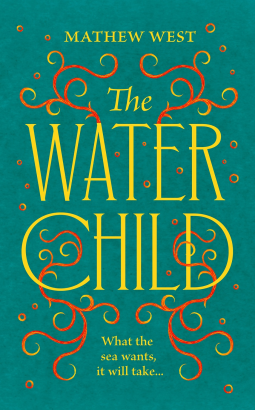
The Water Child by Mathew West

I enjoyed Mathew West’s first novel, The House of Footsteps, an eerie ghost story set in the 1920s, so I was looking forward to reading his new book, The Water Child. It’s quite different, in both setting and tone, but overall I liked this one as well.

The Water Child is set in Portugal in 1754. Cecilia Lamb is anxiously awaiting the return of her husband John, a Scottish sea captain, who has been away on his latest voyage for much longer than expected. It seems likely that the ship has been wrecked and John is dead, but Cecilia hasn’t given up hope. She spends her days wandering the docks, staring out to sea, certain that her husband is still out there somewhere.

As a young woman alone in an unfamiliar country, this is a difficult time for Cecilia and she struggles to come to terms with John’s absence, beginning to have visions, to hear voices and to suffer from a mysterious sickness. Until she knows for certain that her husband won’t come back, she is unable to mourn or to make arrangements to return to her own family in England – and even if he does come back, will he still be the same person he was when he went away?

Mathew West writes beautifully and creates an almost hypnotic atmosphere as Cecilia moves from one day to the next as if in a dream, watching and waiting, trapped in time until she receives some definite news and can start to move forward. Despite the long absence of her husband (and I’m not going to tell you whether he ever reappears or not), Cecilia does form other relationships – with her maid, Rosalie, and with some other women who understand what it’s like to be the wife of a sailor, while at the same time not fully understanding what is going on inside Cecilia’s mind. West’s previous book had much stronger supernatural elements, but in this one they’re a lot more subtle and it’s open to interpretation whether you think the things Cecilia sees and hears have paranormal explanations or more practical ones.

There are some lovely and vivid descriptions of 1750s Portugal, so I was intrigued by Mathew West’s comments at the end of the book that the Portugal he describes probably never existed and owes as much to fantasy as reality, although he also says that he carried out a lot of research into certain details. I don’t have much knowledge of Portugal in that period (the only other book I’ve read with the same setting is Linda Holeman’s novel, The Devil on Her Tongue), so I would have been interested to hear more about what was real and what was fictional.

There’s one more thing I want to mention; I don’t usually give trigger warnings for books, but there is a brief scene of animal cruelty towards the end of the book which doesn’t really feel necessary and I’m sure the author could have found another way to illustrate the cruelty of the person involved. Otherwise, The Water Child is a dark, unsettling and fascinating novel, slow to begin but picking up pace towards the end. I’ll be interested to see what setting Mathew West chooses next, having written two such different books so far.

Thanks to HarperNorth for providing a copy of this book for review via NetGalley.

This is book 46/50 for the 2023 Historical Fiction Reading Challenge.

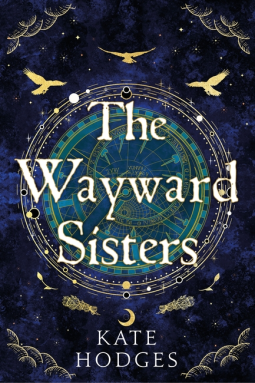
The Wayward Sisters by Kate Hodges

It’s 1769 and Nancy Lockaby is on her way to Inverness where she has been invited to stay with the renowned Shakespearean scholar, Caleb Malles, to help him with his research. Nancy is a keen astronomer who has been developing a theory of her late mother’s involving an astronomical phenomenon known as ‘the Fold’ – a theory that has provoked the scorn and derision of her male colleagues at the Greenwich Observatory. Nancy isn’t sure what her role will be in Caleb’s work as she has little interest in literature, but she welcomes the opportunity to get away from the hostile atmosphere of the Observatory for a while and start a new life in Scotland.

Arriving at the large, crumbling Blackthistle House with her maid, Cora, on a cold, snowy night, Nancy is immediately unsettled by the atmosphere. Why are there lights flashing in the window of a turret? Who are the three strange women she sees in the darkness as her carriage approaches the house? Once she settles in, however, she becomes fascinated by Caleb Malles and his passion for Shakespeare’s Macbeth. She also gets to know the three women she glimpsed in the dark and finds them less threatening as she learns more of their backgrounds. But is it true that they have lived for many centuries and possess special powers? And what is Caleb’s real reason for bringing Nancy to Blackthistle House?

The Wayward Sisters is Kate Hodges’ first novel, having previously written several non-fiction books. You never really know what to expect when trying a new author and I had mixed feelings about this book, but generally more positive than negative. The first half is slow, but has a wonderfully eerie, Gothic atmosphere as Hodges sets the scene and introduces the characters. There’s a particularly memorable scene where Nancy encounters some sinister crows during a snowstorm! I had expected elements of Macbeth to be more deeply woven into the plot, but they really aren’t, apart from the presence of the three women, who clearly represent Shakespeare’s three witches, the Weird (or Wayward) Sisters. The witches have more nuance here than in the play, with each being given a detailed backstory of her own.

Kate Hodges writes very well and there are some nice descriptions to bring the Scottish setting to life, although I was surprised that the recent Jacobite Rebellions were barely mentioned as they must surely have still been having an impact on the lives of the Highlanders in the 1760s. Nancy is an interesting heroine; astronomy is an area of science where women could and did make an impact in the 18th century (the most famous female astronomer of that period was probably Caroline Herschel, the first woman to discover a comet) although it was obviously still a male-dominated field and difficult for women to be taken seriously. However, Nancy’s theories regarding the Fold begin to take the story into the realms of science fiction, particularly when the witches get involved and we discover Caleb’s motives for enlisting the services of an astronomer.

I think I would have enjoyed this book more if it had continued as the atmospheric historical fiction novel it seemed to be at first, rather than the more fantastical story it became. There’s a lot to like about The Wayward Sisters, but it wasn’t really the right book for me.

Thanks to Hodder & Stoughton for providing a copy of this book for review via NetGalley.

This is book 45/50 for the 2023 Historical Fiction Reading Challenge.

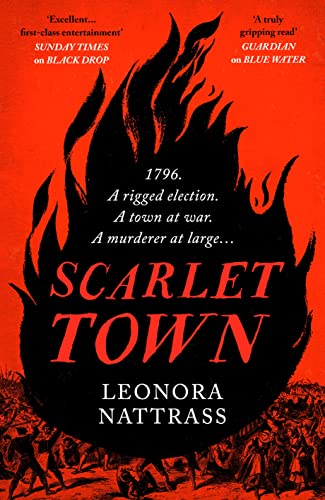
Scarlet Town by Leonora Nattrass

Scarlet Town is the third book in Leonora Nattrass’s Laurence Jago series set in the final decade of the 18th century. I enjoyed the first two books – Black Drop and Blue Water – and this one is another strong entry in the series.

It’s 1796 and Laurence Jago, accompanied by his friend, the journalist William Philpott, has just returned from his voyage to America (described in Blue Water). Jago, once a clerk in the Foreign Office, is now apprenticed to Philpott and is grateful to his friend for the opportunity, while at the same time angry with him for causing his beloved dog, Mr Gibbs, to be left behind in Philadelphia! Back in England again, they head for Jago’s home town of Helston in Cornwall, intending to visit his cousin Pythagoras (affectionately known as Piggy). On arrival in Helston, however, they are shocked by what they find. Not only does wig-wearing appear to have fallen out of fashion during their absence, but the entire town seems to be caught up in the fever of the upcoming election.

Helston is known as a ‘rotten borough’, where only two men in the town are allowed to vote – and one of these two electors has died under suspicious circumstances. It seems that someone is also attempting to kill the remaining elector, so the town’s patron, the Duke of Leeds, asks Laurence to investigate – but to Laurence’s dismay, his own beloved cousin Piggy begins to emerge as the number one suspect. Will he be able to prove Piggy’s innocence and find the real culprit? And who will win the election if both of the Duke’s electors are unable to vote?

According to the author’s note, the situation described in the book (without the deaths/murder attempts) is based on an election that actually did take place in Helston in the 1790s. Several of the characters are people who really existed, including Sir James Burges, the Duke’s candidate for Parliament, and Stephen Lushington (chairman of the East India Company), the alternative candidate put forward by the town’s mayor – and the novel’s title refers to the red ribbons and silks worn by supporters of the mayor’s candidate as opposed to the blue worn by supporters of the Duke’s. I remember learning about the rotten boroughs at school and the events portrayed in this book perfectly illustrate why electoral reform was so desperately needed. Many people complain about today’s electoral system, but the people of Helston were dealing with a system so corrupt that only a tiny minority were making decisions that affected everyone else, where there was no secret ballot and votes could be bought and sold, leaving the electors open to bribery and blackmail.

As well as the fascinating historical setting, I also found the murder mystery quite compelling; it was maybe not as enjoyable as the mystery in Blue Water, and there were times when I felt it became a bit too complicated, but it was intriguing and kept me guessing until the end. Nattrass also lightens the mood with some humour in the form of Toby the Sapient Hog (based on a real performing pig). I love the 18th century world she has created in this series – everything feels so authentic and thoroughly researched. I’m not sure if there’s going to be a fourth book, but if there is then I can’t wait to read it.

Thanks to Viper for providing a copy of this book for review via NetGalley.

This is book 44/50 for the 2023 Historical Fiction Reading Challenge.

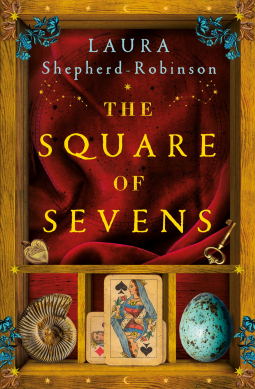
The Square of Sevens by Laura Shepherd-Robinson

Laura Shepherd-Robinson’s books are getting better and better! This one will be on my books of the year list in December, without a doubt.

A standalone novel set in the first half of the 18th century, The Square of Sevens is the story of Red, the daughter of a Cornish fortune teller or ‘cunning-man’. Red can’t remember her mother and has spent the first seven years of her life moving from village to village with her father, telling fortunes using an ancient method of cartomancy known as the Square of Sevens. They need to keep on the move, her father says, to avoid being caught by enemies who wish them harm.

Life changes abruptly for Red when her father dies of a sudden illness and she becomes the ward of a respectable gentleman, Mr Antrobus. Going to live with him in his elegant home in Bath, Red finds herself thrust into society for the first time. Raised by Mr Antrobus and his kindly housekeeper, she settles into her new life while entertaining the people of Bath by reading their cards for them. It’s through her gift for card-reading that Red crosses paths with the wealthy De Lacy family, whom she believes hold the key to the secrets of her own past. And so a sequence of events are set in motion that take Red from Bath to London’s Bartholomew Fair and a grand house in Devon in search of answers.

It’s not really possible for me to say much more about the story without spoiling it, but if I tell you it includes family secrets, disputed inheritances, stolen documents, and lots of surprising twists and turns you’ll get the idea! It’s very entertaining, with the feel of a Charles Dickens novel at times, and I was often reminded of Charles Palliser’s The Quincunx (another great Dickensian novel with an inheritance at the heart of the plot).

I found Red a very engaging narrator; I initially had a lot of sympathy for her, as she struggles to uncover the secrets of her family background and find her place in the world, while others around her try to prevent her from learning the truth at all costs. However, I soon discovered that Red can be just as ruthless herself and is not above doing some plotting and scheming of her own in order to get what she wants. As she tells us at one point in the novel, If you’d wanted a saint, then you should have read a different book. There are plenty of other interesting and memorable characters to get to know – I was particularly intrigued by Lazarus Darke – and what makes the book so fascinating to read is that we can never be quite sure who can be trusted and who can’t.

The ‘Square of Sevens’ method of card reading was described in an 1897 book by Edward Irenaeus Stevenson and Shepherd-Robinson incorporates it throughout the novel. Red tells the fortunes of many of the characters she meets and the fortune-telling theme is carried further with each chapter heading including a picture of a playing card and an interpretation of that card’s meaning. Reading the author’s note at the end of the book, a lot of thought went into choosing the correct card for each chapter and I feel a bit guilty that I didn’t always pick up on the significance of that choice.

If you’ve read and enjoyed Laura Shepherd-Robinson’s two previous novels, the Georgian mysteries Blood and Sugar and Daughters of Night, I’m sure you’ll enjoy this book too – I think it’s even better. If you’re yet to try any of her books then this would be a great place to start!

Thanks to Mantle for providing a copy of this book for review via NetGalley.

This is book 24/50 read for the 2023 Historical Fiction Reading Challenge.

Savage Beasts by Rani Selvarajah

The Greek myth of Medea is transposed to 18th century India in Rani Selvarajah’s debut novel, Savage Beasts. Although I haven’t read very much about Medea – except where she has appeared as a secondary character in other novels I’ve read, such as Madeline Miller’s Circe – it was actually the Indian setting that attracted me to this book rather than the Greek myth aspect and I expect it will have equal appeal to readers of historical fiction and those who enjoy mythology retellings.

The novel opens in 1757 in Calcutta (now known as Kolkata). The East India Company, under the leadership of Sir Peter Chilcott, are advancing on Bengal and war seems inevitable, but James Chilcott, Sir Peter’s nephew, has arrived in Calcutta ready to make a bargain. He is prepared to betray the company and reveal their plans, he says, but he wants something from the Nawab of Bengal in return. Although the Nawab isn’t convinced, his daughter, Meena, is captivated by the handsome young Englishman and agrees to help him. When things go wrong, James and Meena are forced to flee Bengal, leaving a scene of death and devastation in their wake.

So far, I could see the parallels with mythology – Meena in the role of Medea, daughter of King Aeëtes of Colchis, and James as Jason, who comes to Colchis on the Argo in search of the Golden Fleece. When Meena and James leave Bengal, they encounter Meena’s aunt, Kiran, whom I quickly identified with Circe. The later parts of the myth are less familiar to me, but as far as I could tell the novel continued to follow the basic outline, with one or two nice twists towards the end.

What let this novel down for me was the writing. I hate to be too critical of an author’s first novel, but I did find some of the word choices odd or inappropriate. Characters ‘smirk’ all the time, on almost every page – that’s when they’re not ‘sneering’ or ‘scoffing’. I lost count of how many times these words were repeated. I also struggled to believe in Meena as a convincing woman of her time. It seemed unlikely that the daughter of a Nawab (a Mughal ruler of similar status to a prince) would have the freedom to hang around the docks of Bengal on her own, as Meena does in the opening chapter, and her subsequent actions feel more and more anachronistic.

I did like the basic concept of moving the Medea story to 18th century India and the idea of James/Jason as part of a colonial power coming to take what they can from Bengal/Colchis is an intriguing one. For this to work, though, there really needed to be a stronger sense of time and place, but sadly, I couldn’t think of the characters as anything other than modern people in historical costume. Despite my negativity, I stuck with the book to the end and did occasionally become drawn into the story; it’s been receiving a mixture of reviews, including plenty of four and five star ones, so evidently other readers have enjoyed it more than I did. Give it a try if it appeals – and please let me know if there are any other retellings of the Medea myth you can recommend!

Thanks to HarperCollins UK, One More Chapter for providing a copy of this book for review via NetGalley.

This is book 21/50 read for the 2023 Historical Fiction Reading Challenge.