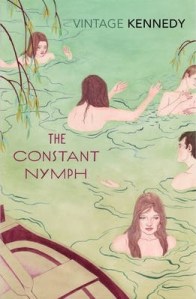
The Constant Nymph by Margaret Kennedy

The Constant Nymph This week Jane of Fleur in her World has been hosting a Margaret Kennedy Reading Week. Margaret Kennedy is a new author for me so I could have chosen to read any of her books (they all sound intriguing in different ways), but I decided to go with The Constant Nymph, as I’d received a copy from NetGalley a while ago. The Constant Nymph was published in 1924 and is probably Margaret Kennedy’s best-known book.

At the beginning of the novel, Lewis Dodd, a talented young composer is on his way to the Tyrol to visit his friend and fellow musician, Albert Sanger, who lives in a chalet in the Alps with his large family. Sanger has seven children – with three different mothers – and they are known collectively as ‘Sanger’s circus’. Lewis has been a frequent visitor to the chalet for years and the children consider him almost part of the family, but for fourteen-year-old Teresa (Tessa) he’s something more than that: he is the man she has loved for as long as she can remember. Lewis loves Tessa too, but as he is more than twice her age, they don’t tell each other how they feel.

When Albert Sanger dies unexpectedly, Sanger’s circus is broken up; the two eldest children, Caryl and Kate, decide to start new lives elsewhere, while Sanger’s current mistress, Linda, moves out of the family home with her young daughter, Susan. Tessa’s sixteen-year-old sister, the wild and free-spirited Antonia, marries her lover Jacob Birnbaum, so that only Tessa and her two younger siblings, Paulina and Sebastian, remain. Their relatives in England come to the rescue, with the children’s cousin, Florence Churchill, setting off for the Alps to see what she can do to help.

Florence is a well-educated, beautiful and refined young woman of twenty-eight and is shocked by the Sangers’ unconventional, bohemian lifestyle. She immediately makes plans to bring Tessa, Paulina and Sebastian to England and send them to school. Before she leaves Austria, however, she finds herself falling in love with Lewis Dodd who is still at the chalet. Despite his feelings for Tessa, Lewis is also drawn to Florence and the two are soon married.

It may seem that I’ve given away a lot of the plot here, but all of this actually takes place in the first half of the book. The remainder of the novel describes the marriage between Lewis and Florence, which as you might expect, is not a very successful one as Lewis really wants to be with Tessa – who is still in love with him. The viewpoint shifts from character to character so that we can understand the emotions and motives of all three (I never managed to warm to Lewis at all, but loved Tessa and had some sympathy for Florence). As the story starts to move towards the final chapters it’s obvious that things aren’t going to end happily for all of them – and maybe not for any of them. The ending, when it does come, is unexpected and not very satisfying. I felt that the characters deserved a better conclusion to their story.

I was also a bit disappointed that so many of Tessa’s other family members and friends disappeared in the middle of the book; Kennedy had gone to so much trouble to introduce us to Caryl and Kate, Linda and Susan, the Russian Trigorin and others, it seemed a shame not to develop any of their stories any further (though I’m aware that there’s a sequel, The Fool of the Family, where we might meet some of them again).

I did enjoy The Constant Nymph, though! The book hasn’t aged very well in some respects (the portrayal of Antonia’s Jewish husband, for example) but then, I read a lot of older books and can accept that sometimes they do feel dated. I loved the setting, the characterisation and the elegant, engaging writing style and am looking forward to reading more of Margaret Kennedy’s books. Thanks to Jane for hosting the reading week and introducing me to an author I might never have thought about trying!

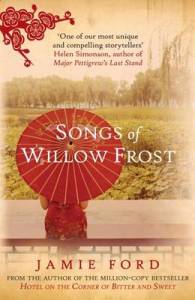
Songs of Willow Frost by Jamie Ford

Songs of Willow Frost William Eng has spent the last five years of his life in the care of the nuns at Seattle’s Sacred Heart Orphanage. It’s 1934 and living conditions at the orphanage are very poor, particularly for William who is Chinese-American and considered inferior to most of the other children. But William is not at all sure that he is actually an orphan – although he has never known his father, the last time he saw his mother she was being carried out of their apartment by a doctor, promising that she’d be coming back soon.

On William’s twelfth birthday he and the other boys are taken to see a film as a special treat and William becomes convinced that one of the actresses he sees on the screen, Willow Frost, is his mother. With the help of his best friend, a blind girl called Charlotte, he sets out to find Willow Frost in the hope that she can answer the question that has been troubling him for five years – what can lead a mother to abandon her child?

Having loved Jamie Ford’s previous novel, Hotel on the Corner of Bitter and Sweet, I was looking forward to reading this one. If anything, this book was even more ‘bitter and sweet’ than the first! At times it was so sad that I wasn’t sure if I could bear to continue reading, but even while my heart was breaking for William and his mother it was obvious that they loved each other and that gave me a glimmer of hope. I wanted them to find the happiness they deserved and that was what kept me turning the pages.

Although we begin in 1934 with William in search of Willow Frost, at least half of the novel is actually set several years earlier in 1921 and follows the story of the young Willow – or Liu Song as she was originally known. It was the 1921 section of the story that I found particularly upsetting to read; being Chinese, a woman and unmarried, life is not easy for Liu Song and it seems that every bad thing that could possibly happen to her does happen. While her stepfather, Uncle Leo, is the villain of the book, I was equally furious with the attitude of a social worker who supposedly had William’s best interests at heart but was clearly only concerned with punishing his mother for what she claimed was immoral behaviour.

Despite the overwhelming sadness, I enjoyed Songs of Willow Frost. There are some great descriptions of Seattle in the 1920s and 1930s and we are given some fascinating insights into the city’s Chinese community and the lives of people struggling to survive during the Depression. I didn’t find this book quite as satisfying as Hotel on the Corner of Bitter and Sweet and there were one or two aspects of the plot that didn’t resolve the way I would have liked them to but overall I thought this was a wonderfully poignant and moving story.

Thanks to Lovereading for the review copy

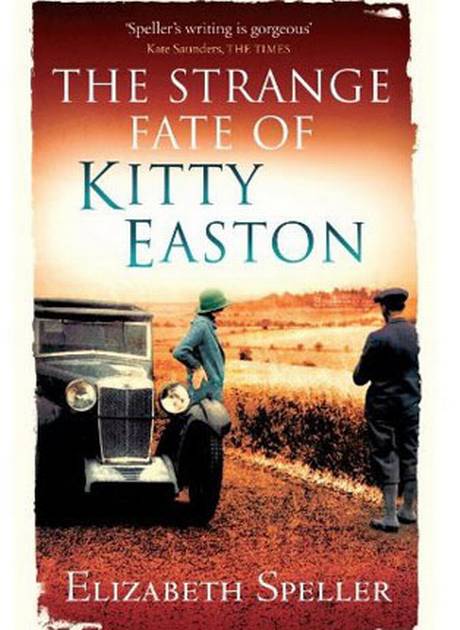
The Strange Fate of Kitty Easton by Elizabeth Speller

Kitty Easton I first met Laurence Bartram two years ago when I read The Return of Captain John Emmett, a mystery novel set in 1920s England. The Strange Fate of Kitty Easton is the sequel. In this book, Laurence’s friend William Bolitho, an architect, has asked Laurence to join him in the village of Easton Deadall. Easton Deadall lost many of its young men in the First World War and William has agreed to design a memorial window for the small church at Easton Hall. As an expert on churches and their renovations, Laurence’s help and advice is needed.

During the journey to Easton Deadall, Laurence learns about the disappearance of Digby and Lydia Easton’s five-year-old daughter, Kitty, several years earlier. Kitty went missing from her bed one night but her body was never found and her fate is still unknown. Since Kitty’s disappearance, the Easton family have continued to suffer; Digby was killed in the war, Lydia has become seriously ill and the relationship between Digby’s two surviving brothers, Julian and Patrick, is strained and tense.

After a slow start in which Elizabeth Speller introduces us to the characters, describes their tragic history and paints a portrait of a small English village trying to recover from the devastation of war, a mystery begins to develop. Another child disappears on a family trip to London to see the British Empire Exhibition and when a murder is committed in Easton Deadall, Laurence is sure both of these incidents are connected to the disappearance of Kitty Easton all those years ago.

I enjoyed this book almost as much as the previous one. The plot was well constructed with some interesting twists and lots of family secrets that are slowly revealed to the reader, but although I’ve referred to the book as a ‘mystery novel’ once or twice in this post, and in many ways it is a mystery novel, it’s also much more than that. The fate of Kitty Easton really only forms a small part of the story.

While reading both of the Laurence Bartram books, I have been impressed by the amazing sense of time and place the author creates. These books don’t just feel like pieces of historical fiction written in the modern day and set in the past – they almost feel as if they could really have been written in the 1920s. As with The Return of Captain John Emmett, my favourite thing about this book was the way it explores so many different aspects of the Great War and reminds us that although the war may have ended in 1918, its consequences were still being felt all over the world for many years afterwards.

There are lots of interesting characters to get to know too (I was particularly intrigued by the story of the youngest Easton brother, Patrick, resented by his family for abandoning them during the war after being excused from fighting on health grounds). The only thing that disappointed me slightly was that until we reach the final chapters of the book, Laurence seems to be on the outside watching and observing rather than taking an active role in the story. I do like Laurence but as the central character of a series I find him a bit bland and it would be nice to see his own personality coming through more strongly.

The way this book ended leaves plenty of scope for a third in the series and I hope there is going to be another one, though I notice that Elizabeth Speller has a new book due out in November with different characters, set during the Battle of the Somme.

Turn of the Century Salon: The Painted Veil by W Somerset Maugham

The Painted Veil Despite the attempts of her mother to arrange a good marriage for her, Kitty Garstin is in no hurry to find a husband. She’s too busy enjoying herself at parties and dances, and it’s only when she’s still unmarried at the age of twenty-five and discovers that her younger sister has become engaged to a baronet that she begins to panic. She agrees to marry Walter Fane, a bacteriologist, and moves to Hong Kong with him. Walter is shy, clever and serious and to the pretty, frivolous Kitty, he seems very cold and aloof. Although he is in love with her, she doesn’t love him in return and soon begins an affair with the charming, charismatic Assistant Colonial Secretary, Charles Townsend.

Eventually Walter learns the truth about Kitty and Charles and confronts Kitty with an ultimatum. She can either accompany him into the interior of China where he has volunteered to deal with a cholera epidemic, or he will allow her to divorce him – but only if Charles agrees to divorce his wife and immediately marry Kitty. When Kitty goes to discuss the situation with Charles, she is cruelly disillusioned by her lover and is left with no other option than to travel to Mei-tan-fu with Walter. Kitty is convinced that Walter is taking her there in the hope that she will die, but it’s here in this remote cholera-ridden city that Kitty finally begins to grow as a person and to make some discoveries about both herself and her husband.

This book was such a surprise. I think I must have formed a preconceived idea that I wouldn’t like Somerset Maugham without ever having tried any of his books or knowing anything about him, because I really didn’t expect to love this as much as I did. I’m so pleased to find that I was wrong! The Painted Veil is one of the best books I’ve read so far this year. I found Maugham’s writing much easier to read than I had thought it might be, but also filled with beauty, poignancy and emotion.

This is quite a short novel but both main characters have a lot of depth and complexity. I disliked Kitty at first – she’s selfish, spoiled and immature – but the fact that she is so flawed and makes such terrible mistakes is what makes her so human. Kitty is changed by her experiences in Mei-tan-fu and we see her mature and gain in wisdom and insight. By the end of the book, I still didn’t like her but I had a better understanding of her and I wanted her to be happy. I had more sympathy for Walter, but because we are viewing him through Kitty’s eyes, we don’t really have a chance to see the other side of his personality that we hear about – when the nuns in the convent tell Kitty how much they admire him, for example, and how tender and loving he can be with the orphaned babies there. Kitty barely knows or understands her husband at all and when she finally begins to do so, we are made to wonder whether it’s going to be too late.

There aren’t a lot of long, descriptive passages in this book but 1920s China is still portrayed beautifully and I loved this description of Kitty watching the rooftops emerging from the mist on her first morning in Mei-tan-fu:

But suddenly from that white cloud a tall, grim, and massive bastion emerged. It seemed not merely to be made visible by the all-discovering sun but rather to rise out of nothing at the touch of a magic wand. It towered, the stronghold of a cruel and barbaric race, over the river. But the magician who built worked swiftly and now a fragment of coloured wall crowned the bastion; in a moment, out of the mist, looming vastly and touched here and there by a yellow ray of sun, there was seen a cluster of green and yellow roofs. Huge they seemed and you could make out no pattern; the order, if order there was, escaped you; wayward and extravagant, but of an unimaginable richness. This was no fortress, nor a temple, but the magic palace of some emperor of the gods where no man might enter. It was too airy, fantastic, and unsubstantial to be the work of human hands; it was the fabric of a dream.

Turn of the Century Salon - March I read The Painted Veil for Katherine’s Turn of the Century Salon. This book was published in 1925 and with its portrayal of society in 1920s colonial Hong Kong and an era when many girls were still raised with the sole aim of making a good marriage, this was an ideal choice for the Salon. If you read it I would also recommend reading Shelley’s sonnet Lift Not The Painted Veil and Oliver Goldsmith’s An Elegy on the Death of a Mad Dog.

The White Cottage Mystery by Margery Allingham

The White Cottage Mystery I love reading detective novels from the Golden Age but I’m very aware of the number of authors from that era I still haven’t tried and until now, Margery Allingham was one of them. This is the first of her books that I’ve read but I’m now definitely interested in reading more of them. I understand The White Cottage Mystery was her first detective story, originally serialised in the Daily Express in 1927 before being published as a book the following year, and though it does have the feel of an early effort I still enjoyed it.

The mystery begins with Jerry Challoner driving through a small village in Kent one afternoon when he notices a young girl struggling to carry a heavy basket. Stopping his car, he offers to help, but shortly after dropping the girl off at her home, The White Cottage, he hears the sound of a gunshot. After learning that Eric Crowther, from the neighbouring house, the Dene, has been murdered inside The White Cottage, Jerry calls his father, Detective Chief Inspector W.T. Challoner of Scotland Yard. When W.T. arrives on the scene he interviews the family and servants who live both in the cottage and the house next door and discovers that the dead man was an unpleasant, blackmailing bully. There are plenty of people who have a motive for killing Crowther and who openly admit to wanting him dead, but W.T. and Jerry must decide which, if any of them, is the murderer.

Even though a murder is involved, there’s no graphic violence or anything too gruesome in this book, and the focus is on W.T’s attempts to solve the mystery. Written and set in the 1920s, W.T. uses old-fashioned methods of crime solving – looking for clues and questioning suspects – and his investigations uncover family secrets, blackmail and even connections to a secret society of thieves. The plot is not especially original but there’s still some suspense and a big twist near the end that took me by surprise – I would never have guessed who the murderer actually was and I can see why it took W.T. such a long time to figure it out.

The White Cottage Mystery is really more of a novella than a novel, short enough to be read in just a few sittings, but the plot was resolved satisfactorily and I felt that it didn’t really need to be any longer. Now that I know what Margery Allingham’s writing is like I think I’m going to enjoy exploring her other novels!

I received a copy of The White Cottage Mystery from Bloomsbury Reader via Netgalley.

The Map of Lost Memories by Kim Fay

As a woman in 1925, Irene Blum feels that her work does not get the recognition it deserves. When she misses out on the position of curator at Seattle’s Brooke Museum, she dreams of making an important historical discovery, one that she can build her own museum around. Since her childhood she has been fascinated by Cambodia and its ancient Khmer civilisation, so when she learns of the possible existence of ten copper scrolls recording the history of the Khmer people she sets off on an expedition to Cambodia to search for them.

Irene begins her journey in Shanghai where she hopes to enlist the help of Simone Merlin, a revolutionary activist and Cambodian scholar who shares Irene’s interest in the Khmer. Despite the disapproval of her abusive husband Simone agrees to join her. At first Irene is pleased to have Simone’s support, but soon begins to wonder whether she might have reasons of her own for wanting to find the lost scrolls.

The novel is divided into three sections. The first is set in Shanghai, China, the second in Saigon, Vietnam and in the third Irene, Simone and their companions finally arrive at their destination, the Cambodian jungle. None of these are places that I know very much about (Cambodia was a completely new setting for me and the other two I only have a very limited knowledge of) and I loved all the descriptions of the three locations. It’s always interesting to read about cultures that are entirely different to your own and by the time I’d finished the book I felt I’d learned a little bit about what life might have been like in China, Vietnam and Cambodia in the 1920s, as well as learning some facts about the Khmer civilisation.

The Map of Lost Memories is not a fast-paced thriller filled with non-stop action and adventure, although it might sound like one from the synopsis. Instead, the story develops quite slowly (a bit too slowly for me, to be honest, especially throughout the first half of the novel) and although Irene and Simone do have some adventures and things get more exciting later in the book, there’s also a lot of focus on the personal lives of the two women, their relationships and their motives for searching for the legendary scrolls.

It was good to read a book set in the 1920s with strong female protagonists at a time when women didn’t have the same career opportunities they have today. However, although I sympathised with Irene’s frustration at her achievements constantly being overlooked or ignored and I admired her dedication and determination, I was never able to warm to her as a character. Unfortunately I didn’t feel much connection to any of the other characters either, which meant that even when they were heading into danger I found I didn’t really care what happened to them. The plot and the setting almost made up for my lack of interest in the characters so I did still enjoy the book, but not as much as I might otherwise have done. This was a promising debut novel, though – it was obvious that the author must have a real passion for Cambodia and Khmer history and that she knows the subject well.

The Murder of Roger Ackroyd by Agatha Christie

2011, among other things, was the year I discovered that I do actually like Agatha Christie, having read a few of her books in the past which I didn’t enjoy very much. I think I had obviously just been choosing the wrong books because I read five in 2011 and loved all but one of them (The Mystery of the Blue Train).

This one, The Murder of Roger Ackroyd, is set in the fictional village of King’s Abbott, home to our narrator, Dr James Sheppard, and the retired detective Hercule Poirot. When Roger Ackroyd is found stabbed to death in his study, Poirot comes out of retirement to investigate the murder. The suspects include Ackroyd’s stepson, his secretary and butler, a big-game hunter and one of the parlourmaids. With Dr Sheppard’s assistance, Poirot begins to piece together the evidence to solve the mystery.

I loved this book and it might even have become my favourite Christie novel so far, if not for one little problem: I guessed the solution to the mystery very early in the story. Now, this is not something that usually happens – I’m normally completely mystified by Agatha Christie’s novels and don’t even bother trying to solve them. This is the first one I’ve ever figured out correctly, but it did mean that in some ways the book was spoiled for me. Not completely spoiled – it was still fun watching for more clues that would confirm whether I was right or not – but it would have been nice to have been surprised when the solution was finally revealed, as the author had intended.

As most Poirot novels are written either in the third person or narrated by Captain Hastings (who does not appear in this book) it took me a while to get used to the new narrator. It gave this book a slightly different feel to the other Poirots I’ve read. I also thought the characters had a bit more depth than usual and I loved the scenes with the doctor’s irritating gossip-loving sister, Caroline, who added some humour to the story. And even though the ending of the story didn’t have quite the impact for me that I would have liked it to have done, I could still appreciate how cleverly constructed the mystery was. There were plenty of suspects, all hiding secrets of their own, lots of red herrings and some plot twists. I’m looking forward to reading more Poirot throughout the year ahead!