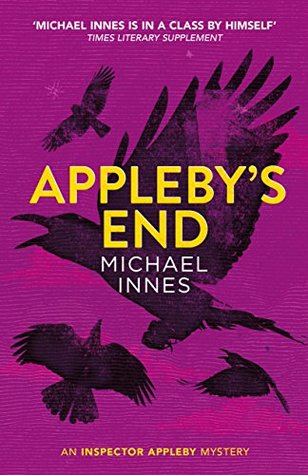
Appleby’s End by Michael Innes

I’ve read quite a few of Michael Innes’ Inspector Appleby mysteries now; I think this is my sixth, and although I enjoyed it more than my last one, The Daffodil Affair, it doesn’t compare to my two favourites, Hamlet, Revenge! and Lament for a Maker. While I love the imaginativeness of his plots, some of them are a bit too bizarre and outlandish for me, and this is one of them.

The novel opens with Inspector John Appleby falling into conversation with a man sitting opposite on the train. His name is Everard Raven, an eccentric lawyer and writer of encyclopedias who is on his way home to his family’s country estate, Long Dream Manor. When Appleby discovers that he has made a mistake with the train timetable and won’t be able to reach his own destination until the following day, Everard offers to give him a room for the night at Long Dream. Meanwhile, they have been joined by the other members of the Raven family – Everard’s brothers, Luke and Robert, and two younger cousins, Judith and Mark – who are also returning home. They all disembark from the train together at a station which, to Appleby’s surprise, happens to be called Appleby’s End.

The eventful journey is not over yet, however. The horse-drawn carriage which has been sent to transport them from the station to Long Dream Manor gets stuck crossing a river and Appleby and Judith Raven find themselves separated from the rest of the party. Making their own way back to the house, they make a gruesome discovery – the head of one of the family servants half-buried in a snowdrift. When Appleby begins to investigate, he uncovers a possible connection between the servant’s death and a series of strange happenings in a nearby village. Strangest of all is the fact that these occurrences closely resemble plots from the long-forgotten works of Ranulph Raven, the late father of Everard, Luke and Robert. Can Ranulph’s novels really be starting to come true?

The story quickly becomes more and more surreal, as Appleby encounters a woman who believes she is a cow, animals turning into marble statues and rumours of witchcraft and magic. There are characters with names like Heyhoe and Rainbird and villages called Snarl, Drool, Sneak and Linger. At the heart of the novel there is an interesting and clever mystery taking place, but, for me, it gets lost beneath the sheer ridiculousness of it all. I’m sure it was intended to be a parody of rural life, and I could see some similarities with Cold Comfort Farm at times, but the humour didn’t really work for me. The only other notable thing to say about this book is that Appleby falls in love – I think. It’s not a particularly romantic romance – although he and his love interest do spend a night in a haystack together, which leads to a proposal of marriage.

Based on what I’ve read so far, all of Michael Innes’ novels do seem to be a bit quirky, but I prefer the ones that are slightly more serious. I’ll continue to read his books but I hope the next one I pick up will be a better choice for me.
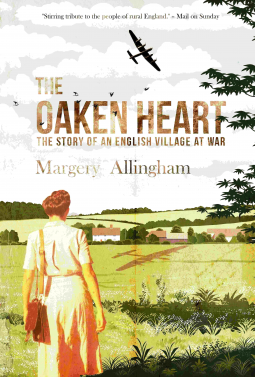
The Oaken Heart by Margery Allingham

Having read several of Margery Allingham’s detective novels, I was intrigued to come across The Oaken Heart, an account of life in her small English village during the Second World War. Originally published in 1941, it was apparently based on letters written to some American friends and expanded into a book at the suggestion of her publisher. It’s interesting to think that she was writing this while the war was still taking place and when nobody knew how much longer it would last or what the outcome would be.

Allingham’s village was Tolleshunt D’Arcy in Essex, but she refers to it in the book as ‘Auburn’ after a line from the poem The Deserted Village by Oliver Goldsmith. She is obviously very proud of Auburn and the way the people who live there work together to cope with whatever the war throws at them; it’s true that all towns and villages have their own unique characteristics, but I think it’s also true that the wartime experiences of the residents of Auburn will have been similar to the experiences of people in other parts of Britain.

Like many other villages, Auburn, in 1938 when the book opens, is still suffering from the effects of the previous war which ended just twenty years earlier. There’s a sense that Allingham and her friends are putting all their faith in Neville Chamberlain, not really believing or wanting to believe that war could possibly happen again. Of course, it does happen again – after a year of preparations, gas mask distributions and discussions of who should take in how many evacuees. The subject of evacuees is an important one to the people of Auburn; at first they are excited at the thought of groups of little schoolchildren from London arriving in the village (since the First World War there has been a shortage of young people in Auburn), but the reality is very different – hundreds of young mothers and babies! Allingham’s descriptions of the newcomers, the culture differences and how the villagers dealt with all of this are quite funny to read about.

I have never read anything about Margery Allingham as a person before, so I don’t know what she was supposed to be like or what impression the people who knew her had of her, but based on her own words in The Oaken Heart, she seems very likeable and down-to-earth. She makes a few references to her writing career now and then (she was working on Traitor’s Purse at the time), but there is never any sense of self-importance or superiority over anyone else in the village. Her writing style is warm, conversational and, as you would expect, very readable.

This is a wonderful book, which I would recommend to anyone who enjoys reading about life during the war. The fact that it is a first-hand account written in 1941 rather than a memoir written years later gives it another layer of interest. As we reach the final page, there is still no end to the war in sight and nobody has any idea if or when it’s all going to stop. I was sorry that the book ended when it did, as I would have liked to have continued reading about the people of Auburn and to find out how they fared later in the war.

The Stolen Marriage by Diane Chamberlain

Diane Chamberlain is not an author I have ever thought about reading, but when I unexpectedly received a review copy of her new book, The Stolen Marriage, from the publisher a while ago I was intrigued. The setting and the plot both sounded appealing and I decided that it would be worth at least giving it a try to see what it was like.

Our narrator is Tess DeMello and as the novel opens in 1944 it seems that she has her future all planned out. She is engaged to the man she loves – Vincent Russo, a newly qualified doctor – and she is about to take the final exams that will enable her to become a registered nurse. Things begin to go wrong when Vincent volunteers to help with a polio epidemic in Chicago and stays away for longer than expected. Feeling lonely and neglected, Tess agrees to join her best friend Gina for a weekend trip to Washington, where one thing leads to another and she finds herself pregnant by another man.

Convinced that Vincent will want nothing more to do with her, Tess goes in search of her baby’s father, Henry Kraft, the wealthy owner of a furniture company in Hickory, North Carolina. All she wants from Henry is enough money for somewhere to live and to provide for the child when it is born, so she gets a big surprise when he asks her to marry him. Thinking about the baby’s future, Tess agrees and soon she is part of the Kraft family, living in their luxurious home in Hickory.

Life in Hickory brings new challenges for Tess, however. She quickly discovers that, although Henry is not unkind, her marriage is a loveless one. Worse, she is unable to trust her new husband. Why is he hiding money from her and where does he disappear to in the middle of the night? And worst of all, Tess finds it impossible to fit in with Henry’s family and friends. His mother and sister seem to hate her – and make no secret of their hatred – but Tess isn’t sure why. Is it just that, with her Italian background and her desire to work for a living, they don’t consider her good enough for Henry – or could there be another reason for their resentment?

It took me a few chapters to really get into The Stolen Marriage, but after that the pages flew by. I was kept in suspense wondering what Henry’s secret could possibly be and although there were plenty of clues I still didn’t guess correctly! Tess didn’t understand what was happening either and I had nothing but sympathy for her as she tried to come to terms not just with the destruction of her old life but the awareness that her new one was built around lies and deceit. However, I struggled to understand some of the choices she made and I felt that her actions (and the actions of other characters) were sometimes contrived to move the story forward rather than feeling like the natural way she would have behaved. There were a few unconvincing plot twists and developments near the end of the novel too, but although this was slightly disappointing it didn’t spoil my enjoyment of the novel too much. There were so many other things to love.

I particularly enjoyed the insights into what it may have been like to live in a small town in North Carolina in the 1940s. Having moved from an Italian neighbourhood in Baltimore, Maryland, Tess experiences a culture shock when she arrives in Hickory. Her husband’s family and friends are prejudiced, narrow-minded snobs who make Tess feel very uncomfortable, finding fault with her looks, her clothes, her opinions and her family background. Racial tensions are also high in the town and this aspect is explored through the story of a black family who work as servants in the Kraft household. Of course, there are good and bad people everywhere and in all walks of life, which Tess discovers when the polio epidemic reaches Hickory and the community must pull together to build and staff a new hospital in record time.

The building of the hospital is based on a true historical event (you can find out more by searching online for ‘the Miracle of Hickory’); I had never heard about this before, so I found that section of the novel fascinating! As the story is set in 1944, it was also interesting to read about the impact of World War II on the people of Hickory, with rationing in place and families waiting anxiously for news of sons, husbands and brothers fighting overseas. I loved the glimpse this book gave me into another time and place and although I’m not sure whether this is typical of Diane Chamberlain’s novels, I will certainly be looking for more of her books in the future.

Thanks to Macmillan for providing a copy of this novel for review.

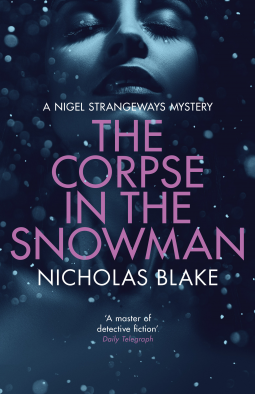
The Corpse in the Snowman by Nicholas Blake

Nicholas Blake was a pseudonym of the Poet Laureate Cecil Day-Lewis under which he wrote a series of mystery novels featuring the private investigator Nigel Strangeways. It seems there are sixteen in the series, published between 1935 and 1966, which is good news for me as The Corpse in the Snowman is my first and I enjoyed it so much I will certainly be reading more of them!

This book is set in winter, as you will have guessed from the title – and yes, there is a snowman and yes, there’s a dead body hidden inside it. We know this from the very first chapter, but what we don’t know is whose body it is and how it has come to be in such a strange and macabre hiding place. To find out what is going on, we have to go back several weeks to the moment earlier in the winter when Nigel and Georgia Strangeways arrive at Easterham Manor in Essex, home of the Restorick family. They have been invited by Clarissa Cavendish, an elderly cousin of Georgia’s who lives on the estate and who has become convinced that there is something badly wrong at the Manor.

Clarissa’s fears are proved correct when, the day after the Strangeways’ arrival, the beautiful Elizabeth Restorick is found dead in her bedroom. It looks like a suicide, but Nigel is sure it is murder – and with a large party of guests gathered at Easterham for the festive season, there are plenty of suspects to choose from.

All the elements of a classic mystery novel are here – a country house cut off by snow; a locked room murder; an amateur detective working alongside the local police; family secrets, clues and red herrings – but a lot of attention is also given to themes such as drugs and drug addiction (with some interesting insights into the attitudes of the time). Published in 1941, the war is in the background but doesn’t really have any influence on the story; it’s set in those early days of the war when not much seemed to be happening and apart from a reference to blackout curtains and Nigel’s complaint at having to travel to Essex in wartime on an old woman’s whim, it is barely mentioned at all.

Although Nigel Strangeways is very ordinary as far as literary detectives go (there’s nothing to make him stand out amongst the Poirots, Campions and Wimseys of the genre), I did like him and will be happy to spend more time in his company. I was intrigued by mentions of his wife Georgia’s past career as an explorer; she doesn’t have a very big part to play in the novel, but I enjoyed what we do see of her. As for the other characters, there are a good variety of them within the Restorick household, ranging from an author who is in love with Elizabeth to a doctor whose speciality is ‘nervous disorders’ in women. I particularly loved Clarissa Cavendish, who is obsessed with the Georgian period and speaks of it as ‘in my day’ as if she had actually been alive at the time.

I am so pleased to have discovered Nicholas Blake and I’m sure I’ll be trying another of his books soon!

Note: This book has also been published as The Case of the Abominable Snowman.

Thanks to Ipso Books for providing a copy of this book for review via NetGalley.

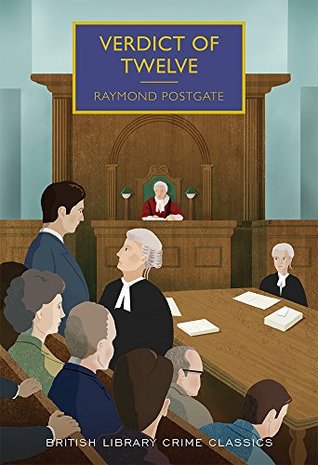
Verdict of Twelve by Raymond Postgate

A woman is on trial for murder and a jury is being sworn in to decide her fate. A jury of twelve men and women selected at random from all walks of life, each of whom has an interesting story of his or her own. Verdict of Twelve (1940), one of the British Library Crime Classics series, is as much about the jury as it is about the crime, which makes it an unusual and fascinating novel.

The book is divided into three main sections. In the first, we are introduced to each member of the jury as they step forward one by one to take their oaths. With an academic, a religious fanatic, a servant, a Greek restaurant owner and an encyclopedia salesman among them, many areas of society are represented and these twelve very different people must find a way to work together to reach what they believe to be the correct verdict.

The second part of the novel (which begins about a third of the way into the book) describes the crime itself. We are given some background information on the accused woman and then an account of the events which led up to the murder. I don’t think I can go into any detail without spoiling things, so I will just say that it is an intriguing mystery, very dark at times but with some humour at others. Although there are only a few suspects it is difficult to decide from the available evidence (which is largely circumstantial) exactly what happened and whether the jurors’ verdict should be guilty or not guilty.

Next, we watch the trial take place, listen to the witnesses and then join the jurors as they discuss the case and try to reach agreement. Finally a short epilogue lets us know whether we – and the jury – came to the right conclusion. It’s an interesting structure and one which I thought worked very well. Knowing the personal background of each juror before the trial begins helps us to see how their individual prejudices and experiences affects their reasoning when it comes to considering the evidence and making a decision. Some find that they have sympathy for the accused and some for the victim; as the reader, I felt that I was almost in the position of a thirteenth juror – and as I disliked one of the characters so much I found that I was also reacting emotionally rather than objectively.

My only slight criticism is that the first section of the book, in which the jury is introduced, is quite uneven. A few of the characters, particularly Victoria Atkins and Arthur Popesgrove, are fully fleshed out in what are almost self-contained short stories, while some of the others have only one or two pages devoted to them. As each juror has one twelfth of the input into the final decision, I’m not sure why we needed to know so much more about some of their backgrounds than others. Apart from this, I really enjoyed Verdict of Twelve – highly recommended for all lovers of classic crime!

Thanks to Poisoned Pen Press for providing a copy of this book for review via NetGalley.

This is book #6 for the R.I.P XII challenge.

Red Sky at Noon by Simon Sebag Montefiore

This is the third in Simon Sebag Montefiore’s Moscow trilogy. I have read the second one, One Night in Winter, but not the first, Sashenka; the books are only loosely connected and it’s not essential to read all three in order. Montefiore is better known as a historian and writer of non-fiction, but these three books are fictional – although based on real events from Russian history.

Red Sky at Noon tells the story of Benya Golden, a Jewish writer and former teacher who, in 1940, is given the death sentence for “terrorism, conspiracy to murder Comrades Stalin, Molotov, Kaganovich and Satinov, and membership of a counter-revolutionary Trotskyite group”. At the last minute Benya is given a reprieve and instead of being executed he is exiled to the Gulag of Kolyma and sentenced to ten years’ hard labour in the gold mines. Life in the camp is harsh and miserable, so when a chance comes two years later to join a penal battalion (a shtrafbat) formed to fight the Germans, Benya is quick to volunteer. The reward will be the opportunity to win redemption by the shedding of blood – either his own or the enemy’s.

The rest of the novel follows the adventures of Benya, his beloved horse Silver Socks and the assorted group of murderers, Cossack gangsters and fellow political prisoners who fight alongside him in the Soviet cavalry. Together they undertake dangerous missions behind enemy lines, facing death, capture or betrayal – or all three – and for Benya, there is also a romance when he meets a widowed Italian nurse, Fabiana. Of course, with Russia and Italy on opposite sides of the war, it’s clear from the beginning that their love affair is unlikely to run smoothly.

With so much happening and with such an action-packed plot and interesting historical setting, this could have been a wonderful novel, filled with drama, romance and excitement. However, I think Montefiore is probably a better historian than he is a novelist; although I have no doubts that he knows his Russian history, he never quite managed to bring the characters and events in this novel to life. The dialogue didn’t feel entirely convincing and there were only a few moments in the whole book when I felt any real emotional connection to Benya or the other characters, despite the horrors of war that were being described. I remember having similar thoughts about One Night in Winter, which was a more enjoyable novel in my opinion, but another one which made little emotional impact.

I haven’t mentioned yet that there is another thread to the novel, involving Svetlana Stalina. As Stalin’s daughter, sixteen-year-old Svetlana is a lonely and isolated figure, who has experienced little in the way of love and friendship as people are afraid to get too close because of who her father is. Svetlana’s story doesn’t really have anything to do with Benya’s, but it offers insights into life in the Stalin household and does add another layer to the novel.

I’m not sure if I would want to read more of Montefiore’s fiction – although Sashenka does still sound tempting – but I’m curious to know what his non-fiction is like. Has anyone read any of it?

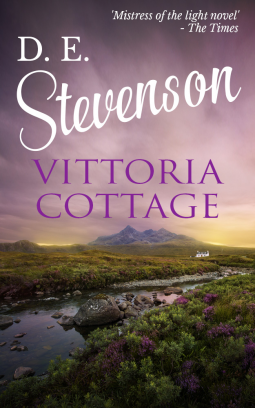
Vittoria Cottage by D E Stevenson

This is only the third book I’ve read by D E Stevenson, but I’m finding that her novels are perfect when I’m in the mood for something gentle and undemanding, but still with convincing characters, some insights into human nature and just enough plot to keep me interested from beginning to end. Having read what other people have to say about her books it seems that they vary in quality, but I think I’ve been lucky with the three I’ve chosen to read so far (Miss Buncle’s Book, Amberwell and now this one).

Vittoria Cottage is the first in a trilogy. The ‘cottage’ of the title is located in the quiet English village of Ashbridge and is home to the Dering family. Arnold Dering died before the novel opens, leaving behind his widow Caroline and their two daughters (there’s also a son who is with the army in Malaya). The younger daughter, Bobbie, doesn’t give Caroline any problems – at least not during the course of this first novel – but the same can’t be said about pretty, selfish Leda. Her engagement to law student Derek causes concern for both families, who can see that the young couple will have no money and are perhaps not very well suited anyway. However, Caroline and Derek’s father resist the temptation to interfere too much and leave Derek and Leda to learn this the hard way.

Meanwhile, Caroline has a romantic interest of her own, although she tries to deny even to herself that she is falling in love. He is a newcomer to the village – Robert Shepperton, a man with a mysterious past. What did he do during the war? What happened to his family? And why has he come to Ashbridge? When Caroline’s sister Harriet, a London actress, arrives for a long stay at Vittoria Cottage, she also finds herself drawn to Robert. But which sister, if either, is Robert interested in?

The main characters in the novel are well drawn and engaging (apart from one or two, such as Bobbie, who remain a bit shadowy) and I liked Caroline immediately. As an older, more mature heroine, she is sensible and practical and if she can sometimes be frustratingly naive and lacking in self-confidence, it only makes her all the more human. I enjoyed watching her relationship with Robert Shepperton slowly develop – a relationship built around friendship and trust. I also liked Caroline’s maid, Comfort Podbury, a young woman who has gained a lot of weight due to a medical condition and is devoted to Caroline because she is one of the few people in Ashbridge who doesn’t judge her by her size.

Vittoria Cottage was published in 1949 and the effects of the war on Caroline and her friends are clear – rationing is still in place, the Derings wonder where Mr Shepperton gets enough coupons to buy so many new clothes, and Caroline is surprised when she finds herself in trouble for attempting to send eggs to Harriet in London. If I’m going to be critical, I could say that this book doesn’t feel very original and I can think of quite a few other novels I’ve read by similar authors which have similar settings and similar types of characters. I don’t think that matters too much, though, because DE Stevenson is very good at writing novels like this and, as I said at the start of this post, sometimes they are just what I’m in the right mood for.

I didn’t enjoy Vittoria Cottage as much as the last Stevenson book I read, Amberwell, but I did like it. The ending seems very abrupt and, without saying too much about it, it’s satisfying in some ways but in others not very satisfying at all! If I want to know what happens next to the Dering family, I’ll have to read the other two in the trilogy, Music in the Hills and Shoulder the Sky.