The Odd Flamingo by Nina Bawden

Nina Bawden is someone I’ve always thought of as a children’s author; I know I’ve read a few of her books, athough Carrie’s War and The Finding are the only ones I can remember anything about. I’ve never tried any of her adult novels, but was drawn to this one by the unusual title. It was originally published in 1954 and has been reissued by British Library as part of their Crime Classics series earlier this year. Bawden isn’t really an author I would have expected them to publish – I had no idea she wrote crime.

The Odd Flamingo is the name of a seedy London nightclub frequented by many of the characters in the novel. One of these is Rose Blacker, a young woman of eighteen who appears to have fallen in with the wrong friends. When Rose tells Celia Stone that she is pregnant – and that the father is Celia’s husband, Humphrey – Celia calls on her lawyer friend, Will Hunt, for help. She doesn’t believe Rose’s claims, but she’s concerned about Humphrey’s reputation and how a scandal could affect his job as a school headmaster.

Will has known Humphrey for years and has always liked and admired him, but when he meets Rose for himself and she produces letters written by Humphrey, his confidence in his friend is shaken. Rose seems so sweet and innocent; surely she must be telling the truth? When a woman’s body is found floating in the canal with Rose’s bag nearby, Humphrey is the obvious suspect. Will agrees to do what he can to clear his name but is worried about what he might discover. As he begins to investigate, he finds that everything keeps leading back to the dark, sordid world of The Odd Flamingo and the miserable lives of the people who go there.

As you can probably tell, this is not exactly the most cheerful and uplifting of books! It’s full of people who are lonely, desperate and troubled or have become mixed up with drugs, theft or blackmail. I found it quite depressing, but also realistic – places like The Odd Flamingo have always existed and probably always will. I can’t really say that I liked any of the characters, but again, most of them feel believable and real. Only Piers, Humphrey’s grotesque, slimy half-brother, veers close to being a stereotype.

The book is narrated by Will and I found him an interesting character; he’s very idealistic and almost hero worships Humphrey, so feels disappointed and let down by Rose’s claims – but then he does the same thing with Rose herself, putting her on a pedestal because she’s young and beautiful. Whether Rose really is as innocent as she seems is a question not answered until the end of the book, but it’s obvious that Will is going to be hurt again if it turns out that she’s not.

The Odd Flamingo, although there are certainly some mysteries to be solved, is not really a conventional mystery novel and not a typical British Library Crime Classic. If your tastes tend towards the darker, grittier end of crime fiction, though, or you’re interested in trying one of Nina Bawden’s adult books, I can happily recommend this one.

The Birds by Tarjei Vesaas

Translated by Torbjørn Støverud and Michael Barnes

Tarjei Vesaas is a completely new author for me, but when I saw two new editions of his books available from Pushkin Press in English translations, I was intrigued by both of them. I decided to start with The Birds, which sounded fascinating. On the front cover, the author Karl Ove Knausgaard describes it as ‘the best Norwegian novel ever’.

The Birds is a short but powerful book. It’s the story of Mattis, a Norwegian man in his late thirties who sees the world differently. Today he would be described as having a mental disability, but Mattis lives in a time when people are not always so sensitive. He’s aware that his neighbours talk about him behind his back and that the village children call him Simple Simon. He has never been able to hold down a steady job and lives with his older sister, Hege, who supports them both through her knitting.

Mattis has low self-esteem and is afraid of what will happen to him if his sister ever leaves, but he is still able to find pleasure in the small things in life, such as the appearance of a woodcock which begins to fly over their house at night. Although nobody else seems to care, to Mattis this is an important, momentous event and the bird and its fate eventually become symbolic of himself. Another, equally significant event is the arrival of Jørgen, a lumberjack with whom Hege falls in love. Convinced that she’ll go away with Jørgen and abandon him, Mattis struggles to cope with this unwelcome change in his life.

This book was published in 1957 and I was impressed by how sensitively and convincingly Vesaas writes about Mattis and his disabilities. He knows he’s not like other people, which makes him feel inadequate and isolated, so any little victory means a lot to him. I found it very moving to see the joy he feels when two young women are kind to him and his sense of pride when he finally starts his own business as ferryman (despite there never being any passengers). I also had a lot of sympathy for Hege. Although we only really see her through Mattis’ eyes, it’s clear that the situation is equally difficult for her. She loves her brother and is protective of him, but at the same time she feels tired, trapped and frustrated. Life seems to be passing her by, so when she finally gets a chance of happiness, she doesn’t want to lose it.

The Birds is a sad, poignant novel but also has some moments of hope and inspiration and is beautifully written, in a simple, gentle way. I loved it and am now looking forward to reading The Ice Palace which sounds just as good.

Thanks to Pushkin Press for providing a copy of this book for review via NetGalley.
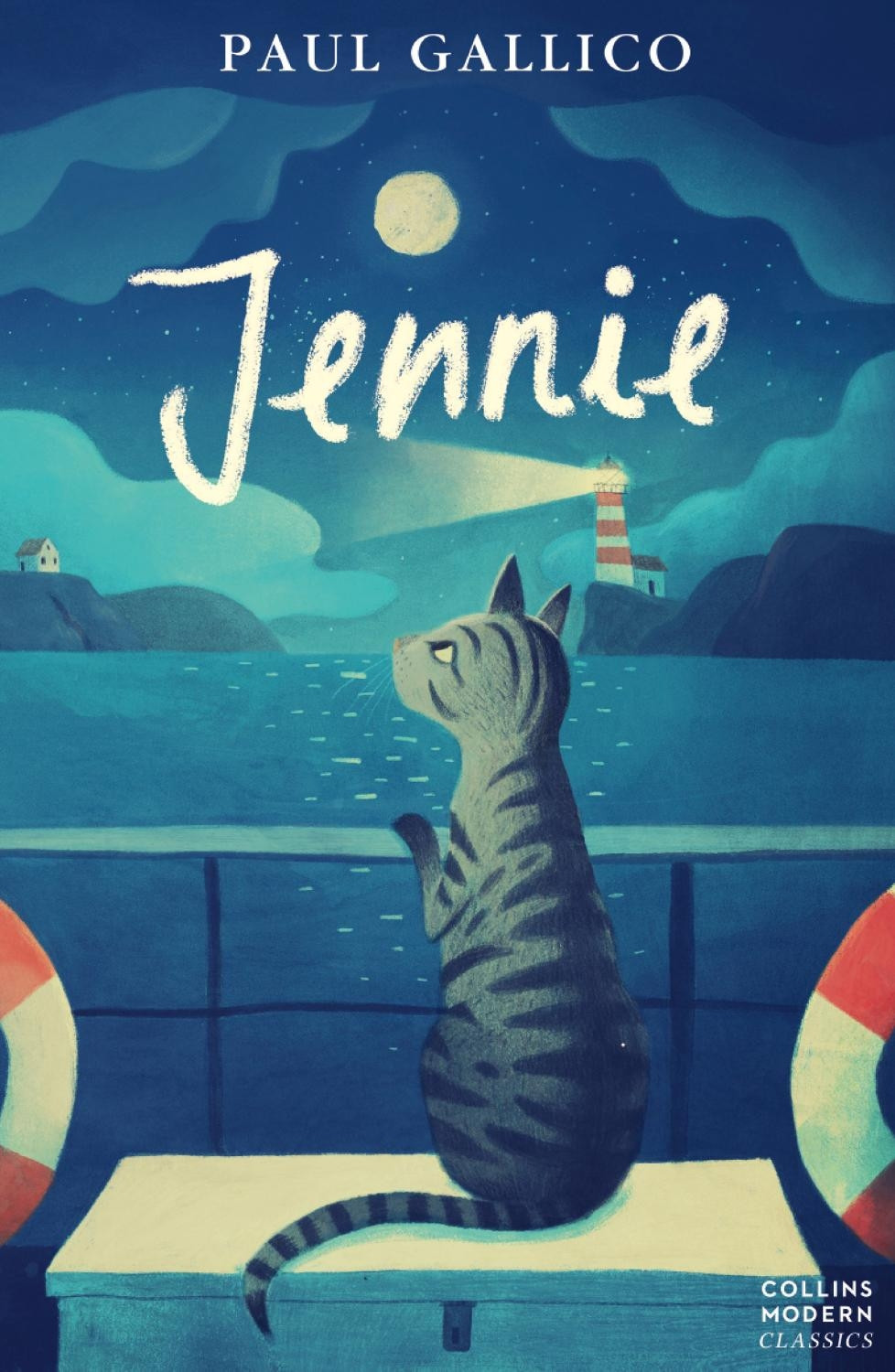
Jennie by Paul Gallico – #ReadingtheMeow2025

This week Mallika of Literary Potpourri is hosting her third annual Reading the Meow event – a celebration of cats in literature. Last year I read and loved Paul Gallico’s Thomasina, so reading one of his other cat books seemed like a good plan for this year’s event. Jennie was originally published in 1950 (and also appeared under the title of The Abandoned in the US) and like Thomasina, it’s a book aimed at children that can also be enjoyed by readers of all ages.

Peter Smith is a lonely eight-year-old boy whose father, an Army officer, is often away from home and whose mother is too busy going out with her friends to have any time for her son. Peter has always wanted a cat of his own to provide the companionship he longs for but isn’t allowed one as his nanny is afraid of them. Everything changes for Peter when he is knocked down and injured running across the road after a striped kitten. When he awakens, he finds that he has been transformed into a white cat – and is immediately thrown out of the house by Nanny.

Alone on the streets of London with the body of a cat and the mind of a boy, he encounters an aggressive yellow tomcat, Dempsey, who decides to defend his territory and leaves Peter unconscious. He is rescued by Jennie, a small kind-hearted tabby who believes Peter’s story and offers to teach him how to behave like a real cat. And so Peter finds himself having lessons on washing, lapping milk, catching mice and the important of pausing in doorways to survey his surroundings! Meanwhile, Jennie tells him her own story of how she was left behind when her owners moved away and began to live the life of a stray. She convinces him to travel to Glasgow with her – because she was born there – and this is the start of many adventures the two have together.

I’m so disappointed that I didn’t read this book as a child as I’m sure I would have loved it. I did still enjoy it as an adult but I don’t think it had the same emotional impact on me that it would have had if I’d been in the target age group. It’s a lovely story and Peter and Jennie are both very likeable, but I felt that this book didn’t have the depth and layers that Thomasina had. Having said that, there were still some moments where I felt a tear in my eye, particularly towards the end!

I loved the relationship between Peter and Jennie and the way they help each other to learn and grow. Peter is completely unprepared for life as a cat and relies on Jennie to teach him even the most basic things, but at the same time, his knowledge of how people behave and think and his ability to read and understand human speech proves very useful to Jennie. Like all good friends, Jennie and Peter have their disagreements – such as whether to accept a kind old man’s offer of a home – and on another occasion, Peter has his head turned by a pretty Siamese called Lulu, but I was sure their friendship would be strong enough to survive! The book was a little bit predictable and I guessed what would happen at the end, but maybe a younger reader wouldn’t.

This was a good choice for Reading the Meow – and also my first book for this year’s 20 Books of Summer! I’m now reading another cat-themed book which I hope to have time to review before the end of the week.

Book 1/20 for 20 Books of Summer 2025.

A Daughter’s a Daughter by Mary Westmacott

I haven’t taken part in the Read Christie challenge for the last two months and wanted to join in with the May read. The book of the month, Cards on the Table, is one that I’ve read quite recently, though, and I’ve also read all of the other alternative suggestions – so instead I decided to read a book I had been considering for 1952 Club in April but didn’t get to as I ran out of time. A Daughter’s a Daughter, published in 1952 (obviously), is one of six novels that appeared under the name Mary Westmacott, Christie’s pseudonym for her books that weren’t mysteries or thrillers. It’s the third Westmacott I’ve read (the others being Unfinished Portrait and Giant’s Bread) and it’s my favourite so far.

The novel opens with Ann Prentice saying goodbye to her nineteen-year-old daughter, Sarah, who is going on a skiing trip to Switzerland. Ann, a widow in her early forties, is very close to her daughter and isn’t looking forward to spending three whole weeks without her. However, while Sarah is away, Ann meets Richard Cauldfield at a party and falls in love. Richard has spent many years in Burma since the death of his wife and has only recently returned to England. On the surface he seems a pompous man, but as Ann gets to know him she sees that he is good and kind – and just days after meeting him, she agrees to marry him. The only problem is, Sarah is due back from Switzerland soon and Ann is worried about how she’ll take the news.

Sarah takes it very badly: she dislikes Richard on sight and decides that her mother can’t be allowed to marry him. Richard tries to befriend Sarah, but has no idea how to speak to a teenage girl and gets everything badly wrong. Meanwhile, Sarah deliberately tries to provoke him and cause arguments, until the atmosphere in the household becomes unbearable. Ann is caught in the middle – she loves Richard and is sure she will be happy with him, but Sarah is her only child and she loves her too. Eventually, she is forced to choose between them and makes a decision she’ll regret for the rest of her life.

I loved this book, but at the same time I found it uncomfortable to read. Sarah is infuriatingly selfish and spiteful, so much so that even later in the book when she ends up desperately unhappy, I couldn’t find much sympathy for her. My heart broke for Ann when she had to make her difficult choice, but after a while she also began to annoy me and I felt that she didn’t handle the situation as well as she could have done. Both Ann and Sarah feel very human, though, and it’s a testament to Christie’s writing that her characters were able to evoke strong emotions in me. Fortunately, there are also some characters I liked, such as Sarah’s boyfriend, Gerry Lloyd, and Ann’s loyal but outspoken housekeeper, Edith. My favourite, though, is Dame Laura Whitstable, Ann’s friend and Sarah’s godmother. A woman in her sixties, Laura has more experience of life than the two younger women and tries her best to pass on her wisdom and knowledge to them without actually giving ‘advice’ or telling them what to do.

I’ve seen the Westmacott books described as romances, but this one is much more of a psychological novel, exploring the relationship between mother and daughter and what it really means to sacrifice your own happiness for someone you love. I found it surprisingly gripping and finished it in two days. I’m now looking forward to reading the other three Westmacotts.

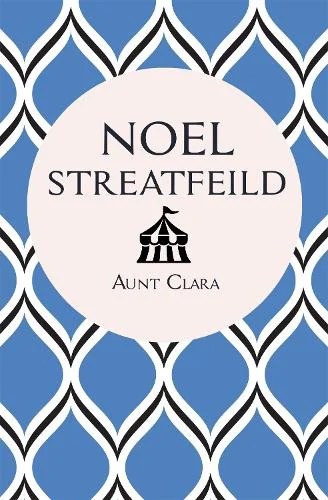
Aunt Clara by Noel Streatfeild – #1952Club

My final book for the 1952 Club being hosted this week by Simon and Karen is one of Noel Streatfeild’s adult novels. I loved Streatfeild as a child but came to her books for adults just a few years ago. So far I’ve enjoyed The Winter is Past and Caroline England and hoped that her 1952 novel, Aunt Clara, would be another good one.

Before we meet the title character, Streatfeild introduces us to Simon Hilton, a wealthy, curmudgeonly man approaching his eightieth birthday, who lives in London with his valet, Henry. Simon has never married, but has five nieces and nephews, most of whom now have children and grandchildren of their own. None of them care much for Simon – and the feeling is mutual – but they all have their eyes on his money and don’t want to risk being disinherited. The old man is looking forward to celebrating his birthday in August and when he receives a stream of letters from various family members suggesting that he switch his party to July instead as it would be more convenient for them, Simon is furious. Feeling disrespected and insulted, he decides to teach them all a lesson!

A few weeks after his birthday party (which was held in August, despite his family’s complaints), Simon dies and everyone gathers for the reading of the will. To their shock and disgust, they hear that everything has been left to Clara, Simon’s sixty-two-year-old niece. Clara is one of the only people in the family who is not greedy and selfish: she looked after her parents until their deaths, sacrificing her own chance of marriage in the process; she is always ready to help her siblings and their children whenever they call on her; she carries out work for charity and sees only the best in everyone else. It may seem that Simon has rewarded her for her goodness, but the bequests include some odd things to leave to a religious, teetotal spinster in her sixties – a small brothel, The Goat in Gaiters pub, Simon’s racehorses and racing greyhounds, a fairground game called Gamblers’ Luck, and two children from a circus. Is Simon playing one last cruel joke from beyond the grave?

I enjoyed Aunt Clara, although I felt that the plot jumped around too much in the second half of the book, making it a bit difficult to follow, particularly as there are so many characters to keep track of as well. It’s fascinating to see how Clara deals with her unusual inheritance, though; she’s endearingly naive and innocent, oblivious to Simon’s malicious humour, and considers each of his bequests to be a ‘sacred trust’. Her efforts to care for each of the people or things entrusted to her eventually begin to give her a different perspective on life and on things she’s always viewed as sins, such as drinking and gambling. She also has to contend with the rest of the Hilton family, who switch their attentions to her, hoping to get their hands on some of her newly gained wealth!

As I’ve mentioned, there are far too many characters – and only a few of the family members are drawn with any depth. One character who does jump out of the pages, though, is Henry, Simon’s manservant, a no-nonsense Cockney who sees the goodness in Clara and takes her under his wing. Henry is present throughout the book and speaks in dialect, including a lot of rhyming slang, which I found a bit tiring to read after a while. Aunt Clara isn’t my favourite of the Streatfeild novels I’ve read so far, then, but I think there’s a lot more to like than to dislike. I was interested to find that it was made into a film starring Margaret Rutherford in 1954. Has anyone seen it?

The Tiger in the Smoke by Margery Allingham – #1952Club

I’ve read a lot of Margery Allingham’s books but, maybe surprisingly, not many of the Albert Campion ones and not the book that is often described as her best, The Tiger in the Smoke. When I saw that it was published in 1952, it seemed an ideal choice for this week’s 1952 Club, hosted by Karen and Simon.

The Tiger in the Smoke is the fourteenth novel in the Albert Campion series – although Campion himself barely appears in it. Despite the exotic title, the Tiger refers to an escaped prisoner, Jack Havoc, and the Smoke is a nickname for London. At the beginning of the book, we meet Meg, who has believed herself to be a war widow since her husband, Major Martin Elginbrodde, was reported dead in Normandy during the D-Day landings. Meg has recently become engaged to another man, Geoffrey Levett, but has started receiving mysterious photographs which seem to show that Martin is still alive. As a thick fog descends on London, Meg asks her cousin Albert Campion and Chief Inspector Charlie Luke to help her find out who is sending the photos and what they mean.

The connection between all of this and the escape of Jack Havoc – whom Campion’s friend Superintendent Oates describes as ‘a truly wicked man’ – is not immediately obvious, but gradually becomes clear as the story progresses. First, though, we meet a gang of ex-Army men trying to make a living as a band of street musicians, all with some kind of disability or war injury. They are also criminals and associates of Havoc, so portraying them all with disabilities is something I’m sure a modern author would avoid, even if Allingham got away with it in the 1950s. Havoc himself is a great villain, surrounded by a real aura of danger due to his unpredictability and ruthlessness.

This book is much more of a thriller than a mystery. In fact, there’s very little mystery at all, beyond the question of who is responsible for the photographs and how Martin Elginbrodde is linked to Havoc and his gang. There’s nothing for the reader to really try to solve, so you just have to sit and watch as the story unfolds. This probably explains why we see so little of Campion, as there’s not much for him to do from an investigative point of view. I have to admit that I was quite happy with his absence as I’ve found so far that I tend to prefer Allingham’s books without Campion to the ones with him – although having said that, this is one of the later books in the series and he seems to have matured a lot since the earliest book I’ve read (Mystery Mile).

I loved the atmospheric descriptions of London in the fog in the first half of the book, with the limited visibility making it easier for the criminals to avoid capture. Allingham finds so many evocative ways to describe the fog and it really adds to the sense of tension and confusion. I’m pleased I decided to read this one for 1952 Club – and I have another Campion novel, The China Governess, on the TBR which I hope to get to soon as well.

Linden Rise by Richmal Crompton – #1952Club

My first book for this week’s 1952 Club (hosted by Karen of Kaggsy’s Bookish Ramblings and Simon of Stuck in a Book) is Richmal Crompton’s Linden Rise. Crompton is much better known for her Just William series for children, but she also wrote a large number of adult novels of which this is one. I’ve previously read two others, Family Roundabout and The Old Man’s Birthday, both of which I enjoyed, so I hoped for a similar experience with this one.

The novel begins in 1892 with fifteen-year-old Tilly Pound arriving at Linden Rise, a cottage in the village of Priors Green. The Culverton family from London have taken the cottage for the summer and Tilly has been employed as housemaid – her first job. Despite their money and comfortable, privileged lives, the Culvertons are not a happy family: Mr Culverton is having an affair with another woman and his wife is fully aware of it, leading to a tense and unloving marriage. Edmund, the eldest child, is Tilly’s age, a serious, humourless boy, very unlike his carefree younger brother, Richard. There are also two girls – pretty, selfish Althea, and the youngest, Vere, who is considered sullen and miserable and is largely ignored by the rest of the family.

As Tilly settles into her new role, the Culvertons come to rely on her more than they know, and when they return to Linden Rise permanently several years later, she comes back to work for them again, this time as head housekeeper and cook. A lot has changed in the intervening years and Tilly isn’t impressed with the direction in which some of the family members’ lives have gone, so she decides to do what she can to put things right.

As you would expect from an author more famous for her children’s stories, Crompton’s child characters are very well drawn and I think that’s why I enjoyed the first part of this book more than the later sections. She knows the sort of conversations children have, the things that are important to them, the eyes through which they look at the world, and how unthinkingly cruel they can sometimes be. Once the children have all grown into young adults and the focus is mainly on their romantic relationships, I felt that the book seemed to lose its charm a little bit. I did love Tilly, though, who remains very much the same throughout the book – reliable, practical and never afraid to speak her mind.

Linden Rise has a lot to say about parenting, a theme that is also an important part of Family Roundabout. Mr Culverton, preoccupied with the other woman in his life, is largely an absent father who barely appears in the novel. Mrs Culverton also shows little interest in the raising of her children, engaging a governess, Miss Maple (another character I loved), for their first summer at Linden Rise. Mrs Culverton makes it clear that she only feels pride in two of her children – ironically, the two most unpleasant ones, Edmund and Althea – while the other two, Richard and Vere, frustrate her with their refusal to conform and behave as she expects them to. I felt so sorry for Vere in particular; Richard at least has a happy nature and doesn’t really care what people think of him, but Vere struggles with feelings of rejection and abandonment even as an adult.

Despite the serious topics the novel covers, there’s also some humour – and a happy ending, at least for some of the characters! I didn’t enjoy this book quite as much as the others I’ve read by Crompton, but I did like it and I’m glad I chose to read it for 1952 Club.

~

Some 1952 books previously read and reviewed on my blog:

East of Eden by John Steinbeck
They Do It with Mirrors by Agatha Christie
The Merry Mistress by Philip Lindsay
Excellent Women by Barbara Pym
The Birds & Other Stories by Daphne du Maurier