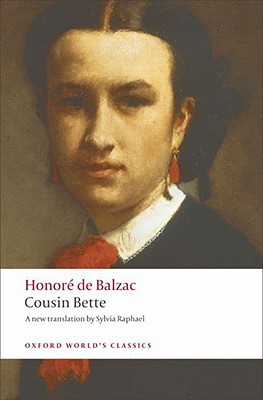
Cousin Bette by Honoré de Balzac

Cousin Bette Balzac is an author I have wanted to try for years but have kept putting off, partly because I thought he sounded intimidating and difficult to read and partly because he wrote so many books it was hard to know where to start! Then, last month I chose ten books at random from my Goodreads “to-read” shelf – and one of them was Cousin Bette, a novel I couldn’t even remember adding to my shelf in the first place, but which sounded very appealing. I obviously couldn’t put off reading Balzac any longer!

Cousin Bette (originally La Cousine Bette and sometimes translated as Cousin Betty) was published in 1846 and is set in 19th century Paris. The title character is Lisbeth – Bette – Fischer, a relation of the Hulot family who has always been jealous of her beautiful cousin Adeline. Plain, poor, and having turned down several marriage proposals, Bette is still unmarried at the age of forty-two. When she rescues a young Polish sculptor, Wenceslas Steinbock, from a suicide attempt and takes him under her wing, she is pleased to be able to tell everyone that she has a lover at last. Her happiness is shattered, however, when Adeline’s daughter, Hortense, falls in love with Wenceslas and marries him herself.

Bette vows to take revenge on the Hulot family and joins forces with Valerie Marneffe, her pretty young neighbour. Knowing that Adeline’s husband, the Baron Hulot, is a notorious womaniser and that Valerie is looking for a rich lover, Bette sees a way to ruin the Baron and destroy the rest of the family in the process.

I enjoyed Cousin Bette and I think it was a good choice for my first Balzac novel. I found it surprisingly easy to read and very entertaining, although I did need to concentrate to follow all the intricacies of the plot. The summary I have given above is only the beginning of the story; Bette is by no means the only character who plots and schemes and tries to cause trouble – and in fact, many of the misfortunes that befall members of the Hulot family are caused by their own personal weaknesses and flaws rather than the influence of others. Baron Hulot, for example, despite being one of the targets of Bette and Valerie’s cruelty, really only has himself to blame as he is unable to resist the temptation placed in his way.

I saw the three main female characters – Cousin Bette, Valerie Marneffe and Adeline Hulot – as representing three stereotypical views of 19th century women of different classes and social groups. Bette is the bitter, jealous middle-aged spinster, Valerie the selfish, manipulative beauty, and Adeline the faithful, loving wife who turns a blind eye to her husband’s many affairs. Any reader who is interested in gender roles and the portrayal of women in literature will find a lot to think about in Cousin Bette.

Before reading this novel I had no idea what the outcome of the story would be and I was kept in suspense until the end. Of course, I’m not going to tell you how it ends, but it’s not quite as simple as the ‘good’ characters being rewarded and the ‘bad’ ones being punished. It’s all very melodramatic – and all very bleak as well – but I enjoyed it and am looking forward to reading more Balzac. As he wrote more than one hundred books, I would love to know if you’ve read any of them and which ones you would recommend.
The Luminaries by Eleanor Catton

The Luminaries This is the novel that won the Booker Prize in 2013 but despite the hype surrounding it at the time and the fact that it did sound like a book I would enjoy, I have been putting off reading it, mainly because of its length. As well as the Booker Prize, though, it was also nominated for the Walter Scott Prize in 2014 and as I’m slowly working through the shortlists for that particular prize, I decided it was time I read it.

The Luminaries is set in the New Zealand town of Hokitika during the Gold Rush of the 1860s. The story revolves around several strange occurrences which all take place on the same night in January 1866: Emery Staines, one of the town’s richest men disappears without trace; prostitute Anna Wetherell collapses in the street in what is thought to be a suicide attempt; and the reclusive Crosbie Wells is found dead in his own home, surrounded by a large quantity of hidden gold. These things may not seem to be connected at first, but of course they are – as is everything else that happens throughout the 800 pages of this very clever and complex novel.

The first and by far the longest section of the book begins with the arrival of Scottish lawyer, Walter Moody, who is hoping to make his fortune on the goldfields. On his first evening in Hokitika he walks into the Crown Hotel to find that he has interrupted a meeting between twelve men who have gathered to try to make sense of what has been happening. These twelve men are all linked in some way with Emery, Anna, Crosbie or all three – and as Walter listens to their stories he too is drawn into the mystery.

In the sections of the novel that follow – each one half the length of the one before – we move forwards and then backwards in time learning more about each of the main characters and the events leading up to the night of 14th January 1866.

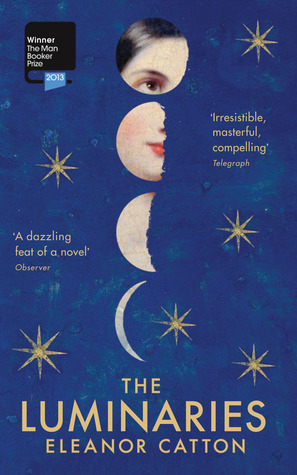
The decreasing length of the chapters corresponds with a waning moon (hinted at by the images on the front cover), one of many astrological elements Eleanor Catton has incorporated into the novel. The character list at the front of the book lists the twelve men who meet in the hotel under the heading ‘Stellar’ and each one is associated with a sign of the Zodiac, while the other characters are listed as ‘Planetary’. Each of the twelve sections of the book begins with an astrological chart and within each section the individual chapters have astrological titles. This was intriguing at first but as I don’t have a lot of interest in astrology it didn’t mean much to me and I quickly gave up trying to interpret it and concentrated on following the story instead.

I have seen lots of comparisons between The Luminaries and the Victorian sensation novels of Wilkie Collins, one of my favourite authors, but I’m not sure if I really agree with that comparison. The book does include lots of elements of the sensation novel (hidden treasure, opium addiction, double identities, séances, forgeries and family secrets) but Eleanor Catton’s writing, in my opinion, lacks the flair and humour of Wilkie Collins’ and the gift for creating strong, unforgettable characters. Apart from one or two, the twelve men of the Crown felt interchangeable and I had to keep looking back at the character list to remind myself which was which. The other eight were slightly stronger (they were the Planetary characters and the ones who tended to drive the story forward) but of these, Anna Wetherell was the only one I really came to care about.

I did enjoy reading The Luminaries, though, and can definitely see why it has been so successful. I was very impressed by the intricate plotting with facts and secrets being slowly unveiled and connections between the characters gradually revealed. I also loved the setting; I have read very few novels set in New Zealand and I certainly haven’t read any set in a New Zealand gold mining town in the 1860s! Because Hokitika is a real place, I could find lots of pictures online which really helped to bring the setting to life. The length of the book wasn’t a problem for me either; the pages seemed to go by much more quickly than I’d expected them to – especially in the second half, where the chapters become shorter and the pace becomes faster.

I know there were a lot of things happening in The Luminaries that I didn’t completely understand (especially all of the allusions to astrology) and lots of little details that I missed. I would probably have to read the book again to be able to fully appreciate it, but for now I’m happy just to have read it once and to have enjoyed it!

Alias Grace by Margaret Atwood

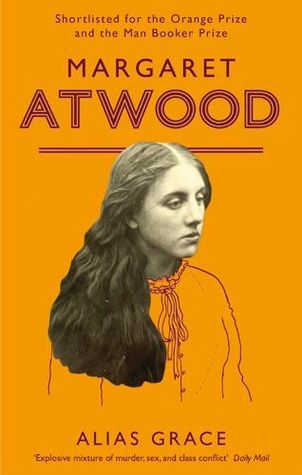
Alias Grace This is only the second book I’ve read by Margaret Atwood. The first was The Handmaid’s Tale, which I read in December 2012 and loved; thinking about which one to read next, Alias Grace sounded the most appealing to me but it wasn’t until it was selected for my Ten From the TBR project last month that I actually got round to reading it.

Alias Grace is a work of fiction based on a true story: the story of Grace Marks, a woman sentenced to life imprisonment for murder in 1840s Canada. Grace (who was only sixteen at the time) and her alleged accomplice, James McDermott, were accused of the murders of their employer, Thomas Kinnear, and his housekeeper, Nancy Montgomery. Grace has been in the Kingston Penitentiary for fifteen years when Simon Jordan, a doctor with an interest in criminal behaviour, decides to visit her as part of his research.

Although Grace claims to have no memory of the murders, she does have plenty of other memories which she gradually shares with Dr Jordan: her childhood in Ireland, her journey across the Atlantic and arrival in Canada, her first job as a maid and her friendship with a girl called Mary Whitney – and finally, the time she spent in Kinnear’s household prior to the murders.

As Dr Jordan listens to her story unfold, he tries to make up his mind about Grace. Is she being completely honest with him? Is she really guilty of the crimes of which she has been accused? Margaret Atwood doesn’t offer any answers here; it is left up to the reader to decide – but proving Grace’s guilt or innocence is not really the point of this book. Grace’s life story is interesting in itself, giving us some insights into what it was like to be an Irish immigrant in the 19th century, and the novel also explores attitudes towards women and towards mental illness at that time.

Alias Grace is a fascinating blend of fact and fiction. Grace Marks really existed but although Atwood states in her author’s note that she has not changed any of the known facts regarding the murder case, there were enough gaps in the records to allow her to invent parts of the story. Simon Jordan is a fictional character, but his inclusion in the novel adds another perspective – and also another layer, because we can never be sure whether Grace is telling him the truth or just saying what she thinks he would like to hear. Hannah Kent uses a similar device in Burial Rites and as I read, I did keep being reminded of Burial Rites (although Alias Grace was published first, of course).

I loved Alias Grace, but it’s a very different type of book from The Handmaid’s Tale, which has made me curious about the rest of Margaret Atwood’s novels. Which one do you think I should read next?

Rebel Queen by Michelle Moran

Rebel Queen I love historical fiction set in India and was instantly intrigued when I saw that Michelle Moran’s new novel, Rebel Queen, was described as the story of Rani Lakshmibai who rebelled against the British by ‘raising two armies — one male, one female — and riding into battle like Joan of Arc.’ Once I started to read the book, I found that it wasn’t quite what I’d expected, although that wasn’t necessarily a bad thing. I have read two of Michelle Moran’s other novels and while I think my favourite of the three is still The Second Empress, I still enjoyed this one and thought it was much better than Cleopatra’s Daughter.

Rani Lakshmibai (or Lakshmi as she is called throughout this novel) rules the state of Jhansi along with her husband, Raja Gangadhar Rao, until his death in 1853. As the raja has died leaving no biological male heir, Jhansi is annexed by the British East India Company, and during the Indian Rebellion of 1857 the rani and her people find themselves caught up in the middle of the conflict. By the rani’s side are her ten Durgavasi – a small, elite group of highly-trained, highly-skilled women who serve as both guards and trusted friends. It is through the eyes of one of these women, Sita Bhosale, that the story of Jhansi unfolds.

Sita Bhosale grows up in a small village many miles from the city of Jhansi and, like the other village girls and women, she lives in purdah, secluded from the view of men outside her family. After her mother dies in childbirth, her father tells her that there will not be enough money to provide a dowry for both Sita and her little sister. With very few options open to a young woman who fails to marry well, he suggests that she begin training for a position in the Durga Dal, the rani’s personal guard. Following several years of hard work, Sita has learned all the skills she needs – she can ride a horse and knows how to use a sword, a pistol and a bow – and soon she is on her way to Jhansi to become the rani’s newest Durgavasi.

As our narrator, Sita is a character who is easy to like. I enjoyed watching her train for the Durga Dal, I was fascinated by her descriptions of her early days in Jhansi where everything – the rani and raja’s court, life in the palace, the absence of purdah – is new and strange, and I sympathised as she found herself the target of the raja’s beautiful, scheming cousin, Kahini, one of her fellow Durgavasi. But from the title, Rebel Queen, and the description of the novel, I had expected this to be the story of Rani Lakshmibai rather than the story of Sita. We don’t really get to know the rani at all until the second half of the novel and only a few chapters at the end are spent on the events of the Sepoy Rebellion (the promised ‘raising of armies and riding into battle’), which was disappointing.

The author assumes the reader has no prior knowledge of Indian culture or history, so she has Sita explain to us how the British East India Company came to be in India, the meanings of customs such as purdah and the Hindu caste system, and the basics of Ayurvedic medicine. While I already knew some of the things Sita tells us, there were still lots of facts and details that were new to me, so this was both an entertaining and an educational read. However, I was surprised to read that the British were flying ‘the red and black Union Jack’ from the buildings of Jhansi, and this made me wonder about the overall accuracy of the novel!

Despite the few problems I’ve mentioned, I did find this an interesting and compelling story. I do think it would have been good to have had at least part of the novel written from the rani’s perspective, but I still enjoyed getting to know Sita and the women of the Durga Dal.

Note: This book has been published in the UK as The Last Queen of India and I think the UK title and description are more appropriate, giving a better idea of what the story is about. However, I have referred to the US edition throughout this post, as this was the version I received for review through NetGalley.

The Importance of Being Earnest by Oscar Wilde

The Importance of Being Earnest This is the second play I’ve read this month as part of my personal challenge to read the three on my Classics Club list during June. I’m really regretting my previous reluctance to read plays because it has meant that until now I’ve been missing out on some great ones like The Importance of Being Earnest. It was silly of me to keep avoiding this particular play, because I’ve enjoyed everything else I’ve read by Oscar Wilde (The Picture of Dorian Gray, The Canterville Ghost, A House of Pomegranates and two more of his short stories); why did I assume I wouldn’t enjoy this one too?

At the beginning of the play, Algernon Moncrieff is being visited at his London home by his friend, Jack Worthing, whom he has always known as Ernest. Jack is from Hertfordshire, where he is guardian to eighteen-year-old Cecily Cardew, whose grandfather found and adopted Jack as a boy. When Algernon finds a cigarette case inscribed to ‘Uncle Jack’ from ‘Little Cecily’, Jack is forced to admit that his name isn’t really Ernest – Ernest is a fictional brother he has invented so that he can escape from Hertfordshire from time to time with the excuse that his brother is in trouble and needs his help.

Algernon then confesses that he has also created an imaginary friend – an invalid called Bunbury who conveniently summons Algernon to his deathbed whenever he needs to get away from his responsibilities in London for a while. Leading double lives (which Algernon refers to as ‘Bunburying’) has so far been very successful for both men, but this is about to change when Algernon falls in love with Jack’s ward, Cecily Cardew, and Jack falls in love with Algernon’s cousin, Gwendolen – two women who are each determined to marry a man called Ernest.

Things quickly become very complicated from now on, with the action moving to Jack’s country estate where a series of misunderstandings, deceptions and mistaken identities follow. I don’t want to give away any more of the plot than I already have because I’m sure there are other people out there who still haven’t read or seen this play and I would hate to spoil the fun for you. And this is a fun play to read. I think Oscar Wilde’s famous humour and wit come across particularly well in the play format; even when reading it on the page it’s easy to imagine the lines being spoken aloud.

Some of the best lines go to Lady Bracknell, one of the ‘formidable aunt’ type characters you so often find in fiction. Although this is the first time I’ve read The Importance of Being Earnest in its entirety, I do remember reading the famous handbag scene at school. I was looking forward to reaching that part and fortunately it is in the first Act so I didn’t have too long to wait; it was lovely to finally be able to read it in its proper context!

There’s obviously a lot more I could have said about this wonderful play, about its themes, its characters and its use of language, but I hope you’ll forgive me for keeping this post short. I have another play to go and read!

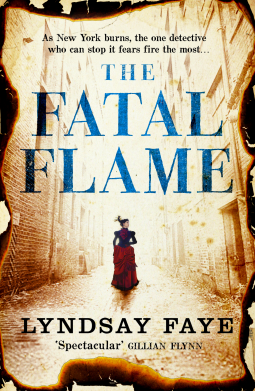
The Fatal Flame by Lyndsay Faye

The Fatal Flame Since reading The Gods of Gotham, Lyndsay Faye’s first novel to feature New York ‘copper star’ Timothy Wilde, I’ve been looking forward to each new book in what I’d hoped would be a long series. I was disappointed to discover that it’s actually a trilogy and The Fatal Flame is the last we’ll see of Tim and his friends – but pleased to have had the chance to read what has been a very enjoyable set of books.

Timothy’s story began in 1845 when his home in Manhattan was destroyed by fire and his brother, Valentine, helped him find work as a copper star in the newly formed New York City Police Department (the name comes from the copper stars the officers wore to identify themselves). In The Gods of Gotham you can read about the early days of Timothy’s career and how his crime-solving skills gained him a position as one of the NYPD’s first detectives, while the second book, Seven for a Secret, followed his investigations into a gang of ‘blackbirders’ (people who hunted down runaway slaves and returned them to slavery in the south). Ideally, these two books should be read before The Fatal Flame as there are some recurring characters and storylines, but it’s not essential.

In this third and final book, set in 1848, a mysterious arsonist appears to be targeting properties belonging to the unscrupulous politician and businessman Robert Symmes. The main suspect is one of his former employees at the New American Textile Manufactory, a woman with a grudge. But as Tim begins to dig deeper into Symmes’ business dealings and his treatment of his female workers, things quickly become much more complex than they seemed at first – especially when Tim’s brother, Valentine, announces that he will be running against Symmes in the next election. Meanwhile, Mercy Underhill, the fascinating, eccentric woman Timothy loves, has returned from London and it’s not long before she befriends Dunla Duffy, a young Irish girl who could hold the key to the mystery.

Most of the other characters we got to know in the previous novels are also back again in this one, including Bird Daly, Silkie Marsh, Jim Playfair and Elena Boehm. With this being the end of the trilogy, the personal story of each character is brought to a close, in one way or another – I would have hoped for a happier ending for one or two of them, but was satisfied with the way most of their stories concluded. I’ve particularly enjoyed watching the relationship between Timothy and Valentine (my favourite character) develop throughout the three books and I loved their scenes together in this book, especially towards the end.

I have mentioned in my posts on the previous two Timothy Wilde books the use of flash (the language of the criminal underworld) and how it adds to the atmosphere and authenticity of the story. Each novel includes a glossary which translates the flash terminology, although by the time you reach the third book in the series you’ll find yourself relying on it less and less (and the meaning can often be worked out from the context anyway). In this book, we see flash being used for the purpose for which it was originally intended – as a secret language to enable the speakers to hold a conversation that is unintelligible to anyone else who may be listening.

Another of the highlights of this trilogy has been seeing how Lyndsay Faye brings to life the New York City of the 19th century and tackles some of the important issues facing the people who lived there during that period. I have hinted at two of the main themes in The Fatal Flame already: political corruption and the exploitation of female employees (particularly Irish immigrants). Sometimes, though, Timothy’s attitudes towards the injustices of 19th century life make him feel slightly unconvincing as a man of his time, which is really my only criticism of the book and of the trilogy as a whole.

The language, the setting, the atmosphere and, most of all, Tim and Val Wilde – I’ve found so much to enjoy in these three novels! Now I’m wondering what Lyndsay Faye will be writing next.

Thanks to Headline for providing a copy of this book for review.

The Widow’s Confession by Sophia Tobin

The Widows Confession It’s the summer of 1851 and visitors are beginning to arrive in the seaside town of Broadstairs, Kent. Among the new arrivals are a young American widow, Delphine Beck, and her cousin, Julia Mardell; two women surrounded by an air of mystery. What is the scandal in Delphine’s past that has led her to flee New York and become estranged from her family? Why has Julia decided to accompany her and why does she keep her face covered by a veil?

Another newcomer is Edmund Steele who has come to Broadstairs to escape from a failed love affair. He is staying at the parsonage with his clergyman friend, Theo Hallam, who is himself trying to move on after a personal loss of his own. Then there’s the artist Mr Benedict, who is planning to spend the summer painting the Broadstairs scenery while his family are staying in nearby Ramsgate, and finally there’s Miss Waring, a nervous woman in her fifties who is visiting with her beautiful young niece, Alba.

All of these people are brought together by Theo’s aunt, Mrs Quillian, who arranges a series of picnics, walks and sightseeing excursions for them. But despite her enthusiasm, there is a lot of tension within the little group and it seems that almost everyone has his or her own secrets to hide. When the body of a young girl is washed up on the beach – and more suspicious deaths follow – it appears that one of the summer visitors could be to blame. Can they put their differences aside and work together to identify the murderer?

The Widow’s Confession is Sophia Tobin’s second novel. Her first was The Silversmith’s Wife, a book I haven’t read and probably won’t now be reading as I found this one quite disappointing. I’m sorry I didn’t like it more as it did sound like the sort of book I would usually enjoy. There were some aspects I enjoyed – the setting, the portrayal of Victorian society and the way the relationships between the characters were developed so carefully – but otherwise the book was just not what I’d expected it to be. Maybe I was misled by the front cover, which gave me the impression the story would be more suspenseful and gothic than it actually was.

I felt that the mystery surrounding the dead girls was ignored for very long stretches of the novel, to the point where I no longer really cared who had killed them or why. I was more interested in the characters themselves, in their tragic pasts and in what had brought each of them to Broadstairs. As a slow-paced, atmospheric study of character and of 19th century life, I thought the novel worked quite well.

What I did love about this book was the setting. Broadstairs was a popular English seaside resort in Victorian times and a favourite holiday spot of Charles Dickens who wrote David Copperfield there (while staying at a house on the cliff which became known as Bleak House). The characters also visit some of the surrounding tourist attractions, all of which are vividly described; I particularly loved reading about their visit to the Shell Grotto in Margate.

For the right reader, I think The Widow’s Confession would be an interesting and worthwhile read, but I have to admit I was pleased when I reached the end and could move on to something else.