The Spendthrift and the Swallow by Ambrose Parry

I loved the first four novels in Ambrose Parry’s Raven and Fisher mystery series and although there doesn’t currently seem to be any news of a fifth, I was pleased to come across this digital short story available free for Kindle. It fits into the series chronologically between the third and fourth books but if you come to it late, as I did, it doesn’t matter at all as it works as a standalone story.

Ambrose Parry is a pseudonym used by the crime author Chris Brookmyre and his wife Dr Marisa Haetzman, a consultant anaesthetist. Marisa’s knowledge is crucial to the series, which is set against the backdrop of the medical world of 19th century Edinburgh. Our two main characters are Dr Will Raven, assistant to the renowned Scottish obstetrician Dr James Simpson, and Sarah Fisher, who also assists at Simpson’s clinic but is struggling to find a way to achieve her own dream of becoming a doctor. Each book in the series features a mystery to be solved, as well as details of Victorian medical procedures and treatments.

The Spendthrift and the Swallow is only 52 pages long, including a preview for Voices of the Dead, and can easily be read in about twenty minutes. The story is set in January 1853 and we follow Will and Sarah as they investigate the death of one of Dr Simpson’s patients, Cora Carlton, the wife of an entrepreneur. The circumstances of Cora’s sudden death could raise questions over the doctor’s medical abilities, so Will and Sarah hope to uncover the truth quickly enough to save his reputation. Meanwhile, Simpson has begun experimenting with the increasingly popular science of mesmerism and places a loud and difficult patient under hypnosis with startling results. I was interested to read in the author’s note at the end of the book that both of these incidents were based on real historical cases.

If you’re new to the Raven and Fisher books, reading this story first wouldn’t be a problem as it doesn’t really spoil anything from the main series and it’s a satisfying mystery in its own right. However, it’s too short for any character development or any background information to help you understand the relationship between Sarah and Will and what has happened to them up to this point. My recommendation is to start with the first full-length novel, The Way of all Flesh. For existing Parry readers, though, this is an entertaining little book and provides an introduction to the mesmerism storyline that will play such a big part in Voices of the Dead.

Book 3/50 for the Historical Fiction Reading Challenge 2024

The Beholders by Hester Musson

‘Beauty is in the eye of the beholder’ and the cover of this debut novel by Hester Musson is certainly a beautiful thing to behold.

We begin in June 1878 with Clara Gethin on trial at London’s Old Bailey for the murder of her own child, whose body has been pulled from the River Thames. As the wife of a highly respected politician who has provided evidence against her, things look very bleak for Clara, but there’s one person who believes – or at least wants to believe – in her innocence. This is Harriet Watkins, her lady’s maid and the only friend she has in the world.

We then go back several months to Harriet’s arrival in Clara’s household following the death of her previous employer. Her mother wants her to return home to marry her fiancé, but Harriet isn’t at all convinced that William is the man she wants to spend her life with, so instead she accepts a new position as housemaid at Finton Hall, the Gethins’ Hertfordshire estate. When Harriet begins her new job, she quickly senses that something is very wrong at Finton Hall. The housekeeper is hostile and unwelcoming, the footman seems to be hiding secrets, and the master, although largely absent, casts a shadow over the entire household. Harriet makes an effort to befriend her new mistress and is rewarded with promotion to lady’s maid, but she is concerned by Clara’s lack of affection for her baby son and her habit of dismissing servants seemingly on a whim.

The story unfolds through the pages of Harriet’s diary as she gives her account of her early days at Finton Hall and the things she experiences and observes there. The diary entries are long and detailed – sometimes more detailed than they really need to be – but otherwise the format is a good way to convey Harriet’s growing sense of unease as she learns more about what is really going on within the Gethin household. However, I think I’ve read too many similar books recently, because I found it easy to guess what was happening and wasn’t surprised at all when it was revealed. It also seemed to take far too long to reach that point – the first half of the book consists of a lot of very slow build-up and there were times when I struggled to stay engaged.

The pace picks up in the second half as the action finally moves outside the confines of the house and we learn more about the fate of Clara Gethin’s baby. This part of the book felt more original and I was less able to predict what was going to happen; I also liked the romantic storyline which developed towards the end – although it felt slightly rushed, the love interest was not the person I’d expected earlier in the book and I was glad the author hadn’t gone in that direction. Overall, I think my feelings about The Beholders are more positive than negative; I just wish it hadn’t taken so long for the plot to emerge!

Thanks to Fourth Estate for providing a copy of this book for review via NetGalley.

Book 2/50 for the Historical Fiction Reading Challenge 2024

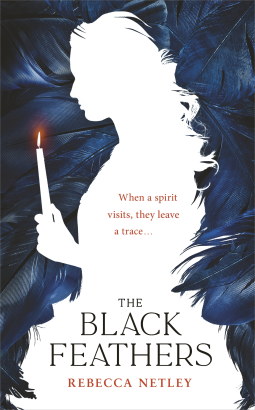
The Black Feathers by Rebecca Netley

The Black Feathers is an eerie Gothic novel, a perfect book to curl up with indoors on a cold, dark night.

It’s 1852 and Edward Stonehouse is returning to Guardbridge, his family estate on the Yorkshire Moors, bringing with him his second wife, Annie, and their baby boy, John. The couple have been married for a year, but this is Annie’s first visit to the house and she is full of apprehension, having been warned by a friend that Guardbridge has a reputation as ‘a place where bad things happen’.

As Annie begins to explore the narrow hallways and dimly-lit staircases of her new home, she finds traces everywhere of Edward’s first wife, Evie, and their young son, Jacob. She longs to know what happened to them, but Edward has made it clear that the subject is not to be discussed, so she turns instead to the other inhabitants of the house – Edward’s sister, Iris, and her old nurse, Mrs North. But here Annie only finds yet more mysteries. Can Iris really communicate with the dead, as she claims, and why does she refuse to venture outside the walls of Guardbridge? And what are the black feathers appearing around the house? Is it true that they mark the spot where a ghostly presence has visited?

The Black Feathers has some obvious similarities with Daphne du Maurier’s Rebecca, as well as a setting reminiscent of Wuthering Heights, but there are enough original elements to make it an enjoyable read in its own right and not too derivative of older classics. I found Annie a likeable character, but Iris intrigued me more, with her passion for spiritualism, interest in taxidermy and the agoraphobia that has kept her indoors for so many years. I wanted to know what had happened to make into the person she became, and although we do eventually find out, Netley keeps us wondering before beginning to reveal the truth. Edward is equally mysterious – seen through Annie’s eyes, he is distant and aloof, a man she has married through necessity and hasn’t yet learned to trust. When we see things from his sister’s perspective, there are hints that he could be quite a different man to the one Annie thinks she has married, but again, we have to wait to find out what sort of person Edward really is and what happened to his first wife and child.

The novel is atmospheric and creepy in places, particularly when Annie begins to see some ghostly apparitions, but I didn’t find it too frightening, which is good as I don’t want to be terrified when I’m reading at bedtime! I felt that the final few chapters let the book down slightly – the unravelling of the house’s secrets involves too much exposition and long stretches of dialogue – but the final twist is clever and unexpected. Rebecca Netley has written another ghost story, The Whistling, which I haven’t read but would like to, having enjoyed this one.

Thanks to Michael Joseph for providing a copy of this book for review via NetGalley.

This is book 47/50 for the 2023 Historical Fiction Reading Challenge.

Learned by Heart by Emma Donoghue

Emma Donoghue’s new novel, Learned by Heart, is the story of Anne Lister and Eliza Raine, two real historical figures. Lister, best known for her diaries in which she writes about her lesbian relationships as well as her daily life in West Yorkshire, has been made famous to modern audiences thanks to the recent BBC/HBO drama series, Gentleman Jack. Eliza Raine, her first lover, is believed to be a possible inspiration for Bertha Mason, Mr Rochester’s wife in Charlotte Brontë’s Jane Eyre.

Eliza was born in Madras (now Chennai), the younger daughter of an Indian mother and an English father, who was working there as a surgeon for the East India Company. Following her father’s death, Eliza and her sister were sent to England to live with a Yorkshire family, the Duffins. We join Eliza at her boarding school in York, where she has made several friends but still feels that she doesn’t entirely fit in due to her background and skin colour. When Anne Lister arrives at the school one day in 1805 and is told to share Eliza’s bedroom, Eliza is immediately drawn to the new girl. Lister, as she prefers to be known, is a strong personality – intelligent, rebellious and an ‘outsider’ like Eliza herself. As the two grow closer, their friendship develops into romantic love, but as two fourteen-year-olds in 19th century England they are denied the freedom to be who they really are.

Interspersed with the account of their schooldays are several letters written by Eliza to Lister ten years later. Through these letters, we are aware from the beginning of the novel that Eliza will end up in an asylum, but we don’t know exactly how or why she came to be there. Although we do learn a little bit more as the story progresses, it’s not fully explained until Emma Donoghue’s author’s note at the end of the book. The novel itself concentrates almost entirely on Lister and Eliza’s time at the Manor School in York, something I hadn’t expected when I first started reading, and I do feel that rather than the letters, it would have been more interesting to have had a sequel continuing the story after they leave school and become adults.

After last year’s Haven, an unusual novel about a group of 7th century monks settling on an uninhabited island, Donoghue is on more familiar territory with this one (several of her earlier books have also been set in the 18th and 19th centuries). A huge amount of research has obviously gone into the writing of this book and her portrayal of everyday life in an English girls’ school during the time of the Napoleonic Wars feels vivid and real. However, I don’t think we really needed so many long, detailed descriptions of every game the girls played at school!

Anne Lister is an intriguing character and seeing her only through Eliza Raine’s eyes gives a real sense of the qualities that Eliza finds so attractive. It also means that we don’t fully get to know Lister or to understand her innermost thoughts and feelings, so she is always surrounded by a slight aura of mystery. I didn’t always like her and as she was clearly the dominant force in their relationship, I felt concerned for Eliza as it seemed obvious she was going to get hurt.

As I’ve said, I think I would have been more interested in learning about the adult lives of the characters, but I did still enjoy the book and thought it was a great introduction to the lives of these two fascinating women.

Thanks to Picador for providing a copy of this book for review via NetGalley.

This is book 14/20 of my 20 Books of Summer 2023

This is book 35/50 for the 2023 Historical Fiction Reading Challenge.

The New Magdalen by Wilkie Collins

Wilkie Collins is one of my favourite Victorian authors, but I feel that I haven’t featured him very often on my blog – probably because I read so many of his books pre-blog, including all of his most famous ones (and I don’t re-read very often these days). Even so, there are still some that I haven’t read yet and I was intrigued when I noticed a few years ago that The New Magdalen was being reprinted by Persephone Books, as they’re a publisher associated more with women authors (although there are a small number of Persephones by male authors as well). It has taken me a while to get round to reading it, so I decided to put it on my 20 Books of Summer list to make sure it didn’t linger on my TBR any longer.

First published in 1873, the novel opens during the Franco-Prussian War in a small cottage in France where Mercy Merrick is working as a Red Cross nurse. As the Germany army draws closer, Mercy has taken shelter in the cottage to nurse some wounded French soldiers and has been joined by another young woman, Grace Roseberry. Grace is on her way to England following the death of her father in Rome; she has spent most of her life in Canada and doesn’t know anybody in England, but she is carrying a letter of introduction from her father to a Lady Janet Roy, a wealthy woman whom she hopes will employ her as a lady’s companion. Grace shares this information with Mercy, who in turn tells Grace her own story – that she is a ‘fallen woman’ who has had a difficult past, eventually ending up in a women’s refuge before volunteering as a nurse.

As the two women talk, the cottage suddenly comes under fire from the advancing army and receives a direct hit from a shell. Grace is badly wounded and is declared dead by a French surgeon. Finding herself alone with Grace’s lifeless body, it occurs to Mercy that she could take Grace’s papers, dress herself in Grace’s clothes and present herself to Lady Janet Roy under the name Grace Roseberry. Desperate to escape from her own troubled past and start a new life, Mercy is unable to resist the temptation and goes through with the plan. It proves to be a huge success and soon Mercy is living as Lady Janet’s adopted daughter and even receives a marriage proposal. Before the marriage can take place, however, Mercy makes a shocking discovery – it seems that the real Grace Roseberry may still be alive and looking for revenge!

Wilkie Collins was known for his sensation novels, a genre that takes elements of Gothic melodrama and places them in an ordinary, often domestic setting. His books typically feature family secrets, disputed inheritances, intercepted letters, stolen jewels, mistaken identities and amazing coincidences. The New Magdalen is less sensational than some of his others, but still falls firmly into the genre so you can expect a very entertaining novel. I’ve always found Collins’ writing to be the most readable of all the Victorians and that, in addition to this being a relatively short book for a 19th century classic, makes it a gripping and surprisingly quick read.

I can see why Persephone chose to add this book to their collection as Collins does write such strong and sympathetic female characters and with Mercy’s story he highlights some of the injustices women faced in Victorian society (and in some ways still do today). I think my favourite Collins novels will always be The Woman in White and Armadale, but this is still a great book and would probably be a good introduction to his work if you didn’t want to commit to a longer one.

This is book 2/20 of my 20 Books of Summer 2023 and book 40/50 from my second Classics Club list.

The Other Side of Mrs Wood by Lucy Barker

Mrs Wood is the most successful medium in Victorian London. Together with her assistant, Miss Newman, she hosts spectacular séances that have made her the talk of the town and brought the rich and famous to her door requesting private consultations. Of course, Mrs Wood can’t really communicate with spirits, but she doesn’t feel too guilty about what she’s doing – after all, a widow has to make a living somehow and this is the work she’s been raised to do. Recently, however, things have started going wrong. There are reports from America of mediums promising to materialise full spirits and although Mrs Wood disapproves of such things, she worries that her own more traditional shows are losing their spark. When she hears the unmistakable sound of a yawn during one of her séances, she knows she has to take action.

The answer to Mrs Wood’s problems arrives in the form of sixteen-year-old Emmie Finch, who wants nothing more than to become a medium. Impressed by the girl’s talent and enthusiasm, Mrs Wood agrees to take her on as an apprentice. Miss Finch is an instant hit with Mrs Wood’s friends and clients, but is she really the sweet, innocent young woman she appears to be or has Mrs Wood made a big mistake?

The Other Side of Mrs Wood is Lucy Barker’s debut novel and a very enjoyable one! It took me a few chapters to get into the story as the beginning was quite slow, but by the middle of the book I had been completely drawn in. At first I wasn’t sure whether I liked Mrs Wood, but I quickly warmed to her. It was nice to have an older, more mature heroine, who is starting to worry about greying hair and aching bones, has already been married and divorced before the story begins and is devoting herself to her career rather than looking for romance. The beautiful young Emmie Finch, on the other hand, is portrayed as the novel’s villain, but whether she really is trying to cause trouble or whether it’s all in Mrs Wood’s mind is something you’ll have to read the book to find out!

Apart from a subplot featuring Mrs Wood’s assistant Miss Newman, who is involved in the early women’s rights movement, this is not really a book that tackles a lot of deep issues and I enjoyed it primarily for its entertainment value. However, that doesn’t mean it’s a silly, frothy book in any way – it’s well written, evocative of the Victorian era, and I learned a huge amount about the 19th century fascination with spiritualism. It was interesting to read about the techniques used by mediums to produce dramatic effects, the etiquette of hosting a meeting of the Circle, and the preparations that go into holding a Grand Séance. What I found particularly intriguing was that although Mrs Wood, like her rival mediums, lives in fear of being caught out and exposed, she doesn’t actually view herself as a fraud or a con artist. She believes she is using her skills to bring comfort to other people and although she has no qualms over using trickery to ‘apport’ (transport using spiritual means) small objects and even herself, she feels that materialising full spirits is a step too far!

The Other Side of Mrs Wood was fun to read (except when I became infuriated by the actions of certain characters!) but I can’t agree with the publisher’s description of the book as an ‘irresistible historical comedy’. It was amusing in places but not particularly funny and definitely not what I would call a comedy. Misleading description aside, it’s an impressive first novel with a great twist at the end and I’m already looking forward to Lucy Barker’s next book.

Thanks to Fourth Estate for providing a copy of this book for review via NetGalley.

This is book 25/50 read for the 2023 Historical Fiction Reading Challenge.

Voices of the Dead by Ambrose Parry

This is the fourth book in Ambrose Parry’s series of crime novels set in the medical world of 19th century Edinburgh – and it’s my favourite so far. Ambrose Parry is a pseudonym of Dr Marisa Haetzman, a consultant anaesthetist, and her husband, the crime author Chris Brookmyre, and they each bring their own set of skills and knowledge to the writing of these books. The series follows Dr Will Raven, assistant to the great Scottish obstetrician James Simpson (a real historical figure), and Sarah Fisher, who dreams of one day becoming a doctor herself, so each book includes a wealth of medical detail as well as a murder mystery to be solved.

In Voices of the Dead, set in 1854, Will is now married with a child and another on the way, but he doesn’t have much time to enjoy being a husband and father – not only is he struggling to move out from under the wing of Dr Simpson and establish his own reputation, he has also become mixed up in yet another murder case. Parts of a dismembered body have been turning up in random places around Edinburgh and Will’s friend, Dr Henry Littlejohn, has asked for his help in identifying the victim.

Meanwhile, Sarah Fisher’s plans to study medicine and follow in the footsteps of Dr Elizabeth Blackwell have had to be put on hold. Disappointed and frustrated, she turns instead to the emerging science of mesmerism, which is beginning to grow in popularity. An American mesmerist has just arrived in Edinburgh and Sarah is keen to learn more about the possible uses of mesmerism in healing patients. Will Raven, however, has a low opinion of such things and, not for the first time, he and Sarah find themselves in conflict. Eventually, however, Sarah is also drawn into the murder investigation and she and Will must work together again to find the culprit.

If you’re new to this series you may be wondering whether you could start here without having read the previous three books. Well, this one does work as a standalone mystery, but I would recommend reading all four in order if you can, starting with The Way of All Flesh. Will and Sarah have a complex relationship – made even more complex by the addition of Will’s wife, Eugenie – and it would be best to get to know them both from the beginning. There are also lots of recurring characters who develop throughout the series; in this book, I particularly enjoyed being reacquainted with Gregor the giant. Like the real life Irishman Charles Byrne (whom I read about recently in Hilary Mantel’s The Giant, O’Brien), Gregor’s size has made him the target of unscrupulous men who hope to acquire his body for exhibition after his death.

As well as the usual details of Will’s work as an obstetrician, I found it fascinating to read about the public displays of mesmerism, hypnotism and spiritualism being staged across Edinburgh and the differing views people held towards them. Were the mesmerists and spiritualists really just frauds preying on gullible victims, as Will believed, or were they acting with the best intentions, trying to provide comfort to people who needed it? This storyline introduces some colourful new characters, including a magician of whom I became quite fond and am hoping we’ll meet again.

Every book in this series has been very enjoyable, but I think this one is the best yet. I’m looking forward to the next one and hope we won’t have to wait too long for it!

Thanks to Canongate for providing a copy of this book for review via NetGalley.

This is book 23/50 read for the 2023 Historical Fiction Reading Challenge.