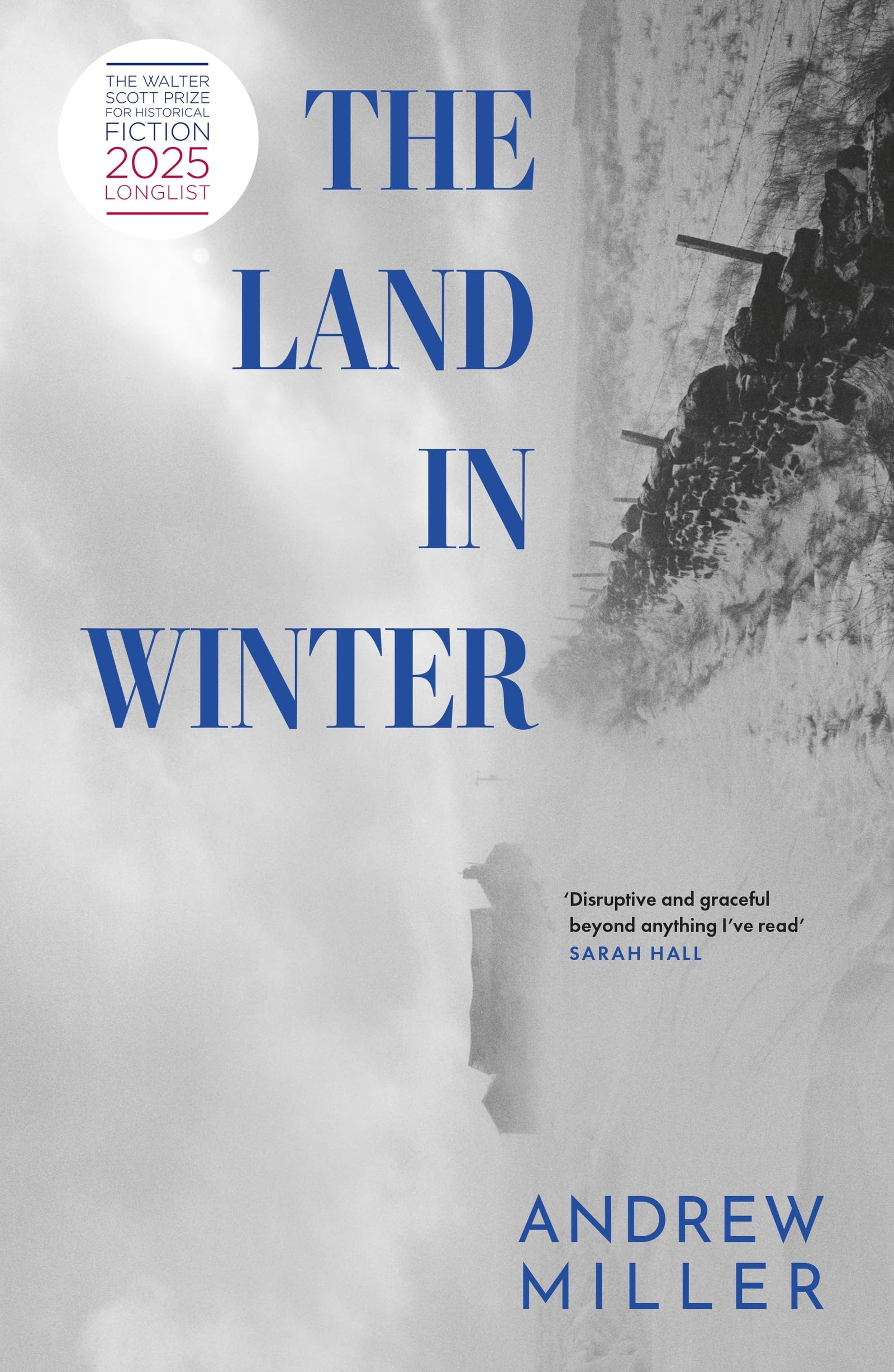
 Andrew Miller’s The Land in Winter had a lot of success last year, being shortlisted for the Booker Prize and winning the Walter Scott Prize for Historical Fiction. It also appeared on a lot of people’s end of year ‘best of’ lists so I had high hopes for it, particularly as I’ve previously enjoyed two of his other books, Pure and Now We Shall Be Entirely Free.
The novel is set in the winter of 1963, one of the coldest winters on record in the UK. Beginning in late December 1962 and lasting until March, temperatures plummeted, blizzards blanketed most of the country in deep snow and rivers and lakes froze over. Against this backdrop, we see the stories of two married couples play out. Dr Eric Parry has recently moved to rural Somerset with his wife, Irene, who is pregnant. Eric is enjoying being a country doctor, but Irene is finding it hard to adapt; it’s so different from her life in London and she misses her sister, who has gone to live in America. Despite her pregnancy, she feels that she and Eric are growing apart – and she’s right to feel that way because, unknown to Irene, Eric is having an affair with one of his patients.
Bill and Rita Simmons, who live at a nearby farm, are also newly arrived in the countryside. To the disappointment of his wealthy father, who wanted him to join the family business, Bill has chosen to follow a very different path and become a dairy farmer. It’s proving to be more difficult than he expected, but he’s sure that with new ideas and investment, he’ll be able to turn things around. He just needs to convince the bank to lend him the money! His wife Rita, like Irene, is pregnant and, also like Irene, she feels lonely and out of place, so it’s probably not surprising that the two women quickly form a bond and a friendship begins to develop.
Apart from a long chapter in the middle of the book in which Irene hosts a Boxing Day party and several other key characters converge on the Parrys’ house, the main focus is on the two couples, their daily lives and the relationships between them. All four characters are believable and strongly drawn, but I think Rita is the one I found most interesting. Before marrying Bill, she had been a dancer in a Bristol nightclub, so the transition to life as a farmer’s wife in a small, quiet community is particularly difficult for her. She has started hearing voices in her head, a sign of her vulnerable, fragile mental state, but Bill isn’t able to give her the support she needs, feeling that he doesn’t truly know who his wife is and preferring to ignore her past.
Although I did enjoy following the stories of Eric and Irene, Rita and Bill, I felt that I was held at a distance for most of the book and never quite connected with the characters on an emotional level as much as I would have liked to. Maybe it was just me, or maybe it was a result of the bleak, frozen setting reflecting their troubled, isolated lives and the coldness of their marriages. Still, this is an impressive novel overall and despite not quite managing to love it I can see why it’s so highly regarded.
 She Reads Novels