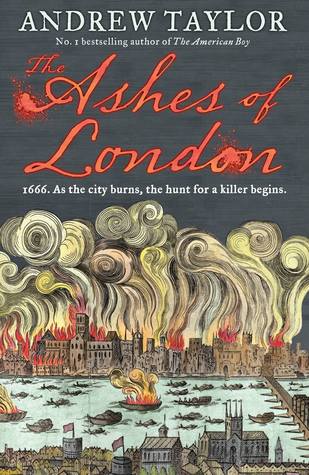
The Ashes of London by Andrew Taylor

The Ashes of London I always look forward to new books by Andrew Taylor, having enjoyed several of his others in the past. His last two novels, The Scent of Death and The Silent Boy, both featured the same characters (Edward Savill, an 18th century London clerk, and his family) and I had expected there to be more books in that series. However, The Ashes of London is something different: it’s set more than a century earlier – during the Great Fire of London of 1666 – and introduces us to a completely new set of characters.

Our narrator, James Marwood, is the son of a Fifth Monarchist who has recently been released from the Tower of London. All Marwood wants is a quiet life and the opportunity to escape the taint of his father’s disgrace – but as the flames begin to rage across London, it seems that fate has something else in store for him. While he watches St Paul’s Cathedral burn, a young woman runs past towards the fire, taking Marwood’s cloak with her. Later, a dead body is found in the ashes: a man with his thumbs tied behind his back. Marwood, who works for the government, is given the job of investigating the death.

Running parallel with his story is that of Catherine (Cat) Lovett, daughter of a regicide who was involved in the execution of King Charles I and who has been on the run since the restoration of the monarchy. As more dead bodies are discovered in the aftermath of the fire, it seems that Cat must be connected to the deaths in some way…and it’s up to Marwood to find out how.

I don’t think The Ashes of London is one of Andrew Taylor’s best books (my favourite is still The American Boy), but I did enjoy reading it. While I didn’t find it quite as atmospheric as some of his other novels, the setting was certainly a fascinating one. Not only do we witness the destruction of a city by fire and share the sense of loss felt by those who lived there, we are also given the chance to learn something about the political situation in London at that time. I previously knew almost nothing about the Fifth Monarchists, a religious sect who even during the Restoration were plotting to overthrow the monarchy and prepare for the coming of King Jesus, so I found that aspect of the story very interesting.

I enjoyed getting to know both of our main characters, James Marwood and Cat Lovett. Marwood is not a particularly memorable character in himself, but he interested me due to his background and ties with the Fifth Monarchists and regicides. Cat is a strong, independent person who knows how to look after herself, and while I couldn’t quite believe in her as a realistic 17th century woman, her actions do help to drive the plot forward. Apparently this book is the first in a new series, so I expect – and hope – that we will meet both James and Cat again.

Overall, I found The Ashes of London a good Andrew Taylor novel, if not a great one. I’m looking forward to reading the next book in this series, but while I’m waiting for it I would like to go back and read Bleeding Heart Square, the only one of his historical novels I still haven’t read yet.


My commonplace book: January 2016

commonplace book
Definition:
noun
a notebook in which quotations, poems, remarks, etc, that catch the owner’s attention are entered

Collins English Dictionary

~

A summary of this month’s reading, in words and pictures.

~

I hated the mountains and the hills, the rivers and the rain. I hated the sunsets of whatever colour, I hated its beauty and its magic and the secret I would never know. I hated its indifference and the cruelty which was part of its loveliness. Above all I hated her. For she belonged to the magic and the loveliness. She had left me thirsty and all my life would be thirst and longing for what I had lost before I found it.

Wide Sargasso Sea by Jean Rhys (1966)

~

Roger had learned from Mr. Gray that this particular kind of rhododendron was called Ponticum, so the secret hiding-place was called Ponticum House. It was used for all sorts of activities and gradually it was furnished with odds and ends of furniture.

Amberwell by D.E. Stevenson (1955)

~

There was the rub: that Julia, who could get intimate with a trapeze artist after five minutes’ conversation – who was intimate with a salesman after buying a pair of shoes – had talked for an hour to her own daughter, about the girl’s own father and lover, without the least intimacy at all.

“I’m a fool,” thought Julia, again. “It’s just because she’s such a perfect lady. And what I need is a good sleep.”

The Nutmeg Tree by Margery Sharp (1937)

~

So fine was the morning except for a streak of wind here and there that the sea and sky looked all one fabric, as if sails were stuck high up in the sky, or the clouds had dropped down into the sea. A steamer far out at sea had drawn in the air a great scroll of smoke which stayed there curving and circling decoratively, as if the air were a fine gauze which held things and kept them softly in its mesh, only gently swaying them this way and that.

To the Lighthouse by Virginia Woolf (1927)

~

Come, Joanna. I can wait no longer.

There it was, Henry’s declaration, as clear as my reflection in my mirror. Neither, I decided, could I wait.

I sent for my uncle of Burgundy. I had an urgent negotiation to undertake.

The Queen’s Choice by Anne O’Brien (2016)

~

Meantime, all around me is violence and robbery, coarse delight and savage pain, reckless joke and hopeless death. Is it any wonder that I cannot sink with these, that I cannot so forget my soul, as to live the life of brutes, and die the death more horrible because it dreams of waking? There is none to lead me forward, there is none to teach me right; young as I am, I live beneath a curse that lasts for ever.

Lorna Doone by R.D. Blackmore (1869)

~

“It is the women who lay clothes to dry on the rooftops of Troy,” I continued. “It is the fishermen who catch the silver fish in the bay,” I gestured out over the plain towards the sea, sparkling blue in the sunlight, “and sell them on the stalls of the marketplace. It is the princes who live in the palaces on the windy heights of the city, and the slaves who draw water from the wells. This, my king – this is Troy. And if we act now, we may still be able to save our city before it is too late.”

For the Most Beautiful by Emily Hauser (2016)

~

The desolation struck me like a blow, fresh and painful, as if all this destruction had been newly made yesterday, and as if this were my first sight of it. It was grief, I think, nothing more or less. I knew it was absurd. But I had noticed this reaction in others as well as in myself: that we mourned for our ravaged city as if for a mother.

The Ashes of London by Andrew Taylor (2016) – Review to follow

~

“And you cannot move at all in Time, you cannot get away from the present moment.”

“My dear sir, that is just where you are wrong. That is just where the whole world has gone wrong. We are always getting away from the present moment. Our mental existences, which are immaterial and have no dimensions, are passing along the Time-Dimension with a uniform velocity from the cradle to the grave. Just as we should travel down if we began our existence fifty miles above the earth’s surface.”

The Time Machine by H.G. Wells (1895)

~

Favourite books this month: Lorna Doone and Amberwell

The Silent Boy by Andrew Taylor

The Silent Boy “Say nothing. Not a word to anyone. Whatever you see. Whatever you hear. Do you understand? Say nothing. Ever.” These words are spoken to ten-year-old Charles on the night of 10th August 1792. This is the night the Tuileries Palace is stormed and the French monarchy falls – one of the defining moments of the French Revolution. It seems that poor Charles has witnessed the brutal murder of his mother and has fled the scene in panic vowing to do as he has been told and never say a word to anyone ever again.

The boy’s silence causes a lot of frustration for a lot of people, including Edward Savill. Savill is the estranged husband of Charles’ mother, Augusta, and is legally, though not biologically, his father. Augusta’s uncle, the wealthy and powerful Mr Rampton, is interested in making Charles his heir and has ordered Savill to bring the boy to him. This proves to be more difficult than expected, however, as Charles has already been claimed by Augusta’s lover, the Count de Quillon, who has come to England to escape the Revolution. The Count insists that Charles is his son…and he has no intention of letting him go.

The Silent Boy follows Edward Savill on his mission to rescue Charles from the clutches of others who have reasons of their own for wanting the boy. Along the way we learn more about Augusta and what happened to her on that fateful night in Paris. There are also some sections of the novel told from the perspective of Charles himself, describing his traumatic experiences in France and his adventures after he is brought to England.

I found Charles’ story both fascinating and frustrating. He’s clearly an intelligent and resourceful boy, but one who has been so badly frightened by what he has seen and heard that he is no longer able to trust anyone at all. His refusal to speak gives him power over the adults who are desperate to hear what he has to say, but it also makes him vulnerable and it’s sad to watch a child cutting himself off so completely from everyone around him. But Charles is not the only one in danger – Edward Savill is also in a difficult position, being used as a pawn by his in-law and patron, Mr Rampton, whose motives are always in doubt.

The Silent Boy is a sequel to The Scent of Death, which was the first of Andrew Taylor’s historical mysteries/thrillers to feature Edward Savill. I enjoyed The Scent of Death but had somehow missed the fact that a sequel had been published last year, so it was a nice surprise for me to see this one in the library. It’s not necessary to have read the first book before this one – the two are very different stories and set during two different Revolutions (American and French) – but The Scent of Death does provide some useful background information on the characters, so I’d recommend reading them in order if you possibly can.

I enjoyed this book but not as much as the other Andrew Taylor novels I’ve read. After the dramatic opening chapter in Paris, I thought the story became very slow and didn’t really pick up again until halfway through. The end was worth waiting for, though, as the tension increases and some surprising revelations are made. I do like Edward Savill as a character and it was nice to meet his daughter, Lizzie, whom he had missed so much while he was away in America in the previous novel. I never quite managed to connect with Charles, but I can appreciate that we probably weren’t really supposed to – the whole point was that Charles had built up a protective wall of silence around himself and wouldn’t let anybody break through it.

Now I’m wondering if there will be a third Edward Savill novel. I do prefer Andrew Taylor’s standalones, such as The American Boy and The Anatomy of Ghosts, but I would be happy to read another book in this series if and when he writes one.

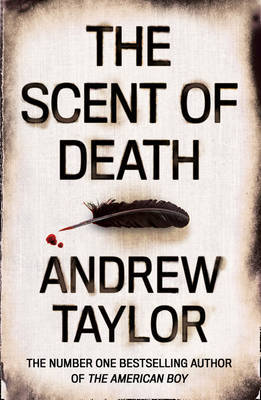
The Scent of Death by Andrew Taylor

The Scent of Death I’ve been looking forward to reading this book, having enjoyed some of Andrew Taylor’s previous novels, including The American Boy (An Unpardonable Crime in the US), so I was pleased to find that The Scent of Death was a similar type of historical mystery, though set in a different time and place.

The story begins in 1778, during the American War of Independence. Our narrator, Edward Savill, is an English clerk who has been sent to Manhattan (an area still under British rule at that time) to investigate the compensation claims of Loyalists who have been dispossessed of their property. Before Savill’s ship even arrives in the port, he sees a dead body being lifted out of the water. Soon another body is discovered – the body of Mr Pickett, a man who has connections with the Wintours, the family Savill will be staying with during his time in New York.

While Savill worries about the people he has left behind in England – his cold, distant wife and his beloved daughter – he also finds himself becoming embroiled in the lives of the Wintour family. As he gets to know Judge Wintour, his invalid wife and his beautiful daughter-in-law Arabella, whose husband is missing in action after the Battle of Saratoga, he starts to suspect they are covering up some secrets. Who killed Mr Pickett and why? Whose is the child Savill hears crying in the night? And what is the mysterious ‘box of curiosities’ he has heard so much about?

One of the things I like about Andrew Taylor’s historical novels is that he makes a real effort to use language appropriate to the time period throughout both the dialogue and the narration. I read a lot of historical fiction and there are a surprising number of authors who make no attempt to do this at all; there are very few who do it as convincingly as Taylor. He doesn’t use any jarring modern words or phrases and it all adds to the atmosphere and authenticity of the story, so that I could almost believe Edward Savill really was an 18th century English gentleman narrating his adventures to us. Remembering that this novel is set in the 1770s, we are also given a range of different opinions on slavery rather than the author just projecting 21st century views onto all of his characters, which would have been unrealistic.

As with Taylor’s other novels, you can never be sure which characters can and can’t be trusted. From Mr Townley and his clerk, Mr Noak, who nursed Savill through his seasickness on the long voyage from England, to the enigmatic Arabella Wintour herself, some of these people turn out to be friends and others enemies. I didn’t actually like any of them apart from Savill himself, but that wasn’t a problem at all – I’m sure we weren’t supposed to like them and were intended instead to get a feel for the hostility and suspicion Savill encountered everywhere he went.

The vivid, atmospheric settings are another strong point of Taylor’s novels. I don’t have much knowledge of the American Revolutionary War and Taylor does such a great job of portraying life in New York during this period: the variety of different people, including soldiers, spies, refugees and slaves, who had made the city their home; the overwhelming heat of summer and the intense cold of winter; and all the danger and intrigue of a city at war. Savill’s investigations take him into the heart of Canvas Town, an area of slums where many of the city’s criminal gangs have settled after it was destroyed by fire, and also away from New York, to the ruins of Arabella’s family plantation, Mount George.

But this was not a perfect book: while parts of it were exciting and absorbing (especially Savill’s journey into the dangerous, lawless ‘Debatable Ground’) and the short chapters made it easy to keep reading, the story moved forward very slowly and at almost 500 pages it felt too long – although admittedly it would be hard to see what could have been taken out. I did enjoy it, though, and while I did come close to solving the mystery, there were still some surprises and plot twists towards the end of the book. So, this was not my favourite Andrew Taylor book and unlike The American Boy will not be one of my books of the year, but it was definitely still worth reading and I hope it’s true that we are going to meet Edward Savill again in a future novel.

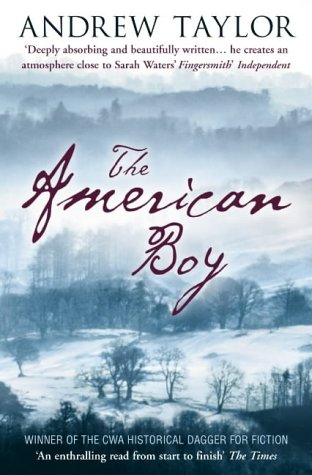
The American Boy by Andrew Taylor

After I read The Anatomy of Ghosts earlier in the year, I asked for opinions on Andrew Taylor’s other books. Well, I’d like to thank the three people who left comments recommending The American Boy (published in the US as An Unpardonable Crime) as I thought this one was even better than The Anatomy of Ghosts. As someone who loves classic sensation novels (Wilkie Collins, Mary Elizabeth Braddon, Ellen Wood etc) it’s maybe unsurprising that I enjoyed this book so much. It has all the elements of a sensation novel and although it was published in 2003 it almost feels as if it could have been written in the 19th century.

The American Boy is set in England during the final months of the reign of George III. The story begins in September 1819 when our narrator, Thomas Shield, is starting a new job as a teacher at a small private school in the village of Stoke Newington. One of the boys at the school is the ten-year-old Edgar Allan Poe, the ‘American boy’ of the title. Shield is given special responsibility for tutoring Edgar and his best friend, Charles Frant, and through the two boys he becomes acquainted with two rich banking families – the Frants and their cousins, the Carswells. He soon becomes caught up in the dramas that are unfolding within the Frant and Carswell families and when two murders take place it seems that Shield’s own life could also be in danger.

The plot is so intricate and complex I won’t even try to go into any more detail, but in addition to the murders, there’s also a disputed will, mistaken identities, family secrets, betrayal, revenge and even romance. Thomas Shield’s adventures take place in a variety of wonderfully atmospheric locations from the dark, foggy streets and over-crowded slums of London to the snowy landscape of the Carswells’ country estate in Gloucestershire, complete with an ice house and ruined abbey. Taylor made his settings feel vivid and real without going into pages and pages of description.

I should point out that although Edgar Allan Poe does have an important part to play in the story, he’s really just a minor character. I actually thought this whole aspect of the book was unnecessary as the plot would have been strong enough without it and a fictional character could easily have been used in his place. I’m not complaining as I do like Poe and found his brief appearances interesting, but I don’t want to mislead anyone into thinking this is a book about Poe because it really isn’t.

Although I hadn’t included this book on my list for the RIP challenge, I’m going to count it as my first book for RIP anyway (I don’t know why I bother making lists for challenges as I never, ever stick to them!) The American Boy isn’t what I would describe as a scary book, but it is a very dark and suspenseful mystery – a perfect book to curl up with and enjoy at this time of year.

I know it’s a cliché but I didn’t want to put this book down and the very short chapters made it even more tempting to keep reading. If it hadn’t been so long (500 pages) I could have read it all in one sitting. I also appreciated the author’s attempts to make the book feel like an authentic 19th century novel through his use of language and Thomas Shield’s narrative style. It won’t be for everyone though; you either like this type of book or you don’t, but for anyone who has enjoyed books such as The Quincunx by Charles Palliser, The Meaning of Night by Michael Cox or The Woman in White by Wilkie Collins, I can highly recommend this one.

The Anatomy of Ghosts by Andrew Taylor

The Anatomy of Ghosts is an entertaining historical mystery set in and around Cambridge University in the late 18th century. I should read historical mysteries more often because I almost always enjoy them – and this one was no exception.

When London bookseller John Holdsworth’s son is drowned in a tragic accident, his wife insists that their little boy is communicating with them from the spirit world. Holdsworth doesn’t agree and is so disgusted by his wife’s claims that he decides to write a book in which he attempts to prove that ghosts don’t exist. The title of Holdworth’s book is The Anatomy of Ghosts and it soon brings him to the attention of Lady Anne Oldershaw. Her son, Frank, has suffered a nervous breakdown after apparently seeing the ghost of a friend’s wife, Mrs Whichcote, at Jerusalem College, Cambridge. Holdsworth agrees to help Frank – and at the same time he begins to uncover the truth behind what really happened to Mrs Whichcote.

This is the first book I’ve read by Andrew Taylor and I really liked his writing style – it’s detailed yet flows nicely and is easy to read. Some might find the book too slow to begin with, but it does pick up pace. Something that really impressed me about Taylor’s writing was the way he managed to bring his settings so vibrantly to life. Whether he was describing John Holdsworth pushing his barrow of old books through the bustling streets of 18th century London or a couple of students in their caps and gowns strolling through the quiet courtyards and gardens of Cambridge, the sounds, sights and even the smells are incredibly vivid. As a historical novel, though, I think it would have benefited from a few points of reference to anchor the story in the 1700s, as it did at times feel more like the Victorian period to me.

The characters, unfortunately, were not the most likeable of people. In fact, I didn’t like any of them, not even Holdsworth, but it didn’t matter too much – the strength of this book was definitely its plot rather than its characters. And I’ve been left intrigued about what was actually in John Holdsworth’s book, The Anatomy of Ghosts. It would have been a nice addition to the story if we could have read a few excerpts!

Are Andrew Taylor’s other books as good as this one?