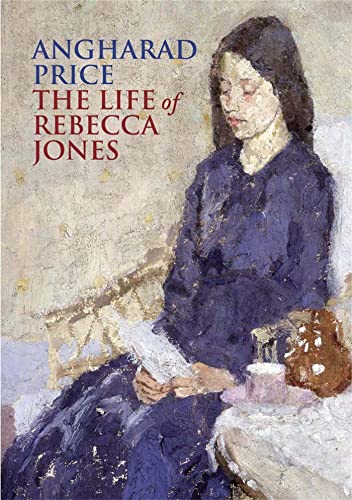
 Translated by Lloyd Jones
I’m aiming to read more books in translation this year so when I started considering possible options for Reading Wales, also known as #Dewithon, hosted this month by Paula at Book Jotter, it seemed like a good opportunity to read something translated from the Welsh language. Eventually I decided on The Life of Rebecca Jones by Angharad Price, first published as O! Tyn y Gorchudd (“oh, pull aside the veil”), in 2002 and translated into English by Lloyd Jones in 2010. It has been listed as one of the top 25 Greatest Welsh Novels by the Wales Art Review (a good resource if you’re looking for Welsh reading ideas).
The novel is a fictional biography, spanning almost the whole of the twentieth century, and is narrated by Rebecca Jones, who looks back on her life in the small rural community of Maesglasau. Beginning with the arrival of her newly wed parents at Tynybraich farm, followed quickly by the birth of Rebecca herself in 1905, she takes us through her entire life, comparing the twists and turns it takes to the path of the stream that flows through the Maesglasau Valley:
“Memories of my childhood reach me in a continuous flow: smells and tastes converging in a surging current. And just like the stream at Maesglasau, these recollections are a product of the landscape in our part of rural mid-Wales at the beginning of the twentieth century. Its familiar bubbling comforts me.
It was not really like that, of course. The flow was halted frequently. Indeed a stream is not the best metaphor for life’s regular flow between one dam and the next.”
Rebecca’s story is not a particularly dramatic or exciting one and is structured as a simple, linear chronicling of events, yet I found it very moving and compelling. As the novel progresses, Rebecca tells us about her daily life on the farm and the different roles performed by men and women, she describes the beautiful landscape and the changing seasons, and looks at some of the customs and traditions of the Maesglasau people. All of this is interspersed with the poetry of Hugh Jones, who was born in Dinas Mawddwy in the 18th century and wrote the hymn that inspired the Welsh title of the novel.
Rebecca is not the only child in the Tynybraich household; she has several younger brothers and sisters, some of whom die in infancy. Three of the brothers – Gruffudd, William and Lewis – are either born blind or become blind later in childhood (is it worse to have never seen the beauty of the world or to have glimpsed it and had it taken away?) and are all sent away to a boarding school for blind children. The education they receive leads to opportunities they would never have had at home in their Welsh valley and while Rebecca is proud of their remarkable achievements she also feels that her brothers’ ties to their own history, culture and language have been broken. This is a pattern she sees repeated in the wider community as the years go by and more and more young people are choosing to leave Maesglasau and make their homes elsewhere. Meanwhile, for those who remain, further changes are brought by modern technology, new ideas, and a greater movement of English people crossing the border into Wales.
 When I first started to read, I wasn’t quite sure whether Rebecca and her family were real people or fictional ones, although the book does include photographs and feels historically authentic. I was quickly able to discover that the family at Tynybraich did indeed exist and are ancestors of Angharad Price. There was even a documentary filmed in the 1960s about the three blind brothers. However, not everything Price tells us about Rebecca’s life is the truth, for reasons only explained once we reach the end of the book. That ending was both surprising and perfect.
Have you read this book or are there any others written in the Welsh language that you can recommend?

Book 9/50 for the Historical Fiction Reading Challenge 2024
 She Reads Novels