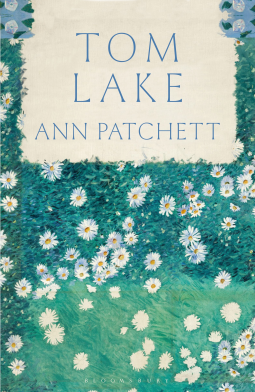
 The title of Ann Patchett’s latest novel, Tom Lake, doesn’t refer to a person, as I’d assumed before I started reading, but to a place – a town in Michigan with a theatre overlooking the lake. One summer in the 1980s, a theatrical group gather at Tom Lake to rehearse the Thornton Wilder play, Our Town. The role of Emily has gone to Lara, a young woman who previously played that same part in a high school production. Here at Tom Lake, Lara meets and falls in love with the charismatic Peter Duke, the actor who plays her father in Our Town and who goes on to become a famous Hollywood star.
Many years later, in 2020, Lara and her husband, Joe, are living on a Michigan farm with their three adult daughters, Emily, Maisie and Nell, who have all come home to be with their parents as the Covid pandemic sweeps across the world. While they help to harvest cherries from the family orchard, the girls ask Lara to tell them about her relationship with Duke. As they listen to her story unfold, they discover things about their mother’s past that makes them reassess everything they thought they knew about her and about themselves.
I loved Ann Patchett’s last novel, The Dutch House, so I was hoping for a similar experience with this book. Sadly, that didn’t happen, although I did still find a lot to like. It’s certainly a beautifully written novel, but I just found it a bit too quiet and gentle and I never felt fully engaged with the characters the way I did with the characters in The Dutch House. I know I’m in a tiny minority, though, and I expect to see Tom Lake on many people’s ‘books of the year’ lists in December.
Although the present day sections of the book are set during the pandemic, Covid is barely mentioned at all and it’s really just a plot device to explain why the family are all together on the farm with such little contact with the outside world. This provides the perfect environment for the three daughters to pass the time listening to their mother’s story without too many distractions – and a cherry orchard does sound like a lovely place to spend the pandemic. Something else which plays a much bigger part in the novel is Thornton Wilder’s Our Town; clearly the play and, in particular, the role of Emily are very important to Lara, but as I’ve neither read nor seen it I didn’t really understand the significance. It seems to be a play that is much better known and more widely studied in America than it is here in the UK and I wish I’d had at least some familiarity with it before I started this book. That’s possibly one of the things that prevented me from enjoying it as much as I’d hoped.
I do like Patchett’s writing, so even though this particular book wasn’t a huge success with me, I’m still looking forward to trying some of her earlier work.
Thanks to Bloomsbury Publishing Plc (UK & ANZ) for providing a copy of this book for review via NetGalley.
 She Reads Novels