A summary of last month’s reading, in words and pictures.
commonplace book
Definition:
noun
a notebook in which quotations, poems, remarks, etc, that catch the owner’s attention are entered
~
“Most people only want a quiet life,” I said. “Even those of us who were once radicals.” I smiled wryly at Roger. He nodded in acknowledgement.
“Fanatics on both sides,” old Ryprose said gloomily. “And all we poor ordinary folk in the middle. Sometimes I fear they will bring death to us all.”
Revelation by CJ Sansom (2008)
~
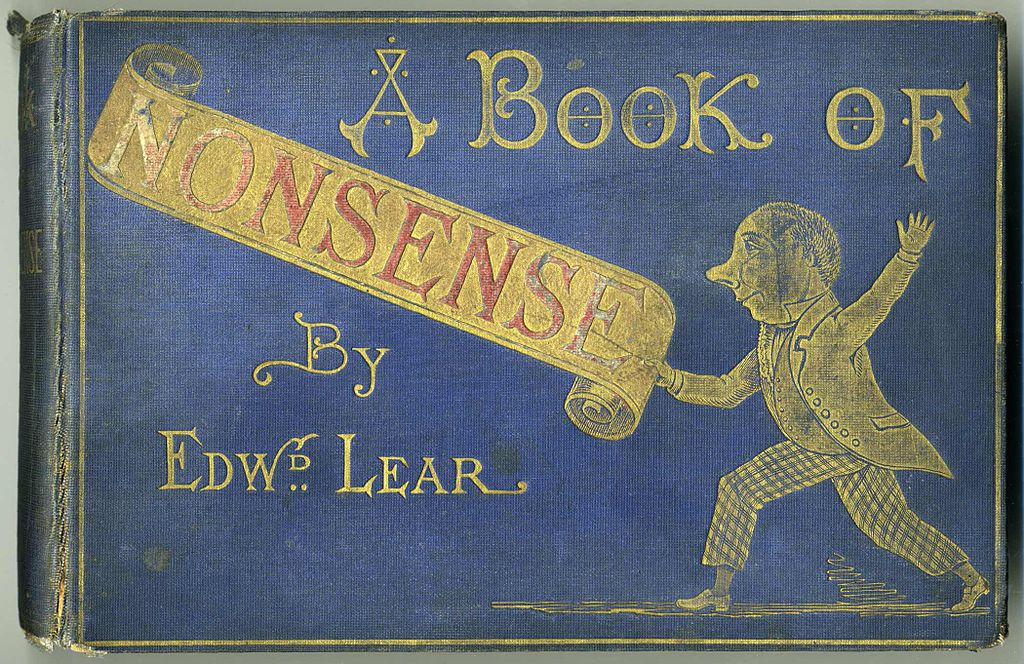
“Books,” the driver resumed. “I’m a great reader. I am. Not poetry. Love stories and murder books. I joined one o’ them” – he heaved a long sigh; with vast effort his mind laboured and brought forth – “circulatin’ libraries”. He brooded darkly. “But I’m sick of it now. I’ve read all that’s any good in it.”
The Moving Toyshop by Edmund Crispin (1946)
~
“We shall wait upon tomorrow,” he said.
“But – what if tomorrow is worse than today?”
“Then we shall wait upon the day after tomorrow.”
“And so forth?” I asked.
“And so forth,” Dogger said.
The Dead in Their Vaulted Arches by Alan Bradley (2014)
~
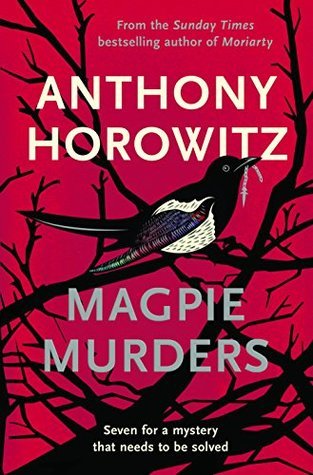
In his masterwork, The Landscape of Criminal Investigation, Atticus Pünd had written: ‘One can think of the truth as eine vertiefung – a sort of deep valley which may not be visible from a distance but which will come upon you quite suddenly. There are many ways to arrive there. A line of questioning that turns out to be irrelevant still has the power to bring you nearer to your goal. There are no wasted journeys in the detection of a crime.’
Magpie Murders by Anthony Horowitz (2016)
~
“But seriously Poirot, what a hobby! Compare that to -” his voice sank to an appreciative purr – “an easy chair in front of a wood fire in a long low room lined with books – must be a long room – not a square one. Books all round one. A glass of port – and a book open in your hand. Time rolls back as you read.”
The Labours of Hercules by Agatha Christie (1947)
~

“Watch and wait,” says Burghley. “You have a valuable nugget of information, but that is all it is at this stage. Watch the lady; watch and wait.” Cecil is reminded of being fleeced by a card trickster once, who had said the very same thing – watch the lady. He lost all the gold buttons from his doublet. That was a lesson learned.
Watch the Lady by Elizabeth Fremantle (2015)
~
Sometimes I would like to cry. I close my eyes. Why weren’t we designed so that we can close our ears as well? (Perhaps because we would never open them.) Is there some way that I could accelerate my evolution and develop earlids?
Behind the Scenes at the Museum by Kate Atkinson (1995)
~
Why the Egyptian, Arabic, Abyssinian, Choctaw? Well, what tongue does the wind talk? What nationality is a storm? What country do rains come from? What color is lightning? Where does thunder go when it dies?
Something Wicked This Way Comes by Ray Bradbury (1962)
~
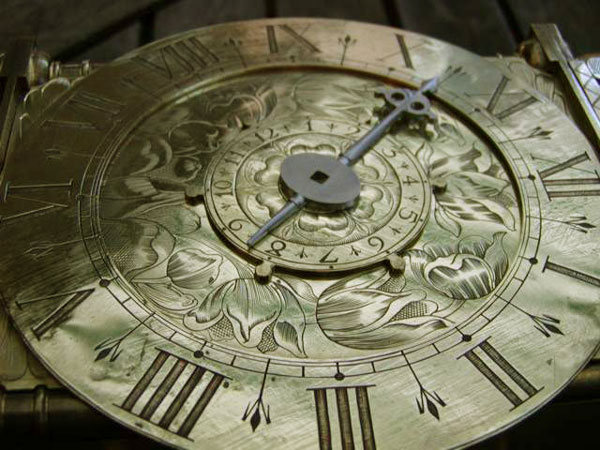
And as the seconds and minutes moved on, I pondered Man’s efforts at the representation or ‘capture’ of Time, and I thought how, for Clockmakers like Hollers, the very Commodity with which they were trying to work was a heartless and capricious Enemy, who stole from them all the while and never rested.
Merivel: A Man of His Time by Rose Tremain (2013)
~
A Gothic gate, richly ornamented with fret-work, which opened into the main body of the edifice, but which was now obstructed with brush-wood, remained entire. Above the vast and magnificent portal of this gate arose a window of the same order, whose pointed arches still exhibited fragments of stained glass, once the pride of monkish devotion. La Motte, thinking it possible it might yet shelter some human being, advanced to the gate and lifted a mossy knocker. The hollow sounds rung through the emptiness of the place. After waiting a few minutes, he forced back the gate, which was heavy with iron work, and creaked harshly on its hinges…
The Romance of the Forest by Ann Radcliffe (1791)
~
I could not possibly go home, I reflected, and add as a serious contribution to the study of women and fiction that women have less hair on their bodies than men, or that the age of puberty among the South Sea Islanders is nine — or is it ninety? — even the handwriting had become in its distraction indecipherable. It was disgraceful to have nothing more weighty or respectable to show after a whole morning’s work.
A Room of One’s Own by Virginia Woolf (1929)
~

Not everyone can write as legibly as I; Father made me spend hours at my tablets, saying that my poems must be written down by me as I myself have composed them, so they will not be distorted in later years by other singers. “For you have great gifts from the Muses,” he said. “I would not have them lost to the world that comes after.”
Burning Sappho by Martha Rofheart (1974)
~
“I ain’t in the habit of picking other folks’ roses without leave,” said she.
As Rebecca spoke she started violently and lost sight of her resentment, for something singular happened. Suddenly the rosebush was agitated violently as if by a gust of wind, yet it was a remarkably still day. Not a leaf of the hydrangea standing on the terrace close to the rose trembled.
“What on earth -” began Rebecca; then she stopped with a gasp at the sight of the other woman’s face. Although a face, it gave somehow the impression of a desperately clutched hand of secrecy.
Small and Spooky edited by M.R. Nelson (2016)
~
Time was not something then we thought of as an item that possessed an ending, but something that would go on forever, all rested and stopped in that moment. Hard to say what I mean by that. You look back at all the endless years when you never had that thought. I am doing that now as I write these words in Tennessee. I am thinking of the days without end of my life.
Days Without End by Sebastian Barry (2016)
~
“You don’t think there’ll really be a war, do you?” she asked anxiously, as her work was for the maimed wrecks of men left by the 1914-18 war – and I could understand her horror of another. But when I looked at the Green Cat I was not sure and I did not reply.
A Chelsea Concerto by Frances Faviell (1959)
~
Favourite books read in October: Revelation, The Moving Toyshop and Magpie Murders
 She Reads Novels