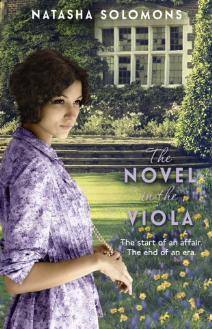
 I love reading fiction set during World War II and The Novel in the Viola is one of the best I’ve read for a while. The story begins in 1938 when we meet nineteen-year-old Elise Landau, a girl from a rich Austrian family (her mother, Anna, is a successful opera singer and her father, Julian, a famous author). Until now, Elise has lead a secure and comfortable life but that’s all about to change because the Landaus are Jews, and with Europe on the brink of war Austria is no longer a safe place to live. And so Elise is sent away from her home in Vienna and travels alone to Tyneford House, a mansion on the south coast of England, where she will work as a maid for Mr Rivers and his son, Kit. Her parents have remained in Austria while they await American visas and they promise to send for Elise as soon as possible – but as the war continues, she begins to wonder if they’ll ever be reunited.
The portrayal of life in an English country house forms a big part of the story, with insights into the class system, social conventions of the time, and the relationships between servant and master. Elise has to get used to working as a parlour maid after spending most of her life having servants of her own. Her background makes it difficult for her to fit in with the other servants at Tyneford but her status as a maid and a Jewish refugee prevents her from being accepted by some of the Rivers’ upper class friends. Elise is a wonderful character and I enjoyed following her as she settled into her new life – I thought Natasha Solomons displayed a real understanding of what it was like to be newly arrived in an unfamiliar country, feeling homesick and struggling with the language and the culture.
There are lots of beautiful, atmospheric descriptions of the Dorset countryside and coast which gave me a true feel of what it was like to live there during the Second World War. The story also looks at the effects the war had on the village of Tyneford and the house itself. The author’s note at the end of the book was very interesting and explained how Tyneford was based on a real place that became a ghost town because of the war.
There are so many other things I could say about this book – there’s the secret of the ‘novel in the viola’ itself, and I haven’t even mentioned yet the romantic storyline which develops as Elise begins to fall in love with someone she meets at Tyneford. But I don’t want to spoil this book for you, so I’ll just say that The Novel in the Viola was a real pleasure to read, a great story with just the right balance of sadness and humour. And I thought the way the book ended was perfect – the only problem was that I had grown to care for Elise and the others so much I didn’t want to leave them behind.
 She Reads Novels