The Odd Flamingo by Nina Bawden

Nina Bawden is someone I’ve always thought of as a children’s author; I know I’ve read a few of her books, athough Carrie’s War and The Finding are the only ones I can remember anything about. I’ve never tried any of her adult novels, but was drawn to this one by the unusual title. It was originally published in 1954 and has been reissued by British Library as part of their Crime Classics series earlier this year. Bawden isn’t really an author I would have expected them to publish – I had no idea she wrote crime.

The Odd Flamingo is the name of a seedy London nightclub frequented by many of the characters in the novel. One of these is Rose Blacker, a young woman of eighteen who appears to have fallen in with the wrong friends. When Rose tells Celia Stone that she is pregnant – and that the father is Celia’s husband, Humphrey – Celia calls on her lawyer friend, Will Hunt, for help. She doesn’t believe Rose’s claims, but she’s concerned about Humphrey’s reputation and how a scandal could affect his job as a school headmaster.

Will has known Humphrey for years and has always liked and admired him, but when he meets Rose for himself and she produces letters written by Humphrey, his confidence in his friend is shaken. Rose seems so sweet and innocent; surely she must be telling the truth? When a woman’s body is found floating in the canal with Rose’s bag nearby, Humphrey is the obvious suspect. Will agrees to do what he can to clear his name but is worried about what he might discover. As he begins to investigate, he finds that everything keeps leading back to the dark, sordid world of The Odd Flamingo and the miserable lives of the people who go there.

As you can probably tell, this is not exactly the most cheerful and uplifting of books! It’s full of people who are lonely, desperate and troubled or have become mixed up with drugs, theft or blackmail. I found it quite depressing, but also realistic – places like The Odd Flamingo have always existed and probably always will. I can’t really say that I liked any of the characters, but again, most of them feel believable and real. Only Piers, Humphrey’s grotesque, slimy half-brother, veers close to being a stereotype.

The book is narrated by Will and I found him an interesting character; he’s very idealistic and almost hero worships Humphrey, so feels disappointed and let down by Rose’s claims – but then he does the same thing with Rose herself, putting her on a pedestal because she’s young and beautiful. Whether Rose really is as innocent as she seems is a question not answered until the end of the book, but it’s obvious that Will is going to be hurt again if it turns out that she’s not.

The Odd Flamingo, although there are certainly some mysteries to be solved, is not really a conventional mystery novel and not a typical British Library Crime Classic. If your tastes tend towards the darker, grittier end of crime fiction, though, or you’re interested in trying one of Nina Bawden’s adult books, I can happily recommend this one.
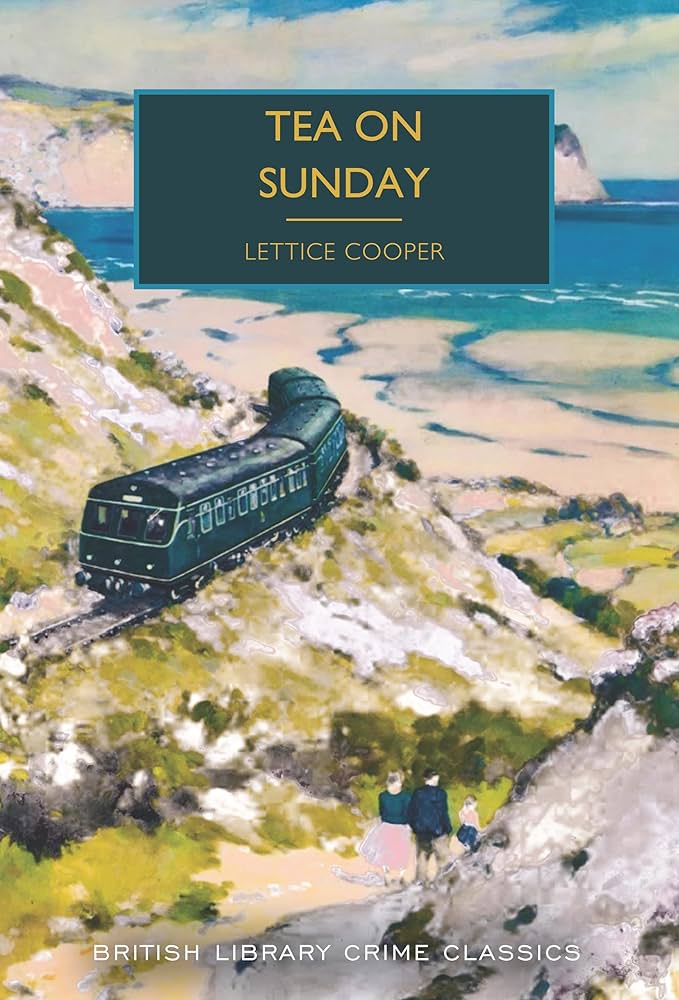
Tea on Sunday by Lettice Cooper

Lettice Cooper is a new author for me. I’m aware that two of her books from the 1930s, National Provincial and The New House, have been published by Persephone, but I haven’t read either of them yet. Tea on Sunday, her only detective novel, sounded appealing, though; it was published in 1973, very late in her life, but has the feel of a Golden Age mystery and has recently been reissued as a British Library Crime Classic.

The plot is quite a simple one. On a snowy winter’s day, Alberta Mansbridge invites eight guests to a tea party at her home in London. The guests include her family doctor, her ‘man of business’, an old friend, the manager of her late father’s engineering company, her nephew Anthony and his wife, and two young men she has taken under her wing – an Italian and an ex-prisoner. As the group gather outside her door that Sunday afternoon, they become concerned when their knocking goes unanswered. Eventually the police are called and force open the door to find that Alberta has been strangled while sitting at her desk.

There’s no real mystery regarding how the murder took place. The doors and windows had been locked and there’s no sign of a burglary, so the police are satisfied that the killer must have been someone Alberta knew and let into the house – probably one of the eight guests who arrived early, committed the murder, then left again to return a few minutes later with the others. But which of the eight was it and why did they want Alberta dead?

Tea on Sunday is a slow paced novel where, once the murder is discovered, not much else actually happens. Most of the focus is on Detective Chief Inspector Corby interviewing the various suspects one by one and delving into Alberta’s personal history to see if the answer lies in her past in Yorkshire. Despite the lack of action, I still found the book surprisingly absorbing and that’s because of Cooper’s strong characterisation. Any of the eight could be the culprit as none of them have alibis and this means Corby has to learn as much as he can about each person and whether or not they have a motive.

Corby is a likeable detective and it’s a shame he only appears in this one book by Lettice Cooper as she could probably have built a whole series around him. Although a few of his comments about women are questionable, I could make allowances for the period in which the novel was written and in general he’s respectful towards the people he interviews and doesn’t judge until he’s heard all the facts. It would be easy, for example, for him to pin the blame on Barry Slater, the former prisoner Alberta met through her charitable work and who runs away as soon as the police are called to the scene, but he doesn’t do this and waits to form his own opinion.

Of the eight suspects, the characters who stand out the most, in my opinion, are Anthony Seldon and his wife, Lisa. As the dead woman’s nephew and the only direct family member invited to the tea party, Anthony naturally comes under suspicion, so a lot of time is spent on his background, painting a picture of a young man who disappointed his aunt by refusing to go into the family business and by marrying a woman she dislikes quite intensely. Another interesting character is Myra Heseltine, Alberta’s close friend who lodged with her until discovering that Alberta’s latest protégé, Marcello Bartolozzi, whom Myra distrusts, may be moving in as well.

It’s Alberta Mansbridge herself, however, whose character comes across most strongly. Despite being murdered so early in the book, she is brought to life through the words and memories of those who knew her: a woman proud of her family’s legacy, stubbornly resistant to change and progress, who interferes in other people’s business but at the same time is generous and giving. At first it’s difficult to see why so many people may have wanted her dead, but gradually motives emerge for almost all of the suspects.

The actual solution to the mystery is disappointingly simple and there are no clever twists along the way, like we would expect from Agatha Christie, for example. I felt let down by the ending, but it was still an enjoyable read up to that point and as the first book I’ve completed in 2025 it means my reading for the year is off to a good start.

Impact of Evidence by Carol Carnac

“The snow and the floods have been abnormal even for these parts,” said Rivers. “I’ve had several investigations in country areas, but I admit I’ve never struck anything quite like St Brynneys. It has a secret quality, and its remoteness affects all the people who live in it.”

First published in 1954, Impact of Evidence has recently been reissued as a British Library Crime Classic. It’s my first Carol Carnac book – I haven’t read Crossed Skis, the other one currently in print – but she also published as E.C.R. Lorac and I’ve read her before under that name. This one is subtitled A Welsh Borders Mystery and is part of a series featuring Chief Inspector Julian Rivers and his sidekick, Inspector Lancing.

The novel begins with a car accident near the village of St Brynneys in the hills of the Welsh borders. Elderly Dr Robinson – whom everyone agrees was too old to be driving – has collided with Bob Parsons’ jeep, with both vehicles being thrown off the road by the impact. Parsons has been lucky and escaped with minor injuries and concussion, but the doctor, whose car has ended up in a stream, has been killed. The Lambton family, who live on a farm nearby, hear the crash and hurry to the rescue, but after retrieving the doctor’s body from the car, they make a shocking discovery. There’s a second body in the back of the car – a man none of the local people have seen before, and as St Brynneys has been cut off from the world for the last few days due to extreme winter weather, nobody knows where he came from.

A local police inspector visits the doctor’s house to try to get to the bottom of the mystery, but when he suffers a fatal accident on the stairs, the mystery only deepens. Chief Inspector Julian Rivers and Inspector Lancing are called in from Scotland Yard, and with the roads still impassable they require the help of the army to access the area. Once they reach St Brynneys, Rivers and Lancing begin their investigations and uncover tensions between the local farming families, the possibility of blackmail and a range of theories to explain the presence of the unidentified corpse.

As my first Carol Carnac book, I’m not sure if there’s anything significantly different between these and her books published as E.C.R. Lorac. The writing style feels very much the same but I haven’t really read enough of her under either name to be able to comment on any other differences. What struck me most about this particular book was the setting and the wonderful atmosphere Carnac creates. The novel is set in a place that has experienced several days of very heavy snowfall, followed by a thaw that has caused flooding, destroying bridges and blocking roads. Carnac’s descriptions of the flooded countryside, the damaged infrastructure and the effect all of this has on a small community really convey a sense of isolation and remoteness. Also, with no routes in or out, this means the suspects (and for that matter, the victims) are limited to people who were already in the area when the snow began.

The actual mystery, I felt, took second place to the setting – which is not to say that it wasn’t interesting, because it was, but I think the descriptions of the snow and the thaw and a society severed from the outside world are what I’ll remember about this book rather than the plot. I’ll try to get round to Crossed Skis at some point and hopefully some more of the Lorac books as well.

Fear Stalks the Village by Ethel Lina White

The village was beautiful. It was enfolded in a hollow of the Downs, and wrapped up snugly — first, in a floral shawl of gardens, and then, in a great green shawl of fields. Lilies and lavender grew in abundance. Bees clustered over sweet-scented herbs with the hum of a myriad spinning-wheels.

With its Tudor cottages and cobbled streets, the village depicted in Ethel Lina White’s 1932 novel seems at first sight to be an idyllic place to live. There’s no poverty or unemployment, an endless round of tea parties and tennis games, and once settled there, people find that they never want to leave. Joan Brook is a relative newcomer to the village, having arrived to take up a position as companion to Lady d’Arcy, and she has already fallen under its spell.

When a novelist friend from London comes to visit, she entertains herself and Joan by imagining the secret scandals taking place behind closed doors. Perhaps the village doctor is poisoning his wife, she says, and the saintly Miss Asprey is bullying her companion; the Rector is leading a double life, and Miss Julia Corner, President of the local Temperance Society, is a secret drinker. The visit is a brief one and the friend soon returns to London, but when the inhabitants of the village begin to receive anonymous poison pen letters, it seems that the scenarios she had imagined were not so far from the truth after all.

Fear Stalks the Village is an unusual crime novel; although there are several deaths, it is not a murder mystery and the plot revolves entirely around finding out who is writing the spiteful letters threatening to expose the private lives of the villagers. Other reviews compare it to The Moving Finger by Agatha Christie, but as I haven’t read that one yet it reminded me most of Henrietta Clandon’s Good by Stealth. There’s lots of witty, satirical humour and a large cast of strongly drawn characters, all of whom appear at first to be happy, well-adjusted people…until the letters begin to arrive. The question the novel raises is whether the cracks have always been there beneath the surface or whether they have been created by the letters and the suspicion and anxiety they cause.

The mystery is quite a clever one, with some red herrings to throw us off the track, and I didn’t guess who was sending the letters. However, it took me a while to get into this book as the pace is quite slow and, despite the title, I didn’t feel that there was any real sense of fear or menace. Still, this is the second book I’ve read by Ethel Lina White, the first being The Wheel Spins (the book on which Alfred Hitchcock’s The Lady Vanishes is based) and I think it’s my favourite of the two – probably because with the other book I couldn’t help comparing it unfavourably to the film, which I love! I would be happy to try more of her books so let me know if there are any you would recommend.

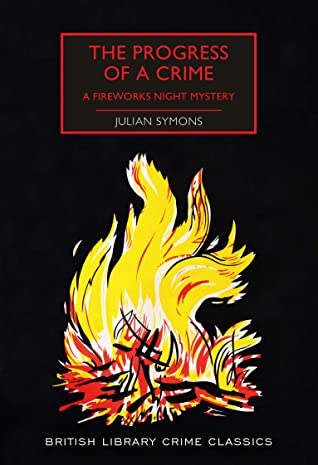
The Progress of a Crime by Julian Symons

Remember, remember, the Fifth of November,
Gunpowder, treason and plot,
I see no reason why gunpowder treason,
Should ever be forgot

It’s the fifth of November today, so no better time to review one of my recent reads, Julian Symons’ The Progress of a Crime, first published in 1960 and subtitled A Fireworks Night Mystery. For those not in the UK or familiar with British culture, this is the night when people traditionally light bonfires and set off fireworks to mark the anniversary of when Guy Fawkes was caught preparing to blow up Parliament with gunpowder in 1605. The Progress of a Crime, the first book I’ve read by Julian Symons, deals with a murder committed at a Bonfire Night celebration.

Hugh Bennett, reporter with the Gazette, has been covering a news story in the village of Far Wether on November the fifth and decides to stay on to watch the lighting of the bonfire on the village green. However, he witnesses more than just a fire that evening when a gang of youths arrive and begin throwing fireworks and causing a disturbance. Things escalate and a man is stabbed to death, but although there are many witnesses, in the darkness nobody is able to say with any certainty which of the boys was the culprit.

All of the group are arrested and questioned, but two quickly emerge as the most likely suspects: the leader, Jack ‘King’ Garney, and his most faithful friend, Leslie Gardner. There’s enough evidence to bring the two to trial and Hugh Bennett is drawn into the investigations due to both his role as a local journalist and as a witness to the crime. Hugh has his own opinions on what happened in Far Wether that night, but when he begins to fall in love with Jill Gardner, Leslie’s sister, things become more complicated.

The Progress of a Crime is an interesting portrayal of society in the early 1960s, but will probably disappoint anyone looking for a more conventional mystery novel. There’s very little suspense and not much actual ‘detecting’ as there are only really two suspects and we know who they are from the beginning. The most exciting part of the book comes in the second half when Garney and Gardner stand trial and we are given some insights into the preparations for the court case, the cross examining of the witnesses and the tensions between family members as they worry over what will happen in court.

According to Martin Edwards’ introduction, Symons took his inspiration for this novel from a real crime, and the book as a whole does feel realistic and gritty. It explores a range of topics including the causes and consequences of juvenile crime, the methods of extracting information used by the police, and the role of the press in reporting on the investigations and maybe even influencing the outcome. This British Library Crime Classics edition also features a short story by Symons, The Tigers of Subtopia, which has obviously been selected for inclusion because it covers similar themes. I can’t really say that I enjoyed either the novel or the short story as I found them quite bleak and depressing, with some very unlikeable characters, but they are interesting from a social history perspective and I would be happy to read some of Symons’ other books.

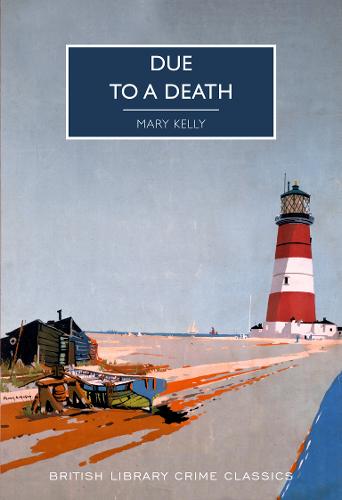
Due to a Death by Mary Kelly – #1962Club

This week Karen of Kaggsy’s Bookish Ramblings and Simon of Stuck in a Book are hosting another of their club weeks, where we all read and write about books published in the same year. This time, the year is 1962 and what a great year for publishing it has turned out to be! There were lots of tempting books to choose from, but I decided to start with one from the British Library Crime Classics series by an author who is new to me: Mary Kelly.

Due to a Death is a very different kind of BLCC book; it’s not really a detective novel, not really a thriller, not a country house or locked room mystery – not even much of a mystery at all. Although there is an element of crime, I would describe this more as a character study and an exploration of the lives of women in a small community in the early 1960s.

Our narrator, Agnes, lives in Gunfleet, a fictional village in the marshlands of Kent. Agnes used to be a teacher but her marriage to Tom meant she was no longer expected to work. It’s not a very happy or satisfying marriage and Tom, who works in a museum, spends most of his free time with his friends, Ian (who is also his stepbrother) and Tubby. Agnes appears to have no friends of her own so Tubby, Ian, and their wives Carole and Helen (whom she doesn’t particularly get along with), form her entire social circle. When Hedley Nicholson, a newcomer to the village, joins their little group he seems to sense that Agnes is lonely and bored and begins to spend more and more time with her, teaching her to drive – something she hopes will provide independence and freedom.

In the opening chapter, we learn that the body of a young woman has been found in the marshes. The rest of the novel is then told in the form of a flashback as Agnes sits in a church, thinking back over the events of the summer. The identity of the dead woman and her connection with the other characters is slowly revealed, but the focus of the book is always on Agnes and her relationships with Hedley, Tom, Ian and Tubby. It’s an interesting study of how, despite living in a small, claustrophobic community where everybody knows everybody else’s business, it’s still possible to feel isolated and alone.

I was very impressed with this book and although it has a slow pace, I found it difficult to put down. However, everything about it is relentlessly bleak, from the desolate marshland setting to the dreary lives of the characters and the tragic motive behind the young woman’s death. I liked it but, as I’ve said, it’s not a typical crime novel, so be prepared!

I hope to have at least one more 1962 review for you later in the week. Meanwhile, here’s my list of other 1962 books previously read and reviewed on my blog.

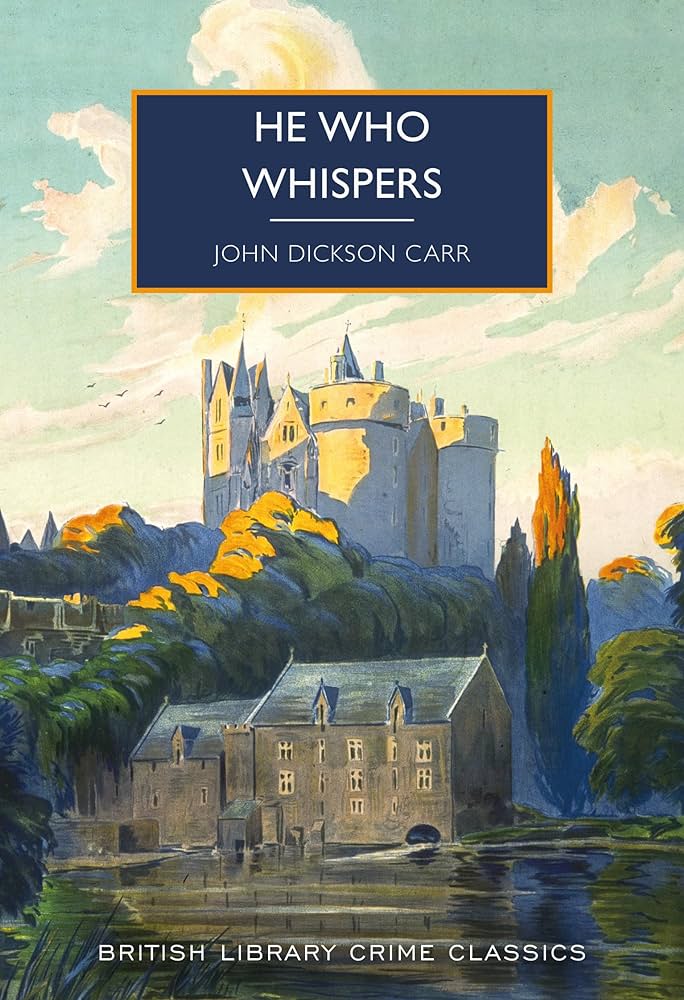
He Who Whispers by John Dickson Carr

He Who Whispers is one of John Dickson Carr’s Dr Gideon Fell mysteries, originally published in 1946 and recently reissued as a British Library Crime Classic. I read another in the series, The Black Spectacles, earlier this year and loved it, so I had high hopes for this one.

The book is set in the aftermath of World War II and is written from the perspective of Miles Hammond, a Nobel Prize winning historian who has just inherited his uncle’s estate, which includes a house in the New Forest containing a large collection of books. As the novel opens, Miles is in London looking for a librarian to assist with his uncle’s collection, and while there he accepts an invitation to attend a meeting of the Murder Club, a group who get together regularly to try to solve true crime cases. On arriving at the venue, Miles is surprised to find that nobody else is there apart from a young woman, Barbara Morrell, and tonight’s speaker, Professor Rigaud.

Despite only having an audience of two, Rigaud proceeds to tell them the story of a crime which took place in France before the war and is both unsolved and seemingly impossible. It involves the murder of a wealthy Englishman, Howard Brooke, found stabbed with his own sword-stick while apparently alone on top of a high tower with witnesses on three sides and the fourth unreachable as it overlooks the river. Fay Seton, Brooke’s secretary, is suspected of the crime for the dubious reason that she is believed to be a vampire – and only a creature that can fly through the air could have reached the top of the tower!

Miles is intrigued by Rigaud’s story and when Fay Seton turns up in London, he offers her the job of librarian so that he can find out more. Heading for his uncle’s house in the New Forest with Fay and his sister Marion, Miles finds that he is becoming increasingly fascinated by the suspected vampire – but when Marion has a terrifying experience while alone upstairs in her bedroom, does this mean Fay has struck again or is there another explanation for the strange occurrences? Luckily, Gideon Fell arrives that same night and begins to investigate!

I enjoyed He Who Whispers, but not nearly as much as I enjoyed The Black Spectacles and I’m not really sure why this particular book is considered one of Carr’s best (apparently even by Carr himself). Yes, the solution is very clever, but I felt that we, the reader, are given very little chance of solving it ourselves, particularly as we don’t really see any of Fell’s thought processes during the novel. He reveals everything in the denouement at the end, but until then we’re as much in the dark as Miles Hammond. There was also too much focus on the vampire storyline for my taste; I thought the mystery was interesting enough without the supernatural element, but I expect other readers will love that aspect of the plot.

Carr captures the feel of post-war Britain very well; a surprising number of 1940s crime novels barely refer to the war at all, but in this one it’s an integral part of the story. Several of the characters in the novel have served in the war, there are mentions of rationing and bombed-out streets and of the effect all of these things have had on people’s mental health. There’s quite a small cast of characters and Carr takes the time to flesh each of them out, but I never really warmed to our protagonist, Miles – he has two possible love interests throughout the novel and although his final decision could have gone either way, I felt that he made the wrong choice in the end!

I want to read more of the Gideon Fell mysteries, so if you’ve read any of them please let me know which ones you particularly enjoyed.