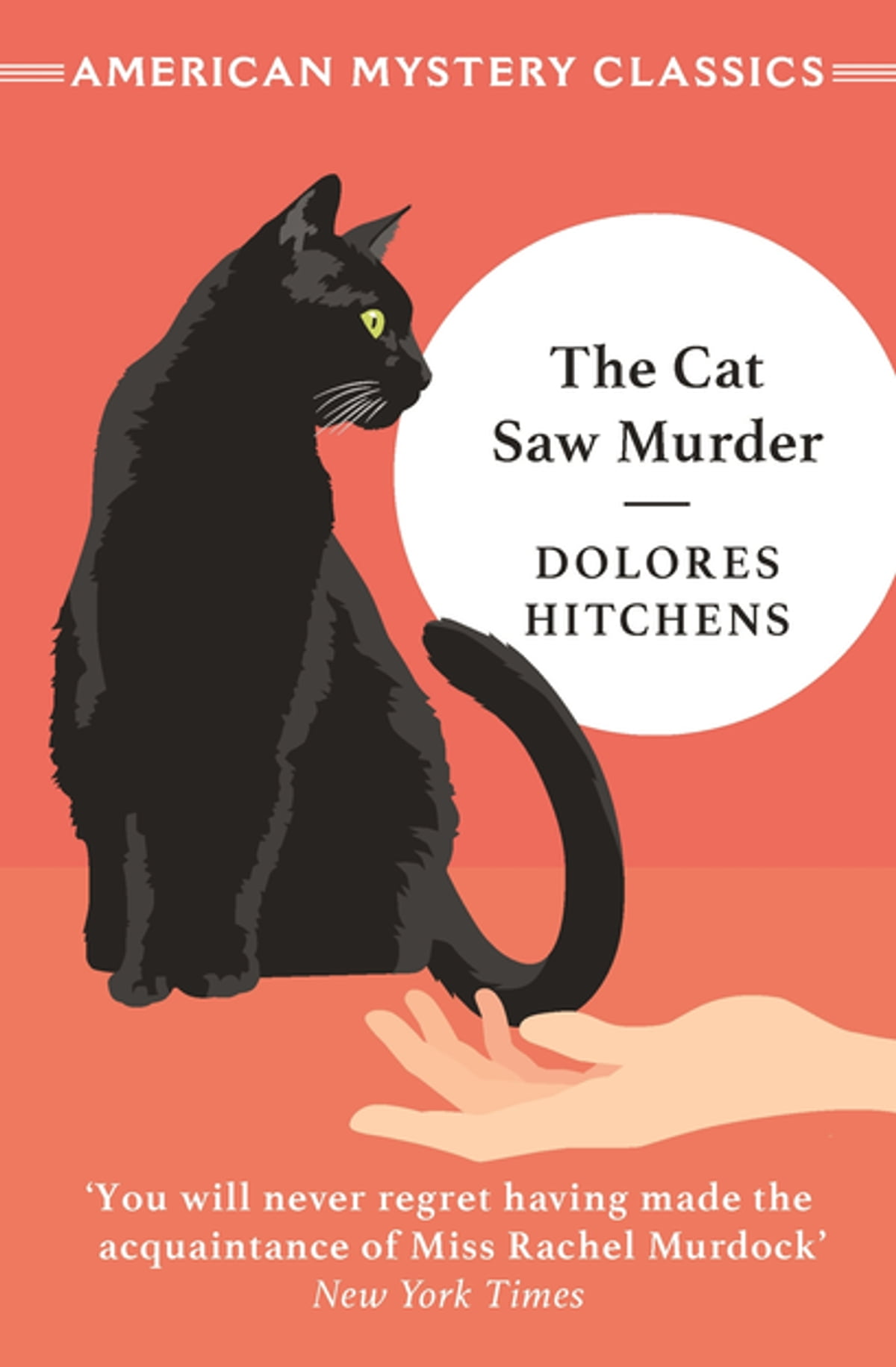
 This week, Mallika of Literary Potpourri is hosting Reading the Meow, a celebration of books featuring cats. When this event was first announced, I wasn’t sure if I had anything suitable; The Life and Opinions of the Tomcat Murr by ETA Hoffmann would have been perfect, if I hadn’t just read it last year. Then I came across a whole series of books with cats in them (or in the titles, at least): Dolores Hitchens’ Rachel Murdock mysteries, some of which have now been reissued as part of the American Mystery Classics imprint. The Cat Saw Murder, originally published in 1939, is the first and I hoped it would be a good choice for Reading the Meow.
The novel begins with elderly Miss Rachel Murdock going to stay with her adopted niece, Lily Sticklemann, who lives at Breakers Beach near Los Angeles. Lily has hinted that she’s in trouble and needs advice, so Miss Rachel has packed her case and set off by train to see if she can help. Her less adventurous sister Jennifer has stayed behind, but Miss Rachel is accompanied by Samantha, the black cat who once belonged to their other sister, Agatha. Agatha was an eccentric woman and on her death she left her fortune to the cat, meaning that Samantha is now a wealthy heiress in her own right. After meeting Lily and discovering that she is having financial difficulties, Miss Rachel becomes concerned for Samantha’s safety, suspecting that Lily has her eye on the cat’s inheritance. However, Lily herself is the one who is murdered – and it seems that Samantha may have been a witness.
There are plenty of suspects – Lily lives in a boarding house, Surf House, and is murdered in her bedroom, which means all of the other residents of the building immediately come under suspicion. Several also have a motive for the crime, as Lily owes gambling debts to some of them and is thought to have been romantically involved with another. Although this is not a locked-room mystery exactly (we know that the bedroom door opens and closes more than once during the night of the murder), it does share many elements of that kind of mystery, but thankfully never becomes too concerned with the puzzle-solving aspects at the expense of the characters and motives.
 Miss Rachel is a great character; I found her very endearing and quite similar to Agatha Christie’s Miss Marple in many ways, although she’s more agile and energetic for her age than Miss Marple is and spends a portion of the book searching rooms and crawling around in the attic. She has a good relationship with the detective investigating the murder, Lieutenant Mayhew, and they both contribute, in their different ways, to the solving of the mystery.
The plot feels slightly disjointed at times and there are some confusing shifts between past and present tense (the book seems to be narrated by someone at an unspecified future date looking back on Mayhew and Miss Rachel’s first case), but otherwise I really enjoyed this book and it did turn out to be a good choice for Reading the Meow. Samantha the cat, although not the main focus of the story, does have a substantial part to play and provides some intriguing clues. The second book in the series is The Alarm of the Black Cat and I think I’ll be tempted to read it soon!

This is book 1/20 of my 20 Books of Summer 2023

 She Reads Novels