Classics Circuit Tour: Jane Austen (Persuasion) vs Charles Dickens (The Mystery of Edwin Drood)

Today, as part of a Classics Circuit Tour, I’m hosting a duel between two very different authors: Jane Austen and Charles Dickens!

Tour participants were invited to choose a novel by either Austen or Dickens – or both. As there were still a couple of Austen novels I hadn’t read, as well as a whole pile of unread Dickens books, I decided this would be a good opportunity to read one of each. But which one would I like the best?
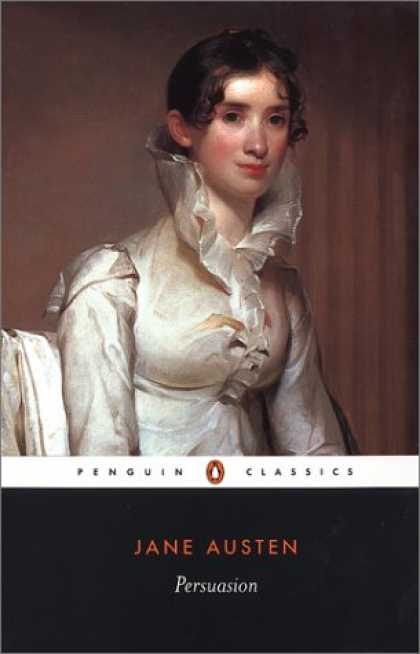
The first book I want to discuss is Jane Austen’s Persuasion, a moving story of mistakes, misunderstandings and second chances.

Austen begins by introducing us to the Elliot family: the vain and conceited Sir Walter of Kellynch Hall and his three daughters, Elizabeth, Anne, and Mary. Mary is married with children of her own, but Elizabeth and Anne still live at home. Elizabeth is very like her father but Anne is gentle, kind-hearted and intelligent. We also meet Lady Russell, a family friend who took on the role of advisor to the girls following the death of their mother.

Several years prior to the beginning of our story, Lady Russell persuaded Anne against marrying Frederick Wentworth, who at that time was a poor young naval officer. Anne has tried to move on with her life but has been unable to forget her first love and she is still unmarried eight years later when she hears that he has returned as the wealthy and respectable Captain Wentworth. Unexpectedly thrown back into his company and forced to see him with another woman, Louisa Musgrove, Anne knows she still loves him – but can Wentworth forgive her for breaking off their engagement all those years ago?

In comparison to the other Austen books I’ve read this one feels more serious and subdued. Anne Elliot is twenty-seven years old which makes her the oldest of Austen’s heroines and this could explain the different tone of the book (as well as the fact that Jane Austen herself was older, this being her final novel). We don’t see Anne as a younger girl in the days of her original romance with Wentworth; instead we meet her when she’s older and more mature. Anne is not a lively, spirited young woman like Elizabeth Bennet or Emma Woodhouse but she has a quiet strength and a warm heart and it’s easy to see what Captain Wentworth loved in her.

It’s slightly disappointing that Anne and Wentworth are kept apart through most of the novel and have little direct interaction with each other, but I appreciated the way Austen kept the reader waiting and wondering, giving the story a sense of restraint and tension. I loved this book and I think it might even have become my favourite Austen novel – although that could still change after I read Sense and Sensibility, which is the only one of her books that I still need to read.

Moving on to Charles Dickens…
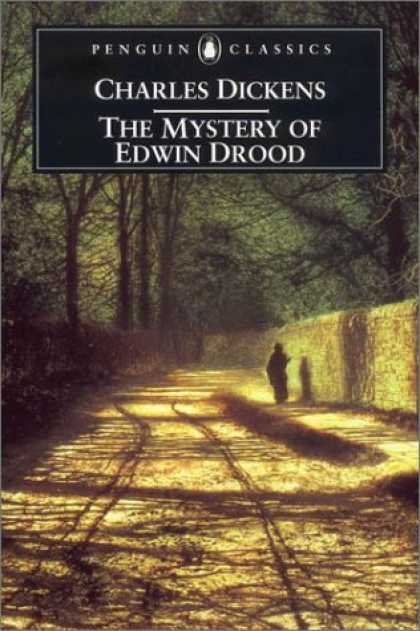
There were plenty of Dickens books I could have chosen, as I’ve only read three of them so far (A Christmas Carol, Bleak House and Our Mutual Friend) but as I’d also committed to reading a Jane Austen book I thought I’d better pick one of his shorter novels.

Trying to avoid one of his eight hundred page tomes played a large part in my decision to read The Mystery of Edwin Drood for the Duelling Authors tour. In comparison to other Dickens novels it’s relatively short – and for a good reason. It’s the novel Dickens was working on when he died in 1870 and unfortunately he was unable to complete it. I wasn’t sure how I would feel about reading an unfinished book but I can tell you that reaching the final page and realising that the mystery wasn’t going to be solved was every bit as frustrating as you might expect!

A large part of the novel is set in the fictional cathedral town of Cloisterham, which is thought to have been based on Rochester, where Dickens lived. We are also taken on a journey into the darker side of Victorian London; the opening scenes of the book take place in Princess Puffer’s opium den, to which Cloisterham choirmaster and piano teacher John Jasper is a regular visitor.

We learn that Jasper is in love with Rosa Bud, an orphan who lives at the Nun’s House in Cloisterham. There are only two problems with this: the first is that Rosa finds Jasper terrifying; the second is that she’s already engaged to his nephew, Edwin Drood, who is only a few years younger than Jasper himself. So when Drood disappears and is presumed to have been murdered it should be obvious who’s to blame, shouldn’t it? Well, no. There’s another suspect: Neville Landless, recently arrived in Cloisterham with his twin sister Helena, who is known to have previously had a violent argument with Drood and was with him the night before his disappearance.

Unfortunately we never find out what really happened to Drood and a number of other storylines are also left unresolved. We can guess what might have been going to happen, and I was able to find lots of possible theories online, but maybe Dickens had a few surprise twists planned for us – we’ll probably never know for certain.

Compared to the other Dickens books I’ve read, I found this one more direct and easy to follow, with less sub-plots and superfluous characters. Almost every chapter helps to move the story forward significantly. It was also quite funny in places, which was good as I haven’t really got on with Dickens’ sense of humour in the past. I can’t help thinking I’ve done things backwards though: I read Drood by Dan Simmons last year, which meant that when I started this book I felt I knew part of the story already. Many of the characters’ names were familiar and I could appreciate how cleverly Simmons had incorporated elements of Dickens’ novel into his own: the opium dens, the tours of the cathedral vaults and crypts, Drood’s interest in Egypt, the ‘hideous small boy’ who throws stones at Durdles. I think it would have been more sensible to have read this book first before the Dan Simmons one!

So who has emerged as the victor of this duel? Well, The Mystery of Edwin Drood was a fun, entertaining read but Persuasion I’m sure will be one of my books of the year – so I think Jane Austen is the winner here!

If you’re still not sure which author you prefer, the other Classics Circuit participants’ Austen and Dickens reviews might help you decide – you can find a full list of tour stops on the Classics Circuit blog.
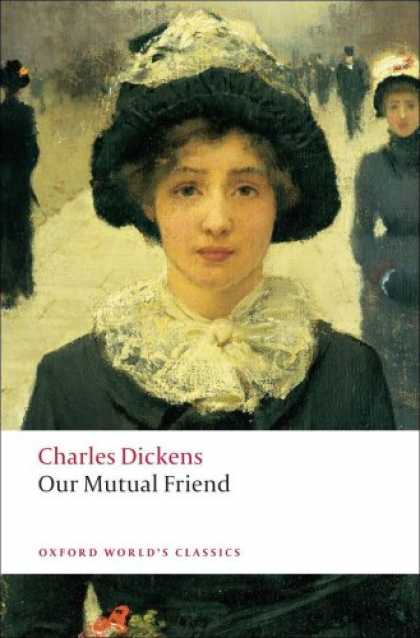
Our Mutual Friend by Charles Dickens

I’m planning to read a lot of Victorian classics this year for the Victorian Literature Challenge (and because I love reading them anyway, of course) so I decided to start with one that has been on my TBR pile for a long time: Our Mutual Friend by Charles Dickens.

Last year I read Bleak House and although I didn’t love it, it didn’t put me off reading more Dickens. However, this one at first felt very similar and some of the aspects of Bleak House that I didn’t like were present here too (a huge number of characters were introduced within the first 100 pages and a lot of different storylines were begun then abandoned for several chapters). I wondered if I really wanted to continue, or if I should choose a different Dickens book to read instead. Then suddenly, things improved. The story started to make sense and I found I was enjoying it. Really enjoying it!

Our Mutual Friend opens with Gaffer Hexam and his daughter Lizzie discovering a dead body in the Thames. The body is assumed to be that of John Harmon, who was on his way to London to marry Bella Wilfer. John’s father had recently died and one of the conditions of his will was that unless John married Bella, he would not be allowed to claim his inheritance.

Bella is disappointed when she learns that he has drowned. It’s not fair: not only has she missed out on the money, now she’s going to have to wear mourning for a man that she’s never met and who died before they were even married! Mr and Mrs Boffin, the kind-hearted couple who inherit the Harmon fortune in John’s absence, feel sorry for her and invite her to stay with them. However, the Boffins soon become the target of fortune hunters and blackmailers such as Silas Wegg and Mr Venus.

Being almost 800 pages long, and being Dickens, this is only one small part of the story. There are several other plots and sub-plots which eventually become woven together – and some very memorable characters, including Jenny Wren, the ‘Dolls’ Dressmaker’, Mrs Higden, who lives her life in terror of the workhouse, and Bradley Headstone, a murderous schoolmaster who falls in love with Lizzie Hexam.

Although I did enjoy this book and found most of it entertaining and gripping, I did struggle with the chapters that took place in the ‘fashionable world’ of the Veneerings’ dining room. This world of dinner parties and politics contrasts sharply with the other main setting of the book, the River Thames, where most of the action takes place. We meet the people who earn their living from the river, we spend some time in the riverside inns and taverns, and in a way the river becomes the most important ‘character’ in the book.

And as the great black river with its dreary shores was soon lost to her view in the gloom, so she stood on the river’s brink unable to see into the vast blank misery of a life suspected, and fallen away from by good and bad, but knowing that it lay there dim before her, stretching away to the great ocean, Death.

I liked both of the two main female characters. Lizzie Hexam is a typical Dickens heroine, but she didn’t irritate me like Esther Summerson did in Bleak House. Bella Wilfer, though, turned out to be a surprisingly complex character. Although she was quite self-absorbed and materialistic, I liked her because she was warm-hearted and despite admitting she wanted to marry a man with money, she also seemed to feel genuinely guilty about it. Money, and how it can change people, is one of the main themes of the book, as Bella explains to her father here:

And yet, Pa, think how terrible the fascination of money is! I see this, and hate this, and dread this, and don’t know but that money might make a much worse change in me. And yet I have money always in my thoughts and my desires; and the whole life I place before myself is money, money, money, and what money can make of life!’

Fathers and daughters play a big part in the story and it’s interesting that with only a few exceptions, the relationship is always the same – a strong, loyal and loving daughter with a weak, villainous or child-like father. Mr Wilfer is described as ‘cherubic’ and devoted to Bella, who treats him like a baby. Then there’s Pleasant Riderhood and her criminal father, Rogue, as well as Lizzie and her father, Gaffer, who was a former associate of Rogue’s. And there’s Jenny Wren, who refers to her alcoholic father as her ‘bad child’ and makes him sit in the corner in disgrace.

Our Mutual Friend is such a big, complex novel it does require the reader to invest a lot of time and effort in it, but it was definitely worth it for me! I now feel much happier about reading more Dickens in the future.

Remember These? Books beginning with ‘A’

A few weeks ago I mentioned that I was planning a series of posts looking at some of the books I recorded in my old reading diary. The diary spanned my teenage years to my early twenties, so most of the books mentioned below will have been read during the 1990s and although I’ve included my original ratings, these do not necessarily reflect what I would feel about the books if I read them again today!

I gave the books ratings out of 5. The symbol * means I loved the book. X means I didn’t finish it.

Books beginning with ‘A’

Here are a selection of the books that appeared on the ‘A’ page of my notebook. Some of these are classics that many of you have probably read. Others are very obscure, so if you’ve read them I’d love to know what you thought of them!

Animal Farm by George Orwell (5/5*)

I obviously loved this when I first read it. I’ve reread it a couple of times since then and I still think it’s a great book.

Alice’s Adventures in Wonderland by Lewis Carroll (5/5)

One of those children’s classics that can also be enjoyed by adults. I haven’t read it for a long time; I wonder if I would feel any differently about it after reading Alice I Have Been earlier this year?

A Home For Jessie by Christine Pullein-Thompson (4/5)

My best friend and I bought this book and the next two in the Jessie series (Please Save Jessie and Come Home Jessie) from the school book fair when we were about 10 or 11 years old. The series follows the adventures of a boy called Matt and the black Labrador puppy that he rescues from being drowned. This was my favourite Jessie book and I loved it so much I re-read it many times, even after I was ‘too old’ for it (can you ever really be too old for a book?) and it made me cry every time.

All the Rivers Run by Nancy Cato (3/5)

This was recommended to me by my mother because I had enjoyed The Thorn Birds and she said this was a similar book also set in Australia. I can’t remember much about this one, though.

Acorna: The Unicorn Girl by Anne McCaffrey and Margaret Ball (3/5)

I’ve never been a big reader of fantasy novels, but I must have enjoyed this enough to give it a 3/5 rating.

A Kind of Thief by Vivien Alcock (3/5)

I can’t remember reading this at all, and even the Goodreads description doesn’t bring back any memories for me: “When her father is suddenly arrested and put into prison, thirteen-year-old Elinor finds that she has to face many unpleasant truths about him and their way of life.”

A Christmas Carol by Charles Dickens (3/5)

I really need to be in a Christmassy mood to appreciate this book. I’ve read it several times over the years and would probably have given it a different rating every time! I re-read it on Christmas Eve last year and really enjoyed it. The edition shown in the picture is the one that was given to me as a Christmas present when I was a child and is a beautiful hardback with colour illustrations.

A Proper Little Nooryeff by Jean Ure (2/5)

I forgot about this one when I did my post on children’s ballet books a few months ago. It was about a teenage boy who becomes a ballet dancer. Nooryeff, if you were wondering, is a mispronunciation of the name (Rudolf) Nureyev.

A Portrait of the Artist as a Young Man by James Joyce
(2/5)

I remember my English teacher at school telling us about this book but saying it was suitable for a ‘more mature reader’ so I didn’t actually read it until after I had left school. The chapters describing the fires of hell must have left a big impression on me because that’s all I can actually remember about the book. I’ve never wanted to read anything else by Joyce though, so I don’t think he’s an author for me.

Across the Barricades by Joan Lingard (2/5)

We read this at school in English Literature. It would have been very relevant in the 1990s, as it was set in Northern Ireland and told the story of Kevin, a Catholic boy, who falls in love with Sadie, a Protestant girl. Although I didn’t know it at the time, this was actually the second in a series of books about Kevin and Sadie. I think maybe the fact that I was made to read it at school affected my enjoyment of it.

Are You There God? It’s Me, Margaret by Judy Blume (2/5)

Like many children/young teenagers I used to read a lot of Judy Blume books. This was one of her most popular books, so I’m sure some of you will remember reading it too. I don’t seem to have enjoyed this one very much though.

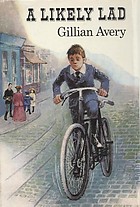
A Likely Lad by Gillian Avery (1/5)

I can’t remember reading this but I only rated it 1/5. According to the product description on Amazon, ‘Pressured by his father to leave school for a career he doesn’t want, a nineteenth-century Manchester boy runs away and gains a new perspective on his future.’ This actually sounds like something I would probably enjoy more if I was reading it now!

An Air That Kills by Andrew Taylor (x); Act of Violence by Margaret Yorke (1/5); A Thin Dark Line byTami Hoag (3/5)

These three are crime novels which is why I’ve grouped them together, but I can remember absolutely nothing about them and even looking up the descriptions on Amazon doesn’t help bring them back to my mind. I must have thought the Tami Hoag one was okay. I did go through a phase of reading a lot of crime novels, but now I almost never read them (I think I’ve only read one in 2010).

A Touch of Practical Magic by Robert Gould (x)

I recognise the title and can even picture what the cover looked like, but I have no idea what it was about. It seems to be out of print and I can’t even find a synopsis online. I obviously didn’t like it enough to finish it anyway, so I won’t spend too much time worrying about it, but if anyone remembers this book please let me know!

Coming soon… Remember These? Books Beginning with ‘B’.

Final thoughts on Bleak House by Charles Dickens

I was hoping to have this review ready to post at the end of Amanda’s readalong, but as usual things didn’t go according to plan and I’m almost a week late!

I had tried to read Bleak House once or twice in the past but gave up after a few chapters, so I hoped that taking part in the readalong would give me the motivation to actually finish the book. And it did. However, I was reminded of the reasons why I had given up on the book on my previous attempts. Dickens’ writing can be very long-winded, descriptive and detailed, even in comparison to other Victorian authors, and there were many parts of the book where I really had to force myself to concentrate – particularly during the first two chapters.

The plot is so complex I’m not even going to try to write a summary, other than to say that the story revolves around a court case called Jarndyce and Jarndyce with which many of the characters are in some way involved. The action moves back and forth between the foggy streets of London and a quiet country estate in Lincolnshire. Half of the story is told by an unnamed narrator in the third person present tense, and the other half is narrated by Esther Summerson. There are some characters who appear in only one of the narratives and some who feature in both, so that the two cross and intersect from time to time.

If you’re thinking of reading Bleak House you should be aware that a huge number of characters are introduced throughout the first half of the book. As I mentioned in one of my readalong update posts, it felt as if storylines were being started then abandoned for hundreds of pages at a time. It takes a long time for the separate storylines to start coming together so you’ll need to have patience, but when they do the book becomes much more enjoyable.

Although many of the characters lacked depth, they were all different and memorable enough that I never had a problem remembering who was who. There were some that I liked (Mr Jarndyce, Inspector Bucket and George), and some that I hated (Skimpole, Smallweed and Tulkinghorn). As for Esther, she appeared to be Dickens’ portrayal of what an ideal woman should be like (i.e. perfect in every way, loved by everyone, happy to be nicknamed ‘little housewife’ and ‘Dame Durden’). But although Esther irritated me, I would probably have enjoyed the book more if it had all been told from her perspective. I found I could get more absorbed in the story while she was narrating and her chapters were much easier to follow than the others.

Bleak House has everything I would normally love in a book: an intricate plot, secrets and revelations, humour, a mystery, unusual characters. Unfortunately there was something about the book that didn’t quite work for me; I’m not sure whether it was the writing style or the narrative structure or a combination of both. But although I didn’t love it, I didn’t dislike it either and as this was only the second Dickens book I’ve read (the other being A Christmas Carol), I’ll definitely be giving him another chance.

Bleak House Readalong: Chapters 20-32

I didn’t post my Bleak House Readalong update last Wednesday as it was Book Blogger Appreciation Week, so in this post I’ll be discussing Week 4: Chapters 20-25 and Week 5: Chapters 26-32.

*Please note: If you haven’t read as far as chapter 32 of Bleak House, you may encounter spoilers in this post.*

In the first 19 chapters of the book, we were introduced to a bewildering number of characters and storylines. As I mentioned in my previous update, the story had so far felt disjointed and slightly confusing. In these next few installments though, things finally start coming together and the story is beginning to get really interesting. There were still a few new characters (the Smallweed family, Mr George, the Bagnets and Mr Bucket the detective), but I think we’ve met all the major ones now.

I won’t even try to write a full summary for these chapters, but here are a few of the more important plot developments: Charley, the orphan girl we met earlier in the book, arrives at Bleak House as Esther’s maid. Richard changes career (again! I wish it was really as easy as that) and joins the army. Everyone seems to be very interested in Captain Hawdon’s handwriting, Caddy Jellyby marries Prince Turveydrop, Esther becomes ill – and in Chapter 29, the identity of Esther’s mother is revealed! I was very surprised by this because, although I had already guessed who it was, I hadn’t expected to find out so early in the story and had thought it would come towards the end of the book.

So overall, I found these chapters much more compelling than the previous ones because it feels that things are actually starting to happen now. And this section ended on an exciting note, when one of the characters spontaneously combusts! There are still some parts where I’m struggling to stay interested (Chapter 25: Mrs Snagsby Sees It All – was there any point to that chapter?) but I think I’m going to enjoy the rest of the book.

You can see other readalong participants’ thoughts on Bleak House here.

Bleak House Readalong: Chapters 14-19

I’m a few chapters ahead of the readalong schedule again, but this post is based on my thoughts at the end of Chapter 19.

*Please be aware that this post may contain spoilers*

It’s week 3 of the readalong, I’m more than 230 pages into my edition of Bleak House, and Dickens is still introducing new characters and new storylines in every chapter!

In this week’s installments, Esther accompanies Caddy Jellyby to the dancing school where her fiancé Prince Turveydrop works. We also meet his father, Mr Turveydrop, who is always talking about the importance of ‘Deportment’ – very annoying! In chapter 15, Mr Skimpole reappears with news that the debt collector Mr Neckett has died, leaving his three children orphaned. The oldest girl, Charley, is taking care of her brother Tom and the baby Emma, as well as going out to work.

The Snagsbys invite the Chadbands for tea and Mrs Chadband turns out to be a face from Esther’s past. Richard changes career again, deciding he wants to be a lawyer this time. And on a visit to Mr Boythorn, Esther encounters Lady Dedlock, who seems strangely familiar although she’s sure she’s never seen her before.

There are an unbelievable number of characters in the first 19 chapters of this book alone! Luckily, I haven’t had too much trouble remembering who they all are. At the moment it’s difficult to tell which of the characters will play a major part in the story and which won’t. Maybe they all will!

As I mentioned last week, I prefer the chapters narrated by Esther to the others, as they are easier to follow. However, we are now starting to see some indications that Esther is not being completely honest with the reader and is choosing what she does and doesn’t want to tell us (usually in relation to a certain young surgeon called Mr Woodcourt).

“For I was so little inclined to sleep, myself, that night, that I sat up working. It would not be worth mentioning for its own sake, but I was wakeful and rather low-spirited. I don’t know why. At least, I don’t think I know why. At least, perhaps I do, but I don’t think it matters.”

I’m enjoying the book but it still feels quite disjointed and confusing. It still seems that storylines are being started and then abandoned just as they’re starting to get interesting, and characters are being introduced then disappear for several chapters at a time. I’m sure that when things start to come together later in the book I’ll be able to appreciate the importance of these early chapters more. I think I just need to be patient!

More posts on the Bleak House readalong here.

Bleak House Readalong: Chapters 8-13

This is Week 2 of the Bleak House Readalong. I’m slightly ahead of the readalong schedule this week, but will keep this post restricted to chapters 8-13.

*If you haven’t read the book yet, you might encounter some spoilers.*

13 chapters into the book now and it still feels that not much has actually happened yet; Dickens is still bringing in new characters and new storylines. I’m enjoying the chapters narrated by Esther the most as I’m finding the other chapters a bit harder to follow.

In this week’s installments, Esther receives a marriage proposal, Richard tries to choose a profession, and a law-copier called Nemo is found dead from a suspected opium overdose. We meet Mrs Pardiggle who, like Mrs Jellyby, is supposed to be a ‘philanthropist’, but whereas Mrs Jellyby neglects her children, Mrs Pardiggle brings her five sons with her everywhere she goes and forces them to invest in charities that they are too young to know anything about.

We also meet a drunken brickmaker and his wife Jenny, who has a black eye and is nursing a sick baby. Other new characters include Mr Boythorn, an old friend of Mr Jarndyce’s who visits Bleak House, a ‘law-stationer’ called Mr Snagsby, and Jo, a homeless crossing-sweeper.

It will be interesting to see how Dickens is going to weave all these storylines and characters together. A lot of things don’t make much sense at the moment, but I’m hoping that everything will start to become clearer soon. I’m enjoying the book more than I was last week, though – and Esther isn’t annoying me as much now.

For more opinions on this week’s installments, see the list of participants at The Zen Leaf.