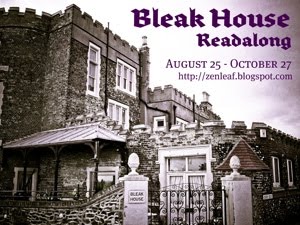
Bleak House Readalong: Chapters 1-7

Charles Dickens’ Bleak House is a book that, like Middlemarch by George Eliot, I have attempted to read before but abandoned after a few chapters. This summer I took part in a Middlemarch readalong and finally finished the book (and ended up loving it) so I’m hoping that this Bleak House readalong will be equally successful. I’ve read Chapters 1-7 this week and have now passed the point where I lost interest and stopped reading the last time.

In Bleak House, Dickens divides the narrative between an orphan called Esther Summerson and an unnamed omniscient narrator, which is an interesting technique but one that isn’t really working for me. The book begins by telling us about a long-running court case called Jarndyce and Jarndyce, which has gone on for so many years that the original parties in the suit are now dead and nobody can remember what it was about. In the opening chapter Dickens tells us about the fog that is enveloping London, which can be seen as a metaphor hinting that the court case and much of the following story is going to be shrouded in fog as well.

“Fog everywhere. Fog up the river, where it flows among green aits and meadows; fog down the river, where it rolls defiled among the tiers of shipping and the waterside pollutions of a great (and dirty) city. Fog on the Essex marshes, fog on the Kentish heights. Fog creeping into the cabooses of collier-brigs; fog lying out on the yards, and hovering in the rigging of great ships; fog drooping on the gunwales of barges and small boats…”

When Ada and Richard, two wards of court, are sent to live with John Jarndyce in his home, Bleak House, Esther is asked to accompany them. At the moment we don’t know why this is, or how Esther is connected with the Jarndyce suit. On their way to Bleak House, they meet a variety of interesting people including Mrs Jellyby, who seems more interested in Africa than in her own family, an eccentric old lady who has been closely following the Jarndyce case, and the old lady’s landlord, Mr Krook.

The first seven chapters are concerned with setting the scene and not much has happened yet. I’m not really a lover of long descriptive passages but most of those were confined to the first two chapters. From the third chapter onwards, when the story really began, I started to enjoy it.

We are introduced to a huge number of characters in the first seven chapters. So far I’ve found it easy enough to remember who they all are, but I suspect that it might get more confusing later. One of the problems I had on my first attempt at reading this book was that Esther irritated me – and unfortunately she’s still irritating me this time. I hope I’m going to like her more as the book continues. I also dislike Mr Skimpole. He takes money from Richard and Esther to pay his debts, but everyone seems to think that’s okay because he’s such a harmless, childlike person.

“When you come to think of it, it’s the height of childishness in you — I mean me —” said Mr Jarndyce, “to regard him for a moment as a man. You can’t make him responsible. The idea of Harold Skimpole with designs or plans, or knowledge of consequences! Ha, ha, ha!”

So far I’m undecided about this book. I’m not loving it yet, but I’m not hating it either. Although Bleak House is a very long book (over 700 pages in my edition) and I’m only around 80 pages into it, I don’t think I’ll have any trouble finishing it. I found with the Middlemarch readalong that making a long classic my secondary book to read alongside several shorter books is a method that works perfectly for me.

I’ll try to post another progress update next Wednesday, when I hope to be able to tell you that I’ve started to love the book!

You can see other participants’ thoughts at The Zen Leaf.

After the Sunday Papers #5

Last month was a great reading month for me – I read ten books, which I know is not many for a lot of other bloggers, but for me it’s more than I usually manage to read. And as well as reading those ten books, I was also slowly working my way through Middlemarch by George Eliot, which I finished last weekend. Considering this was my third attempt at reading it, I felt a real sense of achievement when I reached the final page! As I’ve finished it a few weeks ahead of schedule for Ana’s readalong, I won’t post my thoughts on the book just yet, but will wait until later in the month. Who else has been reading Middlemarch for the readalong? Are you enjoying it?

Another readalong I’ve signed up for is Bleak House by Charles Dickens, which is being hosted by Amanda of The Zen Leaf. Bleak House, like Middlemarch, is a book that I started reading once before but stopped because I wasn’t in the right mood for it. I can be a very moody reader sometimes! Hopefully this time I’m going to enjoy it. If you’d like to participate too, see Amanda’s post to sign up.

This week I’ve been reading The Red Queen by Philippa Gregory which I was sent by Simon & Schuster UK for their Red Queen blog tour. The Red Queen is the second book in Philippa Gregory’s new Wars of the Roses series, which was a fascinating time in English history. I would welcome any recommendations of good non-fiction books about this period as I’d really like to learn more about it.

I’ll be posting my review of The Red Queen soon, but in the meantime why not enter this competition to win a signed copy of the UK hardback – it’s open worldwide until September 30th.

I also received two more books for review this week, which is exciting for me as I don’t usually get very many.

After You by Julie Buxbaum is the third book I’ve received from Transworld for their Summer Reading Challenge (the first two that I’ve read and reviewed were Second Hand Heart and If I Stay). I also had a nice surprise when Rosy Thornton contacted me to offer me a copy of her new novel, The Tapestry of Love. I’m looking forward to reading both of these books.

What will you be reading this week?

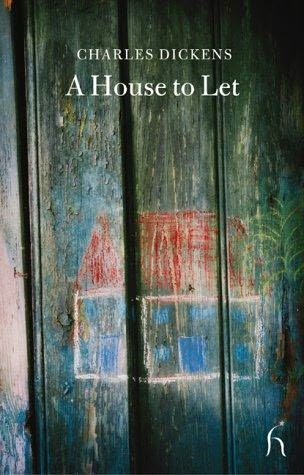
Review: A House to Let by Charles Dickens, Wilkie Collins, Elizabeth Gaskell and Adelaide Anne Procter

A House to Let, at less than 100 pages, is a collaboration between four 19th century authors which originally appeared as the Christmas edition of Charles Dickens’ weekly magazine, Household Words, in 1858.

The book is divided into six sections; the first, Over the Way, and the sixth, Let at Last, are joint efforts by Charles Dickens and Wilkie Collins, and provide the framework for the story. The other four sections are individual contributions from Elizabeth Gaskell, Charles Dickens, Adelaide Anne Procter and Wilkie Collins, in that order.

Over the Way introduces us to Sophonisba, an elderly woman who has never married but has two men vying for her attentions – one is her old admirer Jabez Jarber; the other is her servant, Trottle. When Sophonisba’s doctor advises a change of air and scene, she leaves her home in Tunbridge Wells and moves into new lodgings in London, where she immediately becomes obsessed with the house opposite – a house which has been vacant for many years and is permanently ‘to let’. Determined to discover why the house has remained empty for so long – and convinced she has seen an eye staring out from one of the windows – she asks Jarber and Trottle to investigate.

Over the Way and Let at Last are credited to both Dickens and Collins, but there’s no way to tell exactly which parts were contributed by which writer. The other four chapters, though, are each written in the distinctive style of their respective authors and each tell the story of a previous occupant of the house to let.

The chapter I liked the least was actually the one written solely by Dickens, Going Into Society. The story of a showman and a circus dwarf called Mr Chops, it was just too weird for me and was also quite difficult to read as it was written in dialect. It’s probably significant that I found the two Dickens/Collins collaborations much easier to read than this solo effort, as I’ve always thought Collins was a lot more readable than Dickens.

Three Evenings in the House, the contribution by Adelaide Anne Procter, whose work I was previously unfamiliar with, is in the form of a narrative poem. I’m not a big lover of poetry but luckily for me this was only thirteen pages long and quite easy to understand. Other than providing some variety though, I don’t think this chapter really added much to the story.

The Manchester Marriage
by Elizabeth Gaskell stands out as an excellent piece of writing: a tragic story of Alice Wilson, who is widowed when her husband is lost at sea. After marrying again, she and her new husband move into the house to let where further tragedy awaits them. This is good enough to work as a stand-alone short story (and according to the Biographical Notes, it was actually published separately in its own right). This and the Wilkie Collins contribution, Trottle’s Report, were my favourite chapters. Trottle’s Report is a typical Collins story, with unusual, quirky characters, a mysterious secret, and a slightly dark and gothic feel.

After exploring the histories of the various tenants of the house, the mystery is finally solved in the final chapter, Let at Last, which neatly ties up all the loose ends of the story.

If you like any of these four authors or Victorian fiction in general, then A House to Let is definitely worth reading. It also provides a good introduction to Dickens, Collins, Procter and Gaskell without having to commit yourself to one of their longer works.

Classics/Pages: 97/Publisher: Hesperus Press/Year: 2004 (originally published 1858)/Source: Library book

A Short Story for Wednesday: The Signal-Man by Charles Dickens

The Signal-Man by Charles Dickens (1866)

After recently reading Drood by Dan Simmons which described Charles Dickens’ involvement in the Staplehurst Rail Disaster, I decided to read Dickens’ short story, The Signal-Man. Although it doesn’t directly reference the Staplehurst incident, The Signal-Man was written the following year so was almost certainly influenced by his experience.

Whilst taking a walk one evening, the unnamed narrator discovers an isolated railway station and makes the acquaintance of the lonely signalman. The signalman tells him of a ghostly figure that he has previously witnessed on two occasions standing below the danger light in the entrance to the tunnel. On both occasions, the ghost’s appearance has been followed by tragedy. Now the spectre has appeared again and the signalman is convinced that another disaster is imminent…

This is the first of Charles Dickens’ short stories that I’ve ever read and having read some of his full-length novels, I was surprised by how quick and easy The Signal-Man was to read. Although the outcome of the story was very predictable, Dickens creates a wonderfully eerie and foreboding atmosphere. Highly recommended if you’re in the mood for a classic ghost story.

“His post was in as solitary and dismal a place as ever I saw…So little sunlight ever found its way to this spot, that it had an earthy, deadly smell; and so much cold wind rushed through it, that it struck chill to me, as if I had left the natural world.”

Read The Signal-Man online

* Clayton Tunnel picture – in the public domain

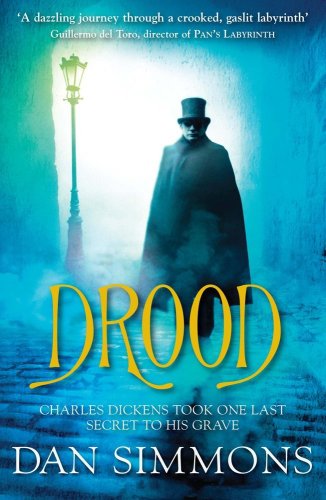
Review: Drood by Dan Simmons

I think I liked the idea of this book more than the book itself. A gothic mystery/horror story set in Victorian London, featuring Charles Dickens and narrated by Wilkie Collins sounded like exactly the kind of book I would enjoy. Unfortunately it didn’t quite live up to its fascinating premise and I was left with mixed feelings about it.

Drood is told in the form of a memoir written by Wilkie Collins (a close friend and collaborator of Charles Dickens, as well as being the author of The Woman in White, The Moonstone and many other novels and plays) and addressed to an unknown reader in the future – that is, to us.

The story begins with the Staplehurst Rail Disaster of 1865, when the train on which Charles Dickens is travelling crashes, sending most of the carriages plummeting over a viaduct into the riverbed below. Luckily Dickens is in one of the few carriages that doesn’t fall. As he helps to rescue people from the wreckage, he encounters a mysterious figure dressed in a black cape who introduces himself only as ‘Drood’. In the days following the train crash, Dickens becomes obsessed with finding Drood and discovering his true identity. With the reluctant help of Wilkie Collins, Dickens begins a search for Drood which leads them through the dark alleys and underground catacombs of London.

Interspersed with the Drood storyline are long passages in which we learn about the family life and living arrangements of both Dickens and Collins, how much they earned for their various novels, their walking tour of Cumberland in 1857, the details of Wilkie’s laudanum addiction, the story of the Swiss chalet given to Dickens by his friend Charles Fechter, Dickens’ interest in mesmerism and every other piece of biographical information you could possibly want to know. Simmons also incorporates some genuine historical letters and quotes which adds some authenticity to the book. I can see why some readers might find this boring, but I enjoyed these sections – I thought the descriptions of Dickens’ reading tours were particularly fascinating.

Simmons has attempted to imitate Wilkie Collins’ narrative style (including the Victorian habit of talking directly to the reader) but I felt that he didn’t get it quite right. He also uses a lot of words and phrases that just sound either too modern or too American to me (the real Collins or Dickens would have walked on the pavement rather than the sidewalk, for example). This is only a small complaint though, as overall, Dear Reader, I thought his style was quite convincing.

I do like the way the book takes us through the process of researching and writing The Moonstone. However, some important plot points are given away so if you haven’t already read The Moonstone and think you might want to, then I would suggest you read it before you begin Drood. It might also be a good idea to read The Mystery of Edwin Drood first (I didn’t and kept wishing I had). Another thing I liked about the book was the way Simmons deliberately tries to confuse and mislead the reader – at several points in the novel we are made to wonder whether something we’ve just read is real or an illusion.

This journey through the cemeteries, opium dens and underground sewers of London is a good atmospheric read for a cold dark night, but I was slightly disappointed by it and despite reading all 775 pages I still can’t decide whether I enjoyed it or not! However, it will almost certainly leave you wanting to learn more about Dickens and Collins and their works, which can only be a good thing. If you like this type of book I would also recommend The Quincunx by Charles Palliser – another book set in Victorian England and written in a 19th century style.

Before I come to the end of this review I would just like to say a few words in defence of poor Wilkie Collins, who happens to be one of my favourite authors. Simmons clearly doesn’t rate Wilkie as a writer (I saw an interview where he described him as ‘mediocre’) and in Drood, the character is portrayed as a not very talented, second-rate author who is consumed with jealousy of the more successful Dickens and becomes increasingly bitter and unlikeable as the book goes on. I admit I’m biased because I’ve absolutely loved every Wilkie Collins book I’ve read; he was a much better writer than Drood suggests and definitely not mediocre, at least in my opinion!

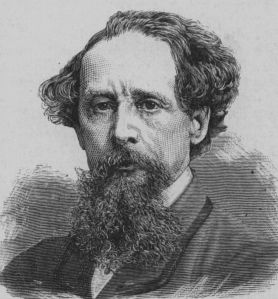
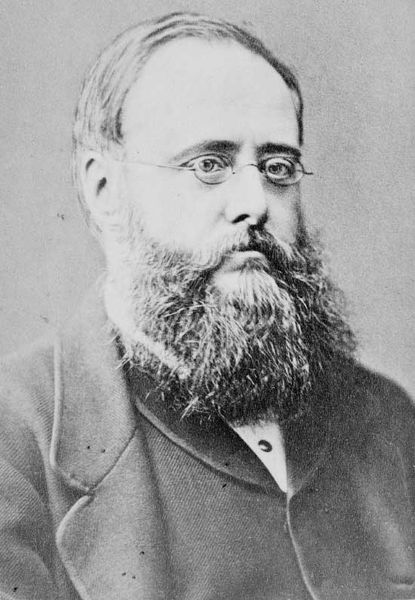
*Pictures of Charles Dickens (top) and Wilkie Collins (bottom) both in the public domain

Genre: Historical Fiction/Horror/Pages: 775/Publisher: Quercus Fiction/Year: 2009/Source: My own copy bought new

Review: A Christmas Carol by Charles Dickens

“Men’s courses will foreshadow certain ends, to which, if perservered in, they must lead,” said Scrooge. “But if the courses be departed from, the ends will change…”

A Christmas Carol is the one classic that almost everyone knows, even if they’ve never read the book. It’s the story of an old, money-obsessed miser called Ebenezer Scrooge who is given the chance of redemption one Christmas Eve when he is visited by the ghost of his deceased business partner, Jacob Marley. Marley warns Scrooge that unless he changes his ways, he will end up like Marley himself, doomed to wander the earth bound by heavy chains of his own making. During the night Scrooge is visited by three more spirits – the Ghosts of Christmas Past, Christmas Present and Christmas Yet to Come – who help him to understand that there are more important things in life than money: things such as generosity, compassion and kindness. The scenes Scrooge witnesses that Christmas Eve are to change his life forever and transform him into a different person.

A Christmas Carol is shorter and easier to read than most of Dickens’ other books and really is suitable for people of all ages. I loved it as a child and after re-reading it this week for the first time in years, I loved it as an adult too. No matter how many movies, cartoons or TV adaptations you may have seen, it’s still worth reading the book for the richness and humour of Dickens’ writing and for his wonderful descriptions and imagery. For example when describing the location of Scrooge’s home, hidden away in a gloomy yard, he says:

 “…one could scarcely help fancying it must have run there when it was a young house, playing at hide-and-seek with other houses, and have forgotten the way out again”.

There are great lines like this one throughout the entire book. I also loved his portrayal of a Victorian Christmas in 19th century London.

Although some readers might find it too sentimental at times, it’s easy to see why this book has become a timeless classic, as it is everything a good Christmas story should be – heartwarming, inspirational and with an important message for us all.

Recommended

Genre: Classics/Pages: 147/Publisher: Chancellor Press/Year: 1985 (originally published 1843)/Illustrations by Arthur Rackham/Source: My own copy