The Twelve Days of Christmas by Susan Stokes-Chapman

I’ve previously only read one short story by Susan Stokes-Chapman (in the anthology The Winter Spirits) and I was interested in reading more of her work. This seemed like the perfect time of year to read her new book, The Twelve Days of Christmas!

The book is loosely based on the Christmas carol of the same name, with each chapter inspired by one of the gifts traditionally mentioned in the song – for example, Chapter 1 features pear trees and a character called Miss Partridge (“a partridge in a pear tree”) and Chapter 6 revolves around a game involving hidden goose eggs (“six geese a-laying”). In some cases this is done quite subtly, but in others it’s more heavy-handed; I can appreciate that it’s probably not easy to work all of these references into a novel without it beginning to feel unnatural!

Each chapter feels almost like a separate story (a few of them probably would work as standalones), but they are also linked together through shared characters and a shared setting. That setting is the little English village of Merrywake during the Regency period, with the Napoleonic Wars playing out in the background. Beginning on Christmas Day and ending on Twelfth Night, we join Viscount Pepin of Wakely Hall and his family, friends and servants as they celebrate the festive season. There’s a lovely Christmassy atmosphere as we watch the characters decorate the house, kiss under the mistletoe, open gifts, write and solve riddles, and prepare for the grand Twelfth Night Ball. But although it may all sound idyllic, not everyone at Wakely Hall is having a happy Christmas…

Stokes-Chapman explains in her author’s note that this book is her tribute to Jane Austen and Georgette Heyer and you can definitely see the influence of both. The Viscount and Viscountess Pepin (the name also has links to the song The Twelve Days of Christmas) with their five daughters immediately made me think of Austen’s Pride and Prejudice – the chapter based on “five gold rings” deals with the five girls and their hopes of marriage. The servants, though, are given just as much attention as the upper classes: there are stories about Loveday Lucas, the new kitchen maid, who can’t seem to do anything right; Will Moss the under-gardener, who appears to have fallen in love with someone completely unsuitable; and Mrs Wilson, the cold, strict housekeeper who is shocked to find that her staff consider her heartless.

I loved the world Stokes-Chapman created at Wakely Hall, but it was also nice to get some insights into the lives of the other residents of Merrywake, such as the village toymaker whose son, a drummer in the British army, has failed to come home from France. The toymaker’s story was one of the highlights of the book for me and together with the chapter that follows, about another army musician (a piper, as you may have guessed), it shows that the impact of the Napoleonic Wars is being felt all over the country, in even the smallest of communities.

The Twelve Days of Christmas is a lovely book and despite it obviously being very contrived in places, I found it completely absorbing. I particularly liked the way so many different characters from such varied backgrounds are all given their chance to shine, while each chapter also cleverly builds on the one before. I was sorry to say goodbye to the people of Merrywake and would love a sequel so we could catch up with them again in the summer!

Thanks to Random House UK, Vintage/Harvill for providing a copy of this book for review via NetGalley.

Merry Christmas!

Just a quick post to wish a Merry Christmas to those who celebrate it – and for those who don’t, I hope you have a lovely day anyway!

Thank you to everyone who has read, liked or commented on my reviews throughout the year. It’s very much appreciated! Have a great Christmas and I’ll be back soon with one or two more posts before the end of the month.

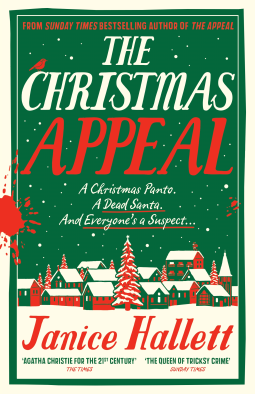
The Christmas Appeal by Janice Hallett – #NovNov23

In this new novella, published just in time for Christmas, Janice Hallett returns to the world of her earlier novel, The Appeal. Once again, newly qualified lawyers Femi and Charlotte are sent a folder of documents and are challenged by their former mentor, the now retired Roderick Tanner, to read through them all and solve the mystery they contain. And once again, the mystery unfolds in the town of Lower Lockwood where the amateur theatrical group known as The Fairway Players are preparing to stage another play, with the aim of raising money for the church roof appeal. This time, it’s that great British tradition, the Christmas pantomime! This year’s choice is Jack and the Beanstalk and rehearsals are about to begin.

Sarah-Jane MacDonald, the fundraising expert from The Appeal, and her husband Kevin have now been elected as co-chairs of The Fairway Players, a move that not everybody is happy with – particularly not Celia Halliday, who believes that she should be the one running the group. Celia is determined to do whatever it takes to prevent Jack and the Beanstalk from being a success, but it seems that the pantomime is already destined to be a disaster and anything that can go wrong will go wrong. What has happened to the young couple who auditioned for parts and have never been seen or heard from since? Is it true that the giant beanstalk Sarah-Jane wants to use as a prop is made of deadly asbestos? Is it really a good idea to use a script written in the 1970s? And whose is the dead body that appears on the night of the performance?

Like The Appeal, this book is written entirely in the form of emails, texts, WhatsApp messages and other types of media. If you’ve read the first book you’ll already be familiar with many of the characters which will make things easier to follow, but if not I don’t think it will be too much of a problem as this one should also work as a standalone. The format of the book allows the different personalities of the characters to shine through very strongly, from bossy Sarah-Jane to snobbish Celia, so you should be able to get to know them quickly.

I found this a more light-hearted book than The Appeal, with lots of humorous misunderstandings and funny moments (I particularly loved Kevin attempting to buy ‘sweets’ to hand out to the children on performance night and accidentally purchasing something completely different instead). I felt that Hallett was trying to make this an entertaining festive read rather than a more serious crime novel, which does mean that the actual mystery is quite weak. The solution relies heavily on information that is only revealed by Tanner at the end of the book and I think it would be almost impossible to solve otherwise. As Tanner already knows all the answers, he doesn’t really need Charlotte and Femi’s assistance and there’s a sense that he has set them this task simply as a problem-solving exercise and to see what they will do with what they’ve learned.

Despite the mystery not being very strong, I enjoyed this book for the characters, the humour and the insights into staging a Christmas pantomime. Hallett’s next novel, The Examiner, out next year, seems to be unrelated to this one, but I wonder whether she’ll return to the Fairway Players in the future for another book.

Thanks to Viper for providing a copy of this book for review via NetGalley.

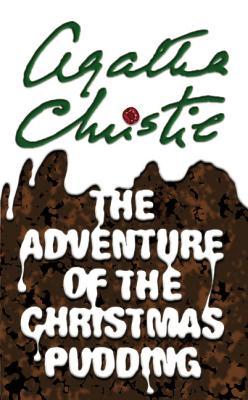
The Adventure of the Christmas Pudding by Agatha Christie

The December prompt for Read Christie 2022 is ‘a story containing precious jewels’ and the book chosen for the group read is Hercule Poirot’s Christmas. I read that one a few years ago, so decided to try The Adventure of the Christmas Pudding instead. This is a collection of six short stories and although only the first one contains precious jewels and has a festive theme, I thoroughly enjoyed reading all six of them!

Agatha Christie herself selected the stories for this collection and the first five in the book are Poirot mysteries. In the title story, The Adventure of the Christmas Pudding, Poirot joins the Lacey family at their country house, supposedly to experience a ‘typical English Christmas’. However, unknown to the family, he has another motive for attending their Christmas celebrations – he is hoping to track down a precious ruby stolen from a foreign prince. Although I felt that the title gave away part of the mystery – it’s obvious that the pudding is going to have some significance – there are still some twists before the full solution becomes clear. And I loved the Lacey children who decide to present Poirot with a murder as a special Christmas treat!

The Adventure of the Christmas Pudding was apparently inspired by Christie’s own memories of spending Christmas at Abney Hall, her sister’s home in Cheshire (presumably without the stolen jewels and murders). The other four Poirot stories in this collection are not set at Christmas, but are equally enjoyable to read. The Mystery of the Spanish Chest, in which a dead body is found in a chest after a party, is excellent. I had no idea who the culprit was or how the crime was carried out and I loved watching the plot unfold. The Under Dog, where Poirot investigates the death of a man who has been hit on the head with a club, is another good one. It’s quite complex and involved and I think it could easily have been developed into a full length novel.

The next two stories are quite unusual. In Four and Twenty Blackbirds, a man who usually dines in the same restaurant every Tuesday and Thursday without fail suddenly turns up on a Monday and asks for food he has never ordered before. Poirot is intrigued, particularly when he hears three weeks later that the man has died after an accidental fall downstairs. I found part of the solution easy to guess, but again there’s more to this story than it would seem at first! Then, in The Dream, Poirot is summoned by an elderly millionaire who is having a recurring dream in which he shoots himself with a revolver. When the old man does actually die a few days later in exactly the manner he has described, Poirot is called back to investigate. I loved this one – it’s very cleverly done!

After all of these Poirot mysteries, it was nice to see Miss Marple make an appearance in the final one, Greenshaw’s Folly. In this story, the elderly Miss Greenshaw, the current owner of the house known as Greenshaw’s Folly, is murdered in the garden just after making a new will. Miss Marple is brought into the mystery by her nephew Raymond West, whose niece has been working at the house, and through her usual methods – a knowledge of human nature and trying to decide who the various suspects remind her of – she proceeds to solve the mystery.

Overall, this is a great collection and I hope I’ve managed to give you a taste of each story without spoiling them too much. I’m looking forward to taking part in Read Christie 2023 next year!

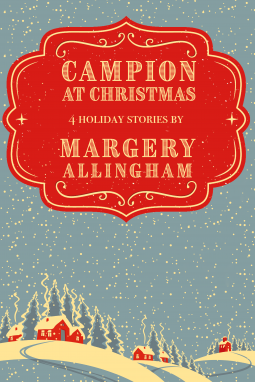
Campion at Christmas by Margery Allingham

I love Margery Allingham so I was pleased to have the opportunity to read this new collection of four short stories, all with a festive theme. The title is slightly misleading as only three of the four stories feature Albert Campion, but they are all quite enjoyable in their different ways. They are also very short, so perfect for readers with busy Christmas schedules who just want something quick to read!

The first story, On Christmas Day in the Morning, was my favourite and involves Campion investigating the death of a postman hit by a car on Christmas morning. The culprits have been identified, but the evidence provided by local residents is confusing and Campion must decide whether the suspects and the victim really could have been in the right location at the right time for the accident to have taken place. It’s not much of a mystery, but I found it a sad and poignant story which reminded me of how lonely some people feel at Christmas.

Next we have Happy Christmas, probably the weakest story in the book, in which a young couple with a passion for the 19th century decide that they would like to have a traditional Victorian Christmas. Campion doesn’t appear at all in this story and I’m not sure that it really belonged in this collection. I’m not entirely sure what the point of it was, although I do love the idea of a Victorian Christmas.

The Case of the Man with the Sack is a more conventional detective story. Albert Campion is celebrating Christmas with friends at their country house when a theft takes place – and the main suspect is Santa Claus. This is a slightly longer story than the others, so there’s more time to develop the plot. Of course, it can’t compare with a full-length Campion mystery, but it was interesting enough to hold my attention until the end.

Finally, there’s Word In Season, a lovely but unusual tale about Campion and his dog, Poins. Did you know that, according to myth, animals are given the power of speech in the final hour of Christmas Eve? I didn’t, but that’s what this final story is about.

These four Christmas stories were obviously ideal for the time of year and I did find them entertaining, but I thought they were too short to be completely satisfying. I’m looking forward to reading some more of Allingham’s longer novels soon.

Thanks to Agora Books for providing a copy of this book for review via NetGalley.

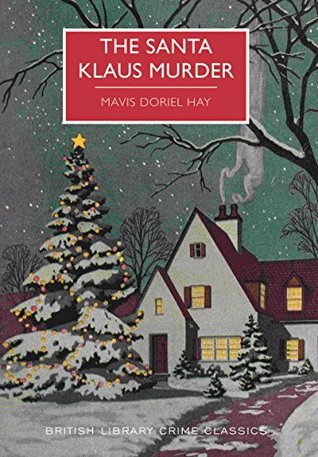
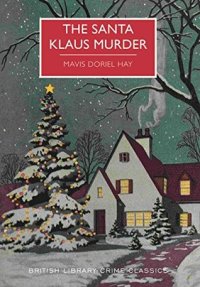
The Santa Klaus Murder by Mavis Doriel Hay

Mavis Doriel Hay wrote three mystery novels during the 1930s, all of which are now available as British Library Crime Classics. This one, The Santa Klaus Murder, sounded as though it would be perfect for the time of year, and of course it was. I enjoyed it, although I found it very similar to Agatha Christie’s Hercule Poirot’s Christmas and Georgette Heyer’s Envious Casca, and not as good as either of those books.

The Santa Klaus Murder is set in and around Flaxmere, a country estate belonging to Sir Osmond Melbury. The novel opens with several first-person accounts written by members of Sir Osmond’s family as they gather at the house to celebrate Christmas and in this way we get to know all of the main characters and learn a little bit about their backgrounds and the relationships between them.

It seems that for many years, Sir Osmond has been trying to control and manipulate the lives of his adult children. His son, George, has the security of knowing that, as the only male heir, his inheritance is safe, but for the four daughters things are much more uncertain. He has already tried to influence, with varying success, the marriages of the three eldest girls – Hilda, Edith and Eleanor – and is now trying to do the same with Jennifer, the youngest. Philip Cheriton, the man Jennifer loves, is attending the Christmas gathering, but Sir Osmond has also invited Oliver Witcombe, whom he would prefer to see as her husband. Jennifer is desperate to marry Philip but needs to find a way to do so without upsetting her father.

We do see a kinder side to Sir Osmond when, on Christmas Day, he asks Oliver to dress up in a Santa Klaus costume and distribute gifts to the family and servants. When the old man is discovered shot dead at his desk in the study that same afternoon, all the clues seem to point towards Santa…but why would Oliver want Sir Osmond dead? Colonel Halstock, the Chief Constable, is brought in to investigate and quickly discovers that almost everyone who spent Christmas at Flaxmere may have had a motive for murder. Could the killer be one of Sir Osmond’s children or one of their partners? What about his pretty young secretary, Grace Portisham, who may be expecting to receive something in his will? Or could it be Ashmore, the family’s old chauffeur, who lost his job at Flaxmere just before Christmas?

Most of the remaining chapters in the book, with one or two exceptions, are narrated by Col. Halstock as he tries to identify the culprit. There’s a lot of discussion of alibis, people’s movements, and the layout of the rooms, so if you enjoy trying to solve those sorts of puzzles – where somebody was at a certain time and what they were doing, or how somebody could have moved from one room to another without being seen – then this is probably the book for you. I didn’t work out who the murderer was, although I had my suspicions, but I did find other parts of the plot easy to predict. As a traditional country house mystery, there wasn’t much that made this book stand out from other books of its genre and era, but as an entertaining and undemanding Christmas read I found it satisfying enough.

Mavis Doriel Hay’s other novels are Murder Underground and Death on the Cherwell, both of which I’m now interested in reading.

Nonfiction Mini-Reviews: A Tudor Christmas and Henry VII

I didn’t have time last month to write about all of the books I read for Nonfiction November, so I’m combining the final two into one post today, which I think is quite appropriate as they are both Tudor related!

First, A Tudor Christmas. If you haven’t finished your Christmas shopping yet, this lovely little book by historian and novelist Alison Weir and her co-author Siobhan Clarke, a guide for Historic Royal Palaces, could be the perfect gift for any history lovers in your life (or for yourself, at any time of year, of course).

Divided into twelve sections to represent each of the twelve days of Christmas, the book takes us through the origins of many of our favourite Christmas traditions, as well as some that were popular in Tudor times but have disappeared over the years. The text is interspersed with recipes, poems, carols and illustrations, so if you don’t want to read it straight through from beginning to end, you could just pick it up and read a page or two whenever you have a few spare moments over the festive period. This is much shorter than the other non-fiction books I’ve read by Alison Weir and obviously doesn’t have the same level of depth, but even so she and Clarke manage to cover a large amount of material, touching on almost every aspect of Christmas you could think of.

I enjoyed reading about the various ways in which St Stephen’s Day/Boxing Day was celebrated in different parts of Europe, ranging from hunting the wren and taking beribboned horses to be blessed by the priest, to distributing alms to the poor. There’s a discussion of when the turkey was first introduced to England, a fascinating chapter about the typical games that would be played at home or at court, and some eye-opening accounts of how much money Henry VIII would spend on celebrating Christmas. There are also descriptions of earlier traditions such as the burning of the yule log and the origins of holly, ivy and mistletoe being used as decorations and, although I would have preferred a tighter focus on the Tudor period itself (which is what I’d expected from the title), I did find the whole book an interesting and worthwhile read.

From a Tudor Christmas to a Tudor king…Henry VII by Gladys Temperley is a biography of the first Tudor monarch who reigned from 1485 to 1509. Originally published in 1914 (and reissued more recently by Endeavour Compass), it does feel a bit dated and dry in places, but I still found it perfectly readable.

I started to read this book shortly after finishing The Tudor Crown by Joanna Hickson, a fictional account of Henry’s life before he became king, so I was particularly interested in the earlier sections which gave the facts behind some of the episodes which were featured in the novel such as Henry’s time in exile and preparations for his return to England at the head of an army. However, all of this is passed over very quickly, to be followed by a much longer section on the rebellions, conspiracies and pretenders to the throne – including Perkin Warbeck and Lambert Simnel – that repeatedly threatened Henry’s reign. As Temperley says, “He trusted few men, suspected many. He had plunged too early into the bitter waters of adversity, and as a fugitive exile, eating the bread of dependence at the courts of France and Brittany, had learnt to watch and school himself until repression had killed all spontaneity.”

Henry VII isn’t one of my favourite kings, but Gladys Temperley seems to have a lot of respect and admiration for him, which I think is a good thing – as long as it doesn’t lead to too much bias, I always think it’s better when an author likes and is genuinely passionate about their subject. Temperley highlights many of Henry’s lasting achievements, such as his ‘Mercantile System’, a policy which aimed to increase foreign trade and improve England’s economy, and the steps he took towards reforming the country’s judicial system.

The book feels thoroughly researched; there are footnotes throughout the text, three appendices giving more information on The Star Chamber, Perkin Warbeck and Juana of Castile, and a very impressive bibliography. You do need to remember, though, that this is a very old biography and that what we know of history is constantly evolving. For a more modern look at Henry VII, I recommend Winter King by Thomas Penn.