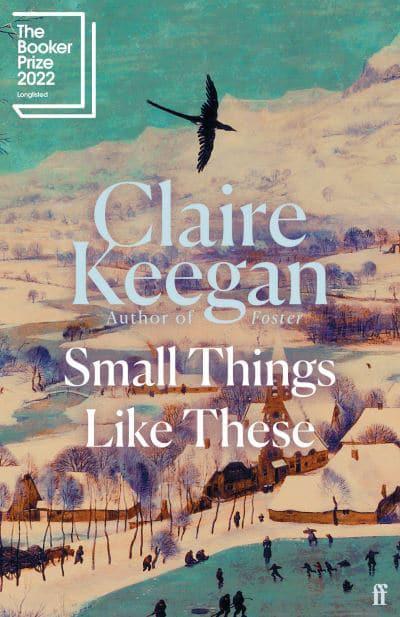
 I hadn’t really considered reading this book until my post on the HWA Crown Awards for Historical Fiction, when several of you commented that you had read and loved it. Around the same time, it was shortlisted for the Booker Prize and again I saw a lot of praise for it, so when I saw how short it was (128 pages in the edition pictured here) I thought I would give it a try for this year’s Novellas in November.
Small Things Like These is set in a small town in Ireland during the winter of 1985. The weather has turned cold and frosty and Bill Furlong, coal and timber merchant, finds his deliveries very much in demand, with customers desperate to heat their homes. Seeing how his friends and neighbours are struggling, Bill knows how lucky he is to have his own business and to be happily married with five lovely children.
Just before Christmas, Bill delivers coal to the local convent and discovers a girl locked in the coal shed, worrying about her hungry baby. Bill is left greatly disturbed by this encounter, particularly as he himself was the child of a single mother and if it hadn’t been for the kindness of his mother’s employer who helped to care for them both, they might also have been sent to a convent. His wife, Eileen, advises him not to get involved, but Bill continues to feel uneasy about the girls working in the convent laundry and the way the nuns are treating them. He knows he will eventually have to make a decision – but what will it be?
This is a quiet but powerful story, with the details of daily life in a small Irish community beautifully described. It didn’t feel like the 1980s to me, though – if I hadn’t known I would have thought it was set at least a few decades earlier. Maybe that was intentional, as some stories really are timeless. Considering how short the book is, Bill’s character is fully developed and his emotional dilemma is portrayed in depth.
Before reading this book, I had never read anything about the Magdalene Laundries, which were run by convents and were really homes for unmarried mothers and ‘fallen women’. There were allegations of women being beaten, punished and treated as slaves and although the last of these laundries closed in 1996, the Irish government didn’t issue an apology until 2013. Through Bill Furlong’s story Keegan explores the question of complicity and whether by staying silent when we know something is wrong we can be held partly responsible. This aspect of the book reminds me of A History of Loneliness by John Boyne, which looks at another scandal within the Catholic Church.
Not for the first time, though, I’ve come to the end of a hugely popular book feeling that although I liked it and found a lot to admire, I didn’t manage to love it the way everyone else did. In this case I think I just wanted a little bit more. It ended quite abruptly just as I was getting really interested in it and I would have liked to have known what happened to the characters next. I’m sure other readers will have thought it was the perfect length and ended in exactly the right place! Still, I’m looking forward to reading more by Claire Keegan and will think about reading Foster for next year’s Novellas in November.
 She Reads Novels