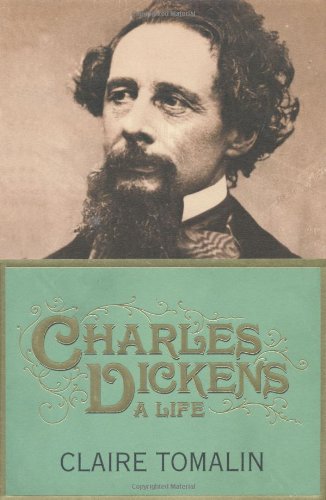
Charles Dickens: A Life by Claire Tomalin

I’ve only read one of Claire Tomalin’s other biographies (Samuel Pepys: The Unequalled Self) but having read that one, Charles Dickens: A Life was everything I was expecting: well researched, thorough and very readable. It took me a long time to finish it but that’s just because I was reading other books at the same time and is no reflection on how much I was enjoying it. Charles Dickens is an ideal subject for a biography as he had such an eventful life and career. One of the things I liked about Tomalin’s Samuel Pepys book was the way she attempted to give us a balanced view of Pepys, looking at both his good points and his bad points, and she does the same here with Dickens.

There are plenty of positive things about Dickens that we can take away from this biography: his incredible energy, his literary talent and the amount of hard work and effort he was prepared to put in to achieve his ambitions. But Tomalin also shows us Dickens’ flaws, particularly the insensitive and cruel way he treated his wife Catherine Hogarth and sometimes his children too. And of course, she discusses his affair with the actress Nelly Ternan (this is the subject of one of Tomalin’s other biographies, The Invisible Woman: The Story of Nelly Ternan and Charles Dickens, which I haven’t read).

It was interesting to read about the progress of Dickens’ career as a writer, and how he went from writing character sketches of the people around him to developing longer stories and eventually producing his famous novels. I enjoyed reading what Tomalin had to say about the Dickens novels that I’ve read – it seems that she admires most of his work though not all of it – but be aware that if you haven’t read all of his books she does include some spoilers. I can understand this, as many of the plot points and characters in Dickens’ novels give us insights into the mind of Dickens himself, and it would be hard to discuss the man without discussing his work. However, I’m sure there will be a lot of people like myself who will read this biography without having read Dickens’ complete works first, so I thought I should warn you that you might come across things you would prefer not to know!

Overall I was left with a negative impression of Dickens rather than a positive one. I can admire the motivation, ambition and talent of someone who worked his way up from a job in a boot blacking factory to become first a journalist and then one of the most famous and successful writers in the world. But the way he treated people in his personal life, as well as the high opinion he seemed to have of himself, makes it hard for me to like him.

I’m not sure how this book compares with other Dickens biographies as this is the only one I’ve ever read, but I enjoyed it, learned a lot from it and was left with a much better understanding of the complex person Dickens was. And as well as the huge amount of information this book contains about the life and work of Dickens himself, as someone who loves reading about the Victorian period in general I was fascinated by all the little details of 19th century life! The book also comes with plenty of additional material including maps, illustrations, a bibliography and a list of the important people in Dickens’ life.

Finally, this has nothing to do with this biography but I was surprised to find how much of Dickens’ life story was already familiar to me through reading novels like Drood and The Last Dickens. This shows that although historical fiction may not always be completely accurate it’s often a good way to absorb historical facts while being entertained at the same time!
From one to six…

Before I started blogging I only ever used to read one book at a time. Now I’ve somehow found myself in the middle of six!

Here are the books I’m currently reading:

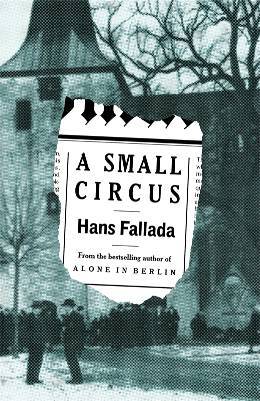
A Small Circus by Hans Fallada

Alone in Berlin was one of the best books I read last year, so I was excited about reading another of Hans Fallada’s novels. So far though, this one is not as good and I’m finding the plot quite confusing. I’m trying to decide whether or not I want to continue with it but will give it at least a few more chapters.

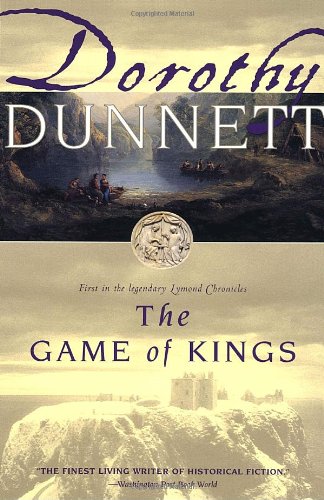
The Game of Kings by Dorothy Dunnett

This is the first of the Lymond Chronicles and the first Dorothy Dunnett book I’ve read. Dunnett fans will be pleased to know that I’m absolutely loving this book and have already ordered the next one in the series!

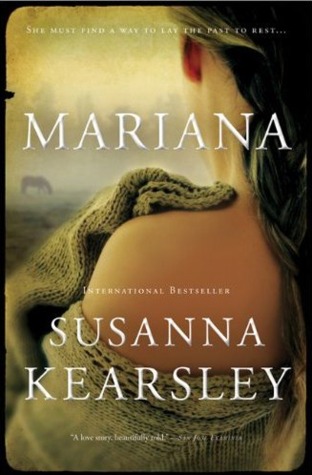
Mariana by Susanna Kearsley

After reading The Rose Garden a few months ago I wanted to read another Susanna Kearsley book and was delighted to receive this one through Netgalley. I’m still near the beginning but I can already tell it’s going to be as good, or maybe even better, than The Rose Garden.

Great Expectations by Charles Dickens

With February marking the 200th anniversary of Dickens’ birth, I wanted to read one of his novels this month. I’m enjoying Great Expectations so far and finding it surprisingly easy to read compared to some of the other Dickens novels I’ve read. I’m reading a few chapters a day on my Kindle which I’ve found is a good way to get through some of these long classics.

Charles Dickens: A Life by Claire Tomalin

I started this Dickens biography in January. Not being a big non fiction fan, it’s taking me a long time to read this one as I’m only picking it up when I’m in the right mood for it.

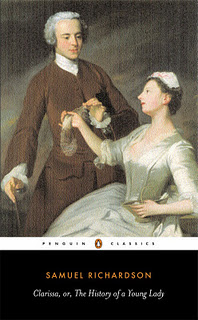
Clarissa by Samuel Richardson

As I mentioned in a previous post I’m reading Clarissa as part of a year-long group read so I’m not expecting to finish it before December. This is another one I decided to read as an ebook as the paperback is just too big!

***

The six books that I’m reading at the moment are all different enough that I’m not having any trouble keeping them separate in my mind, but I do feel as if it’s been a long time since I actually finished a book!

How many books do you usually have on the go at the same time? Do you always finish one book before you start another or do you like to have a variety to choose from?

Samuel Pepys: The Unequalled Self by Claire Tomalin

As you may have noticed, I don’t often read non-fiction (a big clue can be found in my blog name) but this is something I’d like to change. I have heard a lot of praise for Claire Tomalin’s biographies, so I had high hopes for this one.

Samuel Pepys: The Unequalled Self is a long and comprehensive biography of an important historical figure, most famous for the diaries he kept during the 17th century. I haven’t actually read the diaries of Samuel Pepys yet but would certainly like to read them at some point in the future. I wasn’t sure whether not having read the diaries would cause problems with my understanding of the biography, but luckily it didn’t seem to matter – in fact, it might actually be best to read the biography first as it helps to put the diaries in context.

The first few chapters deal with Pepys’ childhood and early life (pre-diary) and understandably we don’t have a lot of information regarding this period of his life – we can only speculate about what Pepys may or may not have done. I found these chapters quite boring in comparison to the rest of the book, although I did enjoy learning about a typical day in a 17th century school – and I was fascinated by the description of the operation Pepys had to remove a stone from his bladder. I’ve always had an interest in the history of medicine and it never ceases to amaze me how anybody ever survived at all!

Tomalin explains that what makes Pepys’ diary so interesting and noteworthy is that he records a mixture of both public events and personal experiences. Pepys lived through a fascinating and eventful period of English history and his famous diary covers such events as the Restoration of Charles II, the plague of 1665 and the Great Fire of London in 1666. I was slightly disappointed that more attention wasn’t given to the plague as it’s a topic I find fascinating to read about (I hope that doesn’t sound too morbid!) but as Tomalin explains it was something that didn’t affect Pepys personally and so he doesn’t spend a lot of time talking about it.

The most interesting parts of the book for me were the descriptions of daily life. While I confess to struggling to get through some of the chapters about Pepys’ political and business activities, I found the more personal sections completely gripping. I thought Tomalin stayed very objective throughout the biography, drawing attention to both the good and the bad aspects of Pepys’ character (and to be honest, he didn’t seem to be the most pleasant of people). But I can tell that even though Tomalin doesn’t shy away from discussing his negative points, she has a lot of enthusiasm and liking for her subject. She also fleshes out the characters of other important people in Pepys’ life including his wife Elizabeth, with whom he had a very complex and volatile relationship. He could be very cruel to her and both physically and verbally abusive, but they did appear to have some genuine affection for each other and Tomalin describes some of the happy times they had together as well as the bad.

For someone like myself who doesn’t often read this type of literary biography, this was quite a challenging book but worth the effort. If I had tried to read this book straight through from beginning to end I probably wouldn’t have managed to finish it, but reading it over the course of a month, a few chapters at a time between reading my usual fiction books, worked perfectly for me.

Have you read any of Claire Tomalin’s biographies? Which ones would you recommend?