Arctic Summer by Damon Galgut

Arctic Summer As someone who has only read one novel by E.M. Forster – A Room with a View – I wasn’t sure whether reading Arctic Summer would be a good idea. It’s a fictional biography of Forster, concentrating on the period during which he was working on his novel A Passage to India, so I thought it might be more sensible to wait until I had read that book first. Arctic Summer is on the list of books I need to read for my Walter Scott Prize Project, though, so when I saw it in the library I couldn’t resist picking it up and taking it home.

I should start by saying that as well as not having read much of Forster’s work, I also – before reading this novel – knew almost nothing about the man himself. The first thing I discovered was that Galgut refers to his main character not as Forster or Edward but as Morgan, which was his middle name. Forster went by this name to distinguish himself from his father, another Edward (and apparently he was originally supposed to be called Henry anyway – there was some confusion over names at the baptism).

We first meet Forster in 1912 as he sets sail on his first trip to India at the age of thirty-three. He is planning to visit his friend Syed Ross Masood, whom he had tutored in Latin several years earlier while Masood was a student in England. Forster is becoming increasingly aware that what he feels for Masood is not just friendship but also love. However, he is not entirely comfortable with his feelings yet and is plagued by doubts and frustrations; this was a time when homosexuality was neither legal nor seen as socially acceptable and we are reminded that fewer than twenty years have passed since Oscar Wilde’s imprisonment for ‘gross indecency’.

Later, during World War I, Forster travels to Egypt to work for the Red Cross, and here he falls in love again, this time with Mohammed el-Adl. His love for Masood and Mohammed forms the main focus of Arctic Summer – and this, to me, was slightly disappointing. Obviously his relationships with these two men (and others) were very important to Forster and had an influence on his writing, but I would have preferred to read a more balanced novel that also explored other aspects of his life, rather than just page after page describing his sexual experiences and desires.

I did enjoy reading about Egypt and India (the visit to the Barabar Caves was particularly memorable) and I was also pleased to see brief appearances from other writers of the period such as D.H. Lawrence and Virginia and Leonard Woolf. The writing was of a high quality too and Galgut tells Forster’s story with sensitivity and understanding. Too much of the book bored me, though, and it failed to move me as much as I would have liked and expected. I had difficulty relating the story of Morgan’s love affairs to what little I know of Forster’s writing and I think I should definitely have waited to read this until I’d at least read A Passage to India and possibly Maurice as well.

This was one of the few disappointments I’ve had during my reading from the Walter Scott Prize shortlists, but don’t let me put you off. Looking at other reviews it seems that a lot of people have read it and loved it. As I’ve mentioned, my own lack of familiarity with Forster’s life and work could have been part of my problem. If nothing else, reading Arctic Summer has made me want to read more of E.M. Forster’s novels sooner rather than later.

My Commonplace Book: March 2016

commonplace book
Definition:
noun
a notebook in which quotations, poems, remarks, etc, that catch the owner’s attention are entered

Collins English Dictionary

~

A summary of this month’s reading, in words and pictures.

~

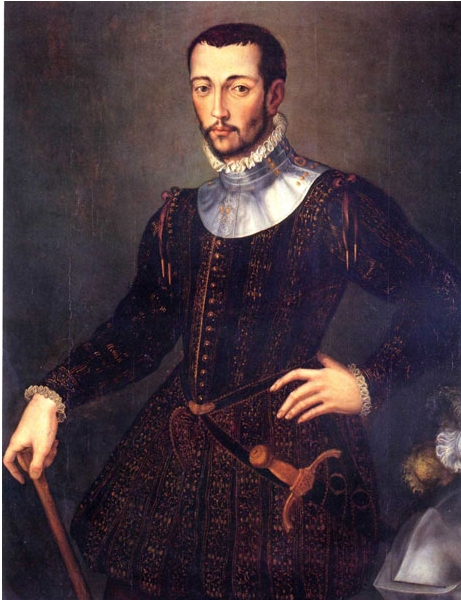
He had a narrow, swarthy face with a high forehead, so high he had his cropped dark hair brushed forward – he was losing his hair, then. His eyes slanted downward, sensual, melancholic and secretive. Saints in the churches, painted on panels and murals, had halos of light around their heads and bodies; the prince seemed to have a tracing of darkness, as if he was standing in front of a prince-shaped hole that led into something terrible, and you could just catch glimpses of it when he moved…

The Red Lily Crown by Elizabeth Loupas (2014)

~

Do you keep time in the same place that you save it? If so why is it so difficult to find? It must be in a very safe place.

Human Croquet by Kate Atkinson (1997)

~

Miss Rebecca was not, then, in the least kind or placable. All the world used her ill, said this young misanthropist, and we may be pretty certain that persons whom all the world treats ill, deserve entirely the treatment they get. The world is a looking-glass, and gives back to every man the reflection of his own face. Frown at it, and it will in turn look sourly upon you; laugh at it and with it, and it is a jolly kind companion; and so let all young persons take their choice.

Vanity Fair by William Makepeace Thackeray (1847)

~

Buddhist caves, two hundred and fifty BC…? It was the Emperor Ashoka who had ordered them to be made, he felt almost sure about that. But there was something else, something to do with the shape of the caves, that escaped him. Was it about meditation? He hadn’t been paying close attention, his mind had been preoccupied, and now their purpose remained a mystery – as it seemed so much in this country was destined to, at least for him.

Arctic Summer by Damon Galgut (2014)

~

The children of Dynmouth were as children anywhere. They led double lives; more regularly than their elders they travelled without moving from a room. They saw a different world: the sun looked different to them, and so did Dynmouth’s trees and grass and sand. Dogs loomed at a different level, eye to eye. Cats arched their tiger’s backs, and the birds behind bars in Moult’s Hardware and Pet Supplies gazed beadily down, appearing to speak messages.

The Children of Dynmouth by William Trevor (1976)

~

Days lived, whether full or empty, whether busy or serene, are but days gone by, and the ashes of the past weigh the same in every hand.

The Royal Succession by Maurice Druon (1957)

~

As for the cold, he had never experienced anything like it: a dry, iron clamp upon the land, like death itself, full of unexpected beauty, like the hard crystals that formed on the inside of the windows. The cold did something strange to the quality of sounds around the farm, deadening all background noise so that the smallest scratching or whisper was emphasised. It was easy to see how the unwary settler could die in such a scene, lulled into marvelling at its deadly beauty even as his blood began to freeze.

A Place Called Winter by Patrick Gale (2015)

~

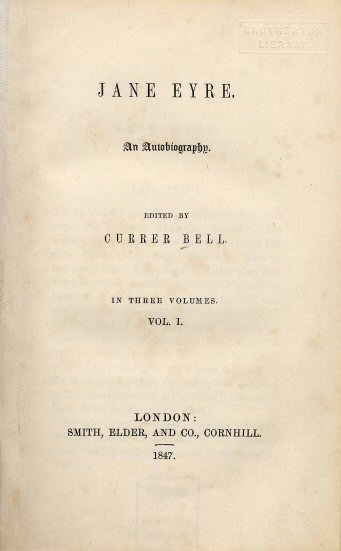
Jane_Eyre_title_page

Under Dad’s philosophy, books were not shape-shifting constructions of a reader’s imagination. Novels, he said, offered the specific clues, maps and guidelines necessary for their own evaluation. By clues, he did not mean metaphors and he did not mean symbolism. He meant actual clues. To him, every book was its own treasure map. A good novel, he said, left the close reader with a useful souvenir. All you needed to do was learn to see what was right under your nose.

The Madwoman Upstairs by Catherine Lowell (2016)

~

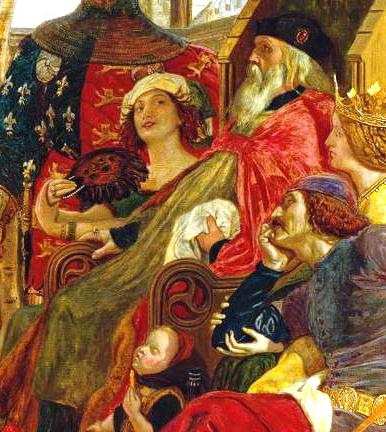
“Robert has been led most of his life by his ambition – our family’s ambition – for him to be king. All of us have paid a price, for some the highest price, for him to fulfil that desire, but we have done so because we see in him something that lifts him above most other men; something that makes us hope. He has the iron will of our grandfather and, yes, the hot blood of our father, though he’ll not hear the latter said, but he also has the heart of our mother. It is a true heart. A good heart. You must keep faith, my lady.”

Kingdom by Robyn Young (2014)

~

Sitting at her bureau a short time before, Frances had been picturing her lodgers in purely mercenary terms – as something like two great waddling shillings. But this, she thought, shuffling backward over the tiles, this was what it really meant to have lodgers: this odd, unintimate proximity, this rather peeled-back moment, where the only thing between herself and a naked Mrs Barber was a few feet of kitchen and a thin scullery door.

The Paying Guests by Sarah Waters (2014)

~

“I think you’ll find most women in pursuit of a husband share an interest in appearing less educated than they really are,” said Beatrice. “It is why I have a low opinion of them.”

“Of women, miss?” said Abigail.

“No, of husbands,” said Beatrice.

The Summer Before the War by Helen Simonson (2016)

~

Knighthood’s not for the likes of these people; for Madame Perrers’ brood. He thought she knew her place. But she’s overreached herself; she’s as grasping as the rest of them, after all. Do these people think they can buy or steal everything?

The People’s Queen by Vanora Bennett (2010)

~

Favourite books this month: The Red Lily Crown and The Summer Before the War.