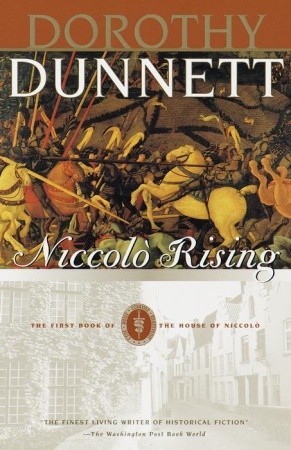
Niccolò Rising by Dorothy Dunnett

If you’ve been following my blog for a while, you’ll probably remember that I read (and loved) Dorothy Dunnett’s Lymond Chronicles earlier this year. I read the sixth and final book in the series in April and was planning to wait a bit longer before I started the House of Niccolò series, but in the end I couldn’t resist the temptation.

The House of Niccolò books were written after the Lymond Chronicles but are set in an earlier period (the 15th century rather than the 16th) and there are some links between the two series. Niccolò Rising, as the title suggests, follows our hero Nicholas as he begins to rise in the world to become a successful merchant and courier. And that’s really all I can tell you about the story. It has so many different layers and is so complex, intricate and cleverly plotted that I wouldn’t know where to begin writing any kind of summary. It’s also difficult to know how much I can say without spoiling things for future readers; if you started reading this book without knowing anything at all about it, it’s possible that you might not even be able to tell at first who the main protagonist of the series is going to be, as Nicholas goes by a different name for the first half of the book.

This book, like all the other Dorothy Dunnett novels I’ve read, was not the easiest of reads but in my opinion it was definitely worth making a bit of extra effort. I did find myself feeling completely confused on many occasions while I was reading, but some of my questions had been answered by the end of the book and the rest I’m hoping will become clearer later in the series or on a re-read. The biggest problem I had was trying to keep the characters straight in my mind. There are over one hundred of them listed in the character list at the front of the book (many of them are real historical figures) though with even the help of the list I still couldn’t seem to keep track of them all! The historical setting for this story is not one that I’m at all familiar with (the world of trade, banking and politics in Flanders and Italy in the 15th century), but I enjoyed learning more about it. Bruges, where a lot of the action in the book takes place, is somewhere I’ve wanted to visit for a long time and it has now moved even higher on my list.

All the time I was reading this book I was trying my best not to compare it with the Lymond Chronicles or Nicholas with Francis Crawford but really it was almost impossible not to. So the question is, as an introduction to the series did I like this book as much as the first Lymond book, The Game of Kings? The answer is no. The writing style is quite different and I didn’t find it as much fun to read. I was enjoying it enough to be in no doubt that I would keep reading to the end, but it never quite reached ‘unputdownable’ status. Nicholas, I suppose, could be considered more instantly likeable than Lymond (though it soon becomes obvious there’s a lot more going on behind his seemingly cheerful exterior than anybody realises) but he hasn’t quite won me over yet; we’ll see how I feel about him when I get further into the series.

When I came to the end of this book I didn’t feel compelled to immediately pick up the next one the way I did with the Lymond Chronicles, but I will definitely be continuing with the series. A copy of The Spring of the Ram is already waiting on my shelf.

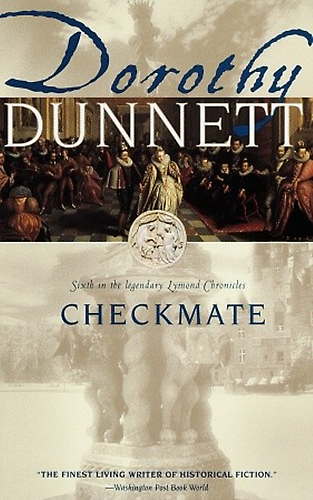
Thoughts on finishing the Lymond Chronicles

I apologise for abandoning my blog this week – I’ve been very busy both at work and at home, and any spare time I did have was devoted to finishing Dorothy Dunnett’s Lymond Chronicles. Because I read the final two books, The Ringed Castle and Checkmate so close together, rather than posting separate ‘reviews’ I decided to combine both books into the same post, along with some comments on the series as a whole.

Let’s start with the fifth book in the series, The Ringed Castle. After all the praise I’ve bestowed on the first four books it’s difficult to find new words to describe how I felt about this one, so suffice to say that it was as wonderful as the others. Russia is one of my favourite settings for historical fiction so I liked that aspect of the book, though I was equally interested in the chapters set at the Tudor court.

As with the previous novels, there’s a lot of history in this book – in the Russian sections we learn about Ivan IV, the Cossacks and the Crimean Tartars, and in the English sections we find ourselves at the centre of the conspiracies and political intrigue surrounding Queen Mary I and the future Elizabeth I. We also meet John Dee, the famous astrologer and mathematician, who is always interesting to read about, as well as another historical figure I knew nothing about: the explorer Richard Chancellor. Chancellor’s work with the Muscovy Company and as a navigator form quite a big part of the plot and I’m glad I’ve been able to learn something about his life and career. The final voyage of the Edward Bonaventure was so sad and one of the most memorable parts of the book for me.

Oh, and I loved the scene in the Hall of Revels, which finally led to the ‘Anvil Moment’ Aarti has been telling me about. And yes, it was worth waiting for!

When I started Checkmate, it was with a mixture of excitement at finding out how Lymond’s story would end and also sadness at the thought of reaching the end of the series. I was hoping to make the final book last as long as possible, but of course I couldn’t and it actually took less time to read than any of the others. In a series of unputdownable books, I found this one the most unputdownable of them all! I admit to having to cheat once or twice and flip forward a few pages, which is something I usually try not to do, but knowing from the previous books that Dorothy Dunnett had no qualms about killing off major characters, sometimes the suspense was just too much to bear.

Having said that, this wasn’t my favourite of the six books. There were parts that I loved – the chase through the streets of Lyon, the hilarious Hotel de Ville banquet, as well as finally learning the truth about Lymond’s birth – but overall I enjoyed some of the earlier books more. Still, I thought Checkmate was a great conclusion to the series and it was good to see so many of the characters from the previous books brought together in this one, including the return of Jerott, Marthe and one of my favourites, Archie Abernethy. And after The Ringed Castle, in which Lymond becomes more isolated than ever from his family, I was glad that Sybilla and Richard played such a big role in this book (it’s been fascinating to follow all the ups and downs of the relationship between Richard and Francis).

I’d like to finish by saying that I agree with all the Dorothy Dunnett readers who have been commenting on my previous Lymond posts – this is the best series of historical fiction novels I’ve ever read and I can see why so many of you have been re-reading them for decades because I’m sure I’ll be doing the same. And for anyone who has yet to read these books, I can promise you that although they’re not the easiest of reads, it’s definitely worth making the effort and getting to know Francis Crawford of Lymond, one of the most complex, charismatic, fascinating characters you’re ever likely to meet in literature. Working through the six books of the Lymond Chronicles has been one of the greatest experiences in my lifetime of reading.

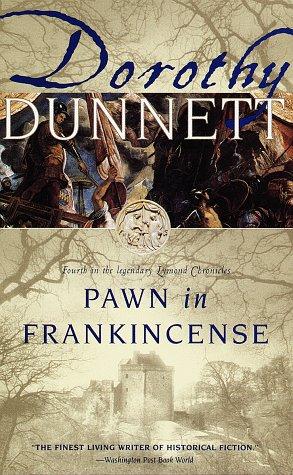
Pawn in Frankincense by Dorothy Dunnett

Pawn in Frankincense, the fourth of Dorothy Dunnett’s Lymond Chronicles, takes our hero Francis Crawford of Lymond on a journey through North Africa, Greece and Turkey to the court of Sultan Suleiman the Magnificent.

I don’t think it’s necessary for me to say anything about the plot of this novel as I expect most people reading this review will have either already read this book, in which case you won’t need a summary, or if you’re new to the series you’ll need to start with The Game of Kings and presumably won’t want to read too much about this fourth instalment. All I will say is that this book features some of the most heartbreaking moments in the series so far.

I had been looking forward to reading Pawn in Frankincense as the general opinion seems to be that it’s one of the best in the series, and I wasn’t disappointed. I think The Disorderly Knights is still my favourite, but I loved this one too. Like the previous three books it was exciting, emotional and almost impossible to put down. I thought the second half of the book in particular was stunning and the last few chapters were so powerful I’m sure I’ll never forget them; the chess game in the seraglio was one of the most tense, nerve-wracking scenes I can ever remember reading. If you’ve read the book I won’t need to explain why, and if you haven’t then I won’t go into any more detail as I certainly wouldn’t want to spoil it for you. I defy anybody to read it without crying or at least being close to tears!

I missed some of the characters from the previous books who didn’t appear in this one, though I do love Archie Abernethy and by the end of the story I loved Philippa too – I hadn’t liked her before but she really came into her own in this book. I also enjoyed learning about the Ottoman Empire, a world I had previously known very little about – I was maybe slightly overwhelmed by all the detailed descriptions at times but they certainly brought each location to life for me. Due to the nature of the story, with Lymond and his companions sailing through the Mediterranean to Constantinople (Istanbul), we are given vivid descriptions of all the places they visit on the way: Algiers, Djerba, Zakynthos, Thessalonika and others, none of which are places that I’ve read much about before.

I’ve started reading The Ringed Castle now and I’m already feeling sad that after I’ve finished it there’ll only be one more book left!

The Disorderly Knights by Dorothy Dunnett

The Disorderly Knights is the third of Dorothy Dunnett’s Lymond Chronicles. In this instalment, Francis Crawford of Lymond goes to Malta to help the Knights Hospitallers of St John protect the island from invasion. It soon becomes obvious that not only is Malta under threat from the Turks, but the Order of St John itself is in danger of being torn apart by feuding factions among the knights. And as the action moves first to Tripoli and then back home to Scotland Lymond himself becomes entangled in the schemes of a very clever and subtle enemy.

I loved the first two books in this series, The Game of Kings and Queens’ Play, but this one is my favourite so far. It’s been a long time since I’ve been so completely immersed in a book – I had to tear myself away from it to go to work or to sleep and still couldn’t stop thinking about the story or the characters even when I wasn’t reading.

As with the first two books I found I had to keep turning back to remind myself of what had happened in earlier sections and was constantly changing my mind about what I thought was going on. Although I knew who the villain was (even if most of the characters in the book didn’t) I wasn’t sure what his motives were, what he was hoping to achieve or how long ago he had started to put his plans into motion, so there was still plenty of mystery to keep me guessing throughout the story.

I have never read anything set in either Malta or Tripoli, but both locations were brought to life for me through the vivid descriptions we were given. After I’d finished the book I looked up some of the historical events covered in the story such as the Siege of Tripoli and I was so impressed at how cleverly Dorothy Dunnett had woven fact and fiction together. The same applies to some of the novel’s later events set in Scotland – the feud between the Scotts and the Kerrs, for example, and even the deaths of some of the characters.

This was such an emotional book too – there were various points in the story where my blood was boiling, my heart was pounding or I had tears in my eyes – yet I think the fact that it caused such strong emotions proves what a powerful book this was. And I appreciated the moments of humour that the author injected into what would otherwise have been a very dark story. The scene with the eight hundred sheep was one of my favourites!

I couldn’t put this book down throughout the last 100 pages and was so glad I had Pawn in Frankincense ready to pick up as soon as I finished! You can expect to see my thoughts on that one soon.

Queens’ Play by Dorothy Dunnett

Queens’ Play is the second of Dorothy Dunnett’s Lymond Chronicles. A few weeks ago I talked about how much I loved the first in the series, The Game of Kings, and I’m pleased to report that I enjoyed this one too, though maybe not quite as much. I never know how to write about the second book in a series as it’s very difficult to discuss it without giving away some of the things that happened in the previous book. So, while I’ll do my best to avoid spoiling too much, if you haven’t already read The Game of Kings then you might prefer to do so before reading any more of my posts on the series.

Queens’ Play starts two years after the end of The Game of Kings. Mary of Guise, the mother of seven-year-old Mary Queen of Scots, has asked Francis Crawford of Lymond to join them in France and help to protect the little Queen from a plot against her life. However, Lymond’s face and name are too well known in France and so he goes undercover, disguised as one of a party of Irishmen who are visiting the French court.

As with The Game of Kings, I was very impressed by the complexity of the characters and the intricate twists and turns of the plot, but Queens’ Play also gives us a vivid depiction of the court of Henri II with its splendour, extravagance and corruption. There are plenty of exciting, dramatic scenes and set pieces too – Lymond’s adventures in France include a hunt involving a cheetah and a wolfhound, a moonlit race across the rooftops of Blois, a wrestling match (I would never have thought I could find wrestling so thrilling to read about!), stampeding elephants and more than one attempted poisoning.

In the time between finishing Queens’ Play and posting this review I have been reading the third book, The Disorderly Knights (halfway through at the moment and loving it), and I’m already starting to see the importance of Queens’ Play in the context of the series. We are introduced to some new recurring characters and Lymond also learns a lot of important lessons in France – as well as battling some personal demons, he starts to understand what it means to be a leader, to care for the men under your control and to take responsibility for what happens to them.

As I mentioned at the start of this post, I thought Queens’ Play was a great book but I didn’t love it as much as I loved The Game of Kings. I think part of the problem was that at the end of The Game of Kings I had felt we were finally starting to see the real Francis Crawford, yet almost from the very beginning of Queens’ Play he was pretending to be somebody else – and although I was still enjoying the story, I wanted Lymond, not his alter ego. Still, as far as I can tell, a lot of people consider this to be the weakest book in the series, so if that’s true I’m really looking forward to the others!

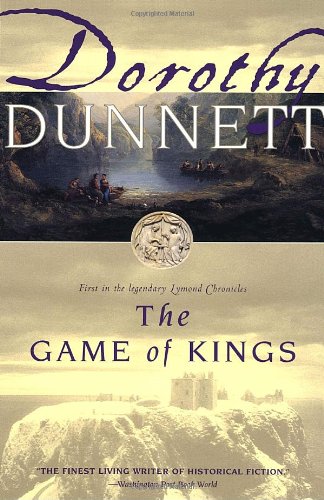
The Game of Kings by Dorothy Dunnett

The Game of Kings is the first of the Lymond Chronicles, a series of historical fiction novels by Dorothy Dunnett originally published in the 1960s and 70s. I’m actually quite surprised and disappointed that I had never come across these books before, especially as historical fiction is my favourite genre and for a few years was pretty much all I read. Anyway, I’ve discovered them now, which is the most important thing!

It’s 1547 and Francis Crawford of Lymond, accused of treason five years earlier, has returned to his home country of Scotland. As the leader of a band of outlaws he begins a search for the three men he believes might be able to clear his name. Lymond’s personal quest is played out during an important period in Scotland’s history: the English are hoping to marry the 4 year old Mary, Queen of Scots to 9 year old King Edward VI of England and unite the two countries – but the Scots are equally determined to prevent this from happening.

I really can’t tell you much more about the plot without spoiling the story, but I can promise you that this was one of the most gripping historical novels I’ve read for a long time – I was never bored for a minute. There are sad scenes, funny scenes, exciting scenes and moving scenes, not to mention the most thrilling sword fight I’ve ever read! I finished reading the book last weekend and since then have been trying to think of what I could possibly say about it that would do it justice…there were just so many things I loved: the wonderful plot, filled with twists and turns, surprises and revelations; the strong, memorable characters; the clever dialogue; and the accurate and well-researched historical setting. Most of all, of course, I loved Francis Crawford of Lymond, brilliant, charismatic and witty, but also very flawed and troubled. He is now high on my list of favourite fictional characters!

In fact, all of the characters in the book are incredibly well drawn. There’s so much I could say about Christian, Will, Sybilla, Kate, Richard, Mariotta and the others, but I won’t because it would be so much more fun for you to get to know these characters for yourself. They all felt like fully formed people rather than just words on a page and they lived on in my mind even when I wasn’t reading, which I always think is a sign of a good book. And I haven’t even mentioned yet the amazing sense of time and place Dorothy Dunnett creates. The amount of detail she goes into in building Lymond’s world is so impressive and everything feels completely accurate.

But much as I loved it, this was not the easiest of books to get into. There are a lot of characters to keep track of and some of them are referred to by more than one name or title, so the character list at the front of the book was very helpful! The novel also has a very, very complex plot and you really need to concentrate because the tiniest detail can turn out to be important later on. Lymond has a very good reason for almost everything he does but many of those reasons are not immediately obvious. Things that initially don’t make any sense suddenly take on new meaning a few chapters later and I found I had to keep re-reading previous sections so I could grasp what had happened.

I should also point out that Lymond’s dialogue is filled with quotes and references from history, literature, myth, nature, philosophy, nursery rhymes, songs and riddles (some of which are in French, Spanish, Latin or other languages, which are not translated for us). I soon realised there was no way I was going to understand all of the references, as unfortunately my education is sadly lacking in comparison to Lymond’s! Some of the things he says seem to mean nothing at all unless you recognise the context they are from, which in most cases I didn’t.

I know there are two Dorothy Dunnett Companions and other guides to the series that you can buy, but I think trying to read those along with The Game of Kings would have been too much for me on a first read! I decided just to enjoy the story and when I re-read the book, as I’m sure I will, I can look up the unfamiliar words and phrases then. In the meantime, there was always Google when I was desperate to know what something meant.

So, if you’re looking for a light, easy read The Game of Kings probably isn’t for you, but if you enjoy complex, well-written historical fiction then I hope you’ll give it a try. Although it could be challenging at times it was so rewarding and definitely worth the effort. I’ve already started reading the second in the series, Queen’s Play – I’m nearly 100 pages into it and loving it so far!

From one to six…

Before I started blogging I only ever used to read one book at a time. Now I’ve somehow found myself in the middle of six!

Here are the books I’m currently reading:

A Small Circus by Hans Fallada

Alone in Berlin was one of the best books I read last year, so I was excited about reading another of Hans Fallada’s novels. So far though, this one is not as good and I’m finding the plot quite confusing. I’m trying to decide whether or not I want to continue with it but will give it at least a few more chapters.

The Game of Kings by Dorothy Dunnett

This is the first of the Lymond Chronicles and the first Dorothy Dunnett book I’ve read. Dunnett fans will be pleased to know that I’m absolutely loving this book and have already ordered the next one in the series!

Mariana by Susanna Kearsley

After reading The Rose Garden a few months ago I wanted to read another Susanna Kearsley book and was delighted to receive this one through Netgalley. I’m still near the beginning but I can already tell it’s going to be as good, or maybe even better, than The Rose Garden.

Great Expectations by Charles Dickens

With February marking the 200th anniversary of Dickens’ birth, I wanted to read one of his novels this month. I’m enjoying Great Expectations so far and finding it surprisingly easy to read compared to some of the other Dickens novels I’ve read. I’m reading a few chapters a day on my Kindle which I’ve found is a good way to get through some of these long classics.

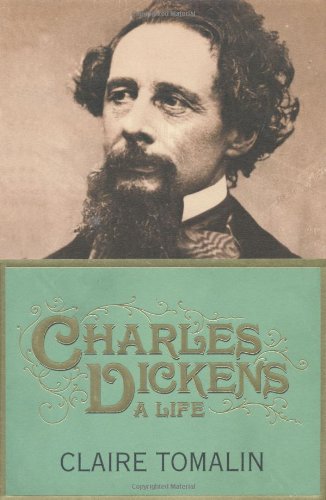
Charles Dickens: A Life by Claire Tomalin

I started this Dickens biography in January. Not being a big non fiction fan, it’s taking me a long time to read this one as I’m only picking it up when I’m in the right mood for it.

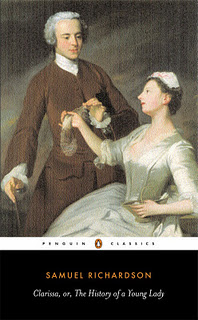
Clarissa by Samuel Richardson

As I mentioned in a previous post I’m reading Clarissa as part of a year-long group read so I’m not expecting to finish it before December. This is another one I decided to read as an ebook as the paperback is just too big!

***

The six books that I’m reading at the moment are all different enough that I’m not having any trouble keeping them separate in my mind, but I do feel as if it’s been a long time since I actually finished a book!

How many books do you usually have on the go at the same time? Do you always finish one book before you start another or do you like to have a variety to choose from?